
Shaoxing, China
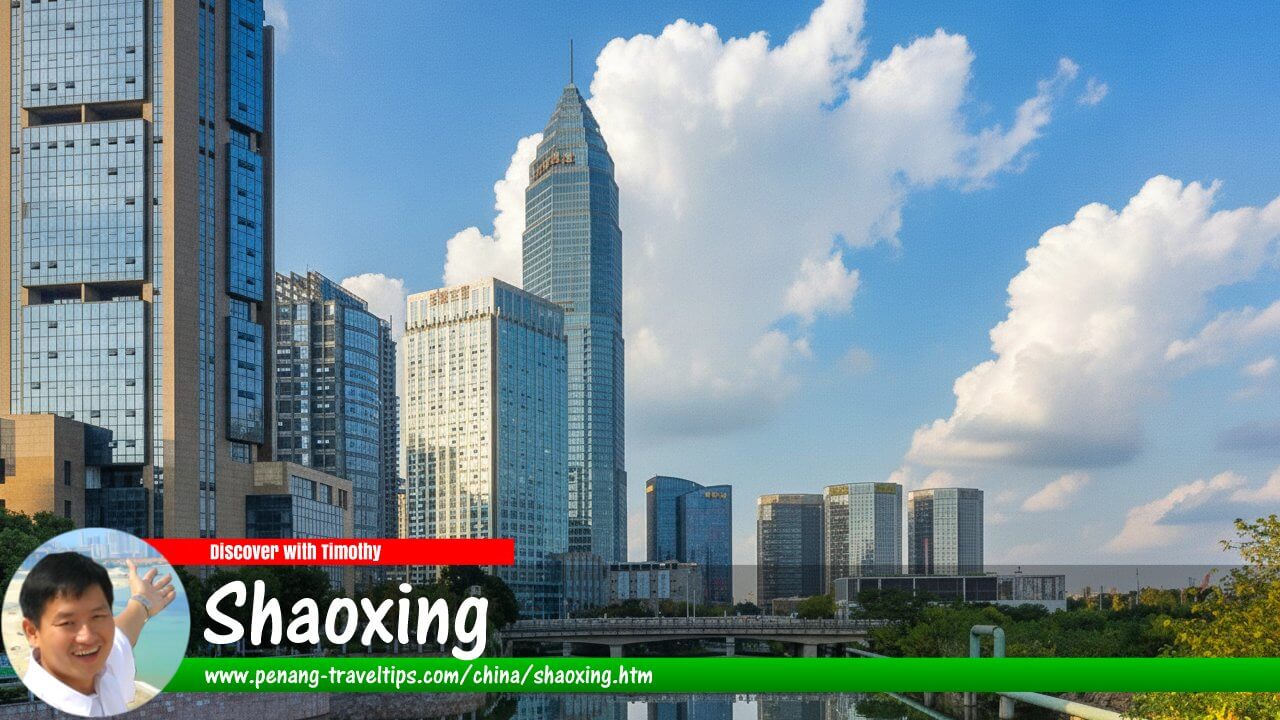 Shaoxing, China (Photo edited with AI on 18 June 2026)
Shaoxing (绍兴; Shàoxīng) is a historic city in northeastern Zhejiang Province, China. Located in the southern part of the Yangtze River Delta, it is one of China's oldest continuously inhabited cities and is famous for its classical waterways, traditional architecture, literary heritage, and the production of Shaoxing rice wine. The city's name, written as 绍兴 in Chinese and romanized as Shàoxīng in pinyin, was adopted during the Southern Song Dynasty. "Shao" means "to continue" or "inherit," while "Xing" means "prosperity" or "revival." The name reflected the imperial aspiration to continue and restore prosperity after the dynasty moved its capital southward.1
Quick Facts
- Chinese Name: 绍兴
- Pinyin: Shàoxīng
- Province: Zhejiang
- Location: Southern Yangtze River Delta, eastern China
- Population: Approximately 5 million
- Area: About 8,279 square kilometres
- Known For: Shaoxing wine, canals, literary heritage, ancient towns
- Major River: Cao'e River
- Nearest International Airport: Hangzhou Xiaoshan International Airport
- UNESCO Site: Part of the Grand Canal cultural heritage network
Geography
Shaoxing lies in northeastern Zhejiang Province, approximately 60 kilometres southeast of Hangzhou. The city occupies a strategic location within the highly developed Yangtze River Delta economic region. It borders Ningbo to the east, Hangzhou to the northwest, Jinhua to the southwest, and the East China Sea coastline lies not far to its east.2
The landscape consists primarily of plains, rivers, lakes, canals, and low hills. Much of the northern part of Shaoxing is part of the fertile Hangjiahu Plain, while the southern areas become increasingly mountainous. The Cao'e River and numerous waterways have shaped the city's development for centuries, making it one of China's most famous water towns.
Shaoxing experiences a humid subtropical climate characterized by four distinct seasons. Summers are hot and humid, while winters are generally cool and damp. Annual rainfall is abundant, supporting agriculture and contributing to the lush scenery that has inspired poets and artists for generations.
Languages and Dialects
Mandarin is the official language used in education, government, and business. However, the traditional local language is the Shaoxing dialect, a branch of the Wu Chinese language family. The dialect is closely related to those spoken in Hangzhou, Ningbo, and other parts of Zhejiang Province.
Wu dialects differ significantly from Mandarin in pronunciation, vocabulary, and grammar. Many older residents continue to speak the Shaoxing dialect in daily life, while younger generations are typically bilingual in both Mandarin and the local speech. In rural areas, additional local variations of Wu Chinese may also be heard.
History
Shaoxing has a history spanning more than 2,500 years. Archaeological discoveries indicate that human settlements existed in the region long before the establishment of recorded Chinese states. During the Spring and Autumn Period, the area became the center of the ancient State of Yue, one of the most influential kingdoms of southern China.2
The city is closely associated with King Goujian of Yue, who ruled during the fifth century BCE. According to historical accounts, Goujian endured years of hardship after defeat by the neighboring State of Wu before ultimately rebuilding his kingdom and achieving victory. His perseverance became one of China's most famous historical lessons.
During the Qin and Han dynasties, Shaoxing developed as an administrative and commercial center. The extensive network of rivers and canals facilitated trade and transportation, allowing agricultural products and handicrafts to reach markets across eastern China.
Under the Tang and Song dynasties, Shaoxing flourished culturally and economically. Scholars, poets, and artists were attracted to the city's picturesque landscapes. The Southern Song period was particularly significant because the city gained prominence as the region surrounding Hangzhou became the political heartland of southern China.
Shaoxing's reputation as a center of learning continued through the Ming and Qing dynasties. Numerous academies and schools produced scholars who succeeded in the imperial civil service examinations. The city became associated with intellectual achievement and literary excellence.
In the modern era, Shaoxing played an important role in China's cultural and political transformation. It was the birthplace of Lu Xun, widely regarded as the father of modern Chinese literature. His writings helped shape twentieth-century Chinese thought and education.
Following economic reforms in the late twentieth century, Shaoxing transformed into one of Zhejiang Province's most prosperous cities while preserving much of its historical heritage.
Economy and Products
Shaoxing possesses one of the strongest economies in Zhejiang Province. Its economy combines advanced manufacturing, traditional industries, commerce, tourism, and agriculture.
The city is internationally famous for Shaoxing wine, a traditional Chinese rice wine produced for more than a thousand years. Made from glutinous rice, wheat, and water, the wine is widely used in Chinese cooking and is also enjoyed as a beverage. Shaoxing wine remains one of the city's best-known exports.3
Textile manufacturing forms another major pillar of the economy. Shaoxing hosts one of the world's largest textile production and trading centers, supplying fabrics, garments, and textile materials to domestic and international markets.
The city is also involved in machinery manufacturing, chemical production, electronics, construction materials, and modern logistics. Industrial parks throughout the municipality support innovation and export-oriented businesses.
Agriculture remains important in rural districts. Farmers produce rice, tea, vegetables, bamboo products, fruits, and aquatic products. The region is also known for its high-quality tea cultivation.
Tourism contributes significantly to local revenue. Visitors come to explore ancient towns, literary landmarks, canal scenery, museums, and historical sites connected to China's cultural heritage.
How to Go There
By Air
Shaoxing does not currently have a major commercial airport serving large numbers of domestic and international flights. Most visitors arrive through Hangzhou Xiaoshan International Airport, located approximately 40 kilometres northwest of central Shaoxing. The airport offers flights throughout China and international connections to destinations across Asia, Europe, and the Middle East.
Major airlines operating at Hangzhou include Air China, China Eastern Airlines, China Southern Airlines, Hainan Airlines, Xiamen Airlines, Singapore Airlines, Qatar Airways, and numerous other domestic and international carriers.
Airport buses, taxis, ride-hailing services, and high-speed rail connections provide convenient transportation between the airport and Shaoxing.
By High-Speed Rail
Shaoxing is well connected to China's extensive high-speed railway network. Major stations include:
- Shaoxing North Railway Station (绍兴北站) – Located in Keqiao District, serving many high-speed trains between Shanghai, Hangzhou, Ningbo, and other major cities.
- Shaoxing Railway Station (绍兴站) – Located closer to the city centre and serving conventional and regional rail services.
- Shangyu Railway Station – Serving eastern parts of the municipality.
High-speed trains connect Shaoxing with Hangzhou in less than 30 minutes and Shanghai in approximately one to two hours.
By Long-Distance Bus
Several long-distance bus terminals serve the city, including Shaoxing Passenger Transport Center and regional bus stations in Keqiao and Shangyu. These terminals provide connections throughout Zhejiang Province and neighboring provinces.
How to Travel Locally
Shaoxing offers a modern and efficient transportation network.
- Taxis: Widely available throughout urban areas and tourist districts.
- E-Hailing Services: Didi is the most popular ride-hailing platform and operates extensively throughout the city.
- Metro: Shaoxing Metro connects key districts and links with Hangzhou's expanding metro network.
- Public Buses: An extensive bus system serves urban neighborhoods, suburbs, and tourist attractions.
- Bicycles: Shared bicycle services are common and suitable for exploring canal districts.
- Canal Boats: In selected heritage areas, traditional boat rides offer a scenic transportation experience.
There are no traditional trishaws, rickshaws, tuk tuks, MRT systems separate from the metro, or LRT systems operating in the city. Modern buses, metro services, taxis, and ride-hailing platforms provide most transportation needs.
Tourist Attractions
1. Lu Xun Native Place
This historic district preserves the childhood home of Lu Xun, China's most influential modern writer. Visitors can explore traditional residences, museums, and streets described in his literary works.
2. Shen Garden
Shen Garden is famous for its connection to the Song Dynasty poet Lu You and his tragic love story with Tang Wan. Classical pavilions, ponds, and landscaped gardens create a romantic atmosphere.
3. East Lake (Donghu)
East Lake is renowned for dramatic cliffs, caves, waterways, and scenic boat rides. The lake was formed from former stone quarries and offers some of the city's most beautiful natural scenery.
4. Orchid Pavilion (Lanting)
The Orchid Pavilion is one of China's most important cultural sites. It commemorates the famous calligrapher Wang Xizhi, who composed the celebrated "Preface to the Poems Collected from the Orchid Pavilion."
5. Keyan Scenic Area
This attraction combines ancient quarry landscapes, temples, lakes, and traditional architecture. It is one of Shaoxing's most visited tourist destinations.
6. Anchang Ancient Town
Anchang is one of Zhejiang's best-preserved water towns. Narrow canals, stone bridges, historic houses, and traditional markets provide visitors with a glimpse of life in old Jiangnan China.
7. Shaoxing Museum
The museum displays archaeological discoveries, historical artifacts, cultural relics, and exhibits covering the city's long history from the ancient State of Yue to modern times.
8. Cangqiao Straight Street
This historic street preserves traditional residences, canals, and shops. It is a popular place to experience local culture, architecture, and cuisine.
9. Former Residence of Cai Yuanpei
The residence honors the influential educator and reformer Cai Yuanpei, who played a major role in modern Chinese education.
10. Kuaiji Mountain
Kuaiji Mountain has historical significance dating back to ancient Yue culture. Temples, scenic viewpoints, forests, and historical monuments attract visitors throughout the year.
Shaoxing, China is  the Map of Cities in China
References
- Encyclopaedia Britannica – Shaoxing
- Wikipedia – Shaoxing
- UNESCO World Heritage Centre
- Travel China Guide – Shaoxing
- Zhejiang Provincial Government
- China Daily – Zhejiang and Shaoxing Reports
Page Details
This page was created/modified on 18 June 2026. Hi, my name is Timothy and created it from my research, for my own entertainment, knowledge and to satisfy my curiosity. I am providing the information to you in good faith and hope it is useful. I try to get the details as accurate as possible. I also try to update the page whenever I stumble on new details. So this and all my other pages are perpetual work in progress. If you discover any error, please politely inform me, pointing out where the error lies, and I will correct it as soon as possible. Your helpfulness will keep this page accurate, relevant and helpful to those who need the information.