
Alma Travel Guide
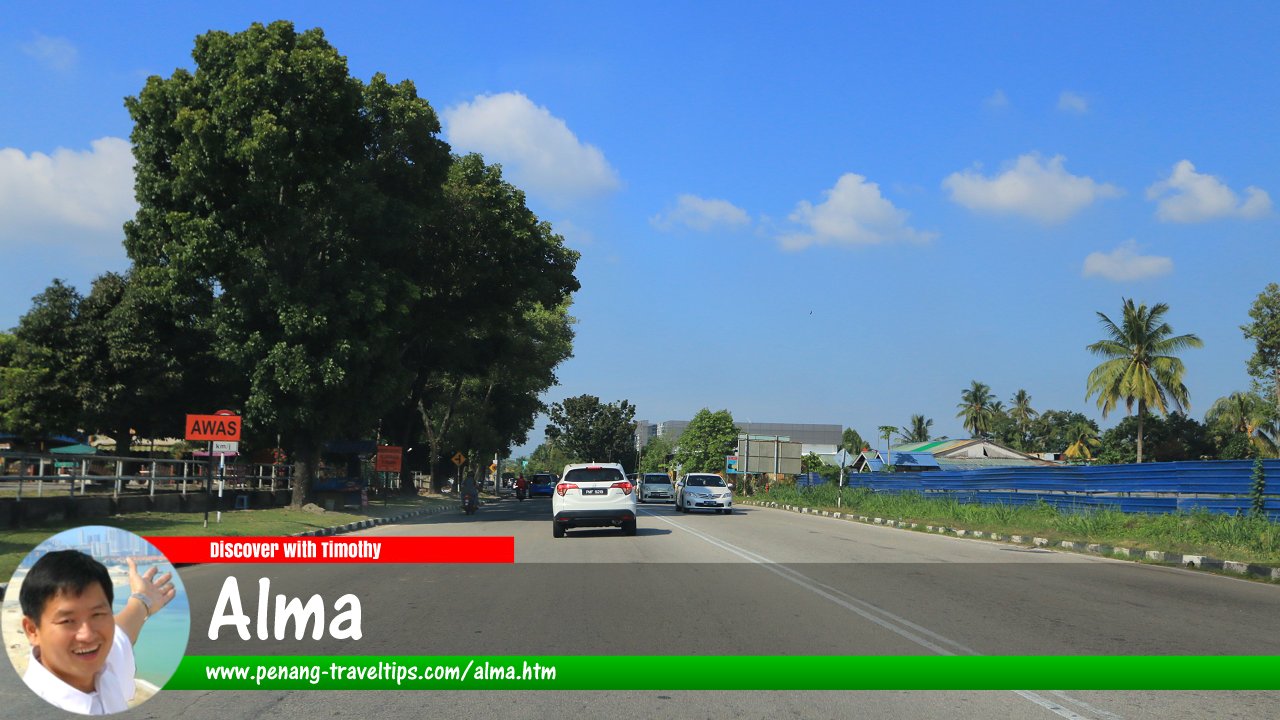 Alma, Bukit Mertajam (9 March 2024)
Also available: Panduan Melawat Alma
Alma is an urban and residential area in Seberang Perai Tengah, on the mainland of Penang, Malaysia. Located near Bukit Mertajam, it has developed into a busy suburban centre with housing estates, shop lots, restaurants, supermarkets and other everyday amenities. Although Alma is not one of Penang's principal tourist destinations, its location makes it a convenient place to experience local life on the mainland and explore the surrounding towns and countryside.
Quick Facts
- Name: Alma
- State: Penang, Malaysia
- Administrative district: Central Seberang Perai
- Region: Mainland Penang
- Nearest major town: Bukit Mertajam
- Main characteristics: Residential neighbourhoods, commercial areas and local businesses
- Historical background: Part of the wider agricultural and settlement history of Seberang Perai
- Nearby attractions: Bukit Mertajam town and Cherok Tok Kun Forest Reserve area
- Getting around: Car, motorcycle, e-hailing services and buses on applicable routes
- Accommodation: Options in Alma, Bukit Mertajam and other nearby mainland towns
- Best suited for: Visitors interested in local food, suburban life and exploring central Seberang Perai
Geography of Alma
Alma is situated in Central Seberang Perai, one of the three administrative districts of Seberang Perai, the mainland portion of Penang. Penang consists of Penang Island and the mainland territory, which lies along the northwestern coast of Peninsular Malaysia. The two parts of the state are connected by the Penang Bridge and the Sultan Abdul Halim Mu'adzam Shah Bridge, also known as the Second Penang Bridge.1
Alma lies close to Bukit Mertajam, one of the principal urban centres on the mainland. Its location provides access to a wider network of residential neighbourhoods, commercial districts and industrial areas. The surrounding region also connects to other important mainland towns, including Perai, Butterworth and Seberang Jaya.
The landscape around Alma is predominantly suburban. Housing estates, commercial shop lots, retail premises and local roads form much of its built environment. Unlike George Town, which is known for its historic architecture and UNESCO World Heritage Site, Alma is primarily associated with modern residential development and the everyday commercial activities of a growing urban population.
The area is connected to the wider road network serving central Penang. This makes it practical for residents and visitors to travel between Alma, Bukit Mertajam and other parts of Seberang Perai. However, distances between residential neighbourhoods and commercial centres can make a private vehicle or e-hailing service useful for getting around.
Alma is not a coastal resort or a major heritage destination. Nevertheless, it can serve as a convenient base for exploring central Seberang Perai, including local markets, traditional town centres and recreational areas in the surrounding countryside.
History of Alma
The history of Alma is closely connected to the wider development of Seberang Perai. Before extensive urbanisation, much of the mainland consisted of forest, wetlands, agricultural land and scattered settlements. Farming and the gradual establishment of roads and townships played important roles in transforming the landscape.
Seberang Perai was originally part of the Kedah Sultanate. In 1800, the British East India Company acquired control of the mainland territory through an agreement with the Sultan of Kedah. The British subsequently called the area Province Wellesley. Agricultural development expanded during the nineteenth century, and the growth of settlements contributed to the emergence of towns such as Butterworth and Bukit Mertajam.2
The development of the wider region gradually brought changes to its economy and settlement patterns. Agricultural estates, transport connections, trading centres and later industrial development contributed to the growth of the mainland. As Bukit Mertajam became an important urban centre, surrounding areas also experienced increasing residential and commercial activity.
Alma's more recent development reflects these broader changes. Housing estates and commercial premises have expanded to meet the needs of residents, while shops, supermarkets, restaurants and service businesses have become part of the local landscape.
Although Alma is now recognised as an urban area, its history should not be confused with that of Bukit Mertajam itself. Detailed accounts of Alma's earliest settlement, the establishment of individual neighbourhoods and the dates of specific developments require local historical records. The broader history of Seberang Perai provides the context for understanding how Alma became part of the mainland's expanding urban environment.
Origin of the Name Alma
The name Alma has a historical connection with the former Alma Estates in Seberang Perai. A heritage trail publication about the mainland's French agricultural settlers records that Alma Estates gave its name to what is now Kampung Alma.3
This connection places the name within the agricultural history of nineteenth-century Province Wellesley. European estate owners and planters established agricultural properties in the region, cultivating various crops and leaving place names that have survived changes in land use and settlement patterns.
The historical reference to Alma Estates provides a documented explanation for the name's local use. However, it does not by itself establish the ultimate linguistic origin of the word Alma or explain why the estate was originally given that name.
Today, Alma is used to identify a wider residential and commercial area rather than only the original village. The name appears in addresses, businesses and local navigation, making it a familiar geographical reference in central Seberang Perai.
Things to Do in Alma and Nearby
Alma is better suited to casual exploration, dining and shopping than to a sightseeing itinerary centred on major landmarks. Visitors can nevertheless combine time in Alma with trips to nearby Bukit Mertajam and the natural areas of central Seberang Perai.
1. Explore Alma's Commercial Areas
The commercial areas of Alma provide an introduction to everyday life in a Malaysian suburban township. Rows of shops, restaurants, cafés and retail businesses serve the surrounding residential neighbourhoods.
Visitors can browse local shops, stop for a meal or look for everyday Malaysian products. These areas are particularly useful for travellers who prefer to experience places beyond the better-known tourist centres of Penang Island.
Commercial premises are spread across different parts of Alma, so walking is most practical within individual shopping areas. A car or e-hailing service may be needed to travel between separate clusters of shops.
2. Visit Bukit Mertajam Town
Bukit Mertajam is the main nearby town and a useful destination for visitors interested in the history and everyday culture of mainland Penang. Its town centre contains traditional commercial premises, restaurants and shops alongside newer developments.
Visitors can explore the streets, observe local trading activity and sample food at restaurants or coffee shops. Those interested in local history may also appreciate the contrast between older commercial areas and the expanding suburban districts around the town.
Bukit Mertajam is also a convenient place to arrange transport, find additional dining options or access services that may not be available within walking distance of a particular part of Alma.
3. Explore Cherok Tok Kun Forest Reserve Area
The Cherok Tok Kun area near Bukit Mertajam is an option for visitors who want to spend time outdoors. The forested hill area is associated with recreational activities, including walking, exercise and hiking.
Depending on the available access and trail conditions, visitors can enjoy the greener surroundings and experience a different side of central Seberang Perai. It provides a contrast to the built-up environment of Alma and the neighbouring urban areas.
Wear suitable footwear, bring drinking water and check local conditions before setting out. Rain can make outdoor trails slippery, and visitors should follow posted instructions and avoid entering restricted areas. Confirm current access arrangements before planning a hike.
4. Discover Other Parts of Mainland Penang
Alma can be included in a broader exploration of Seberang Perai. Butterworth, Seberang Jaya and Perai offer different combinations of commercial districts, transport facilities, industrial areas and shopping destinations.
Visitors interested in heritage and archaeology can also investigate other parts of Seberang Perai. Guar Kepah, for example, is associated with important prehistoric archaeological discoveries, including ancient shell middens and human remains. The state government's historical account identifies the area as significant to the study of early settlement in Penang.1
These destinations are not all within walking distance of Alma. Plan them as separate stops and check travel times before combining them into a single day trip.
How to Get to Alma
Alma can be reached from Penang Island, other parts of Seberang Perai and neighbouring states. Road transport is particularly useful because the area consists of several residential and commercial zones rather than a single compact tourist centre.
1. By Car
Driving is one of the most convenient ways to reach Alma. Visitors travelling from George Town or other parts of Penang Island can cross to the mainland using either the Penang Bridge or the Second Penang Bridge, depending on their starting point and intended route.
Once on the mainland, follow the road network towards Bukit Mertajam and Alma. A navigation application is useful for locating a particular hotel, restaurant or residential address, as the best route depends on the exact destination.
Travellers arriving from Kuala Lumpur, Ipoh or other parts of Peninsular Malaysia can use the North-South Expressway and continue towards the appropriate exit for Bukit Mertajam and central Seberang Perai. Check current road conditions and traffic information before departure.
Traffic can become heavier around major junctions and commercial areas during commuting hours and weekends. Allow additional time if travelling across the bridges or through busy urban sections.
2. By Train
Bukit Mertajam railway station is an important station on the mainland railway network. Visitors travelling from Kuala Lumpur, Ipoh and other locations served by KTM services may be able to reach the station by train.
From the station, continue to Alma by taxi or e-hailing service. The onward journey depends on the exact address, so confirm the destination before booking transport.
Check the latest KTM timetable, service availability and ticket requirements through the official railway booking channels before travelling. Do not assume that every train service stops at Bukit Mertajam.
3. By Bus
Bus services operate across parts of Seberang Perai, connecting selected towns and residential areas. However, whether a bus is convenient for reaching Alma depends on the route, the location of the nearest stop and the distance from that stop to the final destination.
Visitors should check current Rapid Penang routes and schedules before relying on the bus for a particular journey. A short e-hailing trip may be necessary to complete the journey, especially when travelling to residential streets away from major roads.
For longer trips, confirm the location of the departure and arrival stops, the operating hours and any required transfers. Public transport coverage and frequency can vary between routes and times of day.
4. By Air
International visitors can fly to Penang International Airport in Bayan Lepas, on the southeastern side of Penang Island. From the airport, Alma can be reached by rental car, taxi or e-hailing service.
The journey involves travelling from the island to the mainland, usually via one of the two bridges. Travel time depends on traffic, the bridge selected and the exact destination in Alma.
If you intend to hire a car, confirm the rental company's collection arrangements and whether the quoted rate includes the required insurance and other charges. For a short visit, an e-hailing service may be more practical than renting a vehicle.
Where to Stay in Alma
Alma is not a major resort destination, but it can be a practical base for visitors with family, business or other commitments in central Seberang Perai. Accommodation options may include hotels, business-oriented lodging and short-term rental properties, depending on availability.
1. Staying in Alma
Staying in Alma is convenient for visitors who want to be near its commercial areas, restaurants and everyday amenities. It can be particularly suitable for people visiting relatives, attending local events or conducting business in the surrounding neighbourhoods.
Before booking, check the property's exact address and distance from your intended destinations. Accommodation advertised as being in the Alma area may be located some distance from the main commercial streets.
2. Staying in Bukit Mertajam
Bukit Mertajam is an alternative for travellers who want access to a wider range of town-centre services while remaining close to Alma. Staying here may also be useful for visitors who plan to explore the town, visit nearby recreational areas or travel by train.
Compare accommodation according to location, parking availability, transport connections and the facilities you need. If you plan to visit several destinations, consider whether the property offers convenient access to your main routes.
3. Staying in Seberang Jaya or Butterworth
Seberang Jaya and Butterworth are alternatives if accommodation in Alma or Bukit Mertajam does not meet your requirements. Both areas have their own commercial facilities and transport connections, although travelling to Alma will require additional time.
These locations may be worth considering if your itinerary includes other parts of mainland Penang. However, check the distance to Alma and the expected journey time rather than choosing a property based solely on its description as being in Penang.
During school holidays, public holidays and major local events, booking ahead can help you secure suitable accommodation. Travellers who require specific facilities should confirm them directly with the property before making a reservation.
What to Eat in Alma
Alma's food scene reflects the everyday dining culture of mainland Penang. Restaurants, coffee shops, food stalls and cafés cater to residents throughout the day, providing opportunities to sample Malaysian dishes without having to travel to the island's main tourist districts.
1. Malay Food
Malay restaurants and stalls are places to look for dishes such as nasi lemak, nasi campur, fried noodles, fried rice and a variety of cooked dishes served with rice. Breakfast and lunch options are particularly useful for visitors who want a straightforward meal before continuing their journey.
Muslim travellers may find Malay eateries convenient, but the type of cuisine alone does not establish a restaurant's official halal status. If halal certification is important to you, check the establishment's current certification or ask the operator about its food preparation arrangements.
2. Chinese-Malaysian Food
Mainland Penang has a diverse food culture influenced by its different communities. Around Alma and Bukit Mertajam, visitors can look for noodle dishes, rice meals, soups, seafood and other local Chinese-Malaysian favourites.
Dishes worth looking for in the wider area include char koay teow and wonton noodles. Availability varies by restaurant, and some well-known Penang dishes may be easier to find in particular food centres or neighbouring towns.
Travellers with dietary restrictions should check ingredients and preparation methods before ordering. This is especially important for dishes that may contain pork, lard, alcohol or other ingredients that some visitors avoid.
3. Cafés, Bakeries and Desserts
Commercial areas in Alma also offer places to have coffee, enjoy a light breakfast or purchase baked goods and desserts. These establishments can provide a comfortable break between shopping or other activities.
Families may wish to check seating arrangements, parking facilities and menu choices before visiting. If you are travelling with children or a group with different dietary needs, selecting a restaurant in advance can make the outing easier.
4. Eating as a Muslim Traveller
Muslim travellers can look for eateries that clearly identify their halal status. Where formal certification is important, verify the establishment's current status through an appropriate official source rather than relying only on a restaurant's name or the cuisine it serves.
Malaysia's hot and humid climate makes it sensible to stay hydrated, particularly if you plan to combine eating out with walking or hiking. Plan outdoor activities around the cooler parts of the day and allow time to rest.
Getting Around Alma
Alma is a suburban area where the most practical way to travel depends on the distance between destinations. Walking works well within individual commercial areas, while motorised transport is generally more convenient for longer journeys between neighbourhoods.
1. Car and Motorcycle
A car or motorcycle provides flexibility when travelling between residential areas, shops, supermarkets and restaurants. Visitors driving themselves can also combine Alma with nearby destinations in Bukit Mertajam and other parts of Seberang Perai.
Parking arrangements differ between premises. Follow local signs, avoid obstructing driveways and ensure that your vehicle is parked in an authorised space. Commercial areas can be busy during peak periods, so allow time to find parking.
2. E-Hailing Services and Taxis
E-hailing services are useful for visitors arriving by train or bus who do not have their own transport. Enter the full address or the name of the specific establishment to help the driver identify the correct destination.
Driver availability and fares vary according to demand, distance and time of day. If you are travelling from a less busy residential area, consider your return journey before leaving, particularly in the evening.
3. Buses and Walking
Buses can be useful along routes that serve the area, but visitors should verify whether a stop is close enough to their intended destination. Walking is most practical when exploring a cluster of shops or restaurants located along the same commercial street.
Outside these areas, destinations may be separated by busy roads or considerable distances. Pedestrian facilities vary, so take care when crossing roads and avoid walking along narrow or unsafe road shoulders.
Weather and Best Time to Visit Alma
Alma has a tropical climate, with warm temperatures and high humidity throughout the year. Rainfall occurs in different seasons, and short periods of heavy rain can affect outdoor activities and road conditions.
For shopping, dining and general exploration, Alma can be visited throughout the year. If you plan to hike or spend time outdoors around Cherok Tok Kun, morning is often more comfortable than the hottest part of the day. Check the weather forecast before setting out.
Weekdays may be preferable for visitors who want to avoid some of the crowds around commercial areas, although traffic and business hours vary by location. Weekends can be busier at restaurants and shopping destinations.
Suggested Alma Itineraries
Half-Day Visit
- Morning: Have breakfast at a local restaurant or coffee shop in Alma.
- Late morning: Explore a commercial area, browse local shops or visit a supermarket.
- Lunch: Enjoy a meal at a local eatery before continuing your journey.
One-Day Visit to Alma and Bukit Mertajam
- Morning: Start with breakfast in Alma or Bukit Mertajam.
- Late morning: If conditions permit, visit the Cherok Tok Kun area for a walk or outdoor activity.
- Lunch: Return to the town area for a meal.
- Afternoon: Explore the commercial streets of Bukit Mertajam or return to Alma for shopping and refreshments.
- Evening: Have dinner before returning to your accommodation or continuing to another destination.
This itinerary is flexible and should be adjusted according to weather, transport arrangements and personal interests. If hiking is your main activity, begin early and allow sufficient time to rest before travelling elsewhere.
Practical Travel Tips
- Navigation: Use a digital map and enter the exact address of your destination. Alma covers multiple residential and commercial areas.
- Transport: Check current bus and train schedules before relying on public transport.
- Parking: Confirm parking arrangements at shopping areas, restaurants and accommodation.
- Halal food: Verify the halal status of a restaurant if official certification is important to you.
- Outdoor activities: Carry drinking water, wear suitable footwear and check weather conditions before hiking.
- Accommodation: Book ahead during busy holiday periods or when attending local events.
- Road travel: Allow extra time for traffic, particularly around major junctions and when crossing between Penang Island and the mainland.
Conclusion
Alma is a growing residential and commercial area in Central Seberang Perai, offering visitors a look at everyday life on mainland Penang. Its shops, restaurants, housing neighbourhoods and modern amenities make it a useful place to visit for people with family or business connections in the area.
Although Alma is not a major sightseeing destination in its own right, its location near Bukit Mertajam makes it a convenient starting point for exploring the surrounding region. Visitors can combine local dining and shopping with trips to nearby recreational areas and other mainland towns.
For travellers seeking a broader understanding of Penang beyond George Town and the island's coastal attractions, Alma offers a glimpse of the mainland's expanding urban landscape and its role in the daily life of the state.
 Map of Alma, Bukit Mertajam
 Landed Residential Properties in Alma
- The Sky (GPS: 5.30984, 100.4972) planned

Landed Residential Properties in Alma
- Desa Impian 2 (GPS: 5.30752, 100.49315)

- Hillpark Residences (GPS: 5.32513, 100.49464)

- Jesselton Hills (GPS: 5.31775, 100.4881)

- Permatang Sanctuary (GPS: 5.30789, 100.48289)

- Residency Palma (GPS: 5.31438, 100.48972)

- Sentrino (GPS: 5.33137, 100.48361)

- Taman Alma Jaya (GPS: 5.32581, 100.47944)

- Taman Desa Cahaya (GPS: 5.33633, 100.48226)

- The Glades (GPS: 5.31852, 100.48466)

Older housing Estates in Alma
- B Garden
- Desa Impian
- Taman Budiman
- Taman Impian Jaya
- Taman Impian Ria
- Taman Jernih
- Taman Nirwana
- Taman Pinggiran Alma
- Taman Sejahtera
- Taman Sri Janggus
Sights in Alma, Bukit Mertajam
- Masjid Jamek Alma Jaya (GPS: 5.321833, 100.477741)

- Sri Maha Mariamman Devasthanam, Alma (GPS: 5.331025, 100.477735)

Shopping in Alma
- AEON Mall Bukit Mertajam (GPS: 5.320070, 100.476861)

- Pasaraya Jaya Gading (GPS: 5.330899, 100.476472)

- Pasaraya Wonderful (GPS: 5.33116, 100.47992)

- Tesco Bukit Mertajam (GPS: 5.31617, 100.47627)

Eateries in Alma
- Lau Yew Food Court (GPS: 5.329881, 100.480198)
- Pusat Makanan dan Minuman Good B (GPS: 5.330990, 100.475877)
Petrol Stations in Alma
- Caltex Jalan Roshan (GPS: 5.321998, 100.477266)
- Petronas Alma (GPS: 5.324946, 100.477228)
- Petron Jalan Rozhan (GPS: 5.3375, 100.48413)
- Petronas Jalan Rozhan (GPS: 5.33461, 100.48271)
Banks in Alma
- Maybank Alma (GPS: 5.33073, 100.47964)

Businesses in Alma
- Wah Lee Group (GPS: 5.32651, 100.47788)

- WHH Land (GPS: 5.33403, 100.48253)
Schools in Alma
- SJK (T) Ladang Alma (GPS: 5.331729, 100.476818)
- SK Alma Jaya (GPS: 5.32688, 100.47924)

- SRJK (C) Sin Ya (GPS: 5.330472, 100.477845)

Other sights in Alma
- Alma Rubber Estates Sdn Bhd (GPS: 5.332290, 100.477011)
- Pertubuhan Lin Shen Chen For Chong Thean Sien Tong (GPS: 5.329678, 100.481818)
Abandoned Development Projects in Alma
- Taikar Plaza (GPS: 5.32828, 100.47802)

Streets in Alma
Nearby Sights
Getting there
Only Jalan Kulim has a bus route. It is served by Rapid Penang bus 709.
Alma is on the Map of Seberang Perai
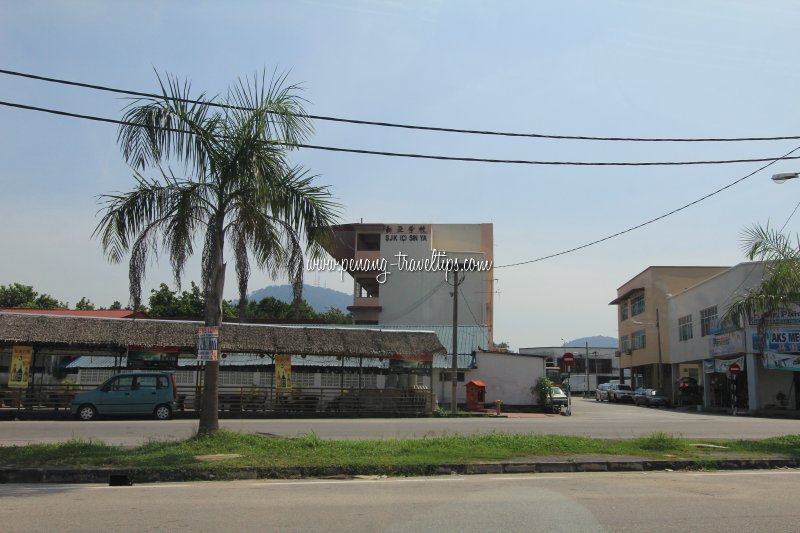 Alma, Bukit Mertajam (13 July 2014)
References
- Penang State Government – Geography and Early History of Penang and Seberang Perai
- Seberang Perai City Council (MBSP) – A Brief History of Seberang Perai
- Penang Heritage Trust – Province Wellesley: From France, Planters, Priests and Professors! (heritage trail booklet)
- Penang Global Tourism – Penang Map and Overview of the State
Page Details
This page was created on 7 September 2026. Hi, my name is Timothy and created it from my research, for my own entertainment, knowledge and to satisfy my curiosity. I am providing the information to you in good faith and hope it is useful. I try to get the details as accurate as possible. I also try to update the page whenever I stumble on new details. So this and all my other pages are perpetual work in progress. If you discover any error, please politely inform me, pointing out where the error lies, and I will correct it as soon as possible. Your helpfulness will keep this page accurate, relevant and helpful to those who need the information.Want to share your Penang travel experiences or get tips from fellow travellers?
Join the Penang Travel Tips Facebook GroupUseful guides for visiting Penang
My Videos of Penang
Latest Pages & Updates
Buy Me A Coffee
If you enjoy the information I provide and want to support the work I do, please buy me a coffee! I appreciate it immensely, thank you so much!
