
Jalan Sungai Udang, Nibong Tebal
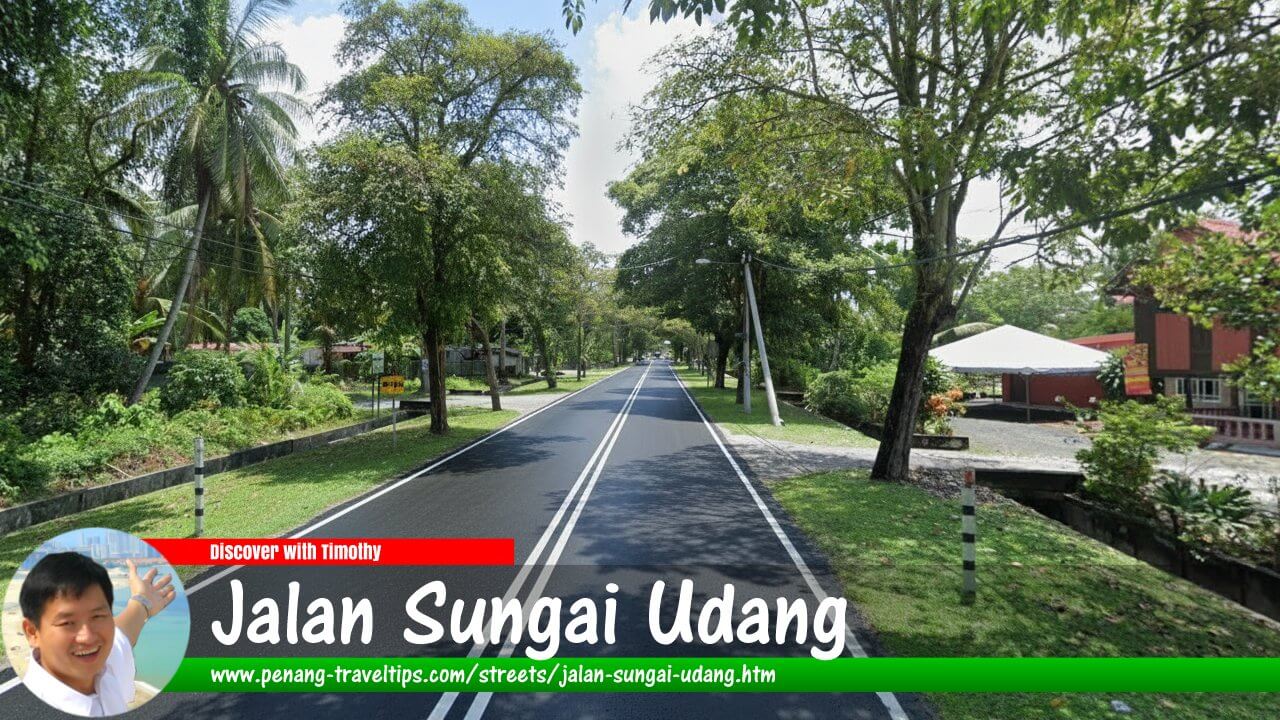 Jalan Sungai Udang, Nibong Tebal (AI-edited photograph on 31 December 2025)
Jalan Sungai Udang is a village road located in the southern part of Seberang Perai, within the Nibong Tebal area of Penang. Classified as part of State Route P169, the road measures approximately 1.42 kilometres in length and functions as a local connector between Federal Route 1 and Jalan Teluk Ipil. Despite its modest scale, Jalan Sungai Udang plays an important role in providing access to nearby residential areas and agricultural land. Notably, although the road is named after Sungai Udang, it does not directly reach the village itself but runs in the general direction towards it, a naming convention that reflects local geography rather than a precise endpoint.1
Quick Facts
- Road name: Jalan Sungai Udang
- Road classification: State Route P169
- Location: Nibong Tebal, Seberang Perai, Penang
- Road type: Village road
- Approximate length: 1.42 km
- Main connections: Federal Route 1 and Jalan Teluk Ipil
- Notable feature: Named after Sungai Udang but does not reach the village
Location and Setting
Jalan Sungai Udang is situated on the outskirts of Nibong Tebal, an area known for its mix of small towns, villages, and agricultural landscapes. The road branches off from Federal Route 1, one of Peninsular Malaysia’s most important north–south routes, before extending inland towards Jalan Teluk Ipil. Its setting is predominantly rural, characterised by village houses, smallholdings, and pockets of undeveloped land that reflect the traditional countryside of southern Seberang Perai.2
The surrounding environment gives Jalan Sungai Udang a distinctly local character. Traffic is generally light, and the road serves primarily residents who live along or near its alignment. This setting contrasts with the busier conditions on Federal Route 1, highlighting the road’s role as a transition between a major arterial route and quieter village areas.2
Role as Part of State Route P169
As part of State Route P169, Jalan Sungai Udang falls under the jurisdiction of state authorities rather than federal road agencies. This classification reflects its primary function as a local connector rather than a long-distance transport corridor. State routes such as P169 are essential for linking villages, farms, and smaller settlements to higher-order roads, ensuring that rural communities remain accessible.3
The state route designation also implies a certain standard of maintenance appropriate to its usage. While the road is narrower and simpler than federal highways, it is maintained to support daily travel needs, including motorcycles, private cars, and occasional light commercial vehicles. This balance between functionality and scale is typical of village roads in Penang’s mainland areas.3
Connectivity Between Major and Local Roads
One of the key functions of Jalan Sungai Udang is its role as a connector between Federal Route 1 and Jalan Teluk Ipil. This connection allows residents to move efficiently between a major north–south corridor and local destinations without travelling long detours. For villagers, the road provides a practical route for accessing shops, schools, and services located along or near Federal Route 1.1
Jalan Teluk Ipil, located at the eastern end of Jalan Sungai Udang, serves additional village areas and agricultural land. By linking these roads, Jalan Sungai Udang helps integrate smaller settlements into the broader transport network of southern Seberang Perai, reinforcing its importance despite its short length.2
The Meaning Behind the Road Name
The name Jalan Sungai Udang can be slightly misleading to those unfamiliar with the area. While it suggests a direct connection to the village of Sungai Udang, the road does not actually extend all the way to that settlement. Instead, it runs in the general direction towards Sungai Udang, reflecting historical routes or intended connections that may not have been fully realised.4
This type of naming is not uncommon in rural Malaysia, where roads are often named after nearby villages, rivers, or landmarks rather than their precise endpoints. Such names provide a sense of orientation and local identity, even if the physical alignment does not exactly match the implied destination.4
Traffic Characteristics and Usage
Traffic along Jalan Sungai Udang is generally light and localised. The majority of road users are residents travelling by motorcycle or private car, along with occasional agricultural vehicles. Heavy traffic is rare, and the road is not typically used as a through route for longer journeys.5
The low traffic volume contributes to a relatively calm road environment. Pedestrians may occasionally use the road, particularly near residential clusters. These characteristics emphasise the need for considerate driving and appropriate speed, ensuring safety for all users in a shared rural setting.5
Community and Agricultural Importance
For the local community, Jalan Sungai Udang serves as an essential access route rather than a commercial corridor. Homes along the road rely on it for daily travel, deliveries, and access to services. Its connection to Federal Route 1 makes it especially valuable, as it provides a direct link to larger towns and regional facilities.2
Agricultural activities in the surrounding area also depend on the road. Farmers use Jalan Sungai Udang to transport produce, equipment, and supplies between fields and nearby collection points. This function underscores the road’s contribution to sustaining rural livelihoods in and around Nibong Tebal.3
Physical Characteristics
Physically, Jalan Sungai Udang reflects its status as a village road. It typically features a single carriageway with limited shoulders, designed to accommodate local traffic rather than high-speed travel. Roadside drainage and basic signage are present, supporting safe use under normal conditions.3
The surrounding greenery, including trees and cultivated land, gives the road a distinctly rural appearance. This environment not only defines the visual character of Jalan Sungai Udang but also reinforces its role as a quiet connector within the local landscape rather than a major transport artery.2
Everyday Experience for Road Users
For those who use it regularly, Jalan Sungai Udang is a familiar and dependable route. Its short length and straightforward alignment make it easy to navigate, even for visitors. The road’s calm atmosphere contrasts with the busier conditions on Federal Route 1, offering a more relaxed driving experience once motorists turn off the main road.5
This everyday experience highlights the value of small village roads within the broader transport system. While they may not attract attention in regional planning discussions, roads like Jalan Sungai Udang quietly support daily life and community cohesion in rural areas.2
Role Within the Local Road Network
Within the local road network of Nibong Tebal, Jalan Sungai Udang functions as a minor but important link. It complements larger roads by providing last-mile connectivity, ensuring that residents and agricultural areas are not isolated from main transport corridors. This role is especially important in regions where settlements are dispersed across the landscape.1
By fulfilling this function, Jalan Sungai Udang demonstrates how even short stretches of road can have outsized importance at the local level. Its continued maintenance and usability are essential for preserving accessibility and quality of life for the communities it serves.3
Jalan Sungai Udang on the Map of Roads in Penang
References
- Roads in Malaysia – Wikipedia
- Nibong Tebal – Wikipedia
- Public Works Department of Malaysia
- Place names – Wikipedia
- Rural road – Wikipedia
Page Details
This page was created on 31 December 2025. Hi, my name is Timothy and created it from my research, for my own entertainment, knowledge and to satisfy my curiosity. I am providing the information to you in good faith and hope it is useful. I try to get the details as accurate as possible. I also try to update the page whenever I stumble on new details. So this and all my other pages are perpetual work in progress. If you discover any error, please politely inform me, pointing out where the error lies, and I will correct it as soon as possible. Your helpfulness will keep this page accurate, relevant and helpful to those who need the information.Want to share your Penang travel experiences or get tips from fellow travellers?
Join the Penang Travel Tips Facebook GroupUseful guides for visiting Penang
My Videos of Penang
 Latest Pages & Updates
Buy Me A Coffee
If you enjoy the information I provide and want to support the work I do, please buy me a coffee! I appreciate it immensely, thank you so much!
