
Jalan Gajah Mati, Machang Bubok
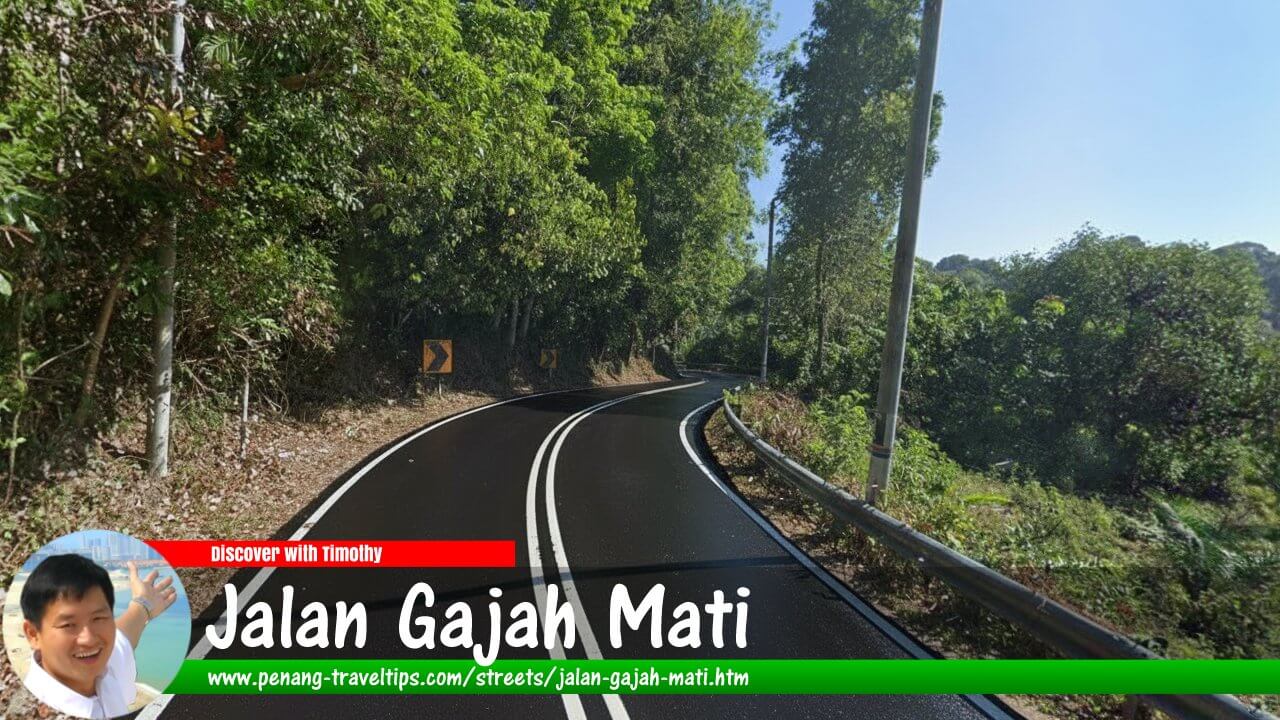 Jalan Gajah Mati, Machang Bubok (AI-edited photograph on 4 January 2026)
Jalan Gajah Mati is a distinctive rural road in Machang Bubok, Seberang Perai, Penang, known both for its varied landscape and its evocative name. Measuring approximately 6 kilometres in length, the road connects Jalan Kulim in the north to Jalan Tasek Junjong in the south, forming a lesser-known but meaningful north–south link through villages, plantations, and undeveloped forest land.1
Quick Facts
- Road name: Jalan Gajah Mati
- Location: Machang Bubok, Seberang Perai, Penang
- Length: Approximately 6 km
- North terminus: Jalan Kulim
- South terminus: Jalan Tasek Junjong
- Road character: Rural village and plantation road
- Notable feature: Hilly and winding middle section
- Name meaning: “Dead elephant” or “elephant dies”
Introduction to Jalan Gajah Mati
Jalan Gajah Mati is not a major highway, yet it holds a unique place within the local geography of southern Seberang Perai. Serving primarily rural communities, the road offers a continuous route between two important local roads while passing through landscapes that change dramatically along its length.2
Its combination of village life, agricultural land, and undeveloped forest makes it representative of the transitional nature of Machang Bubok, where modern development coexists with traditional rural settings.2
Geographical Setting
Situated in Machang Bubok, Jalan Gajah Mati lies in the southeastern part of Seberang Perai. The area is characterised by gently rising terrain, agricultural estates, and pockets of forested land that have remained largely undeveloped.3
The road’s alignment takes advantage of natural contours, particularly in the central section where hills and valleys shape its winding course.3
Connection with Jalan Kulim
At its northern end, Jalan Gajah Mati meets Jalan Kulim, a significant regional road that connects several towns and residential areas in Seberang Perai and beyond. This junction provides villagers with access to wider transport networks, schools, markets, and commercial centres.4
The northern section of Jalan Gajah Mati near this junction functions primarily as a village road, with nearby houses, small farms, and local traffic defining its character.4
Village Road Characteristics
The northern portion of Jalan Gajah Mati passes through established rural settlements. Houses are often set close to the road, and daily activities such as farming, commuting, and social interaction shape traffic patterns.5
Vehicles here tend to move at lower speeds, and the road serves as a shared space for residents, motorcycles, and occasional agricultural vehicles.5
Hilly and Winding Middle Section
The most striking segment of Jalan Gajah Mati lies in its middle portion, where the road becomes noticeably hilly and winding. This stretch passes through undeveloped forest land and extensive palm oil plantations, offering a sense of isolation not commonly found on more urban roads.6
Curves, elevation changes, and dense vegetation define this section, making it visually distinct and requiring greater attention from drivers, especially during wet weather.6
Undeveloped Forest Land
Parts of the middle section remain bordered by forested areas, reflecting land that has not yet been fully developed. These areas contribute to local biodiversity and create a cooler, shaded environment along the road.7
The presence of forest land also reinforces the rural and somewhat remote character of Jalan Gajah Mati, distinguishing it from more heavily urbanised roads.7
Palm Oil Plantations
Alongside the forested stretches are extensive palm oil plantations, a common land use in this part of Penang. These plantations shape both the scenery and the economic activities associated with the road.8
During harvesting periods, plantation-related vehicles may be seen using the road, particularly in the less populated central areas.8
Southern Connection to Jalan Tasek Junjong
At its southern end, Jalan Gajah Mati connects with Jalan Tasek Junjong, another local road serving residential and semi-rural communities. This connection allows movement between Machang Bubok and neighbouring areas without relying solely on larger arterial roads.9
The southern section gradually transitions back into a more settled environment, with fewer sharp curves and more visible human activity.9
Traffic and Usage
Traffic along Jalan Gajah Mati is generally light to moderate, consisting mainly of local residents, plantation workers, and occasional through traffic. Heavy vehicles are less common, particularly in the winding middle section.10
The road’s design and surroundings naturally limit high-speed travel, reinforcing its role as a rural connector rather than a high-capacity transport corridor.10
The Meaning Behind the Name
The name “Gajah Mati” literally translates to “dead elephant” or “elephant dies” in Malay. Such vivid place names are not uncommon in Malaysia and often reflect historical events, local folklore, or notable incidents remembered by earlier communities.11
While no definitive record explains the origin of the name, it likely refers to an incident or story passed down through generations, preserving a fragment of local memory within the landscape.11
Cultural and Local Significance
Beyond its physical function, Jalan Gajah Mati holds cultural value for nearby residents. Roads like this often serve as informal boundaries between villages, estates, and forest land, shaping how communities perceive their surroundings.12
The road’s name, terrain, and relative seclusion contribute to its identity as a place with character rather than just a route on a map.12
Conclusion
Jalan Gajah Mati is a 6 km rural road that encapsulates the diverse landscapes of Machang Bubok, Seberang Perai. Linking Jalan Kulim in the north to Jalan Tasek Junjong in the south, it transitions from village settings to hilly, forested, and plantation-dominated terrain.1
Its evocative name, winding middle section, and quiet rural character make it a distinctive feature of the local road network, reflecting both the geography and the heritage of the area it serves.11
Jalan Gajah Mati on the Map of Roads in Penang
References
- Seberang Perai – Wikipedia
- Penang – Wikipedia
- Seberang Perai City Council
- OpenStreetMap
- Public Works Department of Malaysia
Page Details
This page was created on 4 January 2026. Hi, my name is Timothy and created it from my research, for my own entertainment, knowledge and to satisfy my curiosity. I am providing the information to you in good faith and hope it is useful. I try to get the details as accurate as possible. I also try to update the page whenever I stumble on new details. So this and all my other pages are perpetual work in progress. If you discover any error, please politely inform me, pointing out where the error lies, and I will correct it as soon as possible. Your helpfulness will keep this page accurate, relevant and helpful to those who need the information.Want to share your Penang travel experiences or get tips from fellow travellers?
Join the Penang Travel Tips Facebook GroupUseful guides for visiting Penang
My Videos of Penang
 Latest Pages & Updates
Buy Me A Coffee
If you enjoy the information I provide and want to support the work I do, please buy me a coffee! I appreciate it immensely, thank you so much!
