
Ulu Pandan Road, Singapore
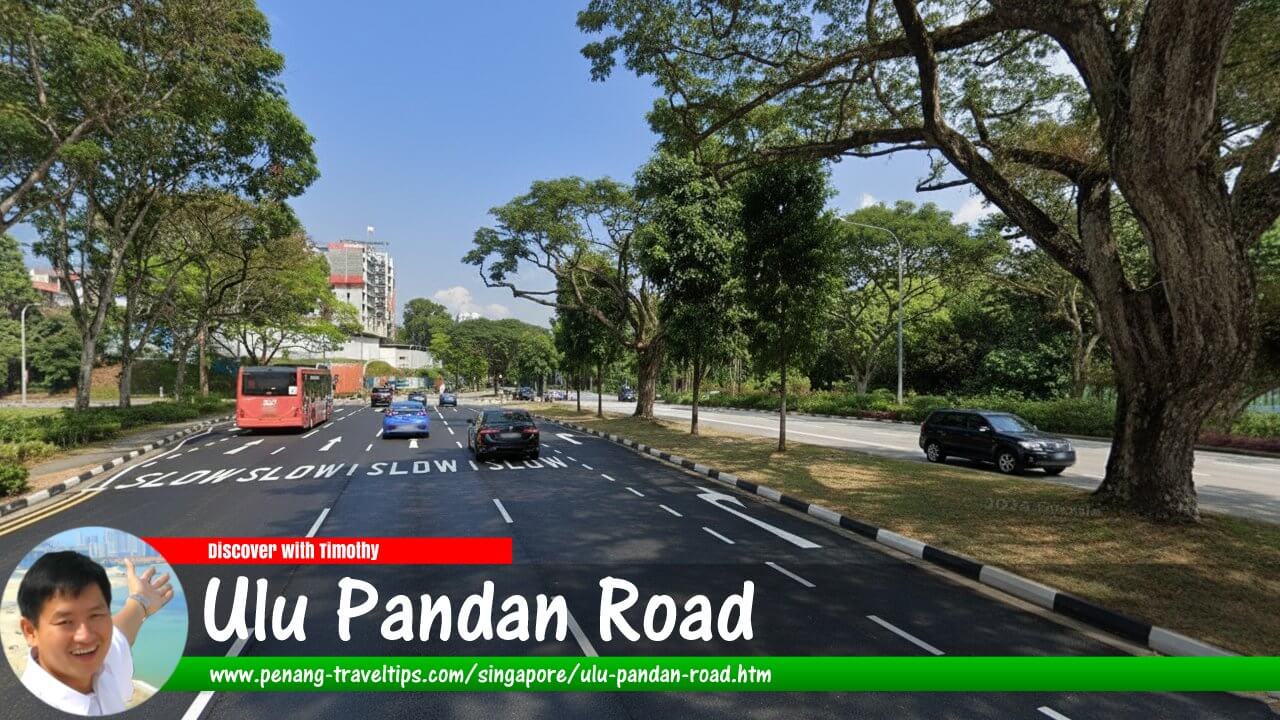 Ulu Pandan Road, Singapore (AI-edited photograph on 25 December 2025)
Dover Road is a relatively short yet historically layered road in Singapore, located within the Bukit Timah planning area and stretching approximately 1.21 kilometres between Clementi Road in the west and Holland Road in the east. Although modest in length, the road sits within a part of Singapore that has undergone profound transformation, evolving from riverine wetlands and rural settlements into a mature residential and educational corridor.
Quick Facts
- Road length: Approximately 1.21 kilometres
- Postal District: Bukit Timah
- Planning Area: Bukit Timah (Planning Area 21)
- Western end: Clementi Road
- Eastern end: Holland Road
- Nearest MRT station: Dover (EW22)
- Primary land use: Residential, educational, low-rise institutional
Early History and Development
Before urban development reshaped the Bukit Timah region, the area surrounding Dover Road was part of a broader natural landscape defined by rivers, swamps, and secondary forests. According to Singapore Street Names by Victor R. Savage and Brenda S. A. Yeoh, the road’s historical identity is linked to the Ulu Pandan River, which once flowed westward toward the Pandan River1.
The word ulu means “upstream” in Malay, reflecting the inland location of the river’s upper reaches. Prior to large-scale development, the swamplands of Ulu Pandan supported fishing and small-scale subsistence activities. Malay communities fished for prawns and crabs along the riverbanks, relying on tidal movements and seasonal water flows for their livelihoods.
Origins of the Road Name
Although now known as Dover Road, historical accounts associate the road’s naming with the Ulu Pandan River rather than with British or European place names. Savage and Yeoh note that the area was closely tied to the river system that once defined movement, settlement, and land use in western Bukit Timah1.
The district later attracted settlers from southern China, particularly Hokkien migrants from Anxi County in Fujian Province. These settlers were drawn by agricultural opportunities and access to water, gradually transforming the swampy terrain into cultivated land. Over time, road alignments were formalised, drainage systems constructed, and the area integrated into Singapore’s expanding road network.
Transformation into an Urban Road
The modern Dover Road took shape during the mid-20th century as Singapore embarked on systematic urban planning and infrastructure development. As Bukit Timah grew into a desirable residential zone, roads connecting Clementi, Holland, and the city fringe became increasingly important.
Dover Road’s alignment between Clementi Road and Holland Road positioned it as a convenient east–west connector. While it never became a major arterial road, it served local traffic efficiently, supporting nearby housing estates, schools, and institutions.
Character and Streetscape
Today, Dover Road is characterised by a calm, suburban atmosphere that contrasts with busier arterial routes nearby. Tree-lined verges, low- to mid-rise residential developments, and institutional buildings define much of its streetscape. The presence of mature greenery reflects Bukit Timah’s reputation as one of Singapore’s more verdant planning areas.
The road’s environment appeals to residents seeking a quieter living setting while remaining within easy reach of employment centres and amenities. Traffic volumes are generally moderate, and pedestrian movement is common, particularly near residential clusters and bus stops.
Surrounding Roads and Connectivity
Dover Road is anchored by two important roads at either end:
- Clementi Road, which connects Bukit Timah to Clementi and educational institutions further west.
- Holland Road, a major route linking the area to Holland Village and the city.
Nearby roads such as Commonwealth Avenue West and North Buona Vista Road enhance regional connectivity, allowing Dover Road to function as part of a well-integrated transport grid rather than an isolated street.
Nearby Sights and Amenities
While Dover Road itself is largely residential, several points of interest lie within its immediate vicinity. Bukit Timah’s broader area is known for reputable schools, educational institutions, and community facilities. Parks and green corridors nearby provide recreational opportunities, reinforcing the area’s appeal to families and long-term residents.
Holland Village, located a short distance away, offers dining, retail, and nightlife options, while Clementi provides access to larger shopping centres and transport hubs.
Residential Properties and Market Values
Residential properties around Dover Road include a mix of older private apartments, landed homes, and small condominium developments. As of late 2024 to early 2025, private residential prices in the Bukit Timah area typically range from SGD 2,200 to SGD 3,000 per square foot, reflecting the district’s status as a prime residential zone2.
Typical apartment sizes range from about 600 to 1,300 sq ft (56–121 sq m). Smaller units may sell from approximately SGD 1.4 million, while larger family-sized apartments can exceed SGD 3 million. Rental prices are similarly strong, with monthly rents commonly between SGD 3,500 and SGD 7,000, depending on size, age, and proximity to MRT access.
Compared to the national average, property values along and near Dover Road are significantly higher, driven by location, greenery, and access to both the city and western employment nodes.
MRT Access and Public Transport
The nearest rail access is Dover MRT Station (EW22) on the East–West Line. This station provides direct connectivity to the Central Business District, Jurong East, and Changi, making Dover Road convenient for commuters3.
Bus services run along Clementi Road and Holland Road, with stops located within walking distance of Dover Road. These routes connect residents to nearby MRT stations, town centres, and educational institutions.
Fun Fact
Few people realise that the calm residential stretch of Dover Road was once part of a swampy riverine landscape where fishing for prawns and crabs was a daily activity. The transformation from wetlands to prime residential land encapsulates Singapore’s broader journey from a rural settlement to a highly urbanised city.
Map of Ulu Pandan Road, Singapore
References
- Savage, V. R. & Yeoh, B. S. A., Singapore Street Names
- Urban Redevelopment Authority – Bukit Timah Residential Market Data
- Land Transport Authority – East–West Line Overview
Page Details
This page was created on 25 December 2025. Hi, my name is Timothy and created it from my research, for my own entertainment, knowledge and to satisfy my curiosity. I am providing the information to you in good faith and hope it is useful. I try to get the details as accurate as possible. I also try to update the page whenever I stumble on new details. So this and all my other pages are perpetual work in progress. If you discover any error, please politely inform me, pointing out where the error lies, and I will correct it as soon as possible. Your helpfulness will keep this page accurate, relevant and helpful to those who need the information.Streets of Singapore Directory
My videos of Singapore
Want to share your Singapore travel experiences or get tips from fellow travellers?
Join the Singapore Travel Tips Facebook GroupMore information for visiting and living in Singapore
Here are some related articles to help you get to know Singapore better.- Cost of Living in Different Singapore Neighbourhoods (2025 Guide)
- EZ-Link Card
- Owning a Car in Singapore
- Singapore MRT Map & Guide 2025
- Singapore Postal Districts and Postcodes
- Singapore Tourist Pass
- Taking the Bus in Singapore: A Visitor's Guide
- Understanding CCR, RCR and OCR in Singapore real estate
 Latest Pages & Updates
Buy Me A Coffee
If you enjoy the information I provide and want to support the work I do, please buy me a coffee! I appreciate it immensely, thank you so much!
