
Telok Blangah Road, Singapore
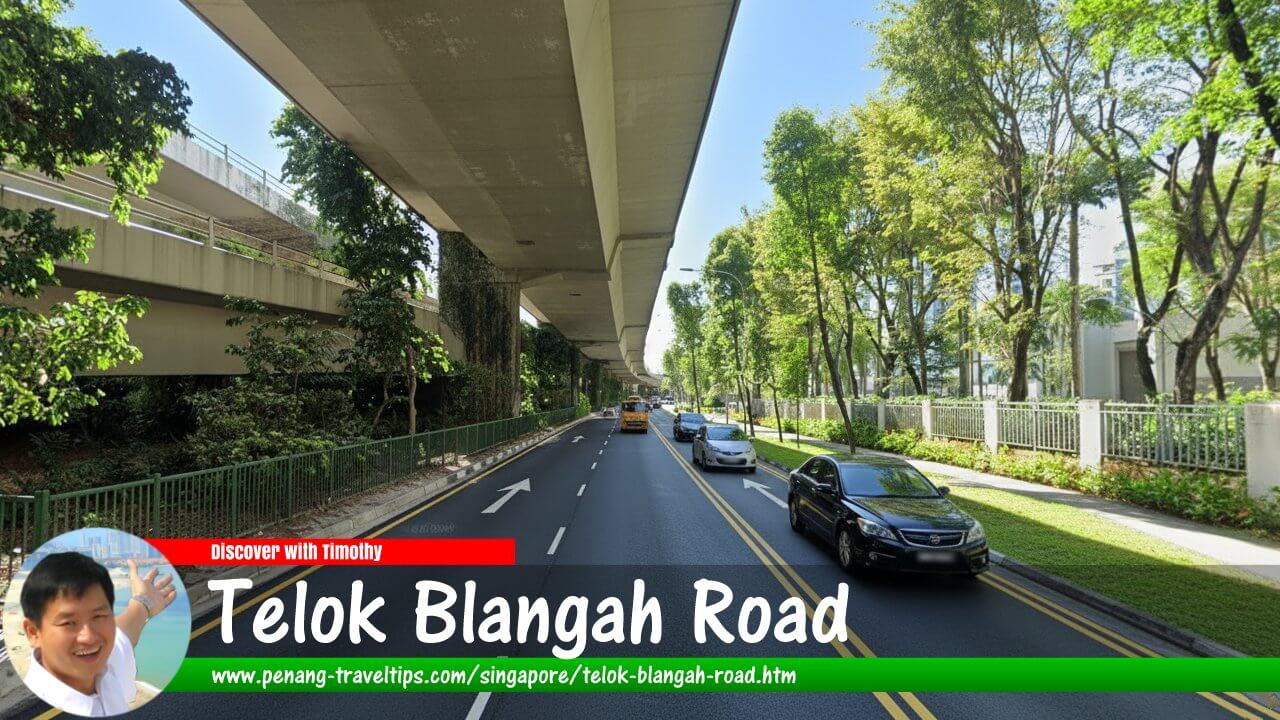 Telok Blangah Road, Singapore (AI-edited photograph on 26 December 2025)
Telok Blangah Road is one of the longest and most historically significant roads in southern Singapore, stretching approximately 3.52 kilometres across the Bukit Merah Planning Area. Running broadly from Pasir Panjang Road in the west to Keppel Road in the east, it serves as a major arterial route that links residential neighbourhoods, former port areas, and modern transport corridors.
Quick Facts
- Road length: Approximately 3.52 km
- Postal District: 4
- Planning Area: Bukit Merah
- Western connection: Pasir Panjang Road
- Eastern connection: Keppel Road
- Nearest MRT stations: Telok Blangah (CC28), HarbourFront (CC29/NE1), Tanjong Pagar (EW15)
- Runs parallel to: West Coast Highway Viaduct
Introduction and Urban Importance
As a principal east–west route, Telok Blangah Road plays an important role in Singapore’s southern transport network. It carries daily commuter traffic between the western parts of Bukit Merah and the city-fringe areas near Keppel and Tanjong Pagar, while also supporting bus services that link residential estates with MRT stations and employment hubs.
The road’s length and alignment reflect successive phases of Singapore’s urban growth, from coastal settlement and plantation land to port-related development and, eventually, high-density public housing and expressway infrastructure.
Historical Background
The area known as Telok Blangah has a history that predates modern road construction by centuries. The name originally referred to a bay located behind what is today Keppel Harbour. Before extensive land reclamation, this bay formed part of Singapore’s natural coastline.
According to Singapore Street Names by Victor R. Savage and Brenda S.A. Yeoh, historian Widodo (2004) noted that around 1800, Telok Blangah was a port of call for Bugis traders, who also used the bay as a shelter during periods of bad weather1. These early maritime activities gave the area strategic importance long before the modern city emerged.
Origin and Meaning of the Name
The name “Telok Blangah” is commonly translated as “cooking pot bay.” The word telok means bay, while blangah is believed to derive from a Malay term associated with a cooking vessel. The rounded, sheltered shape of the original bay may have inspired this descriptive name.
Over time, as roads were laid out and formalised, Telok Blangah Road inherited the name of the wider area, preserving a linguistic link to a vanished coastal landscape.
Development of the Road
Telok Blangah Road likely began as a coastal or near-coastal track serving settlements and plantations in the nineteenth century. With the expansion of Keppel Harbour and the growth of port facilities, the road became increasingly important as a land-based connection between the harbour and inland areas.
In the post-war decades, especially from the 1950s to the 1970s, the road was upgraded and integrated into Singapore’s expanding road network. Public housing developments in Telok Blangah and Bukit Merah further increased its importance as a commuter route.
Character and Streetscape
Today, Telok Blangah Road is characterised by a mix of residential blocks, institutional buildings, commercial premises, and greenery. Large stretches run parallel to the elevated West Coast Highway Viaduct, which channels faster-moving traffic above ground while Telok Blangah Road handles local and bus traffic.
The streetscape varies along its length, with older low-rise structures near the eastern end giving way to modern HDB estates and landscaped verges further west.
Surrounding Roads and Connections
Along its route, Telok Blangah Road intersects or connects with several significant roads, including Pasir Panjang Road, Henderson Road, Kampong Bahru Road, and Keppel Road. These links integrate the road into a broader network connecting the southern coastline, the city centre, and western districts.
Its proximity to expressways and major arterials makes it a strategic corridor for both local and cross-island travel.
Points of Interest Nearby
While Telok Blangah Road itself is primarily functional, numerous attractions lie within its vicinity. These include Mount Faber Park, the Southern Ridges, Telok Blangah Hill Park, and harbourfront areas offering views of shipping lanes and port activity.
Community amenities such as neighbourhood centres, schools, and hawker centres also line or sit just off the road, contributing to its role as a lived-in urban artery.
Residential Property and Prices
Residential properties along and near Telok Blangah Road are predominantly HDB flats, with some private condominiums located on adjacent streets. As of late 2024 and early 2025, HDB resale prices in the Telok Blangah and Bukit Merah area typically ranged from about SGD 650 to SGD 950 per square foot.
Flat sizes usually range from approximately 700 to 1,400 sq ft (65–130 sq m). Depending on flat type and location, resale prices often fall between SGD 550,000 and SGD 1.2 million. Rental rates commonly range from SGD 2,800 to SGD 4,800 per month.
Compared with the national average, prices here are relatively high, reflecting the area’s mature amenities and strong transport connectivity.
Public Transport and MRT Access
Telok Blangah Road is well served by rail and bus transport. The nearest MRT stations include Telok Blangah (CC28) on the Circle Line, HarbourFront (CC29/NE1) on the Circle and North East Lines, and Tanjong Pagar MRT Station (EW15) on the East–West Line.
This multi-line access allows residents and commuters to reach the Central Business District, western suburbs, and northeastern parts of Singapore efficiently.
Bus Services and Stops
Numerous bus stops are located along Telok Blangah Road, with services running at high frequency throughout the day. These buses connect the road to nearby MRT stations, business districts, schools, and recreational areas.
Fun Fact
Despite now running inland and parallel to an expressway, Telok Blangah Road takes its name from a bay that no longer exists in its original form—a reminder that much of Singapore’s present-day land was once sea, shaped by centuries of reclamation and development1.
Map of Telok Blangah Road, Singapore
References
Page Details
This page was created on 26 December 2025. Hi, my name is Timothy and created it from my research, for my own entertainment, knowledge and to satisfy my curiosity. I am providing the information to you in good faith and hope it is useful. I try to get the details as accurate as possible. I also try to update the page whenever I stumble on new details. So this and all my other pages are perpetual work in progress. If you discover any error, please politely inform me, pointing out where the error lies, and I will correct it as soon as possible. Your helpfulness will keep this page accurate, relevant and helpful to those who need the information.Streets of Singapore Directory
My videos of Singapore
Want to share your Singapore travel experiences or get tips from fellow travellers?
Join the Singapore Travel Tips Facebook GroupMore information for visiting and living in Singapore
Here are some related articles to help you get to know Singapore better.- Cost of Living in Different Singapore Neighbourhoods (2025 Guide)
- EZ-Link Card
- Owning a Car in Singapore
- Singapore MRT Map & Guide 2025
- Singapore Postal Districts and Postcodes
- Singapore Tourist Pass
- Taking the Bus in Singapore: A Visitor's Guide
- Understanding CCR, RCR and OCR in Singapore real estate
 Latest Pages & Updates
Buy Me A Coffee
If you enjoy the information I provide and want to support the work I do, please buy me a coffee! I appreciate it immensely, thank you so much!
