
Changi Planning Area Travel Guide
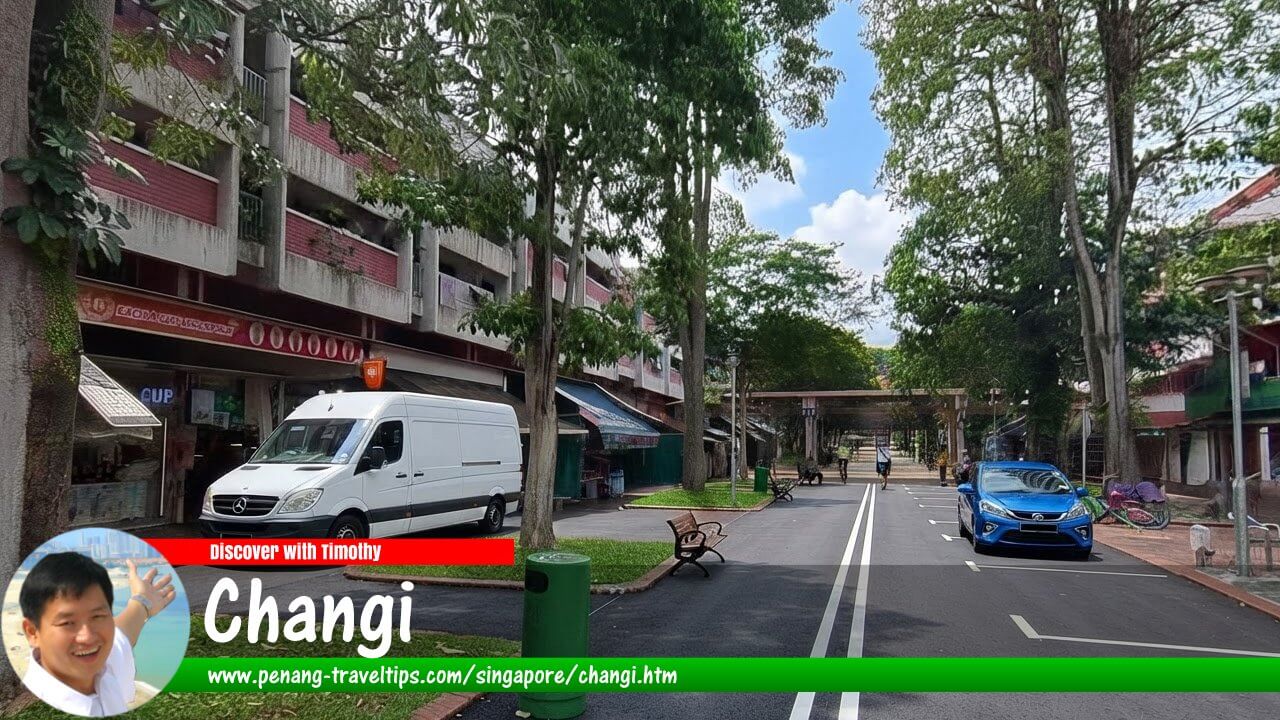 Changi, Singapore (AI image created on 9 August 2026)
The Changi Planning Area (Simplified Chinese: 樟宜, Traditional Chinese: 樟宜, Pinyin: Zhāngyí, Malay: Changi, Tamil: சாங்கி) is located at the eastern tip of Singapore. It covers an extensive area of 40.70 square kilometres, making it one of the larger planning areas in the country. Changi is situated within the East Region and is best known internationally as the location of Changi Airport, one of the world’s busiest and most awarded air transport hubs.
Administratively, the Changi Planning Area is divided into three subzones: Changi Airport, Changi Point, and Changi West. As of 2024, Changi Point has a population of about 560 people, while Changi West has about 1,390 residents. The Changi Airport subzone, due to its aviation-related use, does not have a resident population.
Location and Boundaries
Changi is located on the far eastern edge of Singapore. It is bordered by Tampines Planning Area to the west, Pasir Ris to the northwest, and the Singapore Strait to the east and south. Its strategic coastal location has historically made it significant for maritime activities and, later, aviation development.
History of Changi
Changi has a long and layered history. Originally a rural area with kampongs and coconut plantations, it became an important military zone during British colonial times. The British established military barracks and coastal defence facilities here. During World War II, Changi gained sombre significance as the site of the infamous Changi Prison, where Allied prisoners of war were interned by the Japanese.
In the post-independence era, Changi was transformed with the development of Changi Airport, which opened in 1981. This landmark project reshaped the area, positioning Singapore as a global aviation hub. Today, while much of the land is dominated by airport facilities, traces of its past remain in heritage buildings, the Changi Chapel & Museum, and preserved coastal areas.
Subzones of Changi
- Changi Airport: This subzone encompasses the sprawling terminals, runways, and facilities of Singapore’s main international airport. It is a high-security zone with no permanent residents.
- Changi Point: Known for its rustic charm, coastal park, and ferry terminal, Changi Point is one of the few places in Singapore retaining kampong-like character. It also serves as the gateway to Pulau Ubin and other offshore islands.
- Changi West: This subzone includes areas west of the airport, with some residential quarters, military camps, and aviation-related industries. It is sparsely populated compared to urban planning areas.
Transportation in Changi
Changi is well connected through a network of expressways, most notably the East Coast Parkway (ECP), Tampines Expressway (TPE), and Pan Island Expressway (PIE), which link the area to the rest of Singapore. Public transport is served by the East West Line, with Changi Airport MRT Station as the eastern terminus. In addition, numerous bus services connect Changi Airport and Changi Village to other parts of the island.
Characteristics of Changi
Changi is a distinctive planning area due to its combination of modern global infrastructure and rustic charm. The eastern section is dominated by Changi Airport, with world-class passenger terminals, Jewel Changi Airport shopping complex, and extensive cargo and aviation facilities. In contrast, Changi Point preserves natural and historical character, with beachside chalets, seafood restaurants, and the laid-back atmosphere of Changi Village.
The population density here is extremely low compared to central and suburban areas, as much of the land is reserved for airport operations, military zones, and green spaces.
Attractions in Changi
- Changi Airport and Jewel Changi Airport
- Changi Beach Park, one of the oldest coastal parks in Singapore
- Changi Chapel & Museum, commemorating the experiences of World War II prisoners of war
- Changi Village Hawker Centre, popular for its nasi lemak and local dishes
- Changi Point Ferry Terminal, offering bumboat rides to Pulau Ubin
Where to Stay
Changi is one of the more convenient planning areas in Singapore for accommodation, particularly for travellers with an early flight, a late arrival or an interest in exploring the eastern end of the island. There are several proper hotels within the planning area, ranging from a major international airport hotel to a quieter resort-style hotel at Changi Village.
Crowne Plaza Changi Airport is the obvious choice for travellers who want to stay directly at the airport. The hotel is connected to Terminal 3 and is within easy walking distance of the other airport terminals and Jewel Changi Airport. It has 575 rooms, including rooms overlooking the runway and Jewel, as well as pool-access rooms and suites1. It is particularly convenient for business travellers, families with an early flight and anyone who wants to minimise the journey between the hotel and the airport.
Village Hotel Changi provides a very different experience. Located at 1 Netheravon Road near Changi Village, it is a full-service hotel surrounded by greenery and close to Changi Beach, Changi Point Ferry Terminal and Changi Village Hawker Centre. It has 380 rooms, two outdoor pools and a complimentary airport shuttle2. The hotel's own website lists indicative rates from S$172 per night for a 24-square-metre Superior Room and S$184 for a Deluxe Room, although actual prices vary according to the date and availability2. An Expedia price check on 28 July 2026 found rooms from about S$183 per night including taxes and fees for a specified August 2026 date3.
For travellers needing only a few hours of rest between flights, YOTELAIR Singapore Changi Airport at Jewel is another possibility. Its compact Premium Queen cabins measure about 10 square metres (107 sq ft), while Family cabins measure about 21 square metres (226 sq ft). Day-use bookings are available for a minimum of four hours, making it particularly useful for passengers with long layovers rather than those planning a conventional holiday stay4.
The choice between these hotels depends largely on the type of visit. Crowne Plaza is best for airport convenience, YOTELAIR for a short layover, and Village Hotel Changi for visitors who want to experience a quieter and more traditional side of Singapore. The latter is particularly attractive because Changi Village is close to the ferry terminal for Pulau Ubin and to Changi Beach.
What to Eat
Changi has one of Singapore's most distinctive food scenes because it combines the enormous selection available at Changi Airport and Jewel with the much more traditional food culture of Changi Village. For a visitor, the latter is arguably the more interesting experience.
Changi Village Hawker Centre is the principal food destination in the planning area. The centre dates from 1975 and was developed following the departure of the British military presence from the area. Almost 50 years later, it remains strongly associated with inexpensive local food, particularly nasi lemak and Malay cuisine5.
The hawker centre is notable for its unusually high proportion of Malay and Muslim-owned stalls. Current listings identify 17 halal food outlets within the centre, including A&Z Muslim Kitchen, Al-Baik, Basheer Indian Muslim Kitchen and Changi Famous Nasi Lemak6. This makes Changi Village particularly convenient for Muslim visitors and for anyone interested in exploring Malay food.
Nasi lemak is the dish most closely associated with Changi Village. Mizzy's Corner, International Muslim Food Stall Nasi Lemak and Changi Famous Nasi Lemak are among the stalls that have attracted generations of diners. Other local favourites include Ipoh hor fun, satay bee hoon, Hokkien mee, fish head bee hoon, fish soup, carrot cake and goreng pisang7.
Changi Village is also useful for visitors who want something more substantial than hawker food. The surrounding streets contain Malay, Indian-Muslim and other restaurants, while the waterfront has restaurants and cafés with a more leisurely atmosphere. The combination means that Changi Village can easily support a full afternoon or evening of eating and exploring.
At the airport, the dining choices are vastly more extensive. Jewel alone has more than 200 retail and dining outlets, while the airport terminals contain restaurants and food outlets suitable for virtually every budget and cuisine. This is particularly useful for travellers staying at the airport hotels, although the airport's restaurants tend to be more expensive than the neighbourhood hawker stalls8.
Where to Eat
These are some of the places worth considering when exploring Changi's food scene:
- Changi Village Hawker Centre, 2 Changi Village Road – The essential food stop in Changi. It has a laid-back atmosphere and a particularly strong selection of Malay and Muslim food. It is also convenient for visitors heading to or returning from Pulau Ubin because it is beside Changi Point Ferry Terminal5.
- Mizzy's Corner – One of Changi Village's best-known nasi lemak stalls. The stall is particularly associated with fragrant coconut rice, sambal and fried chicken, making it a good introduction to Singapore-style Malay nasi lemak7.
- International Muslim Food Stall Nasi Lemak – A long-established halal nasi lemak stall that has been operating since the 1980s. Its rice, sambal and fried chicken have earned it a loyal following and make it another strong choice for visitors seeking a traditional halal meal7.
- Changi Famous Nasi Lemak – Another popular halal nasi lemak option within the hawker centre. Visitors interested in comparing different versions of Singapore's nasi lemak can easily try this alongside the better-known stalls.
- Weng Kee Original Taste Ipoh Hor Fun – A long-established stall serving Malaysian-style Ipoh hor fun with smooth rice noodles, chicken and char siew in a savoury gravy. It provides a useful alternative if you do not want another plate of nasi lemak7.
- Changi Village Fried Hokkien Mee – A good choice for the classic Singaporean fried noodle dish made with yellow noodles and rice vermicelli, prawns and other seafood. It is one of the traditional Chinese dishes that provides a contrast to the predominantly Malay food for which the centre is known7.
- Ho Guan Satay Bee Hoon – A stall specialising in satay bee hoon, a Singaporean dish of rice vermicelli coated in a rich peanut-based gravy. It is an interesting choice for visitors who have already tried the country's better-known noodles and want something more unusual7.
- Amigo Chicken Chop Hor Fun – A long-running Changi Village stall known for its chicken chop hor fun. It is one of the more distinctive dishes available at the centre and is useful for visitors who want something different from conventional hawker noodles7.
- Million Star Fried Banana – A popular stop for a simple local snack. Its fried banana and related fried snacks make a good dessert or afternoon treat after a meal at the hawker centre.
- Charlie's Corner – A long-established restaurant at Changi Village serving Western-style food including steaks, fish and chips and other casual dishes. It offers a useful change of pace from the hawker centre and is particularly suitable for an evening meal9.
- Village Hotel Changi's The Blue Tiffin – A halal-certified restaurant at Village Hotel Changi serving local favourites with contemporary touches as well as Chinese dishes influenced by Peranakan flavours. It is a convenient option for hotel guests and other visitors wanting a sit-down halal meal2.
- Canopy Changi Village – A more relaxed waterfront dining option at Civil Service Club @ Changi. It is suitable for visitors who want to sit down for a meal or drinks after exploring Changi Village and Changi Beach.
- Jewel Changi Airport – The major destination for visitors who want an enormous choice of restaurants and cafés in an air-conditioned environment. Its restaurants cover Singaporean, Asian, Western and international cuisines, making it especially useful for families and groups with different tastes8.
If you have only one meal to spare in Changi, I would strongly recommend Changi Village Hawker Centre rather than eating at the airport. The airport is extraordinarily convenient and has a much larger selection, but Changi Village provides the more distinctly Singaporean experience. A plate of nasi lemak followed by a snack such as goreng pisang, followed by a walk towards Changi Point, gives visitors a much better sense of the area's character.
Muslim visitors are particularly well served here. Changi Village Hawker Centre has a substantial concentration of halal and Muslim-owned stalls, while The Blue Tiffin at Village Hotel Changi is halal-certified. This makes Changi one of the more convenient planning areas for visitors seeking halal food without having to rely entirely on shopping-mall food courts6.
For visitors arriving at or departing from Singapore, there is another advantage: Changi's food scene can be incorporated into an airport visit. If you have several hours before a flight and are not required to remain airside, you can take the MRT or a taxi to Changi Village, have a meal, visit Changi Point and Changi Beach, and then return to the airport. However, travellers should allow ample time for the return journey and airport check-in procedures.
Changi therefore offers an unusual contrast within a single planning area. On one side is one of the world's great international airports, surrounded by a vast retail and dining complex; on the other is a small coastal village where people still eat nasi lemak at a neighbourhood hawker centre before taking a small boat to Pulau Ubin. That contrast is perhaps the most interesting reason to visit Changi.
Accommodation and Food References
- Crowne Plaza Changi Airport – Official Website
- Far East Hospitality – Village Hotel Changi
- Expedia – Village Hotel Changi, 2026 rates
- YOTEL – YOTELAIR Singapore Changi Airport
- Kopitiam – Changi Village Hawker Centre: 14 Must-Try Hawker Stalls
- HalalTag – Changi Village Hawker Centre
- HungryGoWhere – Changi Village Hawker Centre
- Jewel Changi Airport – Dining
- Time Out Singapore – Changi Village Hawker Centre
Fun Facts about Changi
- Changi Airport has won over 650 “Best Airport” awards globally.
- Changi Prison was once one of the largest prisons in the world and played a central role in Singapore’s wartime history.
- Changi Village is a beloved weekend spot for both locals and tourists seeking a slower pace of life.
Quick Facts
- Planning Area: Changi
- Region: East Region
- Area: 40.70 sq km
- Subzones: Changi Airport, Changi Point, Changi West
- Population (2024): 1,950 (Changi Point: 560, Changi West: 1,390)
- Population Density: Very low
- Nearest MRT Station: Changi Airport MRT Station (East West Line)
References
Page Details
This page was created on 13 September 2025. Hi, my name is Timothy and created it from my research, for my own entertainment, knowledge and to satisfy my curiosity. I am providing the information to you in good faith and hope it is useful. I try to get the details as accurate as possible. I also try to update the page whenever I stumble on new details. So this and all my other pages are perpetual work in progress. If you discover any error, please politely inform me, pointing out where the error lies, and I will correct it as soon as possible. Your helpfulness will keep this page accurate, relevant and helpful to those who need the information.My videos of Singapore
Want to share your Singapore travel experiences or get tips from fellow travellers?
Join the Singapore Travel Tips Facebook GroupMore information for visiting and living in Singapore
Here are some related articles to help you get to know Singapore better.- Cost of Living in Different Singapore Neighbourhoods (2025 Guide)
- EZ-Link Card
- Owning a Car in Singapore
- Singapore MRT Map & Guide 2025
- Singapore Postal Districts and Postcodes
- Singapore Tourist Pass
- Taking the Bus in Singapore: A Visitor's Guide
- Understanding CCR, RCR and OCR in Singapore real estate
 Latest Pages & Updates
Buy Me A Coffee
If you enjoy the information I provide and want to support the work I do, please buy me a coffee! I appreciate it immensely, thank you so much!
