
Cost of Living in Penang in 2025
Penang has long been a magnet for both expats and Malaysians from other states looking for a better quality of life. Its blend of modern conveniences, colonial charm, and world-famous food makes it a dream place to call home. But how much does it really cost to live in Penang in 2025? In this guide, we’ll break down the essentials — housing, groceries, utilities, transport, and lifestyle — so you can budget realistically before making the move.
Housing Costs in Penang
Property and rental prices in Penang vary widely depending on location, type of accommodation, and whether you are on the island or the mainland. Expats and most newcomers usually prefer Penang Island, particularly areas like George Town, Tanjong Tokong, Tanjung Bungah, and Bayan Lepas.
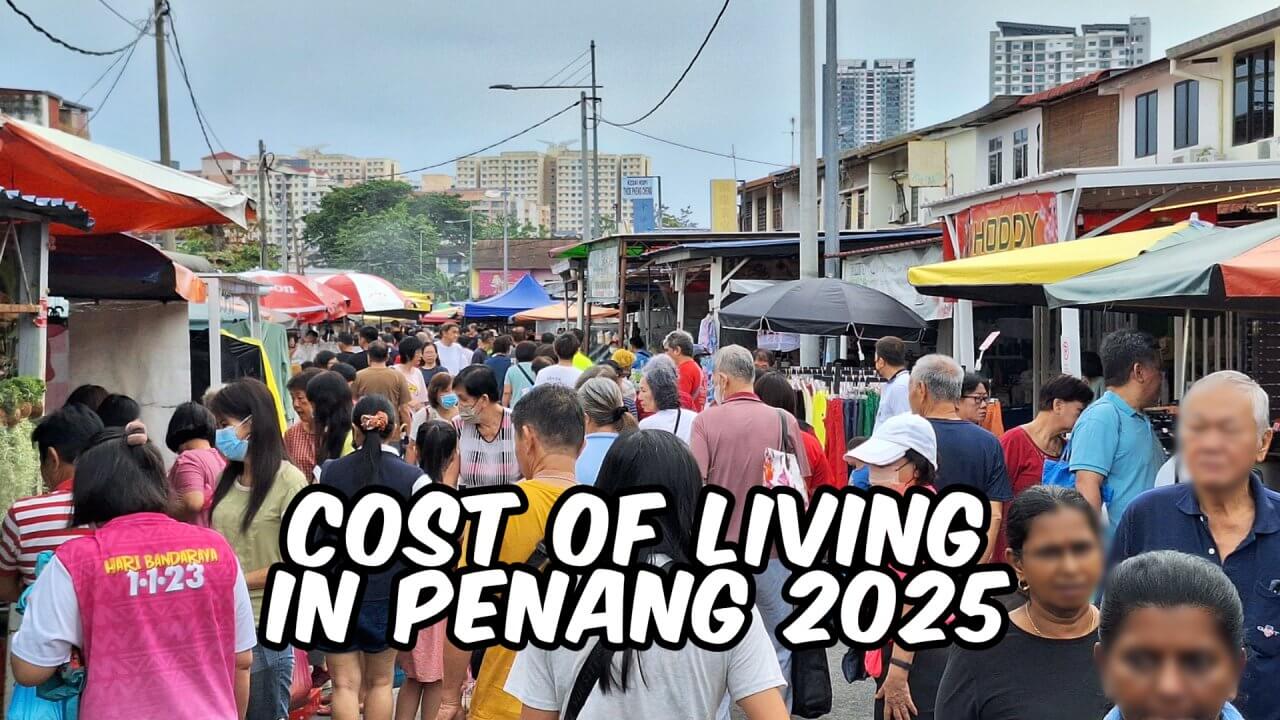
Cost of Living in Penang in 2025 (22 June 2024)

Rental Prices
- High-rise condominiums (with facilities like pools and gyms): RM2,500–RM4,500 per month for a 3-bedroom unit in prime areas such as Gurney Drive or Tanjong Tokong.
- Suburban apartments in less touristy neighborhoods: RM1,200–RM2,000 per month.
- Landed houses: RM3,000–RM6,000 depending on location and size, but these are less common for foreigners.
If you’re coming from Kuala Lumpur, you’ll likely find Penang rentals slightly cheaper. However, compared to Johor Bahru or Ipoh, the island is pricier.
Buying Property
Foreigners face a minimum purchase threshold (RM1 million in Penang as of 2025)1. Locals, on the other hand, can find mid-range condos for RM500,000–RM800,000. Luxury seafront condominiums can exceed RM2 million.
Groceries and Daily Essentials
Food is one of the main reasons people move to Penang, and thankfully, eating well here doesn’t have to break the bank.
- Wet markets: Fresh vegetables, chicken, and seafood are cheaper than supermarkets. Expect to spend RM300–RM500 per month for a family of two shopping mainly at markets.
- Supermarkets: Imported goods can be expensive. A loaf of premium bread may cost RM10–RM15, while local brands go for RM3–RM5.
- Dairy and cheese: Milk is around RM8–RM9 per liter for imported brands, and cheese can be RM20–RM40 for a small block.
On average, an individual might spend RM600–RM1,000 per month on groceries, depending on their taste for imported products.
Utilities and Internet
Utility costs in Penang are relatively affordable compared to many Western countries, though electricity can be high if you rely heavily on air-conditioning.
- Electricity: RM150–RM400 monthly for a condo, depending on air-conditioning usage.
- Water: Very cheap — usually under RM10 per month.
- Internet: High-speed fiber broadband (100–300 Mbps) costs around RM120–RM150 per month.
- Mobile data: Prepaid packages start at RM30–RM50 per month, while postpaid plans range RM80–RM120.
Transportation
One of the biggest adjustments for newcomers is that Penang does not have an extensive train system like Kuala Lumpur. Most people rely on cars, motorbikes, or buses.
- Car ownership: A second-hand local car can cost RM30,000–RM50,000, while imported cars are significantly more expensive due to taxes.
- Fuel: Around RM2.05 per liter (government-subsidized RON95 petrol). Filling a small car tank costs roughly RM80.
- Buses: Rapid Penang buses charge RM1.40–RM4.00 depending on distance. Monthly commuting cost is under RM100 if you rely on buses.
- Ride-hailing: Grab rides within George Town usually cost RM8–RM15, while airport trips can be RM30–RM50.
Eating Out
Eating out in Penang is both a joy and a bargain compared to most places in the world.
- Hawker food: A plate of char koay teow or nasi kandar typically costs RM6–RM12. Budget RM20–RM25 for a filling meal with drinks for two at a hawker centre.
- Mid-range restaurants: Western-style meals at cafes average RM30–RM50 per person.
- Fine dining: Expect to pay RM100–RM250 per person in upscale restaurants.
For expats used to dining in Singapore, Penang is refreshingly affordable. Many locals eat out daily because it’s cheaper and easier than cooking at home.
Healthcare
Penang has excellent private hospitals that attract medical tourists from abroad. Consultation with a specialist costs RM100–RM200, while general practitioner visits are RM50–RM80. Insurance is advisable for expats, with premiums ranging RM300–RM600 monthly depending on age and coverage.
Lifestyle and Leisure
Penang offers a balance between affordability and quality of life.
- Gyms: RM120–RM200 per month.
- Cinema tickets: RM18–RM25 for standard screenings.
- Coffee: RM6–RM8 for kopitiam-style coffee, RM12–RM18 for a latte in a modern cafe.
Expats often find that entertainment costs are lower than in Kuala Lumpur, though international concerts and events are fewer in number.
Education
For families moving to Penang, schooling is a major cost consideration. Local government schools are practically free for Malaysians, but expats usually enroll children in international schools.
- International schools: Annual fees range RM30,000–RM80,000 per child, depending on the curriculum (British, American, or IB).
Overall Monthly Budget
Here’s a rough idea of monthly expenses for different lifestyles in Penang (2025):
- Single expat living in a mid-range condo with moderate eating out: RM4,000–RM6,000.
- Couple with car and occasional dining at restaurants: RM6,000–RM9,000.
- Family of four with children in international school: RM12,000–RM18,000.
Quick Facts
- Rent on Penang Island ranges from RM1,200 to RM6,000 monthly, depending on property type.
- Groceries average RM600–RM1,000 per person per month, more with imported goods.
- Utilities: RM150–RM400 for electricity, RM120–RM150 for high-speed internet.
- Transport: Fuel at RM2.05/litre, bus fares RM1.40–RM4.00, Grab rides RM8–RM50.
- Hawker meals cost RM6–RM12, while mid-range dining is RM30–RM50 per person.
- Healthcare consultations: RM50–RM200; insurance premiums RM300–RM600 monthly.
- International school fees: RM30,000–RM80,000 annually per child.
References
- Penang State Government — Property Guidelines 2025
- ExpatGo Malaysia — Cost of Living Insights
- Numbeo — Penang Cost of Living Index 2025
Page Details
This page was created on 2 September 2025. Hi, my name is Timothy and created it from my research, for my own entertainment, knowledge and to satisfy my curiosity. I am providing the information to you in good faith and hope it is useful. I try to get the details as accurate as possible. I also try to update the page whenever I stumble on new details. So this and all my other pages are perpetual work in progress. If you discover any error, please politely inform me, pointing out where the error lies, and I will correct it as soon as possible. Your helpfulness will keep this page accurate, relevant and helpful to those who need the information.Taking the bus in Penang

