
Melaka UNESCO World Heritage Site
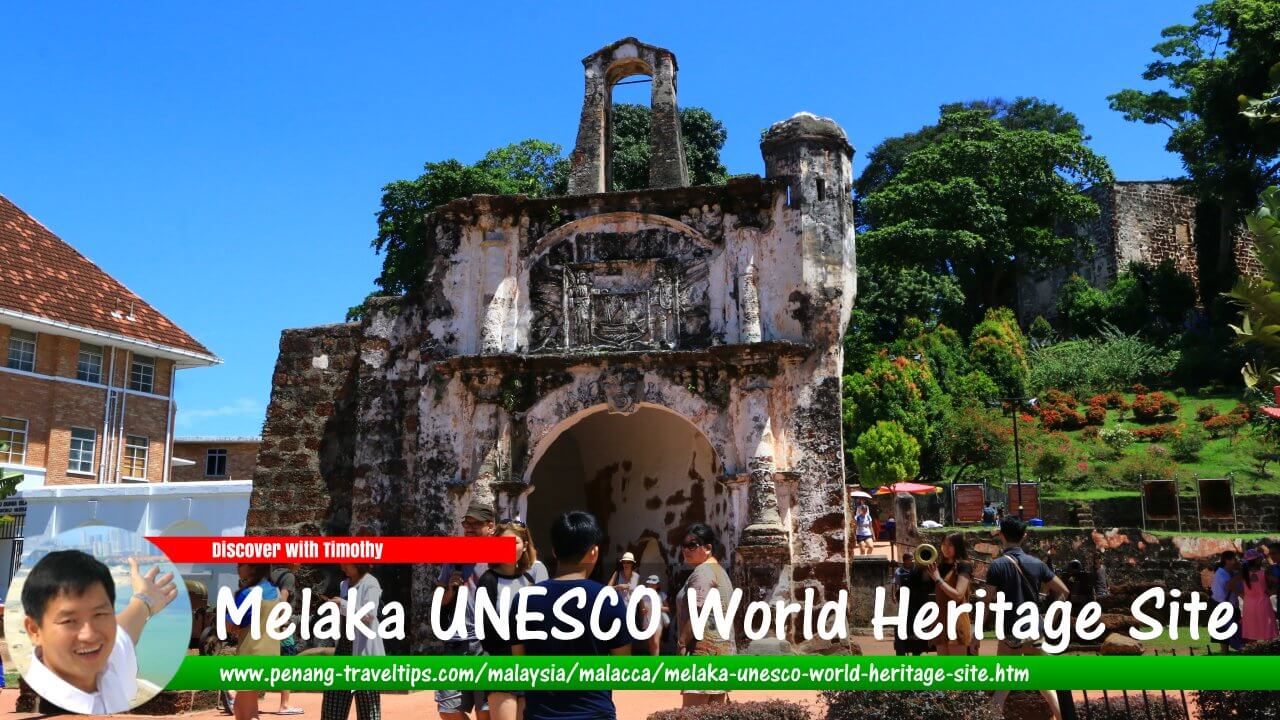 Melaka UNESCO World Heritage Site (10 August 2017)
Jalan Hang Kasturi is a short but culturally dense heritage road in the UNESCO core zone of Melaka, forming part of a historic urban ensemble recognised globally for its multi-civilisational architecture and living traditions.1
On 7 July 2008, Melaka and George Town were jointly inscribed as a UNESCO World Heritage Site under the title Historic Cities of the Straits of Malacca, celebrating their role as exceptional trading ports where Asian and European cultures met, blended, and evolved over five centuries.1
World Heritage Inscription Overview
The protected heritage area in Melaka covers a 38.62-hectare core zone and a 134.03-hectare buffer zone, safeguarding the city’s oldest civic landmarks, traditional residential quarters, commercial streets, and historic religious sites that collectively illustrate the rise of a Malay sultanate, its transformation into a colonial port, and its enduring multicultural identity.1
- Inscription Year: 20081
- Site Type: Cultural
- UNESCO Criteria: II, III, IV1
Core Zone — The Oldest Urban Fabric
The core heritage zone consists of two historic districts divided by the Melaka River, representing the earliest settlement layers of the city. Each side evolved with distinct but complementary urban roles—governance, residence, trade, craftsmanship, and faith.1
1. Civic & Administrative Quarter (East of the River)
The Civic Zone contains Melaka’s most recognisable colonial landmarks and government buildings, shaped successively by Portuguese, Dutch, and British rule.
- Porta de Santiago (A’Famosa Gate) — last standing remnant of a 16th-century Portuguese fortress.2
- St Paul’s Hill & Church Ruins — hilltop chapel where St Francis Xavier was temporarily interred.3
- The Stadthuys — former Dutch administrative building, one of Southeast Asia’s oldest surviving colonial civic structures.4
- Christ Church — 1753 Dutch church built with locally made bricks and later modified under British rule.5
- Colonial civic buildings — restored and repurposed into museums including the History & Ethnography Museum and Governor’s Museum.
These structures collectively reflect Melaka’s evolution from Malay royal capital to European-run port city, illustrating the region’s administrative and military history through architecture, urban planning, and adaptive reuse.
2. Traditional Residential & Commercial Quarter (West of the River)
The Residential and Commercial Zone preserves rows of historic shophouses, aristocratic residences, artisan guild streets, and sacred sites, representing Melaka’s mercantile golden age and its living multicultural community.
Key heritage streets include:
- Jalan Hang Jebat (Jonker Street) — antique dealers, cafés, night market culture.6
- Jalan Tun Tan Cheng Lock (Heeren Street) — elite Peranakan residences, traditional courtyard townhouses.7
- Jalan Tokong (Temple Street) — spiritual axis of the Chinese community.8
- Jalan Tukang Emas (Goldsmith Street) — once home to gold artisans, now part of Harmony Street.1
- Jalan Tukang Besi (Blacksmith Street) — former metalworking and forging guild street.1
This quarter also includes the historic “cross streets” running perpendicular to the main lanes, where additional heritage properties and traditional trades once flourished:
- Lorong Hang Jebat
- Jalan Hang Lekiu
- Jalan Hang Lekir
- Jalan Hang Lekir
- Jalan Hang Kasturi and nearby lanes
In total, about 600 heritage properties lie within this zone, including mosques, Hindu and Chinese temples, clan halls, guild houses, traditional residences, and early commercial buildings that document Melaka’s role as a cosmopolitan entrepôt.1
Important Religious & Cultural Sites (Core Zone)
- Cheng Hoon Teng Temple — Malaysia’s oldest functioning Chinese temple (1645), blending Fujianese, Dutch, and local craftsmanship.9
- Kampung Kling Mosque — 18th-century mosque combining Sumatran, Chinese, Hindu, and Malay motifs.10
- Sri Poyyatha Vinayagar Moorthi Temple — 1781 Hindu temple, the oldest in Malaysia.11
- Baba & Nyonya Heritage Museum — 19th-century Peranakan townhouse museum illustrating Straits Chinese domestic life.12
- Peranakan jewellery and cultural museums — documenting material culture, ritual adornment, and trade wealth.
This side of the river embodies a rare urban typology where commerce, home life, and faith coexist, still inhabited and used daily, making it a living heritage landscape rather than a static monument zone.
Buffer Zone — Protection Without Replacement
Encircling the core is a designated buffer zone that helps protect sightlines, context, and urban continuity. It includes areas such as:
- Jalan Munshi Abdullah1
- Jalan Ong Kim Wee
- Jalan Kota Laksamana (land reclaimed from the sea in the late 20th century)13
- Parts of Kampung Banda Kaba — traditional Malay neighbourhood with early urban village roots.14
- Sections of Jalan Chan Koon Cheng
- Jalan Merdeka
Notably, the reclaimed section of Jalan Kota Laksamana plays an urban planning role by providing modern development space that shields the older riverbank and Heeren Street district, but it contains no properties of heritage age.13
Unlike the core zone, the buffer zone focuses on contextual protection rather than preservation of individual historic buildings, ensuring the heritage district retains its cultural and spatial integrity.
What Makes Melaka’s Heritage Site Exceptional
Multicultural Urban Identity
Melaka demonstrates centuries of cross-cultural exchange, reflected in hybrid architecture, multilingual communities, trade customs, religious tolerance, cuisine, and artisan street names that preserve the memory of old guilds and craft economies.1
Architectural Layers
- Malay sultanate era — port foundations and early town morphology.
- Portuguese era — fortress town planning and defence architecture.2
- Dutch era — civic brick buildings, Protestant churches, administrative townscape.4
- British era — commercial port expansion, institutional buildings, and modifications to Dutch structures.5
- Peranakan influence — courtyard houses, ornate façades, jewellery culture, and mercantile wealth.7
Living Street Culture
Markets, cafés, mosques, temples, antique shops, and artisan boutiques operate within the heritage grid today, especially around Jonker, Temple Street, and Jalan Hang Kasturi, offering visitors direct immersion into everyday Melakan life.
How to Explore the Heritage Site Today
- Walk the river loop between Dutch Square and Jonker Street.
- Discover artisan lanes: Goldsmith, Blacksmith, Temple Street.
- Visit museums housed in restored colonial or Peranakan buildings.
- Shop antiques, enjoy street food, and observe traditional worship spaces still active.
- Take the river cruise at night to appreciate illuminated bridges and waterfront murals.
Page Details
This page was created on 31 December 2025. Hi, my name is Timothy and created it from my research, for my own entertainment, knowledge and to satisfy my curiosity. I am providing the information to you in good faith and hope it is useful. I try to get the details as accurate as possible. I also try to update the page whenever I stumble on new details. So this and all my other pages are perpetual work in progress. If you discover any error, please politely inform me, pointing out where the error lies, and I will correct it as soon as possible. Your helpfulness will keep this page accurate, relevant and helpful to those who need the information.Want to share your Malacca travel experiences or get tips from fellow travellers?
Join the Malacca Travel Tips Facebook GroupInformation for visiting Malacca
Here are some related articles to help you get to know Malacca better.Introduction to Malacca
Information on buying property or renting in Malacca
 Latest Pages & Updates
Buy Me A Coffee
If you enjoy the information I provide and want to support the work I do, please buy me a coffee! I appreciate it immensely, thank you so much!
