
Introduction to Malacca
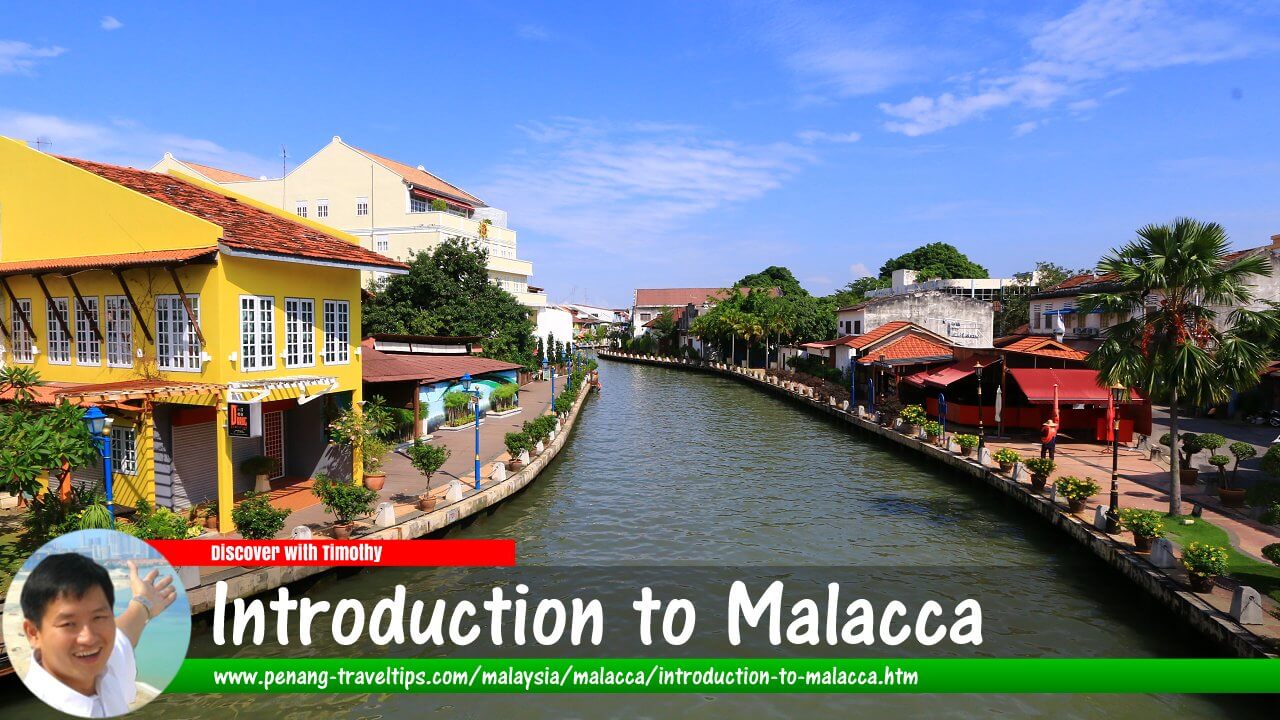 Introduction to Malacca (AI generated on 31 December 2025)
Malacca, a historic state and city on the southwestern coast of Peninsular Malaysia, is celebrated for its formative role in shaping the Malay world and its rich multicultural heritage. Founded in the early 15th century, the city predates Malaysia’s largest urban centres and rose rapidly as a global maritime entrepôt under the Malacca Sultanate. 1
From sultanate to world port
Between 1400 and 1511, Malacca became one of the world’s most important trading ports, linking merchants from Arabia, India, China, and Southeast Asia. Its glory era, though lasting just over a century, reshaped regional politics, culture, and commerce. The influence of the sultanate extended across the Malay Peninsula, Sumatra, and the archipelago, forming a cultural foundation for Malay identity, governance, and diplomacy. 2
Many royal families in present-day Malaysia trace their lineage to the Malaccan sultans. When the Portuguese defeated Sultan Mahmud Shah in 1511, Malacca ceased to be ruled by a sultan. This event also signalled the beginning of European colonial competition in the region. However, Portuguese and Dutch control was largely confined to coastal strongholds, and neither empire exerted deep administrative rule over most of the Malay Peninsula. 3
Colonial treaties and shifting borders
The Anglo-Dutch Treaty of 1824 later divided the Malay world into British and Dutch spheres of influence. Even then, direct British intervention in Malay state administration only began in 1874 in Larut, Perak, before expanding gradually across the peninsula. 4
Multicultural heritage that defines the city
Malacca today is loved by both first-time visitors and locals for its living cultural mosaic. The city carries architectural and cultural imprints from:
- Malay heritage — reflected in palace diplomacy, Islamic scholarship, and early governance systems.
- Chinese Peranakan (Baba-Nyonya) culture — expressed through cuisine, attire, and beautifully preserved townhouses.
- Portuguese-Eurasian communities — descendants of early intermarriages who maintained traditions in settlements like Portuguese Square.
- Dutch civic legacy — most visible in administrative buildings and town planning around Dutch Square.
- British institutional influence — seen in education, legal frameworks, rail history, and municipal systems.
Fun fact: Malacca’s name is believed to originate from the Melaka tree (*Phyllanthus emblica*), under which the city’s founder, Parameswara, is said to have decided to establish the settlement.
UNESCO inscription — a milestone for heritage
On 7 July 2008, Malacca was inscribed as a UNESCO World Heritage Site, recognising its universal value as a historic port city that shaped centuries of maritime exchange. This status has helped strengthen heritage awareness, preservation frameworks, and cultural tourism. 5
Coastal transformation and modern development
Malacca underwent its most dramatic urban and coastal transformation in the 1990s, during a period of rapid economic expansion. Large-scale land reclamation extended the coastline outward, altering marine access for older coastal villages. In some zones, fishing jetties and traditional sea-front communities were separated from the shore by new arterial highways. These changes sparked debate about balancing progress with heritage and livelihoods, a conversation that continues today. 6
Despite growing pains, modern Malacca has also gained strong new pillars of appeal:
- Improved highway connectivity to Kuala Lumpur, Johor Bahru, and Singapore.
- Expanding residential and commercial zones such as Melaka Raya, Ayer Keroh, Cheng, and Klebang.
- Vibrant tourism offerings including river cruises, night markets, galleries, museums, and food tourism.
- Emerging digital-nomad and retirement interest due to lifestyle affordability and heritage charm.
Heritage core — the heart of visitor experience
The historic centre—covering the river basin, civic square, Jonker precinct, and surrounding heritage streets—remains Malacca’s most visited and photographed district. Here, traders once exchanged silk, spices, porcelain, tin, and ideas; today, visitors exchange stories, culture, and satay celup recommendations. The area blends temples, mosques, churches, and shophouses into a compact walkable district, making it one of the region’s best examples of coexisting faiths and cultures. 7
Why Malacca matters to tourists and locals alike
For tourists, Malacca is a time capsule of regional trade history and multicultural living traditions. For locals, it is a place of identity, memory, and daily life—where heritage is not abstract but personal: the smell of pineapple tarts, the call to prayer echoing near temple bells, and evening strolls by the river murals.
Investment and lifestyle appeal (contextual overview)
Although this page focuses on history and place-making, Malacca’s story is also about liveability. It has steadily attracted interest from out-of-state homebuyers, heritage property enthusiasts, lifestyle investors, and long-term tenants seeking a slower pace outside Malaysia’s largest metro areas. (See our upcoming cluster articles on Living in Malacca and Investing in Malacca Property.)
Quick Facts
- Location: Southwestern Peninsular Malaysia, facing the Strait of Malacca.
- Founded: Early 15th century by Parameswara.
- Historic era: 1400–1511 (Malacca Sultanate world trading port).
- UNESCO inscription: 7 July 2008.
- Cultural groups: Malay, Chinese Peranakan, Portuguese-Eurasian, Dutch and British heritage communities.
- Name origin: Melaka tree (Phyllanthus emblica).
References
- Britannica: Founding and Sultanate overview
- UNESCO: World Heritage inscription details
- NLB: Portuguese and Dutch administration scope
- Britannica: Treaty impact
- UNESCO: Preservation milestone
- Malaysiakini: Reclamation debates
- TimeOut: Heritage core modern appeal
Page Details
This page was created on 31 December 2025. Hi, my name is Timothy and created it from my research, for my own entertainment, knowledge and to satisfy my curiosity. I am providing the information to you in good faith and hope it is useful. I try to get the details as accurate as possible. I also try to update the page whenever I stumble on new details. So this and all my other pages are perpetual work in progress. If you discover any error, please politely inform me, pointing out where the error lies, and I will correct it as soon as possible. Your helpfulness will keep this page accurate, relevant and helpful to those who need the information.Want to share your Malacca travel experiences or get tips from fellow travellers?
Join the Malacca Travel Tips Facebook GroupInformation for visiting Malacca
Here are some related articles to help you get to know Malacca better.Introduction to Malacca
Information on buying property or renting in Malacca
 Latest Pages & Updates
Buy Me A Coffee
If you enjoy the information I provide and want to support the work I do, please buy me a coffee! I appreciate it immensely, thank you so much!
