
Jalan Kee Ann, Malacca
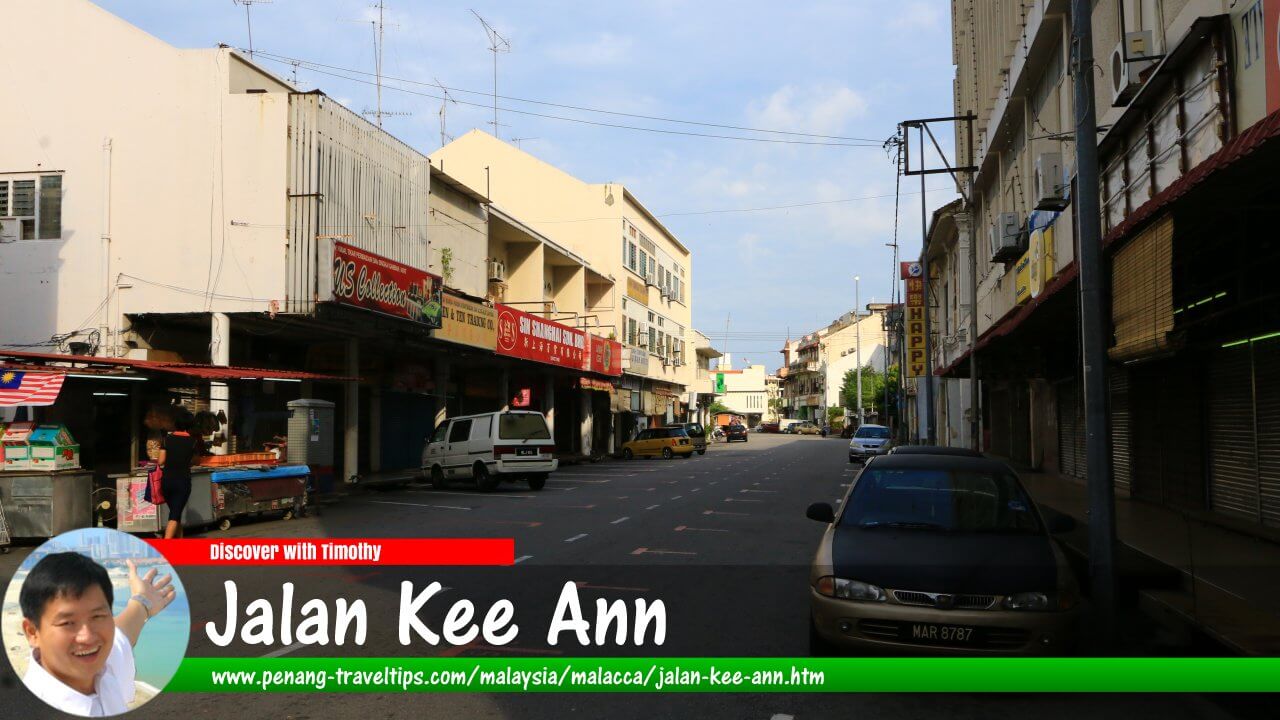 Jalan Kee Ann, Malacca (10 August 2017)
Also available: Jalan Kee Ann (Malay Edition)
Jalan Kee Ann is a historic commercial street in the heart of Malacca that reflects the development of the city beyond its better-known heritage landmarks. Although it is less prominent among visitors compared with streets such as Jalan Hang Jebat or Jalan Tun Tan Cheng Lock, Jalan Kee Ann has played an important role in the daily life of Malacca, particularly as a centre of local commerce and community activity during the twentieth century. The street represents a different aspect of Malacca's history: not only the story of colonial buildings and international trade, but also the story of markets, neighbourhood businesses and the people who shaped the modern city.1
Quick Facts
- Location: Central Malacca, Melaka, Malaysia
- Type of road: Historic urban commercial street
- Named after: Seet Kee Ann (薛其安), a prominent Malaccan community leader
- Historical role: A local trading street associated with markets, shops and neighbourhood activities
- Main character: Traditional shophouses, local businesses and everyday urban life
- Significance: Represents the social and commercial development of twentieth-century Malacca
Location and Setting
Jalan Kee Ann is located in the central area of Malacca city, forming part of the urban landscape surrounding the historic commercial districts south of the Melaka River. The street is situated within walking distance of several important old-town neighbourhoods and is connected with roads that historically supported the movement of people and goods between markets, residential areas and commercial centres.
Unlike the streets within the core heritage zone that are strongly associated with colonial administration, wealthy merchant residences or religious monuments, Jalan Kee Ann developed primarily as a working street. Its importance came from everyday economic activities rather than from grand political or architectural functions.
This distinction makes Jalan Kee Ann an important subject for understanding Malacca's urban history. Cities are not shaped only by famous buildings; they are also shaped by ordinary streets where people shop, work, live and build communities over generations.
The street forms part of the wider commercial neighbourhood that grew as Malacca expanded beyond the immediate riverfront trading area. During the nineteenth and twentieth centuries, improvements in roads, transport and urban planning encouraged the growth of new commercial corridors outside the earliest settlement areas.2
The Origin of the Name Jalan Kee Ann
The name Jalan Kee Ann commemorates Seet Kee Ann (薛其安), a respected Chinese community leader in Malacca during the late nineteenth and early twentieth centuries. Like many streets in Malacca, its name preserves the memory of an individual who contributed to the development of the city and its communities.3
Seet Kee Ann was associated with public service, community organisation and charitable activities. During a period when local communities often relied on prominent individuals to represent their interests, figures such as Seet Kee Ann played important roles in maintaining social networks, supporting education and contributing to civic development.
The naming of a street after him reflects the importance of community leaders in the history of Malacca. While colonial officials and major historical figures often receive wider recognition, local personalities such as Seet Kee Ann also left a lasting mark on the physical landscape of the city.
Street names in Malacca frequently provide clues about the people, communities and events that shaped different parts of the city. In this sense, Jalan Kee Ann is not merely a road name; it is a reminder of the contribution of local communities to Malacca's growth.
Early Development of Jalan Kee Ann
The development of Jalan Kee Ann took place during a period when Malacca was gradually transforming from an old trading port into a modern administrative and commercial town. Although the city's importance as a major international entrepôt had declined compared with earlier centuries, local commerce continued to thrive.
During the late nineteenth and early twentieth centuries, Malacca experienced the growth of new neighbourhoods, improved transport links and increased demand for commercial spaces. Traditional shophouses became the dominant form of urban development because they allowed businesses and families to occupy the same building.4
Jalan Kee Ann developed within this environment. The street became associated with small businesses serving the needs of nearby residents, workers and visitors. Rather than functioning as a ceremonial avenue, it grew organically as part of the daily economy of the city.
The rise of markets was particularly important in shaping the character of the surrounding area. Before the widespread development of modern supermarkets and shopping centres, markets were central institutions where people purchased food, household necessities and other goods. Streets connected to these markets naturally became active commercial areas.
The Era of the Central Market
One of the most important chapters in the history of Jalan Kee Ann was its relationship with the former Central Market area. Established in the twentieth century, the market became a significant centre of activity for residents of Malacca and helped strengthen the commercial importance of nearby streets.5
The presence of a major market created a constant flow of people through the area. Traders, shoppers, food sellers and transport operators contributed to a lively urban atmosphere. Jalan Kee Ann became associated with this everyday rhythm of city life, where commerce was closely connected with community interaction.
For many older residents of Malacca, streets around the market area represent memories of a different era, when shopping involved personal relationships with familiar vendors and when commercial streets served as important social meeting places.
Although the role of traditional markets has changed significantly with the arrival of modern retail formats, the historical importance of this period remains part of Jalan Kee Ann's identity. The street continues to represent a time when local commerce was deeply embedded within neighbourhood life.
A Street of Ordinary Importance
Jalan Kee Ann demonstrates that historical significance does not always come from spectacular monuments or famous events. Some streets are important because of the thousands of ordinary interactions that take place there over decades.
Its history is a history of shopkeepers opening their businesses each morning, families living above their shops, customers visiting familiar stalls and communities building relationships through everyday activities.
For a city like Malacca, which is often introduced through grand narratives of sultans, colonial powers and international trade, Jalan Kee Ann offers another perspective: the history of ordinary people who sustained the city after the great trading empires had passed.
The Character of Jalan Kee Ann
Jalan Kee Ann has a character that is distinctly different from the more famous heritage streets of Malacca. While streets such as Jalan Hang Jebat are recognised for their preserved historic architecture and cultural tourism, Jalan Kee Ann represents another side of the city: the everyday commercial street that supports the routines of local residents.
The atmosphere of Jalan Kee Ann is shaped less by grand historical buildings and more by the continuity of ordinary urban activities. Shops open in the morning, residents carry out daily errands, workers move between businesses and food establishments serve generations of customers. These activities give the street a sense of familiarity that can only develop through long-term community use.
This quality makes Jalan Kee Ann an example of living urban heritage. Its value lies not only in the age of its buildings but also in the relationship between the street and the people who continue to use it. A historic street remains meaningful when it continues to function as part of the city rather than becoming merely a preserved landscape.6
Traditional Shophouses and Urban Landscape
The physical appearance of Jalan Kee Ann reflects the commercial development of Malacca during the late nineteenth and early twentieth centuries. Like many older streets in the city, it is characterised by traditional shophouses that combine commercial and residential functions within the same building.
The traditional shophouse was a practical response to the needs of urban communities. The ground floor provided space for shops, offices or workshops, while the upper floors served as living quarters for the owners and their families. This arrangement allowed business owners to remain closely connected to their customers and their neighbourhood.
Architecturally, these buildings often display features associated with the wider Straits settlement style, including narrow frontages, long internal layouts, decorative façades, timber shutters, tiled floors and covered walkways. Although many buildings have been modified over time, the overall streetscape still reflects the historic pattern of commercial development in Malacca.7
The preservation value of Jalan Kee Ann lies not necessarily in individual buildings, but in the relationship between the buildings, the street and the activities taking place within them. Together, these elements create a picture of how a traditional commercial neighbourhood operated.
A Commercial Street Built Around Daily Needs
Historically, Jalan Kee Ann was closely associated with businesses that served the practical needs of the surrounding population. Unlike specialised streets that developed around luxury goods or particular industries, Jalan Kee Ann grew as a neighbourhood commercial area.
Businesses found along streets of this nature typically included food shops, grocery stores, clothing shops, household goods suppliers, small workshops and professional services. Such businesses formed the backbone of urban life because they provided essential goods and services within walking distance of residential areas.
This type of commercial environment created strong relationships between shopkeepers and customers. Many businesses depended on repeat customers rather than occasional visitors, allowing personal connections to develop over many years.
For older generations of Malacca residents, streets like Jalan Kee Ann represent a period when commercial districts were also social spaces. Going to the market, buying groceries or visiting a familiar shop was not merely an economic activity, but part of the daily rhythm of community life.
The Legacy of the Market Area
The history of Jalan Kee Ann cannot be separated from the importance of markets in traditional urban societies. Before modern shopping centres became common, markets served as essential institutions where communities gathered to purchase fresh produce, household goods and daily necessities.
The former Central Market area contributed greatly to the importance of this part of Malacca. The movement of traders, customers and suppliers created a lively commercial environment that supported businesses along nearby streets, including Jalan Kee Ann.8
The market also shaped the social character of the area. Markets were not simply places of buying and selling; they were places where information was exchanged, friendships were formed and communities interacted. The surrounding streets naturally became extensions of this social environment.
Although the role of traditional markets has changed, the memory of this era remains an important part of Jalan Kee Ann's identity. The street continues to represent the relationship between commerce and community that characterised many historic towns in Southeast Asia.
Relationship with Surrounding Streets
Jalan Kee Ann is part of a wider network of streets that together form the commercial fabric of central Malacca. Its importance becomes clearer when viewed not as an isolated road, but as part of a connected urban neighbourhood.
The surrounding streets developed different roles according to their locations and functions. Some became associated with markets and commerce, while others served as residential areas, administrative routes or connections between different parts of the city.
This interconnected street network is one of the defining characteristics of historic Malacca. The city was not organised around a single main avenue, but through a collection of streets and lanes where different communities lived and worked alongside one another.
Jalan Kee Ann's connection with nearby commercial streets helped reinforce its importance as part of the daily movement of people and goods. Residents could access markets, shops, places of worship and public facilities within a relatively compact urban area.
Jalan Kee Ann Compared with Jonker Street
Because of Malacca's reputation as a heritage destination, visitors often associate historic streets primarily with Jonker Street. However, Jalan Kee Ann represents a different historical experience.
Jonker Street developed as a prominent merchant street with distinctive heritage architecture and cultural significance. Jalan Kee Ann, by comparison, reflects the practical side of urban life: markets, neighbourhood commerce and the daily activities of ordinary residents.
This difference does not make Jalan Kee Ann less important. Instead, it broadens our understanding of how Malacca functioned as a city. A city requires both famous streets and ordinary streets; one tells the story of heritage identity, while the other tells the story of everyday survival and community.
In many ways, Jalan Kee Ann complements the better-known heritage streets. It reminds us that the history of Malacca was not created only by rulers, merchants and colonial officials, but also by shopkeepers, workers, families and residents who maintained the city through generations.
A Street of Memories
For many local residents, the significance of Jalan Kee Ann may not come from a single historic event or landmark. Instead, its importance lies in accumulated memories: childhood visits to shops, meals shared with family, familiar faces behind counters and the changing appearance of the neighbourhood over time.
These personal memories form an important part of urban heritage. While official histories often record major events and prominent figures, the identity of a city is also preserved through everyday experiences that may never appear in formal records.
Jalan Kee Ann therefore represents a quieter but equally valuable chapter of Malacca's history. It is a street that tells the story of how a city lives, adapts and continues moving forward while carrying traces of its past.
Although Jalan Kee Ann is not usually placed among Malacca's most prominent heritage streets, its location gives it an important connection to the wider historic city centre. The street sits within an area where commerce, residential neighbourhoods and cultural landmarks have existed side by side for generations.
Its significance lies in its role as part of the everyday infrastructure of Malacca. While some streets are remembered for palaces, colonial buildings or famous monuments, Jalan Kee Ann is remembered through markets, shops, food businesses and the daily activities of local communities.
Places of Interest Around Jalan Kee Ann
The surroundings of Jalan Kee Ann contain several places that help explain the historical development of central Malacca. Rather than having a single landmark located directly on the street, its importance comes from being part of a wider historic urban district.
Former Central Market Area
The former Central Market area is one of the most important historical references connected with Jalan Kee Ann. The market once served as a major commercial institution where residents purchased fresh produce, household goods and daily necessities.
The existence of the market helped create a lively commercial ecosystem in the surrounding streets. Traders, suppliers, food sellers and customers contributed to the growth of nearby businesses, making this part of Malacca an important centre of everyday economic activity.9
Although the traditional market system has changed significantly, the memory of the market era remains important. It represents a period when commercial streets were closely linked with community life and when shopping was also a social experience.
Connection to the Historic City Centre
Jalan Kee Ann is located within easy reach of several areas associated with Malacca's historic identity. The nearby streets contain a mixture of heritage buildings, religious institutions, traditional businesses and modern commercial activities.
This mixture reflects the layered nature of Malacca. The city was never divided into completely separate historical and modern zones; instead, old and new developments continue to exist together within the same urban landscape.
For those studying the city, Jalan Kee Ann provides an example of how the historic centre extends beyond famous tourist streets. The surrounding ordinary streets are equally important because they supported the communities that allowed the historic city to function.
Jalan Kee Ann Today
Today, Jalan Kee Ann continues to function primarily as a local commercial street. While some businesses have changed with changing economic conditions, the street retains the characteristics of a traditional urban neighbourhood.
The atmosphere differs from the highly visitor-oriented environment of Jonker Street. Instead of focusing mainly on heritage tourism, Jalan Kee Ann remains connected to practical daily activities such as shopping, dining, services and local business.
This continued use gives the street a different kind of heritage value. A historic street does not remain meaningful simply because old buildings survive; it remains meaningful when people continue to use the space and give it new life.
Food and Local Commerce
Food has long been an important part of the identity of commercial streets in Malacca. Streets surrounding traditional markets naturally developed food businesses because traders, workers and shoppers required places to eat throughout the day.
Jalan Kee Ann and its surrounding area continue to reflect this relationship between commerce and food culture. Small eateries, traditional shops and local businesses contribute to the atmosphere of a neighbourhood where commercial activities are closely connected with community routines.
Unlike purpose-built food destinations, the food culture around Jalan Kee Ann developed organically from the needs of local residents. This gives it a different character: less staged, but closely tied to the history of everyday life in Malacca.
Property Market Around Jalan Kee Ann
The property market around Jalan Kee Ann reflects its position as a historic central-city commercial area. Unlike newly developed areas such as Ayer Keroh, Bukit Baru or emerging suburban townships, properties around Jalan Kee Ann derive much of their value from location, accessibility and historical character.
As of 2026, traditional shophouses around central Malacca areas such as Jalan Kee Ann, Jalan Bunga Raya and nearby commercial streets generally command prices ranging from approximately RM1.5 million to RM5 million, depending on land size, frontage, building condition and commercial potential.10
Typical pre-war shophouses may have a built-up area of around 1,800 to 3,500 square feet (approximately 167 to 325 square metres). Larger corner units or combined lots can exceed this size and are usually more valuable because they provide greater flexibility for businesses.
Rental rates vary according to the condition and location of each property. In 2026, commercial units in this area may generally rent for approximately RM3,000 to RM10,000 per month, with renovated premises suitable for restaurants, retail or boutique businesses achieving higher rates.
Compared with other parts of Malacca, Jalan Kee Ann has a higher historical and central-location value but may require greater maintenance investment. Newer commercial properties in areas such as Kota Laksamana or Melaka Raya may offer more modern facilities, while Jalan Kee Ann offers the advantage of being embedded within the historic city environment.
Accessibility and Nearby Bus Services
Jalan Kee Ann benefits from its central location and can be reached by various forms of public transport serving central Malacca. Several bus stops are located along nearby major roads, providing connections to other parts of the city.
Nearby bus stop locations include areas around Jalan Munshi Abdullah, Jalan Bendahara and the central city bus network. From these points, Jalan Kee Ann can be reached conveniently on foot.
The street is also accessible from the Melaka Sentral transport hub through local bus services. Its central position means that many visitors and residents can combine a visit to Jalan Kee Ann with other nearby areas of the historic city.
Interesting Facts About Jalan Kee Ann
The street preserves the memory of a local leader. Unlike streets named after colonial officials or royal figures, Jalan Kee Ann commemorates a community figure who contributed to Malacca's local development.
It represents ordinary urban history. The importance of Jalan Kee Ann comes from decades of daily activities rather than a single dramatic historical event.
The street was shaped by the market economy. Its identity was strongly influenced by the movement of traders, shoppers and residents connected with traditional markets.
It complements Malacca's famous heritage streets. While streets such as Jonker Street showcase merchant heritage, Jalan Kee Ann reveals the everyday commercial life that supported the city.
It demonstrates that heritage exists beyond monuments. A street, its shops and its community memories can be valuable historical records even without famous landmarks.
Conclusion
Jalan Kee Ann is an example of a street whose importance lies beneath the surface. It may not possess the architectural fame of Malacca's best-known heritage streets, but it preserves another essential part of the city's story: the history of everyday people.
Through its connection with Seet Kee Ann, its market history, its traditional commercial environment and its continuing role in local life, the street represents the social foundation that allowed Malacca to grow and survive through changing times.
For an understanding of Malacca as a complete city, streets like Jalan Kee Ann are indispensable. They remind us that heritage is not only found in grand buildings and famous landmarks, but also in ordinary places where generations of residents worked, traded and built their lives.
References
- UNESCO World Heritage Centre – Melaka and George Town, Historic Cities of the Straits of Malacca.
- Jabatan Warisan Negara Malaysia.
- Arkib Negara Malaysia.
- Perbadanan Muzium Melaka (PERZIM).
- Majlis Bandaraya Melaka Bersejarah.
- National Property Information Centre (NAPIC).
- PropertyGuru Malaysia.
- EdgeProp Malaysia.
Jalan Kee Ann on the Map of Malacca, Malacca
Page Details
This page was created on 25 July 2026. Hi, my name is Timothy and created it from my research, for my own entertainment, knowledge and to satisfy my curiosity. I am providing the information to you in good faith and hope it is useful. I try to get the details as accurate as possible. I also try to update the page whenever I stumble on new details. So this and all my other pages are perpetual work in progress. If you discover any error, please politely inform me, pointing out where the error lies, and I will correct it as soon as possible. Your helpfulness will keep this page accurate, relevant and helpful to those who need the information.Streets of Malacca Directory
Want to share your Malacca travel experiences or get tips from fellow travellers?
Join the Malacca Travel Tips Facebook GroupInformation for visiting Malacca
Here are some related articles to help you get to know Malacca better.Introduction to Malacca
Information on buying property or renting in Malacca
 Latest Pages & Updates
Buy Me A Coffee
If you enjoy the information I provide and want to support the work I do, please buy me a coffee! I appreciate it immensely, thank you so much!
