
Jalan Hang Kasturi, Malacca
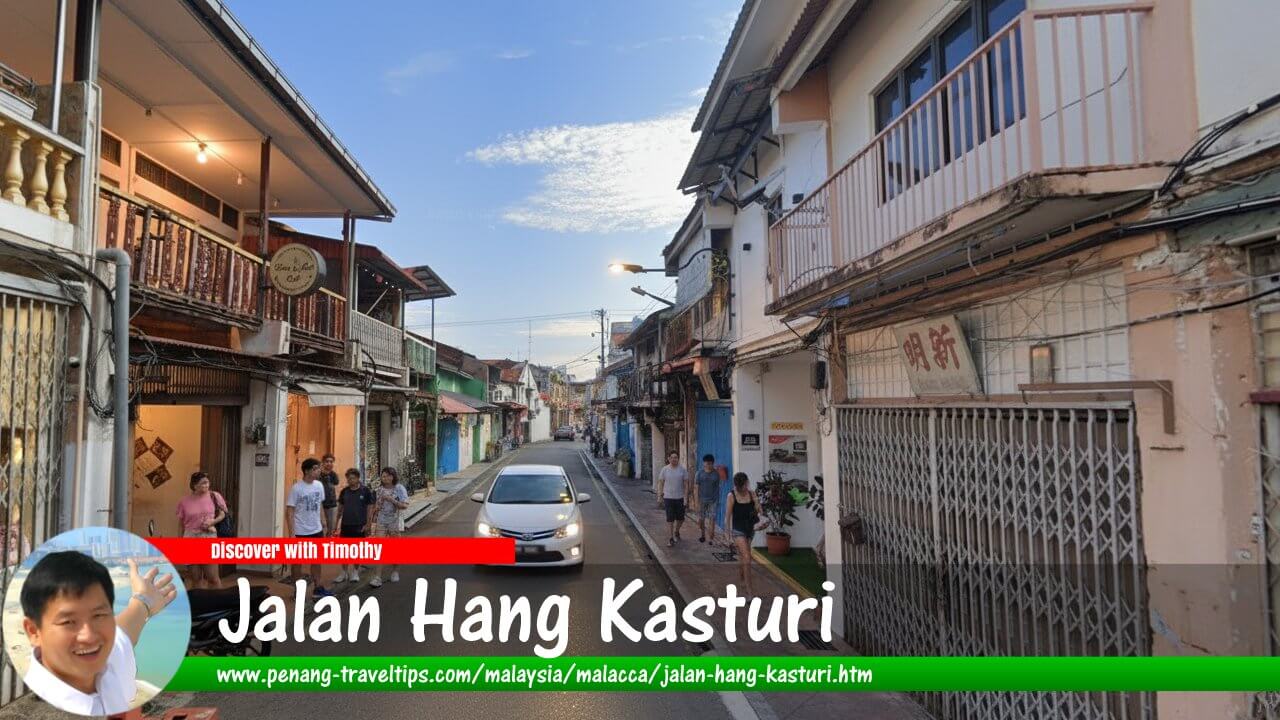 Jalan Hang Kasturi, Malacca (AI generated on 30 December 2025)
Jalan Hang Kasturi in the heart of Malacca City, Malaysia, is a short but culturally significant street stretching approximately 316 metres. It runs from Jalan Kampung Pantai in the north to Jalan Tun Tan Cheng Lock in the south, intersecting notable thoroughfares such as Jalan Hang Jebat, Jalan Tukang Emas and Jalan Tukang Besi. The street’s orientation and traffic patterns reflect its old-town layout and busy heritage context. Traffic flows one-way southbound from Jalan Kampung Pantai to the junction with Jalan Tukang Emas and Jalan Tukang Besi, and northbound from the intersection with Jalan Hang Jebat to the same junction, with continuing southbound flow from Jalan Hang Jebat towards Jalan Tun Tan Cheng Lock and Jalan Laksamana 1.
Quick Facts
- Location: Malacca City, Malaysia
- Length: Approx. 316 m
- Orientation: North–south between major heritage streets
- Traffic: One-way sections adapted to narrow heritage road widths
- Nearby Streets: Jalan Kampung Pantai, Jalan Hang Jebat, Jalan Tun Tan Cheng Lock, Jalan Tukang Emas, Jalan Tukang Besi, Jalan Kampung Kuli
- In Heritage Zone: Within the UNESCO World Heritage core of Melaka City
History
Jalan Hang Kasturi dates back to Malacca’s development as a port and trade centre and forms part of the Historic Cities of the Straits of Malacca UNESCO World Heritage site core area, alongside other narrow streets laid out in the colonial era and earlier. Its historic setting reflects the dense urban fabric of pre-modern Melaka where narrow lanes and cross streets eased pedestrian commerce and access between neighbourhoods. The street itself historically was referred to by locals as “Second Cross Street” due to its position in the street grid of the old Chinese-Malay town area. Its continued use and preservation are tied to the tourism and heritage conservation of the old city centre.:contentReference[oaicite:0]{index=0}
Name and Origins
The name Hang Kasturi honours a legendary warrior figure in Malay literature associated with the tales of Hang Tuah and his companions. While the exact date the street received its current name is not documented in official records, the use of Malay hero names throughout the core heritage streets of Malacca reflects efforts in the post-colonial period to celebrate local history and integrate Malay cultural narratives into the urban fabric alongside the many colonial and Chinese influences.:contentReference[oaicite:1]{index=1}
Character and Surroundings
Jalan Hang Kasturi retains the charm of Malacca’s old town streets — narrow, pedestrian-friendly, and lined with traditional shophouses, cafés, souvenir shops, and artisanal businesses. At night during weekends, parts of the immediate area come alive with food stalls and local vendors, earning the street local nicknames such as “Tofu Street” due to popular tofu-based snacks sold in the vicinity.:contentReference[oaicite:2]{index=2} The immediate surroundings are a mixture of low-rise historic buildings, guesthouses catering to tourists, and heritage businesses serving both visitors and locals.
Urban Fabric and Heritage Context
Jalan Hang Kasturi sits within a grid of narrow lanes and streets characteristic of the Malacca heritage zone, designed originally for ox-carts, pedestrians and rickshaws rather than modern vehicular traffic. It helps connect several culturally important streets including the famed Jonker Walk (Jalan Hang Jebat) area, a major tourist draw featuring antiques, handicrafts, foods, and other local products popular during weekend night markets.:contentReference[oaicite:3]{index=3}
Nearby Streets and Landmarks
Jalan Hang Kasturi intersects and neighbours a number of significant streets:
- Jalan Kampung Pantai – northern terminus in the heritage grid.
- Jalan Hang Jebat – also known as Jonker Street, famed for its nightlife and markets.:contentReference[oaicite:4]{index=4}
- Jalan Tun Tan Cheng Lock – formerly Heeren Street, noted for opulent Peranakan houses.:contentReference[oaicite:5]{index=5}
- Jalan Tukang Emas and Jalan Tukang Besi – historically associated with local artisans such as goldsmiths and tinsmiths.:contentReference[oaicite:6]{index=6}
- Jalan Kampung Kuli – T-junction connecting to the historic network.:contentReference[oaicite:7]{index=7}
Interesting Sights and Attractions
Visitors walking along Jalan Hang Kasturi and its immediate surroundings will find:
- Heritage shophouses with restored façades and traditional architectural details.
- Artisanal workshops producing handcrafted items reminiscent of traditional trades.:contentReference[oaicite:8]{index=8}
- Access to Jonker Walk Night Market on nearby Jalan Hang Jebat, especially lively Friday through Sunday evenings.:contentReference[oaicite:9]{index=9}
- Cafés, boutiques and galleries showcasing local crafts and foods.
Real Estate and Property Values
Being at the heart of Malacca’s UNESCO heritage zone means properties around Jalan Hang Kasturi and nearby streets fetch premium prices relative to average city residential transactions. As of 2025, the median transacted residential price in the state of Melaka was around RM 295,000, or roughly RM 215 per square foot (~RM 2,315/m²), with notable variance depending on location and building type.:contentReference[oaicite:10]{index=10} Heritage shophouse properties in areas like Jonker Street and Heeren Street have been known to sell at higher rates — in the range of RM 1,200 to RM 1,500 per square foot for prime pre-war units due to their rarity, tourist appeal and commercial potential.:contentReference[oaicite:11]{index=11} These shophouses often range in size from about 1,500 to 2,000 sq ft (about 140–185 sq m) but can vary widely depending on depth, frontage and internal configuration.:contentReference[oaicite:12]{index=12} Rental yields for such heritage properties typically start from several thousand ringgit monthly for commercial-oriented uses, reflecting the tourist traffic and business demand in the core heritage district.:contentReference[oaicite:13]{index=13}
Transport and Accessibility
Although Jalan Hang Kasturi itself is narrow and designed for calm travel, it is well-served by local bus routes that circulate through the Malacca city centre. Regular local bus services stop along nearby main streets such as Jalan Kampung Pantai and Jalan Tun Tan Cheng Lock, offering visitors easy access to and from the core heritage zone and nearby transit hubs. Pedestrian traffic is particularly high during market hours and weekends.
Fun Facts
Locals sometimes call Jalan Hang Kasturi “Second Cross Street” because of its placement in the old grid of heritage streets. Parts of the street’s weekend culture — including the tofu snacks and artisanal tin-work stalls — reflect living traditions that harken back to Malacca’s artisan economy of past centuries.:contentReference[oaicite:14]{index=14}
Map of Malacca, Malacca
References
- Melaka Heritage Trail – Malaysia Traveller
- World Heritage Melaka Trail
- Jalan Hang Kasturi: Street of tinsmiths and tofu – The Star
- Commercial properties near Jonker Street – PropertyGuru
- Residential transaction prices in Melaka – iProperty
- Heritage building investment insight – The Edge Malaysia
- Jonker Walk – Wikipedia
- Jalan Tun Tan Cheng Lock – Wikipedia
Page Details
This page was created on 30 December 2025. Hi, my name is Timothy and created it from my research, for my own entertainment, knowledge and to satisfy my curiosity. I am providing the information to you in good faith and hope it is useful. I try to get the details as accurate as possible. I also try to update the page whenever I stumble on new details. So this and all my other pages are perpetual work in progress. If you discover any error, please politely inform me, pointing out where the error lies, and I will correct it as soon as possible. Your helpfulness will keep this page accurate, relevant and helpful to those who need the information.Streets of Malacca Directory
Want to share your Malacca travel experiences or get tips from fellow travellers?
Join the Malacca Travel Tips Facebook GroupInformation for visiting Malacca
Here are some related articles to help you get to know Malacca better.Introduction to Malacca
Information on buying property or renting in Malacca
 Latest Pages & Updates
Buy Me A Coffee
If you enjoy the information I provide and want to support the work I do, please buy me a coffee! I appreciate it immensely, thank you so much!
