
Cheng Ho Cultural Museum
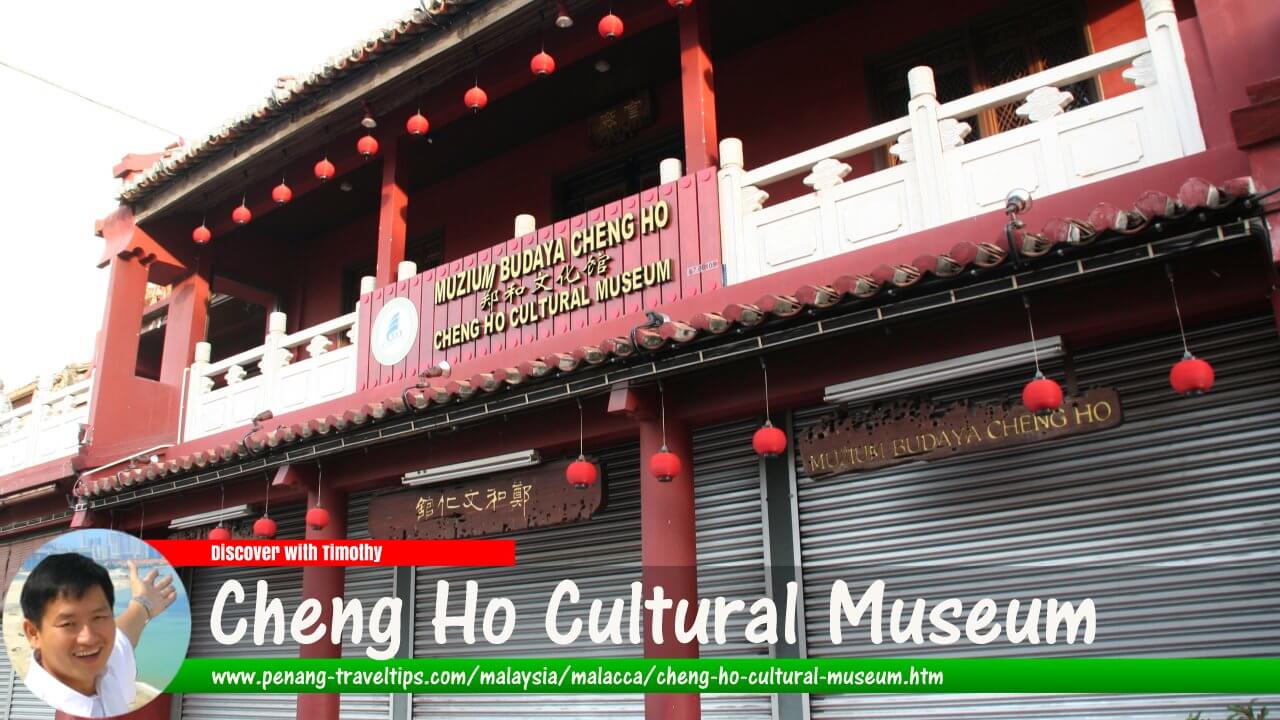 Cheng Ho Cultural Museum (2 May 2009)

Also available: Muzium Budaya Cheng Ho | Cheng Ho Cultural Museum (中文版)
Cheng Ho Cultural Museum (GPS: 2.19537, 102.24857) is a private museum in the historic centre of Malacca, Malaysia, dedicated to the voyages of Admiral Cheng Ho (Zheng He), the Chinese Muslim maritime commander of the Ming dynasty. Housed in a row of interconnected historic shophouses, the museum presents exhibits on Chinese maritime exploration, the history of Malacca, and the cultural exchanges between China and Southeast Asia. Its collections include models of treasure ships, navigational instruments, historical artefacts and displays illustrating the development of maritime trade and Chinese communities in the Malay Archipelago.1
Quick Facts
- Name: Cheng Ho Cultural Museum
- Chinese name: 郑和文化博物馆
- Malay name: Muzium Budaya Cheng Ho
- Location: 51, Lorong Hang Jebat, 75200 Melaka, Malaysia
- GPS coordinates: 2.19537, 102.24857
- Phone: +60 6-288 8571
- WhatsApp: +60 10-350 1460
- Website: https://chengho.my
- Opening Hours: Mon-Thu 9:30am-5:15pm; Fri-Sun & public holidays 9:30am-6:00pm; open daily
- Admission: Non-Malaysian: Adult RM15, Child RM8 | Malaysian: Adult RM10, Child RM5
- Type: Private cultural and maritime history museum
- Established: Opened to the public in 2005
- Main subject: Admiral Cheng Ho, Chinese maritime expeditions, and Chinese-Malay cultural relations
- Notable exhibits: Treasure ship models, maritime artefacts, navigation instruments, historical displays and traditional Chinese cultural objects
- Opening hours: Monday–Thursday, 9:30 am–5:15 pm; Friday–Sunday and public holidays, 9:30 am–6:00 pm. Last admission is earlier than closing time.
- Admission: Fees apply; check the museum's official website for current rates.
- Nearby attractions: Jonker Street, the Stadthuys, Dutch Square, the Malacca River and the historic commercial streets of the old city
Location and Geography
Cheng Ho Cultural Museum is situated in the historic core of Malacca, within walking distance of several major heritage attractions. It occupies interconnected shophouses along Lorong Hang Jebat and the surrounding historic street network, in an area that developed through centuries of commerce, settlement and cultural interaction.
The museum stands close to the Malacca River, which historically served as the principal artery of the city's port. The river connected the trading settlement to the Straits of Malacca and the wider maritime networks linking the Malay Archipelago, China, India and other parts of Asia. Its location provides a useful setting for understanding the commercial environment in which Chinese merchants and foreign traders interacted with the local population.
The surrounding district is characterised by traditional shophouses, narrow streets, temples, heritage buildings, cafés and souvenir shops. Lorong Hang Jebat is near the well-known Jonker Street area, making the museum a convenient stop on a walking tour of old Malacca.
The museum's reported coordinates are approximately 2.19537° N, 102.24857° E. Visitors using satellite navigation should search for Cheng Ho Cultural Museum or its street address, as individual mapping services may display slightly different coordinates.
History of Cheng Ho Cultural Museum
Establishment of the Museum
Cheng Ho Cultural Museum was established by Singaporean-Malaysian historian and heritage enthusiast Dr Tan Ta Sen and opened to the public in 2005, marking the 600th anniversary of the beginning of Cheng Ho's first major maritime expedition in 1405.1
The museum was conceived to present the history of Cheng Ho's voyages and their significance to the development of maritime connections between China and Southeast Asia. It also explores the historical relationship between China and Malacca, a port that became an important centre of international commerce during the fifteenth century.
The museum occupies a complex of interconnected old shophouses that have been adapted for exhibition purposes. Their traditional architectural character complements the museum's subject matter, although the building's present museum function should be distinguished from the historical claims associated with the site.
Since its establishment, the museum has served as a privately operated cultural institution focusing on maritime history, Chinese heritage, historical research and intercultural exchange. Its exhibitions provide visitors with an alternative perspective on Malacca's past, complementing the city's museums devoted to the Portuguese, Dutch and British periods.
Admiral Cheng Ho and the Ming Dynasty Voyages
Cheng Ho, known in modern Chinese pinyin as Zheng He (郑和), was a Muslim admiral and diplomat who served the Ming dynasty of China. Born in Yunnan in 1371, he became one of the most prominent maritime commanders in Chinese history.
Between 1405 and 1433, Cheng Ho led seven major maritime expeditions under the patronage of the Yongle Emperor and his successor. These voyages travelled across the South China Sea and the Indian Ocean, reaching numerous ports in Southeast Asia, South Asia, the Arabian Peninsula and the eastern coast of Africa.
The expeditions combined diplomatic missions, commercial activity, the exchange of gifts, and the projection of Ming imperial influence. Their fleets included large numbers of vessels and personnel, although the precise dimensions and descriptions of the largest ships remain subjects of historical discussion.
Malacca occupied a strategically important position along the maritime route between China and the Indian Ocean. Its location near the Straits of Malacca made it a natural stopping point for ships travelling between East Asia and the trading centres of the west. The settlement developed into a significant entrepôt under the Malacca Sultanate in the fifteenth century.
Cheng Ho's expeditions helped strengthen diplomatic and commercial connections between Ming China and regional polities, including Malacca. Chinese records and later historical accounts describe relations between the Ming court and the Malacca Sultanate during this period.
The museum interprets these connections through exhibits on the admiral's life, his fleet, maritime technology, trade and the cultural encounters that took place across the region. Visitors should distinguish the well-established historical context of Cheng Ho's voyages from more specific claims about individual buildings or archaeological sites in Malacca.
The Question of Cheng Ho's Warehouses in Malacca
One of the museum's notable historical themes concerns the possibility that the site was associated with warehouses used during Cheng Ho's expeditions. The museum has presented the location as a possible site of warehouse facilities connected with the admiral's activities in Malacca.1,2
According to the museum's own account, however, further research is required to substantiate the identification. The proposed association should therefore be treated as a historical claim rather than an established archaeological fact.
The uncertainty is important because Malacca's role as a major trading port makes the presence of commercial storage facilities historically plausible, but plausibility alone cannot establish the precise location of a particular warehouse complex. Documentary evidence, archaeological findings and the interpretation of historical place names must be assessed together before such an identification can be confirmed.
The museum is consequently interesting not only for its displays but also for the questions it raises about how historians reconstruct the city's early maritime past.
Cheng Ho and Bukit Cina
Bukit Cina, a historic hill and Chinese cemetery area in Malacca, is also associated with traditions concerning early Chinese settlement and Cheng Ho's voyages. Some accounts connect the hill with the name Sampo Hill, a name associated with Cheng Ho in regional tradition.
However, the suggestion that Cheng Ho personally visited Bukit Cina, or that the hill's historical name conclusively establishes such a visit, requires careful qualification. A definitive connection would need to be supported by reliable contemporary documentation or other convincing historical evidence.
The wider historical context is less controversial: Chinese communities and maritime networks played an important role in Malacca's development, and the city's position along major trading routes facilitated long-standing contacts between China and the Malay world. The museum provides an opportunity to explore these connections while recognising the difference between documented history, later tradition and unresolved historical interpretations.
Exhibitions and Collections
The museum's exhibitions cover Cheng Ho's maritime expeditions, the technology and organisation of his fleet, trade across the Indian Ocean, and the interaction between Chinese and Southeast Asian societies. The displays combine models, artefacts, illustrations and interpretive material to introduce visitors to the historical period.
Treasure Ship Models
Models of Chinese treasure ships are among the museum's principal attractions. They illustrate the scale and general appearance of the vessels associated with the Ming expeditions and help visitors visualise how large fleets could carry diplomatic envoys, sailors, soldiers, supplies and trading goods over long distances.
The ships formed part of a wider maritime system that relied on navigation knowledge, seasonal monsoon winds, organised crews and access to ports along established sea routes. Models are useful for understanding these operations, although reconstructions of the largest vessels should not automatically be treated as definitive representations of their exact historical dimensions.
Navigation and Maritime Trade
Displays of navigational instruments and maritime equipment introduce visitors to the practical challenges of long-distance sailing before modern engines, satellite positioning and electronic navigation. Mariners depended on accumulated knowledge of winds, currents, coastlines, celestial observations and established sailing routes.
The museum also examines the commercial environment of the voyages. Chinese ceramics, trade goods and other historical objects help illustrate the movement of products and ideas between China and the ports of Southeast Asia and the Indian Ocean.
These exchanges were not limited to material goods. Maritime commerce also encouraged the movement of people, languages, religious traditions, foodways and technical knowledge. Malacca's historical significance lies partly in its position as a meeting place for merchants and communities from different parts of Asia.
Chinese Culture and the Malacca Connection
The museum explores aspects of Chinese cultural heritage and the relationship between Chinese visitors, settlers and local communities. Its displays place the voyages within the broader history of Chinese engagement with the Malay Archipelago.
Chinese merchants and settlers contributed to the commercial and social life of Malacca over successive centuries. Through contact and intermarriage, Chinese and local traditions also influenced the development of Peranakan communities, whose material culture and customs reflect the interaction of different cultural influences.
These later developments should not be attributed solely to Cheng Ho or to the voyages of the early fifteenth century. Rather, they formed part of a longer history of migration, trade and settlement that continued well beyond the Ming expeditions.
Traditional Chinese Architecture and Teahouse
The museum's traditional Chinese decorative elements contribute to its historical atmosphere. Visitors may encounter architectural details, furnishings and displays inspired by Chinese cultural traditions, alongside a teahouse associated with the visitor experience.
The teahouse provides a cultural complement to the museum's exhibitions, introducing visitors to the role of tea in Chinese social life. Availability of refreshments and related services may vary, so visitors who specifically wish to use the teahouse should check with the museum before arriving.
Significance of the Museum
Cheng Ho Cultural Museum offers a perspective on Malacca's history that extends beyond the familiar narrative of European colonial rule. It highlights the city's earlier role in regional maritime networks and the importance of connections between China, the Malay world and the wider Indian Ocean.
The museum also illustrates how historical institutions interpret the past through collections, reconstructed scenes, architectural settings and research. Its discussion of the possible warehouse site demonstrates the need to distinguish between a museum's interpretation and conclusions that have been independently established through historical or archaeological evidence.
For visitors interested in Asian maritime history, Chinese heritage or the early history of Malacca, the museum provides useful context for understanding the city as an international port long before the arrival of the Portuguese in 1511.
How to Get to Cheng Ho Cultural Museum
By Car
Visitors travelling by car can navigate to 51, Lorong Hang Jebat, Melaka. The museum is located in the old city, where streets can be narrow and parking is limited, particularly during weekends, school holidays and public holidays.
It is generally more practical to park at a designated public car park and continue on foot rather than attempt to park directly outside the museum. Check local parking signs and restrictions before leaving your vehicle.
By Bus
Visitors arriving in Malacca by intercity bus will normally arrive at Melaka Sentral, the city's main bus terminal. From there, they can take a local bus or taxi, or arrange an e-hailing ride to the historic city centre.
Local bus routes and service frequencies may change, so check current transport information before travelling. The final approach to the museum is best made on foot if traffic congestion or road restrictions make direct access inconvenient.
By Taxi or E-hailing Service
Taxis and e-hailing services offer a convenient way to reach the old city from Melaka Sentral, hotels and other parts of Malacca. The driver may need to drop passengers at an accessible point nearby because some heritage streets have limited vehicle access or heavy pedestrian traffic.
On Foot
Walking is one of the most convenient ways to reach Cheng Ho Cultural Museum when exploring the historic centre. The museum is within walking distance of Jonker Street, Dutch Square, the Stadthuys and the Malacca River waterfront.
Visitors can combine the museum with other heritage attractions on the same outing. Allow extra time during hot or rainy weather, and take care when walking along streets shared by pedestrians, bicycles, motorcycles and other vehicles.
Opening Hours and Admission
The museum's official website currently lists the following opening hours:1
- Monday to Thursday: 9:30 am to 5:15 pm; last admission at 4:30 pm.
- Friday to Sunday and public holidays: 9:30 am to 6:00 pm; last admission at 5:15 pm.
Admission fees apply, with different rates for Malaysian citizens and visitors from overseas, as well as separate rates for adults and children. As ticket prices and admission arrangements can change, consult the museum's official website before visiting.
Allow sufficient time to explore the displays and read the accompanying explanations. Visitors with a particular interest in maritime history may wish to set aside more time than those planning only a brief stop during a walking tour.
Where to Stay
The historic centre of Malacca is a convenient base for visiting Cheng Ho Cultural Museum and the city's other major heritage attractions. Accommodation ranges from restored shophouse guesthouses and boutique heritage hotels to modern hotels with additional facilities.
Historic City Centre
Staying around Jonker Street, Jalan Hang Jebat and the surrounding heritage district allows visitors to walk to the museum, traditional shops, museums, temples and restaurants. This area is particularly suitable for travellers who want to explore the historic city without relying on a car.
However, the central district can be busy, especially on weekends and during holiday periods. Some streets are affected by evening crowds, and accommodation in converted heritage buildings may have limited parking or fewer modern facilities.
Malacca River and Dutch Square Area
The area around the Malacca River and Dutch Square provides another convenient base. Visitors can walk between the museum and several prominent landmarks, while riverfront establishments offer access to restaurants and cafés.
Accommodation Outside the Historic Core
Travellers seeking larger hotels, shopping facilities or easier vehicle access may prefer accommodation outside the old city. These properties can be suitable for families and visitors travelling by car, although transport will generally be needed to reach the museum.
What to Eat Near Cheng Ho Cultural Museum
The museum's location in the historic centre places visitors close to a wide selection of Malacca's traditional food and contemporary dining establishments. Food options range from Chinese and Peranakan cuisine to Malay dishes, local snacks and international fare.
Peranakan Cuisine
Peranakan cuisine, also known as Nyonya cuisine, reflects the historical interaction between Chinese and Malay culinary traditions. Common dishes include ayam pongteh, laksa, asam fish dishes and a variety of kuih. Recipes and flavours vary between restaurants and families.
Chicken Rice Balls
Chicken rice balls are one of Malacca's best-known local specialities. The dish consists of chicken rice shaped into compact balls, typically served with poached or roasted chicken and accompanying sauces. Restaurants serving this dish can be found in the historic centre and its surrounding streets.
Satay Celup
Satay celup is a popular Malacca dining experience in which skewered ingredients are cooked in a shared pot of satay-style peanut sauce. It is commonly enjoyed as a group meal, although visitors should check individual restaurants for ingredient choices and preparation practices.
Local Snacks and Drinks
Visitors exploring Jonker Street and the nearby commercial streets can also find traditional pastries, Chinese-style snacks, cendol, coffee and other refreshments. The selection varies by establishment, and some vendors operate primarily during busy periods or on weekends.
Travellers with dietary restrictions should ask restaurants about ingredients, cooking methods and food preparation. The presence of a dish on a menu does not necessarily indicate that it meets a particular dietary requirement.
How to Move Around the Area
Walking is the most practical way to explore the streets around Cheng Ho Cultural Museum. Many of Malacca's major heritage attractions are concentrated within a relatively compact area, allowing visitors to combine several stops without travelling long distances by vehicle.
- Walking: Best for the museum, Jonker Street, Dutch Square, the Stadthuys and nearby historic streets.
- Trishaws: Decorated tourist trishaws operate around popular heritage areas. Agree on the route, duration and fare before starting a journey.
- Taxis and e-hailing: Useful for travelling between the historic centre, Melaka Sentral and attractions farther away.
- Local buses: May be useful for selected journeys, depending on current routes and service frequencies.
- Private car: Convenient for exploring destinations beyond the city centre, but less practical for moving between nearby heritage attractions because of congestion and parking limitations.
Visitors should wear comfortable footwear and carry water, particularly when exploring the old city on foot during hot weather. Some historic streets have uneven surfaces, and pedestrian space may be limited in busy areas.
Suggested Places to Visit Nearby
Jonker Street
Jonker Street is one of Malacca's best-known historic commercial streets. It contains traditional shophouses, antique shops, restaurants, cafés and souvenir outlets. The street is especially busy during popular shopping periods and the weekend night market, when operating arrangements may affect vehicle access.
Dutch Square and the Stadthuys
Dutch Square is a prominent heritage area recognised for its red colonial-era buildings. The Stadthuys, historically associated with Dutch administration, now forms part of Malacca's museum complex. The square provides an introduction to the city's European colonial history and contrasts with the Chinese maritime themes presented at Cheng Ho Cultural Museum.
Malacca River
The Malacca River runs through the historic city and was central to its development as a trading port. Its banks now contain heritage buildings, restaurants, walkways and other visitor facilities. Walking along the river helps illustrate the relationship between the old commercial settlement and its maritime setting.
Maritime Museum
The Maritime Museum, housed in a replica of the Portuguese ship Flor de la Mar, examines Malacca's maritime history and its development as a trading centre. It complements Cheng Ho Cultural Museum by providing a broader account of the city's shipping, commerce and changing political fortunes.
Visiting Cheng Ho Cultural Museum
Cheng Ho Cultural Museum is a useful stop for travellers interested in the historical connections between China and Malacca. Its displays introduce visitors to Admiral Cheng Ho's expeditions, the development of Asian maritime networks and the role of the Malacca Sultanate in regional commerce.
The museum is particularly rewarding when considered alongside the historic streets and waterfront nearby. Together, these places help explain why Malacca became a meeting point for traders, travellers and communities from different parts of Asia.
When interpreting the museum's historical claims, visitors should distinguish between the documented voyages of Cheng Ho and proposed identifications of specific sites associated with him. This distinction adds depth to the visit by showing how historical understanding develops through research, evidence and the careful assessment of tradition.
References
- Cheng Ho Cultural Museum Melaka — Official Website. Information on the museum's establishment, exhibitions, opening hours, admission and historical interpretation.
- Tourism Melaka — Cheng Ho Cultural Museum. Overview of the museum, its location and the historical discussion concerning Cheng Ho's possible warehouse complex in Malacca.
- Malaysia Truly Asia — Museums in Melaka. Background on the museum's exhibitions, including ship models, maritime artefacts and the history of Cheng Ho.
- Malaysia Traveller — Cheng Ho Cultural Museum Melaka. Additional visitor information, location details and an overview of the museum's collections.
- British Council Malaysia — Cultural Cities Profile: Melaka. Background on the establishment and cultural role of Cheng Ho Cultural Museum.
Page Details
This page was created on 26 October 2026. Hi, my name is Timothy and created it from my research, for my own entertainment, knowledge and to satisfy my curiosity. I am providing the information to you in good faith and hope it is useful. I try to get the details as accurate as possible. I also try to update the page whenever I stumble on new details. So this and all my other pages are perpetual work in progress. If you discover any error, please politely inform me, pointing out where the error lies, and I will correct it as soon as possible. Your helpfulness will keep this page accurate, relevant and helpful to those who need the information.Want to share your Malacca travel experiences or get tips from fellow travellers?
Join the Malacca Travel Tips Facebook GroupInformation for visiting Malacca
Here are some related articles to help you get to know Malacca better.Introduction to Malacca
Information on buying property or renting in Malacca
 Latest Pages & Updates
Buy Me A Coffee
If you enjoy the information I provide and want to support the work I do, please buy me a coffee! I appreciate it immensely, thank you so much!
