
Rapid KL LRT
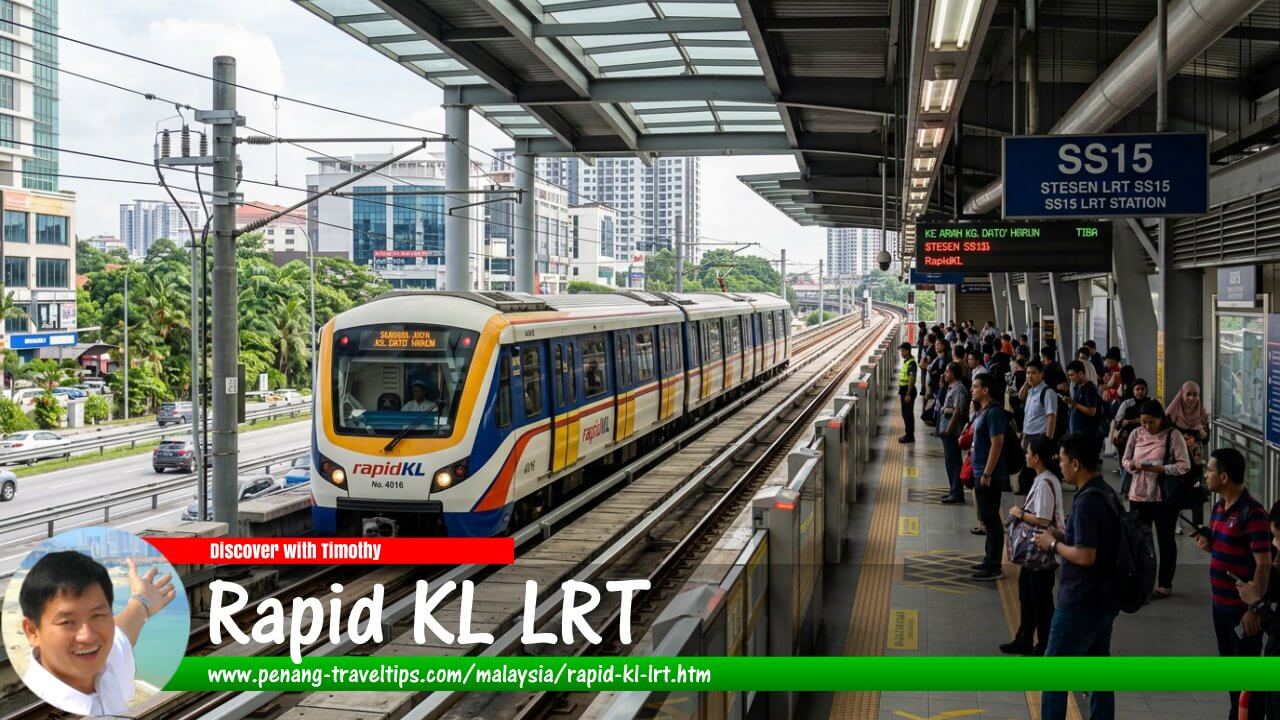 Train of the RapidKL LRT entering station (Picture edited with AI on 29 June 2026)
The Rapid KL LRT is one of the cornerstones of the Klang Valley public transport system, providing efficient, high-capacity rail service across Kuala Lumpur and Selangor. Operated by Rapid KL under Prasarana Malaysia Berhad, the network comprises four lines namely the LRT Ampang Line, LRT Sri Petaling Line, and LRT Kelana Jaya Line and the Shah Alam Line which became operational on 29 June 2026 — forming the backbone of urban mobility in the capital region1.
Overview of the Rapid KL LRT
The Rapid KL LRT spans over 90 kilometres and serves more than 60 stations across the Klang Valley. It connects residential suburbs, business districts, and key transport hubs, linking with KTM Komuter, MRT, and KLIA Transit services at multiple interchange points2.
The system is divided into two distinct types of technology: the Kelana Jaya Line, which uses fully automated driverless trains, and the Ampang and Sri Petaling Lines, which use modern driver-operated trains running on a shared elevated and at-grade network.
The Three Lines of the Rapid KL LRT
LRT Kelana Jaya Line
The LRT Kelana Jaya Line runs from Putra Heights to Gombak, covering 46.4 kilometres and serving 37 stations. It is Malaysia’s first driverless rapid transit line, known for its high frequency and coverage of major destinations such as KLCC, KL Sentral, and Subang Jaya3. Read more: LRT Kelana Jaya Line.
LRT Ampang Line
The LRT Ampang Line operates from Sentul Timur to Ampang, stretching approximately 18.4 kilometres. It primarily serves eastern and northern Kuala Lumpur, including Maluri, Pandan Indah, and Ampang. The line shares part of its track with the LRT Sri Petaling Line before splitting at Chan Sow Lin station4. Read more: LRT Ampang Line.
LRT Sri Petaling Line
The LRT Sri Petaling Line extends from Sentul Timur to Putra Heights, sharing its northern section with the Ampang Line before diverging at Chan Sow Lin. The 37.6-kilometre route passes through Bandar Tasik Selatan, Bukit Jalil, and Kinrara before linking to the LRT Kelana Jaya Line at Putra Heights5. Read more: LRT Sri Petaling Line.
LRT Shah Alam Line
The LRT Shah Alam Line (LRT3) runs from Bandar Utama to Johan Setia, covering approximately 37.8 kilometres and serving 25 stations. Opened in 2025, it connects Petaling Jaya, Shah Alam and Klang while providing convenient interchanges with the MRT Kajang Line, MRT Putrajaya Line and KTM Komuter Port Klang Line, making it an important addition to the Rapid KL rail network.4 Read more: LRT Shah Alam Line.
Interchange Stations
Several stations serve as major interchanges within the Rapid KL LRT, allowing passengers to transfer easily between lines or to other rail systems:
- Masjid Jamek – interchange between the LRT Kelana Jaya, Ampang, and Sri Petaling Lines
- Putra Heights – interchange between the Kelana Jaya and Sri Petaling Lines
- Sentul Timur – shared terminus for Ampang and Sri Petaling Lines
- KL Sentral – connects to KTM Komuter, KLIA Transit, and MRT Kajang Line
- Bandar Tasik Selatan – links to KTM Komuter and KLIA Transit
Ticketing and Payment
Commuters on the Rapid KL LRT use the Touch 'n Go cashless payment system, compatible with other Rapid KL services including MRT, Monorail, and Rapid Bus. Passes such as the MyCity and My50 provide unlimited travel across the network for daily or monthly use6.
Connectivity and Integration
The LRT network forms part of a wider integrated transport ecosystem. It connects with the Kajang Line MRT at Pasar Seni and KL Sentral, and the Putrajaya Line MRT at Ampang Park. The network also links with express bus services, park-and-ride facilities, and key expressways such as the Federal Highway (FT2), Lebuhraya Damansara–Puchong (LDP, E11), and Maju Expressway (MEX, E20)7.
Role in the Klang Valley Urban Landscape
Since its inception, the Rapid KL LRT has reshaped how residents and visitors travel across Greater Kuala Lumpur. It reduces traffic congestion, supports sustainable mobility, and connects key residential and commercial districts. The network is also a catalyst for transit-oriented development (TOD), promoting new housing and retail growth around stations8.
Future Expansions
Ongoing studies and public transport plans envision upgrades and capacity expansions for the Rapid KL LRT. These include additional stations, improved train frequency, and better interchange integration with upcoming MRT lines to further enhance Klang Valley’s rail coverage9.
References
- Rapid KL Official Website
- Prasarana Malaysia Berhad
- LRT Kelana Jaya Line
- LRT Ampang Line
- LRT Sri Petaling Line
- Touch 'n Go Malaysia
- Highways Malaysia – Expressways and Codes
- MRT Corp – Klang Valley Network Overview
- The Star – Future Plans for Klang Valley Rail Upgrades
Page Details
This page was created on 9 October 2025. Hi, my name is Timothy and created it from my research, for my own entertainment, knowledge and to satisfy my curiosity. I am providing the information to you in good faith and hope it is useful. I try to get the details as accurate as possible. I also try to update the page whenever I stumble on new details. So this and all my other pages are perpetual work in progress. If you discover any error, please politely inform me, pointing out where the error lies, and I will correct it as soon as possible. Your helpfulness will keep this page accurate, relevant and helpful to those who need the information.Return to Kuala Lumpur MRT, Malaysia Rail Transportation Network
Rapid Transit Lines
 Latest updates on Penang Travel Tips
Buy Me A Coffee
If you enjoy the information I provide and want to support the work I do, please buy me a coffee! I appreciate it immensely, thank you so much!
