
St Mary-le-Bow Church, London
The previous St Mary-le-Bow Church building had been standing on that site since before the Norman invasion, and was already called by that name. An even earlier copy of the church was destroyed in 1091, in what is believed to be the earliest recorded as well as the most ferocious tornadoes to have ever hit London.
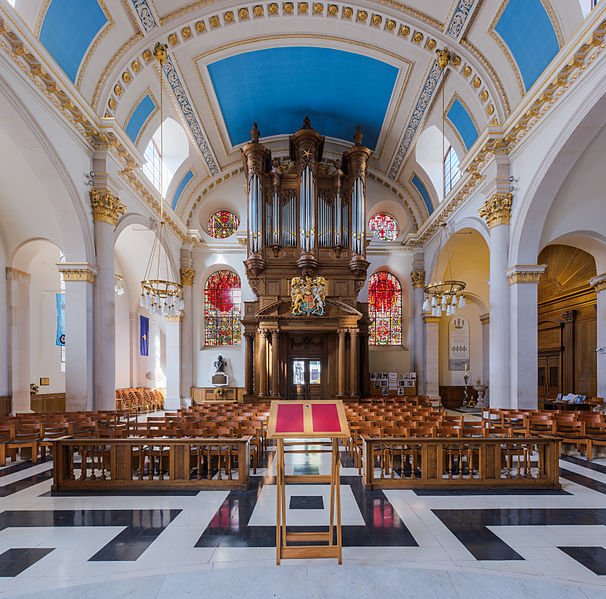 Interior of St Mary-Le-Bow Church
Source: https://upload.wikimedia.org/wikipedia/commons/d/d9/St_Mary-le-Bow_Church_Interior_2%2C_London%2C_UK_-_Diliff.jpg
Author: David Iliff

The bells of the St Mary-le-Bow Church was used in the olden times to signal a curfew in the City of London. In those times, it could be heard as far away as Hackney Marshes. According to tradition, a person born within earshot of the sound of St Mary-le-Bow's bells can consider himself a true cockney. St Mary-le-Bow Church also appeared in a children's nursery rhyme, Oranges and Lemons. A recording of the Bow Bells was made in 1926. It has been used by BBC World Service as an interval signal for its English Language broadcasts since the 1940s, and is still used today.
St Mary-le-Bow Church was destroyed by German bombing on 10 May 1941 causing the bells to crash to the ground. Restoration work took place from 1956, and in 1961, the bells were rung once again. The silence of the bells between 1956 and 1961 resulted in a challenge in considering a person a true cockney, by the literal definition, as the Cockney area is defined by earshot of the bells. Furthermore, the increased din of London makes it all the more difficult to hear the bells.
In a study conducted in 2000, it was determined that the Bow Bells could be heard six miles to the east, five miles to the north, three miles to the south and four miles to the west. Moreover, there is no hospital with a maternity ward within earshot of the Bells, limiting the number of "true" Cockneys that could be born. The Cockney dialet has since migrated outside its original realm.
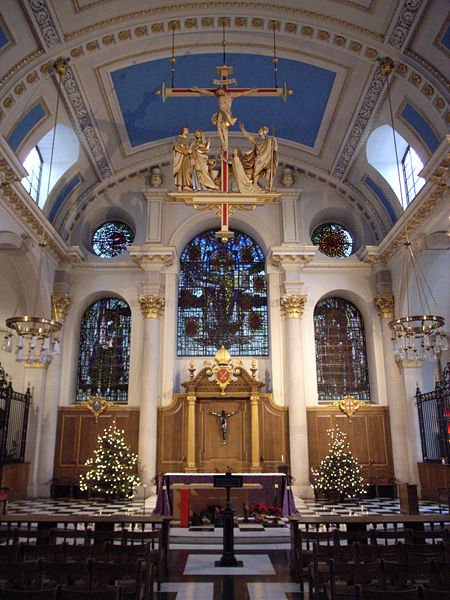 Interior of St Mary Le Bow Church
Source: https://commons.wikimedia.org/wiki/File:St_Mary-Le-Bow_Interior.jpg
Author: Steve Cadman
List of Churches in London
Want to share your London travel experiences or get tips from fellow travellers?
Join the London Travel Tips Facebook GroupMore information for visiting London
Here are some related articles to help you get to know London better.- Cost of Living in London: Discover the true cost of living in London, including housing, transport, groceries, and more - plus tips for budgeting in one of the world's most expensive cities.
- Driving in London: Planning to drive in London? Learn about roads, car rentals, parking, tolls, and key tips for tourists and visitors from outside the capital.
- Driving Tips for Visiting London: Thinking of driving to London? Discover the best times to travel, congestion tips, parking apps, breakdown help, and petrol advice for a smoother journey.
- Evolution of London's Streets: Discover the fascinating history of how London's streets developed from ancient footpaths to today's complex network of roads across the capital.
- History of Immigration to London: Discover the rich history of immigration to London, from Huguenots to Bangladeshis, and how diverse communities have shaped the city's vibrant identity.
- How Big Is London Compared to Other World Cities?
- How London's Streets Measure Up: A Global Comparison of Road Widths
- How Streets of London are Named: Discover how London streets get their names, who decides them, and how historic, political, and public influences shape street naming in the capital.
- How the Grosvenor Family Came to Own Much of Mayfair, Belgravia and Pimlico: Explore how the Grosvenor family came to own much of Mayfair, Belgravia, and Pimlico, and learn about their historical connection (or lack thereof) with the British royal family and government.
- Living and working in London
- London's Quiet Collapse: How Living Standards Fell as Costs Skyrockted (1975-2025): Explore how London residents endured rising costs and falling living standards from 1975 to 2025 - from rocketing rents to wage stagnation and inflation.
- Marvel of the London Underground: Discover the history, challenges, and triumphs of the London Underground - the world's first underground railway and a vital transport lifeline for the UK capital since 1863.
- Moving to London: Expat Tips for Settling in Westminster: Essential advice for expats moving to London's Westminster: neighborhood insights, cost of living, transportation, housing, healthcare, schools, and tips to help you feel at home in the heart of the city.
- Places in London that aren't pronounced the way they're spelled
- Shopping in London: Discover London's diverse shopping scene
- Taking the bus in London: This is your complete guide to taking the bus when in London.
- The Anglican Faith: A Visitor's Guide to the Church of England: Learn about the Anglican faith and its deep ties to London's landmarks like Westminster Abbey and St Paul's Cathedral.
- Top 10 London Streets Every Visitor Must See: Discover London through its most iconic thoroughfares - 10 streets every visitor must experience. From historic Abbey Road to vibrant Camden High Street, explore culture, shopping, and hidden gems.
- Why are most roads in Central London so narrow? Learn why there are so few multi-lane roads and elevated highways in the heart of the city.
 Latest Pages & Updates
Buy Me A Coffee
If you enjoy the information I provide and want to support the work I do, please buy me a coffee! I appreciate it immensely, thank you so much!
