
Somerset House, London
In the mid 18th century, there was growing criticism that London had no great public buildings. Government departments were huddled away in small old buildings all over the city. With growing national pride came comparison with other European capitals disquieting. There was a call for the government to build a national building that the nation can be proud of. In 1775 Parliament passed an Act to erect such a public building on the site of Somerset House. At that time, the Somerset House built by Edward Seymour had become a run down building owned by the Crown.
The old Somerset House was demolished that year. Sir William Chambers, the Surveyor-General of Works, was appointed, at a salary of 2000 pounds per annum, to design and build the new Somerset House. He was to spent the next two decades of his life on this project, begun in 1775. The North Wing that fronts the Strand was completed in 1780, but by the time Chambers died in 1796, the building was still not finished. The work was taken over by James Wyatt. By 1819, it was reported that final touches were still being put to it. The whole building probably cost about half a million pounds.
Although it was already truly magnificent, it was below Chamber's intention, for it was without the east and west wings he had planned. Cost was the inhibiting factor. It was only in 1856 that a further wing was erected. Today, after 150 years, it was still known, in a very British way, as the new wing.
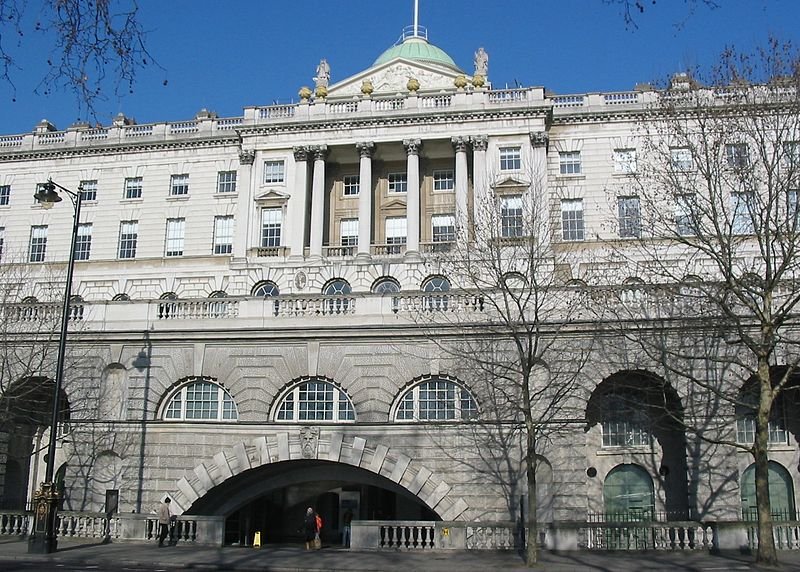 Somerset House, riverside entrance
Source: https://commons.wikimedia.org/wiki/File:Somerset_House_riverside_entrance_2.jpg
Author: Man vyi

During the Second World War, Somerset House sustained some damaged. The repairs were only completed in the 1950s.
Government departments were and continued to be the main occupants of Somerset House. The main tenant of the new Somerset House were the Stamp Office and the Tax Office. These two Offices merged with the Excise Department, evolved to became Inland Revenue in 1849, and were the largest occupier of the building. The North Wing was open to public use from the 1970s.
Inland Revenue eventually merged in 2005 with HM Customs and Excise. Its successor HM Revenue & Customs remain the occupants of Somerset House. Various divisions and Directorates of HMRC (most notably the Solicitor's Office) currently occupy the east, west and new wings. In 2004 it was proposed that the newly-proposed Supreme Court of the United Kingdom be housed in the New Wing, but in the end, Middlesex Guildhall because the choice instead.
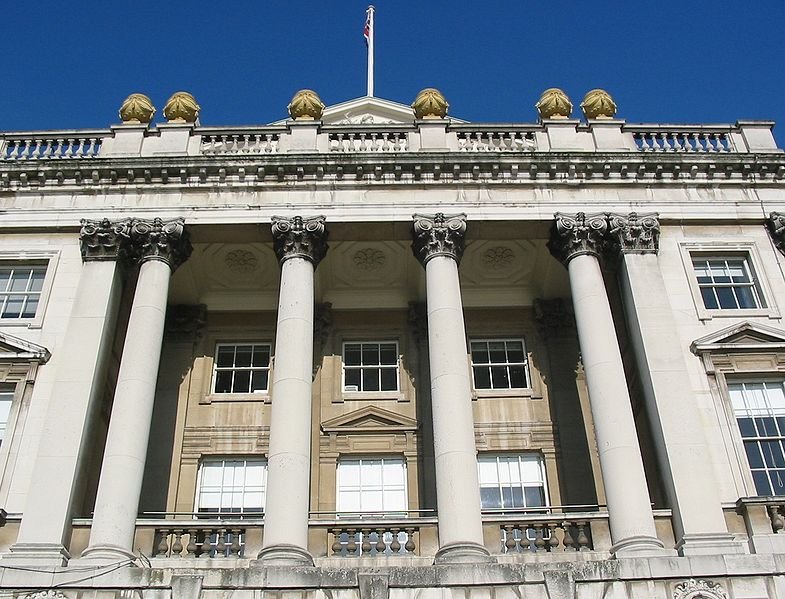
Somerset House
Source: https://commons.wikimedia.org/wiki/File:Somerset_House_riverside_fa%C3%A7ade_columns.jpg
Author: Man vyi
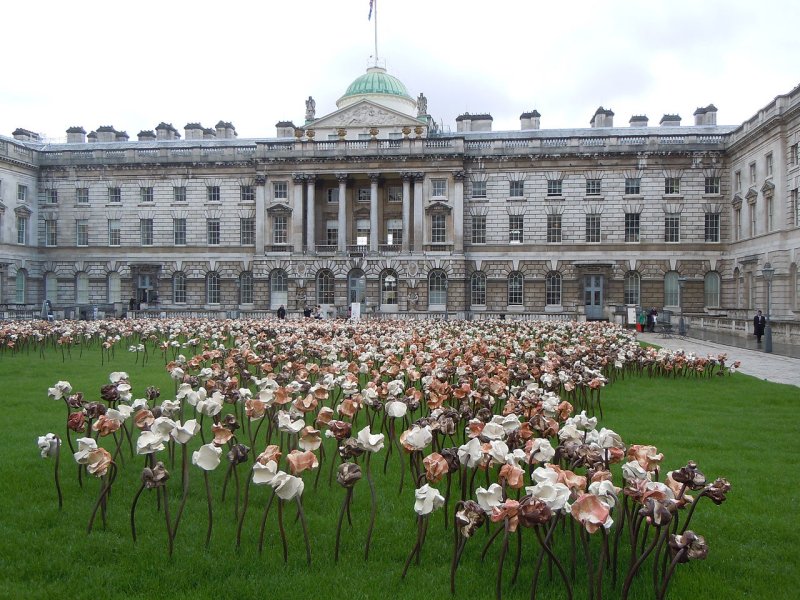
10,000 fleurs d'Argile at Somerset House
Source: https://commons.wikimedia.org/wiki/Category:Somerset_House#mediaviewer/File:Somerset_House_-_Fernando_Casasempere_North.jpg
Author: Patrice78500
Getting there
Address: Strand WC2R 0RNTel: 020 7845 4600 (pre-recorded info)
Opening hours: 10:00am - 6:00pm
Entrance fee: free
Nearest Tube Station: Temple (closed Sundays), Covent Garden, Holborn, Blackfriars
Buses: 9, 11, 15, 23, 91
Boat pier: Embankment
Restaurants: Admiralty
Somerset House is  on the Map of Historic Buildings of London
List of Historic Buildings of London
Want to share your London travel experiences or get tips from fellow travellers?
Join the London Travel Tips Facebook GroupMore information for visiting London
Here are some related articles to help you get to know London better.- Cost of Living in London: Discover the true cost of living in London, including housing, transport, groceries, and more - plus tips for budgeting in one of the world's most expensive cities.
- Driving in London: Planning to drive in London? Learn about roads, car rentals, parking, tolls, and key tips for tourists and visitors from outside the capital.
- Driving Tips for Visiting London: Thinking of driving to London? Discover the best times to travel, congestion tips, parking apps, breakdown help, and petrol advice for a smoother journey.
- Evolution of London's Streets: Discover the fascinating history of how London's streets developed from ancient footpaths to today's complex network of roads across the capital.
- History of Immigration to London: Discover the rich history of immigration to London, from Huguenots to Bangladeshis, and how diverse communities have shaped the city's vibrant identity.
- How Big Is London Compared to Other World Cities?
- How London's Streets Measure Up: A Global Comparison of Road Widths
- How Streets of London are Named: Discover how London streets get their names, who decides them, and how historic, political, and public influences shape street naming in the capital.
- How the Grosvenor Family Came to Own Much of Mayfair, Belgravia and Pimlico: Explore how the Grosvenor family came to own much of Mayfair, Belgravia, and Pimlico, and learn about their historical connection (or lack thereof) with the British royal family and government.
- Living and working in London
- London's Quiet Collapse: How Living Standards Fell as Costs Skyrockted (1975-2025): Explore how London residents endured rising costs and falling living standards from 1975 to 2025 - from rocketing rents to wage stagnation and inflation.
- Marvel of the London Underground: Discover the history, challenges, and triumphs of the London Underground - the world's first underground railway and a vital transport lifeline for the UK capital since 1863.
- Moving to London: Expat Tips for Settling in Westminster: Essential advice for expats moving to London's Westminster: neighborhood insights, cost of living, transportation, housing, healthcare, schools, and tips to help you feel at home in the heart of the city.
- Places in London that aren't pronounced the way they're spelled
- Shopping in London: Discover London's diverse shopping scene
- Taking the bus in London: This is your complete guide to taking the bus when in London.
- The Anglican Faith: A Visitor's Guide to the Church of England: Learn about the Anglican faith and its deep ties to London's landmarks like Westminster Abbey and St Paul's Cathedral.
- Top 10 London Streets Every Visitor Must See: Discover London through its most iconic thoroughfares - 10 streets every visitor must experience. From historic Abbey Road to vibrant Camden High Street, explore culture, shopping, and hidden gems.
- Why are most roads in Central London so narrow? Learn why there are so few multi-lane roads and elevated highways in the heart of the city.
 Latest Pages & Updates
Buy Me A Coffee
If you enjoy the information I provide and want to support the work I do, please buy me a coffee! I appreciate it immensely, thank you so much!
