
Government Buildings in London
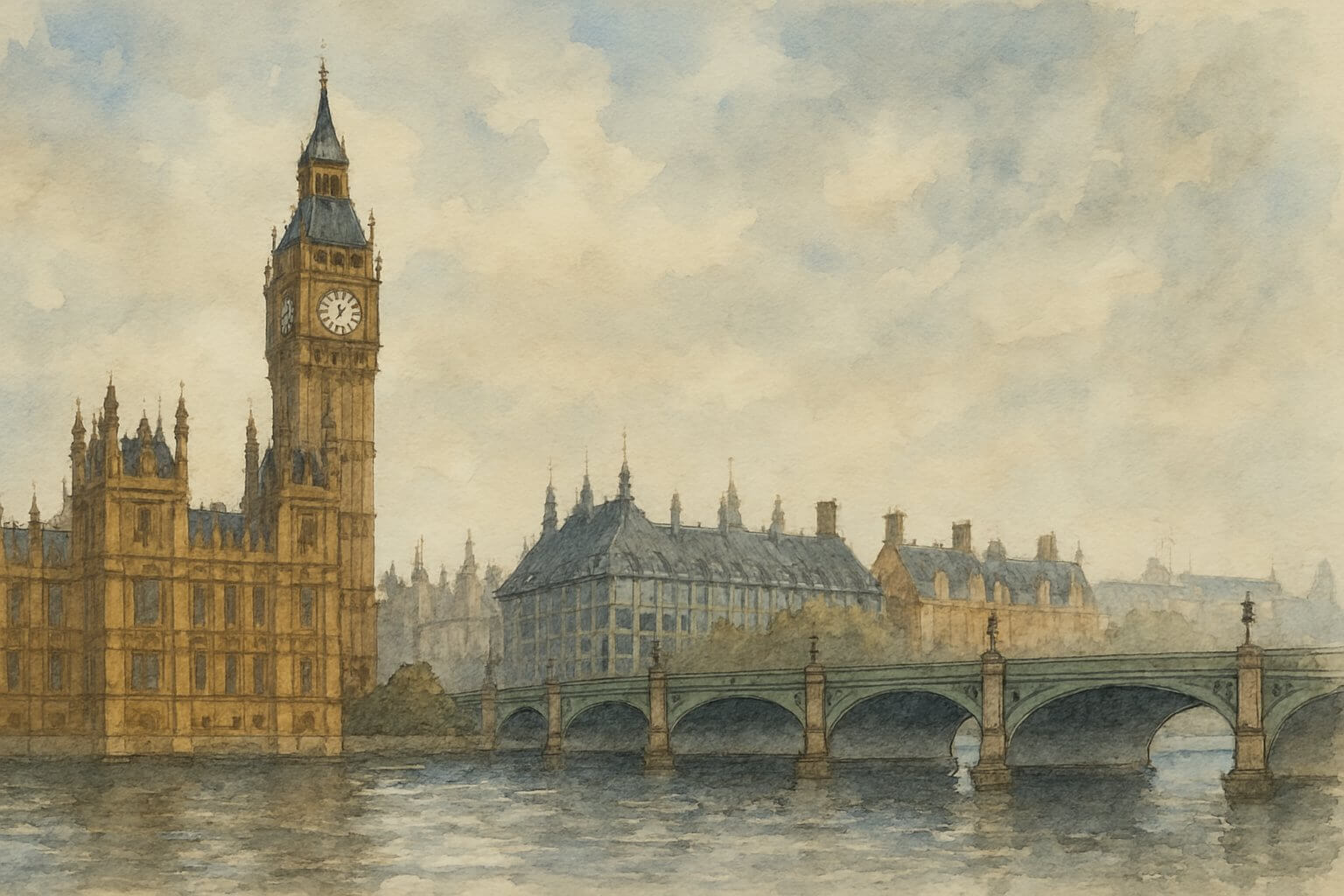 Watercolour of Government Buildings in London
London is home to a rich collection of buildings that play a vital role in the governance of the United Kingdom. These iconic structures are not only historical landmarks but also serve as the centers of political power, lawmaking, and decision-making. From the official residence of the Prime Minister at 10 Downing Street to the towering presence of the Palace of Westminster, London's government buildings are a testament to the country's political heritage and ongoing democratic processes.
Map of Government Buildings in London
Where Are London's Government Buildings Located?
London's government buildings are concentrated primarily in the Westminster area, with many surrounding the Palace of Westminster. This area is often referred to as the political heart of the city, as it is where the most crucial institutions of governance, including Parliament, the Prime Minister's residence, and various government departments, are situated. The proximity of these buildings to one another underscores the centralization of political and administrative power in the capital. From the grand halls of Parliament to the more modern spaces like Portcullis House, these government buildings are not just places of work - they represent the dynamic nature of British democracy, where history and modernity intersect.Many of the most important government buildings are concentrated around Whitehall, a street that runs through Westminster. Whitehall itself is home to the offices of several key ministries and departments, including the Treasury, the Foreign and Commonwealth Office, and the Ministry of Defence. Whitehall has long been the heart of the British civil service, where decisions are made and policies are developed.
List of Government Buildings
1 Parliament Street (GPS: 51.50136, -0.1257) A Hub for Government Administration
Located just a short walk from Westminster, 1 Parliament Street is home to several government departments and agencies. As one of the central administrative hubs, this building helps support the operations of the government, providing space for key officials and departments to coordinate and implement policy decisions.
10 Downing Street (GPS: 51.50336, -0.12762)
 The Heart of the British Government
One of the most famous government buildings in London, 10 Downing Street, has served as the residence and office of the Prime Minister for centuries. Situated in the City of Westminster, this Georgian townhouse has been the site of numerous political decisions that have shaped the nation's history. The building is iconic for its black door, which is often seen as a symbol of British power.
HM Revenue & Customs Building (GPS: 51.50159, -0.12649)
 100 Parliament Street
Located at 100 Parliament Street, the HM Revenue and Customs (HMRC) Building is a key government office situated in the heart of Whitehall. This imposing neoclassical structure, completed in the early 20th century, houses the central operations of HMRC, the UK government department responsible for tax collection, the payment of some forms of state support, and the administration of other regulatory regimes. The building is also partially occupied by the Treasury and other government departments, making it an important hub for public administration.
Portcullis House (GPS: 51.50127, -0.12435)
 Modern Government at Work
Across from the Palace of Westminster, Portcullis House stands as a modern addition to London's government buildings. Completed in the late 1990s, this building houses parliamentary offices and committee rooms. It is an essential part of the parliamentary complex, providing essential services and space for MPs to carry out their work away from the main Palace of Westminster.
The Palace of Westminster (GPS: 51.49947, -0.1248)
 The Home of Parliament
Perhaps the most recognizable of all the government buildings in London, the Palace of Westminster, or the Houses of Parliament, is home to both the House of Commons and the House of Lords. This imposing structure, located on the banks of the River Thames, is where MPs debate and pass laws, shaping the direction of the United Kingdom. The Palace's landmark clock tower, Big Ben, is one of the most famous symbols of London and democracy.
Want to share your London travel experiences or get tips from fellow travellers?
Join the London Travel Tips Facebook GroupMore information for visiting London
Here are some related articles to help you get to know London better.- Cost of Living in London: Discover the true cost of living in London, including housing, transport, groceries, and more - plus tips for budgeting in one of the world's most expensive cities.
- Driving in London: Planning to drive in London? Learn about roads, car rentals, parking, tolls, and key tips for tourists and visitors from outside the capital.
- Driving Tips for Visiting London: Thinking of driving to London? Discover the best times to travel, congestion tips, parking apps, breakdown help, and petrol advice for a smoother journey.
- Evolution of London's Streets: Discover the fascinating history of how London's streets developed from ancient footpaths to today's complex network of roads across the capital.
- History of Immigration to London: Discover the rich history of immigration to London, from Huguenots to Bangladeshis, and how diverse communities have shaped the city's vibrant identity.
- How Big Is London Compared to Other World Cities?
- How London's Streets Measure Up: A Global Comparison of Road Widths
- How Streets of London are Named: Discover how London streets get their names, who decides them, and how historic, political, and public influences shape street naming in the capital.
- How the Grosvenor Family Came to Own Much of Mayfair, Belgravia and Pimlico: Explore how the Grosvenor family came to own much of Mayfair, Belgravia, and Pimlico, and learn about their historical connection (or lack thereof) with the British royal family and government.
- Living and working in London
- London's Quiet Collapse: How Living Standards Fell as Costs Skyrockted (1975-2025): Explore how London residents endured rising costs and falling living standards from 1975 to 2025 - from rocketing rents to wage stagnation and inflation.
- Marvel of the London Underground: Discover the history, challenges, and triumphs of the London Underground - the world's first underground railway and a vital transport lifeline for the UK capital since 1863.
- Moving to London: Expat Tips for Settling in Westminster: Essential advice for expats moving to London's Westminster: neighborhood insights, cost of living, transportation, housing, healthcare, schools, and tips to help you feel at home in the heart of the city.
- Places in London that aren't pronounced the way they're spelled
- Shopping in London: Discover London's diverse shopping scene
- Taking the bus in London: This is your complete guide to taking the bus when in London.
- The Anglican Faith: A Visitor's Guide to the Church of England: Learn about the Anglican faith and its deep ties to London's landmarks like Westminster Abbey and St Paul's Cathedral.
- Top 10 London Streets Every Visitor Must See: Discover London through its most iconic thoroughfares - 10 streets every visitor must experience. From historic Abbey Road to vibrant Camden High Street, explore culture, shopping, and hidden gems.
- Why are most roads in Central London so narrow? Learn why there are so few multi-lane roads and elevated highways in the heart of the city.
 Latest Pages & Updates
Buy Me A Coffee
If you enjoy the information I provide and want to support the work I do, please buy me a coffee! I appreciate it immensely, thank you so much!
