
London Gatwick Airport
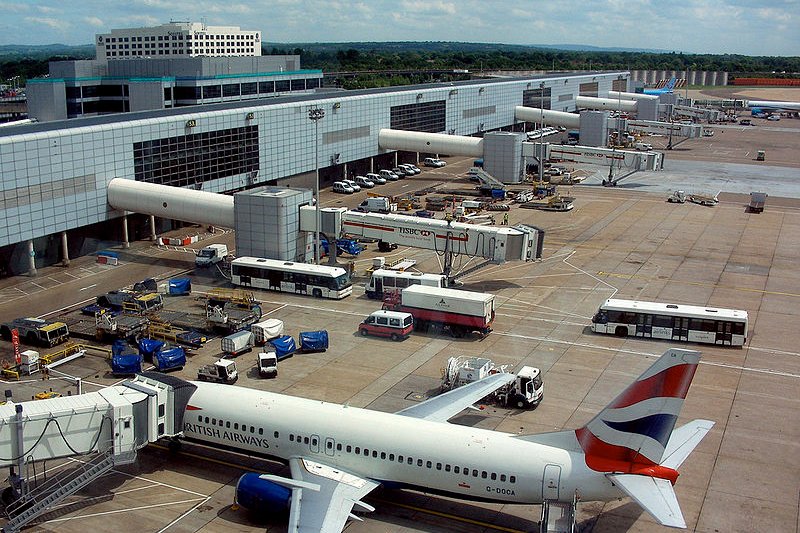 London Gatwick Airport
Source: https://commons.wikimedia.org/wiki/File:Gatwick_Airport,_North_Terminal.jpg
Author: Martin Roell

London Gatwick Airport (LGW) is the second busiest airport in the United Kingdom, and also the second largest in London. It is also the world's busiest single runway airport, the world's 22nd busiest airport in terms of passengers numbers, and the world's 7th busiest in terms of international passengers.
London Gatwick Airport is located in Crawley, West Sussex 46 km (28 miles) south of London. The site has been used as an aerodrome going back to the 1930's. For much of its early existence, it was the site of flying school. During the war years, it was used by the British Air Force for aircraft maintenance. It already had an underground train connection since 1936.
Gatwick Airport on Google Maps Street View
Arriving at Gatwick Airport
If you arrive at London Gatwick, you have the following options to reach London:- Gatwick Express
This is an express train that takes you to London Victoria train station in about 40 minutes. There's one every 15 minutes. The fare is £16.90 one way. - Southern Railway
This is another train service that goes to London Victoria train station, also taking about 40 minutes, but costs only £11.90. The frequency is also one every 15 minutes. - First Capital Connect
Yet another train service. This one stops at a number of stations including London Bridge, Blackfriars, City Thameslink, Farringdon and St Pancras International. You can also take it to Luton Airport. You can reach central London for £10. - National Express
This bus services takes you to the London Victoria train station in around 75-110 minutes. - Easybus
This bus service takes you to Fulham Broadway in London, in around 60-90 minutes, depending on traffic.
History of London Gatwick Airport
The decision to make in 1950 to use Gatwick as the second international airport after Heathrow. It closed for extensive renovation in 1956, and was reopened by Queen Elizabeth II in 1958. The renovated airport became the world's first passenger airport with railway connection. Today it is served by two terminals, North and South Terminal. Pier 6 at North Terminal, opened in 2005, is the world's longest air passenger bridge. It spans an aircraft taxiway, allowing passengers excellent views of the airport and planes.Gatwick is owned and operated by BAA which is owned by the Spanish Ferrovial Group. BAA owns and operates six other UK airports including Heathrow. There are 263,363 aircraft movements at Gatwick in 2006. In 2007 the airport surpassed the 35 million passenger milestone.
In 2008, Gatwick celebrated 50 years of operations. It was opened by Queen Elizabeth II on 9 June 1958. Today it is the main London base for charter airlines. Many flights to and from USA also use Gatwick due to restrictions at Heathrow. The airport is also a major operational base for British Airways, easyJet and Virgin Atlantic, and the base for charter airlines including First Choice Airways, Thomas Cook Airlines, Thomsonfly and XL Airways.
List of Airports in London and Airports in the United Kingdom
Want to share your London travel experiences or get tips from fellow travellers?
Join the London Travel Tips Facebook GroupMore information for visiting London
Here are some related articles to help you get to know London better.- Cost of Living in London: Discover the true cost of living in London, including housing, transport, groceries, and more - plus tips for budgeting in one of the world's most expensive cities.
- Driving in London: Planning to drive in London? Learn about roads, car rentals, parking, tolls, and key tips for tourists and visitors from outside the capital.
- Driving Tips for Visiting London: Thinking of driving to London? Discover the best times to travel, congestion tips, parking apps, breakdown help, and petrol advice for a smoother journey.
- Evolution of London's Streets: Discover the fascinating history of how London's streets developed from ancient footpaths to today's complex network of roads across the capital.
- History of Immigration to London: Discover the rich history of immigration to London, from Huguenots to Bangladeshis, and how diverse communities have shaped the city's vibrant identity.
- How Big Is London Compared to Other World Cities?
- How London's Streets Measure Up: A Global Comparison of Road Widths
- How Streets of London are Named: Discover how London streets get their names, who decides them, and how historic, political, and public influences shape street naming in the capital.
- How the Grosvenor Family Came to Own Much of Mayfair, Belgravia and Pimlico: Explore how the Grosvenor family came to own much of Mayfair, Belgravia, and Pimlico, and learn about their historical connection (or lack thereof) with the British royal family and government.
- Living and working in London
- London's Quiet Collapse: How Living Standards Fell as Costs Skyrockted (1975-2025): Explore how London residents endured rising costs and falling living standards from 1975 to 2025 - from rocketing rents to wage stagnation and inflation.
- Marvel of the London Underground: Discover the history, challenges, and triumphs of the London Underground - the world's first underground railway and a vital transport lifeline for the UK capital since 1863.
- Moving to London: Expat Tips for Settling in Westminster: Essential advice for expats moving to London's Westminster: neighborhood insights, cost of living, transportation, housing, healthcare, schools, and tips to help you feel at home in the heart of the city.
- Places in London that aren't pronounced the way they're spelled
- Shopping in London: Discover London's diverse shopping scene
- Taking the bus in London: This is your complete guide to taking the bus when in London.
- The Anglican Faith: A Visitor's Guide to the Church of England: Learn about the Anglican faith and its deep ties to London's landmarks like Westminster Abbey and St Paul's Cathedral.
- Top 10 London Streets Every Visitor Must See: Discover London through its most iconic thoroughfares - 10 streets every visitor must experience. From historic Abbey Road to vibrant Camden High Street, explore culture, shopping, and hidden gems.
- Why are most roads in Central London so narrow? Learn why there are so few multi-lane roads and elevated highways in the heart of the city.
 Latest Pages & Updates
Buy Me A Coffee
If you enjoy the information I provide and want to support the work I do, please buy me a coffee! I appreciate it immensely, thank you so much!
