
Yancheng, China
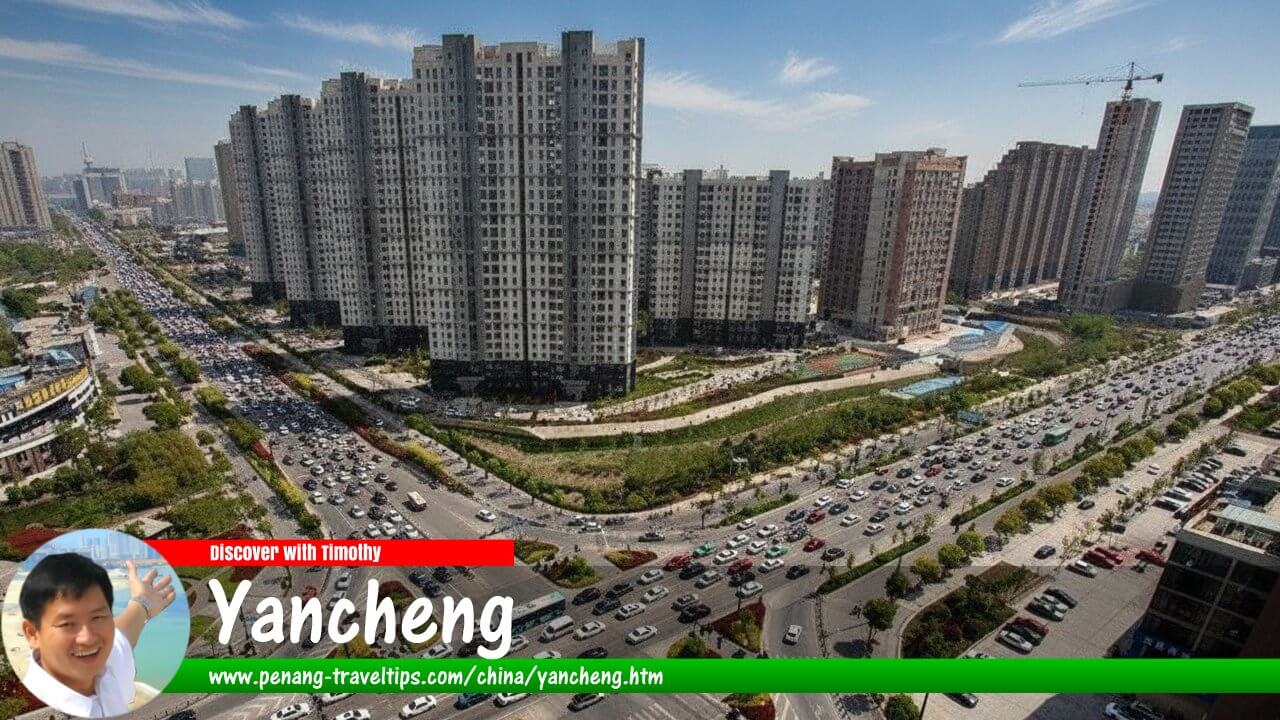 Yancheng, China (Photo edited with AI on 20 June 2026)
Yancheng (盐城, Yánchéng) is a prefecture-level city in northeastern Jiangsu Province, China, situated along the coast of the Yellow Sea. It is one of the largest cities in Jiangsu by land area and is internationally known for its vast coastal wetlands, migratory bird habitats, and long history of salt production. The city serves as an important ecological conservation area while also functioning as a growing industrial and transportation hub in eastern China.1
Quick Facts
- Chinese Name: 盐城
- Pinyin: Yánchéng
- Province: Jiangsu
- Status: Prefecture-level City
- Location: Northeastern Jiangsu Province, China
- Population: Approximately 6.7 million
- Area: About 16,900 square kilometres
- Elevation: Mostly low-lying coastal plain
- Airport: Yancheng Nanyang International Airport
- Main Railway Station: Yancheng Railway Station
- Famous For: Coastal wetlands, red-crowned cranes, Père David's deer, salt production
- Main Industries: Manufacturing, renewable energy, agriculture, petrochemicals, logistics
- Dialect: Jianghuai Mandarin and local Yancheng dialects
Name and Etymology
The name Yancheng literally means "Salt City." The first character, yan (盐), means "salt," while cheng (城) means "city." The name reflects the area's historic importance as one of China's major centers of sea salt production.2
For centuries, the coastal marshes and tidal flats along the Yellow Sea provided ideal conditions for extracting salt from seawater. Salt production became the foundation of the local economy and helped establish the city's identity. The significance of the salt industry was so great that it eventually became incorporated into the city's name.
Even today, although modern industries have diversified the economy, Yancheng remains associated with its historical role in China's salt trade.
Geography
Yancheng occupies a strategic position on the western coast of the Yellow Sea in northeastern Jiangsu Province. It borders Nantong to the south, Huai'an to the west, Yangzhou to the southwest, and Lianyungang to the north. Its eastern boundary faces the Yellow Sea, giving the city one of the longest coastlines in Jiangsu Province.3
The city covers an extensive area of coastal plains, wetlands, tidal flats, and reclaimed land. Much of the terrain is remarkably flat, having been formed over centuries by sediment deposits from the Yangtze River and other waterways.
One of Yancheng's most distinctive geographical features is its vast network of coastal wetlands. These wetlands are among the largest in Asia and serve as important stopover sites for migratory birds along the East Asian-Australasian Flyway. In recognition of their ecological importance, parts of the Yancheng coastal wetlands have been designated as UNESCO World Heritage Sites.4
The city experiences a humid subtropical climate influenced by both continental and maritime weather systems. Summers are warm and humid, while winters are relatively cool. The coastal location moderates temperature extremes compared with inland regions.
Numerous rivers, canals, and drainage channels cross the municipality, supporting agriculture, transportation, and environmental management.
Languages and Dialects
Mandarin Chinese is the official language used throughout Yancheng. However, residents also speak various local dialects that belong primarily to the Jianghuai Mandarin group.5
The local Yancheng dialect differs noticeably from Standard Mandarin in pronunciation, vocabulary, and certain expressions. Linguistic variations can be found between urban districts and rural counties, reflecting the city's large geographical area.
In some coastal communities, speech patterns have been influenced by centuries of maritime trade and migration. Younger generations increasingly use Standard Mandarin in education and business, while local dialects remain important markers of regional identity.
History
Early Settlement
The area around modern Yancheng has been inhabited since ancient times. Archaeological discoveries indicate human activity dating back thousands of years. Because of its fertile coastal plains and abundant natural resources, the region attracted early agricultural settlements.
During the Qin and Han dynasties, the area became increasingly integrated into the imperial administrative system. Salt production emerged as a key economic activity, laying the foundation for future prosperity.
Salt Industry Development
During the Tang and Song dynasties, Yancheng became one of China's most important centers of sea salt production. Government authorities closely regulated salt production because salt taxes were a major source of imperial revenue.6
The growth of the salt industry attracted merchants, laborers, and officials. Towns expanded along transportation routes linking the coast with inland markets.
Ming and Qing Dynasties
During the Ming and Qing periods, Yancheng continued to prosper through salt production, agriculture, and trade. The city benefited from improvements in water transport and administrative organization.
At the same time, the region faced periodic challenges from coastal storms, flooding, and shifting shorelines. Extensive efforts were made to construct embankments and water-control systems.
Modern Development
Following the establishment of the People's Republic of China in 1949, Yancheng underwent significant industrialization and modernization. New industries emerged alongside traditional agriculture and salt production.
In recent decades, the city has gained international recognition for its environmental conservation efforts, particularly the protection of wetlands and endangered wildlife. The designation of portions of the coastal wetlands as a UNESCO World Heritage Site has further increased Yancheng's global profile.4
Economy and Products
Yancheng has developed a diversified economy that combines manufacturing, agriculture, renewable energy, logistics, and environmental industries.
The city is a major center for automobile manufacturing, machinery production, electronics, and petrochemicals. Several industrial parks host domestic and international companies involved in advanced manufacturing and technology.
Renewable energy has become an increasingly important sector. Yancheng possesses extensive offshore and coastal wind resources, making it one of China's leading regions for wind power development. Large wind farms are located both onshore and offshore along the coast.
Agriculture remains significant, with rice, wheat, cotton, rapeseed, and vegetables among the principal crops. Aquaculture and seafood production are also important due to the city's coastal location.
Traditional products include sea salt, preserved foods, freshwater fish, and agricultural products. Tourism related to wildlife conservation and wetland ecosystems has become another growing economic sector.
How to Go There
By Air
Yancheng is served by Yancheng Nanyang International Airport, located approximately 8 kilometres northeast of the city center. The airport handles domestic flights as well as selected international and regional services.7
Airlines operating at the airport typically include Air China, China Eastern Airlines, China Southern Airlines, Shenzhen Airlines, and several regional carriers. Common destinations include Beijing, Shanghai, Guangzhou, Shenzhen, Chengdu, Xi'an, and other major Chinese cities.
By Rail
Yancheng Railway Station is located in Tinghu District and serves both conventional and high-speed rail services. The opening of modern high-speed rail lines has significantly improved connectivity with Shanghai, Nanjing, Nantong, Lianyungang, and Beijing.
Additional stations throughout the municipality provide convenient access to surrounding counties and districts.
By Long-Distance Bus
Yancheng has several long-distance bus terminals, including Yancheng General Bus Station near the urban center. These terminals offer services to cities throughout Jiangsu Province and neighboring provinces such as Zhejiang, Anhui, and Shandong.
By Road
Modern expressways connect Yancheng with Shanghai, Nanjing, Nantong, Suzhou, and other major cities in the Yangtze River Delta region.
How to Travel Locally
Transportation within Yancheng is convenient and affordable.
- Taxis: Metered taxis operate throughout the city and are widely available.
- E-Hailing Services: Didi is the most commonly used ride-hailing platform. Uber does not operate independently in mainland China.
- Public Buses: An extensive network of city buses serves urban districts and suburban areas.
- Intercity Coaches: Frequent coach services connect districts and neighboring counties.
- Bicycle Sharing: Public bicycle and shared electric bicycle services are available in many areas.
Yancheng currently does not have a subway, MRT, LRT, tram, trishaw, rickshaw, or tuk-tuk system. Most visitors rely on taxis, buses, ride-hailing services, or private vehicles.
Tourist Attractions
Yancheng Coastal Wetlands
The coastal wetlands are the city's most famous attraction. These extensive tidal flats and marshes provide habitat for numerous migratory bird species and have been recognized as a UNESCO World Heritage Site.
Jiangsu Yancheng Wetland Rare Birds National Nature Reserve
This reserve protects critical habitats for endangered bird species, including the red-crowned crane. Visitors can observe wildlife and learn about conservation efforts.
Dafeng Milu National Nature Reserve
This reserve is home to the world's largest population of Père David's deer, a species once extinct in China. Educational exhibits and observation areas allow visitors to view these rare animals.
Dongtai Yellow Sea Forest Park
This scenic forest park features extensive woodlands, walking trails, lakes, and recreational facilities. It is a popular destination for ecotourism and outdoor activities.
New Fourth Army Memorial Hall
The memorial commemorates the role of the New Fourth Army during China's resistance against Japanese occupation. Exhibits include historical documents, photographs, and artifacts.
Yongning Temple
One of the region's notable Buddhist temples, Yongning Temple attracts pilgrims and visitors interested in traditional religious architecture.
Dazong Lake Scenic Area
This picturesque freshwater lake offers boating, fishing, cultural performances, and traditional Jiangsu water-town scenery.
Anfeng Ancient Town
Located in Dongtai, Anfeng preserves traditional architecture, historic streets, and cultural heritage associated with the region's trading history.
Chinese Sea Salt Museum
This museum explores the history of salt production in Yancheng and its significance in Chinese economic and social development.
Water Street Cultural District
This restored cultural area combines traditional architecture, local cuisine, handicrafts, and entertainment, providing visitors with a glimpse of local heritage.
Yancheng, China is  the Map of Cities in China
References
- Encyclopaedia Britannica – Jiangsu Province
- China Daily – History of Yancheng
- Jiangsu Provincial Government
- UNESCO World Heritage Centre – Migratory Bird Sanctuaries along the Coast of the Yellow Sea-Bohai Gulf of China
- Encyclopaedia Britannica – Chinese Languages
- Encyclopaedia Britannica – Salt Tax in China
- Yancheng Nanyang International Airport
Page Details
This page was created/modified on 20 June 2026. Hi, my name is Timothy and created it from my research, for my own entertainment, knowledge and to satisfy my curiosity. I am providing the information to you in good faith and hope it is useful. I try to get the details as accurate as possible. I also try to update the page whenever I stumble on new details. So this and all my other pages are perpetual work in progress. If you discover any error, please politely inform me, pointing out where the error lies, and I will correct it as soon as possible. Your helpfulness will keep this page accurate, relevant and helpful to those who need the information.