
Jiaxing, China
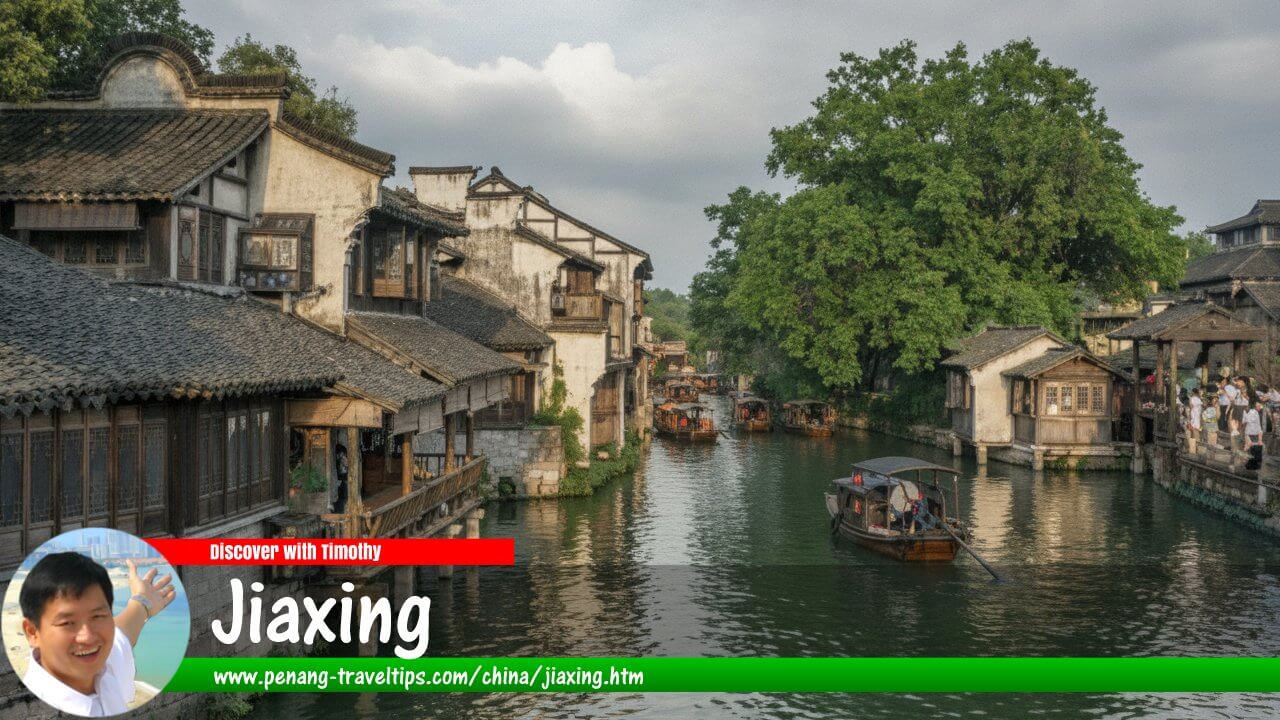 Jiaxing, China (Photo edited with AI on 18 June 2026)
Jiaxing (嘉兴, Jiāxīng) is a prefecture-level city in northeastern Zhejiang Province, China. Located in the heart of the Yangtze River Delta between Shanghai and Hangzhou, Jiaxing is renowned for its rich history, extensive canal network, prosperous economy, and picturesque water towns. The city has long served as an important transportation and commercial hub due to its strategic location along the Grand Canal and numerous inland waterways.1 The name "Jiaxing" literally means "Auspicious Prosperity" or "Excellent Flourishing." The character 嘉 (jiā) means "excellent," "auspicious," or "commendable," while 兴 (xīng) means "to prosper" or "to flourish." The name reflects the region's historical importance and economic prosperity, and it has been used since the Southern Song Dynasty.2
Quick Facts
- Chinese Name: 嘉兴
- Pinyin: Jiāxīng
- Province: Zhejiang
- Location: Northeastern Zhejiang Province, China
- Population: Approximately 5.5 million
- Area: About 4,223 square kilometres
- Climate: Humid subtropical
- Known For: Water towns, silk production, South Lake, Grand Canal heritage
- Main Railway Station: Jiaxing Railway Station
- Major Industries: Manufacturing, textiles, electronics, logistics
Geography
Jiaxing is situated in northeastern Zhejiang Province within the fertile Yangtze River Delta region. The city lies approximately 90 kilometres southwest of Shanghai and about 90 kilometres northeast of Hangzhou, making it one of the most strategically located cities in eastern China.3
The terrain of Jiaxing is predominantly flat, consisting of alluvial plains formed by centuries of river and canal activity. Unlike many parts of Zhejiang Province that are characterized by mountains and hills, Jiaxing is notable for its low elevation and extensive network of rivers, lakes, ponds, and canals.
Water plays a defining role in the city's geography. Numerous waterways connect Jiaxing to the Grand Canal, one of the world's longest and oldest canal systems. These waterways have historically facilitated trade, transportation, irrigation, and agriculture.
The city experiences a humid subtropical climate with four distinct seasons. Summers are warm and humid, while winters are generally mild. Annual rainfall is abundant, supporting the region's agricultural productivity and maintaining its extensive water networks.4
South Lake (Nanhu) is one of Jiaxing's most famous geographical features. Located near the city centre, it is known both for its scenic beauty and its historical significance.
Languages and Dialects
Mandarin is the official language used in schools, government offices, media, and business. However, the traditional local language spoken by many residents is the Jiaxing dialect, which belongs to the Wu Chinese language family.5
The Jiaxing dialect shares linguistic characteristics with other Wu dialects spoken throughout the Yangtze River Delta, including those of Shanghai, Suzhou, and Hangzhou. Although Mandarin has become increasingly dominant among younger generations, many older residents continue to use local dialects in daily conversation.
Besides Mandarin, dialects spoken in the region include:
- Jiaxing Wu dialect
- Tongxiang dialect
- Haining dialect
- Pinghu dialect
- Various neighbouring Wu Chinese dialects
Due to Jiaxing's proximity to Shanghai and its growing international business environment, English is increasingly used in tourism, education, and commerce.
History
The history of Jiaxing stretches back more than 6,000 years. Archaeological discoveries indicate that the area was inhabited during the Neolithic period, particularly by cultures associated with the lower Yangtze River basin.6
During the Qin and Han dynasties, the region became integrated into China's imperial administrative system. Its fertile lands and navigable waterways made it an important agricultural area and trading centre.
Jiaxing gained prominence during the Tang and Song dynasties when commerce flourished along the Grand Canal. The canal connected northern and southern China, making Jiaxing a vital stop for merchants transporting grain, silk, tea, and manufactured goods.
During the Southern Song Dynasty, Jiaxing achieved significant economic and cultural development. The city benefited from its location near the imperial capital of Hangzhou and became known for its agricultural productivity and handicraft industries.
The Ming and Qing dynasties witnessed continued prosperity. Silk weaving, textile production, and commerce expanded substantially, and numerous historic bridges, temples, gardens, and canals were constructed during this period.
Jiaxing occupies a special place in modern Chinese history. In 1921, representatives of the Communist Party of China held the concluding session of their First National Congress aboard a boat on South Lake after relocating from Shanghai. The famous "Red Boat" has since become an important historical symbol.7
Following the establishment of the People's Republic of China in 1949, Jiaxing continued to develop as an industrial and agricultural centre. Economic reforms beginning in the late twentieth century accelerated growth, transforming the city into an important manufacturing and logistics hub within the Yangtze River Delta.
Economy and Products
Jiaxing possesses one of Zhejiang Province's strongest economies. Its advantageous location between Shanghai and Hangzhou has attracted significant investment in manufacturing, logistics, technology, and trade.
The city has developed a diversified industrial base that includes:
- Textiles and garments
- Silk production
- Electronics manufacturing
- Automobile components
- Chemical products
- Machinery manufacturing
- Renewable energy equipment
- Logistics and warehousing
Jiaxing has long been associated with silk production. The fertile mulberry-growing regions surrounding the city support sericulture, while traditional silk weaving remains an important cultural and economic activity.
Agriculture continues to contribute significantly to the local economy. Major agricultural products include rice, wheat, rapeseed, vegetables, fruits, and freshwater fish.
One of Jiaxing's most famous specialty foods is the Jiaxing rice dumpling, or zongzi. These glutinous rice dumplings wrapped in bamboo leaves are widely consumed throughout China and are particularly associated with the Dragon Boat Festival.
Modern industrial parks and development zones have attracted both domestic and foreign investment. Jiaxing's strategic location allows manufacturers to access major markets in Shanghai, Hangzhou, Suzhou, and other cities throughout eastern China.
How to Go There
By Air
Jiaxing does not currently have a large commercial airport serving extensive passenger traffic. Most visitors arrive via nearby airports.
- Shanghai Hongqiao International Airport is approximately 90 kilometres northeast of Jiaxing.
- Shanghai Pudong International Airport is approximately 120 kilometres away.
- Hangzhou Xiaoshan International Airport is approximately 80 kilometres southwest of Jiaxing.
These airports are served by numerous domestic and international airlines, including Air China, China Eastern Airlines, China Southern Airlines, Hainan Airlines, Xiamen Airlines, Singapore Airlines, Cathay Pacific, Emirates, and many others.
By Train
Jiaxing is well connected to China's extensive railway network.
- Jiaxing Railway Station is located near the city centre and handles both conventional and some high-speed rail services.
- Jiaxing South Railway Station serves high-speed trains on major routes connecting Shanghai, Hangzhou, Ningbo, Nanjing, Beijing, and other cities.
High-speed rail travel makes Jiaxing easily accessible from Shanghai in less than one hour and from Hangzhou in approximately 30 minutes.
By Long-Distance Bus
Several long-distance bus stations operate throughout the city, including Jiaxing Passenger Transport Centre. Regular services connect Jiaxing with destinations throughout Zhejiang, Jiangsu, Shanghai, and neighbouring provinces.
By Road
Modern expressways such as the Shanghai-Hangzhou Expressway and Hangzhou Bay Ring Expressway provide excellent road connections to surrounding cities.
How to Travel Locally
Taxis
Taxis are widely available throughout Jiaxing and offer convenient transportation between attractions, railway stations, hotels, and commercial districts.
E-Hailing Services
Didi and other ride-hailing applications are commonly used by residents and visitors. These services provide convenient alternatives to traditional taxis.
Public Buses
Jiaxing maintains an extensive public bus network covering urban districts, suburban communities, and nearby towns. Buses are affordable and widely used.
Bicycles and Shared Mobility
The city's relatively flat terrain makes cycling a practical option. Public bicycle-sharing systems and shared electric bicycles are widely available.
Water Transport
In certain historic water towns and canal areas, small tourist boats provide scenic transportation and sightseeing opportunities.
Jiaxing currently does not have a subway, MRT, LRT, tram network, trishaw system, rickshaw service, or tuk-tuk transportation. Public buses, taxis, ride-hailing services, and bicycles remain the primary means of local travel.
Tourist Attractions
1. South Lake (Nanhu)
South Lake is Jiaxing's most famous attraction. Besides its scenic beauty, it is historically significant as the site where the First National Congress of the Communist Party of China concluded aboard the famous Red Boat.8
2. Nanhu Revolutionary Memorial Hall
This museum commemorates the founding of the Communist Party of China and presents exhibits related to modern Chinese history.
3. Wuzhen Water Town
Located within Jiaxing's jurisdiction, Wuzhen is one of China's best-preserved ancient water towns. Visitors can explore canals, stone bridges, traditional houses, and cultural performances.
4. Xitang Ancient Town
Xitang is famous for its covered corridors, canals, historic architecture, and picturesque scenery. It has served as a filming location for several international productions.
5. Yuehe Historic District
This restored canal-side district features traditional architecture, shops, restaurants, tea houses, and cultural attractions.
6. Jiaxing Museum
The museum houses collections related to local archaeology, history, art, and cultural heritage.
7. Haining Leather City
One of China's largest leather goods markets, Haining Leather City attracts visitors interested in shopping and local industry.
8. Qiantang River Tidal Bore Viewing Area
Near Haining, visitors can witness the spectacular tidal bore of the Qiantang River, one of the world's most powerful tidal phenomena.
9. Meihuazhou Scenic Area
This scenic area combines historical sites, temples, waterways, and natural landscapes, providing insight into traditional Jiangnan culture.
10. Grand Canal Heritage Sites
Various sections of the historic Grand Canal pass through Jiaxing, offering opportunities to appreciate one of China's greatest engineering achievements.
Jiaxing, China is  the Map of Cities in China
References
- Encyclopaedia Britannica – Jiaxing
- Jiaxing Municipal Government
- Zhejiang Provincial Government
- China Meteorological Administration
- Encyclopaedia Britannica – Wu Chinese Languages
- UNESCO Cultural Heritage Resources
- South Lake Revolutionary Memorial Resources
- China Tourism Information – South Lake
Page Details
This page was created/modified on 18 June 2026. Hi, my name is Timothy and created it from my research, for my own entertainment, knowledge and to satisfy my curiosity. I am providing the information to you in good faith and hope it is useful. I try to get the details as accurate as possible. I also try to update the page whenever I stumble on new details. So this and all my other pages are perpetual work in progress. If you discover any error, please politely inform me, pointing out where the error lies, and I will correct it as soon as possible. Your helpfulness will keep this page accurate, relevant and helpful to those who need the information.