
Cambodia Travel Guide
 Go Back
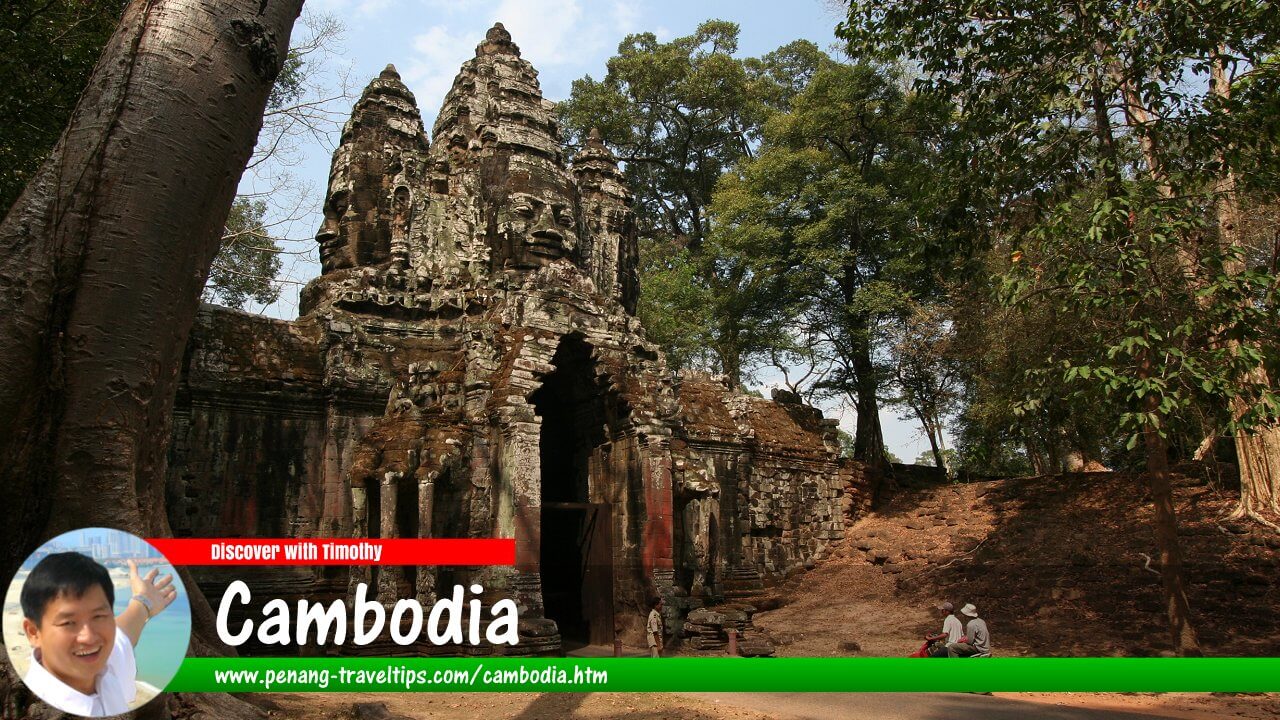 Cambodia Travel Guide (26 February 2006)
Also available: Panduan Melawat Kemboja
Cambodia, officially the Kingdom of Cambodia, is a country in mainland Southeast Asia known for its ancient Khmer civilisation, magnificent temple complexes, Buddhist heritage, tropical landscapes and vibrant cities.
For Malaysian travellers, Cambodia is a relatively accessible destination within Southeast Asia. Its most famous attraction is Angkor, the vast archaeological complex near Siem Reap that contains Angkor Wat and numerous other temples and remains of the Khmer Empire.
Beyond Angkor, Cambodia offers a wide variety of experiences, including the capital city of Phnom Penh, the colonial-era town of Battambang, the southern coastal destinations of Kampot and Kep, the beaches and islands around Sihanoukville, and historic sites scattered throughout the countryside.
Cambodia is also a country of contrasts. Ancient temples stand alongside rapidly developing cities, while traditional villages and agricultural landscapes continue to coexist with modern tourism infrastructure.
Where Is Cambodia?
Cambodia is situated in the southwestern part of the Indochinese Peninsula in mainland Southeast Asia. It shares international borders with Thailand to the west and northwest, Laos to the north, and Vietnam to the east and southeast. Its southwestern coastline faces the Gulf of Thailand.
The country covers approximately 181,035 square kilometres. Much of Cambodia consists of relatively low-lying plains, with mountain ranges concentrated mainly in the southwest and along parts of the northern and eastern borders. :contentReference[oaicite:1]{index=1}
Cambodia's geography is strongly shaped by two major waterways: the Mekong River and Tonlé Sap Lake. The Mekong flows through the country from north to south, while the Tonlé Sap basin occupies a large part of central Cambodia.
The country's coastal region includes beaches, islands, bays, mangrove forests and coastal wetlands. The main coastal provinces include Kampot, Kep and Koh Kong, while Sihanoukville is the country's principal coastal city. :contentReference[oaicite:2]{index=2}
Phnom Penh
Phnom Penh is the capital and largest city of Cambodia. It is situated at the confluence of the Mekong, Tonlé Sap and Bassac rivers and serves as the country's principal political, economic and cultural centre.
The city combines historic monuments and traditional markets with modern shopping centres, hotels, restaurants and rapidly developing urban districts.
Important attractions include the Royal Palace, Silver Pagoda, National Museum of Cambodia and Wat Phnom. Phnom Penh is also an important destination for understanding Cambodia's more recent history.
Siem Reap
Siem Reap is the principal tourist centre for visiting Angkor. The city lies close to the archaeological park and has developed a large tourism industry consisting of hotels, restaurants, markets, tour operators and transportation services.
Although many visitors come to Siem Reap primarily to see Angkor Wat, the city itself has attractions including markets, museums, cultural performances, restaurants and traditional neighbourhoods.
Siem Reap is therefore more than simply a base for visiting the temples. It is an important destination in its own right and is likely to form the centrepiece of a first trip to Cambodia.
The Khmer Civilisation
Cambodia's cultural identity is closely associated with the ancient Khmer civilisation, which developed into one of the most powerful states in mainland Southeast Asia.
The Khmer Empire reached its greatest influence during the Angkorian period, when successive kings established capitals and constructed enormous temple complexes, reservoirs, roads and other infrastructure.
Angkor became the centre of the Khmer Kingdom for several centuries. The archaeological remains found there demonstrate the sophistication of Khmer architecture, engineering, religion and urban planning. :contentReference[oaicite:3]{index=3}
The Angkorian Period
The Angkorian era is generally associated with the period from the early ninth century until the fifteenth century. King Jayavarman II is traditionally regarded as the founder of the Angkorian state in the early ninth century.
Successive rulers expanded the kingdom and constructed increasingly ambitious religious and civic monuments. Among the most significant rulers were Suryavarman II, builder of Angkor Wat, and Jayavarman VII, who constructed major monuments including Bayon, Angkor Thom, Ta Prohm and Preah Khan.
The rulers followed both Hindu and Buddhist traditions at different times, and religious beliefs had a profound influence on Khmer architecture and sculpture.
Angkor Wat
Angkor Wat is Cambodia's most famous monument and one of the most recognisable archaeological sites in the world.
Built during the reign of King Suryavarman II in the twelfth century, Angkor Wat was originally constructed as a Hindu temple dedicated to Vishnu before later becoming an important Buddhist site.
Its monumental towers, extensive galleries, bas-reliefs and enormous surrounding moat make it one of the outstanding achievements of Khmer architecture.
Angkor Wat is also a powerful national symbol. Its image appears on the Cambodian national flag, making the monument immediately identifiable with the country.
The temple forms part of the much larger Angkor Archaeological Park, which covers approximately 400 square kilometres and contains numerous temples, reservoirs, canals, roads and other remains of the ancient Khmer capitals. Angkor was inscribed on the UNESCO World Heritage List in 1992. :contentReference[oaicite:4]{index=4}
Angkor Thom and Bayon
Angkor Thom was a major fortified city and the last great capital of the Khmer Empire. It was developed during the reign of King Jayavarman VII in the late twelfth and early thirteenth centuries.
At the centre of Angkor Thom stands the famous Bayon, recognisable for its numerous monumental towers decorated with enormous carved faces.
Other important monuments within Angkor Thom include the Terrace of the Elephants, Terrace of the Leper King, Baphuon and several other temples and structures.
Angkor Thom demonstrates that Angkor was not simply a collection of temples but a vast urban complex containing religious, royal and civic structures. :contentReference[oaicite:5]{index=5}
Ta Prohm
Ta Prohm is one of the most atmospheric temples in the Angkor complex. It is particularly famous for the large tree roots that have grown over and through parts of its stone structures.
The temple was constructed during the reign of Jayavarman VII and was originally associated with a Buddhist foundation.
The combination of architecture and vegetation has made Ta Prohm one of the most photographed sites in Cambodia.
Cambodia's Other Ancient Sites
Angkor is Cambodia's most famous archaeological site, but it is not the country's only important ancient heritage area.
Sambor Prei Kuk, in Kampong Thom Province, contains the remains of the ancient city of Ishanapura and predates the great Angkorian monuments. It became a UNESCO World Heritage Site in 2017.
Preah Vihear, located dramatically on a cliff in the Dangrek Mountains, is another important Khmer temple. It was inscribed on the UNESCO World Heritage List in 2008.
Koh Ker, another former Khmer capital, was added to the UNESCO World Heritage List in 2023. These sites demonstrate that Cambodia's ancient heritage extends far beyond Angkor. :contentReference[oaicite:6]{index=6}
Tonlé Sap Lake
Tonlé Sap is the largest freshwater lake in Southeast Asia and one of Cambodia's most important geographical and ecological features.
The lake is closely connected to the Mekong River system and undergoes dramatic seasonal changes in its size and water flow.
The surrounding lake and wetlands support fishing communities, agriculture and a wide range of wildlife. Floating and stilted villages around Tonlé Sap are also popular with visitors, although the quality and character of the experience varies between locations.
The Mekong River
The Mekong River is one of the defining geographical features of Cambodia. It enters the country from Laos, flows through central Cambodia and continues towards Vietnam.
The river supports agriculture, fisheries, transportation and communities throughout the country.
Phnom Penh occupies a particularly important position within the Mekong river system, where the Mekong, Bassac and Tonlé Sap waterways meet.
Cambodia's Climate
Cambodia has a tropical monsoon climate and is generally hot throughout the year. The country experiences broad wet and dry seasons, although temperature and rainfall vary between regions.
The dry season generally extends from around November to April, while the wet season generally runs from May to October.
November to January are among the more comfortable months in terms of temperature, while April is normally the hottest period. During the wet season, rain often comes in the form of heavy tropical downpours rather than continuous rain throughout the day. :contentReference[oaicite:7]{index=7}
For Malaysian travellers, Cambodia's climate will generally feel familiar. The heat and humidity can be considerable, especially when walking around large temple complexes such as Angkor.
Religion in Cambodia
Theravada Buddhism is the dominant religion in Cambodia and plays an important role in Cambodian society and culture.
Buddhist temples and monasteries can be found throughout the country, while Buddhist traditions influence festivals, architecture and everyday life.
Cambodia also has a Muslim minority, including the Cham Muslim community. Muslim communities can be found particularly in Phnom Penh and parts of central and southern Cambodia.
This Muslim presence is relevant to Malaysian travellers because halal food and mosques can be found in Cambodia, although their availability is considerably more limited than in Malaysia or in parts of southern Thailand.
The Khmer People and Language
The majority of Cambodia's population are Khmer, and Khmer is the country's official language.
The Khmer language has its own distinctive writing system and is used in government, education, media and everyday communication.
English is commonly used in the tourism industry, especially in Phnom Penh, Siem Reap and other destinations that receive large numbers of international visitors. French also has a historical presence as a result of Cambodia's colonial past.
Cambodia's Modern History
Cambodia's modern history has been marked by colonial rule, independence, civil conflict and profound political and social upheaval.
Cambodia became part of French Indochina during the nineteenth century and remained under French influence until independence in 1953.
The decades that followed were extremely turbulent. Cambodia experienced civil war and political instability before the Khmer Rouge came to power in 1975.
The Khmer Rouge regime, under Democratic Kampuchea, was responsible for mass killings, forced labour, displacement and widespread destruction of Cambodian society. The regime ended in 1979 after Vietnamese forces entered Cambodia.
The country subsequently experienced further conflict before gradually moving towards peace and political reconstruction. Cambodia became a constitutional monarchy again in 1993.
Cambodia Today
Modern Cambodia is a constitutional monarchy with Phnom Penh as its capital. The country has undergone substantial economic and urban development, particularly in Phnom Penh and major tourism centres such as Siem Reap.
Tourism is an important part of the Cambodian economy, with Angkor remaining the country's best-known international attraction. At the same time, Cambodia continues to develop its coastal areas, cultural destinations and nature-based tourism.
For Malaysian travellers, Cambodia offers an interesting combination of historical heritage, Buddhist culture, tropical scenery and relatively easy regional travel.
Major Cities in Cambodia
- Phnom Penh - capital
- Battambang
- Kampong Cham
- Kampong Thom
- Kampot
- Kep
- Koh Kong
- Kratie
- Oudong
- Poipet
- Siem Reap
- Sihanoukville
World Heritage Sites in Cambodia
Cambodia ratified the World Heritage Convention on 28 November, 1991. As of August 2010, it has two World Heritage Sites, both in the Cultural category. Cambodia has also submitted another ten properties presently on the World Heritage Tentative List. Cambodia served a term on the World Heritage Committee, in 2009-2013.
Places of Interest in Cambodia
Cities and Sights of Central Cambodia
- Koki Beach
- Kompong Cham
- Neak Luong
- Prek Kampi
- Ratanakiri
- Sambor
- Stung Treng
Cities and Sights of the Cambodian Coast
- Bokor
- Kampot
- Kep
- Kirirom
- Koh Kong
- Koh Tang Islands
- Koh Tunsay
- Kompong Som
- Kompong Som Islands
- Ream Islands
- Samit Islands
- Sre Amben
- Tunlop Rolork
Why Visit Cambodia?
The main reason many travellers come to Cambodia is undoubtedly Angkor. However, limiting a Cambodian journey to Angkor Wat alone would mean missing much of what the country has to offer.
Phnom Penh provides insight into Cambodia's royal, colonial and modern history. Battambang offers a slower-paced experience of Cambodian life, while Kampot and Kep provide access to the country's southern countryside and coast.
Further afield, Cambodia's mountains, forests, rivers, islands and archaeological sites provide opportunities for travellers who want to venture beyond the main tourist routes.
For Malaysian travellers, Cambodia is therefore best understood not simply as the home of Angkor Wat, but as a country with a deep historical identity, distinctive culture and diverse landscapes.
Getting to Cambodia
Cambodia is readily accessible from Malaysia by air, while overland travel is possible through Thailand, Laos and Vietnam. For most Malaysian travellers, flying is the quickest and most convenient way to reach the country.
The main international gateways are Phnom Penh and Siem Reap. Cambodia also has international airports serving other parts of the country, including the coastal region.
Travelling from Malaysia to Cambodia
There are regular air connections between Malaysia and Cambodia, making the country suitable for both short holidays and longer journeys.
Travellers from Peninsular Malaysia can generally find flights from Kuala Lumpur to Phnom Penh and Siem Reap. Flight schedules vary according to the airline and season, so travellers should check the latest schedules before booking.
Travellers from Penang and other Malaysian cities may also find connecting flights through Kuala Lumpur or other regional hubs.
Flying to Phnom Penh
Phnom Penh International Airport is the principal gateway for travellers visiting Cambodia's capital and southern and central regions.
The airport is located west of central Phnom Penh. Travellers can continue into the city by taxi, ride-hailing service or other airport transportation.
Phnom Penh is a suitable arrival point for itineraries that include the capital, Kampot, Kep, Sihanoukville and other destinations in southern Cambodia.
Flying to Siem Reap
Travellers whose principal purpose is to visit Angkor can fly directly to Siem Reap Angkor International Airport.
The new airport is located considerably farther from the centre of Siem Reap than the former airport. Travellers should therefore allow additional time for the journey between the airport and their hotel.
Siem Reap Angkor International Airport serves as the principal gateway to the Angkor Archaeological Park and the surrounding tourism region.
Flying to Sihanoukville
Sihanoukville International Airport serves Cambodia's principal coastal region and can be useful for travellers planning to visit Sihanoukville, the islands of Koh Rong and Koh Rong Sanloem, or other destinations along the southern coast.
Flight schedules to Sihanoukville are more limited than those to Phnom Penh and Siem Reap, so travellers should check availability carefully when planning an itinerary.
Entry Requirements for Malaysians
Malaysian citizens travelling to Cambodia for tourism should check the latest entry requirements before departure. Immigration and visa regulations can change, so information obtained several months before a journey should be reconfirmed close to the travel date.
A valid Malaysian passport is required for international travel. Travellers should ensure that the passport has sufficient validity for entry and that it contains enough blank pages where required.
Malaysians may enter Cambodia under the visa arrangements applicable to Malaysian citizens, subject to the purpose and duration of the visit. Travellers planning a longer stay, employment, study or another non-tourism purpose may be subject to different requirements.
Visa Requirements
Cambodia offers several methods of obtaining permission to enter the country, depending on the traveller's nationality and circumstances. These may include visa exemption arrangements, electronic visas and visas obtained through Cambodian diplomatic missions.
Malaysian travellers should verify which arrangement applies to them before travelling rather than relying on information intended for citizens of other countries.
Travellers who are unsure about their eligibility should consult the Cambodian embassy or official immigration authorities before departure.
Electronic Visa
Cambodia provides an electronic visa facility for eligible travellers. An e-Visa can be particularly convenient because the application can be completed before travelling.
Travellers using an e-Visa should ensure that the details entered in the application correspond exactly with their passport information.
The approved e-Visa document should be saved digitally and, where practical, printed as a backup.
Cambodia e-Arrival
Cambodia has introduced an electronic arrival system known as the Cambodia e-Arrival. Travellers may be required to complete the relevant arrival information electronically before entering the country.
Requirements and procedures can change, so travellers should check the current official instructions before departure and complete any required information within the permitted period.
Immigration at the Airport
Upon arrival, travellers proceed through Cambodian immigration before collecting their baggage and leaving the airport.
Keep the passport, visa or visa-related documents and any required arrival information easily accessible until the immigration process has been completed.
The immigration officer may ask about the purpose of the visit, intended length of stay or accommodation. Having the hotel name and booking information readily available can make the process easier.
Customs
After immigration and baggage collection, travellers proceed through customs before entering the public area of the airport.
Travellers should declare items where required and should not assume that everything purchased overseas can automatically be brought into Cambodia without restriction.
Particular care should be taken with medicines, large quantities of goods, food products and other items that may be subject to Cambodian regulations.
Entering Cambodia by Land
Cambodia shares land borders with Thailand, Laos and Vietnam. Overland travel can therefore be incorporated into a wider Southeast Asian itinerary.
Land crossings can be useful for travellers who are already visiting neighbouring countries, although journeys can take considerably longer than flying.
Border procedures may also take longer than airport immigration, particularly during busy periods.
Malaysia–Thailand–Cambodia Overland Route
Malaysian travellers who enjoy overland journeys can travel north through Thailand before continuing into Cambodia.
One possible route is to travel from Malaysia to southern Thailand, continue towards Bangkok and then cross into Cambodia before travelling to destinations such as Siem Reap or Phnom Penh.
This route is considerably slower than flying but can be attractive to travellers who want to experience several countries in one journey.
Crossing from Thailand to Cambodia
Thailand and Cambodia share several border crossings. The most important for tourists is the Aranyaprathet–Poipet crossing, which connects Thailand's Sa Kaeo Province with Cambodia's Banteay Meanchey Province.
Poipet is an important gateway for travellers travelling between Thailand and Siem Reap.
Travellers using land borders should check the latest operating arrangements, visa procedures and transportation options before departure because border conditions and procedures can change.
Crossing from Vietnam to Cambodia
Cambodia can also be reached overland from Vietnam. One of the most important crossings is near Bavet, connecting Cambodia with Ho Chi Minh City and southern Vietnam.
This route is particularly useful for travellers combining Phnom Penh with Ho Chi Minh City.
Crossing from Laos to Cambodia
Cambodia and Laos share a border in the north. Overland travel between the two countries is possible, although some routes are considerably less convenient than the main Thailand–Cambodia and Vietnam–Cambodia corridors.
Travellers planning to cross from Laos should confirm the availability of transportation and border procedures before committing to the route.
Getting from the Airport to Your Hotel
Transportation options vary between Cambodian airports.
In Phnom Penh and Siem Reap, travellers can generally use airport taxis, private transfers or ride-hailing services where available.
A pre-arranged hotel transfer can be worthwhile for first-time visitors arriving late at night or travellers carrying substantial luggage.
Ride-Hailing Services
Ride-hailing applications are widely used in Cambodia's major cities and can make getting around considerably easier for visitors.
They can also reduce the need to negotiate fares with drivers before a journey.
Travellers should confirm the vehicle registration and driver details shown in the application before entering the vehicle.
Tuk-Tuks in Cambodia
The tuk-tuk is one of Cambodia's most recognisable forms of tourist transportation.
Modern app-based tuk-tuks are available in major cities, while traditional tuk-tuks can also be hired directly from drivers.
Tuk-tuks are particularly useful for short journeys and sightseeing because they are open to the surrounding air and can accommodate several passengers.
Private Drivers
Hiring a private driver is a popular option for travellers visiting several attractions in one day.
This is particularly useful around Siem Reap, where the temples of Angkor are spread across a large area.
A private driver can remain with the traveller throughout the day, reducing the need to arrange separate transportation between temples.
Travelling Around Angkor
The temples of Angkor are spread across a large archaeological landscape. Walking between all the major sites is therefore impractical for most visitors.
Common ways of exploring Angkor include tuk-tuk, private car, bicycle and organised tour.
A tuk-tuk is particularly popular because it provides shade between temple visits and allows visitors to travel between sites without having to drive themselves.
Travelling by Bus
Long-distance buses and minibuses connect Phnom Penh with Siem Reap, Battambang, Kampot, Sihanoukville and other Cambodian destinations.
Bus travel can be considerably cheaper than flying and is suitable for travellers who have enough time.
Journey times vary according to traffic, road conditions and the route taken. Travellers should therefore avoid planning tightly timed connections.
Domestic Flights
Domestic air travel can save considerable time when travelling between distant regions of Cambodia.
However, domestic flight schedules and routes can change according to demand and season. Travellers should check current availability before planning an itinerary around a domestic flight.
Travelling by Train
Cambodia has a developing railway network, with passenger services connecting several parts of the country.
Train travel can be an interesting alternative to buses for travellers who are not in a hurry and want to experience another form of Cambodian transportation.
However, the railway network does not currently provide the same level of coverage as the railway systems found in countries such as Thailand or Malaysia.
Travelling by Boat
Boat transportation can be useful on certain routes, particularly around Tonlé Sap and along some waterways.
Boat services can be affected by water levels and seasonal conditions. Travellers should therefore confirm that a particular service is operating before relying on it for an important connection.
Driving in Cambodia
Self-driving is possible in Cambodia, but it may not be the most convenient option for first-time visitors.
Traffic conditions, road behaviour and navigation can be unfamiliar to Malaysian drivers. In major cities, traffic can also be congested and motorcycles are common.
For sightseeing, hiring a driver is often more convenient than renting a car and driving independently.
Motorcycles and Scooters
Motorcycles and scooters are common throughout Cambodia and can be convenient for short-distance travel.
However, visitors should not assume that riding a motorcycle in Cambodia is automatically safe or legally permitted under their Malaysian driving licence.
Anyone considering renting a motorcycle should ensure that they have the appropriate licence, insurance and experience before riding.
Travelling with Children
Cambodia can be visited with children, although families should take the climate and transportation conditions into consideration.
The large temple complexes around Angkor can involve substantial walking and exposure to heat. Families should allow plenty of time for rest, drinking water and meals.
Hotels with swimming pools can be particularly useful for families visiting Siem Reap because children can have time to relax between temple excursions.
Accessibility for Travellers with Mobility Difficulties
Accessibility varies considerably between Cambodian destinations.
Modern hotels, airports and shopping centres generally provide better accessibility than ancient temples, historical sites and rural attractions.
Many Angkor temples contain uneven surfaces, steps and narrow passages. Travellers with mobility difficulties should research individual sites and consider private transportation when planning their visit.
Planning a Multi-City Journey
Cambodia is large enough that travelling between several destinations requires careful planning.
A first-time visitor should avoid trying to cover too much of the country in a short holiday. Combining Phnom Penh and Siem Reap, for example, can provide a good introduction to Cambodia without spending too much time in transit.
Travellers with more time can add Battambang, Kampot, Kep or the southern islands.
Suggested First-Time Cambodia Itinerary
Day 1: Arrive in Siem Reap and explore the town.
Day 2: Visit Angkor Wat and other major Angkor temples.
Day 3: Continue exploring Angkor and surrounding temples.
Day 4: Travel to Phnom Penh.
Day 5: Explore Phnom Penh's major historical and cultural attractions.
Day 6: Continue exploring Phnom Penh or make a nearby excursion.
Day 7: Return to Malaysia.
This itinerary provides a good introduction to Cambodia without attempting to cover too many destinations. Travellers with fewer days can concentrate entirely on Siem Reap and Angkor, while those with more time can extend the journey to Battambang or the southern coast.
Planning for Malaysian Travellers
For Malaysians taking a short holiday, flying directly to Cambodia is generally the simplest approach. Those with a week or more can consider combining two or three destinations.
Travellers from Malaysia should also take into account the time required for airport transfers, immigration, domestic transportation and hotel check-in rather than counting only the actual flight time.
For a first visit, a practical combination is Siem Reap and Phnom Penh. This provides a balance between Cambodia's ancient heritage and its modern capital.
For Muslim travellers, it is useful to research halal restaurants and mosques before travelling, particularly when planning to visit smaller towns or rural areas where Muslim facilities may be limited.
Travelling Around Cambodia
Cambodia is relatively straightforward to explore, particularly along the main tourist routes connecting Phnom Penh, Siem Reap and the southern provinces. The choice of transportation depends largely on the distance, available time and level of comfort desired.
For most Malaysian travellers, a combination of private transportation, tuk-tuks and intercity buses provides the most practical way to explore Cambodia. Domestic flights can be useful when time is limited, while trains and boats offer alternative experiences on selected routes.
Travelling Between Major Cities
The principal tourist destinations are spread across Cambodia, so travelling between them can take several hours. Phnom Penh is centrally located and serves as an important transportation hub.
Siem Reap lies in northwestern Cambodia, while Battambang is farther west. Kampot and Kep are in the south, and Sihanoukville lies farther along the southern coast.
Travellers should take journey times into account when planning their itinerary. It is generally better to spend several nights in a destination than to move hotels every day.
Bus and Minibus Services
Buses and minibuses are among the most widely used forms of intercity transportation in Cambodia. They connect Phnom Penh with most of the country's principal tourist destinations.
Large coaches generally provide more space and luggage capacity, while minibuses can sometimes offer faster journeys because of their smaller size.
Travel times depend on traffic and road conditions. A journey advertised as taking a certain number of hours should therefore be regarded as an estimate rather than a guarantee.
Private Car with Driver
For families, couples or small groups, hiring a private car with a driver can be a comfortable way to travel between destinations.
The main advantage is flexibility. Travellers can normally stop for meals, photographs and sightseeing without being tied to the schedule of a public bus.
A private vehicle can be particularly worthwhile when visiting several attractions in rural areas or when travelling with elderly passengers.
Tuk-Tuk Travel
Tuk-tuks are an integral part of everyday transportation in Cambodia and are particularly common in Phnom Penh and Siem Reap.
They are suitable for short journeys around town and are also commonly used for sightseeing. In Siem Reap, a tuk-tuk can be hired for a full day to take visitors between the temples of Angkor.
Modern ride-hailing applications can also be used to book tuk-tuks in many urban areas. These services can be convenient because the fare is usually displayed before the journey.
Using Ride-Hailing Applications
Ride-hailing applications have become increasingly useful in Cambodia's major cities. They allow visitors to request cars or tuk-tuks without having to negotiate directly with drivers.
The application also provides useful information such as the vehicle registration number and driver's details.
Before entering a vehicle, check that the vehicle and driver correspond to the information shown in the application.
Travelling by Taxi
Taxis are available in Phnom Penh, Siem Reap and other major destinations. Hotel staff can normally arrange a taxi when required.
Where possible, use a metered taxi or a service where the fare is clearly established before departure. This reduces the possibility of misunderstandings about the cost of a journey.
Walking Around Cambodian Cities
Walking is a pleasant way to explore compact areas of Cambodian cities, particularly parts of central Siem Reap and Phnom Penh.
However, Cambodia's tropical climate can make extended walking uncomfortable during the middle of the day. Visitors should carry drinking water and avoid excessive exposure to the sun.
Pedestrians should also take care when crossing roads because motorcycles and other vehicles can approach from several directions.
Cycling in Cambodia
Cycling can be an enjoyable way to explore Cambodia, particularly around Siem Reap and the countryside surrounding the Angkor temples.
Bicycles allow travellers to move at a slower pace and see villages, rice fields and smaller roads that may be missed when travelling by vehicle.
However, cyclists should be prepared for hot weather and should take care when riding on roads shared with motorcycles and cars.
Accommodation in Cambodia
Cambodia offers accommodation ranging from simple guesthouses to luxury international hotels and resorts.
Prices vary considerably according to location, standard and season. Malaysian travellers can generally find accommodation to suit a wide range of budgets.
Siem Reap has particularly extensive accommodation choices because of its importance as the gateway to Angkor.
Hotels in Phnom Penh
Phnom Penh offers the widest range of accommodation in Cambodia, including international hotel chains, boutique hotels, serviced apartments and budget guesthouses.
Popular areas include the riverside, central Phnom Penh, BKK1 and areas around the Royal Palace and major commercial districts.
Travellers who want easy access to restaurants and sightseeing attractions may prefer to stay in the central part of the city.
Hotels in Siem Reap
Siem Reap has a particularly large selection of hotels and resorts. Accommodation can be found close to the Old Market and Pub Street, along the main roads into town, and in quieter areas surrounded by gardens.
Travellers visiting Angkor should consider the location of their hotel carefully. A hotel farther from the centre may provide a quieter environment, while a centrally located hotel makes it easier to walk to restaurants and markets.
Beach Resorts
Cambodia's southern coast offers beach resorts ranging from budget accommodation to luxury properties.
Sihanoukville has undergone extensive development, while the islands of Koh Rong and Koh Rong Sanloem offer a more island-oriented experience.
Kampot and Kep provide a different atmosphere, with riverside accommodation, countryside surroundings and access to coastal attractions.
Guesthouses and Budget Accommodation
Budget accommodation is widely available in Cambodia. Guesthouses and smaller hotels can be particularly good value in Siem Reap, Phnom Penh and Battambang.
Travellers choosing budget accommodation should look beyond the room price and consider factors such as air-conditioning, hot water, cleanliness, location and recent guest reviews.
Luxury Accommodation
Cambodia also has a well-developed luxury hotel and resort sector. Siem Reap in particular has numerous high-end properties catering to visitors seeking a more relaxed experience after visiting the temples.
Luxury resorts can also be found in Phnom Penh, Kampot and along the southern coast.
Choosing Where to Stay
The best location depends on the purpose of the trip. A traveller visiting Angkor for several days may prefer Siem Reap, while someone interested in Cambodia's political and cultural history may prefer Phnom Penh.
For a beach holiday, the southern coast or one of Cambodia's islands may be more appropriate.
When comparing hotels, Malaysian travellers should consider the distance to restaurants, transportation, supermarkets and other facilities rather than choosing accommodation based solely on the room price.
When to Visit Cambodia
Cambodia can be visited throughout the year, but the experience varies according to the season.
The dry season, roughly from November to April, is generally the most popular period for tourism. The weather is usually drier, although temperatures rise considerably towards the end of the season.
The wet season, roughly from May to October, brings more frequent rainfall. The countryside becomes greener and some attractions can be particularly atmospheric during this period.
Visiting Cambodia from November to January
November through January is generally one of the most comfortable periods for visiting Cambodia. Temperatures are comparatively pleasant, particularly during mornings and evenings.
This is also a popular period for visiting Angkor, so accommodation and tours can be in high demand.
Visiting Cambodia from February to April
Temperatures gradually increase from February onwards. By March and April, conditions can become very hot, particularly when walking around exposed temple sites.
April is also associated with the Cambodian New Year, known as Chaul Chnam Thmey. The holiday period is an important cultural celebration but can also affect transportation, business hours and travel plans.
Travellers visiting during this period should check holiday schedules and make accommodation arrangements in advance.
Visiting Cambodia from May to October
The wet season brings regular rainfall, particularly in the afternoon or evening. Rainfall does not necessarily prevent sightseeing throughout the day.
The landscape becomes lush and green during this period, and there can be fewer international tourists at some attractions.
For travellers who do not mind occasional rain, the wet season can therefore be an attractive time to visit.
Visiting Angkor During the Wet Season
The wet season can give Angkor a particularly dramatic appearance. Vegetation is greener, reflecting pools may contain more water and the surrounding countryside is often vibrant.
However, rain can make some surfaces slippery. Visitors should wear suitable footwear and take care when climbing steps or walking over uneven stones.
Weather Considerations for Malaysians
Malaysian travellers are already accustomed to tropical heat and humidity, so Cambodia's climate may not feel entirely unfamiliar.
The major difference is that Cambodia generally has a more pronounced dry season than Malaysia. During the hottest months, temperatures can be significantly higher than what many Malaysians experience at home.
Visitors should therefore plan temple visits and outdoor activities around the heat, especially when travelling with children or elderly companions.
What to Wear in Cambodia
Lightweight clothing is suitable for Cambodia's warm climate. Loose, breathable clothing is particularly comfortable when visiting temples and spending long periods outdoors.
Visitors should also bring a hat, sunglasses and comfortable walking shoes.
When visiting Buddhist temples and other religious sites, modest clothing is appropriate. Some sites may require visitors to cover their shoulders or knees.
Clothing for Muslim Travellers
Muslim travellers should be aware that Cambodia is predominantly Buddhist and that religious facilities are not as widespread as they are in Malaysia.
Women who wear hijab can dress as they normally would, although modest clothing is particularly appropriate when visiting temples, monasteries and rural communities.
Travellers should carry a lightweight prayer garment if required and should identify nearby mosques or suitable prayer facilities when planning a day outside the main cities.
Budgeting for a Trip to Cambodia
Cambodia can be a relatively affordable destination for Malaysian travellers, although costs vary considerably according to travel style.
Budget travellers can stay in guesthouses, eat at local restaurants and use public transportation, while travellers seeking greater comfort can choose international hotels, private drivers and organised tours.
The cost of visiting Angkor should also be included in the travel budget because the temple pass is an important expense for most visitors to Siem Reap.
Using US Dollars in Cambodia
The Cambodian riel is the country's official currency, but the US dollar has historically been widely used in Cambodia, particularly in tourism and urban areas.
However, travellers should pay attention to the currency used when receiving change and should not assume that every transaction will be settled in US dollars.
The use of US dollars has also changed in some areas, and smaller transactions are increasingly conducted in Cambodian riel. It is therefore useful to carry some riel for everyday purchases.
Credit Cards and Cash
Credit and debit cards are accepted at many hotels, shopping centres, restaurants and other businesses in Phnom Penh and Siem Reap.
Cash remains important, especially when buying food from local vendors, using smaller transportation services or travelling outside major tourist centres.
Malaysian travellers should therefore carry a combination of payment methods rather than relying exclusively on cards.
ATMs in Cambodia
ATMs are widely available in Phnom Penh, Siem Reap and other major towns. They can be considerably less common in remote rural areas and smaller islands.
Travellers heading into the countryside should therefore obtain sufficient cash beforehand.
Check the fees and exchange rate before confirming an ATM transaction, particularly when using a Malaysian bank card.
Mobile Internet and SIM Cards
Mobile internet is widely available in Cambodia's populated areas. Travellers can purchase a local SIM card, use an eSIM or activate international roaming on a Malaysian mobile plan.
A local SIM or eSIM can be particularly useful for travellers who intend to use maps, ride-hailing applications and online translation frequently.
Mobile connectivity may become weaker in remote rural areas and on some islands.
Wi-Fi
Wi-Fi is commonly available in hotels, restaurants, cafés and other tourist establishments.
The quality of the connection varies, particularly outside major cities. Travellers who need reliable internet access should therefore have mobile data as a backup.
Electricity and Power Plugs
Cambodia generally operates on a 230-volt electrical supply with a frequency of 50 Hz.
Power sockets can vary and may accommodate different plug types. Malaysian travellers should carry a universal travel adaptor rather than assuming that Malaysian three-pin plugs will fit everywhere.
Time Zone
Cambodia operates on Indochina Time (ICT), which is UTC+7.
Malaysia operates on UTC+8, meaning Cambodia is one hour behind Malaysia.
This small time difference makes Cambodia convenient for Malaysian travellers because there is no major adjustment to daily routines or flight schedules.
Language and Communication
Khmer is the official language of Cambodia. English is commonly understood in tourist areas, especially among hotel staff, tour operators and younger people working in the tourism industry.
English may be less widely understood in rural areas. Having the name and address of a hotel written in Khmer can be useful when travelling outside major tourist centres.
Useful Khmer Words
Hello — Suosdei សួស្តី 
Thank you — Aw kun អរគុណ
Sorry / Excuse me — Som tos សុំទោស
Yes (commonly used by men) — Baht បាទ
Yes (commonly used by women) — Chaa ចាស៎
No — Te ទេ
Delicious — Chnn-ganh ឆ្ងាញ់
Cambodian people generally appreciate visitors who make an effort to use a few Khmer words, even when communication subsequently continues in English.
Food and Dining in Cambodia
Cambodian cuisine, often known as Khmer cuisine, is one of the distinctive culinary traditions of mainland Southeast Asia. It shares some ingredients and influences with the cuisines of Thailand, Vietnam and Laos, but has its own flavours and cooking traditions.
Rice is the principal staple, while fish, freshwater seafood, vegetables, herbs and fermented ingredients feature prominently in Cambodian cooking. Coconut milk, lemongrass, galangal, turmeric and kaffir lime are among the ingredients commonly encountered.
For Malaysian travellers, Cambodian food is generally easy to appreciate because rice-based meals, noodles, soups, grilled meats and fresh vegetables are familiar components of the regional diet.
Amok
Fish amok is one of Cambodia's best-known dishes and is often regarded as a national dish. It consists of fish cooked with a rich mixture of coconut milk, kroeung and spices, traditionally steamed in a banana leaf.
The flavour is generally aromatic and creamy rather than intensely hot. Chicken and other variations can also be found.
Kroeung
Kroeung refers to a Cambodian spice and herb paste used in many traditional dishes. Its ingredients can include lemongrass, galangal, turmeric, kaffir lime leaves, garlic and shallots.
Different combinations of ingredients are used according to the dish being prepared, giving Cambodian cuisine its characteristic aromatic quality.
Lok Lak
Lok lak is a popular Cambodian dish consisting of stir-fried or grilled beef served with vegetables and a dipping sauce, often accompanied by rice.
The dish is widely available in restaurants catering to both local residents and tourists.
Nom Banh Chok
Nom banh chok is a traditional Cambodian noodle dish commonly eaten for breakfast. Rice noodles are served with a fish-based green curry sauce together with fresh herbs and vegetables.
It is a good example of Cambodia's tradition of combining noodles with fresh herbs and vegetables rather than relying solely on meat.
Khmer Noodles and Rice Dishes
Noodles and rice are found in countless Cambodian meals. Restaurants and street vendors offer fried rice, rice noodles, noodle soups and various combinations of meat and vegetables.
Travellers can therefore find inexpensive meals throughout the country, particularly around markets and local neighbourhoods.
Cambodian Street Food
Street food forms an important part of Cambodian food culture. Markets and roadside stalls sell noodles, grilled meat, rice dishes, snacks, fruit and desserts.
Street food can be inexpensive and provides an opportunity to experience everyday Cambodian cuisine.
Travellers should use normal food-safety precautions, particularly with uncooked food and dishes that have been sitting at room temperature for extended periods.
Fresh Fruit
Cambodia produces a wide variety of tropical fruits. Depending on the season, visitors may encounter mangoes, bananas, pineapples, dragon fruit, rambutan, mangosteen, jackfruit and durian.
Fresh fruit is widely available at markets and roadside stalls and can be a refreshing choice in Cambodia's hot climate.
Vegetarian Food
Vegetarian meals are available in Cambodia, particularly in larger cities and tourist centres.
However, travellers who avoid meat for religious or dietary reasons should check ingredients carefully because fish sauce, shrimp paste or other animal-based ingredients may be used in dishes that otherwise appear vegetarian.
Halal Food in Cambodia
Cambodia is a predominantly Buddhist country, but it has a long-established Muslim minority, particularly among the Cham people. As a result, halal food can be found in Cambodia, especially in Phnom Penh and some areas with established Muslim communities.
The availability of halal food is considerably more limited than in Malaysia. Travellers should therefore plan meals in advance when visiting smaller towns and rural areas.
In Phnom Penh and other larger cities, visitors can find restaurants serving halal Cambodian, Malay, Indian, Pakistani and Middle Eastern food.
Muslim Communities in Cambodia
Cambodian Muslims belong to several communities, with the Cham being the largest and most historically significant Muslim group in the country.
Many Cham Muslims trace their heritage to the wider Cham civilisation of mainland Southeast Asia. Muslim communities can be found in Phnom Penh as well as along parts of the Mekong and in other regions.
The presence of these communities means that Islam is not entirely unfamiliar in Cambodia, although Muslims remain a relatively small proportion of the overall population.
Mosques in Cambodia
Mosques can be found in Phnom Penh and in communities where Cambodian Muslims live. Some are modest neighbourhood mosques, while others are more prominent Islamic centres.
Muslim travellers should not expect to find a mosque on every street or in every tourist destination, as they might in Malaysia.
Those who require regular congregational prayers should identify the location of the nearest mosque before travelling to smaller towns or remote attractions.
Muslim-Friendly Travel
Cambodia can be visited by Muslim travellers, but a little more planning is advisable than when travelling in a Muslim-majority country.
The easiest destinations for Muslim visitors are generally Phnom Penh and Siem Reap, where international tourism has created a wider selection of restaurants and services.
Outside the major tourist centres, travellers may need to rely more heavily on vegetarian food, seafood or food prepared from clearly identifiable ingredients.
Prayer Facilities
Prayer facilities are available in mosques and some Muslim establishments, particularly in Phnom Penh and areas with established Muslim communities.
Hotels do not generally provide dedicated Muslim prayer rooms in the way that some hotels in Malaysia do. Muslim travellers may therefore wish to carry a compact prayer mat and plan prayer stops in advance.
When visiting attractions far from a city, it may be necessary to combine sightseeing with prayer breaks at an appropriate and respectful location.
Alcohol and Cambodian Food
Alcohol is widely available in Cambodia and beer is commonly consumed in restaurants and social settings.
Muslim travellers who avoid alcohol should be aware that alcoholic drinks may be prominently featured on restaurant menus.
When ordering food, it is advisable to make dietary requirements clear, particularly where sauces, marinades or cooking ingredients are uncertain.
Eating at Buddhist Temples
Food is sometimes offered to monks and visitors may encounter food being prepared or distributed at Buddhist temples.
Visitors should observe local customs and avoid disturbing religious activities while taking photographs or exploring temple grounds.
Cambodian Culture
Cambodian culture has been shaped by Khmer civilisation, Theravada Buddhism, Hindu traditions, village life and centuries of interaction with neighbouring societies.
Religion continues to play an important role in everyday life. Buddhist temples are found throughout the country and monks are a familiar part of Cambodian society.
Family and community relationships are also important, particularly outside the major cities.
Respect for Religion
Visitors should behave respectfully when entering Buddhist temples and monasteries. Dress modestly, speak quietly and follow any instructions given by temple authorities.
Shoes may need to be removed before entering certain buildings, and visitors should avoid touching religious objects unless explicitly permitted.
When photographing monks or worshippers, it is courteous to ask permission where appropriate.
Greetings in Cambodia
The traditional Cambodian greeting is known as the sampeah. It involves placing the palms together in front of the body, with the height of the hands varying according to the status of the person being greeted.
A smile and polite greeting are generally well received. Visitors do not need to master every aspect of Cambodian etiquette, but a respectful attitude is important.
The Importance of the Head and Feet
Cambodian social customs, like those of several Southeast Asian cultures, attach particular significance to the head and feet.
The head should not be touched casually, particularly the head of a child. Similarly, pointing one's feet directly at another person or a sacred object can be considered disrespectful.
When sitting in a temple or religious setting, visitors should take care not to point their feet towards Buddha images or monks.
Dress at Religious Sites
There is no single dress code throughout Cambodia, but modest clothing is appropriate when visiting temples, monasteries and other religious places.
Visitors should avoid entering sacred buildings wearing revealing clothing. Carrying a lightweight shawl can be useful for covering the shoulders when necessary.
Photography
Photography is permitted at many Cambodian tourist attractions, but restrictions can apply at certain religious, government or museum sites.
Visitors should observe signs and instructions before taking photographs.
Particular sensitivity is appropriate when photographing monks, people praying, funerals and other religious ceremonies.
Traditional Cambodian Dance
Cambodian classical dance is an important part of the country's cultural heritage. The tradition is characterised by elaborate costumes, controlled movements and symbolic hand gestures.
Performances are available in Siem Reap and Phnom Penh, providing visitors with an opportunity to experience Cambodian culture in an organised setting.
Apsara Dance
The Apsara is one of the most recognisable figures in Cambodian classical dance and art. Apsara figures appear extensively in the bas-reliefs of Angkorian temples.
The dance tradition associated with the Apsara is therefore closely connected with Cambodia's ancient artistic heritage.
Cambodian New Year
Chaul Chnam Thmey, the Cambodian New Year, is traditionally celebrated in April and is one of the country's most important festivals.
The celebrations are associated with family gatherings, temple visits, traditional games and water-related activities.
Travellers visiting Cambodia during this period should be prepared for changes to opening hours and transportation schedules.
Water Festival
The Bon Om Touk, or Water Festival, is traditionally associated with the reversal of the Tonlé Sap River and the annual rhythm of the Mekong water system.
The festival is particularly important in Phnom Penh, where boat races and other celebrations have historically attracted large crowds.
Pchum Ben
Pchum Ben is an important Cambodian religious observance dedicated to remembering deceased relatives and ancestors.
Families visit pagodas, make offerings and participate in religious ceremonies during this period.
Visitors should be especially respectful when entering temples during Pchum Ben because religious activities may be more extensive than usual.
Cambodian Markets
Markets remain an important part of everyday life in Cambodia. They sell fresh produce, meat, seafood, clothing, household goods, handicrafts and prepared food.
Tourist-oriented markets can also be found in Phnom Penh and Siem Reap, offering souvenirs and handicrafts alongside local products.
Shopping in Cambodia
Popular Cambodian souvenirs include silk and textiles, handicrafts, carvings, ceramics, paintings, spices and locally produced food products.
Visitors should distinguish between genuinely Cambodian handicrafts and mass-produced souvenirs imported from elsewhere in the region.
When purchasing antiques or historical objects, travellers should be particularly careful because the export of cultural property may be restricted.
Silk and Textiles
Silk weaving has a long tradition in Cambodia. Cambodian silk products include scarves, clothing, decorative fabrics and other handicrafts.
Visitors interested in silk can visit workshops and social enterprises where traditional weaving techniques are demonstrated.
Khmer Architecture
Khmer architecture is most famously represented by the temples of Angkor, but its influence can also be seen in modern Cambodian religious buildings and monuments.
Angkorian architecture is characterised by monumental scale, carefully planned layouts, towers, galleries, reservoirs and extensive stone carving.
The architectural styles changed considerably over several centuries, reflecting changes in religion and royal patronage.
French Colonial Heritage
Cambodia's period under French rule left a visible architectural legacy, particularly in Phnom Penh and Battambang.
Colonial buildings, broad streets, markets and administrative structures form an important part of the architectural character of these cities.
Battambang is particularly well known for its collection of French colonial-era buildings and relatively relaxed atmosphere.
Cambodian History and the Khmer Rouge
A visit to Cambodia is incomplete without acknowledging the country's recent history. The Khmer Rouge period from 1975 to 1979 resulted in the deaths of a very large number of Cambodians through execution, starvation, disease and forced labour.
The period profoundly affected Cambodian society and remains an important part of the country's collective memory.
Tuol Sleng Genocide Museum
The Tuol Sleng Genocide Museum in Phnom Penh occupies the former S-21 prison, a site used by the Khmer Rouge for detention, interrogation and torture.
The museum provides a sobering account of the victims and the operations of the Khmer Rouge security apparatus.
This is a serious historical site rather than a conventional tourist attraction. Visitors should allow sufficient time to process what they see and should exercise appropriate respect.
Choeung Ek Genocidal Center
The Choeung Ek Genocidal Center, commonly known as the Killing Fields, is located outside central Phnom Penh.
It is one of the best-known memorial sites associated with the Khmer Rouge period and provides further context for understanding the scale of the atrocities committed during that era.
Together with Tuol Sleng, the site forms an important part of Cambodia's modern historical narrative.
Visiting Historical Sites Respectfully
Visitors should approach Cambodia's genocide memorials with sensitivity. These are places of remembrance rather than entertainment.
Photography may be permitted in some areas, but visitors should always consider whether taking a photograph is appropriate in the circumstances.
Children and younger travellers may also benefit from some preparation before visiting these sites because the subject matter can be distressing.
Why Culture Matters to the Traveller
Understanding Cambodia's culture and history makes a journey more meaningful. The temples of Angkor are not merely architectural monuments; they were built within a sophisticated religious and political civilisation.
Likewise, Cambodia's markets, food, festivals, Buddhist traditions and modern communities provide context for understanding the country beyond its famous temples.
For Malaysian travellers, Cambodia offers familiar Southeast Asian warmth and hospitality while presenting a cultural landscape that is distinctly Khmer.
Places to Visit in Cambodia
Cambodia offers a surprisingly diverse range of destinations. Although Angkor Wat is by far the country's most famous attraction, visitors can also explore historic cities, colonial towns, river landscapes, mountains, beaches and tropical islands.
For a first visit, Siem Reap and Angkor are usually the main focus, while Phnom Penh provides an important introduction to Cambodia's modern history and culture. Travellers with more time can continue to Battambang, Kampot, Kep or the southern islands.
Siem Reap
Siem Reap is Cambodia's principal tourism centre and the main base for visiting the Angkor Archaeological Park.
The city has developed around the needs of visitors, with a wide selection of hotels, restaurants, cafés, markets, tour operators and transportation services.
Although Angkor is the principal attraction, Siem Reap itself is worth exploring. The city has a lively evening atmosphere, traditional markets, cultural performances and opportunities to experience Cambodian food and handicrafts.
Angkor Archaeological Park
The Angkor Archaeological Park is the most important tourist attraction in Cambodia. It contains the remains of the ancient Khmer capitals and numerous temples, reservoirs, roads and other structures.
The area is extensive, and visitors normally require several days to explore its major monuments properly.
The site is a UNESCO World Heritage property and is regarded as one of the most important archaeological areas in Southeast Asia.
Angkor Wat
Angkor Wat is the largest and most famous temple within the Angkor complex. Its five central towers, galleries and extensive bas-reliefs make it one of the world's most recognisable monuments.
The temple was constructed in the twelfth century during the reign of King Suryavarman II and was originally dedicated to the Hindu god Vishnu.
Visitors should allow several hours to explore Angkor Wat because the complex is considerably larger than it appears from the famous western entrance.
Sunrise at Angkor Wat
Watching the sunrise behind Angkor Wat is one of Cambodia's most popular tourist experiences.
Visitors generally arrive before dawn to secure a position near the reflecting pools in front of the temple.
The experience can be beautiful, but it is also extremely popular. Travellers who prefer a quieter visit may choose to explore the temple later in the morning instead.
Angkor Thom
Angkor Thom was a major fortified city and one of the most important centres of the Khmer Empire.
The city is entered through monumental gates decorated with carved figures. At its centre stands the Bayon temple.
The scale of Angkor Thom helps visitors understand that Angkor was not simply a collection of isolated temples but a vast urban and ceremonial complex.
Bayon
Bayon is famous for its towers bearing enormous carved faces. The temple was constructed during the reign of King Jayavarman VII and forms the architectural centrepiece of Angkor Thom.
The bas-reliefs around the temple also provide valuable glimpses into everyday Khmer life, military campaigns and royal ceremonies.
Ta Prohm
Ta Prohm is one of the most atmospheric temples in Angkor. Large trees and roots have grown around sections of the ruins, creating the appearance of a temple gradually being reclaimed by the surrounding forest.
The temple became particularly well known internationally after appearing in the film Lara Croft: Tomb Raider.
Banteay Srei
Banteay Srei is a smaller temple located some distance from the main Angkor complex. It is renowned for its exceptionally detailed carvings and pinkish sandstone.
The temple dates from the tenth century and is dedicated to the Hindu god Shiva.
Because of its distance from the central Angkor temples, visiting Banteay Srei usually requires additional transportation and time.
Preah Khan
Preah Khan was built during the reign of Jayavarman VII and served as both a religious centre and an important institution within the Angkorian kingdom.
Its extensive corridors, galleries and partially restored structures provide visitors with another perspective on the scale and complexity of Angkorian architecture.
Neak Pean
Neak Pean is a small temple situated on an island within a reservoir. It was built during the reign of Jayavarman VII and is associated with Buddhist religious traditions.
The approach across the reservoir provides a very different experience from the monumental stone temples elsewhere in Angkor.
Phnom Bakheng
Phnom Bakheng is a temple situated on a hill overlooking the Angkor area. It became famous as a sunset viewpoint.
Because of the popularity of sunset visits, access can be restricted when visitor numbers reach the permitted capacity.
Phnom Penh
Phnom Penh is Cambodia's capital and the country's largest urban centre. It is the best destination for travellers interested in Cambodia's royal history, museums, modern development and twentieth-century history.
The city lies at the meeting point of the Mekong, Tonlé Sap and Bassac rivers.
Royal Palace
The Royal Palace is one of Phnom Penh's most recognisable landmarks. It remains the official residence of the King of Cambodia.
The palace complex contains several important buildings and gardens, including the Silver Pagoda.
Visitors should dress respectfully when entering the palace grounds.
Silver Pagoda
The Silver Pagoda, officially known as Wat Preah Keo Morakot, is located within the Royal Palace complex.
The pagoda contains important Buddhist images and treasures and is notable for its ornate interior and decorative features.
National Museum of Cambodia
The National Museum of Cambodia houses one of the world's most important collections of Khmer art and archaeological artefacts.
Its collection includes sculptures, ceramics, bronzes and other objects representing different periods of Cambodian history.
A visit to the museum can help visitors understand the artistic traditions they later encounter at Angkor and other archaeological sites.
Wat Phnom
Wat Phnom is a historic Buddhist temple situated on a small hill in central Phnom Penh.
According to tradition, the temple is associated with the founding legend of Phnom Penh. The name of the city itself is connected with the hill and the traditional story surrounding it.
The temple remains an active place of worship and should therefore be visited respectfully.
Phnom Penh Riverside
The riverside area of Phnom Penh is a popular place for walking, dining and observing city life.
Restaurants, cafés, hotels and shops are concentrated along sections of the waterfront, while the area becomes particularly lively in the evening.
The riverside is also a convenient starting point for exploring other central attractions.
Tuol Sleng Genocide Museum
The Tuol Sleng Genocide Museum is one of the most important historical sites in Phnom Penh.
The former school was converted into the S-21 prison by the Khmer Rouge. The museum documents the experiences of prisoners and the operations of the regime.
Visitors should be prepared for disturbing material and approach the site as a place of remembrance.
Choeung Ek
The Choeung Ek Genocidal Center, commonly known as the Killing Fields, is located outside central Phnom Penh.
The site is a memorial to victims of the Khmer Rouge and provides further context for the history presented at Tuol Sleng.
A visit to both sites provides a more complete understanding of Cambodia's modern history.
Battambang
Battambang is Cambodia's second-largest city and is known for its colonial architecture, artistic community, countryside and slower pace of life.
The city is located in northwestern Cambodia and is surrounded by fertile agricultural land.
Battambang provides a useful contrast to the much busier tourist centres of Phnom Penh and Siem Reap.
Battambang Colonial Architecture
Battambang contains a collection of French colonial buildings, particularly around the old town.
The architecture provides evidence of the city's importance during the colonial period and gives the central area a distinctive character.
Bamboo Train
The Bamboo Train, locally associated with the norry, became one of Battambang's most unusual tourist experiences.
The original bamboo-platform railway experience developed from the practical use of Cambodia's railway infrastructure. A modern tourist version operates separately from the original informal system.
Travellers should check the current operating arrangement before making the journey because the attraction has changed over time.
Phnom Sampeau
Phnom Sampeau is a limestone hill outside Battambang containing temples, caves and viewpoints over the surrounding countryside.
The site is also associated with Cambodia's Khmer Rouge history, including caves that were used as killing sites.
Visitors can combine the natural and cultural aspects of the area in a single excursion from Battambang.
Kampot
Kampot is a riverside town in southern Cambodia known for its relaxed atmosphere, colonial architecture, surrounding countryside and proximity to Bokor National Park.
The town sits along the Kampot River and has become increasingly popular with travellers looking for an alternative to the busier coastal destinations.
Kampot is also associated with Cambodia's famous pepper-growing industry.
Kampot Pepper
Kampot pepper is one of Cambodia's best-known agricultural products and has protected geographical indication status.
Visitors can visit pepper farms in the Kampot and Kep region to learn about cultivation and processing.
Pepper products are popular souvenirs, although travellers should consider customs and import regulations before bringing agricultural products back to Malaysia.
Bokor National Park
Preah Monivong Bokor National Park, commonly known as Bokor National Park, is located in the mountains near Kampot.
The park contains forests, waterfalls, viewpoints and historical buildings associated with the French colonial period.
The cooler mountain climate provides a contrast to the heat of Cambodia's lowlands.
Kep
Kep is a small coastal destination close to the Vietnamese border. It was developed as a seaside resort during the French colonial period and later became associated with Cambodian holiday culture.
Kep is particularly famous for its seafood, especially crab.
Kep Crab Market
The Kep Crab Market is one of the town's best-known attractions. Visitors can watch seafood being prepared and cooked while enjoying views of the coast.
The market provides an opportunity to experience a different side of Cambodian food culture.
Koh Rong
Koh Rong is one of Cambodia's best-known tropical islands. It offers beaches, clear waters and a range of accommodation from simple beach bungalows to more developed resorts.
The island is popular with travellers looking for a beach holiday and can be reached by boat from the mainland.
Koh Rong Sanloem
Koh Rong Sanloem lies close to Koh Rong and is generally associated with a quieter and more relaxed island experience.
Its beaches and forested interior make it attractive to travellers seeking a less developed environment.
Boat schedules can be affected by weather and sea conditions, so travellers should allow some flexibility when planning island transfers.
Sihanoukville
Sihanoukville is Cambodia's principal coastal city and the main departure point for the country's popular islands.
The city has undergone extensive redevelopment and construction, changing its character considerably over the years.
Travellers interested primarily in beaches may prefer to continue to Koh Rong or Koh Rong Sanloem rather than spend their entire beach holiday in Sihanoukville itself.
Preah Vihear
Preah Vihear Temple is a spectacular Khmer monument situated on a mountain ridge in northern Cambodia near the Thai border.
The temple is dedicated to the Hindu god Shiva and is particularly notable for its dramatic setting and long processional layout.
Because of its remote location, Preah Vihear is more suitable for travellers with additional time who wish to explore Cambodia beyond the main tourist circuit.
Koh Ker
Koh Ker was briefly the capital of the Khmer Empire during the tenth century. Its archaeological remains include the imposing Prasat Thom pyramid temple.
The site is considerably less visited than Angkor, making it attractive to travellers interested in archaeological sites away from the main tourist crowds.
Sambor Prei Kuk
Sambor Prei Kuk is an important pre-Angkorian archaeological site in Kampong Thom Province.
It contains the remains of Ishanapura, the capital of the Chenla Kingdom, and is particularly notable for its brick temple structures decorated with distinctive carvings.
The site was inscribed as a UNESCO World Heritage property in 2017.
Tonlé Sap and Floating Villages
The communities around Tonlé Sap Lake provide an opportunity to see a way of life closely connected with the lake and its seasonal changes.
Several villages receive tourists, including Chong Khneas and Kampong Phluk near Siem Reap.
The character of these villages varies, and visitors should choose tours carefully and avoid activities that appear exploitative or disrespectful towards local communities.
Mekong River and River Islands
The Mekong and its associated waterways offer opportunities to see a different side of Cambodia away from the major temples and cities.
Around Phnom Penh and other parts of the Mekong basin, visitors can find rural communities, floating houses, farms and river islands.
Cycling and boat excursions can provide a slower-paced way to experience these landscapes.
Wildlife and Nature
Cambodia contains forests, wetlands, mountains and coastal ecosystems supporting a variety of wildlife.
Nature-oriented destinations include the Cardamom Mountains, the northeastern provinces and parts of the southern coast.
Visitors interested in wildlife should choose responsible operators that prioritise conservation and do not encourage inappropriate interaction with wild animals.
Cardamom Mountains
The Cardamom Mountains form one of Cambodia's most important remaining forested regions. The area contains mountains, rivers, waterfalls and diverse ecosystems.
The region is suited to travellers interested in trekking, nature and adventure rather than conventional sightseeing.
Access can be more difficult than to Cambodia's major tourist destinations, so organised tours or specialist operators may be appropriate.
Northeastern Cambodia
Cambodia's northeastern provinces, including Ratanakiri and Mondulkiri, offer a very different experience from Phnom Penh and Siem Reap.
The region is known for forests, waterfalls, rolling landscapes and indigenous communities.
Because of the greater distances and more limited infrastructure, these destinations are better suited to travellers who have additional time and are comfortable travelling away from the established tourist routes.
Choosing Destinations for Your Trip
A first-time visitor to Cambodia should not feel obliged to visit every destination. The country is best explored by selecting destinations that match the purpose of the journey.
History and archaeology: Siem Reap, Angkor, Koh Ker, Preah Vihear and Sambor Prei Kuk.
Modern history: Phnom Penh, Tuol Sleng and Choeung Ek.
Culture and city life: Phnom Penh, Siem Reap and Battambang.
Colonial architecture: Battambang, Phnom Penh, Kampot and Kep.
Beaches and islands: Sihanoukville, Koh Rong and Koh Rong Sanloem.
Countryside and nature: Kampot, Bokor, the Cardamom Mountains, Mondulkiri and Ratanakiri.
Muslim-friendly facilities: Phnom Penh and areas with established Cham Muslim communities generally offer more options than remote destinations.
How Long Should You Spend in Cambodia?
A short trip of four to five days can be devoted primarily to Siem Reap and Angkor.
A trip of around seven days allows visitors to combine Siem Reap with Phnom Penh.
With ten to fourteen days, travellers can add Battambang, Kampot, Kep or the southern islands without rushing excessively.
Travellers with two weeks or more can consider adding destinations in northeastern Cambodia or spending additional time exploring the country's archaeological and natural attractions.
Cambodia Beyond Angkor Wat
Angkor Wat is the obvious centrepiece of a Cambodian journey, but the country's attractions extend well beyond the famous temple.
From the royal buildings and museums of Phnom Penh to the colonial streets of Battambang, the pepper plantations of Kampot and the beaches of Koh Rong, Cambodia offers experiences suited to many different types of traveller.
For Malaysian visitors making their first journey to the country, a combination of Siem Reap and Phnom Penh provides the strongest introduction. Those with more time can then venture south, west or north to discover a Cambodia that is considerably more varied than the Angkor temples alone might suggest.
Practical Information for Travelling in Cambodia
Cambodia is a relatively accessible destination for Malaysian travellers, but a little preparation can make the journey considerably easier. The most important considerations are travel documents, entry requirements, money, communications, health, transportation and personal safety.
Entry Requirements for Malaysians
Malaysian citizens travelling to Cambodia for tourism should check the latest entry requirements before departure. Cambodia permits visa-free entry for Malaysian passport holders for short tourist visits, subject to the applicable immigration conditions.
Travellers should ensure that their passport has sufficient validity and contains enough blank pages for immigration formalities. Entry requirements can change, so it is advisable to verify the current requirements with the Cambodian authorities or the Cambodian diplomatic mission before travelling.
Cambodia e-Arrival
Cambodia has introduced an electronic arrival system for travellers entering the country. Travellers should complete the required arrival information within the prescribed period before arrival and retain the confirmation on their phone.
The electronic arrival process is separate from the question of whether a traveller requires a visa. Malaysian citizens travelling under the applicable visa-exemption arrangement should still complete any mandatory arrival procedures.
Travel Insurance
Travel insurance is recommended for a trip to Cambodia. A suitable policy can provide protection against medical expenses, trip cancellation, lost baggage, delays and other unexpected events.
Travellers undertaking activities such as trekking, diving, motorcycling or other adventure activities should check that these activities are covered by their policy.
Medical Facilities
Medical facilities are considerably better in Phnom Penh and other major cities than in remote parts of Cambodia. Siem Reap also has medical facilities serving the large international tourist population.
Travellers with existing medical needs should carry sufficient medication for the entire trip and keep important medical information readily available.
Medication
Prescription and regular medication should preferably be kept in its original packaging. Travellers should also carry a copy of their prescription or a letter from their doctor when appropriate.
It is advisable to check Cambodia's regulations before bringing medicines that are controlled or restricted, particularly medication containing substances that may be regulated differently from Malaysia.
Vaccinations and Health Precautions
There is no single vaccination requirement that applies to every traveller to Cambodia. Health recommendations depend on the traveller's itinerary, activities, duration of stay and personal medical circumstances.
Travellers should consult a doctor or travel-health professional before departure if they require advice about vaccinations, malaria prevention or other health precautions.
Mosquitoes
Mosquitoes are present in Cambodia, particularly in rural and forested areas. Travellers should take precautions against mosquito bites by using insect repellent, wearing appropriate clothing and using accommodation with screens or air-conditioning where possible.
The risk of mosquito-borne diseases varies according to location and season, so travellers planning to visit rural areas should obtain appropriate medical advice before departure.
Drinking Water
Travellers should generally drink bottled, filtered or otherwise reliably treated water rather than untreated tap water.
Bottled water is widely available in Cambodia. When purchasing bottled water, check that the seal is intact.
Food Hygiene
Food hygiene standards vary between establishments. Hotels and established restaurants generally provide a predictable standard, while street food can vary considerably.
Travellers should be cautious with raw food, unpeeled fruit, untreated water and food that has been kept at room temperature for long periods.
Heat and Dehydration
Cambodia can become extremely hot, particularly during the dry season and around the hottest months of the year.
Visitors spending several hours outdoors should drink sufficient water, use sun protection and take breaks in shaded or air-conditioned areas.
This is particularly important when exploring Angkor, where visitors may spend many hours walking between temples under direct sunlight.
Travel Safety in Cambodia
Cambodia is generally welcoming to tourists, but visitors should take ordinary precautions against theft and other petty crime.
Keep passports, cash, bank cards and electronic devices secure, particularly in crowded markets, busy streets and transportation hubs.
Bag Snatching
Bag and phone snatching can occur in busy urban areas, particularly when travellers are carrying bags close to the roadside.
When travelling by tuk-tuk, keep bags securely inside the vehicle and avoid holding valuable items where they can easily be grabbed by someone passing on a motorcycle.
Keeping Your Passport Safe
A passport is one of a traveller's most important possessions. Keep it securely stored and carry a photocopy or digital copy separately from the original.
It is also useful to keep digital copies of travel insurance information, flight details and other important documents in secure cloud storage.
Traffic in Cambodia
Road traffic can be chaotic, particularly in Phnom Penh and other busy urban areas. Motorcycles are numerous and traffic patterns may differ from what Malaysian travellers are accustomed to.
Pedestrians should exercise particular care when crossing roads and should not assume that approaching vehicles will stop.
Driving in Cambodia
Self-driving is possible in Cambodia but is generally not the easiest option for first-time visitors.
Traffic conditions, road quality, motorcycles and unfamiliar driving practices can make driving stressful, especially in Phnom Penh.
For most Malaysian tourists, hiring a car with a driver or using established transportation services is more convenient.
Renting a Motorcycle
Motorcycles are widely used in Cambodia and can be rented in some tourist destinations.
However, visitors should be aware of local licensing requirements, insurance conditions and road safety risks before renting a motorcycle.
Travellers should never assume that a Malaysian driving licence automatically provides the necessary legal authority to operate a motorcycle in Cambodia.
Crossing Roads
Crossing a busy Cambodian road can initially be intimidating. Traffic may approach from several directions, and motorcycles can move through gaps between larger vehicles.
Cross carefully and avoid sudden movements. When possible, use pedestrian crossings or traffic lights.
Using Tuk-Tuks Safely
Tuk-tuks are generally convenient for short journeys, but travellers should use established ride-hailing applications or reputable drivers where possible.
Agree on the destination and fare before starting a journey when a fare has not already been established through an application.
Keep bags and valuables secure throughout the ride.
Scams and Tourist Traps
As in many popular tourist destinations, Cambodia has some scams targeting visitors. These can include inflated prices, misleading transportation arrangements and unsolicited offers.
Travellers should be particularly cautious when strangers approach them with elaborate stories or offers that seem unusually attractive.
ATMs and Bank Cards
Use ATMs located at established banks or reputable commercial premises where possible. Avoid using unfamiliar machines in isolated locations.
Travellers should inform their Malaysian bank of overseas travel when required and ensure that their cards are enabled for international transactions.
Carrying Cash
It is useful to carry a modest amount of cash for small purchases, transportation and places that do not accept cards.
However, there is generally no need to carry a large amount of cash at one time. Divide money between different secure locations when travelling.
Currency Exchange
Currency exchange services are available in Phnom Penh, Siem Reap and other major tourist destinations.
Travellers should compare exchange rates and fees before changing large amounts of money.
Using Malaysian Bank Cards
Malaysian debit and credit cards can be used at many Cambodian hotels, restaurants, shopping centres and other established businesses.
Foreign transaction fees and currency conversion charges may apply depending on the card issuer. Travellers should check their bank's overseas transaction charges before departure.
Mobile Phone Connectivity
Mobile networks cover most populated areas of Cambodia. Travellers can obtain a local SIM card, use an eSIM or activate international roaming with a Malaysian telecommunications provider.
A local data connection is useful for navigation, ride-hailing, translation, online banking and communication.
Using Google Maps
Google Maps can be useful in Cambodian cities and tourist areas, although mapping information can be less complete in remote areas.
Download important maps for offline use if travelling into areas where mobile coverage may be unreliable.
Using Translation Applications
Translation applications can be useful when travelling outside the main tourist centres. English is widely used in tourism but is less common in rural communities.
Saving the name and address of your hotel in Khmer can also make it easier to communicate with drivers.
Internet Access
Wi-Fi is widely available in hotels, cafés and restaurants in Phnom Penh and Siem Reap.
The quality of internet access can be less reliable in rural areas and on some islands. A mobile data connection provides a useful backup.
Photography and Drones
Visitors should observe restrictions on photography at museums, religious sites, government buildings and other sensitive locations.
Anyone intending to operate a drone should check Cambodia's current aviation and local-authority requirements before bringing or flying one.
Respecting Temples
Many Cambodian temples remain active religious sites rather than being purely historical monuments.
Visitors should dress modestly, keep noise levels low and avoid climbing on structures unless access is clearly permitted.
Do not touch statues or religious objects unnecessarily, and follow instructions from site authorities.
Removing Shoes
Shoes may need to be removed before entering certain Buddhist buildings or private religious areas.
Follow local signs or observe what other visitors are doing when there is no explicit instruction.
Interacting with Monks
Monks are an important part of Cambodian society. Visitors should behave respectfully around them and avoid interrupting religious activities.
Women should be particularly mindful of local Buddhist customs concerning physical contact with monks.
Responsible Tourism
Travellers can contribute positively to Cambodia by supporting locally owned businesses, paying fair prices for handicrafts and using reputable tour operators.
Avoid purchasing archaeological artefacts or wildlife products unless their legal origin and export status are clear.
Animal Attractions
Cambodia offers several opportunities to encounter wildlife and domestic animals. Visitors should choose activities that prioritise animal welfare.
Be cautious about attractions that allow tourists to handle wild animals, ride animals in inappropriate conditions or participate in activities that cause visible distress.
Visiting Rural Communities
Rural Cambodia offers valuable opportunities to see traditional agriculture and village life, but communities should not be treated simply as tourist spectacles.
Ask permission before photographing people, particularly children, and follow the guidance of local guides.
Travelling with Children
Cambodia can be a rewarding destination for families, although the heat and amount of walking required at archaeological sites should be considered when planning an itinerary.
Siem Reap's hotels and restaurants are generally well equipped for international families, while remote destinations may offer fewer facilities.
Travelling with Elderly Passengers
Older travellers should consider the physical demands of visiting Cambodia's archaeological sites. Many temples involve uneven surfaces, steps and extensive walking.
A private vehicle with a driver can make the journey considerably more comfortable and allows sightseeing to be adjusted according to the traveller's energy level.
Travelling During Public Holidays
Cambodian public holidays can affect transportation, hotel availability, opening hours and the operation of local businesses.
The major festivals, particularly Cambodian New Year, can result in substantial domestic travel.
Travellers visiting during major holidays should book transportation and accommodation early.
Best Time of Day for Sightseeing
Cambodia's heat makes early morning and late afternoon particularly pleasant times for outdoor sightseeing.
This is especially important at Angkor, where visitors can spend several hours walking between temples.
A practical itinerary often combines an early morning visit with a midday break at the hotel before continuing sightseeing later in the afternoon.
Planning an Angkor Visit
Visitors should avoid trying to see every major temple in a single day. The archaeological park is extensive and the tropical heat can make an overly ambitious itinerary exhausting.
A two- or three-day visit allows travellers to see the principal monuments at a more comfortable pace.
Arrange transportation in advance and decide which temples are priorities before beginning each day.
Sunrise and Sunset Visits
Sunrise and sunset are among the most popular times to visit Angkor. Famous viewpoints can therefore become crowded.
Travellers who prefer a quieter experience can visit less famous temples during these periods instead of following the most popular itinerary.
Temple Footwear
Comfortable shoes are essential when exploring Angkor. The ground can be uneven, slippery or dusty, and some temple areas require climbing steps.
Sandals may be convenient in the heat but should provide sufficient grip and support.
Sun Protection
A hat, sunglasses and sunscreen are highly recommended for temple visits and other outdoor activities.
An umbrella can also provide useful protection from both the sun and sudden rain.
What to Pack for Cambodia
Travel documents: Passport, travel insurance details, flight information and copies of important documents.
Clothing: Lightweight breathable clothing together with modest clothing for temples and religious sites.
Footwear: Comfortable walking shoes with good grip.
Sun protection: Hat, sunglasses and sunscreen.
Health: Personal medication, basic first-aid supplies and insect repellent.
Electronics: Phone, chargers, power bank and a universal travel adaptor.
Connectivity: eSIM or SIM arrangements and offline maps.
Money: Malaysian bank cards together with some Cambodian riel and, where useful, US dollars.
For Muslim travellers: Compact prayer mat, appropriate clothing and information about nearby mosques and halal restaurants.
Emergency Numbers
Travellers should keep the contact details of their accommodation, travel insurer and Malaysian diplomatic mission readily available.
Emergency contact numbers and other essential information can change, so travellers should verify the current numbers before departure rather than relying solely on old travel information.
Malaysian Diplomatic Assistance
Malaysian citizens who encounter serious problems while in Cambodia can seek assistance from the Malaysian diplomatic mission responsible for Cambodia.
Before travelling, it is useful to save the mission's current telephone number and address in your phone and keep a copy of your passport separately from the original.
Travelling from Cambodia to Neighbouring Countries
Cambodia shares land borders with Thailand, Laos and Vietnam, making overland travel between these countries possible.
Popular routes include travel between Siem Reap and Thailand, Phnom Penh and Vietnam, and northern Cambodia and Laos.
Travellers crossing an international border should check the entry requirements of the destination country separately because Cambodian entry permission does not provide entry rights into neighbouring countries.
Overland Travel to Thailand
Thailand is Cambodia's most popular overland connection for many travellers. Routes connect destinations such as Siem Reap and Phnom Penh with towns and cities in Thailand.
Border crossings can be slower than international airports, particularly during busy periods. Travellers should allow sufficient time for immigration procedures.
Overland Travel to Vietnam
Vietnam is another popular destination combined with Cambodia. Phnom Penh has particularly strong transportation connections with Ho Chi Minh City and other Vietnamese destinations.
Travellers should obtain the appropriate Vietnamese visa or visa exemption before attempting to cross the border, according to their nationality and current Vietnamese immigration rules.
Overland Travel to Laos
Laos can be reached overland from northern Cambodia, although the journey is considerably less common among first-time visitors.
The crossing can be useful for travellers undertaking a longer Indochina journey through Cambodia, Laos, Thailand and Vietnam.
Planning a Multi-Country Indochina Trip
Cambodia works particularly well as part of a larger Southeast Asian itinerary. Malaysian travellers can combine Cambodia with Thailand, Vietnam or Laos using a mixture of flights and overland transportation.
For a first-time multi-country journey, it is generally better to spend sufficient time in each country rather than attempting to cover too many destinations in a short period.
Final Practical Advice
Cambodia is an approachable destination for Malaysian travellers, particularly when the trip is centred around Phnom Penh, Siem Reap and Angkor. English is widely useful in tourist areas, transportation is readily available and accommodation ranges from inexpensive guesthouses to international luxury hotels.
The main challenges are the tropical heat, road conditions, occasional connectivity limitations and the need for greater planning when travelling outside the major tourist centres.
With sensible preparation, respect for local customs and a flexible itinerary, Cambodia can be explored comfortably while allowing visitors to appreciate both its remarkable ancient heritage and its vibrant contemporary culture.
Planning a Trip to Cambodia
Cambodia is a country that can be visited on a short holiday focused on Angkor or explored more extensively over several weeks. The ideal itinerary depends on whether the traveller is primarily interested in history, culture, nature, beaches or a combination of these.
For Malaysian travellers making their first visit, Siem Reap and Phnom Penh provide the strongest introduction to the country. Travellers with additional time can extend the journey to Battambang, Kampot, Kep or the islands.
Four-Day Cambodia Itinerary
A four-day trip is suitable for travellers whose main objective is to see Angkor and experience Siem Reap.
Day 1: Arrive in Siem Reap, settle into the hotel and explore the city, Old Market area and riverside.
Day 2: Spend the day exploring the principal temples of Angkor, including Angkor Wat, Angkor Thom and Bayon.
Day 3: Visit Ta Prohm and other temples. Depending on interests, continue to Banteay Srei or explore additional Angkor sites.
Day 4: Enjoy a final morning in Siem Reap before departing Cambodia.
This itinerary is compact but allows first-time visitors to experience Cambodia's most famous attraction without attempting to cover too much of the country.
Five-Day Cambodia Itinerary
Five days provides enough time to combine Angkor with a brief introduction to Phnom Penh.
Day 1: Arrive in Siem Reap and explore the city.
Day 2: Explore Angkor Wat, Angkor Thom and Bayon.
Day 3: Visit Ta Prohm, Banteay Srei and other selected temples.
Day 4: Travel to Phnom Penh and explore the riverside and central city.
Day 5: Visit the Royal Palace, National Museum and selected historical sites before departure.
Seven-Day Cambodia Itinerary
A week allows travellers to experience Cambodia at a more comfortable pace and provides time for both its ancient and modern history.
Days 1–3: Siem Reap and the Angkor Archaeological Park.
Day 4: Explore Siem Reap or visit Tonlé Sap before travelling to Phnom Penh.
Day 5: Explore Phnom Penh, including the Royal Palace, Silver Pagoda and National Museum.
Day 6: Visit Tuol Sleng and Choeung Ek and explore other parts of Phnom Penh.
Day 7: Enjoy the city before departure or continue to another Cambodian destination.
Ten-Day Cambodia Itinerary
With ten days, travellers can add a second region to the standard Siem Reap and Phnom Penh itinerary.
Days 1–3: Siem Reap and Angkor.
Day 4: Additional Angkor temples or Tonlé Sap.
Day 5: Travel to Battambang.
Day 6: Explore Battambang and its surrounding attractions.
Day 7: Travel to Phnom Penh.
Days 8–9: Explore Phnom Penh, including the Royal Palace, National Museum, Tuol Sleng and Choeung Ek.
Day 10: Depart Cambodia or continue to another country.
Two-Week Cambodia Itinerary
A two-week trip allows travellers to experience Cambodia much more extensively. A possible itinerary combines the country's archaeological, cultural, historical and coastal attractions.
Days 1–4: Siem Reap and Angkor.
Days 5–6: Battambang.
Days 7–9: Phnom Penh.
Days 10–11: Kampot and Bokor National Park.
Day 12: Kep.
Days 13–14: Sihanoukville, Koh Rong or Koh Rong Sanloem.
This itinerary is only a framework. Travellers who are more interested in history can substitute archaeological sites such as Preah Vihear, Koh Ker or Sambor Prei Kuk, while those looking for relaxation can spend additional time on the southern coast.
Combining Cambodia with Thailand
Cambodia and Thailand are natural combinations for a Southeast Asian holiday. The two countries share a land border and have frequent air connections.
A Malaysian traveller might begin in Bangkok, continue to Siem Reap to visit Angkor, and then travel onwards to Phnom Penh before returning to Malaysia.
Another option is to combine Bangkok with Cambodia's southern coast and islands.
Combining Cambodia with Vietnam
Cambodia and Vietnam can also be combined conveniently, particularly through Phnom Penh and Ho Chi Minh City.
A common itinerary begins in Ho Chi Minh City, continues to Phnom Penh and ends in Siem Reap.
The reverse route works equally well for travellers flying into Siem Reap and continuing southwards through Cambodia before entering Vietnam.
Combining Cambodia with Laos
Cambodia and Laos are suitable for travellers interested in a quieter Indochina experience. Northern Cambodia provides the main overland connection with southern Laos.
The two countries can be combined with Thailand to form a longer mainland Southeast Asian itinerary.
Combining Cambodia with Multiple Countries
Travellers with two or three weeks available can combine Cambodia with Thailand, Vietnam and Laos. However, each additional border crossing increases the amount of time spent travelling.
A carefully planned itinerary should therefore balance the number of countries visited against the time available.
Best Travel Style for Cambodia
Cambodia can accommodate many styles of travel, from independent backpacking to organised tours and private luxury holidays.
For Malaysian travellers, a private car with driver can be particularly convenient when travelling between several attractions. It eliminates the need to negotiate individual journeys and provides flexibility to change the itinerary.
Independent travellers can also use buses, trains, flights, tuk-tuks and ride-hailing services to move around the country.
Luxury Travel in Cambodia
Cambodia has a growing selection of luxury hotels and resorts, particularly in Siem Reap, Phnom Penh and the southern coastal areas.
Siem Reap is particularly well suited to luxury travellers because of the combination of high-end accommodation, private temple tours, fine dining and spa facilities.
Budget Travel in Cambodia
Cambodia remains relatively accessible to budget travellers. Guesthouses, inexpensive restaurants, local buses and shared transportation can keep daily expenses manageable.
However, travellers should not assume that everything is inexpensive. International-standard hotels, private tours and premium restaurants can cost considerably more than local alternatives.
Travelling Independently
Independent travel is straightforward in the major tourist destinations. Hotels and guesthouses can usually arrange transportation, excursions and local guides.
English is widely used in the tourism industry, making Cambodia relatively easy to navigate for international visitors.
Hiring a Private Guide
A knowledgeable local guide can significantly enhance visits to Angkor and other archaeological sites.
The history and symbolism of Khmer temples can be difficult to understand from the architecture alone. A guide can explain the religious imagery, historical context and stories depicted in the bas-reliefs.
When selecting a guide, choose a licensed or reputable guide with good knowledge of the sites being visited.
Using a Tour Package
Organised tours can be convenient for first-time visitors who prefer not to arrange transportation and accommodation independently.
A tour package may also be useful for travellers with limited time.
However, independent or private travel provides greater flexibility, particularly for visitors who want to spend more time at specific temples or avoid the busiest periods.
For Malaysian Travellers
Cambodia is relatively convenient for Malaysians because of its geographical proximity, established tourism infrastructure and cultural familiarity with Southeast Asia.
Malaysian travellers can generally communicate in English in tourist areas, use familiar international payment cards and find accommodation and food at a wide range of price levels.
The most significant differences are likely to be the use of the US dollar alongside the Cambodian riel, the less developed road infrastructure in some areas and the much smaller Muslim population compared with Malaysia.
For Muslim Travellers
Muslim travellers can visit Cambodia comfortably with some additional planning. Phnom Penh and Siem Reap provide the greatest choice of halal restaurants and access to Muslim communities.
Outside the main tourist centres, halal food and prayer facilities become less predictable.
Travellers who require halal meals and regular access to mosques should identify suitable restaurants and prayer locations before travelling to smaller towns or remote attractions.
Cambodia's Muslim communities, particularly the Cham, form an important part of the country's cultural diversity. Visiting a mosque or Muslim neighbourhood, where appropriate and with respect for local customs, can provide an interesting perspective on Cambodia beyond its better-known Buddhist heritage.
When to Visit Cambodia
The best time to visit Cambodia depends partly on the type of trip. The cooler and generally drier months are popular for sightseeing, especially around Angkor.
The wet season brings heavier rainfall but also greener landscapes, fewer tourists at some attractions and impressive water levels around Tonlé Sap and other waterways.
Travellers should therefore not automatically regard the rainy season as a poor time to visit. Short tropical downpours do not necessarily prevent sightseeing for the entire day.
How Much Time Is Enough?
For a first visit focused on Cambodia's major highlights, five to seven days is a reasonable minimum.
A week allows travellers to see Angkor and Phnom Penh without having to rush excessively.
Around ten days to two weeks provides a much more satisfying introduction to the country and allows one or two additional destinations to be included.
Cambodia as a Travel Destination
Cambodia is best known internationally for Angkor Wat, but the country offers much more than its ancient temples. Its capital reveals the complexities of its modern history, while cities such as Battambang preserve colonial architecture and traditional culture.
The southern provinces provide a contrasting landscape of pepper plantations, mountains, fishing communities and tropical islands, while the Mekong and Tonlé Sap remain central to the lives of many Cambodian communities.
Conclusion
Cambodia is a rewarding destination for Malaysian travellers who are interested in history, culture, architecture, food and Southeast Asian heritage. Angkor provides an extraordinary introduction to the achievements of the Khmer civilisation, while Phnom Penh helps visitors understand the country's royal traditions, colonial history and difficult modern past.
Beyond these two major destinations, Cambodia offers colonial towns, rural landscapes, mountain regions, archaeological sites and tropical beaches. The country can therefore support anything from a short temple-focused holiday to an extended journey through mainland Southeast Asia.
For Malaysian travellers, Cambodia is close enough for a relatively short holiday yet culturally distinctive enough to feel like a very different experience. With sensible planning, respect for local customs and an itinerary suited to the available time, it can be an exceptionally rewarding country to explore.
References
Information concerning Cambodia's history, geography, culture, tourism, heritage sites and travel arrangements should be verified against current official and authoritative sources before travelling, as entry requirements, transportation schedules, opening hours and other practical details may change.
Page Details
This page was created on 17 August 2026. Hi, my name is Timothy and created it from my research, for my own entertainment, knowledge and to satisfy my curiosity. I am providing the information to you in good faith and hope it is useful. I try to get the details as accurate as possible. I also try to update the page whenever I stumble on new details. So this and all my other pages are perpetual work in progress. If you discover any error, please politely inform me, pointing out where the error lies, and I will correct it as soon as possible. Your helpfulness will keep this page accurate, relevant and helpful to those who need the information.Buy Me A Coffee
If you enjoy the information I provide and want to support the work I do, please buy me a coffee! I appreciate it immensely, thank you so much!
