
Jalan Pongsu Seribu, Kepala Batas
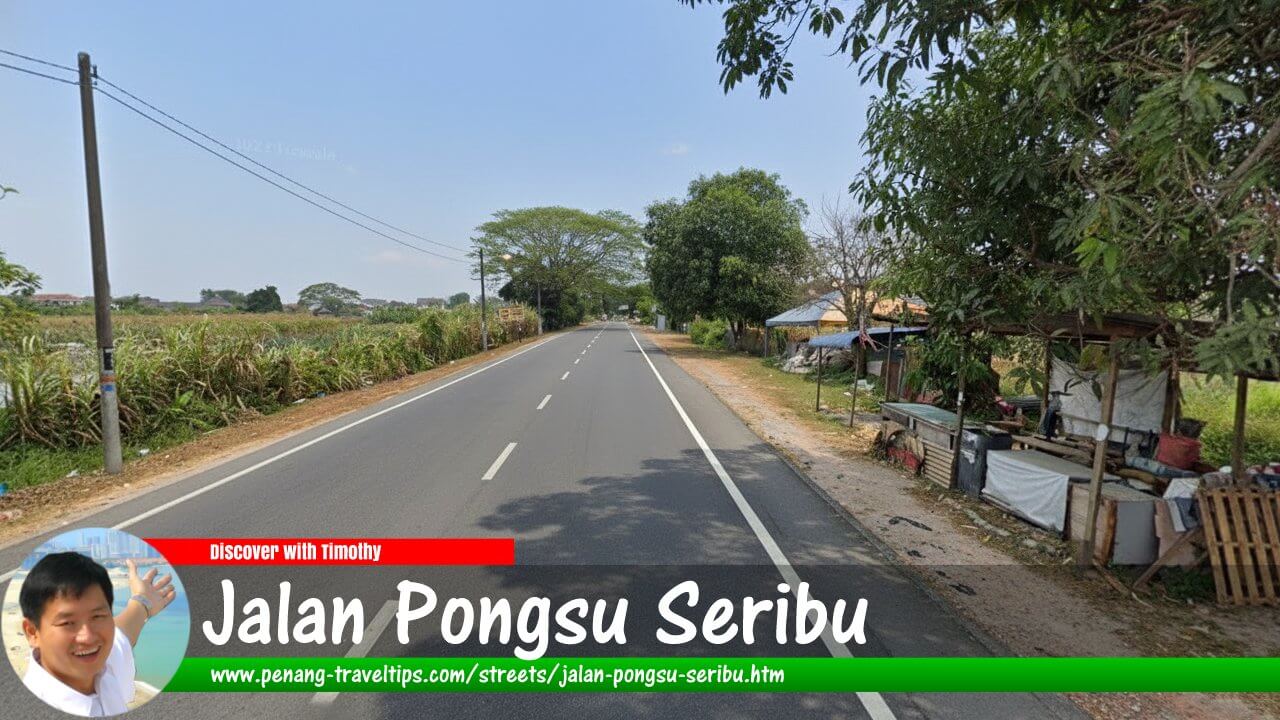 Jalan Pongsu Seribu, Kepala Batas (AI-edited photograph on 1 January 2026)
Jalan Pongsu Seribu is a notable rural road in Kepala Batas, Seberang Perai Utara, Penang. Extending for approximately 4 kilometres, the road forms part of State Route P3 and serves as an important connector between several village roads and settlements. It runs from a multi-road intersection in the northwest to another significant junction in the southeast, traversing landscapes that remain closely tied to agriculture, village life, and the historical development of northern Seberang Perai.1
Quick Facts
- Road name: Jalan Pongsu Seribu
- Location: Kepala Batas, Seberang Perai Utara, Penang
- Route designation: State Route P3
- Approximate length: 4 km
- Northwest connection: Jalan Permatang Bogar, Jalan Datuk Haji Ahmad Badawi, Jalan Permatang Sirah
- Southeast connection: Jalan Merbau Kudung and Jalan Lahar Yooi
- Road character: Rural collector road
- Name meaning: “A thousand hillocks”
Location and Setting
Jalan Pongsu Seribu is situated within the Kepala Batas area, a district known for its blend of rural heritage and gradual suburban growth. The road lies inland from the coastal zones of Seberang Perai and passes through landscapes that are predominantly flat, punctuated by small natural rises and long-established agricultural plots. These features give the road its distinctive rural identity.2
The surrounding area includes kampung settlements, paddy fields, and scattered residential developments, making Jalan Pongsu Seribu an essential corridor for daily local movement.2
Route Description
At its northwestern end, Jalan Pongsu Seribu begins near an important intersection that brings together Jalan Permatang Bogar, Jalan Datuk Haji Ahmad Badawi, and Jalan Permatang Sireh. This convergence highlights the road’s role as a connector, linking multiple village routes into a coherent local network.1
From this junction, the road extends southeastward, passing through a largely rural corridor. It eventually reaches another significant junction where it meets Jalan Merbau Kudung and Jalan Lahar Yooi, providing onward connections to other parts of Kepala Batas and neighbouring localities.3
State Route P3
As part of State Route P3, Jalan Pongsu Seribu is integrated into Penang’s state-managed road system. State routes like P3 are designed to support regional mobility, particularly by connecting rural areas with larger towns, administrative centres, and major highways.1
Although P3 is not a high-capacity expressway, it plays a critical role in ensuring that inland communities remain accessible and economically connected.1
Etymology and Meaning
The name “Pongsu Seribu” carries cultural and geographical significance. The Malay word pongsu refers to a small hillock or low rise in the land. When combined with seribu, meaning “a thousand,” the name can be interpreted as “a thousand hillocks.”4
This evocative name reflects the local perception of the landscape, which, while generally flat, features subtle undulations that were once more noticeable before modern land levelling and agricultural practices.4
Road Design and Physical Characteristics
Jalan Pongsu Seribu is typically a two-lane single carriageway designed to accommodate local traffic. The road prioritises accessibility over speed, with direct access points to houses, farms, and small businesses lining certain sections.5
Drainage ditches, roadside vegetation, and simple junction layouts are common features, reinforcing its classification as a rural collector road rather than an urban arterial.5
Surrounding Land Use
The land use along Jalan Pongsu Seribu is predominantly agricultural, with paddy fields and smallholdings occupying large stretches of land. Traditional kampung houses are interspersed with newer residential developments, reflecting gradual population growth in Kepala Batas.2
Small roadside businesses, including workshops and convenience shops, serve the daily needs of residents and contribute to the road’s role as a local activity spine.2
Traffic and Daily Usage
Traffic volumes on Jalan Pongsu Seribu are generally moderate and consist mainly of motorcycles, private cars, and light commercial vehicles. Heavy vehicles are relatively uncommon, except during agricultural harvesting periods or local construction activities.3
The road is particularly important during peak hours, when residents travel to work, schools, and markets in Kepala Batas and nearby towns.3
Historical Development
Historically, Jalan Pongsu Seribu likely evolved from informal village paths that connected early settlements scattered across the inland plains of northern Seberang Perai. As agricultural activity intensified, these paths were upgraded to support carts, motorcycles, and eventually motor vehicles.5
Its eventual designation as part of a state route reflects the increasing importance of the road in regional connectivity and administration.5
Role in the Kepala Batas Community
Today, Jalan Pongsu Seribu functions as more than just a transport corridor. It is a shared community space that supports social interaction, economic activity, and access to essential services. The road links residents to schools, mosques, markets, and neighbouring villages, reinforcing social cohesion.1
Its continued relevance demonstrates how rural roads remain vital even as surrounding areas experience gradual urbanisation.1
Future Outlook
As Kepala Batas continues to develop, Jalan Pongsu Seribu is expected to remain an important local connector. Incremental upgrades may improve safety and capacity, but its fundamental role as a rural state road is likely to be preserved.3
Balancing development with the preservation of rural character will be key to ensuring that Jalan Pongsu Seribu continues to serve its communities effectively.3
Jalan Pongsu Seribu on the Map of Roads in Penang
References
- Roads in Penang – Wikipedia
- Kepala Batas – Wikipedia
- Transportation in Penang – Wikipedia
- Dewan Bahasa dan Pustaka – Malay Language Reference
- Public Works Department of Malaysia
Page Details
This page was created on 1 January 2026. Hi, my name is Timothy and created it from my research, for my own entertainment, knowledge and to satisfy my curiosity. I am providing the information to you in good faith and hope it is useful. I try to get the details as accurate as possible. I also try to update the page whenever I stumble on new details. So this and all my other pages are perpetual work in progress. If you discover any error, please politely inform me, pointing out where the error lies, and I will correct it as soon as possible. Your helpfulness will keep this page accurate, relevant and helpful to those who need the information.Want to share your Penang travel experiences or get tips from fellow travellers?
Join the Penang Travel Tips Facebook GroupUseful guides for visiting Penang
My Videos of Penang
 Latest Pages & Updates
Buy Me A Coffee
If you enjoy the information I provide and want to support the work I do, please buy me a coffee! I appreciate it immensely, thank you so much!
