
Jalan Krian Kedah, Sungai Jawi
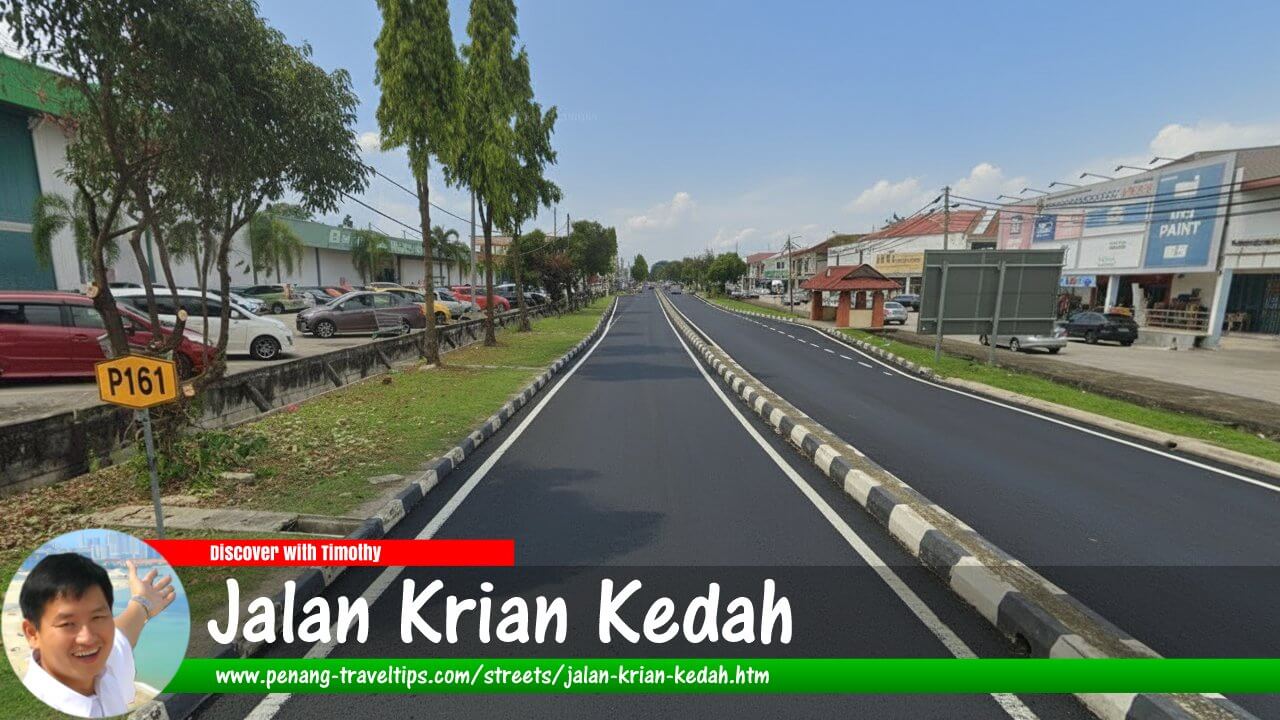 Jalan Krian Kedah, Sungai Jawi (AI-edited photograph on 4 January 2026)
Jalan Krian Kedah is a short yet distinctive no-through road located in Sungai Jawi, within the Seberang Perai Selatan district of Penang. Though modest in length and traffic volume, the road reflects the layered character of the area, transitioning from a semi-urban junction in the north to a distinctly rural setting in the south. It serves as a connector for local residents, worshippers, and plantation workers, while also standing as a quiet reminder of how development gradually gives way to countryside in this part of the Penang Mainland1.
Quick Facts
Name: Jalan Krian Kedah
Location: Sungai Jawi, Seberang Perai Selatan, Penang
Road Type: No-through local road
Northern Terminus: Junction with Jalan Sungai Bakap
Southern End: Devi Sri Maha Arakasiamman Temple and adjacent palm oil plantation
Carriageway: Dual carriageway at the northern junction, tapering to single carriageway and rural road
Primary Function: Local access and community connectivity
Location and Setting
Situated in Sungai Jawi, Jalan Krian Kedah lies within an area known for its blend of residential neighbourhoods, small businesses, religious sites, and agricultural land. Sungai Jawi itself has long functioned as a service centre for surrounding villages and estates, and the road fits naturally into this context as a local access route rather than a major thoroughfare. Its northern junction with Jalan Sungai Bakap places it within easy reach of shops, eateries, schools, and public facilities that line one of the town’s principal roads2.
As the road progresses southward, the surroundings become noticeably quieter and greener. Built-up plots thin out, roadside activity diminishes, and the landscape gradually opens into agricultural land dominated by palm oil plantations. This transition makes Jalan Krian Kedah a subtle boundary between the semi-urban fabric of Sungai Jawi and the rural hinterland beyond.
Road Layout and Physical Characteristics
One of the defining features of Jalan Krian Kedah is the way its physical form changes over a relatively short distance. At its northern end, where it meets Jalan Sungai Bakap, the road begins as a dual carriageway. This design accommodates turning movements and local traffic entering or leaving the main road, providing a sense of openness and capacity that contrasts with what follows.
Moving south, the road soon tapers into a single carriageway. Lanes narrow, shoulders become less formal, and the overall design shifts toward that of a minor local road. Further along, the surface and alignment take on the character of a country road, with simpler drainage, fewer markings, and a stronger visual presence of vegetation along the verges. This gradual transformation mirrors the changing land use and reinforces the road’s role as a low-speed, access-oriented route rather than a commuter corridor.
No-Through Road Character
Jalan Krian Kedah is classified as a no-through road, meaning it does not serve as a shortcut or alternative route between major destinations. Instead, it ends definitively in the south beside the Devi Sri Maha Arakasiamman Temple, beyond which lies a palm oil plantation. This termination point shapes how the road is used: traffic is almost entirely local, consisting of residents, temple visitors, and vehicles associated with plantation activities.
The absence of through traffic contributes to a calmer atmosphere. Noise levels are generally low, and pedestrian movement can take place with a greater sense of safety compared to busier roads. For nearby residents, this quality is often valued, as it preserves a degree of tranquillity while still maintaining convenient access to Sungai Jawi’s amenities.
The Devi Sri Maha Arakasiamman Temple
At the southern end of Jalan Krian Kedah stands the Devi Sri Maha Arakasiamman Temple, a Hindu temple that serves as both a religious and cultural landmark. Its presence gives the road a clear focal point and destination, particularly during festivals and prayer days when devotees travel from surrounding areas to attend ceremonies.
The temple’s location, set against the backdrop of plantation land, highlights the longstanding relationship between religious institutions and rural communities in Seberang Perai. Roads like Jalan Krian Kedah play an important role in sustaining this relationship by providing direct, practical access while remaining integrated into the everyday landscape rather than dominating it.
Surrounding Land Use
Land use along Jalan Krian Kedah is predominantly local and small-scale. Near the northern junction, there are residential properties and minor commercial activities that benefit from proximity to Jalan Sungai Bakap. These include houses, small workshops, and informal businesses typical of Sungai Jawi’s mixed-use environment.
Further south, development gives way to agricultural land, with palm oil plantations forming the dominant land use beyond the temple. This pattern reflects broader trends in Seberang Perai Selatan, where agriculture remains an important economic activity alongside urban growth. The road thus acts as a transitional corridor, linking everyday town life with the productive rural landscape.
Role in the Local Transport Network
Although Jalan Krian Kedah is not a major traffic artery, it still plays a meaningful role within the local transport network. Its connection to Jalan Sungai Bakap ensures that residents can quickly reach public transport routes, schools, markets, and healthcare facilities. For temple visitors, the road provides a clear and direct approach without the confusion of navigating through residential lanes.
The road’s design naturally encourages lower speeds, which aligns well with its function. Cyclists and pedestrians are occasionally seen using the road, particularly in the quieter southern section. In this way, Jalan Krian Kedah supports a more human-scale form of mobility that complements larger roads rather than competing with them.
Everyday Life and Community Value
For the people who live and work nearby, Jalan Krian Kedah is less a piece of infrastructure and more a familiar part of daily life. Children travel along it to visit friends or attend religious classes, adults use it for short trips and errands, and during temple events it becomes a shared space filled with activity and social interaction.
Such roads often escape attention in broader discussions about transport and development, yet they are essential to the functioning of local communities. By providing access, shaping neighbourhood character, and linking different land uses, Jalan Krian Kedah contributes quietly but meaningfully to the social fabric of Sungai Jawi.
Conclusion
In summary, Jalan Krian Kedah exemplifies the understated importance of local roads in Seberang Perai. From its dual-carriageway beginning at Jalan Sungai Bakap to its rural ending beside the Devi Sri Maha Arakasiamman Temple and surrounding palm oil plantation, the road tells a story of transition, community, and place. While it may not feature prominently on regional maps, its value lies in how it supports everyday movement, preserves a calm environment, and connects people to both town and countryside in Sungai Jawi3.
References
- Penang State Government – Locality and district information
- Google Maps – Sungai Jawi and Jalan Sungai Bakap area
- Majlis Bandaraya Seberang Perai – Roads and local infrastructure
Jalan Krian Kedah on the Map of Roads in Penang
Page Details
This page was created on 4 January 2026. Hi, my name is Timothy and created it from my research, for my own entertainment, knowledge and to satisfy my curiosity. I am providing the information to you in good faith and hope it is useful. I try to get the details as accurate as possible. I also try to update the page whenever I stumble on new details. So this and all my other pages are perpetual work in progress. If you discover any error, please politely inform me, pointing out where the error lies, and I will correct it as soon as possible. Your helpfulness will keep this page accurate, relevant and helpful to those who need the information.Want to share your Penang travel experiences or get tips from fellow travellers?
Join the Penang Travel Tips Facebook GroupUseful guides for visiting Penang
My Videos of Penang
 Latest Pages & Updates
Buy Me A Coffee
If you enjoy the information I provide and want to support the work I do, please buy me a coffee! I appreciate it immensely, thank you so much!
