
Ramboda Falls
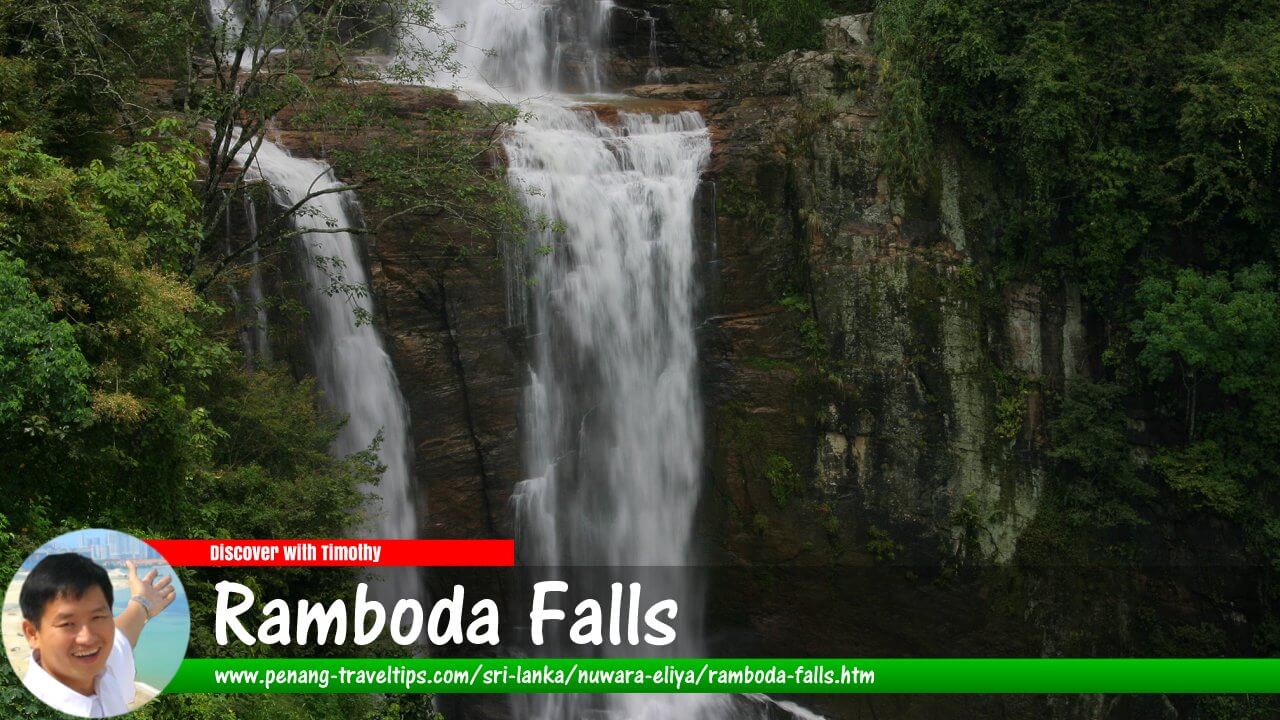 Ramboda Falls, Nuwara Eliya, Sri Lanka (1 September 2005)
Ramboda Falls (GPS: 7.05456, 80.70533) is one of the most impressive waterfalls in Sri Lanka, located in the picturesque hill country between Kandy and Nuwara Eliya. Cascading down a steep mountainside amid lush tea plantations and mist-covered valleys, the waterfall is a popular stop for travellers exploring the Central Highlands. Rising approximately 109 metres (358 feet), Ramboda Falls is ranked among the tallest waterfalls in the country and is renowned for its dramatic scenery and refreshing mountain climate.1
The waterfall is situated at Ramboda Pass in the Nuwara Eliya District, along the A5 highway. It is formed by the waters of Panna Oya, a tributary of Kotmale Oya, which descends through the rugged terrain of Sri Lanka's central mountains. Visitors are drawn to the falls not only for their natural beauty but also for the surrounding landscapes of tea estates, forests, and winding mountain roads.2
Quick Facts
- Location: Ramboda Pass, Nuwara Eliya District, Sri Lanka
- Watercourse: Panna Oya (tributary of Kotmale Oya)
- Height: Approximately 109 metres (358 feet)
- Type: Tiered waterfall
- Elevation: About 945 metres above sea level
- Number of Main Drops: 2
- Nearest Town: Pussellawa
- Best Time to Visit: May to September and December to March
- Access: Via the A5 Kandy–Nuwara Eliya Road
- Notable Feature: Surrounded by tea plantations and mountain scenery
Natural Setting and Features
Ramboda Falls occupies a spectacular setting in Sri Lanka's Central Province, an area known for its cool climate and scenic mountain landscapes. The waterfall plunges down a rocky escarpment in a series of cascades, creating a striking white ribbon against the surrounding greenery. During periods of heavy rainfall, the volume of water increases significantly, producing a thunderous display that can be seen and heard from considerable distances.3
The falls are often described as a tiered or multi-level waterfall. In addition to the main cascade visible from viewpoints, the watercourse includes upper and lower sections that together create the broader Ramboda waterfall system. The lower section, accessible via a short walking path, offers some of the most dramatic views and photography opportunities.4
The surrounding environment consists of rolling tea estates, cloud forests, and mountain ridges. Frequent mist and cool temperatures contribute to the area's distinctive atmosphere, making Ramboda one of the most photogenic locations in Sri Lanka's hill country.5
Historical and Cultural Significance
Ramboda Pass has long been an important route connecting the central regions of Sri Lanka. During the British colonial period, roads through the highlands were developed to serve the growing tea industry. Travellers crossing the pass often remarked on the beauty of the waterfalls and steep mountain scenery, which remain largely unchanged today.6
The area around Ramboda is closely associated with Sri Lanka's tea-growing heritage. Many of the nearby estates date back to the nineteenth century and continue to produce world-famous Ceylon tea. Visitors frequently combine a stop at Ramboda Falls with tours of nearby tea factories and plantations.
Wildlife and Environment
The forests and plantations surrounding Ramboda Falls support a variety of plant and animal species. The moist highland environment provides habitat for numerous birds, butterflies, reptiles, and small mammals. Birdwatchers may encounter endemic Sri Lankan species in the wooded areas around the waterfall, while the dense vegetation contributes to the region's rich biodiversity.7
Conservation efforts in the Central Highlands aim to preserve these ecosystems while promoting sustainable tourism. Visitors are encouraged to avoid littering and to respect the natural environment when exploring the area.
Travel Information
How to Get There
Ramboda Falls is conveniently located along the A5 highway connecting Kandy and Nuwara Eliya. The waterfall lies approximately 23 kilometres west of Nuwara Eliya and can be reached by private vehicle, taxi, or public bus operating between Kandy and Nuwara Eliya.8
- From Kandy: Approximately 50 kilometres (about 1.5–2 hours by road).
- From Nuwara Eliya: Approximately 23 kilometres (about 45–60 minutes by road).
- From Colombo: Approximately 140 kilometres (about 4–5 hours by road).
Best Time to Visit
The waterfall can be visited throughout the year. However, it is most impressive after periods of rainfall when water flow is strongest. Early morning visits often provide the clearest views, while afternoon mist can add a dramatic atmosphere for photography.
Viewing Points
Several viewpoints offer excellent perspectives of the waterfall. Visitors can admire the falls from roadside lookouts, nearby hotels, and dedicated observation areas. A short walking trail provides access to closer views of the lower cascade.
What to Bring
- Comfortable walking shoes with good grip.
- Light rain jacket or umbrella.
- Camera or smartphone for photography.
- Drinking water.
- Warm clothing during cooler months.
Safety Tips
- Stay on designated paths and viewing areas.
- Avoid climbing wet rocks, as surfaces can be slippery.
- Take extra care during periods of heavy rain.
- Supervise children near steep drop-offs and watercourses.
- Respect local regulations and environmental guidelines.
Nearby Attractions
Travellers visiting Ramboda Falls often combine their journey with other attractions in Sri Lanka's hill country. Popular nearby destinations include tea factories and plantations, Gregory Lake in Nuwara Eliya, the Sri Bhakta Hanuman Temple, Hakgala Botanical Garden, and several other famous waterfalls such as Devon Falls and St. Clair's Falls.9
Because of its accessibility, dramatic scenery, and location along one of Sri Lanka's most scenic roads, Ramboda Falls remains one of the country's most rewarding natural attractions. Whether visited as a brief roadside stop or as part of a broader exploration of the Central Highlands, the waterfall offers an unforgettable glimpse into the beauty of Sri Lanka's mountainous interior.
Ramboda Falls on  the Map of Nuwara Eliya, Sri Lanka
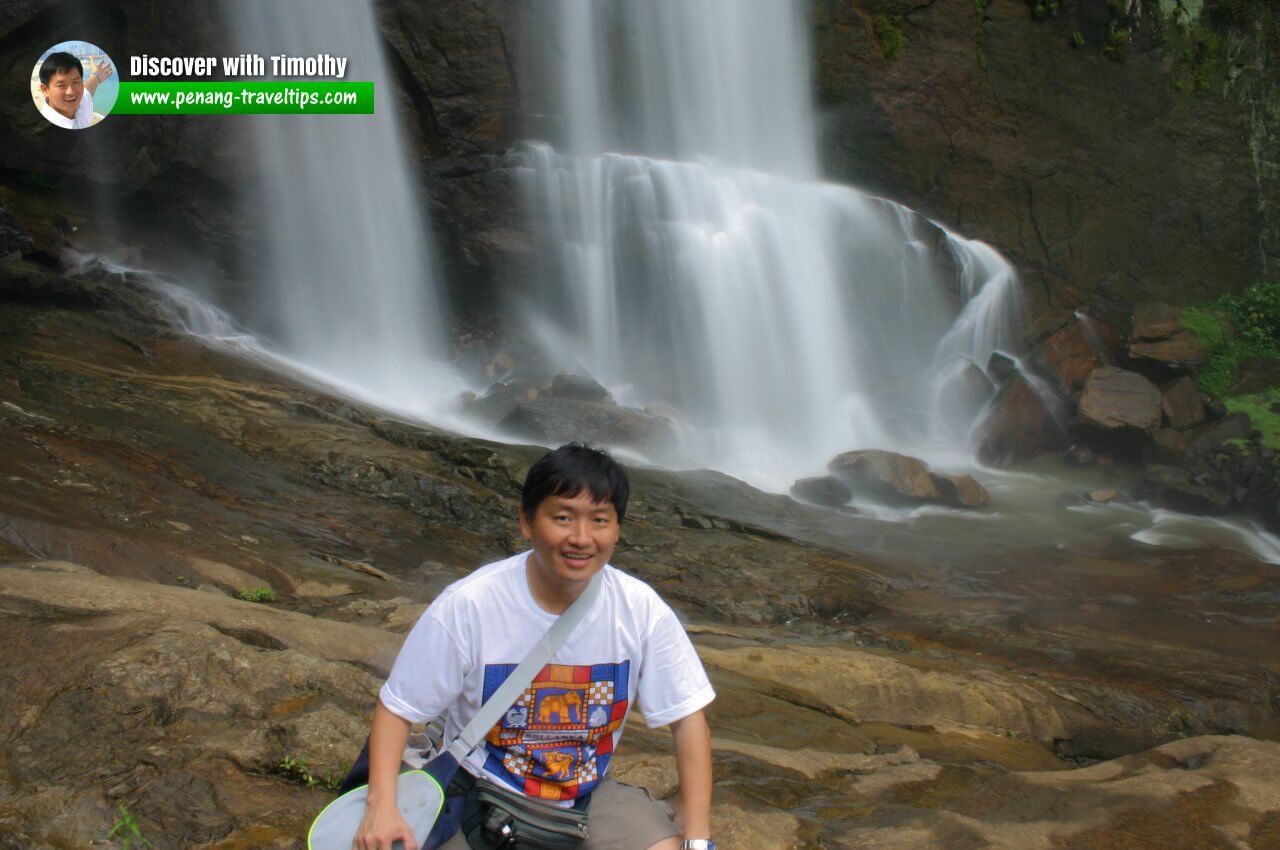 Me at Ramboda Falls (1 September 2005)
References
- Wikipedia – Ramboda Falls
- Ceylon Pages – Ramboda Falls
- Birding Sri Lanka – Ramboda Falls
- Lanka Pradeepa – Ramboda Falls
- Mihiliya Tours – Ramboda Falls
- Historical Description of Ramboda Pass
- Sri Lankan Guide – Ramboda Falls
- Attractions in Sri Lanka – Ramboda Falls
- Nearby Attractions around Ramboda Falls
Page Details
This page was created/modified on 7 June 2026. Hi, my name is Timothy and created it from my research, for my own entertainment, knowledge and to satisfy my curiosity. I am providing the information to you in good faith and hope it is useful. I try to get the details as accurate as possible. I also try to update the page whenever I stumble on new details. So this and all my other pages are perpetual work in progress. If you discover any error, please politely inform me, pointing out where the error lies, and I will correct it as soon as possible. Your helpfulness will keep this page accurate, relevant and helpful to those who need the information.