
Sri Lanka Travel Guide
 Go Back
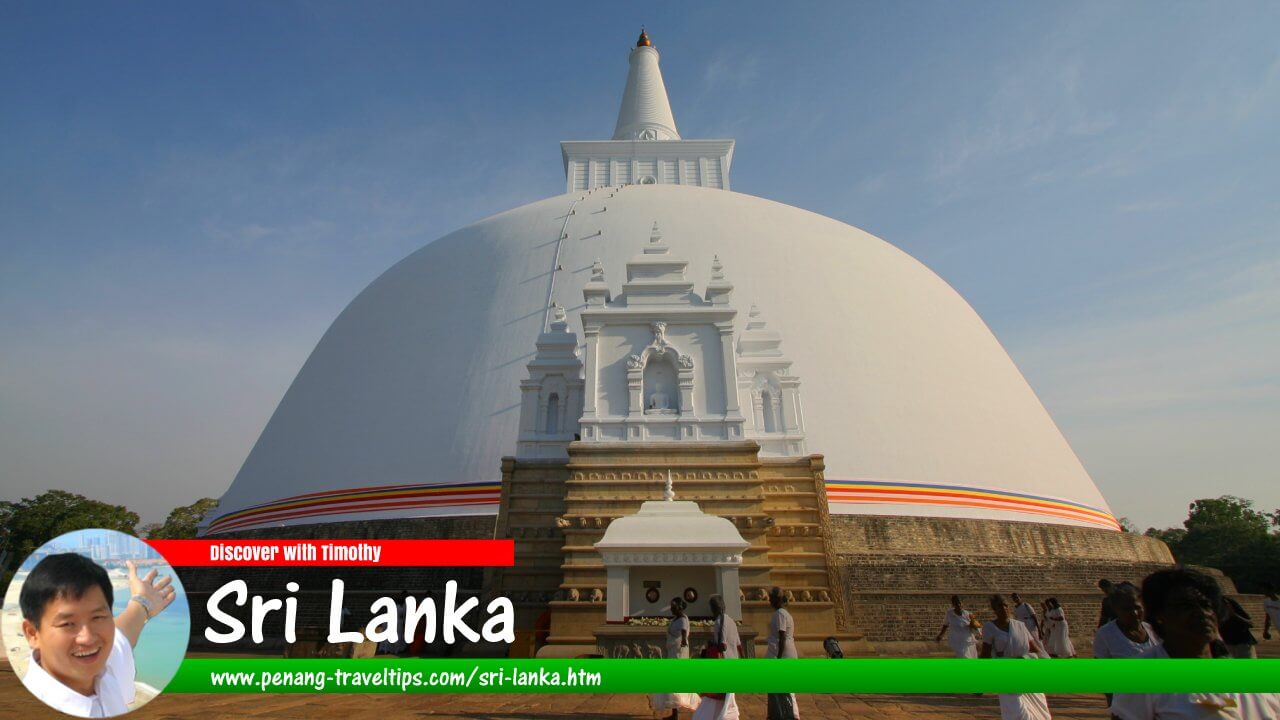 Sri Lanka Travel Guide (28 August 2005)
Also available: Panduan Melawat Sri Lanka
Sri Lanka at a Glance
Sri Lanka is a compact island nation in the Indian Ocean, situated just south of India. Formerly known as Ceylon, the country is officially the Democratic Socialist Republic of Sri Lanka. For Malaysian travellers, Sri Lanka offers an unusually varied holiday experience within a relatively small area, combining ancient cities, Buddhist heritage, tea plantations, tropical beaches, wildlife parks and lively cities. 1
Although Sri Lanka is considerably smaller than Malaysia, its landscape is remarkably diverse. The island has a mountainous interior, extensive lowlands, long stretches of coastline and several distinct climatic zones. The central highlands are particularly scenic, with tea plantations, waterfalls and cool mountain towns, while the coast offers beaches, surfing, diving and other water activities. 2
Where Is Sri Lanka?
Sri Lanka lies in the Indian Ocean, immediately south of the Indian subcontinent. Its position makes it geographically close to South Asia while also giving it strong historical connections with the wider Indian Ocean world.
The island measures roughly 430 kilometres from north to south and about 225 kilometres at its widest point. Its commercial capital is Colombo, while the administrative capital is Sri Jayewardenepura Kotte. Sri Lanka has nine provinces and 25 districts. 1
For Malaysian travellers, the relatively compact size of Sri Lanka is a major advantage. It is possible to combine several very different experiences in a single holiday, although travelling between destinations can take longer than the distances on a map might suggest because of mountainous roads and local traffic.
Why Visit Sri Lanka?
Sri Lanka is one of those destinations where a single trip can combine several types of holiday. You can explore ancient Buddhist cities in the morning, travel through emerald-green tea plantations in the afternoon and arrive at a tropical beach the following day.
The country's attractions include ancient cities, temples, colonial forts, beaches, wildlife reserves, mountains, waterfalls, tea estates and traditional cultural experiences. Sri Lanka Tourism currently presents the country's attractions around themes including heritage, scenic landscapes, wildlife, beaches, adventure, wellness, festivals and local culture. 3
A Country with a Long History
Sri Lanka has a history stretching back more than 2,500 years, with ancient kingdoms leaving behind impressive cities, irrigation systems, monasteries, stupas and temples. The ancient capitals of Anuradhapura and Polonnaruwa are among the most important archaeological sites on the island.
Sigiriya, the spectacular rock fortress rising above the surrounding plains, is another highlight of Sri Lanka's ancient heritage. The site dates to the fifth century and is notable not only for its fortress but also for its gardens, water features and surviving frescoes. 4
The former royal city of Kandy represents another important period in Sri Lankan history. It was the last great kingdom of the island and remains an important centre of Sinhalese culture and Buddhism. The city is home to the Temple of the Sacred Tooth Relic, one of Sri Lanka's most important Buddhist sites. 5
Colonial Heritage
Sri Lanka's history was also shaped by European colonial powers, particularly the Portuguese, Dutch and British. Their influence can still be seen in architecture, churches, forts, railway lines, place names and aspects of the country's cuisine and culture.
The finest example is Galle Fort on the southern coast. The historic fortifications, streets and colonial buildings create an atmosphere quite different from the ancient cities of the interior. Sri Lanka Tourism describes the Dutch fort at Galle as one of the best-preserved examples of its kind in Asia. 6
Sri Lanka's Cultural Heritage
Sri Lanka has a rich mixture of religious and cultural traditions. Buddhism has played a central role in the country's history, while Hinduism, Islam and Christianity are also important parts of Sri Lankan society.
For visitors, this diversity can be seen in temples, mosques, churches, Hindu kovils, festivals, food and everyday life. Malaysian travellers may find some aspects of this religious diversity familiar, while other traditions will feel distinctly South Asian.
Sri Lanka's cultural heritage is particularly concentrated in the so-called Cultural Triangle, which encompasses major historical sites around Anuradhapura, Polonnaruwa, Sigiriya and Dambulla. 7
The Scenic Hill Country
One of the most memorable parts of a Sri Lankan journey is the central highlands. The mountains are covered with extensive tea plantations, while mist, waterfalls and winding roads give the region a very different character from the tropical coast.
Nuwara Eliya is one of the best-known hill towns and is associated with Sri Lanka's tea-growing heritage. Ella, meanwhile, has become particularly popular with international visitors for its mountain scenery, hiking trails, waterfalls and railway journeys.
The highlands also provide a welcome change from the heat and humidity of the lowlands. Sri Lanka's mountains rise to more than 2,500 metres, creating noticeably cooler conditions in some areas. 1
Tea Country
Tea is one of Sri Lanka's best-known products and an important part of its identity. The British developed large-scale tea cultivation in the nineteenth century, and the plantations today form some of the most recognisable landscapes in the central highlands.
Visitors can tour tea estates and factories, learn about the production process and sample different varieties of Ceylon tea. For Malaysian travellers who enjoy tea, a visit to the hill country is therefore more than just a scenic excursion; it is an opportunity to experience one of the country's defining industries.
Sri Lanka's Beaches
Sri Lanka is surrounded by the Indian Ocean and has an extensive coastline. Popular coastal destinations include Mirissa, Unawatuna, Hikkaduwa, Bentota, Arugam Bay and the beaches around Trincomalee and the eastern coast.
The country's two monsoon systems mean that different sides of the island can offer better beach conditions at different times of the year. This is one of the most useful things to understand when planning a Sri Lankan beach holiday. 8
For Malaysian travellers accustomed to tropical weather, Sri Lanka's climate will feel familiar in many respects. However, its seasonal rainfall patterns are different, so it is important to choose the coast according to the time of year rather than assuming that every beach has the same weather throughout the year.
Wildlife and National Parks
Sri Lanka is also an excellent destination for wildlife enthusiasts. The country has numerous national parks and protected areas where visitors can see elephants, leopards, deer, crocodiles and a wide variety of birds.
Yala National Park is among the best-known wildlife destinations and is particularly associated with its leopard population. Other important parks include Udawalawe, Minneriya and Wilpattu, each offering different landscapes and wildlife experiences. 9
For Malaysian travellers who enjoy visiting national parks in Sabah or Sarawak, a Sri Lankan safari provides a different experience. Instead of dense equatorial rainforest, many Sri Lankan parks have dry-zone landscapes, grasslands, scrub and open water bodies, making wildlife easier to observe in certain seasons.
Elephants of Sri Lanka
The Asian elephant is one of Sri Lanka's most iconic animals. Elephants can be encountered in several national parks, and seasonal gatherings around water bodies can provide spectacular wildlife experiences.
When choosing an elephant safari, however, travellers should consider animal welfare. Avoid attractions that encourage visitors to touch, ride or otherwise interact unnaturally with wild animals. Responsible wildlife tourism helps protect the animals while giving visitors a more authentic experience.
Peradeniya Royal Botanic Gardens
Peradeniya Royal Botanic Gardens, located about 5.5 kilometres west of Kandy, is one of Sri Lanka's most attractive botanical gardens. Established in 1821, the 59-hectare garden contains more than 4,000 species of plants, including orchids, palms, spices, medicinal plants and tropical trees. 19
The garden is particularly famous for its impressive avenues of royal palms, giant bamboo, orchids and the enormous Javan fig tree. It is a pleasant place to spend several hours walking among the tropical vegetation, especially after visiting the cultural attractions of Kandy. 19
For Malaysian travellers, Peradeniya is an easy addition to a Kandy itinerary and provides a relaxing contrast to the city's temples and historical attractions.
Pinnawala Elephant Orphanage
Pinnawala Elephant Orphanage, near Rambukkana, is one of Sri Lanka's best-known elephant conservation centres. Established in 1975, it was originally created to care for orphaned and abandoned elephant calves and has subsequently developed into a centre for elephant care, breeding, veterinary treatment and conservation. 20
Visitors can observe elephants in the centre and see aspects of their daily care, including feeding and bathing. The elephants also have access to the nearby Ma Oya River, where visitors can observe them during scheduled bathing periods. 20
Pinnawala can be visited conveniently between Colombo and Kandy and may therefore fit well into an itinerary travelling between the two cities. Travellers should follow all visitor rules and avoid unauthorised contact with the elephants.
Whale Watching
Sri Lanka's position in the Indian Ocean also makes it possible to see whales and dolphins. Mirissa on the southern coast is particularly well known for whale-watching excursions, including opportunities to see blue whales. 10
As with safaris, choose a responsible operator that follows appropriate distances and wildlife-viewing practices. Marine animals should be observed without being chased or disturbed.
Climate at a Glance
Sri Lanka has a tropical climate, but the country's mountainous interior and two monsoon systems create considerable regional variation. The southwest monsoon generally affects the southwest between May and September, while the northeast monsoon affects the northeast between December and February. 11
December–February: Generally favourable for the southwest coast and hill-country travel.
March–April: Inter-monsoon period, generally warm and humid with possible afternoon thunderstorms.
May–September: Southwest monsoon affects the southwest and hills, while the east and north can offer better conditions.
October–November: Second inter-monsoon period, with rain possible across much of the island.
This seasonal pattern means that there is no single "best month" for the whole of Sri Lanka. Instead, the ideal time depends on whether your priority is the southern beaches, eastern coast, hill country, wildlife or cultural sites. 11
The Main Tourist Regions
For a first visit, it is useful to think of Sri Lanka in terms of several broad travel regions rather than trying to understand all 25 administrative districts.
Colombo and the Western Coast
Colombo is the country's commercial capital and the main urban gateway for international visitors. It combines colonial architecture, modern shopping centres, restaurants, markets, religious buildings and a growing contemporary cityscape.
The Cultural Triangle
The Cultural Triangle is the main region for exploring Sri Lanka's ancient Buddhist heritage. Anuradhapura, Polonnaruwa, Sigiriya and Dambulla are among its principal attractions. 7
Kandy and the Central Highlands
Kandy provides a bridge between the cultural heartland and the mountains. From there, travellers can continue towards Nuwara Eliya, Ella and the surrounding tea-growing areas.
The Southern Coast
The southern coast combines beaches, historic Galle, surfing and whale watching. Galle, Unawatuna and Mirissa are among the best-known destinations in this region.
The Eastern Coast
The eastern coast has a different character and becomes particularly attractive when the southwest monsoon affects the western and southern parts of the island. Trincomalee and Arugam Bay are among the better-known destinations in the east. 11
The North
Northern Sri Lanka offers a distinctive cultural experience shaped strongly by Tamil traditions, Hindu heritage and the region's own history. Jaffna is the principal city and can be an interesting addition for travellers who want to see a side of Sri Lanka that differs from the more heavily visited south and central regions.
Sri Lanka and Malaysia: What Feels Familiar?
Malaysian travellers may find Sri Lanka surprisingly easy to adapt to. Both countries have tropical climates, multicultural populations and long histories of interaction between different religions and ethnic communities.
There are also similarities in the food culture, including the importance of rice, spices, curries, coconut and seafood. At the same time, Sri Lankan cuisine has its own distinctive character, with dishes such as hoppers, string hoppers, kottu roti, dhal curry and a wide variety of sambols.
The major difference for many Malaysians will be the scale and character of the cultural environment. Sri Lanka's Buddhist heritage is much more visible in everyday life, while the country's architecture, languages and traditions reflect its deep South Asian roots.
Why Sri Lanka Works Well as a Holiday Destination
Sri Lanka's greatest strength is its variety. A Malaysian traveller can begin in Colombo, visit ancient ruins, explore a Buddhist temple in Kandy, travel through tea country, go on safari and finish the trip beside the Indian Ocean without having to cross an international border.
That compact combination of culture, nature, wildlife, mountains and beaches is what makes Sri Lanka particularly appealing. The challenge is not finding things to do, but deciding how much to fit into one trip.
What This Sri Lanka Travel Guide Covers
This guide is designed especially with Malaysian travellers in mind. The following sections will look at the country's main destinations, how to get there from Malaysia, transport within Sri Lanka, accommodation, food, halal food and Muslim facilities, costs, weather, safety and practical matters.
Particular attention will be given to issues that may matter to Malaysians, including visa and entry requirements, flights from Malaysia, local transport, availability of halal food, places to pray, currency, mobile connectivity and how to plan an itinerary without spending too much time on the road.
Sri Lanka is small enough to explore in one trip, but diverse enough to reward several visits. The key is to plan around the regions and seasons rather than trying to tick every attraction off a list.
Places to Visit in Sri Lanka
Sri Lanka may be a relatively small island, but it offers an extraordinary range of places to visit. Ancient cities, Buddhist temples, colonial forts, tea plantations, mountain scenery, wildlife parks and tropical beaches can all be combined into one journey. For Malaysian travellers, the main challenge is deciding which destinations deserve a place in the itinerary.
This section introduces the principal destinations and explains what makes each one worth visiting. Rather than trying to cover every town, the focus is on places that are particularly useful for a first-time visitor to Sri Lanka.
Colombo
Colombo is Sri Lanka's largest city and its principal commercial and financial centre. It is also the usual starting point for international visitors. The city combines colonial-era buildings with modern shopping centres, hotels, restaurants, markets and religious sites.
Among the places worth seeing are Galle Face Green, Colombo Fort, Pettah Market, Gangaramaya Temple, Independence Square and the National Museum of Colombo. The city is a good introduction to modern Sri Lankan life before heading into the countryside.
Galle Face Green
Galle Face Green is a broad seaside promenade in the heart of Colombo. It is particularly lively towards evening, when local families and visitors come to enjoy the sea breeze and watch the sunset.
The area is also a convenient place to sample some local snacks and observe everyday life in Colombo. It is not a conventional beach for swimming, but rather an urban waterfront gathering place.
Pettah
Pettah is one of Colombo's busiest commercial districts. Its crowded streets, shops, markets and street vendors provide a very different experience from the polished shopping malls elsewhere in the city.
It is an interesting place for visitors who want to see the energetic side of Colombo, although travellers should keep an eye on their belongings in crowded areas.
Gangaramaya Temple
Gangaramaya is one of Colombo's best-known Buddhist temples. The complex combines religious buildings with a museum-like collection of Buddhist artefacts, statues and objects from different parts of Asia.
Visitors should dress respectfully when entering Buddhist temples. Shoes and hats may need to be removed, and photography may be restricted in particular areas.
Negombo
Negombo is a coastal city north of Colombo and close to Bandaranaike International Airport. Because of its convenient location, it is often used as a first or final overnight stop by travellers with early or late flights.
The city has a long association with fishing and Christianity, and its coastal character makes it quite different from Colombo. If your flight arrives late at night, staying in Negombo can be more convenient than travelling into central Colombo.
Sigiriya
Sigiriya is one of Sri Lanka's most famous attractions and one of the country's defining landmarks. The ancient rock fortress rises dramatically above the surrounding landscape and is a UNESCO World Heritage Site. 12
The site is associated with King Kashyapa I, who established his royal residence there in the fifth century. Visitors climb a series of stairways towards the summit, passing through the famous Lion Gate and remnants of the ancient complex.
The climb can be physically demanding, especially in hot weather. Start early in the morning if possible, wear comfortable footwear and carry drinking water.
Sigiriya Frescoes
The rock is famous for its surviving frescoes, which are among the most recognisable examples of ancient Sri Lankan art. The paintings form an important part of the cultural significance of the site.
Pidurangala Rock
Pidurangala Rock is located close to Sigiriya and has become popular because it provides a spectacular view towards Sigiriya Rock. The hike is generally less formal than the climb at Sigiriya, but the final section can be uneven and requires care.
Many visitors climb Pidurangala around sunrise to see Sigiriya illuminated by the early morning light. It is an excellent option for travellers who enjoy hiking and photography.
Dambulla
Dambulla Cave Temple is another major attraction in the Cultural Triangle and a UNESCO World Heritage Site. The complex consists of caves containing Buddhist statues and paintings created and expanded over many centuries. 13
The temple is still an active religious site. Visitors should dress modestly and behave respectfully. As with other temples, shoes may need to be removed before entering certain areas.
Dambulla is also conveniently located between Kandy and Sigiriya, making it a practical stop on a cultural itinerary.
Anuradhapura
Anuradhapura was one of the great ancient capitals of Sri Lanka and served as a centre of political and Buddhist civilisation for many centuries. Its archaeological area contains enormous stupas, monasteries, reservoirs and sacred sites spread across a large landscape.
The Sri Maha Bodhi is particularly important. It is a sacred fig tree grown from a sapling of the Bodhi tree at Bodh Gaya in India, under which Buddhist tradition says the Buddha attained enlightenment. 14
Anuradhapura is best explored with sufficient time because the archaeological zone is extensive. Hiring a vehicle or guide can make it easier to move between the widely scattered sites.
My video about the history of Anuradhapura
Polonnaruwa
Polonnaruwa became the medieval capital of Sri Lanka after the decline of Anuradhapura. Its archaeological remains include royal buildings, monasteries, stupas and remarkable Buddhist sculptures.
The Gal Vihara is one of the most famous sites, with four large Buddha images carved into a single granite rock face. The quality and scale of the carvings make it one of the highlights of Sri Lanka's ancient heritage. 15
Bicycles are sometimes used to explore the archaeological area, although the tropical heat should be taken into account. For many visitors, a car or tuk-tuk is more comfortable.
Aukana Buddha Statue
Aukana Buddha Statue, near Kekirawa in Sri Lanka's North Central Province, is one of the finest surviving examples of an ancient standing Buddha statue in the country. Carved from a single granite rock during the 5th century, the statue rises more than 12 metres and stands on a separately carved lotus pedestal. 21
The statue is traditionally associated with the reign of King Dhatusena and faces the magnificent Kala Wewa reservoir. Its finely carved robe, serene expression and carefully proportioned form demonstrate the skill of Sri Lanka's ancient stone sculptors. Parts of the former image house that once sheltered the statue can still be seen around it. 21
Aukana is particularly worthwhile for travellers interested in Buddhist art, ancient architecture and Sri Lanka's cultural heritage. It can be combined with a visit to Anuradhapura, Dambulla or Polonnaruwa, although its location means that a private vehicle or organised tour is usually more convenient than relying solely on public transport.
Mihintale
Mihintale, about 10 to 15 kilometres east of Anuradhapura, is regarded as one of the most sacred Buddhist sites in Sri Lanka and is traditionally associated with the arrival of Arahat Mahinda Thera, who introduced Buddhism to King Devanampiyatissa in the 3rd century BCE. Sri Lanka Tourism describes it as the cradle of Buddhism in Sri Lanka. 22
The sacred mountain contains numerous ancient monuments, including the Ambasthala Stupa, Kantaka Chetiya, Naga Pokuna and the imposing Maha Seya. Visitors reach the main complex by climbing a long ancient stone staircase, while the higher areas provide extensive views across the surrounding countryside. 22
Mihintale is both an archaeological site and an active place of pilgrimage, so visitors should dress modestly and behave respectfully. It is particularly easy to visit together with Anuradhapura, making the two destinations a natural combination for travellers exploring Sri Lanka's ancient Buddhist heritage.
Kandy
Kandy is one of Sri Lanka's most important cultural cities. Situated among hills in the central part of the island, it was the last capital of the ancient Sri Lankan kingdoms before British colonial rule.
The city's most important attraction is the Temple of the Sacred Tooth Relic, which houses a relic believed by Buddhists to be a tooth of the Buddha. The temple forms part of the Sacred City of Kandy, a UNESCO World Heritage Site. 16
Kandy Lake
Kandy Lake sits beside the Temple of the Sacred Tooth Relic and provides a pleasant setting for a walk. The surrounding hills give the city a distinctive landscape that is quite different from the flat coastal areas.
Cultural Performances
Kandy is also known for traditional dance performances featuring elaborate costumes, drumming and fire-walking demonstrations. These performances provide visitors with an introduction to Sri Lanka's performing arts, although the quality and authenticity of commercial shows can vary.
Ella
Ella has become one of Sri Lanka's most popular destinations among younger travellers and independent tourists. The town is surrounded by mountains and tea plantations and provides access to several hiking trails and viewpoints.
Little Adam's Peak
Little Adam's Peak is a relatively accessible hike with views over the surrounding hills and valleys. It is a good option for visitors who want mountain scenery without undertaking an especially strenuous trek.
Ella Rock
Ella Rock is a more demanding hike. The route can be confusing in places, so travellers unfamiliar with the area may benefit from a local guide.
Nine Arch Bridge
The Nine Arch Bridge is one of Ella's most photographed landmarks. The historic railway bridge is surrounded by lush vegetation and tea-country scenery.
Visitors often time their visit to coincide with a passing train. Be careful around the railway tracks and never stand on the tracks while a train is approaching.
The Kandy–Ella Train Journey
The train journey through the central highlands is one of Sri Lanka's most famous travel experiences. The route passes through tea plantations, mountain valleys and small stations, providing constantly changing views of the landscape.
For many visitors, the journey between Kandy and Ella is as much an attraction as the destinations themselves. However, trains can be crowded and delays are possible, so do not schedule an important flight immediately after the journey.
Nuwara Eliya
Nuwara Eliya is a hill town situated at a considerably higher elevation than Colombo and Kandy. Its cooler climate and colonial-era architecture have earned it the nickname "Little England".
The surrounding region is dominated by tea plantations. Visitors can tour tea factories, walk through plantations and enjoy the cooler mountain climate.
For Malaysian travellers who are used to hot tropical weather, Nuwara Eliya can be a refreshing change. Bring a light jacket because temperatures can feel surprisingly cool, especially at night.
Horton Plains National Park
Horton Plains is a high-altitude protected area in the central highlands. It is known for its grasslands, forests, streams and dramatic viewpoints.
The hike to World's End, a dramatic escarpment overlooking the surrounding landscape, is one of the park's main attractions. The weather can change rapidly, so an early start is advisable.
Galle
Galle is one of the most attractive historic cities in Sri Lanka. Its centrepiece is the UNESCO-listed Galle Fort, whose walls surround a fascinating mixture of colonial buildings, churches, mosques, boutique hotels, restaurants and shops. 17
Galle Fort is particularly enjoyable on foot. The compact streets allow visitors to explore at a leisurely pace, and the ramparts provide excellent views over the Indian Ocean.
Galle Fort Mosque
The fort's multicultural heritage is reflected in its religious buildings, including mosques and churches. For Malaysian Muslim travellers, the presence of a mosque within the historic fort is an interesting reminder of the long-standing Muslim trading communities of the Indian Ocean.
Unawatuna
Unawatuna is a popular beach destination close to Galle. It offers a combination of sandy beaches, restaurants, guesthouses and water activities.
Its proximity to Galle makes it possible to combine a historic city visit with a beach stay. The area can become busy during peak travel periods.
Mirissa
Mirissa is a picturesque beach town on the southern coast and one of Sri Lanka's best-known whale-watching bases. It is also popular for surfing, swimming and simply relaxing by the sea.
The town has many restaurants and guesthouses, making it a convenient stop for independent travellers.
Hikkaduwa
Hikkaduwa is another established beach destination south of Colombo. It is known for surfing, diving, snorkelling and its lively tourist atmosphere.
The destination is particularly suitable for travellers who prefer a beach town with plenty of restaurants and activities rather than an isolated resort.
Bentota
Bentota is a popular resort area on the southwest coast. It is known for beaches, water sports and river-based activities.
Because of its location between Colombo and Galle, Bentota can also be incorporated conveniently into a southern coastal itinerary.
Yala National Park
Yala National Park is one of Sri Lanka's most famous wildlife destinations. It is particularly renowned for the possibility of seeing leopards, elephants, sloth bears, crocodiles and many species of birds. 18
A safari normally takes place in a jeep accompanied by a driver or guide. Wildlife sightings can never be guaranteed, so visitors should approach a safari as an opportunity to observe animals in their natural environment rather than as a checklist.
Udawalawe National Park
Udawalawe National Park is particularly associated with elephants and is often considered one of the easier places in Sri Lanka to see them. Its open landscape can make wildlife relatively easy to spot.
Udawalawe can work well as a stop between the hill country and the southern coast.
Wilpattu National Park
Wilpattu is Sri Lanka's largest national park and is known for its distinctive natural lakes or "villus". It offers a more remote wildlife experience than some of the country's better-known parks.
Travellers who want to explore a less crowded safari destination may find Wilpattu particularly appealing.
Minneriya National Park
Minneriya is famous for seasonal gatherings of elephants around its reservoir. The phenomenon is often referred to as "The Gathering" and is one of Sri Lanka's notable wildlife experiences.
The timing and size of elephant gatherings depend on rainfall and water conditions, so visitors should not expect exactly the same experience every year.
Trincomalee
Trincomalee on the northeast coast combines beautiful beaches with a significant history and important Hindu heritage. The area is particularly attractive during the period when the eastern coast experiences its drier weather.
Nilaveli Beach and Uppuveli Beach are among the better-known beaches in the area. Pigeon Island National Park, located offshore, is also popular for snorkelling and marine life.
Arugam Bay
Arugam Bay is internationally recognised as a surfing destination. It has a relaxed atmosphere and attracts surfers from around the world during the appropriate season.
Even if you do not surf, the area can appeal to travellers looking for a more laid-back coastal experience away from the main tourist routes.
Jaffna
Jaffna provides an opportunity to experience the distinctive Tamil culture of northern Sri Lanka. The city and surrounding peninsula have their own cuisine, religious traditions, architecture and historical identity.
The Nallur Kandaswamy Kovil is one of the region's most important Hindu temples. Visitors should dress appropriately and follow the temple's rules, particularly concerning photography and access to sacred areas.
Adam's Peak
Adam's Peak, also known as Sri Pada, is one of Sri Lanka's most significant pilgrimage sites. The summit is associated with different religious traditions, including Buddhism, Hinduism, Islam and Christianity.
The climb involves thousands of steps and is particularly popular during the pilgrimage season. Visitors who are not accustomed to long climbs should prepare physically and allow plenty of time.
Ruwanwelisaya and the Ancient Stupas
Sri Lanka is home to some enormous Buddhist stupas, particularly in Anuradhapura. Ruwanwelisaya, for example, is one of the most revered stupas in the ancient city.
For Malaysian visitors familiar with Buddhist temples in Penang, Kuala Lumpur and other parts of Malaysia, Sri Lanka provides a fascinating opportunity to see Buddhist architecture and religious practices on a much larger historical scale.
Beaches or Mountains?
If you have only a week, deciding between the coast and the highlands can make itinerary planning much easier. A beach-focused trip could concentrate on the southern coast, while a scenery-focused journey might combine Kandy, Nuwara Eliya and Ella.
For a first visit of 10 to 14 days, however, it is possible to combine Colombo, the Cultural Triangle, Kandy, Ella and the southern coast without making the itinerary excessively complicated.
Suggested Destinations by Interest
History: Anuradhapura, Polonnaruwa, Sigiriya, Dambulla and Galle.
Buddhist heritage: Kandy, Anuradhapura, Dambulla and Polonnaruwa.
Tea country: Nuwara Eliya, Ella and the central highlands.
Beaches: Unawatuna, Mirissa, Bentota, Hikkaduwa and Trincomalee.
Wildlife: Yala, Udawalawe, Wilpattu and Minneriya.
Surfing: Arugam Bay and selected beaches on the southern coast.
Hindu culture: Jaffna and Trincomalee.
Mountain scenery: Ella, Nuwara Eliya, Horton Plains and Adam's Peak.
Colonial heritage: Galle and Colombo.
Choosing Destinations for a First Trip
For a first-time Malaysian visitor, a balanced itinerary is usually more rewarding than concentrating entirely on one type of attraction. Sri Lanka's greatest appeal lies in the contrast between its regions.
A journey that combines ancient heritage, Kandy, tea country and a southern beach provides a good introduction to the island. Wildlife can then be added if you have sufficient time.
Do not underestimate travel time. A journey that looks short on a map may take several hours because of winding mountain roads, traffic and slower local trains. Leaving some flexibility in the itinerary will make the trip considerably more enjoyable.
What Makes Sri Lanka Different from Other Asian Destinations?
Sri Lanka's attraction is not based on a single iconic city or landmark. Its strength lies in the combination of experiences. Few destinations allow you to move so quickly from ancient Buddhist monuments to cool tea plantations, wildlife safaris and tropical beaches.
For Malaysian travellers, that variety makes Sri Lanka particularly suitable for a two-week holiday. It is possible to see a great deal without needing to travel across an enormous country.
Getting to and Around Sri Lanka
For Malaysian travellers, getting to Sri Lanka is relatively straightforward because the country is well connected by air with the region. Once you arrive, however, travelling around the island requires a little more planning. Sri Lanka may look small on a map, but narrow roads, traffic and mountainous terrain can make journeys considerably longer than expected. 23
Flying from Malaysia to Sri Lanka
The principal international gateway is Bandaranaike International Airport, also known as Colombo International Airport, located at Katunayake, north of Colombo. Despite commonly being called Colombo Airport, it is actually closer to Negombo than to central Colombo.
For travellers from Malaysia, Kuala Lumpur International Airport (KLIA) is the main point of departure. Depending on the airline and travel dates, flights may be available directly between Kuala Lumpur and Colombo, while connecting flights through other Asian hubs provide additional choices.
When comparing airfares, look at the total journey time as well as the ticket price. A cheaper connecting flight may not be worthwhile if the connection adds many hours to the journey.
Arriving at Bandaranaike International Airport
Bandaranaike International Airport is located in Katunayake, in Sri Lanka's Western Province. The airport serves as the country's principal international gateway and is the usual arrival point for Malaysian visitors.
After immigration and baggage collection, travellers can continue by taxi, private transfer, bus or other ground transportation. If you arrive late at night, staying in nearby Negombo can be a convenient option before beginning a longer journey the following morning.
Entry Requirements for Malaysians
Sri Lanka's immigration rules have changed in recent years, so Malaysian travellers should check the official Electronic Travel Authorization (ETA) system before departure rather than relying on older travel information.
As of 25 May 2026, Malaysian nationals are among 40 nationalities eligible for a 30-day tourist visa free of charge. However, travellers from these countries are still required to obtain an ETA before arriving in Sri Lanka. 24
The ETA should be obtained through Sri Lanka's official immigration system. The Department of Immigration and Emigration advises travellers to retain a copy of the ETA approval for presentation at the point of entry. 25
For a normal tourist visit, Malaysian travellers should also have a passport valid for at least six months from the date of arrival, a confirmed return or onward ticket and sufficient funds to cover their stay. 25
For Malaysian tourists:
- Tourist visa: free for eligible Malaysian nationals under the current 2026 scheme.
- Permitted stay: up to 30 days under the free tourist visa scheme.
- ETA: required before arrival.
- Passport: valid for at least six months from arrival.
- Return/onward ticket: required.
- Funds: travellers should be able to demonstrate sufficient means for their stay.
Immigration regulations can change, so this information should be treated as a guide rather than a substitute for checking the official Sri Lankan immigration website immediately before your journey.
Should You Stay in Colombo or Negombo?
If you arrive during the daytime and want to explore the capital, Colombo is a logical first stop. If your flight arrives late or departs very early, Negombo can be more convenient because it is much closer to the airport.
Negombo also makes a pleasant introduction to Sri Lanka, with its beach, fishing traditions, churches and seafood restaurants. It can be particularly useful for travellers who do not want to spend their first or final night dealing with Colombo traffic.
Getting Around Sri Lanka
Sri Lanka has an extensive network of roads, railways and buses. The official tourism authority describes the country as having a well-connected transport network covering road, rail and air, with both government and private services. 26
For tourists, the main choices are train, public bus, taxi or private car with driver, tuk-tuk and, for some journeys, domestic air services.
Travelling by Train
Travelling by train is one of the most enjoyable ways to experience Sri Lanka. The railway network connects Colombo with many major towns and tourist destinations, and the journey through the central highlands is particularly famous for its scenery. 26
The Kandy–Ella railway journey is the best-known scenic train experience. The route passes through tea plantations, mountain valleys, tunnels, bridges and small rural stations.
Even if you are not particularly interested in trains, this journey is worth considering because it provides a very different perspective of the Sri Lankan countryside from travelling by road.
First Class, Second Class and Third Class
Sri Lankan trains generally offer several classes of accommodation. The exact availability varies according to the train and route.
First class can provide greater comfort and, on some services, air-conditioning. Second class is often a good compromise between comfort and price, while third class is the most economical and provides a more local experience.
For the scenic hill-country journey, do not become so concerned about obtaining a particular class that you miss the opportunity to enjoy the journey itself. The scenery outside the window is the real attraction.
Booking Train Tickets
Popular scenic trains can become crowded, particularly during busy travel periods. If you have a fixed itinerary, check the latest Sri Lanka Railways booking arrangements before travelling.
It is also wise to allow some flexibility. Train delays can occur, and a journey that looks simple on paper may take longer than expected.
Travelling by Bus
Buses provide one of the most extensive forms of public transport in Sri Lanka. Government-operated services and private buses connect towns and cities throughout the island. 26
For travellers on a budget, buses can be remarkably inexpensive. They are also useful for reaching places that are not directly served by railway lines.
However, buses can be crowded, and travelling with large luggage may be inconvenient. For Malaysian travellers accustomed to relatively comfortable intercity coaches, some Sri Lankan buses may feel basic.
Travelling by Private Car and Driver
For many Malaysian travellers, hiring a car with a driver is one of the most convenient ways to explore Sri Lanka, especially for a first visit or a family holiday.
A private vehicle allows you to visit several attractions in a day without having to coordinate multiple buses and trains. It is particularly useful for the Cultural Triangle, where major attractions can be spread across a large area.
A driver can also be helpful in the hill country, where roads are winding and unfamiliar. Instead of concentrating on driving, you can enjoy the scenery and use the journey as part of the holiday.
Why a Private Driver Can Make Sense
- Greater flexibility over departure times.
- Easier access to rural attractions.
- Convenient for families or groups.
- Useful when carrying luggage between several hotels.
- Practical for visiting several Cultural Triangle sites.
- Allows you to stop for photographs and local attractions.
The Sri Lanka Tourism Development Authority maintains a directory of registered transport and taxi operators, which can be useful when selecting a service provider. 27
Tuk-Tuks
Tuk-tuks, known locally as three-wheelers, are an everyday form of transport in Sri Lanka. They are particularly useful for short journeys within towns and cities.
They can be convenient for reaching a restaurant, railway station or nearby attraction, but fares should be clarified before starting the journey if the vehicle is not using a meter.
For longer journeys, compare the fare with a taxi or ride-hailing service. A tuk-tuk can be enjoyable for a short local trip, but travelling for hours in one can become uncomfortable.
Taxis and Ride-Hailing
Taxis are widely available in the major cities and tourist areas. Sri Lanka Tourism also maintains a list of registered taxi and transport operators, including services offering airport transfers and car rental. 27
Ride-hailing applications may also be useful in major urban areas. Availability can be less reliable in smaller towns and rural regions, so do not depend entirely on an app when travelling through remote parts of the island.
Driving Yourself
Self-driving is possible, but it is not necessarily the best choice for a first-time visitor. Sri Lanka drives on the left-hand side of the road, which will be familiar to Malaysian drivers. However, traffic conditions, narrow roads, tuk-tuks, buses, pedestrians and unfamiliar road layouts can make driving stressful. 23
The situation becomes more challenging in the hill country, where roads can be narrow and winding. If your main objective is sightseeing rather than driving, a car with a local driver is usually a more relaxing option.
Domestic Flights
Sri Lanka's compact size means that most tourists do not need domestic flights. However, air services and charter options can provide faster connections between selected destinations for travellers who value time over cost. Sri Lanka Tourism notes that air services can connect the international airport with popular tourist destinations. 26
For a normal holiday, however, travelling by road and rail is part of the Sri Lankan experience. The scenery you miss from an aircraft may be one of the highlights of travelling overland.
How Long Do Journeys Take?
One of the most important things for Malaysian travellers to understand is that distance does not necessarily equal travel time in Sri Lanka. Roads can be narrow, traffic can be heavy and the mountainous interior makes journeys slower.
Colombo to Kandy: roughly half a day by road, depending on traffic and transport.
Kandy to Nuwara Eliya: several hours, with winding mountain roads.
Nuwara Eliya to Ella: several hours by road, although the scenery makes the journey worthwhile.
Colombo to Galle: generally a straightforward journey, with road and rail options.
Colombo to Anuradhapura: a substantial journey requiring several hours.
Colombo to Trincomalee: a longer cross-country journey, so consider the time required when planning an itinerary.
These are only broad planning estimates. Actual travel times depend heavily on traffic, weather, road conditions and the type of transport used.
Do Not Change Hotels Every Night
Because Sri Lanka has so many attractions, there can be a temptation to move to a different hotel every night. This can make a trip surprisingly tiring.
A better strategy is to use several base towns and make day trips from them. For example, Kandy can serve as a base for nearby attractions, while Ella can serve as a base for exploring the surrounding highlands.
This reduces packing and unpacking and gives you more time to enjoy each destination.
A Practical Transport Strategy
For a first trip, you do not need to choose only one mode of transport. In fact, combining several is often the best approach.
Airport to hotel: taxi or pre-arranged transfer.
Colombo sightseeing: taxi or tuk-tuk.
Cultural Triangle: private car with driver is particularly convenient.
Kandy to Ella: train if the timetable and availability fit your itinerary.
Hill-country sightseeing: car with driver or local taxi.
Southern coast: train, bus, taxi or private car depending on your schedule.
Short local journeys: tuk-tuk or taxi.
Travelling with Children
Families can travel around Sri Lanka comfortably, but long road journeys should be planned carefully. Children may find several hours in a car or bus tiring, particularly on winding mountain roads.
Breaking the journey with interesting stops can turn a long transfer into part of the holiday. Wildlife parks, waterfalls, tea plantations and historical sites provide natural opportunities to stop and stretch your legs.
Travelling as a Couple
Couples have considerable flexibility when travelling around Sri Lanka. A private car with driver can make it easy to combine cultural attractions with scenic stops and romantic destinations such as Ella, Galle and the southern beaches.
For couples on a tighter budget, trains and buses can reduce transportation costs considerably, while allowing more interaction with everyday Sri Lankan life.
Travelling on a Budget
Sri Lanka can be explored on a modest budget if you are willing to use public transport and locally operated accommodation. Trains and buses are considerably cheaper than hiring a private vehicle.
The trade-off is time and convenience. A private driver may cost more, but the ability to visit several attractions efficiently can be worthwhile when you have only one or two weeks.
Travelling in Comfort
If comfort and convenience are more important than keeping costs to a minimum, a private car and driver is an attractive option. You can also combine this with selected train journeys so that you enjoy the famous scenic railway experience without depending on trains for the entire trip.
What Malaysian Travellers Should Remember
- Sri Lanka drives on the left, like Malaysia.
- Road journeys can take longer than expected.
- The train is an attraction in its own right, especially in the hill country.
- Buses are economical but can be crowded.
- Tuk-tuks are excellent for short journeys.
- A private driver can save considerable time on a multi-destination itinerary.
- Do not schedule a flight immediately after a long train or road journey.
- Keep some flexibility in the itinerary for delays.
- Check the latest transport schedules before travelling.
Planning Your Route
A sensible first-time route could begin at the airport, continue to Sigiriya and the Cultural Triangle, proceed to Kandy, travel through the hill country to Ella, and then continue towards the southern coast before returning to Colombo or the airport.
This route creates a natural progression from ancient heritage to mountains and finally to beaches. It also avoids unnecessary backtracking.
For a longer holiday, you can add Anuradhapura and Mihintale in the north-central region, a safari at Yala or Udawalawe, or a visit to Galle and the southern beaches. The key is to allow enough time for the journey between each region rather than treating Sri Lanka as though it were a small city.
For Malaysian travellers, this is perhaps the most important transport lesson: enjoy the journey, not merely the destination. In Sri Lanka, the train winding through tea country, a road through mountain villages or a tuk-tuk ride through a busy town can itself become part of the travel experience.
Where to Stay in Sri Lanka
Sri Lanka offers a wide range of accommodation, from international five-star resorts and boutique hotels to family-run guesthouses, homestays and budget hostels. For Malaysian travellers, accommodation is generally available at a variety of price levels, making it possible to tailor a trip to either a modest budget or a more comfortable holiday.
The more important question is not simply which hotel to choose, but where to stay. Because Sri Lanka has many attractions spread across different regions, choosing the right base can save hours of unnecessary travel.
Colombo
Colombo has the widest range of accommodation in Sri Lanka. Visitors can choose from international hotel chains, upscale city hotels, boutique properties and budget accommodation.
Staying in Colombo makes sense if you want to explore the capital's museums, markets, colonial buildings, shopping areas and restaurants. It can also be useful at the beginning or end of a trip when you want easy access to the airport.
Colombo Fort
The Fort area is convenient for travellers interested in Colombo's historical and commercial centre. It is close to many major landmarks and has good transport connections.
Galle Face
The area around Galle Face is particularly attractive to travellers who prefer upscale hotels, restaurants and a seaside setting. Several of Colombo's best-known luxury hotels are located here.
Kollupitiya and Bambalapitiya
These areas offer a mixture of hotels, apartments, restaurants and shopping facilities. They can be convenient for longer stays because of the variety of services nearby.
Negombo
Negombo is one of the most practical places to stay near Bandaranaike International Airport. It has a large selection of hotels, resorts and guesthouses along the coast.
Consider staying here if your flight arrives late at night or departs early in the morning. It can be considerably more convenient than travelling into Colombo immediately after a long international flight.
Negombo is also suitable for travellers who want to begin or end their holiday with a few relaxed days by the sea.
Sigiriya and the Cultural Triangle
If your main interest is Sri Lanka's ancient heritage, staying around Sigiriya, Dambulla or Habarana is more practical than making repeated long journeys from Kandy or Colombo.
These areas provide access to Sigiriya Rock, Dambulla Cave Temple, Polonnaruwa, Minneriya National Park and other attractions in the Cultural Triangle.
Sigiriya
Staying near Sigiriya is particularly convenient if you want to climb the rock early in the morning, when temperatures are more comfortable and the crowds may be smaller.
Habarana
Habarana is a useful base because of its central location. It provides convenient access to Sigiriya, Dambulla, Polonnaruwa and several wildlife parks.
Dambulla
Dambulla is another practical base, especially for travellers using public transport or looking for a larger selection of everyday services. Its location makes it useful for exploring several attractions in the region.
Anuradhapura
Anuradhapura has a wide range of accommodation, from simple guesthouses to comfortable hotels. Staying here is worthwhile if you want to explore the ancient city at a relaxed pace rather than making a long day trip from elsewhere.
The archaeological area is extensive, so having a hotel nearby allows you to start early and avoid travelling unnecessarily.
For travellers particularly interested in Buddhist heritage, Anuradhapura can easily justify two nights rather than being treated as a quick stop.
Mihintale
Visitors interested in Buddhist history may also choose accommodation in or around Anuradhapura and make a short excursion to Mihintale. There is generally little reason to change hotels solely to visit Mihintale because of its proximity to Anuradhapura.
Polonnaruwa
Polonnaruwa has several hotels and guesthouses around the ancient city. Staying nearby can be useful if you plan to spend a full day exploring the archaeological zone.
For travellers with limited time, however, Polonnaruwa can also be visited as part of a Cultural Triangle itinerary based in Habarana or Sigiriya.
Kandy
Kandy offers accommodation at almost every level, from budget guesthouses to luxury hotels overlooking the hills and lake.
Staying in the city centre is convenient for visiting the Temple of the Sacred Tooth Relic, Kandy Lake and local markets. Accommodation on the hills outside the centre can provide better views and a quieter environment, but transportation into town becomes more important.
Near Kandy Lake
Hotels around Kandy Lake are particularly convenient for first-time visitors. Many major attractions are within walking distance or a short tuk-tuk ride.
Hilltop Hotels
Hotels on the surrounding hills can offer spectacular views of Kandy. They are a good choice if you prefer a peaceful setting, although steep roads may make walking less practical.
Peradeniya
Travellers who prefer a quieter environment can stay around Peradeniya, west of Kandy. This area is particularly convenient for visiting the Royal Botanic Gardens.
However, if your main purpose is sightseeing in central Kandy, staying closer to the city may save travel time.
Nuwara Eliya
Nuwara Eliya has a selection of hotels, guesthouses, cottages and colonial-style properties. Because the town sits at a high elevation, accommodation can feel quite different from the tropical hotels found on the coast.
Some historic properties preserve the colonial atmosphere associated with the town, while newer hotels provide more modern facilities.
Remember that nights can be cool. A room with heating or good blankets can make a noticeable difference, particularly for Malaysian travellers who are accustomed to warmer tropical conditions.
Ella
Ella has developed into one of Sri Lanka's major tourist centres and offers a particularly wide choice of guesthouses, boutique hotels, hostels and villas.
Many properties are built on hillsides and offer impressive views over the surrounding mountains. The downside is that some accommodation can involve steep access roads or stairways.
If you are travelling with older family members or have difficulty walking, check the hotel's location carefully before booking.
Galle
Galle provides two distinctly different accommodation experiences. You can stay inside the historic Galle Fort, where boutique hotels and restored colonial buildings create a unique atmosphere, or stay outside the fort in more conventional hotels.
Staying inside the fort is particularly enjoyable if you like history, architecture and walking. The narrow streets are atmospheric in the evening after many day visitors have left.
Unawatuna
Unawatuna is a convenient base for travellers who want both beach time and access to Galle. It has a large selection of guesthouses, hotels, villas and resorts.
Because the town is close to Galle, you can spend the morning exploring the fort and return to the beach for the afternoon.
Mirissa
Mirissa is well suited to travellers looking for a relaxed beach stay. There is a broad range of accommodation, from simple rooms to boutique beach properties.
If whale watching is part of your itinerary, staying in Mirissa for at least one night makes an early-morning departure much easier.
Bentota
Bentota is particularly suitable for travellers who prefer resort-style accommodation. The area has larger hotels and properties offering swimming pools, beach access, water sports and other leisure facilities.
It can therefore be a good choice for families or couples who want to end a sightseeing trip with several days of relaxation.
Hikkaduwa
Hikkaduwa has a lively tourist atmosphere and a wide variety of accommodation. It is particularly popular with surfers, divers, backpackers and independent travellers.
If you prefer nightlife and plenty of restaurants within walking distance, Hikkaduwa can be more suitable than a quiet beach resort.
Yala and the Wildlife Parks
If you plan to go on safari, consider staying near the entrance to the national park rather than travelling from a distant coastal or mountain town.
There are lodges, hotels and guesthouses around the various park entrances. Some safari lodges provide a more immersive nature experience, while ordinary hotels can be more economical.
Staying nearby also makes it easier to take an early-morning safari, when wildlife activity can be better and temperatures are more comfortable.
Trincomalee and the Eastern Coast
Trincomalee and nearby beach areas such as Nilaveli and Uppuveli offer accommodation ranging from simple guesthouses to beach resorts.
The eastern coast is highly seasonal, so hotel availability and atmosphere can vary considerably depending on the time of year. Check the seasonal weather before booking a long beach stay here.
Arugam Bay
Arugam Bay has a strong surf-town atmosphere, with guesthouses, small hotels, hostels and boutique properties catering to surfers and independent travellers.
During the surfing season, accommodation can become considerably more sought after, so booking ahead is sensible if your travel dates are fixed.
Jaffna
Jaffna offers a selection of hotels and guesthouses suitable for travellers exploring northern Sri Lanka. Accommodation here tends to have a more local character than the major southern tourist destinations.
Jaffna is a particularly interesting choice for travellers who want to experience Tamil culture and explore a part of Sri Lanka that receives fewer international tourists.
Types of Accommodation
Luxury Hotels and Resorts
Sri Lanka has a growing selection of luxury hotels and beach resorts. These are particularly common in Colombo, the southern coast, Kandy and major beach destinations.
Luxury properties can be worthwhile if you are looking for a relaxing resort experience, but there is little need to book five-star accommodation for every night of a sightseeing-heavy itinerary.
Boutique Hotels
Boutique hotels are especially attractive in historic areas such as Galle Fort and in scenic destinations such as Ella. They tend to offer fewer rooms and a more personalised atmosphere.
Guesthouses
Guesthouses are common throughout Sri Lanka and can provide excellent value. Many are family-run and offer breakfast, local advice and a more personal experience.
For Malaysian travellers, guesthouses can also be a good way to experience Sri Lankan hospitality without spending heavily on accommodation.
Homestays
Homestays provide an opportunity to stay with or close to a local family. The experience can be especially rewarding outside the major tourist centres.
However, facilities vary considerably, so read recent reviews carefully and make sure the accommodation matches your expectations.
Hostels
Hostels are widely available in major tourist destinations and are particularly popular with younger independent travellers. Some offer private rooms as well as dormitories.
Hotels with Breakfast
Breakfast is commonly included in Sri Lankan accommodation, especially in guesthouses and smaller hotels. A typical breakfast may include local dishes such as string hoppers, hoppers, dhal curry, coconut sambol and fresh fruit, alongside more familiar Western choices.
If you require halal food, it is worth asking the hotel in advance whether its kitchen can provide halal meat and whether separate preparation is possible.
What to Look for When Booking
Location should be your first consideration. A beautiful hotel far outside town may be less convenient than a simpler property within walking distance of restaurants and attractions.
- Distance from the attractions you want to visit.
- Access to restaurants and shops.
- Availability of air-conditioning in hot lowland areas.
- Heating or warm bedding in the highlands.
- Swimming pool if you are travelling during hot weather.
- Wi-Fi quality if you need to work or upload content.
- Breakfast and dietary options.
- Airport transfer availability.
- Recent guest reviews.
- Cancellation conditions.
Air-Conditioning: Important for Malaysians?
Malaysians are accustomed to air-conditioning, and it is worth remembering that not every room in Sri Lanka necessarily has it. In the cooler highlands, air-conditioning may be unnecessary, but in Colombo, the Cultural Triangle and many coastal areas, it can make a major difference to comfort.
If you are visiting during the warmer months, check the room description carefully before booking.
Swimming Pools
A swimming pool can be particularly valuable after a day of sightseeing. This is especially true in the Cultural Triangle, where daytime temperatures can be high.
If you are travelling with children, a hotel pool can also provide a welcome break from temples, archaeological sites and long road journeys.
Beach Resorts
Sri Lanka's beach resorts range from large international properties to smaller boutique hotels. For a Malaysian traveller, the experience may feel familiar in some respects, but the surrounding scenery and Indian Ocean setting give the resorts their own character.
If your main objective is relaxation, it may be better to spend several nights in one beach resort rather than changing hotels along the coast every day.
Booking During Peak Seasons
Accommodation demand varies considerably according to the region and season. The southwest and southern coasts become more popular during their drier months, while the eastern coast becomes more attractive at a different time of year because of the monsoon pattern. 28
Popular hotels in Galle, Ella and major beach destinations can fill quickly during busy periods. If your itinerary is fixed, booking accommodation in advance is sensible.
Where Should Malaysians Stay?
First night after arrival: Negombo or Colombo.
Ancient heritage: Sigiriya, Habarana, Dambulla or Anuradhapura.
Buddhist heritage: Kandy or Anuradhapura.
Tea country: Nuwara Eliya or Ella.
Mountain scenery: Ella.
Colonial heritage: Galle Fort.
Beach holiday: Mirissa, Unawatuna, Bentota, Hikkaduwa or Trincomalee depending on season.
Wildlife: Near Yala, Udawalawe or another chosen national park.
Surfing: Arugam Bay.
Tamil culture: Jaffna.
A Good Hotel Strategy for a Two-Week Trip
For a two-week holiday, you could divide your accommodation into approximately five or six bases rather than changing hotels every night.
- Negombo or Colombo for 1 night.
- Sigiriya or Habarana for 2 nights.
- Kandy for 1–2 nights.
- Ella or Nuwara Eliya for 2–3 nights.
- Yala or Udawalawe area for 1–2 nights if including a safari.
- Southern coast for 3–4 nights.
This is only a framework. The number of nights should be adjusted according to your interests and the season in which you travel.
Choosing Between Hotel and Guesthouse
If you spend most of the day sightseeing, there is little reason to pay a premium for a luxury hotel that you will barely use. A clean, comfortable guesthouse with a good location may provide much better value.
On the other hand, after several days of travelling around the island, a comfortable resort with a swimming pool can be an excellent way to end the holiday.
A useful strategy is therefore to mix accommodation styles: choose practical guesthouses or boutique hotels while touring the cultural and mountain regions, then finish with a more comfortable beach resort.
Accommodation for Muslim Travellers
Muslim travellers will find accommodation throughout Sri Lanka, but the availability of specifically Muslim-oriented facilities varies from place to place. Hotels in Colombo and areas with established Muslim communities are generally more likely to have access to halal food.
In smaller tourist destinations, it is advisable to contact the hotel before booking if halal meals, prayer facilities or other specific requirements are important to you.
Food, Halal Food and Muslim Facilities in Sri Lanka
Food is one of the pleasures of travelling in Sri Lanka. Sri Lankan cuisine is built around rice, coconut, spices, vegetables, seafood and a remarkable variety of curries. For Malaysian travellers, some flavours will feel familiar, but Sri Lankan cooking has its own distinctive character.
For Muslim travellers from Malaysia, Sri Lanka is also a relatively manageable destination. The country has a long-established Muslim community, and halal food and mosques can be found in many parts of the island. Nevertheless, availability is not uniform everywhere, so some planning is worthwhile.
Sri Lankan Cuisine
The staple food of Sri Lanka is rice, which is commonly served with several curries and side dishes. A typical meal may include rice, vegetable curries, dhal, sambol, pickles and a meat, fish or seafood dish.
Sri Lankan food is often strongly flavoured, with spices such as cinnamon, cardamom, cloves, cumin, coriander, fenugreek and chilli. Coconut milk is also widely used, giving many curries a rich texture.
Do not assume that every Sri Lankan curry is extremely spicy. The level of chilli varies from dish to dish, and restaurants catering to international visitors will often adjust the amount of chilli if asked.
Rice and Curry
Rice and curry is the quintessential Sri Lankan meal. Rather than referring to one particular curry, the term describes a meal consisting of rice accompanied by a selection of curries and side dishes.
You may receive several small portions of vegetables, dhal, sambol, meat, fish or seafood. The combination can be quite different from one restaurant to another.
For Malaysian travellers, this is probably the easiest Sri Lankan meal to understand. It is somewhat reminiscent of having rice with several dishes at a Malaysian mixed-rice stall, although the flavours and cooking methods are distinctly Sri Lankan.
Hoppers
Hoppers, known locally as appa, are bowl-shaped pancakes made from a fermented rice-and-coconut batter. They are crisp around the edges and soft in the centre.
An egg hopper is made by adding an egg to the centre while it cooks. Hoppers are commonly eaten with sambol or curry and make an excellent breakfast or light meal.
String Hoppers
String hoppers, or idiyappam, are thin strands of steamed rice flour dough pressed into small nests. They are usually eaten with coconut sambol, dhal or curry.
Malaysians familiar with rice noodles may find the appearance familiar, although the texture and the way string hoppers are served are quite different.
Kottu Roti
Kottu roti is one of Sri Lanka's most recognisable street foods. Pieces of flatbread are chopped on a hot metal griddle with vegetables, egg, meat or cheese and spices.
The rhythmic sound of the metal blades chopping the roti is part of the kottu experience. You will hear it frequently in busy Sri Lankan towns.
Muslim travellers should confirm that the meat used is halal and that the establishment does not mix halal and non-halal meat if this is important to them.
Pol Roti
Pol roti is a simple Sri Lankan flatbread made with coconut and flour. It is commonly served with sambol, curry or other accompaniments.
Because it is vegetarian, it can be a straightforward option for travellers who are uncertain about the source of meat.
Dhal Curry
Dhal curry is a staple throughout Sri Lanka. Lentils are cooked with spices and often coconut milk to produce a creamy, aromatic dish.
It is generally vegetarian and can be an easy choice for Muslim travellers when dining in establishments where the halal status of meat is uncertain.
Sambol
Sambol is a broad category of spicy accompaniments. The best known is pol sambol, made primarily from grated coconut, chilli, onion and lime.
Other sambols may be based on vegetables, fish or other ingredients. Sambol can be surprisingly spicy, so start with a small amount if you are not accustomed to Sri Lankan chilli.
Seafood
Being an island nation, Sri Lanka has an abundance of seafood. Fish, prawns, crab and squid are common in coastal areas.
For Muslim travellers, seafood is generally a convenient choice when halal-certified meat is unavailable, although preparation methods and other ingredients should still be checked if you have strict dietary requirements.
Crab
Sri Lankan crab is particularly famous for its large size and sweet meat. Crab dishes are especially associated with Colombo and the western coast.
Seafood restaurants in tourist areas may offer grilled, fried or curried crab. Prices can vary substantially depending on the size and restaurant.
Vegetarian Food
Sri Lanka is an excellent destination for vegetarians. Because of the country's Buddhist and Hindu traditions, vegetarian dishes are widely available, particularly vegetable curries, dhal, sambol and rice-based dishes.
However, vegetarians who avoid fish sauce, dried fish or other animal-derived ingredients should still ask about the preparation of individual dishes.
Halal Food in Sri Lanka
Halal food is available in Sri Lanka, particularly in Colombo and areas with significant Muslim communities. Sri Lankan Muslims, often referred to as Sri Lankan Moors, form an established part of the country's population, and halal food is available in many Muslim-owned restaurants and eateries.
In Colombo, travellers can find Muslim restaurants serving rice and curry, biryani, kottu, naan, kebabs and other South Asian dishes. Similar establishments can also be found in cities and towns outside the capital.
However, the situation becomes less predictable in small rural communities and some tourist destinations. Malaysian Muslim travellers should not assume that every restaurant serving chicken or beef is halal.
How to Identify Halal Food
Look for restaurants displaying a halal sign or certification, or choose an established Muslim-owned restaurant. If there is any doubt, ask the restaurant staff whether the meat is halal.
It is useful to learn the word "halal", which is widely understood. You can also ask specifically whether the chicken, beef or other meat is halal.
When staying in a hotel, inform the hotel before arrival if you require halal meals. This gives the kitchen an opportunity to make suitable arrangements.
Muslim Restaurants
Muslim restaurants are particularly common in Colombo, Kandy, Galle and other larger cities. In smaller towns, you may need to rely more heavily on vegetarian dishes, seafood or food prepared by your hotel.
Colombo is the easiest place to find a broad selection of halal restaurants, including establishments serving Sri Lankan Muslim cuisine as well as Indian, Pakistani, Middle Eastern and other cuisines.
Muslim Cuisine in Sri Lanka
Sri Lankan Muslim cuisine reflects the island's long history of Indian Ocean trade. Biryani, samosas, meat curries, seafood dishes and various rice-based meals are widely associated with Muslim communities.
In Colombo and other cities, you may encounter restaurants that specialise in Muslim or South Asian food. These can be especially useful for Malaysian travellers who want a familiar style of meal after several days of eating local food.
Halal Food Outside Colombo
Outside Colombo, halal options still exist, but they become more dependent on the location. Larger cities such as Kandy and Galle generally offer more choices than small villages or remote areas.
In the Cultural Triangle and hill country, it is wise to research restaurants before setting out for the day if halal meat is important to you.
A practical approach is to carry some packaged food or snacks for long excursions, particularly when visiting remote archaeological sites or national parks.
Eating at Hotels
Hotels can often accommodate dietary requirements if you notify them in advance. This is particularly useful when staying at resorts or lodges in areas where there are few restaurants nearby.
When booking, send a clear message stating that you require halal food. Ask whether the hotel can provide halal meat and whether it has separate preparation arrangements.
If the answer is unclear, vegetarian or seafood meals may be the safer choice.
Prayer Facilities
Muslim travellers will find mosques in many Sri Lankan cities and towns. Colombo in particular has numerous mosques because of its long-established Muslim population.
Outside the major cities, mosques may be less numerous, but they can still often be found in towns with established Muslim communities.
Jumu'ah Prayers
If you need to attend Friday Jumu'ah prayers, it is advisable to identify a nearby mosque in advance, particularly when travelling outside major cities.
Hotels may be able to tell you where the nearest mosque is. Local Muslim communities can also be a useful source of information.
Prayer in Hotels
Hotels generally do not provide dedicated Muslim prayer rooms, but travellers can usually pray privately in their rooms. If you need a larger prayer area, ask the hotel whether a quiet room or other suitable space can be made available.
It is also useful to carry a small prayer mat and use a smartphone app to determine the direction of the qiblah.
Ramadan in Sri Lanka
Travelling during Ramadan is possible, particularly in Colombo and areas with established Muslim communities. Muslim restaurants may adjust their operating hours, and mosques become especially active around iftar and evening prayers.
However, travellers should not expect every restaurant to operate according to Ramadan schedules. Outside Muslim neighbourhoods, normal restaurant hours may continue.
It is therefore sensible to plan meals ahead, especially when travelling to rural destinations.
Alcohol
Alcohol is available in Sri Lanka, particularly in hotels, tourist restaurants and licensed establishments. Muslim travellers who avoid alcohol should have no difficulty finding non-alcoholic drinks, but it is worth checking whether alcohol is used in the preparation of particular dishes if this is a concern.
Drinking Water
Visitors should generally choose bottled or properly treated drinking water rather than assuming that tap water is suitable everywhere. Sri Lanka Tourism advises visitors to take appropriate precautions with drinking water and food hygiene. 29
Check that bottled water is properly sealed before drinking it. Carrying a reusable bottle and refilling it from a reliable filtered-water source can reduce plastic waste where safe facilities are available.
Fruit and Fresh Produce
Sri Lanka has an impressive variety of tropical fruit, including pineapple, papaya, banana, mango, rambutan and watermelon.
Fresh fruit is widely available at markets and restaurants. When buying cut fruit from street vendors, choose busy establishments where the turnover is high and the food is visibly handled hygienically.
Tea
Ceylon tea is one of Sri Lanka's most famous products. The country's central highlands produce several varieties of tea, and visiting a tea plantation or factory is one of the classic experiences of a Sri Lankan holiday.
Tea is served throughout the country, from simple roadside establishments to luxury hotels. Bringing home a packet of Ceylon tea is an easy and practical souvenir.
Arrack
Arrack is a traditional Sri Lankan alcoholic spirit made from the fermented sap of coconut flowers. It is an important part of the country's drinking culture, although it is obviously not relevant to Muslim travellers who avoid alcohol.
Street Food
Sri Lanka has an enjoyable street-food culture. In addition to kottu, you may encounter samosas, roti, short eats, hoppers and various fried snacks.
Street food can be excellent, but choose stalls where food is cooked thoroughly and served hot. For Muslim travellers, confirm the ingredients and halal status of meat dishes before ordering.
Eating with Your Hands
Rice and curry may traditionally be eaten with the right hand. This is a familiar practice in Malaysia, particularly among Malaysian Indians and Muslims, so Malaysian visitors are unlikely to find it unusual.
If you prefer cutlery, restaurants will generally provide a spoon and fork when requested.
Food Hygiene
As with travel anywhere in South Asia, basic food hygiene precautions are sensible. Choose restaurants that appear clean, eat food that is freshly cooked and be cautious with raw foods and untreated water.
Travellers with sensitive stomachs may want to take things slowly during the first few days rather than immediately sampling every spicy street-food dish available.
Food for Malaysian Travellers
Malaysians accustomed to rice, noodles, curries, coconut and chilli will find Sri Lankan cuisine surprisingly approachable. The biggest difference is often the way spices are combined rather than the basic ingredients themselves.
Easy choices for Malaysian Muslim travellers:
- Vegetarian rice and curry.
- Dhal curry.
- Vegetable curries.
- String hoppers with vegetarian accompaniments.
- Hoppers with suitable fillings.
- Seafood dishes.
- Halal biryani at Muslim restaurants.
- Halal kottu from a verified halal establishment.
- Fresh tropical fruit.
- Ceylon tea.
Where Muslim Travellers Should Be Most Prepared
Colombo is the easiest place to manage halal dining and mosque access. Kandy and Galle are also relatively straightforward because they are major cities with established Muslim communities and substantial tourist infrastructure.
The greatest challenge is likely to occur when travelling through remote parts of the Cultural Triangle, mountain regions or national parks. In these areas, advance planning is more important.
A Practical Strategy for Halal Travellers
- Research halal restaurants in each major destination before travelling.
- Save the locations of nearby mosques on your phone.
- Ask hotels about halal meals before arrival.
- Carry snacks for long road journeys and excursions.
- Choose vegetarian or seafood dishes when halal meat cannot be verified.
- Confirm the halal status of meat rather than assuming it.
- Allow extra time on Fridays if you need to locate a mosque for Jumu'ah.
Sri Lanka Is Manageable for Malaysian Muslims
Overall, Malaysian Muslim travellers should not regard Sri Lanka as a difficult destination from a halal perspective. The country has a long-established Muslim community, numerous mosques and a substantial halal-food network, particularly in its larger towns and cities.
The main difference from Malaysia is that halal facilities are not as ubiquitous. In Malaysia, it is often possible to assume that a Muslim-friendly restaurant or halal-certified outlet is nearby. In rural Sri Lanka, that assumption is less reliable.
With a little advance planning, however, you can enjoy Sri Lanka's rice and curry, hoppers, string hoppers, seafood, tea and other local specialities while maintaining your dietary and religious requirements.
Food Is Part of the Sri Lankan Experience
For Malaysian travellers, Sri Lankan food is unlikely to feel completely unfamiliar. The combination of rice, coconut, dhal, spices, seafood and curry provides plenty of points of familiarity, while the distinctive preparation and use of spices make the cuisine worth exploring in its own right.
And if you happen to become addicted to egg hoppers with sambol by the end of your trip, well, that is hardly the worst souvenir to bring home.
Things to Know Before You Travel to Sri Lanka
Sri Lanka is a relatively easy country for Malaysians to visit, but a little preparation can make the journey much smoother. The island has a tropical climate, a different currency, its own customs and several regions with distinct weather patterns. Understanding these practical matters before departure will help you enjoy the trip rather than spend your holiday solving avoidable problems.
Best Time to Visit Sri Lanka
One of the most important things to understand about Sri Lanka is that there is no single best time to visit the whole country. Different parts of the island experience their wet seasons at different times because of the southwest and northeast monsoons. 28
This means that you can usually find a relatively favourable region to visit at almost any time of year. The trick is to match your itinerary with the weather rather than choosing your travel dates based solely on the country as a whole.
South and West Coast
The western and southern coastal areas, including Colombo, Bentota, Galle, Mirissa and Unawatuna, generally have their more favourable beach period during the northern hemisphere's winter months, when the southwest monsoon is less influential.
For a beach holiday on the south or west coast, the period from roughly December to March is often particularly attractive, although weather conditions can vary from year to year.
East Coast
The eastern coast, including Trincomalee and Arugam Bay, has a different seasonal pattern. The east is generally more suitable for beach activities during the period when the southwest monsoon affects the western and southern parts of the island.
This makes Sri Lanka unusual: when one side of the island is experiencing less favourable beach weather, another side may be enjoying much better conditions.
Central Highlands
Kandy, Nuwara Eliya and Ella are cooler because of their elevation. Rain can occur throughout the year, and conditions can change quickly in the mountains.
Travellers visiting the highlands should therefore bring a light jacket or sweater even when travelling from hot, tropical lowlands.
How Long Should You Spend in Sri Lanka?
A trip of 7 days can provide a taste of Sri Lanka, but you will need to be selective. Trying to cover Colombo, the Cultural Triangle, Kandy, the hill country, wildlife parks and the southern beaches in one week will result in a very rushed holiday.
For a first visit, 10 to 14 days is much more comfortable. This gives you enough time to combine cultural attractions, mountains, wildlife and the coast without spending every day in transit.
With two to three weeks, you can explore more slowly and include destinations such as Anuradhapura, Mihintale, Jaffna, the eastern coast or additional national parks.
Avoid Packing Too Much Into the Itinerary
Sri Lanka looks compact on a map, but road journeys can take considerably longer than the straight-line distance suggests. Mountains, traffic, winding roads and frequent stops all add to travel time.
A common mistake is to schedule several major attractions on the same day simply because they appear close together on a map.
Allowing time to sit down for a cup of tea, stop at a viewpoint or simply watch village life is not wasted time. It is part of experiencing Sri Lanka.
Currency
The official currency is the Sri Lankan rupee (LKR). Notes and coins are used widely for everyday purchases.
Credit and debit cards are accepted at many hotels, larger restaurants and established businesses, particularly in tourist areas. Nevertheless, travellers should carry some cash for smaller shops, markets, tuk-tuks, local eateries and rural destinations.
Do not assume that every small business will accept a card simply because your hotel does.
Changing Money
Foreign currency can be exchanged through banks and authorised money changers. Keep your passport available when required for currency-exchange transactions.
It is generally better to compare the exchange rate and any charges rather than automatically changing all your money at the airport.
At the same time, convenience matters. Changing a small amount on arrival gives you local currency for your immediate transport and food needs, after which you can look for better rates elsewhere.
ATMs
ATMs are available in major cities and tourist centres. However, availability can become less predictable in rural areas.
It is therefore sensible to withdraw enough cash before heading into remote parts of the country, while avoiding carrying unnecessarily large amounts of cash.
Credit Cards
Visa and Mastercard are widely accepted at established hotels and businesses, while smaller establishments may operate on a cash-only basis.
Before your trip, inform your bank that you will be travelling overseas if your bank requires travel notification. Also check your card's foreign transaction and cash-withdrawal fees.
Internet and Mobile Connectivity
Mobile connectivity is generally good in populated areas, although coverage can become weaker in mountainous or remote regions.
Malaysian travellers can use international roaming, purchase a local SIM card or use an eSIM, depending on their phone and travel requirements.
Local SIM Cards
A local SIM can be economical if you need substantial mobile data during your trip. SIM cards are available through mobile operators and authorised outlets.
Bring your passport because registration requirements may apply when purchasing a local SIM.
eSIM
An eSIM can be particularly convenient for travellers whose phones support the technology. You can arrange your data plan before leaving Malaysia and avoid changing physical SIM cards.
For a short holiday, an eSIM can also allow you to keep your Malaysian SIM active for receiving important messages while using the Sri Lankan connection for data.
Electricity and Power Plugs
Sri Lanka uses 230 volts electricity at 50 hertz. The country uses several plug types, including Type G, which is the same three-pin plug commonly used in Malaysia.
Because Malaysian travellers already use the Type G plug, you may not need an adapter for every hotel. However, some properties may have different sockets, so a universal travel adapter remains useful.
Time Difference Between Malaysia and Sri Lanka
Sri Lanka Standard Time is 2 hours 30 minutes behind Malaysia. When it is 12:00 noon in Kuala Lumpur, it is 9:30 a.m. in Sri Lanka.
This small time difference makes Sri Lanka particularly convenient for Malaysians because jet lag is minimal compared with travelling to Europe or North America.
Language
Sri Lanka has two official languages: Sinhala and Tamil. English is widely used in tourism, business and government and is commonly understood in hotels and tourist establishments.
Malaysian travellers should have little difficulty communicating in major tourist destinations. Outside tourist areas, however, English may be less widely spoken.
Useful Sinhala Words
Learning a few local expressions is always appreciated. You do not need to become fluent, but knowing a greeting or thank-you can make interactions more pleasant.
- Ayubowan — a traditional Sinhala greeting meaning roughly "may you live long".
- Istuti — thank you.
- Ow — yes.
- Næhæ — no.
Tamil is also widely spoken, particularly in the north and east, and many Sri Lankans are multilingual.
Religion and Religious Etiquette
Sri Lanka is predominantly Buddhist, with Hindu, Muslim and Christian communities also forming important parts of its religious landscape. Visitors should be respectful when entering temples, mosques, churches and other places of worship.
Visiting Buddhist Temples
Remove your shoes and hat before entering designated areas of Buddhist temples. Dress modestly, covering the shoulders and knees where appropriate.
Do not pose disrespectfully with Buddha statues. In particular, avoid turning your back to a Buddha image simply for a photograph.
Photography rules vary between sites, so follow signs and instructions from temple staff.
Visiting Hindu Temples
Hindu temples may have their own rules regarding footwear, photography and access to particular areas. Follow instructions from temple personnel and worshippers.
Visiting Mosques
If you visit a mosque, dress modestly and follow the rules regarding footwear and access. Some mosques may restrict entry to non-Muslim visitors in certain areas or at particular times.
Dress Code
Sri Lanka is generally relaxed in tourist areas, but modest clothing is appropriate when visiting religious sites.
For Malaysian travellers, the clothing standards will feel quite familiar. Loose trousers, long skirts, shirts that cover the shoulders and other modest clothing are suitable choices when visiting temples.
Carry a light scarf or shawl if you want an easy way to cover your shoulders when necessary.
Sun Protection
Sri Lanka is a tropical country, and the sun can be strong even when the temperature does not feel extreme.
- Use sunscreen.
- Wear a hat.
- Drink sufficient water.
- Take breaks from the midday sun.
- Use sunglasses when appropriate.
This is particularly important when visiting exposed archaeological sites such as Anuradhapura, Polonnaruwa and Sigiriya.
Mosquitoes
Mosquitoes are present in tropical Sri Lanka, particularly in lowland and rural areas. Travellers should take sensible precautions such as using insect repellent and wearing clothing that provides some protection.
Accommodation with mosquito nets or screened windows can be useful in areas where mosquito activity is noticeable.
Health Precautions
Before travelling, check the latest health advice for Sri Lanka and make sure your routine vaccinations are up to date. Travellers with specific medical conditions should consult their doctor before departure.
Carry sufficient prescription medication for the entire trip, preferably in its original packaging, and keep important medicines in your hand luggage.
Travel Insurance
Travel insurance is strongly recommended. A suitable policy can provide protection against medical expenses, trip interruption, baggage problems and other unexpected events.
Check the policy carefully rather than assuming that every travel insurance plan provides the same coverage. Adventure activities, such as diving, surfing or certain outdoor sports, may require additional coverage.
Emergency Numbers
Keep the contact details for your accommodation, travel insurer and Malaysian diplomatic mission readily accessible. In an emergency, contact the appropriate local emergency service or seek assistance from your hotel.
Malaysian travellers should also keep the contact information for the High Commission of Malaysia in Colombo in their phone, particularly if travelling independently.
Safety
Sri Lanka is generally a manageable destination for tourists, but normal precautions should be followed. Keep an eye on your belongings in crowded places, avoid displaying large amounts of cash and use reputable transport providers.
Tourists should also be cautious when dealing with unofficial guides or anyone offering unusually attractive deals.
Road Safety
Traffic is one of the more significant practical hazards for visitors. Buses and other vehicles can travel quickly on roads that may appear narrow to foreign visitors.
Take particular care when crossing roads. Do not assume that a vehicle will stop simply because you are standing at a pedestrian crossing.
Tuk-Tuk Fares
If a tuk-tuk does not use a meter, agree on the fare before starting the journey. Asking your hotel approximately how much a journey should cost can give you a useful reference point.
For longer journeys, consider using a reputable taxi or ride-hailing service instead.
Bargaining
Bargaining is common in some markets and informal settings, but it is not appropriate everywhere. Prices at established shops, supermarkets, hotels and restaurants are generally fixed.
When bargaining, keep it friendly. A small difference in price may be insignificant to a foreign traveller but meaningful to a local seller.
Shopping
Popular Sri Lankan souvenirs include Ceylon tea, spices, handicrafts, batik, gems and traditional products.
When buying expensive gemstones, use a reputable dealer and obtain proper documentation. Do not purchase valuable stones simply because a street vendor claims that they are exceptionally rare or valuable.
Tea Purchases
Tea is one of the easiest souvenirs to buy. Look for properly packaged Ceylon tea from established shops or reputable producers.
Tea from different regions can have distinctive characteristics, so consider buying several smaller packages rather than one large quantity.
Gems
Sri Lanka is famous for gemstones, particularly sapphires. However, the gem trade can be confusing for inexperienced buyers.
If you are not knowledgeable about gemstones, there is little reason to make a major purchase. If you do buy a valuable stone, use an established dealer and request a recognised certificate.
Photography
Sri Lanka is extraordinarily photogenic, from ancient temples and tea plantations to beaches and wildlife. However, respect restrictions at religious and archaeological sites.
Do not photograph people without permission when doing so could make them uncomfortable. When photographing Buddhist monks, ask first if appropriate.
Wildlife Etiquette
Sri Lanka is famous for its elephants, leopards, birds and other wildlife. When visiting national parks, follow the instructions of your safari guide and park authorities.
Do not feed animals, leave your vehicle unnecessarily or attempt to approach wildlife closely for photographs.
Wild animals are not performers. The best safari experience is one in which you observe them behaving naturally.
Elephants and Animal Welfare
Visitors may encounter elephant-related attractions outside national parks. Before participating, consider whether the activity genuinely supports animal welfare.
Be cautious about attractions that allow close physical interaction with wild animals, particularly if the animals appear stressed, restrained or forced to perform unnatural behaviours.
Public Holidays and Poya Days
Poya days, which occur on full-moon days, are important Buddhist observances in Sri Lanka. Many businesses may operate differently on these days, and alcohol sales are generally restricted.
Major Buddhist festivals can also bring large crowds and changes to local transport conditions.
If your itinerary coincides with an important religious festival, check local arrangements in advance rather than assuming that everything will operate normally.
Photography and Drone Rules
Drone use is subject to local aviation and site-specific regulations. If you intend to bring a drone, check the latest requirements and obtain any necessary permission before flying it.
Do not assume that because a drone can technically fly over an attraction, it is automatically legal to do so.
Public Behaviour
Sri Lankans are generally warm and hospitable towards visitors. Simple courtesy goes a long way.
- Dress respectfully at religious sites.
- Ask permission before photographing people.
- Do not touch religious objects without permission.
- Do not litter.
- Follow local instructions at archaeological sites.
- Be considerate when visiting villages and residential areas.
What Malaysians Will Find Familiar
Malaysians may find Sri Lanka surprisingly comfortable in many respects. Both countries drive on the left, have tropical climates, use British-influenced electrical systems, eat plenty of rice and enjoy tea, curry and spicy food.
Both societies are also religiously diverse, and Malaysians will encounter Buddhists, Hindus, Muslims and Christians living alongside one another.
What May Feel Different
The biggest differences are likely to be the pace of travel, road conditions and the relative scarcity of modern conveniences outside major cities.
Sri Lanka also has a stronger presence of ancient Buddhist monuments and archaeological sites than Malaysia, and visiting these sites often requires walking outdoors for considerable distances.
Useful Things to Pack
- Passport and travel documents.
- ETA approval and copies of important travel documents.
- Travel insurance details.
- Credit or debit cards.
- Some Sri Lankan rupees.
- Universal travel adapter.
- Phone and charging cable.
- Power bank.
- Sunscreen.
- Insect repellent.
- Comfortable walking shoes.
- Lightweight modest clothing for temples.
- Light jacket or sweater for the highlands.
- Reusable water bottle.
- Personal medication.
- Small umbrella or lightweight rain jacket.
For Muslim Travellers
Muslim visitors may also wish to pack a prayer mat, especially when travelling through rural areas where a mosque may not be nearby.
A small supply of halal snacks can also be useful on long journeys or excursions into areas where halal restaurants are limited.
Learning a Little About Sri Lanka Before Going
Your experience will be richer if you know a little about Sri Lanka before you arrive. Understanding the significance of Buddhism, the ancient kingdoms, the colonial period and the country's ethnic diversity will make many of the places you visit more meaningful.
This is particularly true at Anuradhapura, Polonnaruwa, Kandy, Mihintale and the other historic sites described earlier in this guide.
Do Not Treat Sri Lanka as Just a Beach Destination
It would be easy to look at photographs of Sri Lanka's beaches and assume that the country is primarily a tropical island getaway. The beaches are indeed beautiful, but they represent only one part of the experience.
Sri Lanka combines ancient cities, Buddhist monuments, Hindu temples, tea plantations, mountains, wildlife, colonial architecture, beaches and a distinctive cuisine within a relatively small island.
That diversity is precisely what makes the country so rewarding to explore.
Final Preparations Before Leaving Malaysia
- Check your passport validity.
- Apply for the required ETA.
- Confirm your flights.
- Book your first night's accommodation.
- Arrange airport transportation if arriving late.
- Purchase suitable travel insurance.
- Check the weather for each region on your itinerary.
- Prepare some Sri Lankan currency or plan where to obtain it.
- Download useful maps and transport applications.
- Save your hotel's contact details.
- Save the contact details of the Malaysian High Commission.
- Prepare prescription medicines and essential personal items.
- Check halal restaurants and mosques if required.
Travel Slowly and Enjoy the Island
The best way to experience Sri Lanka is not to race from attraction to attraction. Allow yourself time to sit in a tea shop, watch a train pass through the hills, wander through an ancient city, talk to local people or simply enjoy the view.
For Malaysians, Sri Lanka is close enough to visit without a complicated long-haul journey, yet different enough to feel like a genuine adventure. With sensible preparation and a flexible itinerary, it can be an exceptionally rewarding destination.
Planning Your Sri Lanka Journey
By now, you should have a good picture of what Sri Lanka offers: ancient cities and Buddhist heritage, spectacular scenery in the central highlands, wildlife, beaches, distinctive food and a rich mixture of cultures. Sri Lanka Tourism itself presents the country through themes including heritage, wildlife, scenery, beaches, adventure and wellness, reflecting just how varied the island is. 30
The final step is to put these experiences together into an itinerary that suits the amount of time you have. Sri Lanka is small enough to explore in a relatively short holiday, but there is enough to see that trying to cover everything will leave you spending too much of your holiday on the road.
A Suggested 7-Day Itinerary
If you have only one week, concentrate on one part of the country rather than attempting to circle the entire island.
- Day 1: Arrive in Colombo or Negombo.
- Day 2: Travel to Sigiriya or Habarana and explore the surrounding area.
- Day 3: Visit Sigiriya and Dambulla.
- Day 4: Travel to Kandy and visit the Temple of the Sacred Tooth Relic.
- Day 5: Travel through the hill country towards Nuwara Eliya or Ella.
- Day 6: Explore Ella and the surrounding mountains.
- Day 7: Return towards Colombo for your departure.
This itinerary is fairly fast-paced, but it gives a first-time visitor a taste of Sri Lanka's ancient heritage, Buddhist culture and mountain scenery.
A Suggested 10-Day Itinerary
With ten days, you can add a wildlife experience or some time on the coast.
- Days 1–2: Colombo or Negombo.
- Days 3–4: Sigiriya, Dambulla and the Cultural Triangle.
- Day 5: Kandy.
- Days 6–7: Nuwara Eliya or Ella.
- Day 8: Yala or Udawalawe area.
- Days 9–10: Southern coast, followed by departure from Colombo.
This version gives you more variety without requiring an excessively long stay. It also introduces wildlife and the coast, two of Sri Lanka's major attractions. Sri Lanka Tourism highlights Yala, Sigiriya, Galle, Ella, Hikkaduwa, Dambulla and whale watching at Mirissa among its principal attractions. 31
A Suggested 14-Day Itinerary
For Malaysian travellers visiting Sri Lanka for the first time, two weeks is an excellent length of time. You can experience the country's principal highlights without having to change hotels every night.
- Day 1: Arrive in Negombo or Colombo.
- Day 2: Travel to Anuradhapura.
- Day 3: Explore Anuradhapura and visit Mihintale.
- Day 4: Travel to Sigiriya or Habarana.
- Day 5: Visit Sigiriya and Dambulla.
- Day 6: Visit Polonnaruwa.
- Day 7: Travel to Kandy.
- Day 8: Explore Kandy and the surrounding area.
- Day 9: Travel through the tea country to Nuwara Eliya or Ella.
- Day 10: Explore the hill country.
- Day 11: Travel towards Yala or Udawalawe.
- Day 12: Go on a wildlife safari and continue towards the southern coast.
- Day 13: Relax at Galle, Unawatuna or Mirissa.
- Day 14: Return to Colombo for your flight home.
This itinerary covers a substantial portion of Sri Lanka, so it is still relatively active. If you prefer a slower holiday, remove one or two destinations rather than trying to maintain the entire schedule.
For Travellers Who Love History
If ancient history is your main interest, give priority to Anuradhapura, Mihintale, Sigiriya, Dambulla, Polonnaruwa and Kandy. Six of Sri Lanka's eight UNESCO World Heritage properties are cultural sites, including Anuradhapura, Polonnaruwa, Sigiriya, Kandy, Galle Fort and Dambulla. 32
Anuradhapura and Polonnaruwa are particularly rewarding because they are not simply individual monuments. They are extensive ancient urban landscapes containing stupas, temples, monasteries, reservoirs and other archaeological remains.
Anuradhapura was a political and religious capital for around 1,300 years, while Polonnaruwa later became the island's second capital. 33
For Nature and Wildlife Lovers
Wildlife enthusiasts should consider including at least one national park in the itinerary. Yala is famous for its elephants, leopards and birdlife, while other parks provide different wildlife experiences.
Do not feel that you must visit several national parks. One well-planned safari can be more enjoyable than repeatedly spending hours travelling from one park to another.
For Beach Lovers
If beaches are your priority, choose your coast according to the season. The southwest and southern coast and the east coast do not have identical weather patterns, so the best beach destination depends on when you travel. Sri Lanka's climate is influenced by both southwest and northeast monsoons, as well as two inter-monsoon periods. 34
For a relaxed beach holiday, it is usually better to select one or two coastal bases rather than constantly moving from beach to beach.
For Train Enthusiasts
Sri Lanka's railway is part of the travel experience rather than merely a means of transportation. The railway network connects Colombo with destinations throughout the island, including important tourism corridors in the hill country and along the coast. 35
The journey through the central highlands is particularly famous for its scenery. If taking the train is important to you, build your itinerary around the railway timetable rather than assuming that a train will always fit conveniently between two hotel bookings.
For Muslim Travellers from Malaysia
Muslim travellers can follow essentially the same itinerary as other visitors, but should give additional thought to where they will eat and where they can pray.
Colombo, Kandy and other major towns generally provide more choices, while remote archaeological sites, wildlife parks and mountain areas may require more advance planning.
When travelling between destinations, it is sensible to identify the next reliable halal restaurant or mosque before leaving the previous town. Carrying some halal snacks is also useful on long journeys.
Visa and Entry Requirements
Travel requirements can change, so Malaysian travellers should always check the official Sri Lankan immigration and ETA websites shortly before departure rather than relying on an old travel article.
As of 25 May 2026, Malaysian nationals are among 40 nationalities eligible for a 30-day tourist ETA free of charge. The official Sri Lankan ETA system nevertheless states that travellers should obtain the relevant ETA approval before arrival, so this should be checked and completed through the official system before travelling. 36
The ETA system also states that travellers should be able to show a return or onward ticket when travelling by air and evidence of sufficient funds to cover their stay. 37
Because immigration policies can change, treat this information as a guide rather than a substitute for checking the official requirements immediately before your journey.
Arriving in Sri Lanka
Most Malaysian visitors will arrive at Bandaranaike International Airport, north of Colombo. Depending on your itinerary, you may choose to stay in nearby Negombo rather than travelling directly into Colombo.
This can be especially convenient if your flight arrives late at night. It also gives you the opportunity to begin your holiday at a more relaxed pace.
Getting Around the Island
Sri Lanka can be explored by a combination of trains, buses, taxis, tuk-tuks and private vehicles. There is no single best mode of transport for the entire journey.
Trains are particularly enjoyable on scenic routes, while a private car with a driver can be considerably more convenient for visiting several archaeological sites or travelling between destinations.
Should You Hire a Car?
For most Malaysian visitors, hiring a car with a local driver can be a practical option, especially for a first trip. It allows you to visit several attractions in one day without having to understand the local bus and train network.
Driving yourself is possible for eligible visitors, but Sri Lankan traffic, unfamiliar roads, pedestrians, tuk-tuks and buses can make driving more stressful than expected.
If you are primarily interested in sightseeing rather than driving, having someone else handle the roads allows you to concentrate on enjoying the scenery.
Responsible Tourism
Sri Lanka's archaeological sites, forests, beaches and wildlife are valuable resources. Visitors can help protect them by following marked paths, avoiding litter and respecting wildlife and religious sites.
When buying souvenirs, consider locally made products rather than objects made from protected wildlife or archaeological material. Do not purchase anything that appears to have been taken from a historic site.
Respecting Local Communities
Tourism provides important income to many Sri Lankan communities. Choosing locally owned guesthouses, restaurants, guides and small businesses can help spread tourism revenue beyond large international companies.
A friendly conversation with a local shopkeeper, restaurant owner or driver can also become one of the memorable parts of the journey.
Photography with Respect
Photographs are an important part of modern travel, but remember that temples and religious sites are places of worship rather than merely photographic backdrops.
Ask before photographing people, follow signs concerning photography and avoid posing in ways that could be regarded as disrespectful towards religious images.
How Much Should You Budget?
Sri Lanka can accommodate different travel budgets. Budget travellers can use guesthouses, local restaurants and public transport, while those seeking greater comfort can choose boutique hotels, resorts and private transportation.
The biggest difference in total cost often comes from accommodation and transportation rather than food. A private car and driver can make a substantial difference to the cost of a trip, but can also save considerable time.
For Malaysian travellers, it is therefore useful to decide early whether your priority is lowest possible cost, maximum comfort or a balance between the two.
Don't Try to See Everything
Sri Lanka rewards travellers who slow down. If you spend half your holiday sitting in a vehicle because you have tried to include every famous attraction, you may remember the traffic more clearly than the temples and mountains.
Choose the experiences that matter most to you and leave some empty space in the itinerary.
Our Recommended Approach
For a first visit of about two weeks:
- Spend time among the ancient cities and religious sites.
- Include Sigiriya and Dambulla.
- Visit Kandy.
- Experience the central highlands.
- Take at least one scenic train journey if it fits your schedule.
- Include one wildlife safari.
- Finish with several relaxing days on the coast.
- Build halal food and mosque stops into the itinerary if required.
- Leave some free time instead of filling every day with attractions.
Why Sri Lanka Is Worth Visiting
Sri Lanka is unusual in that such a relatively compact island contains an extraordinary concentration of experiences. Within a single journey, you can walk among ancient Buddhist monuments, climb a historic rock fortress, ride a train through tea country, watch elephants in the wild, eat a fiery rice-and-curry meal and finish the trip beside a tropical beach.
The island's UNESCO-listed heritage sites alone provide a remarkable historical journey, while its mountains, forests, wildlife and coastline add an entirely different dimension. 38
For Malaysians, there is also a comforting degree of familiarity. The tropical climate, rice-based cuisine, tea culture, left-side driving and religious diversity make parts of Sri Lanka feel recognisable, while its ancient civilisation, landscapes and cultural traditions make the experience distinctly different from travelling within Southeast Asia.
Final Thoughts
Sri Lanka is a destination best experienced as a journey rather than a checklist. Its greatest attraction is not any single monument, beach or national park, but the extraordinary variety that can be encountered within one relatively small island.
Plan enough to avoid unnecessary difficulties, especially regarding transportation, weather, accommodation and halal food. But do not plan so rigidly that you leave no room for the unexpected.
Take the scenic train. Stop for tea. Spend an extra hour exploring an ancient city. Talk to the people you meet. Watch an elephant from a respectful distance. And if you discover a little roadside restaurant serving an unforgettable curry, consider that part of the itinerary too.
For Malaysian travellers, Sri Lanka offers an excellent combination of accessibility, cultural richness, natural beauty and variety. With thoughtful planning, it can be a memorable destination whether you have one week, two weeks or considerably longer.
References
- Sri Lanka Tourism – Official Website of Sri Lanka Tourism
- Sri Lanka Tourism – Tourist Attractions
- UNESCO World Heritage Convention – Sri Lanka
- UNESCO – Sacred City of Anuradhapura
- UNESCO – Ancient City of Polonnaruwa
- UNESCO – Ancient City of Sigiriya
- UNESCO – Sacred City of Kandy
- UNESCO – Old Town of Galle and its Fortifications
- UNESCO – Rangiri Dambulla Cave Temple
- UNESCO – Central Highlands of Sri Lanka
- UNESCO – Sri Lanka World Heritage information
- Sri Lanka Tourism Development Authority – Annual Reports
- Department of Meteorology, Sri Lanka
- Sri Lanka Railways
- Sri Lanka Tourism – Transport Information
- Sri Lanka Tourism – Accommodation
- Sri Lanka Tourism – Things to Do
- Sri Lanka Tourism – Food and Cuisine
- Sri Lanka Tourism – Top Attractions
- National Dengue Control Unit, Ministry of Health, Sri Lanka
- World Health Organization – Dengue
- Ministry of Health, Sri Lanka
- Department of Immigration and Emigration, Sri Lanka – Official ETA Website
- Department of Immigration and Emigration, Sri Lanka
- Sri Lanka ETA – Short Visit Information
- Sri Lanka ETA – Visa Fees and Free Tourist Visa Information
- Sri Lanka ETA – Terms and Conditions
- Sri Lanka Tourism – Heritage, Wildlife and Scenic Attractions
- Sri Lanka Tourism – Official Travel Planning Resources
- Sri Lanka Department of Immigration – Free Tourist Visas for Selected Countries
- Sri Lanka Tourism – Featured Tourist Attractions
- UNESCO – World Heritage Properties in Sri Lanka
- Sri Lanka Tourism – Official Destination Information
- Sri Lanka Department of Meteorology – Climate and Monsoon Information
- Sri Lanka Railways – Railway Network and Tourism Corridors
- Sri Lanka ETA – Official Online Visa Application
- Sri Lanka ETA – Entry Requirements and Conditions
- UNESCO – Sri Lanka World Heritage Convention Profile
Page Details
This page was created on 20 August 2026. Hi, my name is Timothy and created it from my research, for my own entertainment, knowledge and to satisfy my curiosity. I am providing the information to you in good faith and hope it is useful. I try to get the details as accurate as possible. I also try to update the page whenever I stumble on new details. So this and all my other pages are perpetual work in progress. If you discover any error, please politely inform me, pointing out where the error lies, and I will correct it as soon as possible. Your helpfulness will keep this page accurate, relevant and helpful to those who need the information.Buy Me A Coffee
If you enjoy the information I provide and want to support the work I do, please buy me a coffee! I appreciate it immensely, thank you so much!
