
Nuwara Eliya
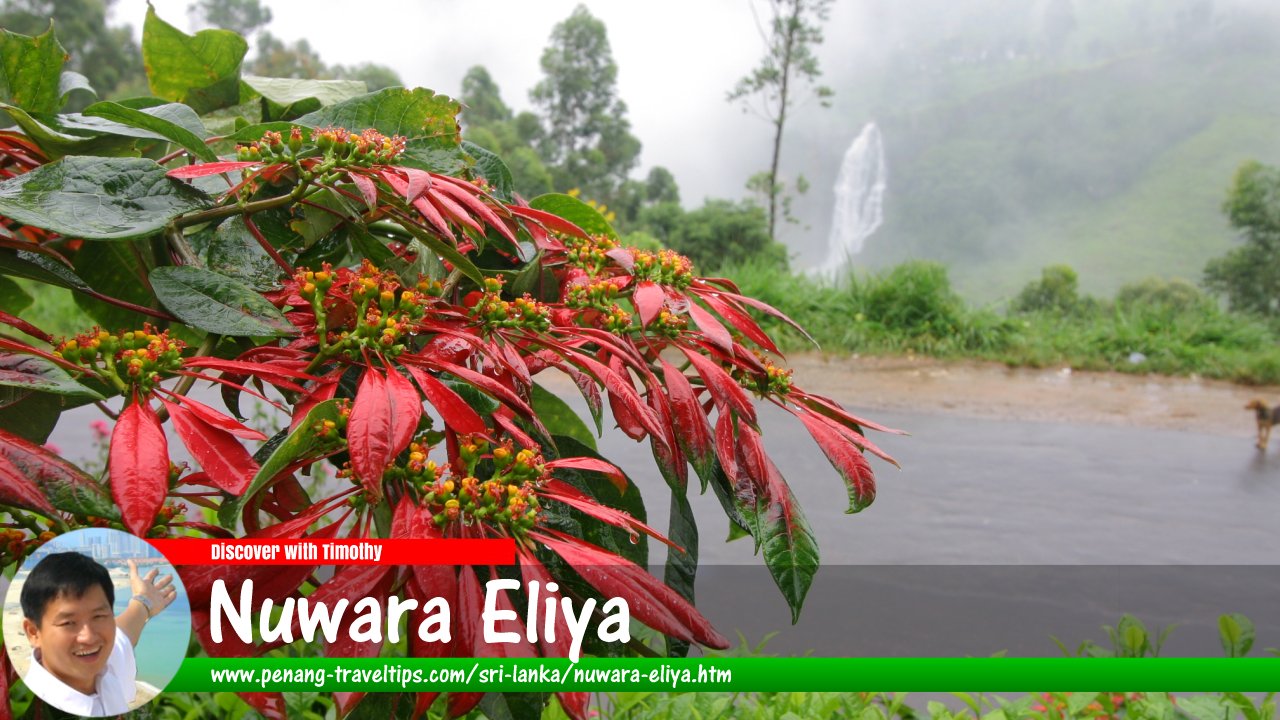 Nuwara Eliya, Sri Lanka (2 September 2005)
Nuwara Eliya (Sinhala: නුවරඑළිය; Tamil: நுவரேலியா) is a picturesque city in the Central Province of Sri Lanka, renowned for its cool mountain climate, rolling tea plantations, colonial-era architecture, and scenic landscapes. Situated high in the country's central highlands, it is often referred to as "Little England" because of its British colonial heritage, well-kept gardens, and temperate weather. The city serves as the administrative centre of Nuwara Eliya District and is one of Sri Lanka's most popular tourist destinations, attracting visitors seeking natural beauty, outdoor recreation, and a glimpse into the island's tea-growing culture.1
Quick Facts
- Country: Sri Lanka
- Province: Central Province
- District: Nuwara Eliya District
- Elevation: Approximately 1,868 metres (6,128 feet) above sea level
- Nickname: Little England
- Name Meaning: "City on the Plain" or "City of Light"
- Main Industries: Tea production, agriculture, tourism
- Climate: Cool subtropical highland climate
- Famous Products: High-grown Ceylon tea, vegetables, flowers, strawberries
- Nearby Landmark: Pidurutalagala, the highest mountain in Sri Lanka
The Name of the Place and How It Got Its Name
The name Nuwara Eliya originates from the Sinhala language. The word "Nuwara" means "city" or "town," while "Eliya" can be interpreted as "plain," "open space," or "light." As a result, the name is commonly translated as either "City on the Plain" or "City of Light." The name reflects the city's location on a high plateau surrounded by mountains and its reputation for clear, bright highland scenery.2
Before the development of the modern town, the area consisted largely of grasslands and forests inhabited by local communities. During the British colonial period in the nineteenth century, the location gained prominence due to its cool climate and strategic position in the central highlands. The original Sinhala name remained in use and became internationally recognized as the city grew into a major hill station and tea-producing centre.3
Geography
Nuwara Eliya is located in the heart of Sri Lanka's central mountain region at an elevation of approximately 1,868 metres above sea level. This high altitude gives the city a climate that is significantly cooler than most other parts of the tropical island. Average temperatures are generally mild throughout the year, and frosts may occasionally occur during colder months.1
The city lies amidst a landscape of mountains, valleys, waterfalls, rivers, and tea-covered hills. It is situated near Pidurutalagala, which rises to approximately 2,524 metres and is the highest mountain in Sri Lanka. Dense forests, mist-covered slopes, and fertile valleys characterize the surrounding region.1
Nuwara Eliya's geography plays a crucial role in its agricultural productivity. The cool climate and rich soils support the cultivation of tea, vegetables, fruits, and flowers that are uncommon in many tropical regions. The area is also home to numerous streams and reservoirs, including Gregory Lake, which adds to the city's scenic appeal and recreational opportunities.3
The region receives substantial rainfall due to the influence of monsoon systems. This abundant precipitation helps sustain lush vegetation and contributes to the area's reputation as one of Sri Lanka's greenest and most beautiful landscapes.4
History
The recorded modern history of Nuwara Eliya began during the early nineteenth century under British colonial rule. The area was brought to wider attention after explorers and colonial officials ventured into the central highlands and recognized its potential as a mountain retreat. Dr. John Davy is often credited with documenting the area's suitability for settlement in 1818.5
British administrators quickly became attracted to the cool climate, which reminded them of the weather conditions in Britain. Governor Sir Edward Barnes encouraged the development of the region, and Nuwara Eliya gradually evolved into a hill station where colonial officials, military officers, and plantation owners could escape the heat of the lowlands.3
During the mid-nineteenth century, the city became closely linked with the expansion of plantation agriculture. Coffee was initially cultivated in the surrounding hills, but after a devastating coffee disease affected plantations across Ceylon, tea cultivation replaced coffee as the dominant crop. Nuwara Eliya subsequently emerged as one of the most important tea-growing districts in the country.6
The colonial influence remains visible throughout the city. Historic buildings such as the Grand Hotel, Hill Club, old post office, churches, and traditional cottages showcase British architectural styles. Sporting traditions including golf, horse racing, and cricket were also introduced during this period and continue to be associated with the city today.2
Following Sri Lanka's independence in 1948, Nuwara Eliya remained an important administrative, agricultural, and tourism centre. Today it combines its colonial heritage with Sri Lankan cultural traditions, creating a distinctive character unlike any other city in the country.1
Economy and Products
The economy of Nuwara Eliya is heavily dependent on agriculture and tourism. The region is internationally famous for producing some of the highest-quality Ceylon tea. The unique combination of altitude, cool temperatures, and rainfall creates ideal conditions for growing tea with a delicate aroma and flavour that is highly valued in global markets.6
Tea plantations cover vast areas of the surrounding hills. Tea estates employ thousands of workers and contribute significantly to Sri Lanka's export earnings. The district's teas are often marketed under the prestigious Nuwara Eliya name and are recognized as among the finest high-grown teas in the world.6
In addition to tea, the area is an important centre for vegetable farming. Farmers produce crops such as carrots, potatoes, leeks, cabbage, beetroot, and lettuce. The cool climate also supports the cultivation of strawberries and a wide variety of flowers, making the district a major supplier of fresh produce to other parts of Sri Lanka.3
Tourism forms another major pillar of the local economy. Visitors are drawn by the pleasant climate, tea plantations, gardens, waterfalls, hiking opportunities, and colonial architecture. Hotels, guesthouses, restaurants, transport services, and recreational facilities generate substantial income and employment for local residents.1
Tourist Attractions
Nuwara Eliya offers a wide range of attractions that showcase its natural beauty, cultural heritage, and unique highland environment.
Gregory Lake
Gregory Lake is one of the city's most popular recreational areas. Created during the British colonial period, the lake offers boating, walking paths, cycling opportunities, and scenic views of the surrounding hills. It serves as a central gathering place for both residents and visitors.3
Pidurutalagala
Pidurutalagala is the highest mountain in Sri Lanka. Rising above Nuwara Eliya, it provides spectacular views of the central highlands. The mountain is an important geographical landmark and contributes significantly to the city's dramatic scenery.1
Hakgala Botanical Garden
Hakgala Botanical Garden is one of Sri Lanka's most important botanical gardens. It contains a remarkable collection of roses, orchids, and other flowering plants. The garden is particularly famous for its colourful displays and cool-climate flora.2
Horton Plains National Park
Located near Nuwara Eliya, Horton Plains National Park is a protected highland plateau known for its unique ecosystems. Visitors come to enjoy hiking trails, grasslands, cloud forests, and wildlife. The park's most famous attraction is World's End, a dramatic cliff with stunning panoramic views.5
Pedro Tea Estate
Pedro Tea Estate offers visitors an opportunity to learn about the production of Ceylon tea. Guided tours explain the cultivation and processing of tea leaves, while tasting sessions allow guests to sample some of the region's finest products.7
Nuwara Eliya Golf Club
Established during the colonial era, the Nuwara Eliya Golf Club is one of the oldest golf courses in Asia. Its well-maintained fairways and scenic surroundings make it a popular attraction for golf enthusiasts.2
Seetha Amman Temple
This Hindu temple is associated with legends from the ancient Indian epic Ramayana. According to tradition, the area was linked to the story of Sita's captivity by King Ravana. The temple attracts both pilgrims and tourists interested in mythology and culture.2
Victoria Park
Located in the centre of Nuwara Eliya, Victoria Park is known for its landscaped gardens, walking paths, and birdlife. It provides a tranquil environment for relaxation and photography.3
Colonial Buildings
Historic structures such as the Grand Hotel, Hill Club, Holy Trinity Church, and the old Post Office preserve the architectural legacy of the British colonial period. These landmarks contribute to the city's distinctive identity as "Little England."2
Other attractions in the vicinity of Nuwara Eliya
Ramboda Falls: a huge waterfall in the highlands of one of many waterfalls in Nuwara Eliya in Sri Lanka.
Heritance Tea Factory: a boutique award-winning hotel.
References
- Encyclopaedia Britannica – Nuwara Eliya
- Wikipedia – Nuwara Eliya
- Nuwara Eliya Municipal Council – About Nuwara Eliya
- Fortune Lanka – Nuwara Eliya
- Nuwara Eliya Info – About and History
- Sri Lanka Tea Board – Nuwara Eliya Tea Region
- The Tea Experience: A Nuwara Eliya Staple
Page Details
This page was created/modified on 7 June 2026. Hi, my name is Timothy and created it from my research, for my own entertainment, knowledge and to satisfy my curiosity. I am providing the information to you in good faith and hope it is useful. I try to get the details as accurate as possible. I also try to update the page whenever I stumble on new details. So this and all my other pages are perpetual work in progress. If you discover any error, please politely inform me, pointing out where the error lies, and I will correct it as soon as possible. Your helpfulness will keep this page accurate, relevant and helpful to those who need the information.