
Ampang Jaya Travel Guide
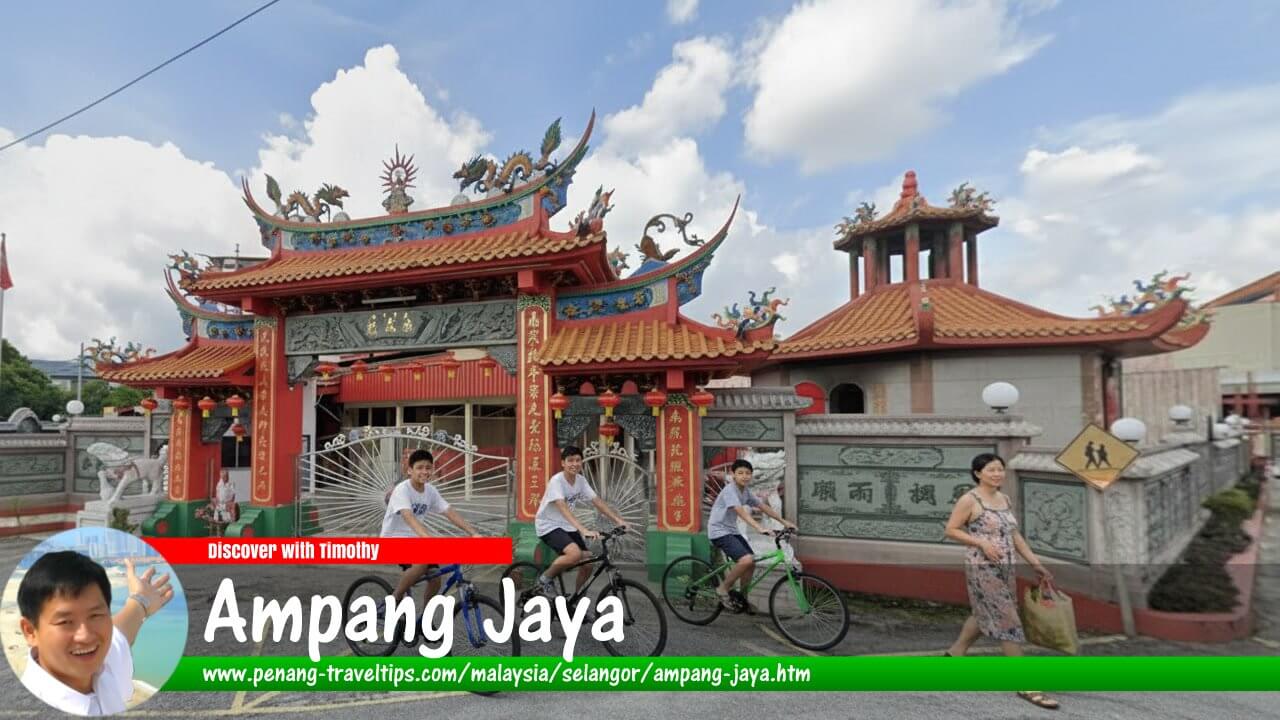 Ampang Jaya Travel Guide (AI Generated on 20 September 2026)
Also available: Panduan Melawat Ampang Jaya
Ampang Jaya is a major municipality in the state of Selangor, Malaysia, located immediately east of Kuala Lumpur. Administered by the Majlis Perbandaran Ampang Jaya (MPAJ), it encompasses the historic town of Ampang together with numerous established residential and commercial townships including Pandan Indah, Pandan Jaya, Taman Kosas, Lembah Jaya, Kampung Melayu Ampang, Ukay Perdana, and parts of Hulu Kelang. Covering an area of approximately 143.5 square kilometres, Ampang Jaya has grown into one of the most populous and economically vibrant municipalities in the Klang Valley. Although physically contiguous with Kuala Lumpur, it remains part of Selangor and occupies a unique place in Malaysian history as the birthplace of the Klang Valley's tin-mining industry, which ultimately led to the founding of Kuala Lumpur1.
Quick Facts
- State: Selangor
- Local Authority: Majlis Perbandaran Ampang Jaya (MPAJ)
- Established as Municipal Council: 1 July 1992
- Area: Approximately 143.5 km²
- Population: Approximately 800,000 (municipality estimate)
- State Constituencies: Ampang, Lembah Jaya, Teratai, Dusun Tua and parts of others
- Parliamentary Constituencies: Ampang and parts of Gombak
- Neighbouring Areas: Kuala Lumpur, Petaling Jaya, Cheras, Kajang, Hulu Langat
- Major Roads: Jalan Ampang, Middle Ring Road 2 (MRR2), Ampang-Kuala Lumpur Elevated Highway (AKLEH), Duta-Ulu Klang Expressway (DUKE), Sungai Besi Expressway (BESRAYA)
- Rail Services: Ampang Line LRT, Sri Petaling Line LRT and MRT Putrajaya Line (selected stations)
- Major Hospitals: KPJ Ampang Puteri Specialist Hospital, Hospital Ampang
- Major Shopping Centres: Ampang Point Shopping Centre, Melawati Mall, Spectrum Shopping Mall, Ampang Waterfront
History
The history of Ampang Jaya is closely intertwined with the origins of Kuala Lumpur itself. In 1857, Raja Abdullah of Klang commissioned a group of Chinese miners, led by Kapitan China Yap Ah Sze and other pioneers, to open new tin mines in the Ampang Valley. These miners travelled up the Klang River before entering the Sungai Ampang, where rich deposits of alluvial tin were discovered. Their success transformed Ampang into one of the most productive mining districts in Selangor and attracted thousands of immigrants seeking employment and economic opportunities2.
The mining settlement at Ampang soon became connected to a small trading post located at the confluence of the Klang and Gombak rivers. This trading post eventually developed into Kuala Lumpur. For this reason, historians frequently regard Ampang as the birthplace of the economic activity that gave rise to Malaysia's capital city. Without the prosperity generated by the Ampang tin mines, Kuala Lumpur may never have developed into the country's principal commercial centre3.
During the late nineteenth century, Ampang evolved from a mining settlement into a thriving agricultural district. As tin production gradually declined during the twentieth century, extensive rubber plantations and fruit orchards replaced many former mining lands. Traditional Malay villages, Chinese new villages, and commercial centres expanded throughout the district, establishing the multicultural character that continues to define Ampang Jaya today.
Rapid urbanisation began during the 1970s and accelerated through the 1980s as Kuala Lumpur expanded beyond its administrative boundaries. Large-scale housing developments such as Pandan Indah, Pandan Jaya, Taman Kosas, Lembah Jaya and Ukay Heights were established to accommodate the Klang Valley's growing population. This transformation turned Ampang from a semi-rural township into one of Malaysia's most important suburban municipalities4.
Recognising the area's rapid growth, the Selangor State Government established the Majlis Perbandaran Ampang Jaya (MPAJ) on 1 July 1992. The new municipal council assumed responsibility for local administration over much of Ampang and Hulu Kelang, replacing the former Hulu Langat District Council. Since then, MPAJ has overseen the municipality's continued development through improvements in infrastructure, public amenities, environmental management and urban planning5.
Geography
Ampang Jaya occupies a strategic position immediately east and northeast of Kuala Lumpur, forming part of the continuous urban landscape of the Klang Valley. The municipality stretches from the heavily urbanised Jalan Ampang corridor in the west towards the forested foothills of the Titiwangsa Range in the east. This geographical diversity gives Ampang Jaya a distinctive character, where modern townships coexist with hills, rivers and protected forest reserves6.
The municipality covers approximately 143.5 square kilometres, making it one of Selangor's larger urban local authorities. It borders Kuala Lumpur along much of its western boundary, while neighbouring the districts of Hulu Langat and Gombak elsewhere. Major rivers include Sungai Ampang, Sungai Klang and several tributaries that descend from the surrounding hills. The eastern portion of the municipality includes parts of the Klang Gates Quartz Ridge and forest reserves, providing valuable green lungs for the Klang Valley and helping to protect important water catchment areas.
The municipality's varied topography has significantly influenced its development. The flatter western areas became centres of commerce, industry and high-density housing, while the hillier eastern localities, such as Ukay Heights and parts of Hulu Kelang, developed as prestigious residential neighbourhoods offering panoramic views of the Klang Valley. These contrasting landscapes contribute to Ampang Jaya's reputation as one of the Klang Valley's most geographically diverse municipalities7.
Administration
Ampang Jaya is administered by the Majlis Perbandaran Ampang Jaya (MPAJ), whose headquarters are located in Pandan Indah. The municipal council is responsible for urban planning, development control, public health, waste management, licensing, landscaping, drainage, local roads and recreational facilities. It also oversees enforcement of municipal by-laws and works closely with both the Selangor State Government and federal agencies on matters relating to infrastructure and public services8.
The municipality consists of numerous well-established residential and commercial localities, each with its own distinct identity. Among the best known are Ampang, Kampung Melayu Ampang, Pandan Indah, Pandan Jaya, Taman Kosas, Taman Cempaka, Lembah Jaya, Bukit Indah, Ukay Perdana, Ukay Heights, Taman Melawati and parts of Hulu Kelang. Together, these neighbourhoods form one of the largest continuous suburban communities within Greater Kuala Lumpur.
Neighbourhoods and Townships
Ampang Jaya comprises a diverse collection of neighbourhoods and townships that have developed over more than a century. While the municipality is commonly referred to simply as "Ampang", it actually encompasses numerous communities, each possessing its own history, character and identity. Together, these neighbourhoods form one of the largest continuous suburban areas within the Greater Kuala Lumpur conurbation9.
Historic Ampang
The historic heart of the municipality is the town of Ampang, where the Klang Valley's tin-mining industry first flourished during the nineteenth century. Today, the town remains an important commercial centre, with traditional shop houses standing alongside modern retail developments. Nearby Kampung Melayu Ampang preserves much of the area's Malay cultural heritage and continues to be known for its traditional food, village atmosphere and long-established community institutions.
The Pandan Corridor
To the southwest lies the rapidly urbanised Pandan corridor, comprising neighbourhoods such as Pandan Indah, Pandan Jaya and Pandan Mewah. Developed primarily from the 1980s onwards, these areas feature a mixture of terrace houses, apartments, condominiums and commercial centres. Excellent road connections and the extension of the Ampang Line LRT have made the Pandan corridor one of the municipality's busiest residential districts10.
Lembah Jaya and Taman Kosas
The central portion of Ampang Jaya includes Lembah Jaya, Taman Kosas, Taman Cempaka and several adjoining residential estates. These neighbourhoods were established during the municipality's period of rapid suburban expansion and today accommodate a large proportion of Ampang Jaya's population. Schools, neighbourhood shopping centres and recreational parks make these areas particularly popular among families.
Hulu Kelang and the Hills
The northern and eastern sections of the municipality extend into the foothills of the Titiwangsa Range. Prestigious residential neighbourhoods such as Ukay Heights, Ukay Perdana, Bukit Antarabangsa and parts of Hulu Kelang occupy elevated terrain overlooking the Klang Valley. These localities are characterised by lower-density housing, extensive greenery and panoramic views of Kuala Lumpur. Their hillside setting also requires careful planning to minimise environmental risks associated with steep slopes11.
Population and Demographics
With an estimated population approaching 800,000 residents, Ampang Jaya ranks among the largest municipalities in Selangor. Population growth has been driven by its strategic location adjoining Kuala Lumpur, its well-developed transport infrastructure and the continuous construction of new housing over recent decades12.
The municipality reflects Malaysia's multicultural society. Malays form the largest ethnic group, followed by substantial Chinese and Indian communities, together with residents of Eurasian and indigenous descent. In addition, Ampang Jaya is home to sizeable expatriate communities from Japan, Korea, the Middle East and numerous other countries, particularly in neighbourhoods located along Jalan Ampang and the Hulu Kelang corridor.
Islam is the principal religion, while Buddhism, Christianity, Hinduism and other faiths are also widely practised. Mosques, churches, temples and other places of worship are distributed throughout the municipality, reflecting its long-standing tradition of religious diversity and peaceful coexistence.
Economy
Ampang Jaya possesses a broad and diversified economy. While its early prosperity depended almost entirely upon tin mining, today's economy is driven primarily by commerce, retailing, professional services, healthcare, education, hospitality and residential development. The municipality's close proximity to Kuala Lumpur allows many residents to commute easily to employment centres throughout the Klang Valley while maintaining homes within Ampang Jaya.
Commercial activity is concentrated along major roads such as Jalan Ampang, Jalan Pandan Indah, Jalan Bunga Raya and Jalan Hulu Kelang. Numerous office buildings, banks, restaurants, hotels, medical centres and neighbourhood retail complexes serve both local residents and visitors. Small and medium-sized enterprises also play a significant role in the municipality's economy, particularly within light industrial areas and commercial shop-office developments13.
The healthcare sector has become an increasingly important economic contributor. Private hospitals such as KPJ Ampang Puteri Specialist Hospital attract patients from across Malaysia and neighbouring countries, while Hospital Ampang has established itself as one of the country's leading specialist hospitals, particularly in orthopaedics, traumatology and oncology services.
Tourism also contributes to the local economy. Visitors are drawn by Ampang's historic significance, its renowned local cuisine, shopping centres, recreational parks and proximity to attractions such as the National Zoo, the Klang Gates Quartz Ridge and the embassies located along nearby Jalan Ampang.
Residential Development
Residential development within Ampang Jaya reflects more than five decades of continuous urban growth. Housing ranges from traditional kampung dwellings and post-independence villages to modern terrace houses, gated communities, luxury condominiums and hillside bungalows. This diversity enables the municipality to accommodate residents from a wide range of income groups and lifestyles14.
Older residential areas, including Kampung Melayu Ampang and parts of Ampang town, retain much of their original character and community spirit. By contrast, neighbourhoods such as Pandan Indah, Taman Kosas and Lembah Jaya display more planned suburban layouts with integrated commercial centres, schools and recreational facilities.
High-rise residential developments have become increasingly common, particularly along Jalan Ampang, Pandan Indah and the municipality's western boundary adjoining Kuala Lumpur. These projects have helped accommodate population growth while taking advantage of excellent accessibility to employment centres throughout the Klang Valley.
Education
Ampang Jaya is well served by educational institutions at every level. Government primary and secondary schools are distributed throughout the municipality, while numerous Chinese vernacular schools, Tamil schools and religious schools cater to the needs of its diverse population15.
Among the municipality's best-known institutions are SMK Ampang, SMK Pandan Indah, SMK Lembah Keramat, SK Ampang, SK Pandan Indah and many other long-established schools. Private and international education has also expanded considerably, with institutions such as the International School of Kuala Lumpur located immediately adjacent to the municipality and serving many Ampang Jaya residents.
For higher education, residents enjoy convenient access to universities and colleges throughout the Klang Valley, including Universiti Malaya, Universiti Kuala Lumpur, Universiti Kebangsaan Malaysia, Tunku Abdul Rahman University of Management and Technology, and numerous private higher education institutions situated within Kuala Lumpur and Selangor.
Healthcare
Ampang Jaya is one of the Klang Valley's leading healthcare centres, with both public and private medical facilities serving residents from throughout Selangor and Kuala Lumpur. The municipality's strategic location and well-developed transport network have encouraged the establishment of several major hospitals, specialist centres and community healthcare facilities16.
The municipality's principal public healthcare institution is Hospital Ampang, officially known as Hospital Sultan Mizan Zainal Abidin. Opened in 2006, the hospital is recognised nationally for its specialist services in orthopaedics, traumatology, burns treatment, plastic surgery and oncology. It receives referrals from hospitals throughout Malaysia and has become one of the country's foremost specialist medical centres17.
The private healthcare sector is equally well developed. KPJ Ampang Puteri Specialist Hospital, located along Jalan Mamanda, offers a comprehensive range of medical specialties including cardiology, oncology, orthopaedics, paediatrics and maternity services. Numerous specialist clinics, dental practices, physiotherapy centres and neighbourhood medical clinics are also located throughout Ampang Jaya, ensuring that residents have convenient access to healthcare close to home.
Shopping and Commercial Centres
Ampang Jaya offers an extensive range of shopping facilities, from traditional wet markets and neighbourhood shop houses to modern shopping malls. The municipality's commercial districts have expanded steadily alongside its residential growth, making it one of the Klang Valley's most self-sufficient suburban municipalities18.
Ampang Point Shopping Centre, opened in 1993, remains one of the municipality's best-known retail landmarks. Although newer malls have since opened elsewhere in the Klang Valley, Ampang Point continues to serve the local community with supermarkets, restaurants, banks, retail shops and professional offices.
Other important commercial destinations include Melawati Mall, serving the Hulu Kelang and Taman Melawati communities; Spectrum Shopping Mall Ampang; Ampang Waterfront; and numerous neighbourhood commercial centres located throughout Pandan Indah, Pandan Jaya, Taman Kosas and Lembah Jaya. Traditional markets, including the popular Ampang morning market and several night markets (pasar malam), continue to play an important role in the municipality's retail economy.
The municipality is particularly well known for its diverse food scene. Ampang has long been associated with excellent Chinese seafood restaurants, traditional Malay cuisine and Indian-Muslim eateries. In recent decades, Middle Eastern, Korean and Japanese restaurants have also become increasingly common, reflecting the area's growing international population.
Transportation
One of Ampang Jaya's greatest strengths is its comprehensive transportation network. Located immediately adjacent to Kuala Lumpur, the municipality enjoys direct access to multiple highways, rail lines and bus services, allowing residents to travel conveniently throughout the Klang Valley19.
Road Network
Jalan Ampang remains the municipality's historic and most important arterial road. Originally constructed to connect the early tin mines with Kuala Lumpur, it continues to serve as a major east-west route linking Ampang town with the city centre. Other important roads include Jalan Hulu Kelang, Jalan Pandan Indah, Jalan Bunga Raya, Jalan Memanda and Jalan Lingkaran Tengah 2 (MRR2).
Several expressways further improve regional accessibility. These include the Ampang–Kuala Lumpur Elevated Highway (AKLEH), the Duta–Ulu Klang Expressway (DUKE), the Sungai Besi Expressway (BESRAYA), and the Kuala Lumpur Middle Ring Road 2 (MRR2). Together, these highways provide efficient connections to Petaling Jaya, Shah Alam, Kajang, Putrajaya, Kuala Lumpur International Airport and other parts of the Klang Valley.
Rail Transport
Rail transport has played an increasingly important role in Ampang Jaya's development. The municipality is served primarily by the Ampang Line of the Rapid KL Light Rail Transit (LRT) system, whose origins date back to the former STAR LRT. Stations within the municipality include Ampang, Cahaya, Cempaka, Pandan Indah and Pandan Jaya, together with several others serving neighbouring communities20.
In addition to the LRT network, portions of the municipality are served by the MRT Putrajaya Line, particularly along its western boundary near Jalan Ampang. Residents also benefit from convenient access to the wider Klang Valley rail network through nearby MRT, LRT, KTM Komuter and Monorail interchange stations located within Kuala Lumpur.
Bus Services
Rapid KL operates an extensive network of bus routes throughout Ampang Jaya, connecting residential neighbourhoods with rail stations, shopping centres, hospitals and educational institutions. These services are supplemented by feeder buses serving LRT and MRT stations, as well as school buses and private shuttle services operated by commercial organisations.
Recreation and Attractions
Despite its highly urbanised character, Ampang Jaya contains numerous recreational facilities, parks and natural attractions. Community parks, neighbourhood playgrounds and sports complexes are distributed throughout the municipality, while the eastern foothills provide opportunities for hiking, cycling and nature appreciation21.
One of the municipality's best-known attractions is Zoo Negara Malaysia, situated in Hulu Kelang. Established in 1963, it is Malaysia's national zoo and houses thousands of animals representing hundreds of species. The zoo remains one of the country's most popular family attractions and receives visitors from across Malaysia and abroad.
Nearby lies the Klang Gates Quartz Ridge, recognised as the longest exposed quartz dyke in the world. This remarkable geological formation stretches for approximately 14 kilometres and has been designated a National Heritage site because of its exceptional scientific significance and unique biodiversity.
Other recreational destinations include the Ampang Recreational Forest, neighbourhood parks, sports complexes, golf clubs and the scenic hills surrounding Hulu Kelang. Together with the municipality's shopping centres, restaurants and cultural attractions, these facilities contribute to a high quality of life for residents while also attracting visitors from elsewhere in the Klang Valley.
Government and Administration
Ampang Jaya is administered by the Majlis Perbandaran Ampang Jaya (MPAJ), which was established on 1 July 1992 following the reorganisation of local government in Selangor. The municipality encompasses the former Ampang area of the Hulu Langat District together with Hulu Kelang in the Gombak District. MPAJ is responsible for urban planning, development control, licensing, public health, waste management, landscaping, drainage, road maintenance, enforcement of municipal by-laws and the provision of public amenities22.
The municipal council operates under the supervision of the Selangor State Government and works closely with federal agencies on infrastructure, housing, environmental protection and disaster management. As one of the busiest municipalities in the Klang Valley, MPAJ continually balances urban growth with the need to preserve green spaces, improve public services and maintain a high quality of life for its residents.
Culture and Community
One of Ampang Jaya's greatest strengths is its multicultural character. Malays, Chinese, Indians and many other communities have lived side by side for generations, contributing to a rich cultural landscape that is reflected in the municipality's places of worship, schools, markets and festivals. Mosques, Buddhist temples, Hindu temples and churches are found throughout the municipality, symbolising the religious diversity that characterises both Selangor and Malaysia23.
Ampang is particularly famous for its culinary heritage. The town has long been associated with Chinese seafood restaurants, traditional Malay cuisine and Indian-Muslim eateries, while more recent immigration has introduced Middle Eastern, Japanese and Korean restaurants that further enrich the local food scene. During major celebrations such as Hari Raya Aidilfitri, Chinese New Year, Deepavali and Christmas, neighbourhoods throughout the municipality come alive with festive decorations, open houses and community gatherings.
The municipality also maintains an active calendar of community programmes organised by MPAJ, resident associations and non-governmental organisations. These include environmental campaigns, cultural performances, sports competitions, public health initiatives and educational activities that strengthen neighbourhood ties and encourage civic participation.
Future Development
As part of the rapidly expanding Greater Kuala Lumpur metropolitan region, Ampang Jaya continues to undergo steady redevelopment and infrastructure improvements. New mixed-use developments, residential projects and commercial centres are being constructed throughout the municipality, while older neighbourhoods are gradually being revitalised through urban renewal initiatives24.
Transportation remains a major focus of future planning. Improvements to road networks, pedestrian facilities, cycling infrastructure and public transport integration are expected to further strengthen connectivity between Ampang Jaya, Kuala Lumpur and neighbouring municipalities. Transit-oriented development around existing LRT and MRT stations is also expected to shape future residential and commercial growth.
Environmental sustainability has become increasingly important in municipal planning. Programmes promoting greener neighbourhoods, improved waste management, flood mitigation, slope monitoring and the protection of forest reserves are intended to ensure that future development remains balanced with environmental conservation. These initiatives are particularly significant given the municipality's mixture of dense urban districts and environmentally sensitive hillside areas.
Why Ampang Jaya Matters
Although often overshadowed by neighbouring Kuala Lumpur, Ampang Jaya occupies a unique place in Malaysian history and continues to play a vital role within the Klang Valley. It was here that the discovery of rich tin deposits in the nineteenth century generated the economic activity that ultimately led to the establishment and growth of Kuala Lumpur. Few municipalities in Malaysia can claim such a direct connection to the origins of the nation's capital25.
Today, Ampang Jaya has evolved into a modern municipality that combines historical significance with contemporary urban living. Its well-developed residential neighbourhoods, thriving commercial districts, excellent healthcare facilities, reputable educational institutions and extensive transportation network make it one of Selangor's most important municipalities. At the same time, its hills, forests and geological landmarks provide valuable natural assets rarely found so close to a major metropolitan centre.
Fun Facts
- The history of modern Kuala Lumpur began with the discovery of tin in Ampang in 1857, making Ampang Jaya the birthplace of the city's development.26
- The Klang Gates Quartz Ridge in Hulu Kelang is widely recognised as the world's longest exposed quartz dyke, stretching for approximately 14 kilometres.27
- The name Ampang is believed to derive from the Malay word referring to a dam or embankment built across a river to regulate water flow, reflecting the area's early reliance on rivers for mining and agriculture.28
- Despite being immediately adjacent to Kuala Lumpur, Ampang Jaya remains part of Selangor and has its own municipal council, elected representatives and local administration.
Ampang Jaya is  on the Map of Neighbourhoods and Townships of Selangor
References
- Majlis Perbandaran Ampang Jaya (MPAJ)
- National Archives of Malaysia
- Malaysia History: The Founding of Kuala Lumpur
- Selangor State Government
- PLANMalaysia
- MyGeoportal Malaysia
- Department of Statistics Malaysia
- Hospital Sultan Mizan Zainal Abidin (Hospital Ampang)
- KPJ Ampang Puteri Specialist Hospital
- Prasarana Malaysia Berhad
- Rapid KL
- Zoo Negara Malaysia
- Ministry of Tourism, Arts and Culture Malaysia
- Department of Minerals and Geoscience Malaysia
- UNESCO World Heritage Centre
Page Details
This page was created on 26 June 2026. Hi, my name is Timothy and created it from my research, for my own entertainment, knowledge and to satisfy my curiosity. I am providing the information to you in good faith and hope it is useful. I try to get the details as accurate as possible. I also try to update the page whenever I stumble on new details. So this and all my other pages are perpetual work in progress. If you discover any error, please politely inform me, pointing out where the error lies, and I will correct it as soon as possible. Your helpfulness will keep this page accurate, relevant and helpful to those who need the information.List of Neighbourhoods and Townships in Selangor
Living in Selangor
 Latest Pages & Updates
Buy Me A Coffee
If you enjoy the information I provide and want to support the work I do, please buy me a coffee! I appreciate it immensely, thank you so much!
