
Ampang Travel Guide
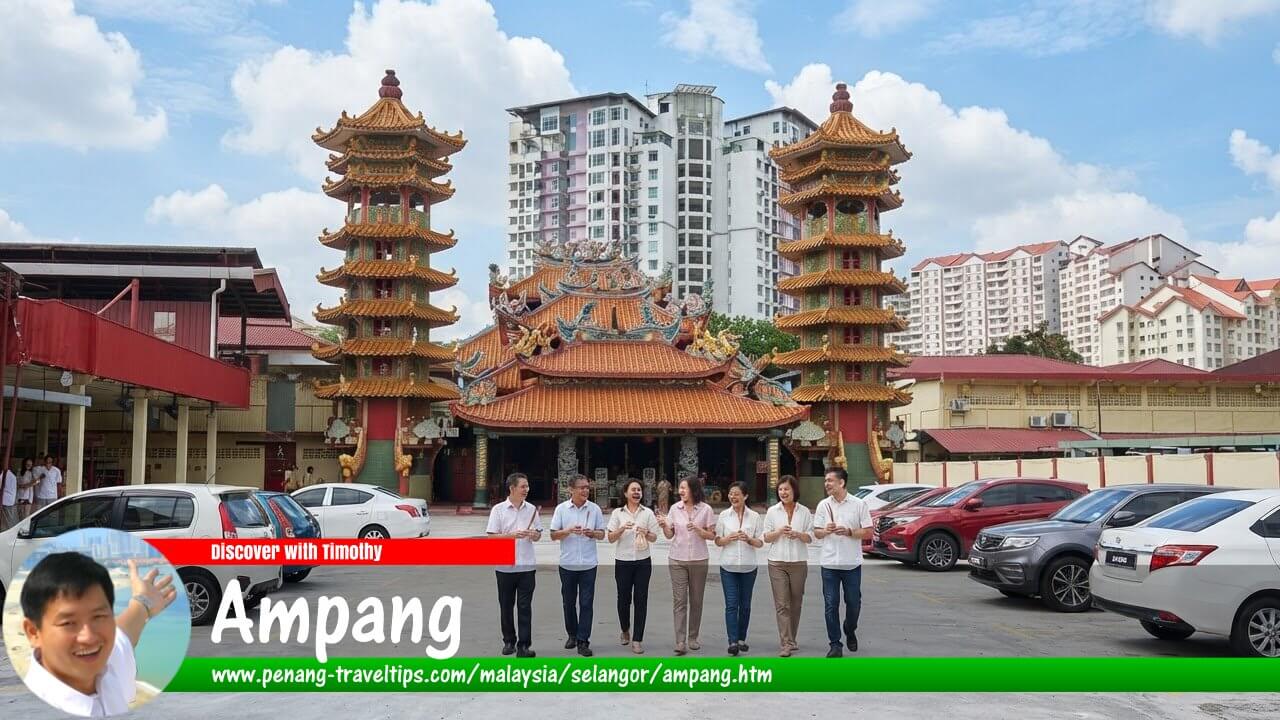 Ampang Travel Guide (AI Generated on 20 September 2026)
Also available: Panduan Melawat Ampang
Ampang (often referred to via its municipal identity Ampang Jaya) is a prominent suburb straddling parts of Selangor state just east of Kuala Lumpur. It combines historical significance, urban convenience and a diverse cultural character, making it a notable town within Selangor’s growth corridor.
Quick Facts
- Located in eastern Selangor, adjacent to Kuala Lumpur, under Ampang Jaya Municipal Council (MPAJ).
- Historically founded as a tin-mining settlement; “Ampang” derives from “empangan” (dam).
- Residential & diplomatic enclave with growing condominium & mixed-use developments.
- Well connected via LRT Ampang Line, major roads (Jalan Ampang, AKLEH, MRR2) and highways.
- Landmarks include Zoo Negara, Ampang Point, Taman Tasik Ampang Hilir.
- Fun fact: Ampang is famous locally for yong tau foo (a Hakka stuffed tofu dish).
History and How the Town Was Established
Ampang’s history is closely tied with the early tin mining era in the Klang Valley. In 1857, Raja Abdullah of Selangor opened the area for tin prospectors; 87 Chinese miners ventured up from the Klang River and established mining operations in what is now Ampang. Many died of malaria initially, but the enterprise persisted and by 1859 tin was being exported. 1 The name “Ampang” is derived from the Malay word “empangan” (dam), referencing dams built by miners to channel water in sluice operations, and adapted in pronunciation as “Ampang”. 23
As Kuala Lumpur developed around the same mining nascent economy, Ampang functioned as one of its upstream mining settlements. Over time, with administrative changes in 1974 (when Kuala Lumpur became a Federal Territory), the western portion of the old Ampang district went to KL, while the eastern parts remained in Selangor and were later formalized as Ampang Jaya in parts of Hulu Langat and Gombak districts. 4
Characteristic of the Town
Ampang today presents a blend of mature suburbia, diplomatic enclaves, green pockets, and urban convenience. Its demographics are ethnically diverse, with significant Malay, Chinese, Indian and expatriate communities. 5 The town includes older villages as well as newer high-rise condominiums and developments. It is also known for its culinary heritage, particularly local favourites such as yong tau foo, reflecting its Hakka Chinese influence. 3
Some parts of Ampang, especially Ampang Hilir, host embassy residences and more upscale housing, contributing to a more international flair. 6 The built environment ranges from low-rise houses and shoplots to mid/high-rise condominiums and mixed-use projects.
Real Estate and Property Market There
The real estate market in Ampang is varied and generally positioned as more premium compared to its outer-suburb neighbours. Luxury bungalows, high-end condominiums and landscaped developments are present, especially in sections closer to KL and diplomatic precincts. 7 Some newer developments, such as SOHO Transit 2, offer compact units (e.g. ~280 sq ft) targeted for young professionals and investors. 8
Due to Ampang’s mature status and limited land availability, property prices in certain enclaves can be quite high. 7 Mixed-use developments along Jalan Ampang and adjacent corridors continue to rejuvenate parts of the housing market, appealing to buyers wanting both connectivity and prestige. 9
Accessibility and Transportation
Ampang is well served by public transit and road networks. The LRT Ampang Line runs through the area, providing direct rail connectivity to central Kuala Lumpur. 10 Major roads such as Jalan Ampang (Route B31) date back to the 1880s and remain among the principal arteries connecting Ampang to KL and surrounding areas. 11 Jalan Ampang is accessible via Jalan Tun Razak, Middle Ring Road 2 (MRR2), and other arterial links. 11
Additionally, expressways and elevated highways such as the Ampang-Kuala Lumpur Elevated Highway (AKLEH) bolster road access. 11 The town also benefits from proximity to major highways and ring roads in the Klang Valley, making commuting into KL or adjacent suburbs relatively convenient.
Landmarks and Places of Interest
Ampang and its surroundings host a number of attractions and notable sites, including:
- Zoo Negara — the national zoo located near Ampang, drawing both local and international visitors. 12
- Ampang Point Shopping Centre — a local mall offering retail, dining and community services. 7
- Taman Tasik Ampang Hilir — a lake park that evokes the tin mine legacy and offers green respite within the urban fabric. 13
- Heritage structures along Jalan Ampang and older shophouses in the precinct, including colonial‐era buildings. 11
These landmarks help to reinforce Ampang’s identity as both a residential and recreational node within the greater Klang Valley region.
Fun Fact
Ampang is locally famous for its yong tau foo, a Hakka stuffed tofu dish that has become a culinary calling card of the area. 3 Also, the name “Ampang” evolved from how Chinese miners pronounced the Malay word empangan (dam), hence the local variant. 2
Ampang is  on the Map of Towns in Selangor
Map of Ampang, Selangor
Eateries in Ampang
- Restoran Foong Foong (GPS: 3.1445, 101.76331)

- Restoran Orchard View Yong Tau Foo (GPS: 3.144480, 101.763278)

Sights in Ampang, Selangor


Categories of Sights in Ampang
References
- Wikipedia – Ampang Jaya
- MPAJ – Ampang Jaya Background
- Heritage Malaysia – Ampang History
- Wikipedia – Ampang District
- MPAJ – Info Ampang Jaya
- Land Pacific – Ampang Hilir properties
- PropertyGuru – Ampang property overview
- Kopi & Property – SOHO Transit 2 Ampang
- iProperty – Astrum Ampang development
- TravelTill – Ampang history
- AARoads Wiki – Jalan Ampang
- TripAdvisor – Ampang attractions
- Penang Travel Tips – Ampang
Page Details
This page was created on 10 October 2025. Hi, my name is Timothy and created it from my research, for my own entertainment, knowledge and to satisfy my curiosity. I am providing the information to you in good faith and hope it is useful. I try to get the details as accurate as possible. I also try to update the page whenever I stumble on new details. So this and all my other pages are perpetual work in progress. If you discover any error, please politely inform me, pointing out where the error lies, and I will correct it as soon as possible. Your helpfulness will keep this page accurate, relevant and helpful to those who need the information.List of Towns in Selangor
Living in Selangor
 Latest Pages & Updates
Buy Me A Coffee
If you enjoy the information I provide and want to support the work I do, please buy me a coffee! I appreciate it immensely, thank you so much!
