
George Town Heritage Enclave Self-Guided Tour
 George Town Heritage Enclave Self-Guided Tour
Welcome to the George Town Heritage Enclave Self-Guided Tour!
This tour is designed to help you explore the heart of George Town at your own pace. Over the course of about 60 minutes, you’ll walk through a UNESCO World Heritage Site filled with culture, history, and charm.You’ll start at the junction of Lebuh Pantai and Lebuh Armenian and end your journey at the majestic Khoo Kongsi. Along the way, we’ll stop at iconic street murals, clan temples, mosques, and heritage buildings that tell the story of George Town’s multicultural past.
At each stop, simply click on the speaker icon to hear a short narration about the place you’re seeing. Whether you’re a first-time visitor or returning to Penang, this walk is a wonderful way to connect with the rich tapestry of life in the heritage enclave.
Put on your walking shoes, charge your phone, and let’s get started!
At each stop, click the speaker icon in order to listen to the audio guide
1st Stop: Little Children on a Bicycle Mural

This is the Little Children on a Bicycle mural by Ernest Zacharevic. Painted in 2012 as part of the George Town Festival, this interactive piece shows a girl joyfully pedaling an old bicycle with her little brother on the back. What makes it extra charming is that the bicycle is real, fixed onto the wall, while the children are painted in lifelike style. It's playful, spontaneous, and full of childhood energy—capturing the spirit of George Town's revival through art. It's also one of the most photographed murals in Penang, so don’t forget to take a snapshot!
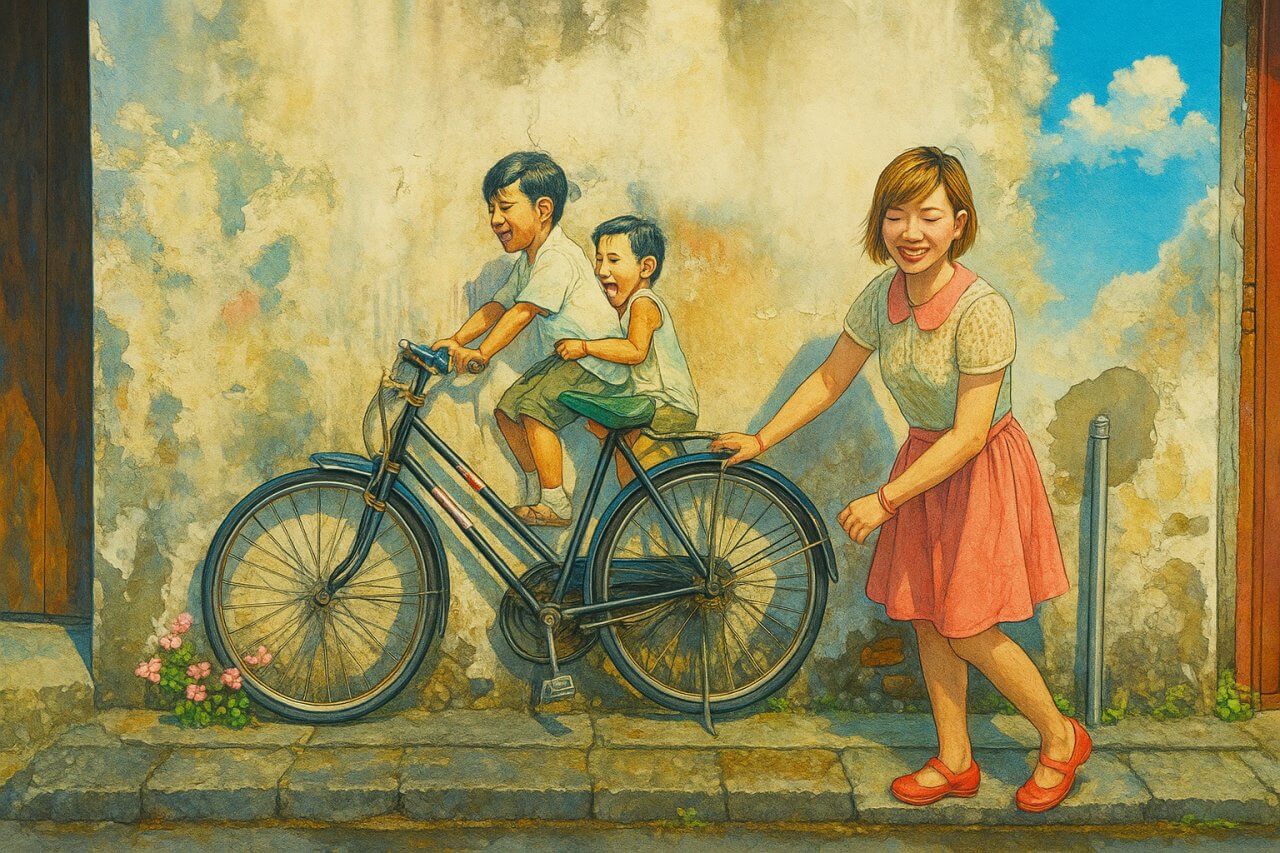
Now stroll along Lebuh Armenian, with quaint shophouses on both sides. They sell handmade crafts, old postcards, and Penang-themed souvenirs. Once in a while, a trishaw comes rolling by. The street is charming and ever lively with visitors and locals mingling.
2nd Stop: Cheah Kongsi Temple
You are now standing at the entrance to Cheah Kongsi Temple, one of George Town's oldest and grandest clan houses. Founded by the Cheah clan from South China in the 19th century, this heritage building blends Chinese, Malay, and European architectural elements. You'll notice sweeping tiled roofs, carved stone lions, gilded beams, and open courtyards. Inside, altars are richly adorned with ancestral tablets and deities, reflecting the deep cultural values of family and tradition. The intricate craftsmanship speaks volumes of the skills brought by early Chinese immigrants to Penang.
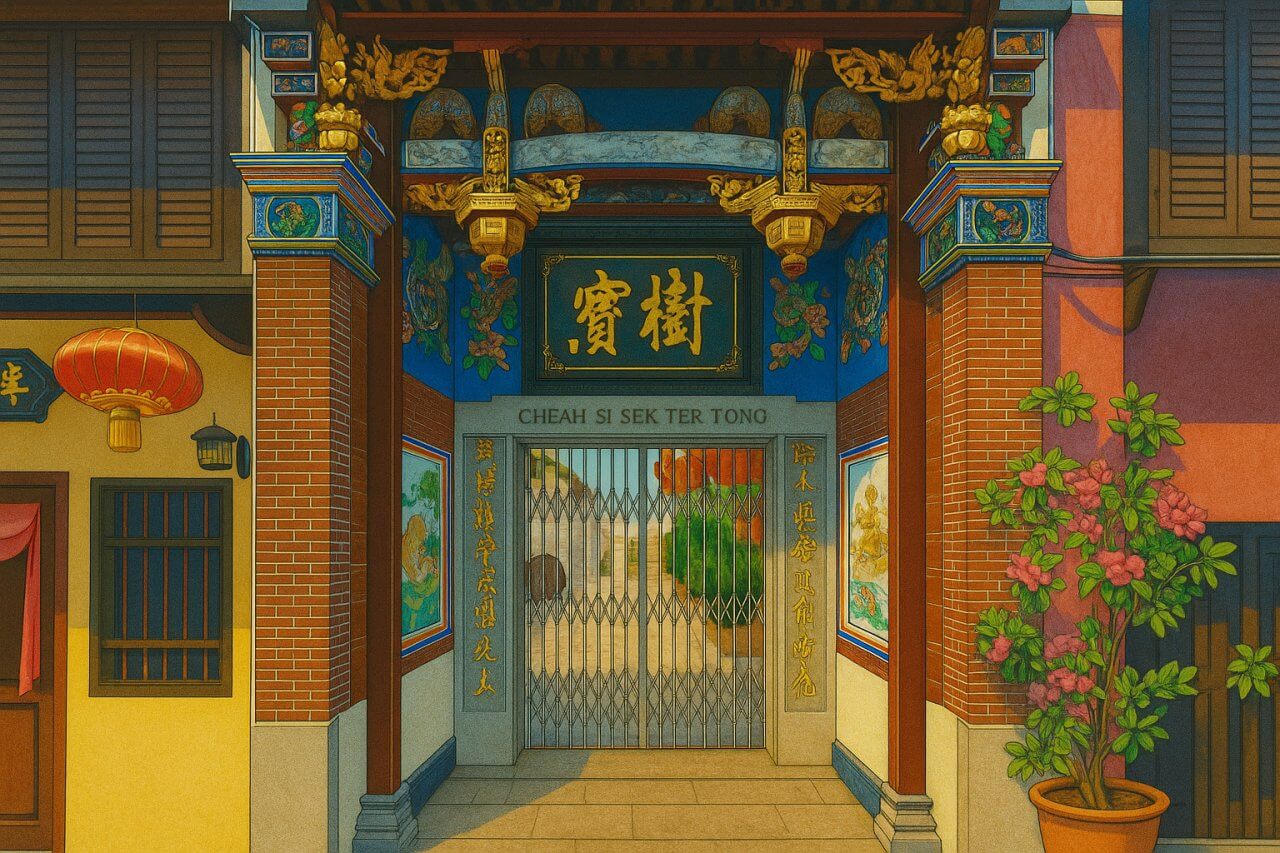
As you walk along Lebuh Armenian, take in the vibrant street textures - there's always something to catch your eye, from the smell of local delicacies to the colours of souvenirs in the shops along the way.
3nd Stop: Hock Teik Cheng Sin Temple (Hock Teik Soo)
On your left, is the entrance to Hock Teik Soo Temple, also known as Hock Teik Cheng Sin. The temple itself is hidden from street view, nestled inside a quiet courtyard beyond a narrow passageway. This Taoist temple is dedicated to Tua Pek Kong, the god of prosperity and deity revered by the Chinese. Hock Teik Soo was once the secret society hall of the Chinese Hokkien community and played a significant role in Penang's 19th-century clan conflicts. Today, it offers a peaceful respite, with the scent of incense wafting through its tiled interior and quiet courtyard. Step inside to experience a slice of Penang's spiritual and social past.
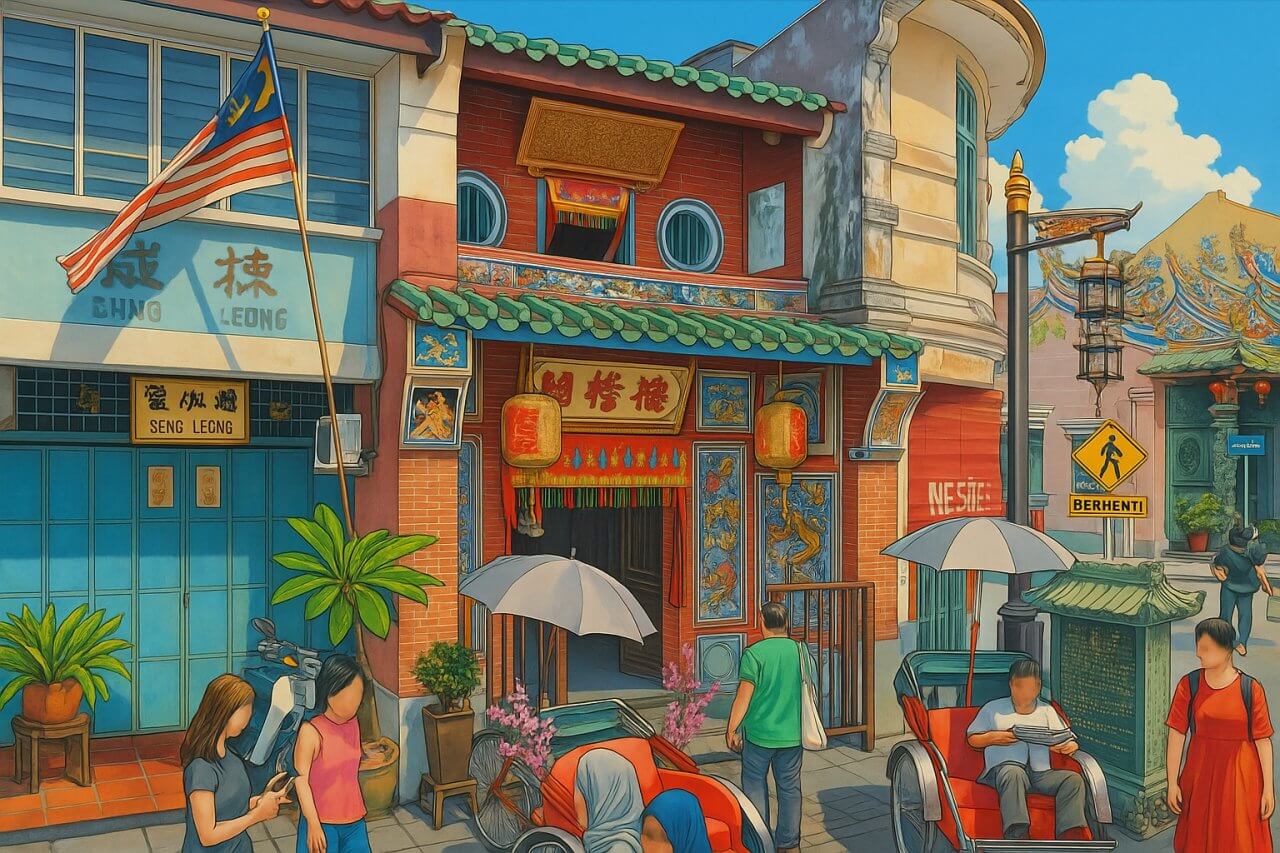
Beyond the entrance to Hock Teik Soo Temple is an intersection. Across the road, on your left, is our 4th stop.
4th Stop: Choo Chay Keong (Yap Temple)
On your left, at the corner of Lebuh Armenian and Lebuh Cannon, is this small but impressive temple belonging to the Yap clan. It is officially called Choo Chay Keong. Don't let its modest size fool you - the temple is richly decorated with granite pillars, tiled rooftops, and golden carvings. It was built in the late 19th century and remains an important place of worship and clan gathering. The Yaps, like many other Chinese clans in Penang, built this temple not only for spiritual reasons but also to offer support to new immigrants arriving in Penang. The vibrant ceramic figurines on the roof depict Chinese mythology and folk tales, showcasing a blend of devotion and storytelling through architecture.
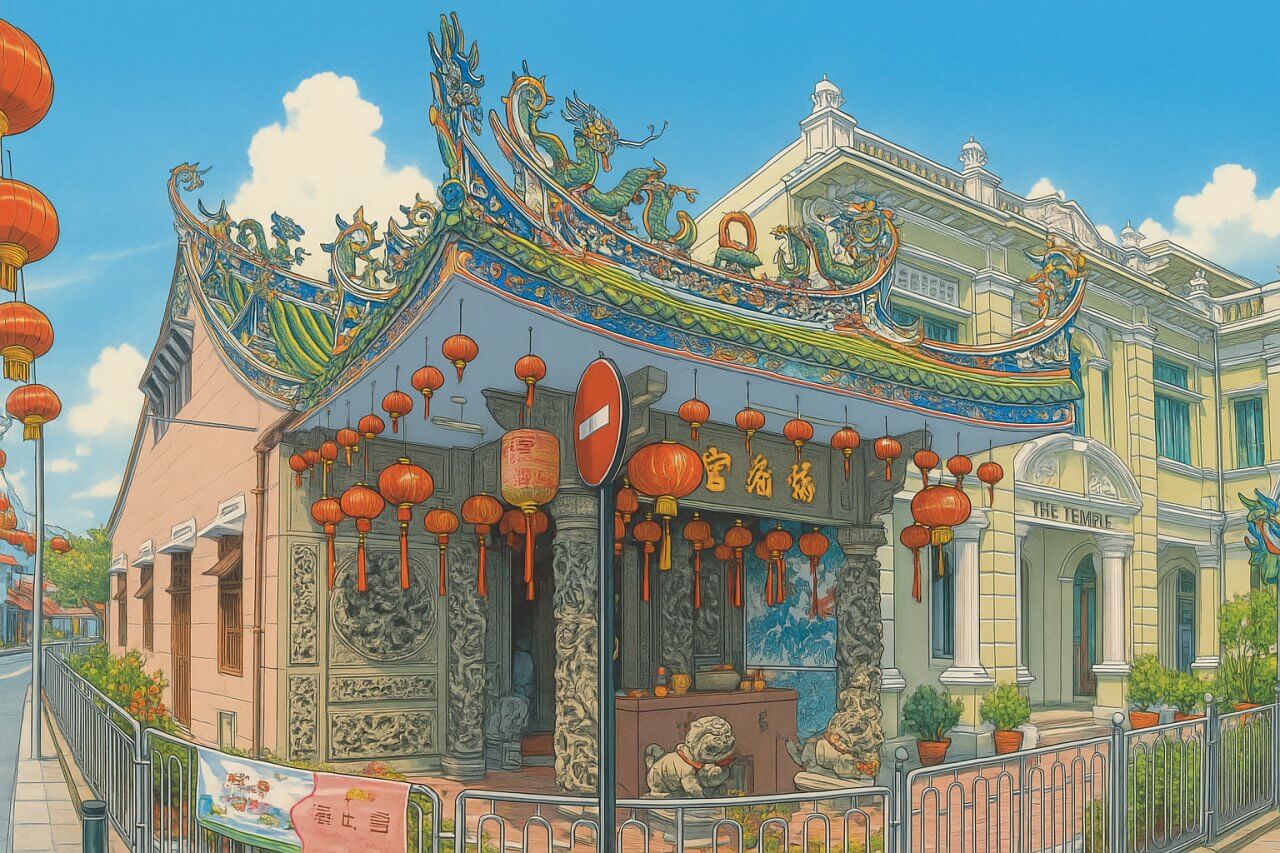
Continue along Lebuh Armenian as it curves gently to the left.
5th Stop: 120 Lebuh Armenian - Sun Yat-sun Penang Base
On your right, at 120 Lebuh Armenian, is an unassuming shophouse that played an enormous role in the history of China. This was the Penang base for Chinese revolutionary Dr. Sun Yat-sen. It was here in 1910 that he plotted the overthrow of the Qing Dynasty in China. The house served as a meeting point for revolutionaries and fundraisers for the cause. Today, it's a small museum - Sun Yat-sen Museum Penang, exhibiting photographs, documents, and period furniture that tell the story of Dr. Sun's time in Penang, serving as a powerful reminder of the role played by George Town in shaping the history of China.
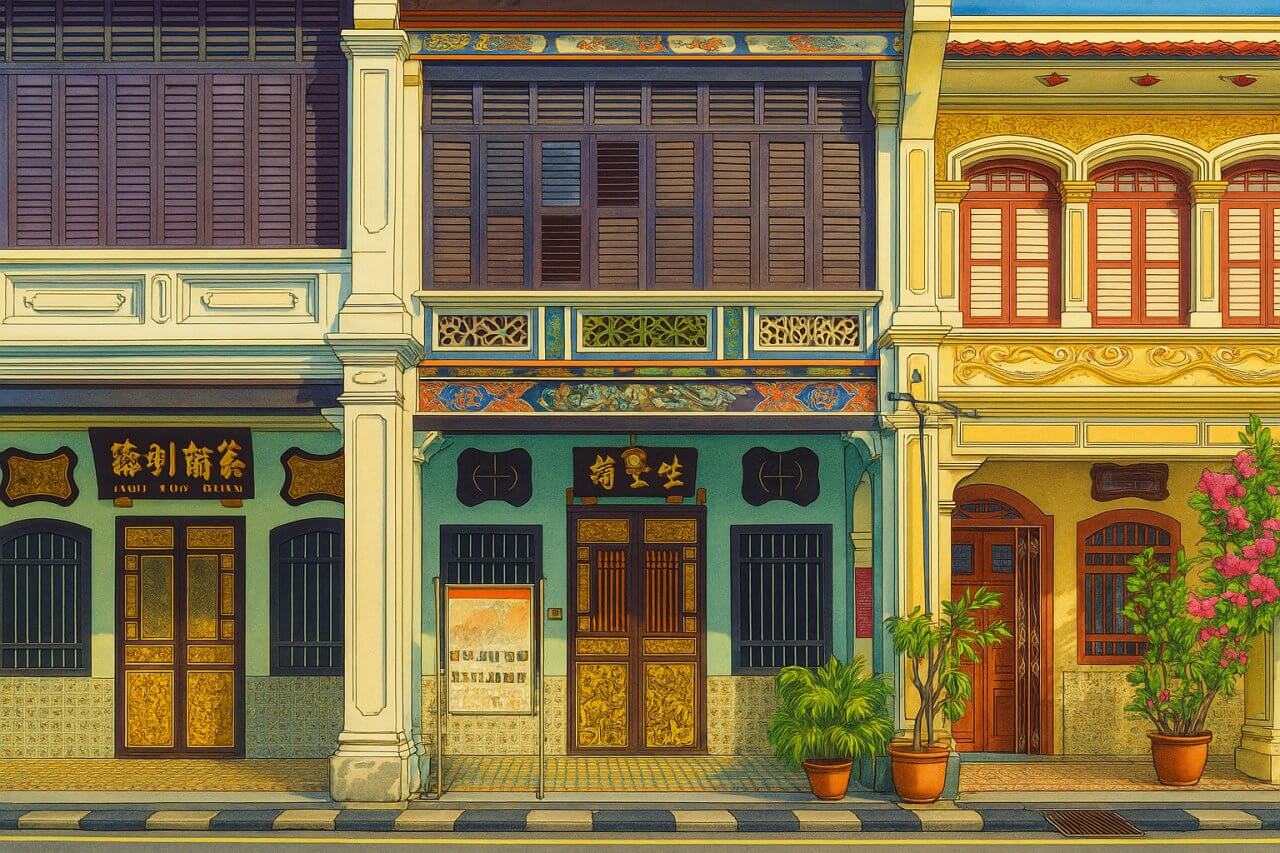
A few steps beyond 120 Lebuh Armenian, also on your right, is our 6th Stop, a stately old mansion with three French windows on the upper floor.
6th Stop: Syed Alatas Mansion
This elegant 19th-century mansion belonged to Syed Mohd Alatas, a wealthy Achehnese trader. It stands as one of the few remaining examples of Islamic-Achehnese architecture in George Town. The building features arched verandahs, symmetrical design, and large shuttered windows. Once a private residence, the mansion later became a school and, more recently, a heritage building under conservation. While it's not usually open to the public, it's a magnificent sight from the outside, reflecting the multicultural roots of Penang’s trading elite.
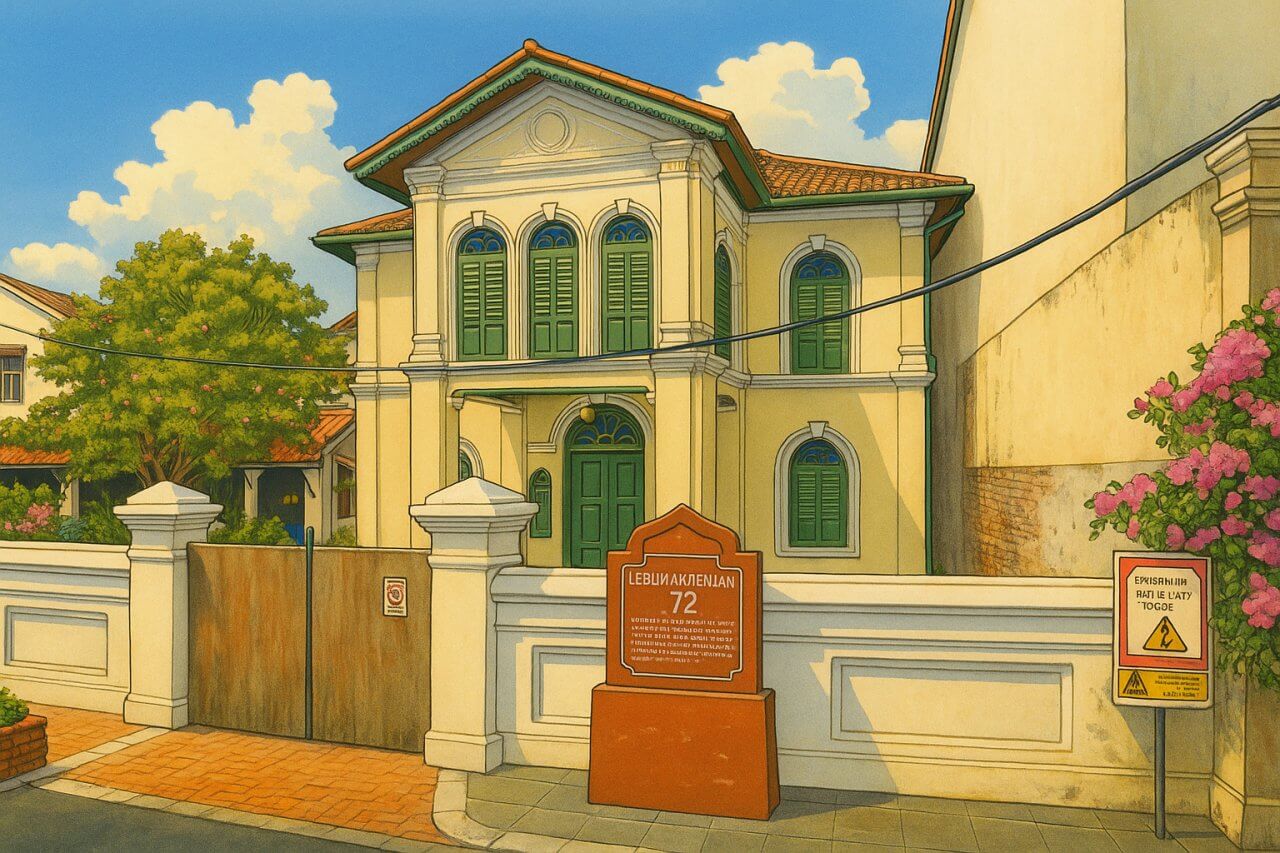
Across the street from the Syed Alatas Mansion, on your left, is the 7th Stop.
7th Stop: Armenian Park
Armenian Park is a pocket-sized green space in the heritage core, popular with both tourists and locals. With benches, shady trees, and a small open area, it offers a great spot to take a rest. You might see locals sitting around and children playing while families take a break. Though not a historical landmark itself, the park is surrounded by centuries of history. It provides a pleasant moment to sit, cool down, and reflect on all you've seen so far.
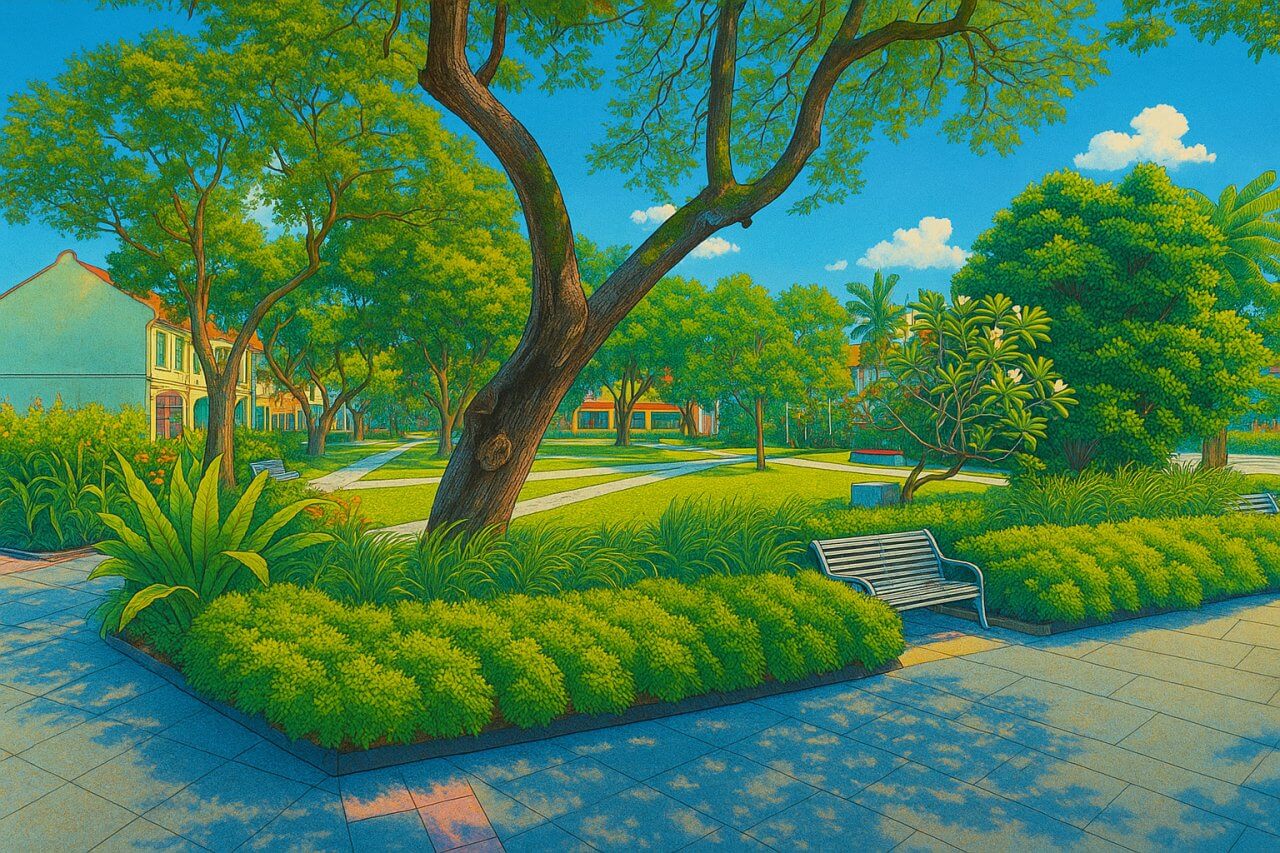
At the junction in front, turn left and go along Lebuh Acheh. You are now walking through the Muslim quarter.
8th Stop: Masjid Melayu Lebuh Acheh
On your right is one of George Town’s most historic mosques—Masjid Melayu Lebuh Acheh. Built in 1808 by Tengku Syed Hussain Al-Aidid, an Arab-Malay nobleman, this mosque served the Achehnese and Muslim trading community in Penang. Its serene architecture features a pyramidal roof, airy prayer halls, and a tall minaret. In the early 19th century, the area around the mosque was a thriving Muslim quarter, complete with madrasahs and traders’ homes. Today, it remains a place of worship and a symbol of the deep Islamic roots in Penang’s history.
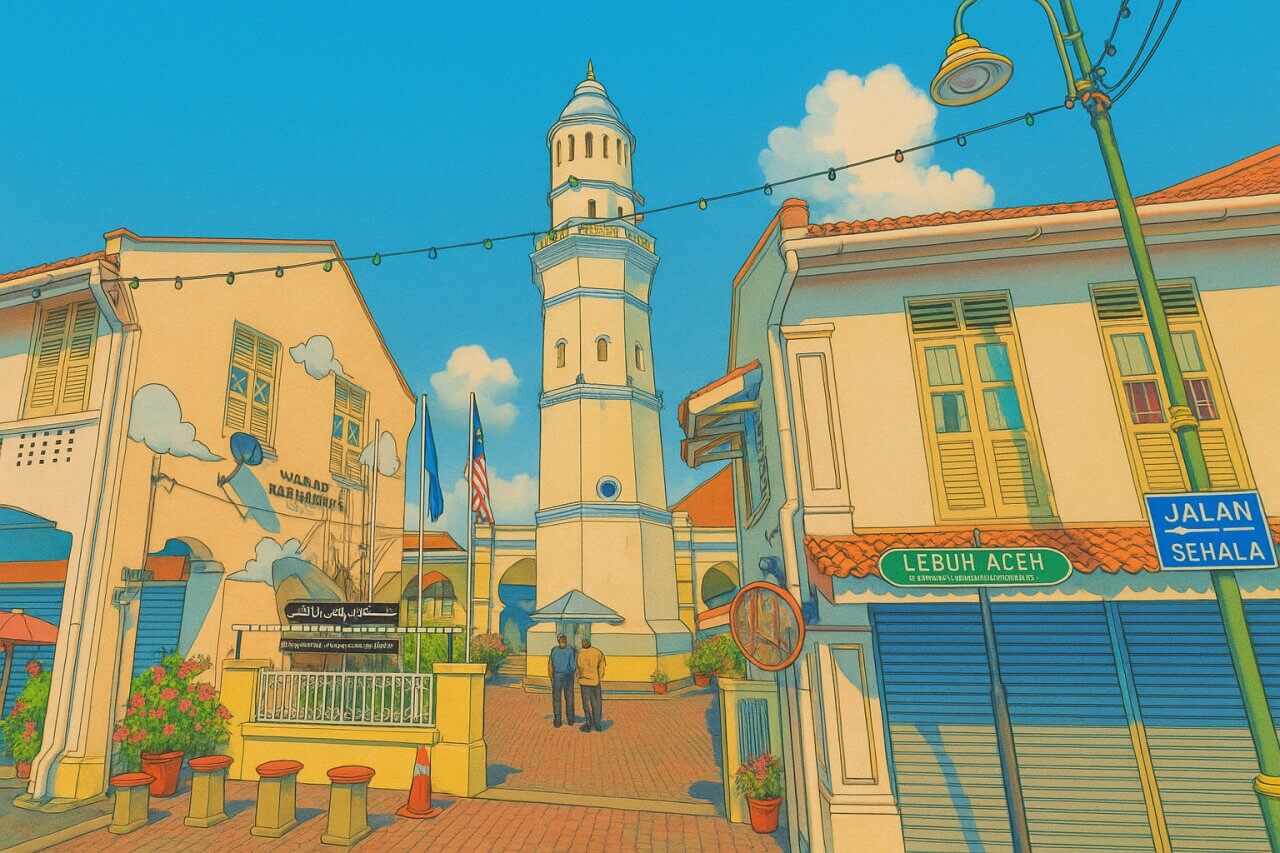
From the mosque, cross the junction to Lebuh Cannon and continue walking until the 9th Stop on your right.
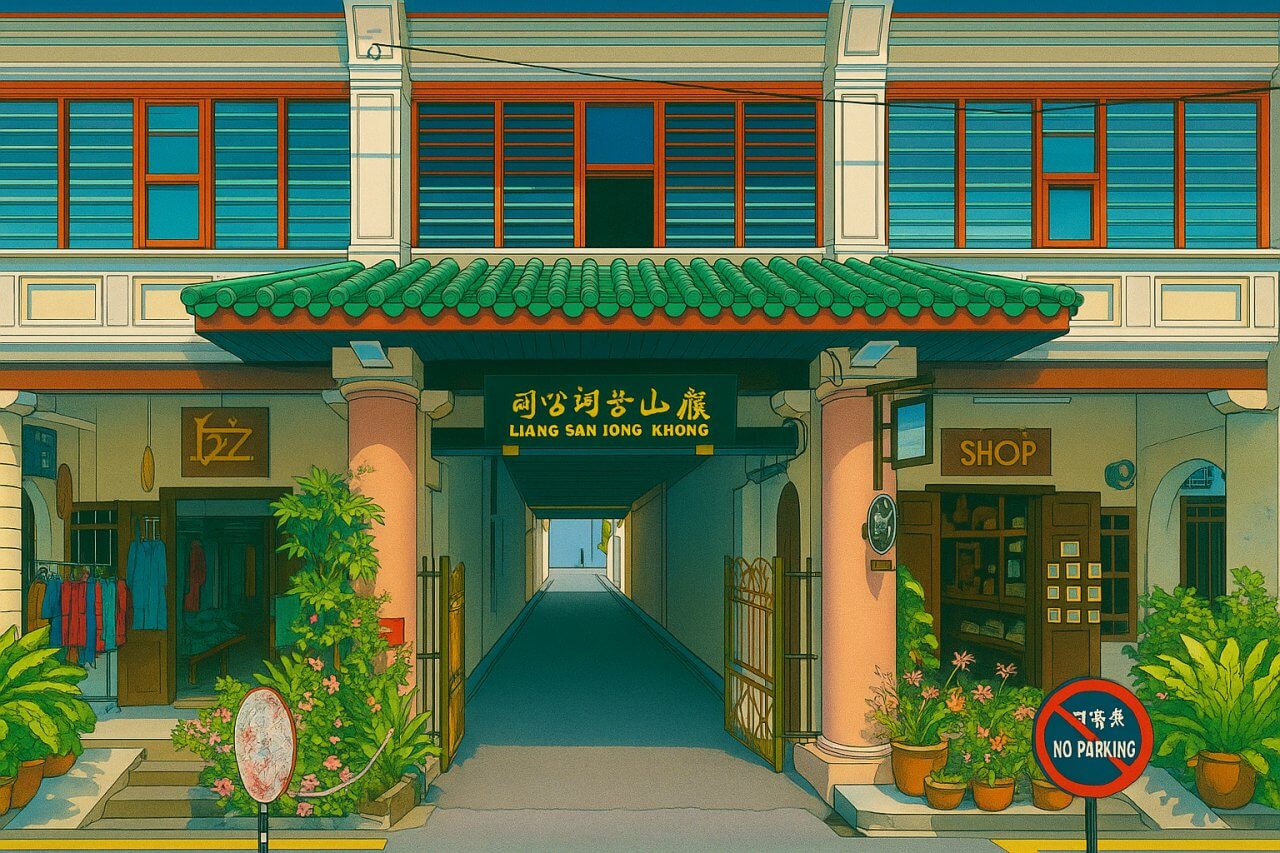
9th Stop: Entrance to Khoo Kongsi
You've reached the grand finale of this walk - Khoo Kongsi, the most famous and elaborate clan temple in Penang. From the street, you see an ornate entrance gate that leads into a courtyard. Inside is a richly carved and gilded ancestral hall that has amazed visitors for over a century. Built by the Khoo clan from southern China, the temple is a symbol of wealth, craftsmanship, and kinship. Every inch of this place is a feast for the eyes - from dragon carvings and gold-leaf calligraphy to granite staircases and elaborate murals. If you have time, it's worth buying a ticket to go in and explore.
End of Tour
That concludes your 60-minute heritage walk through the heart of George Town. We hope this tour helped you appreciate the cultural richness and architectural beauty of this UNESCO World Heritage Site. Feel free to explore further or grab a kopi at one of the nearby cafes - you've earned it!Alternative Routes and Bonus Detours
If you have a little extra time or energy, here are a few enriching detours and extensions you can consider adding to your tour:Detour 1: Penang Street Art Trail (Short Extension)
Where to detour: From Stop 1 (Little Children on a Bicycle), continue a short distance down Lebuh Pantai and take a detour to Lebuh Ah Quee to see the Boy on a Bike mural, also by Ernest Zacharevic.Why go: It's one of the most photographed murals in the city and adds a fun twist to your art-filled journey.
Adds: ~5 minutes.
Detour 2: Kuan Yin Temple (Chinese Goddess of Mercy Temple)
Where to detour: After Stop 8 (Masjid Melayu), continue on Lebuh Acheh and walk a few minutes toward Jalan Masjid Kapitan Keling.Why go: This is the oldest Chinese temple in Penang, dating back to the early 1800s. It's a beautiful and spiritual stop that highlights the religious diversity of George Town.
Adds: ~10-15 minutes. Loop back via Lebuh Cannon.
Detour 3: Kapitan Keling Mosque
Where to detour: After Stop 8 or at the end of the tour, walk 5 minutes north along Lebuh Cannon to reach Kapitan Keling Mosque.Why go: This is one of Penang's most significant mosques, built by Indian Muslim traders. Visitors are welcome during non-prayer hours and can learn more about Islam in Penang.
Adds: ~10 minutes.
Optional Start Point: Begin at Armenian Park Instead
Why: Armenian Park has space to gather and can serve as an alternate starting point for groups or tours. From here, walk eastward along Lebuh Armenian to reverse the route.Useful for: Tour guides, school groups, or those starting from Weld Quay.
Map of George Town Heritage Enclave Self-Guided Tour
Page Details
This page was created on 12 July 2025. Hi, my name is Timothy and created it from my research, for my own entertainment, knowledge and to satisfy my curiosity. I am providing the information to you in good faith and hope it is useful. I try to get the details as accurate as possible. I also try to update the page whenever I stumble on new details. So this and all my other pages are perpetual work in progress. If you discover any error, please politely inform me, pointing out where the error lies, and I will correct it as soon as possible. Your helpfulness will keep this page accurate, relevant and helpful to those who need the information.Taking the bus in Penang

