
 Go Back
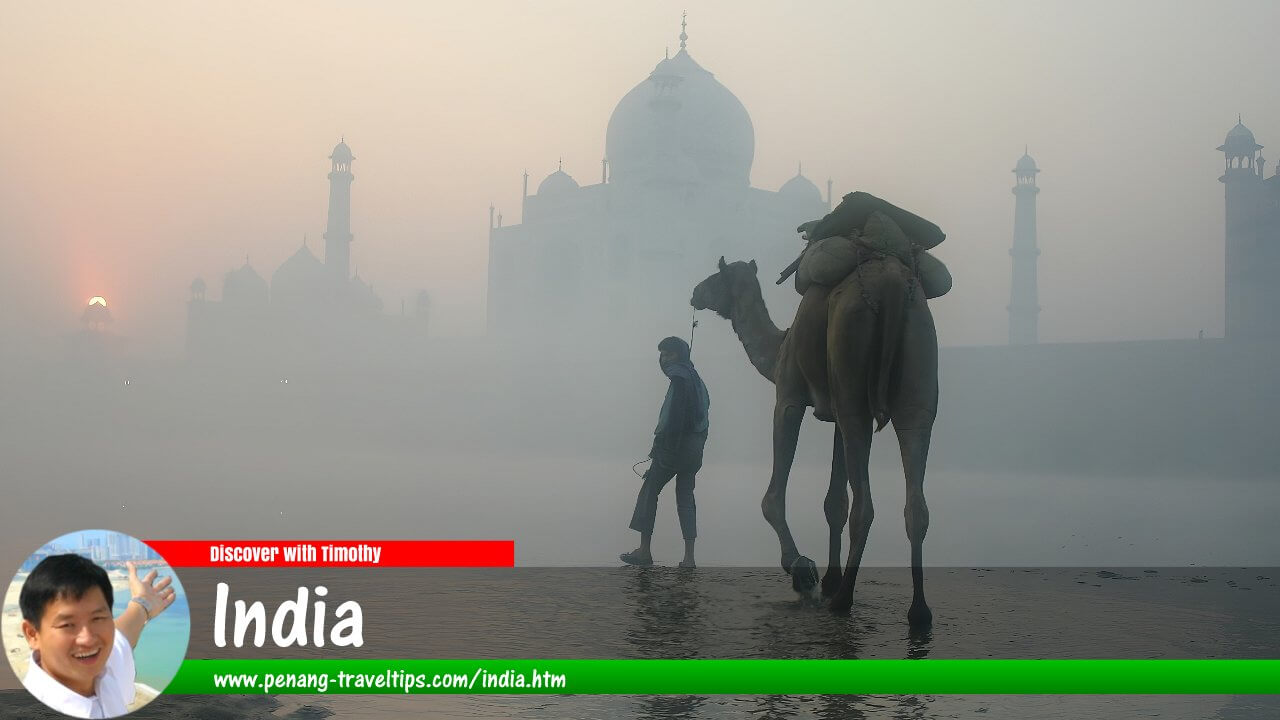 India Travel Guide (9 November 2004)
Also available: Panduan Melawat India
Introducing India
India is one of the world's largest and most diverse countries, offering an extraordinary variety of landscapes, cultures, religions, languages, cuisines and historical sites. From the snow-covered Himalayas in the north to tropical Kerala in the south, and from the deserts of Rajasthan in the west to the lush hills of the Northeast, India offers an enormous range of travel experiences.
With an area of about 3.28 million square kilometres, India is the world's seventh-largest country. Its geography includes some of the world's highest mountains, vast river plains, deserts, forests, plateaus, long coastlines and offshore islands. This geographical diversity is closely connected to the country's remarkable cultural diversity. 1
For a traveller, India is perhaps best understood not as a single destination but as a collection of very different regions. A trip through Rajasthan can feel completely different from one through Kerala, while Delhi, Mumbai, Kolkata, Goa, Tamil Nadu and the Himalayan states each offer their own distinct character.
The Name India
The name India is ultimately associated with the Indus River. The ancient Sanskrit name Sindhu, referring to the river and surrounding region, evolved through different languages and historical usage into names such as Hind and India.
The country is officially known as India and Bharat. Both names are recognised in the Constitution of India, and both continue to be used in the country today.
Where Is India?
India occupies most of the Indian subcontinent in South Asia. The country is bounded by the Himalayan mountain system to the north and extends southward into the Indian Ocean.
India shares land borders with Pakistan to the west; China, Nepal and Bhutan to the north; and Bangladesh and Myanmar to the east. Its long coastline faces the Arabian Sea, the Indian Ocean and the Bay of Bengal.
The Himalayas
The Himalayas form one of India's most distinctive geographical features. The mountain region includes destinations such as Ladakh, Jammu and Kashmir, Himachal Pradesh, Uttarakhand and Sikkim.
These northern regions offer a completely different travel experience from India's great cities and tropical south. Visitors can explore mountain valleys, high-altitude lakes, monasteries, trekking routes and hill stations.
The Great River Plains
South of the Himalayas lies the vast Indo-Gangetic Plain, one of the most densely populated and agriculturally important regions of the country. The Ganges and other major rivers have played a profound role in India's history, religion and civilisation.
Important destinations including Delhi, Agra, Lucknow and Varanasi are located within or close to this broad northern plain.
The Thar Desert
In northwestern India lies the Thar Desert, much of which is located in Rajasthan. Its arid landscape, sand dunes and historic desert cities provide one of India's most distinctive travel experiences.
Jaipur, Jodhpur and Jaisalmer are among the best-known destinations in Rajasthan. The region is famous for its forts, palaces, colourful markets, traditional crafts and the legacy of the Rajput kingdoms. 2
India's Coastline
India has a long coastline stretching along the Arabian Sea, the Indian Ocean and the Bay of Bengal. Goa, Kerala, Karnataka, Tamil Nadu, Maharashtra and Odisha all offer coastal landscapes, but their cultures and environments are quite different.
India also has two significant island territories, the Andaman and Nicobar Islands in the Bay of Bengal and Lakshadweep in the Arabian Sea. Both offer opportunities for visitors interested in beaches, marine life and island environments.
India's Six Broad Tourism Regions
For the purposes of travel planning, it is useful to think of India in broad regions. The official Incredible India tourism portal groups destinations into North, Northeast, East, Central, West and South. 3
North India
North India includes destinations such as Delhi, Agra, Rajasthan, Punjab, Uttar Pradesh, Uttarakhand, Himachal Pradesh, Jammu and Kashmir and Ladakh.
This is one of the most popular parts of India for first-time visitors because it combines major historical monuments, Mughal architecture, Hindu pilgrimage centres, colourful cities and Himalayan scenery.
South India
South India includes Kerala, Tamil Nadu, Karnataka, Andhra Pradesh and Telangana, together with territories such as Puducherry and Lakshadweep.
The region is known for its distinctive cuisine, Dravidian temples, tropical scenery, beaches, backwaters, classical arts and long-established cultural traditions.
West India
West India includes Goa, Maharashtra and Gujarat. Mumbai, India's largest city by metropolitan population and one of its principal commercial centres, is located here.
Goa is particularly well known for its beaches and holiday atmosphere, while Gujarat offers historic cities, religious sites, handicrafts and distinctive regional culture.
East India
East India includes West Bengal, Odisha, Bihar and Jharkhand. Kolkata is the region's best-known major city and an important centre of culture, literature and history.
Eastern India also contains important Buddhist, Hindu and archaeological sites, including destinations associated with the ancient history of the Indian subcontinent.
Central India
Central India includes Madhya Pradesh and Chhattisgarh. The region is particularly interesting for its historical sites, temples, forests and wildlife.
For travellers who have already visited the classic Golden Triangle, Central India offers an opportunity to explore a less familiar side of the country.
Northeast India
Northeast India consists of Arunachal Pradesh, Assam, Manipur, Meghalaya, Mizoram, Nagaland, Sikkim and Tripura.
The region is known for mountains, forests, rivers, tea plantations and the cultures of numerous ethnic communities. It is considerably less visited by international tourists than destinations such as Delhi, Rajasthan, Goa and Kerala, making it particularly interesting for travellers seeking a different experience.
India's Languages
India has extraordinary linguistic diversity. Hindi is one of the country's principal languages and is widely spoken across much of northern India, but there is no single language spoken throughout the country.
English also has an important role in administration, education, business and tourism. In addition, major regional languages such as Bengali, Tamil, Telugu, Marathi, Gujarati, Kannada, Malayalam and Punjabi are widely spoken in their respective regions.
For international travellers, English is generally useful in major hotels, airports, tourist attractions and urban areas. However, its usefulness can vary considerably once you travel into smaller towns and rural areas.
India and Religion
India is the birthplace of several major religions, including Hinduism, Buddhism, Jainism and Sikhism. Islam and Christianity also have long histories in India, while smaller communities follow religions including Judaism and Zoroastrianism.
This religious diversity is visible throughout the country in the form of temples, mosques, churches, gurdwaras, monasteries and other places of worship.
Many of these sites remain active places of worship rather than simply tourist attractions. Visitors should therefore dress appropriately, observe local customs and follow instructions concerning photography, footwear and access to sacred areas.
India's Ancient Civilisations
India has one of the world's longest and richest recorded histories. The Indus Valley Civilisation flourished in parts of the northwestern Indian subcontinent thousands of years ago and was followed by numerous kingdoms, empires and regional cultures.
Over the centuries, India witnessed the rise of major political and cultural powers including the Maurya and Gupta empires, the Chola dynasty, the Mughal Empire and numerous regional kingdoms.
The remains of these different periods can be found throughout the country in the form of archaeological sites, ancient cities, temples, forts, palaces and monuments.
The Mughal Legacy
The Mughal Empire had a profound influence on Indian history, art and architecture, particularly from the 16th century onward.
The most famous surviving example is undoubtedly the Taj Mahal in Agra, but Mughal heritage extends far beyond this one monument. Delhi and Agra contain numerous forts, mosques, gardens, tombs and other structures associated with the Mughal period.
British India
India subsequently came under increasing British influence and eventually British rule. The period of British rule had a profound impact on India's political institutions, economy, education, railways and architecture.
British colonial architecture can still be seen in cities such as Mumbai, Kolkata, Chennai and Delhi. India's independence was achieved on 15 August 1947, an event commemorated every year as Independence Day.
Modern India
India became a republic on 26 January 1950, when its Constitution came into effect. Republic Day is now one of the country's most important national celebrations.
Modern India has developed into a major economy with important agricultural, manufacturing, pharmaceutical, information technology, financial and service industries. Its cities range from historic urban centres to some of Asia's largest technology and business hubs.
Delhi and New Delhi
Delhi is one of India's most historically important urban areas, while New Delhi is the national capital and seat of the central government.
The wider Delhi area contains layers of history from different periods. Visitors can see medieval Islamic monuments, Mughal architecture, British colonial buildings and modern Indian institutions within the same metropolitan area.
India as a Tourist Destination
India offers an unusually broad range of tourism experiences. The official Incredible India tourism portal categorises experiences under themes including heritage, nature, wildlife, spirituality, gastronomy, adventure, arts, wellness, rural tourism and beaches. 4
This diversity means that India can appeal to very different types of travellers. One visitor may come primarily to see the Taj Mahal, another may want to trek in the Himalayas, while others may be interested in food, wildlife, yoga, spirituality, beaches or traditional arts.
India for Malaysian Travellers
India has several advantages for Malaysian travellers. English is widely used in tourism and business, Indian food is already familiar to Malaysians, and Malaysia itself has a large and diverse Indian community.
Nevertheless, travellers should not assume that Indian culture is the same throughout the country. India has enormous regional differences in cuisine, language, customs, architecture and traditions.
For example, Tamil Nadu offers a very different cultural experience from Punjab, while Kerala differs substantially from Rajasthan. Exploring these regional differences is one of the great pleasures of travelling in India.
India Is Not One Destination
One of the most important things to understand before travelling to India is its enormous scale. A journey between two apparently nearby destinations on a map can take many hours, while travelling between different regions may require a domestic flight.
For this reason, it is usually better to concentrate on one or two regions during a single trip rather than trying to see the whole country.
A first visit might focus on the Golden Triangle of Delhi, Agra and Jaipur. Another trip could concentrate on Kerala, while a longer journey might combine Mumbai with Goa or explore the Himalayan region.
What Makes India Special?
India is difficult to summarise in a single description. It is a country of ancient temples and modern technology, royal palaces and crowded cities, Himalayan mountains and tropical beaches, desert landscapes and dense forests.
It can also be a challenging destination. Traffic, crowds, heat, noise, unfamiliar customs and the sheer scale of the country may take some adjustment, particularly for a first-time visitor.
At the same time, these contrasts are part of what makes India so memorable. Travelling through the country is not simply a matter of visiting monuments; it is an opportunity to experience a civilisation and society with extraordinary regional variety.
Planning Your Journey
The most sensible way to plan a trip to India is to begin with the experience you want rather than simply listing famous attractions. Decide whether your priority is history, food, wildlife, beaches, mountains, spirituality, architecture, shopping or cultural experiences, and then choose the region that best matches those interests.
For a first visit, the classic Delhi–Agra–Jaipur route provides an introduction to North India. Travellers seeking tropical scenery may prefer Kerala, while those interested in monumental temples could focus on Tamil Nadu. Rajasthan is particularly suitable for travellers fascinated by forts, palaces and desert landscapes.
India rewards travellers who take their time. Rather than trying to cover too much ground, spend several days in each destination and allow yourself time to experience the local atmosphere.
Looking Ahead
In the following parts of this India Travel Guide, we will explore the country's major destinations, the best time to visit, how to get around, accommodation, Indian cuisine, practical considerations and useful advice for travellers planning their first journey to India.
Places to Visit in India
India has an enormous number of places worth visiting, and choosing where to go can be one of the hardest parts of planning a trip. The best approach is to select destinations according to your interests and the region you want to explore rather than trying to see too much in one journey.
For a first visit, the classic Golden Triangle of Delhi, Agra and Jaipur is one of the easiest introductions to India's history and culture. Beyond these three cities, however, India offers beaches, mountain scenery, ancient temples, wildlife reserves, colonial cities, desert landscapes and some of the world's most important religious sites.
Delhi
Delhi is one of the best places to begin exploring India. The city combines the political centre of modern India with centuries of history, and its monuments reflect the many dynasties and empires that ruled the region.
Red Fort
The Red Fort is one of Delhi's most important historical monuments. Built during the Mughal period, the massive red sandstone complex was closely associated with the Mughal imperial capital and later became an important symbol of India's independence.
The Red Fort is part of India's UNESCO World Heritage heritage and is one of the major historical attractions in Old Delhi. 5
Humayun's Tomb
Humayun's Tomb is an impressive Mughal garden tomb dating from the 16th century. UNESCO describes it as the first substantial garden-tomb on the Indian subcontinent and notes its influence on later Mughal architecture, including the Taj Mahal. 6
Qutub Minar
Qutub Minar is one of Delhi's most recognisable monuments. The tall stone minaret forms part of a larger archaeological complex containing structures from the early period of Muslim rule in northern India.
India Gate
India Gate is a prominent monument in New Delhi and a familiar landmark of the Indian capital. The surrounding area is particularly popular in the evening when the weather is cooler.
Lotus Temple
The Lotus Temple is a distinctive modern building in Delhi known for its flower-like architecture. It is associated with the Baháʼí Faith and welcomes visitors of different religions.
Agra
Agra is one of India's most visited historic cities and forms the second point of the Golden Triangle. Its greatest attraction is the Taj Mahal, but the city has several other important Mughal monuments.
Taj Mahal
The Taj Mahal is India's most famous monument and one of the world's best-known buildings. Built by Mughal emperor Shah Jahan in memory of his wife Mumtaz Mahal, the white marble mausoleum was constructed during the 17th century and is recognised by UNESCO as a masterpiece of Indo-Islamic architecture. 7
The Taj Mahal is particularly beautiful in the early morning, when the light is softer and temperatures are more comfortable. It is closed to ordinary visitors on Fridays, so check the current opening arrangements when planning your visit. 8
Agra Fort
Agra Fort is another major Mughal monument. The massive red sandstone fort contains palaces, halls and courtyards and provides an excellent introduction to Mughal imperial architecture.
Because Agra has several important monuments within a relatively small area, the city can be explored conveniently as part of a Golden Triangle itinerary.
Fatehpur Sikri
Fatehpur Sikri is a historic Mughal city located near Agra. Built during the reign of Emperor Akbar, the complex contains palaces, courtyards, mosques and other structures representing the architectural ambitions of the Mughal period.
Jaipur
Jaipur, the capital of Rajasthan, is the third point of the Golden Triangle. Founded in 1727 by Maharaja Sawai Jai Singh II, it is famous for its distinctive architecture, royal history and colourful markets. 9
Amber Fort
Amber Fort stands on a hill outside Jaipur and is one of Rajasthan's most impressive forts. Its courtyards, gateways, palaces and decorative interiors reflect the wealth and power of the Rajput rulers.
Hawa Mahal
Hawa Mahal, or Palace of Winds, is one of Jaipur's most recognisable buildings. Its distinctive façade contains numerous small windows and openings and has become one of the defining images of the Pink City.
City Palace
City Palace is a large complex of courtyards, buildings and museums in the heart of Jaipur. It provides an insight into the city's royal heritage and remains associated with the former ruling family.
Jantar Mantar
Jantar Mantar is an astronomical observatory containing a remarkable collection of large-scale instruments built in the 18th century. The Jaipur observatory is a UNESCO World Heritage Site. 10
Rajasthan
Beyond Jaipur, Rajasthan offers some of the most spectacular landscapes and historic cities in northern India. The state is known for its forts, palaces, desert scenery, colourful traditions and former princely states.
Jodhpur
Jodhpur is sometimes called the Blue City because of the blue-painted houses around its old city. The enormous Mehrangarh Fort rises above the city and provides panoramic views of the surrounding area.
Udaipur
Udaipur is known for its lakes, palaces and romantic setting. Lake Pichola and the City Palace are among its principal attractions.
The city offers a very different atmosphere from the desert cities of western Rajasthan and is particularly appealing to travellers who enjoy architecture, lakes and historic hotels.
Jaisalmer
Jaisalmer lies deep in the Thar Desert and is famous for its golden sandstone architecture. The city's most remarkable landmark is Jaisalmer Fort, a historic fortified settlement that remains partly inhabited.
Desert excursions from Jaisalmer can include camel rides, jeep safaris and overnight stays in desert camps.
Pushkar
Pushkar is a small pilgrimage town centred around Pushkar Lake. It is particularly associated with Hindu religious traditions and is also famous for its annual camel and livestock fair.
Varanasi
Varanasi, on the banks of the Ganges, is one of India's most important religious cities. It is particularly associated with Hindu pilgrimage, cremation rituals and the ghats along the river.
A boat ride on the Ganges at sunrise provides a memorable way to observe the riverfront and the city's religious life. Visitors should behave respectfully because many activities taking place along the ghats are religious ceremonies rather than performances for tourists.
Sarnath
Sarnath, near Varanasi, is one of the most important Buddhist pilgrimage sites in India. It is traditionally regarded as the place where the Buddha delivered his first sermon after attaining enlightenment.
The archaeological remains and museum make Sarnath a worthwhile addition to a visit to Varanasi, particularly for travellers interested in Buddhist history.
Amritsar
Amritsar in Punjab is home to the Golden Temple, the holiest shrine of Sikhism. The temple stands in the centre of a sacred pool and welcomes visitors of all backgrounds.
Visitors should cover their heads, dress respectfully and remove their shoes before entering the temple complex. The communal kitchen, or langar, is also an important part of the experience.
Mumbai
Mumbai is India's financial and entertainment capital and one of the country's most cosmopolitan cities. It combines colonial architecture, modern business districts, busy markets, religious sites and the enormous Indian film industry.
Gateway of India
The Gateway of India is one of Mumbai's most recognisable landmarks. Built during the British colonial period, it stands beside the harbour and is closely associated with the city's maritime history.
Chhatrapati Shivaji Terminus
Chhatrapati Shivaji Terminus is one of Mumbai's most spectacular historic buildings. Its Victorian Gothic architecture reflects the city's colonial past and the development of India's railway system.
The station is a UNESCO World Heritage Site and remains a functioning railway station, making it an unusual combination of living transport infrastructure and historic architecture. 11
Elephanta Caves
The Elephanta Caves are located on an island in Mumbai Harbour and contain rock-cut temples and sculptures dating from the early medieval period. They can be reached by boat from Mumbai.
Goa
Goa is India's best-known beach destination and has a distinctive cultural identity shaped by centuries of interaction between Indian and European influences.
In addition to its beaches, Goa has historic churches, old Portuguese-era neighbourhoods, markets and a relaxed holiday atmosphere.
Old Goa
Old Goa contains several historic churches and convents that form a UNESCO World Heritage Site. The complex illustrates the importance of Goa as a former centre of Portuguese influence in Asia. 12
Kerala
Kerala in southern India is famous for its tropical scenery, backwaters, beaches, hill stations, wildlife and distinctive cuisine. It offers a slower-paced experience compared with the large cities of northern India.
Alappuzha
Alappuzha, also known as Alleppey, is one of the main gateways to Kerala's famous backwaters. Travellers can take boat trips through a network of waterways surrounded by villages, coconut palms and rice fields.
Kochi
Kochi is a historic port city with a multicultural past. Fort Kochi contains colonial-era buildings, churches, traditional trading areas and the famous Chinese fishing nets.
Munnar
Munnar is a hill station surrounded by tea plantations and mountains. Its cooler climate makes it a popular retreat from the heat of the lowlands.
Tamil Nadu
Tamil Nadu is one of the best destinations in India for travellers interested in Hindu temple architecture. The state is home to some of the largest and most elaborate Dravidian temples in the country.
Chennai
Chennai is the capital of Tamil Nadu and an important centre of Tamil culture. It combines a large modern city with historic temples, markets, museums and a long coastline.
Mahabalipuram
Mahabalipuram, also known as Mamallapuram, is famous for its ancient rock-cut temples, monuments and sculptures. The Group of Monuments at Mahabalipuram is recognised by UNESCO as a World Heritage Site. 13
Madurai
Madurai is one of Tamil Nadu's oldest cities and is best known for the spectacular Meenakshi Amman Temple. Its towering, intricately decorated gateways are among the most recognisable examples of South Indian temple architecture.
Karnataka
Karnataka offers a mixture of modern cities, historic monuments, temples, coffee-growing highlands and beaches.
Bengaluru
Bengaluru, formerly Bangalore, is one of India's principal technology and business centres. The city has a younger and more cosmopolitan atmosphere than many of India's historic destinations.
Mysuru
Mysuru, or Mysore, is famous for its magnificent palace and its association with the former Wadiyar royal family. The city is particularly attractive when the palace is illuminated at night.
Hampi
Hampi contains the ruins of the former Vijayanagara Empire and is one of India's most extraordinary archaeological landscapes. Ancient temples, monuments and stone structures are scattered among dramatic boulder-covered hills.
The Group of Monuments at Hampi is a UNESCO World Heritage Site. 14
Hyderabad
Hyderabad in Telangana combines historic Islamic architecture with a modern technology and business sector. The city is particularly famous for its food and its distinctive history as a former princely state.
Charminar
Charminar is Hyderabad's best-known landmark. The four-towered structure stands in the centre of the old city and is surrounded by busy markets.
Odisha
Odisha on India's eastern coast is particularly important for Hindu religious architecture and classical culture.
Konark Sun Temple
The Konark Sun Temple is an enormous 13th-century temple designed in the form of the chariot of the sun god Surya. Its stone carvings and monumental scale make it one of India's most impressive temples.
The temple is a UNESCO World Heritage Site. 15
Puri
Puri is an important Hindu pilgrimage destination and is famous for the Jagannath Temple. It is also a popular beach destination on the Bay of Bengal.
Madhya Pradesh
Madhya Pradesh is a good choice for travellers who want to explore India's central regions, including ancient monuments, Buddhist heritage and wildlife.
Khajuraho
Khajuraho is famous for its group of Hindu and Jain temples decorated with elaborate stone carvings. The temples are recognised as a UNESCO World Heritage Site and are among the finest surviving examples of medieval Indian temple architecture. 16
Sanchi
Sanchi is one of India's most important Buddhist sites. Its monuments include stupas, temples and gateways associated with the development of Buddhist art and architecture in India.
Bodh Gaya
Bodh Gaya in Bihar is one of the most important Buddhist pilgrimage sites in the world. It is traditionally regarded as the place where Siddhartha Gautama attained enlightenment and became the Buddha.
The Mahabodhi Temple Complex is a UNESCO World Heritage Site and attracts Buddhist pilgrims from many countries. 17
Darjeeling
Darjeeling in West Bengal is a hill station famous for tea plantations, mountain scenery and views towards the Himalayas. It is particularly associated with Darjeeling tea and the historic Himalayan railway.
The Darjeeling Himalayan Railway forms part of the UNESCO-listed Mountain Railways of India and is one of the country's most distinctive railway experiences.
Sikkim
Sikkim is a small Himalayan state known for mountain scenery, Buddhist monasteries, forests and views of high Himalayan peaks.
Gangtok, the state capital, is a popular base for exploring Sikkim. The state is especially appealing to travellers looking for cooler weather and mountain landscapes rather than India's major cities.
Rishikesh
Rishikesh is situated on the Ganges at the foothills of the Himalayas and is internationally associated with yoga, meditation and spiritual retreats.
The city also attracts adventure travellers interested in activities such as river rafting and trekking.
Ladakh
Ladakh is one of India's most dramatic high-altitude regions. Its barren mountains, deep valleys, Buddhist monasteries and high mountain passes create landscapes unlike those found elsewhere in the country.
Leh is the principal town and a common base for exploring the region. Because of the high altitude, visitors should allow time to acclimatise rather than immediately undertaking strenuous activities.
Andaman and Nicobar Islands
The Andaman and Nicobar Islands offer a tropical island experience far removed from India's major mainland cities. The islands are known for beaches, forests, coral reefs and marine activities.
Port Blair, now officially known as Sri Vijaya Puram, is the principal gateway for visitors to the Andaman Islands.
Wildlife Destinations
India is also an important destination for wildlife tourism. Several national parks and protected areas provide opportunities to see Bengal tigers, Asian elephants, rhinoceroses, leopards, deer and numerous bird species.
Ranthambore National Park in Rajasthan is particularly famous for tiger sightings, while Kaziranga National Park in Assam is renowned for its greater one-horned rhinoceroses.
Periyar National Park in Kerala and Kanha and Bandhavgarh in Madhya Pradesh are other well-known wildlife destinations.
Choosing Where to Go
For a first-time visitor with around one week, the Delhi–Agra–Jaipur Golden Triangle is a practical choice because the three destinations can be combined into one itinerary.
With around 10 to 14 days, you could explore the Golden Triangle more slowly or add destinations such as Varanasi, Udaipur or Ranthambore.
If you have two weeks and prefer tropical scenery, Kerala can easily occupy an entire journey by itself, combining Kochi, Munnar, Thekkady and the backwaters around Alappuzha.
For a longer trip, consider choosing one region rather than trying to cross the entire country. India rewards slow exploration, and each additional journey between distant destinations takes time away from experiencing the places themselves.
India's Great Variety
The remarkable thing about travelling in India is that the country's major attractions are not concentrated in one area. The Taj Mahal, Himalayan monasteries, Rajasthan's forts, Kerala's backwaters, Tamil Nadu's temples, Goa's beaches and the ruins of Hampi represent completely different aspects of Indian civilisation.
Rather than asking which is the single best place to visit in India, it is more useful to ask which part of India best matches your interests. Once you have answered that question, planning the journey becomes considerably easier.
When to Visit India
Because India is such a large country with enormous geographical variation, there is no single period that can be described as the best time to visit the entire country. The ideal season depends greatly on where you are going and what you want to do.
In general, the cooler months from about October to March are the most comfortable period for travelling through much of northern and central India. However, southern India has a different climate, while the Himalayan region has its own seasonal pattern. The southwest monsoon also brings substantial rainfall to many parts of the country during the middle of the year. 18
India's Main Seasons
India's climate is commonly described in terms of several broad seasons, although the timing and intensity vary considerably from region to region. The four broad periods are spring, summer, monsoon and winter.
For travellers, it is often more useful to think in terms of cool season, hot season and monsoon season, while remembering that some parts of India do not follow this pattern precisely.
Spring: February to April
Spring can be an excellent time to visit many parts of India. Temperatures gradually rise from the cooler winter conditions, while many northern destinations remain comfortable for sightseeing.
The official tourism portal describes spring as a period of pleasant weather and colourful festivals, with destinations such as Kashmir, Kerala and the Himalayas offering different experiences during this period. 18
Spring is also associated with important festivals including Holi, the colourful festival celebrated in many parts of India. Because festival dates follow the Hindu lunar calendar, they change from year to year.
Summer: April to June
Summer can be extremely hot in many parts of India, particularly across the northern and central plains. Temperatures can become uncomfortable for sightseeing, especially during the hottest part of the afternoon.
For this reason, summer is not usually the first choice for a sightseeing trip through Delhi, Agra and Rajasthan. However, it can be a good time to visit India's mountain and hill regions, where temperatures are considerably cooler.
Hill stations such as Shimla, Darjeeling, Ooty and Munnar can provide a welcome escape from the heat of the plains. 18
Monsoon: June to September
The southwest monsoon is one of the defining features of India's climate. It brings widespread rainfall to much of the country, although the amount and timing vary significantly between regions.
The India Meteorological Department defines the southwest monsoon season as June to September and monitors its progress and withdrawal across the country. 19
Monsoon weather does not simply mean that it rains continuously everywhere. Some areas experience heavy rainfall while others receive less. Rain can also occur in intense spells rather than throughout the entire day.
The monsoon can transform the landscape, making forests and countryside exceptionally green. Kerala, the Western Ghats and parts of northeastern India can be particularly lush during and after the rains.
Autumn and Early Winter: October to November
October and November are among the most attractive months for travelling through much of India. The monsoon begins to withdraw from many regions, temperatures become more comfortable and the countryside can remain green after the rains.
This period is particularly attractive for sightseeing in northern India, including Delhi, Agra, Jaipur and Rajasthan.
It is also a major festival season. Diwali, the Festival of Lights, normally falls between October and November, although the exact date changes each year.
Winter: December to February
Winter is generally the most popular season for visiting many of India's northern and central destinations. Daytime temperatures can be pleasant for sightseeing, although mornings and nights can become quite cold in some areas.
Delhi, Agra, Jaipur, Rajasthan, Varanasi and many other northern destinations are particularly popular during this period.
In the Himalayas, however, winter can mean snow, freezing temperatures and difficult travel conditions. At the same time, this is an excellent period for travellers specifically seeking winter scenery and snow activities.
Best Time for the Golden Triangle
For the classic Delhi–Agra–Jaipur Golden Triangle, the cooler months from roughly October to March are generally the most comfortable.
December and January can be quite cold in the mornings, particularly in Delhi and Agra, but daytime sightseeing is usually much more pleasant than during the hottest months.
By April and May, temperatures can rise sharply, making long periods of outdoor sightseeing more tiring. If travelling during these months, it is sensible to arrange sightseeing for early morning and late afternoon.
Best Time for Rajasthan
Rajasthan is at its most comfortable during the cooler months, particularly from October through March. The desert climate means that daytime temperatures can be pleasant in winter while nights can become surprisingly cold.
Winter is therefore a good time for visiting Jaipur, Jodhpur, Jaisalmer and Udaipur, as well as for desert excursions.
Summer should be approached with caution because temperatures in Rajasthan can become extremely high. Travellers unused to intense heat may find outdoor sightseeing uncomfortable or even hazardous.
Best Time for Kerala
Kerala has a tropical climate and follows a different seasonal pattern from northern India. It experiences significant rainfall associated with the southwest monsoon, and parts of the state also receive rainfall from the northeast monsoon later in the year.
The cooler and generally drier period is often preferred by visitors planning a conventional Kerala holiday, particularly for exploring Kochi, the hill country and the backwaters.
However, the monsoon should not automatically be regarded as a reason to avoid Kerala. The rain creates exceptionally lush scenery and is an important part of the state's landscape and culture.
Best Time for Goa
Goa is most popular during the drier months, particularly from around November through March. This period is generally more suitable for beach holidays and outdoor activities.
The monsoon months are considerably wetter. Beaches and resorts may have a very different atmosphere during this period, although the landscape becomes green and some travellers specifically enjoy Goa during the rainy season.
Best Time for Tamil Nadu
Tamil Nadu has an important climatic difference from much of northern India because the state receives significant rainfall from the northeast monsoon, particularly during October to December.
This means that travellers planning to visit Chennai, Mahabalipuram, Thanjavur or Madurai should not automatically apply the northern Indian travel calendar to Tamil Nadu.
For this reason, checking the weather for the specific destination is more useful than relying solely on a general "best time to visit India" recommendation.
Best Time for the Himalayas
The Himalayan region requires especially careful seasonal planning. High-altitude destinations can experience severe winter conditions, while some mountain roads and passes may be inaccessible during periods of heavy snow.
For destinations such as Himachal Pradesh, Uttarakhand and Sikkim, the most suitable period depends on altitude and the activities you want to undertake.
Ladakh is particularly seasonal. Its high-altitude landscape has a much shorter conventional tourist season than most of mainland India, and winter travel requires considerably more preparation.
Best Time for Wildlife Safaris
If seeing wildlife is a major reason for your trip, the best time depends on the particular national park. Many parks have seasonal opening arrangements, while animal sightings can vary according to weather, vegetation and water availability.
The hotter months can sometimes offer better wildlife sightings because animals are more likely to congregate around remaining water sources. However, the heat can be demanding for visitors.
Before planning a safari, check the current opening dates and regulations of the particular national park rather than relying on a general India-wide recommendation.
Travelling During the Monsoon
Travelling during the monsoon can be rewarding, but it requires greater flexibility. Heavy rain can cause flooding, landslides, road disruptions and delays in some parts of the country.
The India Meteorological Department provides rainfall forecasts, warnings and specialised tourism weather information, making it a useful source for checking conditions when travelling during the monsoon season. 20
Travellers should also remember that India's monsoon is not uniform. A rainy period in Mumbai does not necessarily mean identical conditions in Delhi, Rajasthan, Kerala or Ladakh.
Travelling During Festival Season
India's major festivals can add an extraordinary dimension to a trip. Diwali, Holi, Durga Puja, Navratri, Eid, Christmas and numerous regional festivals are celebrated in different parts of the country.
However, festivals can also mean crowded transport, higher hotel demand, road closures and changes to opening hours. If you specifically want to experience a major festival, it is wise to book accommodation and transport well in advance.
Diwali
Diwali, the Festival of Lights, is one of India's most important festivals. Homes, shops and public spaces are decorated with lamps and lights, while families gather and celebrations take place across much of the country.
The festival is particularly spectacular in cities and towns where streets and buildings are illuminated at night. However, visitors should be prepared for very large crowds and significant firecracker activity in some places.
Holi
Holi is famous for its colourful celebrations, during which people traditionally throw coloured powders and water at one another.
For visitors, Holi can be a memorable cultural experience, but it is important to understand that participation is not always as simple as watching a public performance. In crowded areas, strangers may approach visitors and apply coloured powder to them.
Wear old clothing that you do not mind staining, protect cameras and phones, and avoid carrying valuables during large celebrations.
Ramadan and Eid
India has a large Muslim population, and Ramadan and Eid are observed in many parts of the country. Cities such as Delhi, Hyderabad, Lucknow, Mumbai and parts of Kerala have particularly strong Muslim cultural traditions.
During Ramadan, visitors may find special evening food markets and increased activity around mosques. On Eid, public celebrations and family gatherings can create a festive atmosphere, although opening hours and transport arrangements may differ from normal days.
Weather Can Vary Greatly Within One Trip
One of the most important things to remember when packing for India is that the weather can be completely different between destinations on the same journey.
A trip combining Delhi and Rajasthan with a visit to Kerala may require lightweight clothing for the south and warmer layers for northern mornings. Adding a Himalayan destination can require substantially heavier clothing.
Similarly, a traveller visiting India during winter should not assume that the entire country will be cold. Kerala and Goa can remain warm while northern India experiences much cooler conditions.
When Should Malaysians Visit India?
For Malaysians who are visiting India for the first time, October to March is a useful general starting point if the itinerary focuses on northern India, the Golden Triangle, Rajasthan or other major sightseeing destinations.
However, if the main destination is Kerala, Tamil Nadu, Goa, Ladakh or the Northeast, it is better to choose the travel dates according to that region's particular climate.
India's official tourism portal provides destination-specific weather information, while the India Meteorological Department provides current forecasts, rainfall information and weather warnings. Checking both before departure is a sensible habit. 21
A Practical Rule of Thumb
If you are planning a first trip and want to visit the classic northern destinations, aim for the cooler months. If you want the Himalayas, check the conditions of the particular mountain destination. If you want Kerala or another tropical region, study its rainfall pattern separately.
In other words, do not ask only, "When is the best time to visit India?" Ask instead, "When is the best time to visit the part of India I want to see?"
That small change in the question can make a big difference to the quality of your trip.
Getting to and Around India
India is a vast country, so transport is an important part of planning a trip. Fortunately, the country has an extensive network of international airports, domestic flights, railways, buses, taxis and other forms of local transport.
For Malaysian travellers, the most practical approach is usually to fly into one of India's major international airports and then combine domestic flights with trains or road transport, depending on the itinerary.
Flying from Malaysia to India
Malaysia has good air connections with India, particularly from Kuala Lumpur International Airport (KLIA). Depending on the season and airline schedules, travellers can find direct flights or convenient connections to several major Indian cities.
Among the most useful gateways for international travellers are Delhi, Mumbai, Bengaluru, Chennai, Hyderabad, Kochi and Kolkata. Your choice of arrival airport should depend on the region you intend to visit.
For example, Delhi is a natural gateway for the Golden Triangle and North India, while Kochi and Bengaluru can be useful starting points for journeys through South India.
Indira Gandhi International Airport, Delhi
Indira Gandhi International Airport (DEL) is one of India's principal international gateways and is particularly convenient for travellers visiting Delhi, Agra, Jaipur and northern India.
The airport has extensive domestic connections, making Delhi a useful hub if your itinerary combines North India with another part of the country.
Chhatrapati Shivaji Maharaj International Airport, Mumbai
Chhatrapati Shivaji Maharaj International Airport (BOM) serves Mumbai and is an important gateway to western India.
It is particularly convenient for itineraries involving Mumbai, Goa, Gujarat and other destinations in western India.
Chennai International Airport
Chennai International Airport (MAA) is one of the principal gateways to South India. It is useful for visiting Tamil Nadu and can also serve as a starting point for journeys to neighbouring southern states.
Cochin International Airport
Cochin International Airport (COK) is one of the main gateways to Kerala. It is particularly convenient for travellers planning to visit Kochi, Munnar, Thekkady and the Kerala backwaters.
Choosing Your Arrival Airport
When booking a flight to India, avoid choosing an airport solely because the airfare is slightly cheaper. A cheaper flight may save money but require a long journey back to the part of India you actually want to visit.
If your itinerary is centred on Rajasthan, for example, Delhi is generally a more logical gateway than Mumbai. If your main interest is Kerala, flying into Kochi or Thiruvananthapuram can save considerable travelling time.
Domestic Flights
Because of India's size, domestic flights can save a great deal of time when travelling between distant regions.
India has a large domestic aviation network linking major cities and many regional airports. Airlines operating domestic services include carriers such as IndiGo, Air India and other scheduled airlines.
Flying is particularly useful when combining destinations that are geographically far apart, such as Delhi and Mumbai, Delhi and Bengaluru, or Mumbai and Kochi.
When Should You Fly?
For a long-distance journey, compare the total travel time rather than simply the ticket price. A train may be cheaper but take many hours or even overnight, while a flight can cover the same distance in a fraction of the time.
However, remember to include the time needed to reach the airport, check in, pass security and collect baggage. For shorter journeys, a fast train may sometimes be more convenient than flying.
Travelling by Train
India has one of the world's largest railway networks and trains remain one of the most important ways of travelling between cities.
For tourists, Indian Railways can be more than simply transportation. A long-distance train journey offers an opportunity to see the countryside and experience an important part of everyday Indian life.
However, the railway system can initially seem complicated because there are many train types, classes, routes and booking categories.
Indian Railways
Indian Railways operates the country's extensive rail network. Long-distance trains connect major cities and many smaller towns, while suburban railway systems serve some of India's largest metropolitan areas.
Official railway information and ticketing are available through Indian Railways' designated online systems. Travellers should use official or reputable booking channels and check the exact train, class and station before travelling.
Classes on Indian Trains
Indian long-distance trains can have several classes of accommodation. The most relevant for tourists include AC First Class, AC 2-Tier, AC 3-Tier, Sleeper Class and Chair Car, although not every train offers every class.
Air-conditioned classes generally provide a more comfortable environment for long journeys, particularly for travellers unfamiliar with India's heat and crowded railway environment.
Vande Bharat Express
Vande Bharat Express is India's modern semi-high-speed train service. These trains operate on selected routes and offer a more contemporary travel experience than many traditional long-distance services.
They are particularly useful when travelling between cities connected by the expanding Vande Bharat network, although they do not serve every tourist destination.
Luxury Train Journeys
India also has several luxury tourist trains aimed specifically at travellers who want to experience the country's heritage in comfort.
Services such as the Palace on Wheels in Rajasthan combine sightseeing with hotel-style accommodation, dining and onboard services. These journeys can be expensive compared with ordinary Indian trains but offer a very different way of experiencing the country.
Booking Train Tickets
Popular trains and convenient departure times can sell out, particularly during holiday periods. It is therefore advisable to book important journeys in advance.
Check the station carefully when booking. Large cities such as Delhi and Mumbai have more than one railway station, and arriving at the wrong station can create unnecessary complications.
Travelling by Bus
Buses are an important form of transport, particularly for destinations not conveniently served by rail.
Long-distance buses range from basic services to modern air-conditioned coaches and sleeper buses. In some regions, private operators provide comfortable overnight services between major cities.
For tourists, buses can be particularly useful for shorter regional journeys where a train is unavailable or inconvenient.
Hiring a Private Car and Driver
For sightseeing itineraries, especially in Rajasthan and parts of North India, hiring a car with a driver can be one of the most convenient options.
This allows travellers to visit several destinations without having to deal with railway schedules or changing buses. A private driver can also be useful for routes involving smaller towns and attractions located outside major cities.
However, travellers should use a reputable company, establish the price and inclusions clearly in advance, and confirm whether fuel, tolls, parking, driver's accommodation and interstate charges are included.
Taxis and Ride-Hailing Services
In major Indian cities, taxis and app-based ride-hailing services are widely available. Services such as Uber and Ola operate in many urban areas, although availability varies from city to city.
Ride-hailing apps can be useful because the fare is normally displayed before the journey and the destination is recorded electronically.
At airports and railway stations, travellers should be cautious about unofficial drivers who approach passengers offering transportation. Using an official taxi counter or a recognised ride-hailing service is generally safer and less stressful.
Auto Rickshaws
Auto rickshaws are one of India's most recognisable forms of urban transport. They are especially useful for short journeys in cities and towns.
Where metered fares or app-based booking are available, these can reduce the need to negotiate. In other places, agree on the fare before getting into the vehicle.
Cycle Rickshaws
Cycle rickshaws continue to operate in some cities and are particularly useful for short journeys through narrow or crowded streets.
They are not normally suitable for long-distance travel, but they can be an interesting way to experience historic neighbourhoods where motor vehicles cannot easily enter.
Metro Systems
Several Indian cities have modern metro systems, including Delhi, Mumbai, Bengaluru, Chennai, Hyderabad, Kolkata and Jaipur.
The Delhi Metro is particularly useful for visitors because it connects many important parts of the capital and can be considerably faster than travelling by road during peak traffic.
Using the metro can also reduce the cost of getting around large cities, especially when compared with taking taxis for every journey.
Travelling Around Delhi
Delhi is large and traffic can be heavy. For sightseeing, combining the metro with short taxi or auto-rickshaw journeys is often more practical than relying entirely on road transport.
When planning your day, group attractions that are geographically close together. Delhi's size means that visiting attractions on opposite sides of the metropolitan area in succession can waste considerable time in traffic.
Travelling Around Mumbai
Mumbai has an extensive suburban railway network and metro system. Local trains are an important part of everyday life in the city and can be extremely crowded, particularly during peak hours.
Visitors unfamiliar with the system may prefer taxis, ride-hailing services or the metro for some journeys, particularly when carrying luggage.
Travelling Around Kerala
Kerala offers several transport options, including trains, buses, taxis and boats.
For a multi-city holiday, a private car with a driver can be convenient, especially when travelling between Kochi, Munnar, Thekkady and the backwaters.
Boat services are particularly important in the backwater region, where waterways form an integral part of local transportation as well as tourism.
Travelling Around Rajasthan
Rajasthan is well suited to a combination of trains and private cars. Jaipur, Jodhpur, Udaipur and other major cities have railway connections, while a private car is useful for reaching forts, smaller towns and desert areas.
A driver can also allow you to stop at attractions along the way rather than being tied to a fixed railway timetable.
Driving in India
Although it is technically possible for foreign visitors to drive in India, self-driving is generally not recommended for first-time visitors.
Traffic conditions can be very different from those in Malaysia. Large cities can be extremely congested, roads can vary greatly in quality, and traffic behaviour may be unfamiliar to visitors.
Hiring a professional driver is usually a much more relaxing option, particularly for long-distance sightseeing.
Walking in Indian Cities
Walking can be enjoyable in historic districts and around major attractions, but conditions vary considerably. Some streets have pavements while others may be crowded, uneven or shared with vehicles.
Take particular care when crossing roads. Traffic can come from several directions, and vehicles may not always behave as a Malaysian pedestrian expects.
Using Google Maps
Google Maps can be extremely useful for navigating Indian cities, locating restaurants and attractions, checking approximate travel times and finding railway stations.
However, estimated journey times can change dramatically because of traffic. Do not schedule airport transfers or train connections with an unrealistically small margin of time.
Airport Transfers
When arriving in India for the first time, it is worth arranging your airport transfer in advance, particularly if your flight arrives late at night.
Many hotels can arrange a driver to meet you at the airport. Alternatively, use the airport's official taxi service or a recognised ride-hailing app where available.
Allow Plenty of Time
One of the biggest mistakes a visitor can make in India is underestimating travel time. A journey that looks short on a map may take much longer because of traffic, road conditions, railway schedules or delays.
If you have an important flight or international departure, allow a generous buffer rather than assuming that everything will run exactly according to schedule.
Combining Different Forms of Transport
The most efficient India itinerary often uses several forms of transport. For example, you might fly from Malaysia to Delhi, travel by car between Delhi, Agra and Jaipur, take a domestic flight to Kochi, use a private car to explore Kerala and then fly home from Kochi.
Another itinerary could combine trains between major cities with taxis for local sightseeing.
Which Transport Should You Choose?
As a general rule, use domestic flights for very long distances, trains for comfortable intercity journeys where suitable services exist, private cars with drivers for sightseeing circuits, and metro systems or ride-hailing services for getting around major cities.
The best option depends on the distance, your budget, the amount of luggage you have and how much time you have available.
Transport for Malaysian Travellers
Malaysians who are accustomed to driving on the left side of the road will find this aspect familiar, as India also drives on the left. However, the traffic environment can be very different from Malaysia.
For a first visit, there is little advantage in taking on the stress of driving yourself. India has enough public and private transport options that visitors can explore comfortably without renting a car.
Plan the Journey, Not Just the Destination
Because India is so large, transportation should be considered part of the itinerary itself. A spectacular destination is less enjoyable if reaching it requires an exhausting journey followed by another long transfer the next morning.
When planning your route, look at the entire journey from hotel to hotel rather than simply comparing distances between cities. A slightly more expensive flight or train may save many hours and make the overall trip considerably more enjoyable.
Where to Stay and What to Eat in India
India offers an enormous range of accommodation and food, from inexpensive guesthouses and simple local restaurants to historic palaces, luxury resorts and some of the world's finest hotels. For Malaysian travellers, the availability of familiar flavours can make India relatively easy to navigate, but the country's regional cuisines are so diverse that food itself can become one of the highlights of the journey.
Where to Stay in India
Accommodation in India ranges from basic budget rooms to five-star international hotels. Prices vary greatly according to the city, season, location and standard of the property.
In major tourist destinations such as Delhi, Agra, Jaipur, Mumbai and Goa, travellers can choose from international hotel chains, boutique hotels, heritage properties, hostels, guesthouses and homestays.
Hotels in Major Cities
In large cities, choosing the right neighbourhood can be almost as important as choosing the hotel itself. A hotel that looks inexpensive may become inconvenient if it is far from the attractions you want to visit or difficult to reach through heavy traffic.
For a short stay in Delhi, for example, it can be worthwhile to choose accommodation with convenient access to the Metro rather than simply selecting the cheapest room.
Luxury Hotels
India has an impressive collection of luxury hotels, including properties housed in former palaces, colonial buildings and historic mansions.
Some of the most memorable luxury stays can be found in Rajasthan, where former royal residences have been converted into heritage hotels. Staying in one can provide an experience that goes beyond simply having a comfortable room.
Heritage Hotels
Heritage hotels are particularly associated with Rajasthan and other parts of India that have preserved historic palaces and mansions.
These properties can range from extremely luxurious palaces to much smaller historic homes. They are a good choice for travellers who want accommodation to form part of the cultural experience.
Resorts
Resorts are particularly common in destinations such as Goa, Kerala and the Himalayan hill stations. They can be suitable for travellers who want to spend more time relaxing rather than moving between attractions.
Kerala also has resorts and boutique properties located beside the backwaters, plantations and coastal areas.
Guesthouses and Homestays
Guesthouses and homestays provide a more intimate alternative to conventional hotels. They can be particularly appealing in smaller towns and rural destinations.
A homestay can also give travellers an opportunity to experience local food and everyday life more closely, although the standard of facilities can vary considerably.
Budget Accommodation
India remains a destination where budget accommodation is widely available. Hostels, simple hotels and guesthouses can be found in most major tourist destinations.
However, low price does not always mean good value. Check recent reviews, the exact location, cleanliness, air-conditioning and bathroom facilities before booking.
Choosing a Hotel
When choosing accommodation in India, pay particular attention to location, cleanliness, air-conditioning, reviews and transport access.
Air-conditioning can be particularly important during the hotter months, while a central location can save considerable time in cities where traffic is heavy.
Food in India
Indian food is not a single cuisine. The country has an extraordinary range of regional culinary traditions, with substantial differences between North Indian, South Indian, Bengali, Gujarati, Punjabi, Rajasthani, Goan, Kashmiri and other cuisines.
This means that travellers should not assume that every Indian restaurant serves the same kind of food. One of the pleasures of travelling in India is discovering how dramatically the ingredients, cooking techniques and flavours change from one region to another.
North Indian Food
North Indian cuisine is perhaps the style of Indian food most familiar internationally. It includes dishes such as naan, roti, paratha, tandoori chicken, butter chicken, kebabs, dal and various curries.
Dairy products such as yoghurt, paneer and ghee are also widely used in many northern dishes.
South Indian Food
South Indian cuisine is very different from the food commonly associated with North India. Rice is particularly important, while dishes such as dosa, idli, vada, sambar and various rice preparations are widely enjoyed.
Many South Indian meals also make extensive use of coconut, curry leaves, tamarind and other ingredients that create distinctive flavours.
Dosa
Dosa is a thin, crisp or soft fermented crepe traditionally made from rice and black gram. It is commonly served with sambar and chutneys.
There are many variations, including the popular masala dosa filled with a spiced potato mixture.
Idli
Idli is a soft steamed savoury cake traditionally made from fermented rice and black gram batter. It is commonly eaten for breakfast and served with sambar and chutney.
Thali
A thali is a meal consisting of several different dishes served together, often with rice, bread, vegetables, lentils, sauces and other accompaniments.
Thalis vary substantially by region. A Gujarati thali, for example, can be quite different from a South Indian or Rajasthani thali.
Indian Street Food
Street food is an important part of India's food culture. Depending on the region, visitors may encounter dishes such as samosa, chaat, pani puri, vada pav, kachori and numerous regional snacks.
Trying street food can be one of the most enjoyable parts of a trip, but travellers should choose vendors carefully. Look for stalls that are busy with local customers and where food is prepared fresh and served hot.
Food Hygiene
Travellers should take sensible precautions when eating in India. The risk of food- and water-borne illness can vary according to location, food handling and personal circumstances.
Drink bottled or otherwise reliably treated water, be cautious with raw food that may have been washed with untreated water, and choose freshly cooked food where possible.
The UK's travel health guidance for India also advises travellers to take care with food and drinking water because of the risk of gastrointestinal infections. 22
Vegetarian Food
India is one of the easiest countries in the world for vegetarians to find a wide variety of food. Vegetarian dishes are available everywhere, from simple local restaurants to high-end hotels.
However, the meaning of vegetarian food in India can differ from what some international visitors expect. Always check the ingredients if you have a strict dietary requirement.
Indian Muslim Cuisine
India has a large Muslim population and a long tradition of Muslim cuisine. Cities such as Delhi, Hyderabad, Lucknow, Kolkata and parts of Kerala have particularly strong Muslim culinary traditions.
Dishes such as biryani, kebabs, nihari and various meat curries can be found in areas with established Muslim communities.
Halal Food in India
For Muslim travellers from Malaysia, halal food is available in many parts of India, particularly in areas with sizeable Muslim populations. However, the availability of clearly certified halal food varies considerably between cities and restaurants.
Major cities such as Delhi, Mumbai and Hyderabad have many restaurants serving Muslim and halal cuisine, while Kerala also has a substantial Muslim community and a strong halal food culture.
Travellers should nevertheless check directly with restaurants if halal certification is important to them. Do not assume that every restaurant serving an Indian Muslim-style dish is necessarily halal.
Vegetarian and Jain Food
Jain cuisine is another distinctive tradition found particularly in parts of western and northern India. Strict Jain diets can exclude ingredients such as onions and garlic, in addition to meat and other animal products.
Travellers with specific dietary requirements should explain them clearly when ordering because apparently vegetarian dishes can still contain ingredients that are unsuitable for particular diets.
Rajasthan Food
Rajasthan has a distinctive cuisine shaped partly by its dry environment and historical traditions. Popular dishes include dal baati churma, gatte ki sabzi and various breads and lentil preparations.
The food can be rich and heavily spiced, although restaurants catering to tourists can usually adjust the level of chilli if requested.
Goan Food
Goan cuisine reflects the region's Indian and Portuguese influences. Seafood is particularly important, and dishes often incorporate coconut, spices and distinctive sour flavours.
Goa also has a large variety of vegetarian and international restaurants because of its long history as a tourist destination.
Kerala Food
Kerala cuisine makes extensive use of rice, coconut, seafood, vegetables, spices and curry leaves. The region is particularly famous for its seafood and traditional meals served on banana leaves.
Kerala also has a substantial Muslim population, especially in northern parts of the state, and visitors can find many halal restaurants and Muslim-style dishes.
Hyderabadi Biryani
Hyderabadi biryani is one of India's most famous regional dishes. It is traditionally prepared with rice, meat, spices and aromatic ingredients, and is strongly associated with Hyderabad's culinary heritage.
Different restaurants prepare biryani in different styles, so trying it at more than one establishment can be part of the fun.
Indian Tea
Tea is deeply embedded in everyday life in India. Chai, generally referring to spiced milk tea in the common expression "masala chai", is widely available.
India is also one of the world's major tea-producing countries. Assam and Darjeeling are particularly famous for their tea-growing traditions.
Indian Coffee
Although tea is more deeply associated with India, coffee has a long history in the southern states, particularly Karnataka, Kerala and Tamil Nadu.
Visitors to South India should try South Indian filter coffee, which is traditionally brewed using a metal filter and served with hot milk and sugar.
Sweets and Desserts
Indian cuisine includes an enormous variety of sweets. Depending on the region, visitors may encounter gulab jamun, jalebi, rasgulla, peda, laddu, barfi and many other traditional sweets.
Indian sweets are often considerably sweeter than desserts commonly served in Malaysia, so first-time visitors may want to start with a small portion.
Spice Levels
Indian food can be spicy, but not every Indian dish is extremely hot. The level of chilli varies by region, restaurant and individual dish.
If you are sensitive to chilli, tell the restaurant clearly that you prefer mild food. This is particularly useful when ordering unfamiliar dishes.
Eating with Your Hands
In many parts of India, eating with the right hand is a traditional way of enjoying certain meals, particularly rice-based dishes and thalis.
Restaurants aimed at international visitors will normally provide cutlery, so you do not have to eat with your hands if you are uncomfortable doing so. If you choose to eat traditionally, wash your hands first and use the right hand.
Food at Hotels
International hotels generally offer a wide range of food, including Indian, continental and other international dishes. They can therefore be useful for travellers who are still adjusting to local food or have specific dietary requirements.
However, do not spend an entire trip eating only at international hotels. Some of India's most memorable dishes are found in small local restaurants and traditional eateries.
Breakfast in India
Breakfast varies enormously by region. In the north, travellers may encounter paratha, poha or stuffed breads, while South India is famous for dosa, idli, vada and other rice-based dishes.
Hotels often offer both Indian and Western breakfast options, making it easy for visitors to alternate between familiar and local food.
Drinking Water
Travellers should be careful about drinking water in India. For most visitors, bottled water from a reliable source or properly treated water is the safest option.
Check that bottled water is properly sealed before drinking it. Be cautious about ice unless you know that it has been made from safe water.
Fruit and Raw Vegetables
Fresh fruit can be enjoyed in India, but it is safest to choose fruit that you can peel yourself. Be more cautious with raw salads and other uncooked foods if you are unsure how they were washed or prepared.
Where Should You Eat?
For your first meal in an unfamiliar city, a busy restaurant with many local customers is often a better choice than an empty establishment. High customer turnover means that ingredients are more likely to be used quickly, while freshly prepared food is generally preferable.
Hotel restaurants are useful when you want a more controlled environment, while established local restaurants are an excellent way to experience regional cuisine.
Indian Food Is Regional
The best way to approach food in India is to think regionally. Eat Mughlai food in Delhi, Rajasthani dishes in Rajasthan, Goan cuisine in Goa, Kerala food in Kerala and Tamil cuisine in Tamil Nadu.
Doing so allows you to experience the country through its food as well as through its monuments and landscapes.
Accommodation and Food Together
Where you stay can also influence your food experience. A hotel in a busy tourist district may offer familiar international dishes, while accommodation in a traditional neighbourhood can put you closer to local markets and restaurants.
For Malaysian travellers, this combination can be particularly enjoyable: start with familiar Indian flavours, then gradually explore dishes and cuisines that are less commonly encountered in Malaysia.
A Comfortable Approach for First-Time Visitors
If you are visiting India for the first time, there is no need to try everything immediately. Start with familiar dishes, choose reputable restaurants and gradually experiment with regional specialities.
India has enough food to keep even the most enthusiastic traveller busy for several journeys, so there is no need to rush.
Practical Travel Information for India
India can be an extremely rewarding destination, but a little preparation can make the journey considerably more comfortable. For Malaysian travellers in particular, it is useful to understand the entry requirements, money, communications, health precautions, local customs and practical realities before setting off.
Entry Requirements for Malaysians
Malaysian citizens travelling to India generally need a valid passport and an appropriate visa or travel authorisation. India provides an e-Visa system for eligible foreign nationals, allowing many travellers to apply online before travelling. 23
Visa rules can change, so Malaysian travellers should check the current requirements through the official Indian government e-Visa portal before making travel arrangements.
Indian e-Visa
The Indian e-Visa system covers several categories of travel, including tourism. Applicants normally complete the application online and receive an electronic travel authorisation that must be presented when entering India.
Make sure that the information in your application matches your passport exactly. Pay particular attention to your passport number, name, date of birth and nationality.
Do not leave the visa application until the last minute. Processing times and requirements can change, and an application may require additional information or documents.
Passport Validity
Your passport should have sufficient validity for your planned journey. Indian visa requirements may also specify minimum passport validity and blank-page requirements.
Before travelling, check both your passport's validity and the current Indian visa requirements rather than relying on information from an old trip or an unofficial website.
Keep Copies of Important Documents
Keep copies of your passport, visa, flight bookings, hotel reservations and travel insurance information. It is useful to have both electronic copies and a separate physical copy.
If your passport is lost or stolen, having a copy can make the process of obtaining assistance considerably easier.
Money in India
The currency of India is the Indian rupee (INR). Banknotes are issued in several denominations, while coins are also used for smaller amounts.
Carry some cash because smaller restaurants, shops, transport providers and businesses may not always accept cards or electronic payments.
Credit Cards and Debit Cards
International credit and debit cards are widely accepted in major hotels, shopping centres, restaurants and urban businesses. However, acceptance is less consistent in smaller towns and rural areas.
It is therefore sensible to carry a combination of payment methods rather than relying entirely on one card.
ATMs
ATMs are widely available in Indian cities and tourist destinations, although availability can become more limited in remote areas.
When travelling outside major cities, withdraw enough cash for your immediate needs while avoiding carrying unnecessarily large amounts of money.
UPI and Digital Payments
Unified Payments Interface (UPI) has transformed everyday payments in India. QR-code payments are now common at restaurants, shops and many small businesses.
However, foreign visitors may not always be able to use UPI in exactly the same way as Indian residents because some UPI services require an Indian bank account or local mobile arrangements.
International visitors should therefore not assume that a QR code payment will automatically work with a Malaysian banking app. Carrying a card and some cash remains useful.
Internet and Mobile Data
India has extensive mobile and internet coverage in urban areas. Travellers can use roaming services from Malaysian operators or obtain a local SIM or eSIM where available and permitted.
A reliable mobile data connection is particularly useful for navigation, ride-hailing, translation, hotel communication and checking travel information.
Wi-Fi
Wi-Fi is widely available in hotels, cafés, airports and many restaurants in major cities. However, connection quality varies.
For a journey involving several destinations, having mobile data as a backup is worthwhile rather than depending entirely on hotel Wi-Fi.
Time Zone
India uses Indian Standard Time (IST), which is UTC+5:30. India does not observe daylight saving time.
Malaysia is 2 hours and 30 minutes ahead of India. This difference is useful to remember when communicating with people at home or checking flight times.
Electricity
India generally uses electricity at around 230 volts and 50 Hz, similar to Malaysia. However, socket designs vary and you may encounter different types of outlets.
A universal travel adaptor is therefore a useful item to pack, particularly if you are carrying several electronic devices.
Language
India has many languages, but English is widely used in tourism, business and government. In major tourist destinations, you can generally manage hotels, transport and sightseeing with English.
Learning a few simple words in the local language can nevertheless be appreciated, particularly outside major tourist centres.
Indian Culture and Personal Space
India is a densely populated country, and crowded environments are common. Markets, railway stations, temples and public transport can become extremely busy.
Travellers who are accustomed to the comparatively spacious environment of Malaysia may need some adjustment, particularly in major cities.
Dress
There is no single dress code for the whole of India, but modest clothing is generally appropriate, especially when visiting religious sites.
At temples, mosques, gurdwaras and other places of worship, visitors may be required to cover parts of the body, remove shoes or cover their heads.
Women travelling in India may find that loose, modest clothing is more comfortable and appropriate in many traditional environments, particularly outside major metropolitan areas.
Removing Shoes
Visitors are commonly expected to remove their shoes before entering temples, mosques, gurdwaras and some homes.
Wear footwear that is easy to remove and put back on, particularly if your itinerary includes several religious sites.
Photography
Photography is allowed at many tourist attractions, but restrictions can apply in religious buildings, museums, military facilities and certain archaeological sites.
Always follow signs and instructions from staff. Ask permission before photographing people, particularly during religious ceremonies.
Respecting Religious Practices
India has many active places of worship. Visitors should remember that people around them may be praying, meditating, making offerings or participating in ceremonies.
Avoid treating religious rituals simply as photo opportunities. Observe quietly and follow local instructions concerning where visitors may stand or whether photography is permitted.
Public Behaviour
Public behaviour in India can sometimes be more conservative than what visitors are accustomed to in certain parts of Malaysia. Public displays of affection should therefore be kept relatively discreet.
When in doubt, observe what local people are doing and follow the tone of the environment.
Photography of People
Many Indians are accustomed to tourists and may be happy to be photographed, but you should still ask permission when taking close-up portraits.
Be especially considerate around religious ceremonies, people who are grieving and individuals in vulnerable situations.
Health and Vaccinations
Travellers should consider their health needs before visiting India. Recommended vaccinations and precautions depend on your individual circumstances, itinerary and activities.
The CDC recommends that travellers to India be up to date with routine vaccinations and discusses additional vaccines and precautions according to the destination and type of travel. 24
For personalised medical advice, consult a doctor or travel-health professional before departure, particularly if you plan to visit remote areas or undertake extensive outdoor activities.
Food and Water Safety
Food and water hygiene deserve particular attention. Drink bottled, boiled or otherwise safely treated water and take care with food prepared in questionable conditions.
Freshly cooked food served hot is generally preferable to food that has been sitting at room temperature for a long time.
Heat and Dehydration
India can become extremely hot, particularly during the pre-monsoon summer months. Travellers from Malaysia may be familiar with tropical heat, but the dry heat of northern and central India can feel very different from Malaysia's humid climate.
Drink sufficient water, protect yourself from direct sun and avoid strenuous sightseeing during the hottest part of the day.
Altitude
Altitude becomes an important consideration when visiting destinations such as Ladakh and parts of the Himalayas.
Visitors travelling rapidly from low altitude to high-altitude destinations should allow time to acclimatise and should not immediately undertake strenuous exercise.
If you develop symptoms that could indicate altitude sickness, seek medical advice and do not continue ascending until you have recovered.
Mosquitoes and Insects
Mosquito-borne diseases occur in parts of India. The level of risk varies according to location, season and other factors.
Use insect repellent, wear appropriate clothing and consider accommodation with screens or air-conditioning where appropriate.
Travel Insurance
Travel insurance is strongly recommended for a trip to India. A suitable policy should cover medical treatment, emergency evacuation, trip interruption and other risks relevant to your itinerary.
If you plan to participate in activities such as trekking, rafting or motorcycling, check that the policy specifically covers those activities.
Personal Safety
India is visited by millions of tourists, but travellers should take normal precautions against theft, scams and other problems.
Keep passports, money and important documents secure. Avoid displaying large amounts of cash and be cautious when approached by strangers offering unsolicited assistance.
Scams and Tourist Traps
Some visitors encounter common tourist scams, including inflated taxi fares, unofficial guides, claims that a hotel or attraction is closed, and unsolicited offers of shopping assistance.
If someone tells you that your hotel is closed, your train has been cancelled or an attraction is unavailable, verify the information directly with your hotel, railway operator or official ticket office.
Taxis and Fares
When using a conventional taxi or auto rickshaw without a meter or app-based fare, agree on the price before starting the journey.
Using a recognised ride-hailing service can reduce uncertainty because the destination and fare are normally recorded through the application.
Crossing Roads
Take extra care when crossing roads in Indian cities. Traffic can be heavy and unpredictable, with cars, motorcycles, buses, auto rickshaws, bicycles and pedestrians sharing limited road space.
Do not assume that a vehicle will stop simply because you are standing at a crossing. Follow local pedestrian signals where available and cross carefully.
Women Travellers
Women can and do travel throughout India, but female travellers should take sensible precautions and remain aware of their surroundings.
At night, use reputable transport, avoid isolated areas and consider sharing your itinerary with someone you trust. Choosing reputable accommodation can also make a significant difference to peace of mind.
Travelling with Children
India can be an exciting destination for families, but long journeys, heat, crowds and unfamiliar food may be challenging for young children.
Families should allow plenty of rest time rather than trying to maintain a packed sightseeing schedule every day.
Public Toilets
Toilet facilities vary considerably in quality. Major hotels, airports, shopping centres and tourist attractions generally have more predictable facilities, while rural areas may have very basic toilets.
Carrying tissues or toilet paper and hand sanitiser is a useful precaution.
Tipping in India
Tipping practices vary according to the type of establishment and the quality of service. In restaurants, hotels and for private drivers, a tip may be appreciated when service is good.
There is no single fixed percentage that applies everywhere, so consider the circumstances and check whether a service charge has already been included in the bill.
Shopping
India is an excellent destination for shopping, particularly for textiles, handicrafts, jewellery, spices, tea, leather goods and traditional clothing.
In markets, bargaining may be part of the experience, although it is not appropriate everywhere. Shops in established shopping centres and fixed-price stores generally have less scope for negotiation.
Spices and Food Products
Spices and packaged food products can make excellent souvenirs, but travellers should check Malaysian customs and import requirements before bringing food products home.
Commercially packaged products with clear labelling are generally easier to manage than loose or homemade food items.
What to Pack
Your packing list should depend heavily on your itinerary and season. Lightweight clothing is useful for much of India, while northern winter destinations may require warmer layers.
If you are visiting religious sites, include clothing that covers the shoulders and knees. Comfortable walking shoes are also essential because many historic attractions involve considerable walking.
Useful Items to Bring
A small day bag, reusable water bottle, hand sanitiser, tissues, sunscreen, insect repellent, universal travel adaptor and portable power bank can all be useful.
If you wear prescription glasses, bring a spare pair if possible. Keep essential medication in your hand luggage and carry it in its original packaging.
Public Holidays and Crowds
India has numerous national, religious and regional holidays. Transport and accommodation can become particularly busy around major festivals such as Diwali and Holi.
When planning your trip, check the dates of major festivals and public holidays for the regions you intend to visit.
Respect Local Customs
India's diversity means that customs can vary considerably from one region to another. What is perfectly normal in a major metropolitan city may be viewed differently in a small traditional community.
The simplest approach is to remain observant, polite and flexible. When visiting a new environment, take your cues from local customs rather than assuming that practices are the same everywhere.
India Can Be Intense
India can be exhilarating, fascinating and occasionally exhausting. The crowds, traffic, noise, heat and sheer amount of activity can overwhelm first-time visitors.
Do not feel that you need to fill every hour with sightseeing. A quiet afternoon at your hotel, a leisurely meal or a walk through a local neighbourhood can be just as memorable as visiting another monument.
Allow Extra Time
India rewards flexibility. Trains can be delayed, traffic can be unpredictable and weather can affect transport. Building some spare time into your itinerary will make the journey much less stressful.
In particular, avoid scheduling an important international flight immediately after a long-distance road or rail journey if you can reasonably avoid it.
For Malaysian Travellers
Malaysia and India have many cultural connections, and Malaysian travellers may find aspects of Indian food, religion and family life familiar. At the same time, India is considerably larger and more regionally diverse than Malaysia.
Approach each destination on its own terms, and do not expect the customs of one Indian state to apply throughout the country.
A Sensible Approach to India
The best preparation for India is not to eliminate every unfamiliar experience. Instead, prepare for the practical issues that can genuinely cause problems, while remaining open to the unexpected.
Keep your documents secure, use reputable transport, take care with food and water, dress appropriately at religious sites, allow enough time for journeys and remain flexible.
With these basic precautions in place, you can concentrate on what makes India so rewarding: its history, architecture, food, people, landscapes and extraordinary cultural diversity.
Before You Leave Malaysia
Before departure, check the latest Indian visa requirements, your passport validity, travel insurance, flight arrangements, accommodation and any health recommendations relevant to your itinerary.
It is also worth checking the latest travel advice issued by the Ministry of Foreign Affairs of Malaysia and current information from the Indian authorities before departure, as entry rules and local conditions can change. 25
Once these practical matters are taken care of, you are ready to experience one of the world's most diverse and fascinating travel destinations.
Practical Tips and Recommended Itineraries for India
India is a destination where good planning can make a major difference to the quality of your trip. The country is so large and diverse that the most enjoyable journeys are usually those that concentrate on a manageable area rather than attempting to see everything at once.
How Long Should You Spend in India?
There is no ideal length of stay for India. Even several weeks would cover only a small part of the country. For a first visit, however, 7 to 10 days can be enough to experience a particular region, while two weeks allows for a more relaxed itinerary.
If you have only one week, concentrate on one compact route. If you have two weeks, you can either explore one region thoroughly or combine two destinations that are well connected by air.
Travel Tips of Top Tourist Destinations in India
Travel Tips of Top Cities in India
- New Delhi - capital
- Mumbai - biggest city
- Agra
- Kolkata (Calcutta)
- Bengaluru (Bangalore)
- Chennai
- Hyderabad
- Goa
- Kochi (Cochin)
Map of the States and Union Territories of India
Travel Tips of the States in India
- Andhra Pradesh

- Arunachal Pradesh

- Assam

- Bihar

- Chhattisgarh

- Goa

- Gujarat

- Haryana

- Himachal Pradesh

- Jammu and Kashmir

- Jharkhand

- Karnataka

- Kerala

- Madhya Pradesh

- Maharashtra

- Manipur

- Meghalaya

- Mizoram

- Nagaland

- Odisha

- Punjab

- Rajastan

- Sikkim

- Tamil Nadu

- Telangana

- Tripura

- Uttarakhand

- Uttar Pradesh

- West Bengal

Union Territories of India


Categories of sights in India
One-Week Golden Triangle Itinerary
The Golden Triangle is probably the most practical introduction to India for a first-time visitor. It links Delhi, Agra and Jaipur, giving travellers a mixture of Mughal monuments, Rajput architecture, markets, food and modern Indian city life.
Day 1: Arrive in Delhi
Arrive in Delhi and allow yourself time to recover from the flight. If you arrive early enough, explore a nearby part of the city rather than attempting a full sightseeing programme.
Day 2: Delhi
Spend the day exploring Delhi's major attractions, such as the Red Fort, Jama Masjid, Humayun's Tomb, India Gate and Qutub Minar. Group attractions geographically so that you spend less time sitting in traffic.
Day 3: Delhi to Agra
Travel from Delhi to Agra by train or private car. After checking into your hotel, visit Agra Fort and explore the surrounding area.
Day 4: Taj Mahal and Jaipur
Visit the Taj Mahal early in the morning before travelling onwards to Jaipur. The journey can take several hours, so do not attempt to pack too many attractions into the same day.
Day 5: Jaipur
Explore Amber Fort, the City Palace, Jantar Mantar and Hawa Mahal. Leave some time for Jaipur's markets and traditional handicrafts.
Day 6: Jaipur
Use the second day to explore Jaipur at a more relaxed pace. You could visit additional palaces and markets or simply enjoy the atmosphere of the Pink City.
Day 7: Return to Delhi
Return to Delhi by road, train or domestic flight depending on your onward travel arrangements. If possible, allow a buffer before an international flight rather than scheduling the connection too tightly.
Ten-Day North India Itinerary
With around 10 days, you can expand the Golden Triangle with another destination.
- Days 1–2: Delhi
- Days 3–4: Agra
- Days 5–7: Jaipur
- Days 8–9: Varanasi
- Day 10: Return to Delhi or continue to your next destination
Varanasi adds a completely different dimension to the journey because of its religious importance and its location along the Ganges.
Two-Week Rajasthan Itinerary
Travellers particularly interested in forts, palaces and desert scenery can spend two weeks exploring Rajasthan rather than following the entire Golden Triangle.
- Delhi
- Agra
- Jaipur
- Jodhpur
- Udaipur
- Jaisalmer
- Pushkar
This itinerary involves considerable road and rail travel, so allow enough time between destinations. A private car with driver can be particularly convenient for this type of journey.
Two-Week Kerala Itinerary
For travellers who prefer tropical scenery, food and a slower pace, Kerala can easily fill a two-week holiday.
- Kochi
- Munnar
- Thekkady
- Alappuzha and the backwaters
- Kovalam or another coastal destination
This itinerary combines historic streets, tea plantations, mountain scenery, wildlife, backwaters and beaches.
South India Itinerary
Travellers interested in temples and South Indian culture can combine destinations in Tamil Nadu and Kerala.
- Chennai
- Mahabalipuram
- Puducherry
- Thanjavur
- Madurai
- Kochi
- Munnar
- Alappuzha
This route offers a particularly rich introduction to South Indian architecture, cuisine and culture.
India for History Lovers
India is one of the world's great destinations for historical tourism. Travellers interested in history can choose between ancient Buddhist sites, Hindu temples, Mughal monuments, Rajput forts, colonial architecture and archaeological ruins.
A history-focused journey might include Delhi, Agra, Fatehpur Sikri, Jaipur, Varanasi, Sarnath and Khajuraho.
India for Food Lovers
Food lovers should consider planning an itinerary around regional cuisines rather than simply around monuments.
Delhi is excellent for Mughlai and North Indian food, Hyderabad for biryani, Rajasthan for traditional desert cuisine, Goa for its distinctive coastal dishes, and Kerala and Tamil Nadu for South Indian food.
Travelling between regions allows you to experience how dramatically Indian cuisine changes from one state to another.
India for Nature Lovers
India is not only about historic cities. Its mountains, forests, rivers, wetlands and coastlines support a remarkable variety of wildlife and landscapes.
Nature-focused itineraries can include Kerala's Western Ghats, the Himalayan states, Rajasthan's wildlife reserves, Assam's Kaziranga National Park or the tropical islands of the Andaman and Nicobar group.
India for Spiritual Travel
India has been a centre of religious and philosophical traditions for thousands of years. Travellers interested in spirituality can visit Hindu pilgrimage centres, Buddhist sites, Sikh shrines, Islamic monuments and Christian heritage sites.
Varanasi, Bodh Gaya, Sarnath, Amritsar and Rishikesh are among the destinations particularly associated with spiritual and religious tourism.
India for Photography
India offers almost endless photographic opportunities, from colourful markets and historic monuments to Himalayan landscapes, deserts, temples and everyday street scenes.
However, photography should always be balanced with respect for the people and places being photographed. Ask permission for close-up portraits and observe restrictions at religious and heritage sites.
India for Shopping
Shopping can be an enjoyable part of almost any Indian journey. Each region has its own handicrafts, textiles and products.
Rajasthan is particularly well known for textiles, jewellery, handicrafts and decorative objects, while Kashmir is famous for carpets, shawls and traditional crafts. Kerala offers spices, tea and traditional handicrafts.
When buying expensive jewellery, antiques or valuable handicrafts, use an established retailer and obtain proper documentation for the purchase.
Responsible Tourism
Responsible tourism is particularly important in a country as populous and culturally diverse as India. Travellers should avoid unnecessary plastic waste, respect religious and cultural sites, conserve water and dispose of rubbish responsibly.
When visiting wildlife areas, follow park regulations and do not attempt to feed or approach wild animals.
Supporting Local Businesses
Whenever possible, consider using locally owned hotels, restaurants, guides and handicraft businesses. Spending money locally can help tourism income reach the communities that host visitors.
Buying directly from artisans can also provide a more meaningful souvenir than purchasing mass-produced products from a large tourist shop.
Travelling Slowly
India is particularly well suited to slow travel. Rather than changing hotels every night, consider staying several nights in each destination.
This gives you time to explore beyond the major attractions, discover local restaurants, return to places you enjoyed and simply observe everyday life.
Do Not Overplan
One of the most common mistakes on a first trip to India is trying to see too much. The temptation is understandable: there are simply too many famous places to visit.
But spending four hours travelling to a monument, rushing through it and immediately travelling onwards can be less rewarding than spending an extra day in one city.
Be Flexible
Leave some flexibility in your schedule. Traffic, weather, train delays and unexpected events can affect your plans.
If something goes wrong, try not to regard it as a disaster. India is a country where an unplanned detour can sometimes become one of the most memorable parts of the trip.
Respect Local Life
Tourists are guests in the communities they visit. Dress appropriately, ask before taking photographs of people, respect religious practices and avoid behaviour that could cause offence.
Remember that many of India's most important monuments are also active religious or community spaces.
Be Patient
India can sometimes test a traveller's patience. Traffic may move slowly, queues can be long and arrangements may not always work exactly as expected.
Keeping a calm attitude and allowing extra time can make the experience much more enjoyable.
Keep Your Valuables Secure
Use normal precautions with passports, cash, phones and cameras. Avoid leaving valuable items unattended in hotel rooms or vehicles and keep important documents secure.
For longer train journeys, keep valuables within your immediate control rather than leaving them unattended.
Emergency Numbers
India has a nationwide emergency number, 112, which can be used to seek emergency assistance. 26
It is nevertheless useful to keep the contact details of your hotel, tour operator, travel insurance provider and the Malaysian diplomatic mission in India with you.
Malaysian Diplomatic Assistance
Malaysian citizens who encounter serious problems while in India can seek assistance from the High Commission of Malaysia in New Delhi or the relevant Malaysian Consulate.
Before departure, save the current contact details of the Malaysian diplomatic mission and register or otherwise inform the appropriate authorities of your travel plans if recommended. 27
Before Returning to Malaysia
Before leaving India, check your flight time, airport terminal and baggage arrangements. Major Indian airports can be large and busy, so allow sufficient time for check-in, security and immigration.
If you have purchased food, spices, medicines, handicrafts or other products, check Malaysia's current customs and import requirements before packing them into your luggage.
India Is a Journey of Contrasts
Perhaps the best way to describe India is as a country of contrasts. Ancient monuments stand beside modern cities, traditional markets operate beside technology companies, and centuries-old religious traditions continue alongside a rapidly developing economy.
The country can be crowded, noisy and challenging, but it can also be deeply fascinating. A journey through India often leaves visitors with memories that go well beyond the famous monuments.
Final Advice for Visiting India
For a first visit, choose a manageable region, travel during a suitable season, allow plenty of time for transportation and book important arrangements in advance.
Take sensible precautions with food, water, personal belongings and transport. Dress respectfully, particularly at religious sites, and remain aware that customs vary considerably from one part of India to another.
Most importantly, do not judge the whole country by your experience in one city. India is extraordinarily diverse, and each region has its own character, food, history and traditions.
Whether you are visiting the Taj Mahal, walking through the streets of Jaipur, cruising Kerala's backwaters, exploring ancient temples in Tamil Nadu or travelling through the Himalayas, India offers an extraordinary range of experiences.
For Malaysian travellers, India is also a destination where familiarity and discovery exist side by side. Some food, religious traditions and cultural influences may feel familiar, while the sheer scale and diversity of the country will continually provide something new.
Take your time, remain curious and allow India to surprise you. That is often when the journey becomes most rewarding.
References
- Incredible India – Official Tourism Portal of India
- Rajasthan Tourism – Government of Rajasthan
- Incredible India – North India
- Incredible India – Official Tourism Portal
- UNESCO – Red Fort Complex
- UNESCO – Humayun's Tomb, Delhi
- UNESCO – Taj Mahal
- Taj Mahal – Official Website
- Rajasthan Tourism – Jaipur
- UNESCO – Jantar Mantar, Jaipur
- UNESCO – Chhatrapati Shivaji Terminus
- UNESCO – Churches and Convents of Goa
- UNESCO – Group of Monuments at Mahabalipuram
- UNESCO – Group of Monuments at Hampi
- UNESCO – Sun Temple, Konark
- UNESCO – Khajuraho Group of Monuments
- UNESCO – Mahabodhi Temple Complex at Bodh Gaya
- Incredible India – India Tourism
- India Meteorological Department
- India Meteorological Department – Weather Services
- Incredible India – Destination and Travel Information
- UK Foreign, Commonwealth & Development Office – India Health Advice
- Government of India – e-Visa
- U.S. Centers for Disease Control and Prevention – India Traveller's Health
- Ministry of Foreign Affairs, Malaysia
- Government of India – Emergency Response Support System 112
- High Commission of Malaysia, New Delhi
Page Details
This page was created on 25 August 2026. Hi, my name is Timothy and created it from my research, for my own entertainment, knowledge and to satisfy my curiosity. I am providing the information to you in good faith and hope it is useful. I try to get the details as accurate as possible. I also try to update the page whenever I stumble on new details. So this and all my other pages are perpetual work in progress. If you discover any error, please politely inform me, pointing out where the error lies, and I will correct it as soon as possible. Your helpfulness will keep this page accurate, relevant and helpful to those who need the information.Buy Me A Coffee
If you enjoy the information I provide and want to support the work I do, please buy me a coffee! I appreciate it immensely, thank you so much!
