
Zhoushan, China
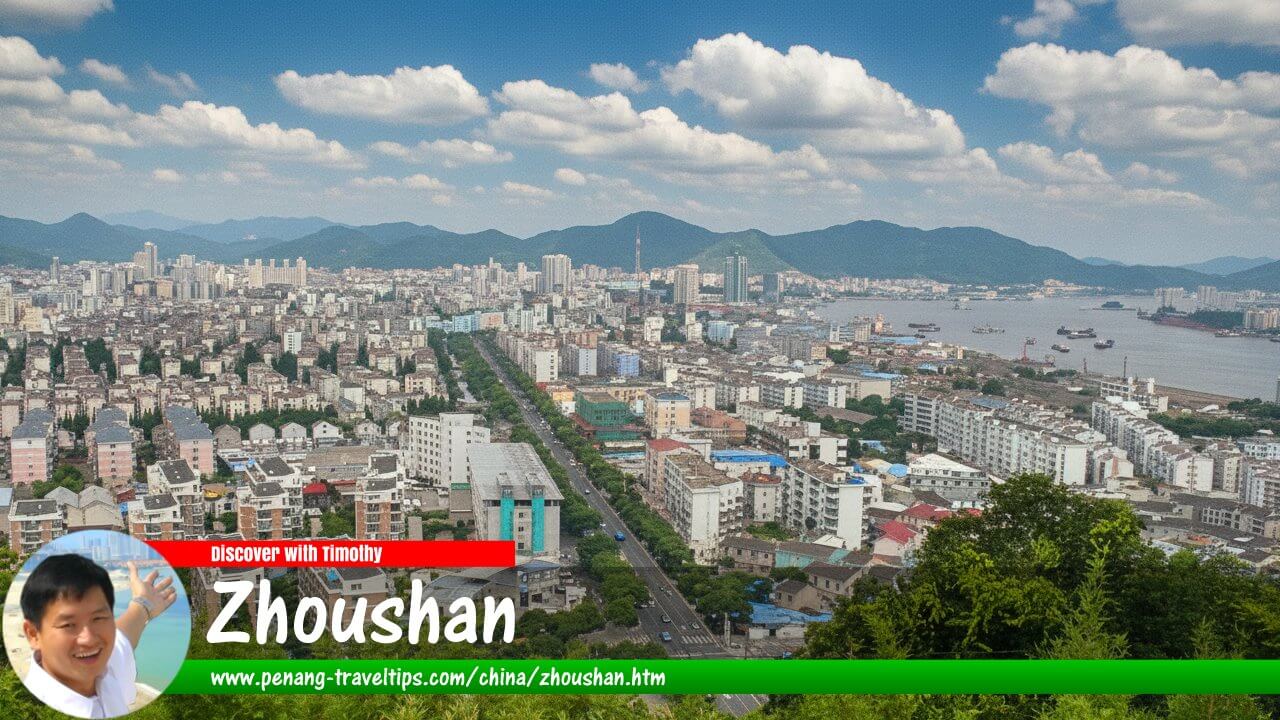 Zhoushan, China (Photo edited with AI on 18 June 2026)
Zhoushan (舟山; Zhōushān) is a prefecture-level city in northeastern Zhejiang Province, China. Located in the East China Sea south of the Yangtze River estuary, it is the only prefecture-level city in China consisting entirely of islands. The city comprises a vast archipelago of more than a thousand islands and is renowned for its maritime culture, fishing industry, Buddhist heritage, and strategic port facilities. Zhoushan occupies an important position in China's coastal economy and serves as a gateway between the mainland and the East China Sea. The name "Zhoushan" literally means "Boat Mountain" or "Ship Mountain," derived from the Chinese characters 舟 (boat) and 山 (mountain), reflecting the region's long association with maritime navigation and its hilly island landscape.1
Quick Facts
- Chinese Name: 舟山
- Pinyin: Zhōushān
- Province: Zhejiang
- Administrative Status: Prefecture-level city
- Location: East China Sea, northeastern Zhejiang
- Area: Approximately 22,200 square kilometres (including sea area)
- Population: About 1.1 million
- Famous For: Archipelago, fishing industry, Buddhist heritage, ports
- Main Island: Zhoushan Island
- Major Attraction: Mount Putuo
- Airport: Zhoushan Putuoshan Airport
- Climate: Humid subtropical climate
Name and Etymology
The English name of the city is Zhoushan, derived directly from the Mandarin pronunciation of the Chinese name 舟山 (Zhōushān). Historically, the area was known by various names linked to its maritime location and island settlements. The character zhou (舟) means "boat" or "ship," while shan (山) means "mountain." Together, the name evokes the image of mountainous islands rising from the sea like ships.
The name reflects both the city's geography and its centuries-old dependence on maritime activities. Fishing, shipbuilding, trade, and navigation have shaped the identity of Zhoushan since ancient times. The city's location at the intersection of important sea routes contributed to its development as one of China's major maritime centres.2
Geography
Zhoushan is situated off the northeastern coast of Zhejiang Province in eastern China. It lies across Hangzhou Bay from Shanghai and Ningbo and forms part of the larger Yangtze River Delta economic region. The municipality consists of approximately 1,390 islands and more than 3,000 reefs, making it China's largest archipelago.
The largest island is Zhoushan Island itself, which contains much of the city's population and urban development. Other important islands include Putuo Mountain, Daishan Island, Shengsi Islands, and several smaller inhabited islands. Bridges connect many of the major islands to the mainland through the impressive Zhoushan-Ningbo Bridge network.
The terrain is generally hilly, with low mountains and coastal plains. Numerous bays, harbours, and natural anchorages provide ideal conditions for fishing and shipping activities. The coastline is highly indented, creating many scenic coves and beaches.
Zhoushan experiences a humid subtropical climate characterized by mild winters and warm, humid summers. The surrounding sea moderates temperatures throughout the year. Annual rainfall is abundant, and the region occasionally experiences typhoons during the summer and autumn months.3
Languages and Dialects
Mandarin Chinese is the official language used in government, education, and public administration throughout Zhoushan. However, local residents commonly speak varieties of the Wu Chinese language family.
The principal local dialect is the Zhoushan dialect, which belongs to the Taihu subgroup of Wu Chinese. It shares similarities with dialects spoken in nearby Ningbo and Shanghai but possesses distinctive vocabulary and pronunciation shaped by centuries of relative island isolation.
In addition to the Zhoushan dialect, some communities speak dialects influenced by migrants from other parts of Zhejiang Province. Due to increasing mobility and tourism, Standard Mandarin has become more widely used, especially among younger generations and business professionals.
History
Human settlement in the Zhoushan archipelago dates back thousands of years. Archaeological discoveries indicate that fishing communities inhabited the islands during prehistoric times. The area's strategic location along coastal trade routes contributed to its early development.
During the Tang Dynasty (618–907), Zhoushan emerged as an important maritime trading centre. Merchant vessels traveling between northern and southern China frequently stopped in the islands' natural harbours. Trade with neighbouring countries such as Japan and Korea also increased during this period.
The Song Dynasty (960–1279) witnessed significant growth in maritime commerce. Zhoushan became closely connected with the flourishing port economy of eastern China. Fishing industries expanded, and coastal settlements prospered.
During the Yuan and Ming dynasties, the islands played a role in China's maritime defence system. The government established military garrisons to protect coastal waters from piracy and foreign incursions. Zhoushan's strategic importance continued to increase as maritime trade expanded.
In the nineteenth century, the archipelago gained international significance during the Opium Wars. British forces occupied parts of the islands because of their strategic position near major shipping routes. Following various treaties and political developments, the islands eventually returned fully to Chinese administration.
After the establishment of the People's Republic of China in 1949, Zhoushan underwent extensive modernization. Fishing fleets expanded, transportation infrastructure improved, and port facilities grew substantially. The construction of bridges linking the islands to the mainland transformed accessibility and accelerated economic development.
In recent decades, Zhoushan has become a key component of China's maritime strategy and economic planning. The establishment of the Zhoushan Archipelago New Area in 2011 further strengthened its role as a centre for shipping, logistics, fisheries, and marine industries.4
Economy and Products
The economy of Zhoushan is closely tied to the sea. Fishing remains one of the city's most important traditional industries, and Zhoushan is often regarded as one of China's leading fishing centres. Local fishermen harvest a wide variety of seafood, including fish, shrimp, crab, squid, and shellfish.
Marine processing industries play a significant role in the local economy. Seafood products from Zhoushan are distributed throughout China and exported internationally. Dried seafood, fish products, and marine delicacies are particularly well known.
The city also possesses one of the world's busiest port systems. The nearby Ningbo-Zhoushan Port handles enormous volumes of cargo and ranks among the largest ports globally. Port operations, logistics services, ship repair, and maritime transportation contribute substantially to economic output.
Petrochemical industries, oil storage facilities, and energy infrastructure have expanded rapidly in recent years. Zhoushan's strategic location makes it an ideal hub for international shipping and fuel distribution.
Tourism represents another important economic sector. Religious pilgrims visit Mount Putuo throughout the year, while leisure travelers are attracted by beaches, island scenery, seafood cuisine, and coastal resorts.
Agriculture is limited by the islands' geography but includes vegetables, fruits, tea, and aquaculture products. Marine aquaculture, including fish farming and shellfish cultivation, has become increasingly important.5
How to Go There
By Air
Zhoushan Putuoshan Airport serves the city and is located on Zhujiajian Island, approximately 15 kilometres from downtown Dinghai District. The airport offers domestic flights connecting Zhoushan with major Chinese cities including Beijing, Shanghai, Guangzhou, Shenzhen, Xiamen, Chengdu, and Qingdao. Airlines operating there commonly include Air China, China Eastern Airlines, China Southern Airlines, XiamenAir, and several regional carriers.
By Rail
Zhoushan currently does not have a conventional railway station on the islands themselves. Travelers usually reach Ningbo by high-speed rail and then continue to Zhoushan via highway buses or private vehicles across the Zhoushan-Ningbo Bridge system. Future rail projects are expected to improve direct connectivity.
By Road
The Zhoushan-Ningbo Bridge network links the islands directly to mainland Zhejiang Province. Long-distance buses operate regularly from Shanghai, Hangzhou, Ningbo, Suzhou, and other cities in eastern China.
The main long-distance bus terminals are located in Dinghai District and Putuo District, providing convenient access to destinations throughout Zhejiang and neighbouring provinces.
By Ferry
Ferry services remain an important means of transportation. Passenger ferries connect various islands within the archipelago and provide routes to nearby coastal cities. Ferries are particularly useful for reaching smaller islands that are not connected by bridges.
How to Travel Locally
Zhoushan has a well-developed local transportation network serving its islands and urban districts.
- Taxis: Metered taxis are widely available in Dinghai, Putuo, and other urban areas.
- E-Hailing Services: Ride-hailing platforms such as Didi are commonly used and provide convenient transportation.
- Public Buses: Extensive bus routes connect districts, ports, tourist attractions, and residential areas.
- Island Ferries: Ferries are essential for travel between islands not connected by bridges.
- Tourist Shuttle Buses: Dedicated services operate to major attractions including Mount Putuo.
- Car Rental: Rental vehicles are available for travelers wishing to explore independently.
There is currently no subway, MRT, LRT, trishaw, rickshaw, or tuk-tuk system in Zhoushan. Most visitors rely on buses, taxis, ferries, and ride-hailing services.
Tourist Attractions
1. Mount Putuo (Putuoshan)
One of China's four sacred Buddhist mountains, Mount Putuo is the city's most famous attraction. It is associated with Guanyin, the Bodhisattva of Compassion, and contains numerous temples, monasteries, and sacred sites.
2. Puji Temple
The largest and most important temple on Mount Putuo, Puji Temple attracts pilgrims from across China and abroad. Its impressive architecture and tranquil surroundings make it a major cultural landmark.
3. Fayu Temple
Known for its elegant design and historical significance, Fayu Temple is another important Buddhist site featuring beautiful halls, gardens, and ancient relics.
4. Shengsi Islands
This scenic island group is famous for pristine beaches, fishing villages, dramatic cliffs, and opportunities for outdoor recreation. The islands are popular among photographers and nature enthusiasts.
5. Dongji Islands
Located at the eastern edge of the archipelago, the Dongji Islands offer spectacular ocean views, rugged coastlines, and a relatively untouched maritime environment.
6. Zhujiajian Island
Zhujiajian is known for its sandy beaches, coastal scenery, seafood restaurants, and cultural festivals. Nansha Beach is particularly popular during summer.
7. Dinghai Ancient City
The historic centre of Dinghai preserves traditional architecture, old streets, temples, and cultural heritage associated with Zhoushan's maritime past.
8. Nansha Scenic Area
This beach destination offers swimming, sunbathing, sand sculpture exhibitions, and recreational activities for visitors seeking a seaside holiday.
9. Baiquan Ancient Town
Baiquan features historic buildings, traditional local culture, and a glimpse into the everyday life of Zhoushan's island communities.
10. Zhoushan Museum
The museum showcases the history, culture, marine ecology, and economic development of the archipelago through exhibitions and educational displays.
Zhoushan, China is  the Map of Cities in China
References
- Encyclopaedia Britannica – Zhoushan
- China Daily – Zhoushan Historical Overview
- Travel China Guide – Zhoushan Travel Guide
- Zhejiang Provincial Government – Zhoushan Profile
- China.org.cn – Zhoushan Economy and Development
Page Details
This page was created/modified on 18 June 2026. Hi, my name is Timothy and created it from my research, for my own entertainment, knowledge and to satisfy my curiosity. I am providing the information to you in good faith and hope it is useful. I try to get the details as accurate as possible. I also try to update the page whenever I stumble on new details. So this and all my other pages are perpetual work in progress. If you discover any error, please politely inform me, pointing out where the error lies, and I will correct it as soon as possible. Your helpfulness will keep this page accurate, relevant and helpful to those who need the information.