
Huzhou, China
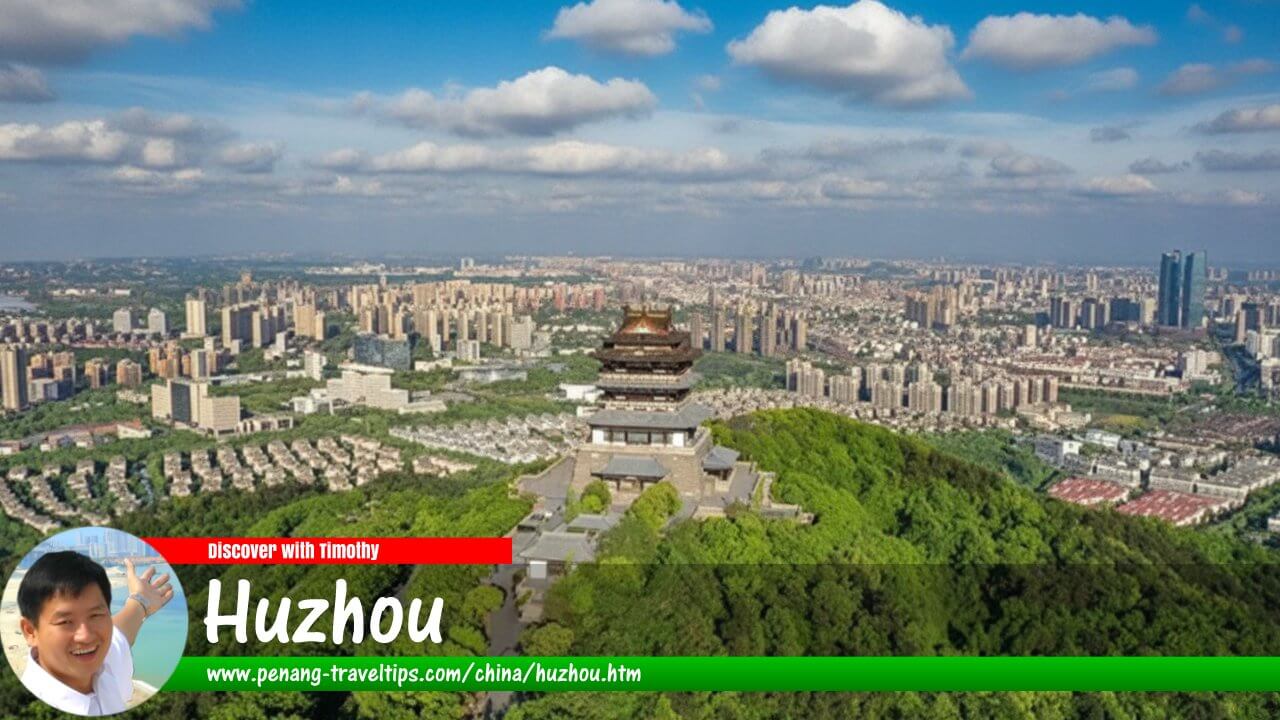 Huzhou, China (Photo edited with AI on 18 June 2026)
Huzhou (湖州; Húzhōu) is a prefecture-level city in northern Zhejiang Province, China. Situated on the southern shore of Taihu Lake and positioned between Hangzhou and Suzhou, Huzhou has long been an important center of commerce, culture, and transportation in eastern China.1 The city is renowned for its silk production, tea cultivation, picturesque waterways, and well-preserved historic towns. Its name literally means "Lake Prefecture," referring to its location beside the vast Taihu Lake, one of China's largest freshwater lakes.2 For centuries, Huzhou prospered through agriculture, silk weaving, and trade along the Grand Canal, and today it remains one of Zhejiang's most economically developed cities.
Quick Facts
- English Name: Huzhou
- Chinese Name: 湖州
- Pinyin: Húzhōu
- Province: Zhejiang
- Location: Northern Zhejiang Province, China
- Population: Approximately 3.4 million
- Area: About 5,820 square kilometers
- Famous For: Silk, tea, Taihu Lake, ancient towns
- Main Waterway: Taihu Lake
- Climate: Humid subtropical
- Major Industries: Silk, textiles, manufacturing, renewable energy
- Nearest Airport: Hangzhou Xiaoshan International Airport
Name and Origin
The name Huzhou consists of two Chinese characters: Hu (湖), meaning "lake," and Zhou (州), meaning "prefecture" or administrative region. The name therefore translates as "Lake Prefecture," reflecting the city's close relationship with Taihu Lake, which has shaped its geography, economy, and culture for centuries.2
Historically, the region was known by other names during different dynasties. The name Huzhou became established during imperial times when administrative reforms organized territories around major geographical features. The lake provided abundant fish, fertile land, and transportation routes that supported the development of settlements throughout the region.
Geography
Huzhou occupies the northern part of Zhejiang Province and borders Jiangsu Province to the north and Anhui Province to the west. It lies approximately 90 kilometers north of Hangzhou and around 150 kilometers west of Shanghai. This strategic location places Huzhou within the economically dynamic Yangtze River Delta region.3
The city's terrain varies considerably. The eastern and northern portions are characterized by low-lying plains and waterways connected to Taihu Lake, while the western and southwestern areas become increasingly mountainous. The Tianmu Mountains extend into western Huzhou and contribute to the area's scenic beauty and biodiversity.
Taihu Lake dominates the northern landscape. Covering more than 2,200 square kilometers, it is China's third-largest freshwater lake and plays a crucial role in local agriculture, fisheries, tourism, and water supply. Numerous rivers, canals, and streams connect Huzhou to neighboring cities and the historic Grand Canal system.
Huzhou experiences a humid subtropical climate with four distinct seasons. Summers are hot and humid, while winters are cool and relatively mild. Annual rainfall is abundant, supporting rice cultivation, tea plantations, and lush vegetation throughout the region.
Languages and Dialects
Mandarin Chinese is the official language used in government, education, and public administration. However, many residents also speak local varieties of the Wu Chinese language family.4
The primary local dialect is the Huzhou dialect, which belongs to the Taihu branch of Wu Chinese. This dialect shares linguistic characteristics with the dialects spoken in nearby cities such as Suzhou, Jiaxing, and Shanghai. Wu dialects are known for their rich tonal systems and significant differences from standard Mandarin.
In rural areas and among older generations, local dialects remain widely used in daily life. Younger residents are generally bilingual in both Mandarin and local Wu speech due to education and media exposure.
History
Human settlement in the Huzhou area dates back thousands of years. Archaeological discoveries indicate that prehistoric communities inhabited the region due to its fertile soil, plentiful water resources, and favorable climate.5
During the Spring and Autumn Period (771–476 BCE), the area was associated with the ancient State of Wu and later the State of Yue. These kingdoms competed for dominance in southeastern China and contributed to the cultural foundations of the region.
Under the Qin and Han dynasties, Huzhou became integrated into the imperial administrative system. Improved transportation and agricultural development encouraged population growth and economic expansion.
The construction and expansion of the Grand Canal during the Sui and Tang dynasties transformed Huzhou into a significant commercial center. Goods, including silk, tea, grain, and ceramics, could be transported efficiently between northern and southern China.6
Huzhou reached particular prominence during the Song Dynasty. Its silk industry became famous throughout China, and local scholars contributed significantly to literature, philosophy, and education. Wealth generated by commerce led to the construction of temples, gardens, bridges, and cultural institutions.
During the Ming and Qing dynasties, Huzhou remained one of the wealthiest regions in the lower Yangtze basin. Merchants and landowners invested heavily in silk production, creating a prosperous economy that attracted traders from across the country.
In the twentieth century, Huzhou experienced political upheavals, war, and modernization. Following the establishment of the People's Republic of China in 1949, industrialization accelerated. Economic reforms initiated in the late twentieth century further transformed Huzhou into an important manufacturing and technology center.
Economy and Products
Huzhou possesses one of the strongest economies in Zhejiang Province. Its economy combines traditional industries with advanced manufacturing, technology, environmental services, and modern logistics.7
Silk Production
Huzhou is often regarded as one of China's historic silk capitals. The region's favorable climate supports mulberry cultivation and silkworm breeding. Huzhou silk has been prized for centuries due to its quality and craftsmanship.
Tea Cultivation
The city produces high-quality green teas, including varieties grown in the mountainous western districts. Tea cultivation remains an important agricultural activity and contributes to tourism.
Manufacturing
Modern industries include textiles, machinery, electronics, building materials, household appliances, and precision equipment. Industrial parks throughout Huzhou attract domestic and international investment.
Renewable Energy
In recent years, Huzhou has become a leader in green development. Renewable energy projects, electric vehicle components, and environmentally sustainable technologies play increasing roles in the local economy.
Tourism
Tourism contributes significantly to local income. Visitors are drawn by ancient towns, lake scenery, cultural heritage sites, tea plantations, and ecological attractions.
How to Go There
By Air
Huzhou does not currently have a major commercial airport serving large numbers of passenger flights. Most visitors arrive through Hangzhou Xiaoshan International Airport, located approximately 90 kilometers south of downtown Huzhou.8
The airport offers flights operated by Air China, China Eastern Airlines, China Southern Airlines, Hainan Airlines, XiamenAir, and numerous international carriers. Destinations include major Chinese cities such as Beijing, Shanghai, Guangzhou, Shenzhen, Chengdu, and Xi'an, as well as international destinations throughout Asia and beyond.
Travel between the airport and Huzhou is possible by high-speed rail, intercity bus, taxi, or private transfer.
By Train
Huzhou is well connected to China's high-speed railway network. The main railway stations include:
- Huzhou Railway Station – Main high-speed rail station serving routes to Hangzhou, Shanghai, Nanjing, Beijing, and other major cities.
- Deqing Railway Station – Serving nearby Deqing County and the Moganshan area.
- Changxing Railway Station – Providing additional regional connections.
High-speed rail services make Huzhou easily accessible from major cities in the Yangtze River Delta.
By Long-Distance Bus
Several long-distance bus terminals operate within the city. These terminals provide services to neighboring Zhejiang cities as well as destinations in Jiangsu, Anhui, Shanghai, and other provinces.
How to Travel Locally
Huzhou has a modern transportation system that makes local travel convenient.
Taxis
Taxis are widely available throughout the city. They are relatively affordable and can be hailed on the street or booked through mobile applications.
E-Hailing Services
Ride-hailing platforms such as Didi are commonly used. International visitors often find these services convenient for navigating the city.
Public Buses
An extensive bus network connects urban districts, residential neighborhoods, railway stations, and tourist attractions.
Metro and Rail Transit
Huzhou does not currently operate a full metro, MRT, or subway system. However, urban transit planning continues to evolve as the city grows.
Bicycles and Shared Mobility
Shared bicycles and electric bicycles are popular and environmentally friendly transportation options. Dedicated cycling paths exist in many areas.
Rickshaws and Tuk-Tuks
Traditional rickshaws and tuk-tuks are generally not part of the city's modern transportation system.
Tourist Attractions
Moganshan
Moganshan is one of China's most famous mountain resorts. Known for bamboo forests, cool summer temperatures, and historic villas, it has attracted visitors for more than a century.9
Nanxun Ancient Town
Nanxun Ancient Town is a beautifully preserved water town featuring canals, stone bridges, traditional residences, and gardens. It reflects the wealth generated by silk merchants during the Qing Dynasty.
Taihu Lake Scenic Area
The Taihu Lake shoreline offers scenic views, recreational facilities, walking trails, and opportunities to experience local fishing culture.
Feiying Pagoda
Feiying Pagoda is one of Huzhou's most famous historic landmarks. The unique structure consists of an inner pagoda enclosed by an outer pagoda and dates back many centuries.
Lotus Garden
This historic garden showcases classical Chinese landscaping, pavilions, ponds, and seasonal flowers. It provides a peaceful retreat within the urban environment.
Ancient Gingko Corridor
Located in Changxing County, this scenic area features centuries-old gingko trees that create spectacular golden landscapes during autumn.
China Huzhou Silk Museum
The museum explores the history, techniques, and economic significance of silk production in Huzhou and the surrounding region.
Xisai Mountain Scenic Area
This scenic area combines natural beauty with cultural heritage, offering hiking trails, viewpoints, temples, and historical sites.
Deqing and Moganshan Villages
Picturesque villages surrounding Moganshan provide opportunities to experience rural Zhejiang culture, traditional architecture, and local cuisine.
Huzhou, China is  the Map of Cities in China
References
- Encyclopaedia Britannica – Huzhou
- Wikipedia – Huzhou
- Zhejiang Provincial Government
- Encyclopaedia Britannica – Wu Language
- China Daily – Huzhou History and Culture
- UNESCO World Heritage Centre – Grand Canal
- Huzhou Municipal Government
- Hangzhou Xiaoshan International Airport
- Moganshan Tourism Information
Page Details
This page was created/modified on 18 June 2026. Hi, my name is Timothy and created it from my research, for my own entertainment, knowledge and to satisfy my curiosity. I am providing the information to you in good faith and hope it is useful. I try to get the details as accurate as possible. I also try to update the page whenever I stumble on new details. So this and all my other pages are perpetual work in progress. If you discover any error, please politely inform me, pointing out where the error lies, and I will correct it as soon as possible. Your helpfulness will keep this page accurate, relevant and helpful to those who need the information.