
Bertam, Seberang Perai
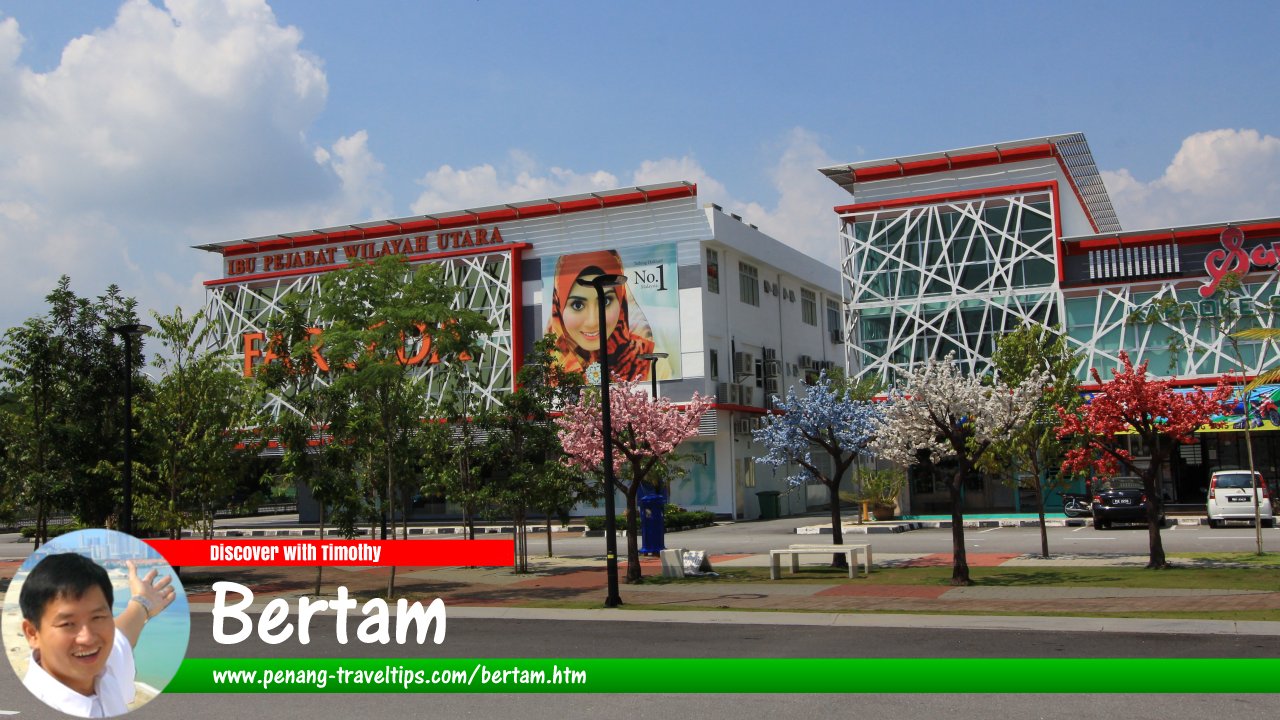 Bertam, Seberang Perai (22 July 2015)
Bertam is a prominent and fast-developing township located in the northern part of Seberang Perai, Penang, Malaysia. Once a largely agricultural area dotted with villages and plantations, Bertam has transformed into one of northern Seberang Perai’s key growth centres. Today, it is recognised for its educational institutions, modern residential developments, and strategic connectivity, positioning it as an important urban node within Seberang Perai Utara1.
Quick Facts
Location: Northern Seberang Perai, Penang, Malaysia
District: Seberang Perai Utara
Administrative Authority: Seberang Perai City Council (MBSP)
Character: Emerging township and suburban growth area
Known for: Education hubs, new townships, highway accessibility
Connectivity: Near North–South Expressway and major arterial roads
Geographical Setting
Bertam is situated on relatively flat lowland terrain typical of northern Seberang Perai. Historically dominated by agricultural land, particularly oil palm estates and smallholdings, the area’s geography has made it suitable for large-scale planned development. Drainage canals and small waterways traverse the landscape, reflecting its origins as plantation and farming land2.
The township benefits from its inland location, which reduces exposure to coastal flooding while remaining close to important transport corridors. Its proximity to neighbouring towns such as Kepala Batas, Tasek Gelugor, and Sungai Dua places Bertam at the centre of a growing northern Seberang Perai urban cluster.
Historical Background
Before urban development began, Bertam was primarily a rural area characterised by estates, kampung settlements, and agricultural activities. The name “Bertam” is believed to be derived from the bertam palm, a native plant that once grew abundantly in the area. Early communities relied on farming and estate-related employment for their livelihoods3.
For much of the 20th century, Bertam remained relatively quiet compared to Butterworth and other parts of Seberang Perai. This began to change toward the late 20th and early 21st centuries, when regional planning initiatives identified northern Seberang Perai as a future growth corridor.
Planned Development and Urban Growth
The transformation of Bertam accelerated with the introduction of planned townships and institutional developments. Purpose-built residential areas, commercial centres, and public facilities began to replace plantations, reshaping the physical and social landscape. This shift marked Bertam’s transition from a rural hinterland into a modern suburban environment4.
Unlike organic town growth seen in older settlements, Bertam’s development has largely followed a master-planned approach. Wide roads, designated commercial zones, and integrated amenities reflect contemporary urban planning principles aimed at supporting long-term population growth.
Education as a Key Anchor
One of Bertam’s defining characteristics is its role as an education hub for northern Seberang Perai. The presence of higher education institutions has attracted students, educators, and supporting services, contributing significantly to local economic activity and demographic diversity.
Educational facilities have also spurred the development of rental housing, retail outlets, and food services, creating a dynamic township environment. This educational focus distinguishes Bertam from nearby towns that remain more agriculturally or administratively oriented5.
Residential and Commercial Landscape
Bertam’s residential landscape includes a mix of landed housing, apartments, and gated communities designed to cater to a growing middle-income population. New townships offer modern amenities such as parks, community facilities, and neighbourhood retail areas, enhancing overall liveability.
Commercial development has expanded alongside residential growth. Shoplots, supermarkets, and service-based businesses form emerging commercial nodes that serve both Bertam residents and surrounding communities. These developments reduce dependence on older urban centres for daily needs.
Transport and Connectivity
Strategic connectivity has been a major factor in Bertam’s growth. The township is located close to the North–South Expressway, providing efficient access to Butterworth, Penang Island, and other parts of Peninsular Malaysia. Major arterial roads further enhance regional connectivity6.
Private vehicles are the dominant mode of transport, though ongoing infrastructure improvements aim to improve traffic flow and safety. The emphasis on road connectivity reflects Bertam’s role as a suburban township designed around regional mobility.
Community and Lifestyle
The population of Bertam is relatively young and diverse, shaped by migration from other parts of Penang and neighbouring states. This demographic mix has contributed to a more varied lifestyle compared to traditional towns in northern Seberang Perai.
Community life is centred on residential neighbourhoods, educational campuses, and commercial areas. While modern lifestyles dominate, pockets of older villages and long-established communities remain, preserving links to the area’s rural past.
Economic Role within Seberang Perai Utara
Bertam plays an increasingly important economic role within Seberang Perai Utara as a growth engine complementing older towns such as Kepala Batas and Tasek Gelugor. Its expanding population supports demand for services, retail, education, and employment opportunities.
The township also contributes to regional balance by absorbing population growth that might otherwise concentrate in Butterworth or central Seberang Perai. This decentralisation supports more even development across the mainland7.
Environmental and Planning Considerations
Rapid development in Bertam has raised important environmental and planning considerations. Managing drainage, preserving green spaces, and ensuring sustainable land use are key priorities given the area’s low-lying terrain and history of agricultural use.
Urban planners face the challenge of balancing growth with environmental resilience, particularly in the context of climate change and increasing rainfall intensity. Incorporating parks, retention ponds, and landscaped buffers has become an integral part of new developments.
Relationship with Surrounding Areas
Bertam’s growth has influenced nearby towns and villages, creating new economic linkages and commuting patterns. Residents from surrounding areas travel to Bertam for education, shopping, and services, while Bertam residents rely on older towns for cultural and administrative functions.
This interdependence highlights Bertam’s role as part of a broader northern Seberang Perai urban network rather than an isolated township.
Future Outlook
Looking ahead, Bertam is expected to continue evolving as one of northern Seberang Perai’s most significant growth areas. Planned expansions, infrastructure upgrades, and population inflows are likely to further strengthen its position as a modern township.
The long-term challenge for Bertam will be to maintain quality of life amid rapid change. Ensuring adequate public facilities, environmental sustainability, and community cohesion will be essential as the township matures into a permanent urban centre within Penang.
Map of Bertam, Seberang Perai, Penang
Sights in Bertam
- Bertam Resort
 (GPS: 5.52052, 100.45308)
- Bertam Souq & Waterpark (GPS: 5.519, 100.45314)

- Bertam Walk (GPS: 5.51544, 100.4474)

- Hotel Kamelia (GPS: 5.51744, 100.4513)

- KFC Bertam Drive Thru (GPS: 5.51719, 100.44422)

- Lotus's Bertam Perdana (GPS: 5.51694, 100.44305)

- Penang Technology Park (GPS: 5.52747, 100.48798)

- Sunshine Bertam Shopping Mall (GPS: 5.51618, 100.45021)

References
- Seberang Perai City Council (MBSP)
- Penang Institute – Urban and Regional Studies
- Official Portal of the Penang State Government
- Federal Department of Town and Country Planning Malaysia
- Ministry of Higher Education Malaysia
- Ministry of Transport Malaysia
- Economic Planning Unit Malaysia
Page Details
This page was created on 2 January 2026.Want to share your Penang travel experiences or get tips from fellow travellers?
Join the Penang Travel Tips Facebook GroupUseful guides for visiting Penang
My Videos of Penang
 Latest Pages & Updates
Buy Me A Coffee
If you enjoy the information I provide and want to support the work I do, please buy me a coffee! I appreciate it immensely, thank you so much!
