
Jalan Penanti, Kubang Semang
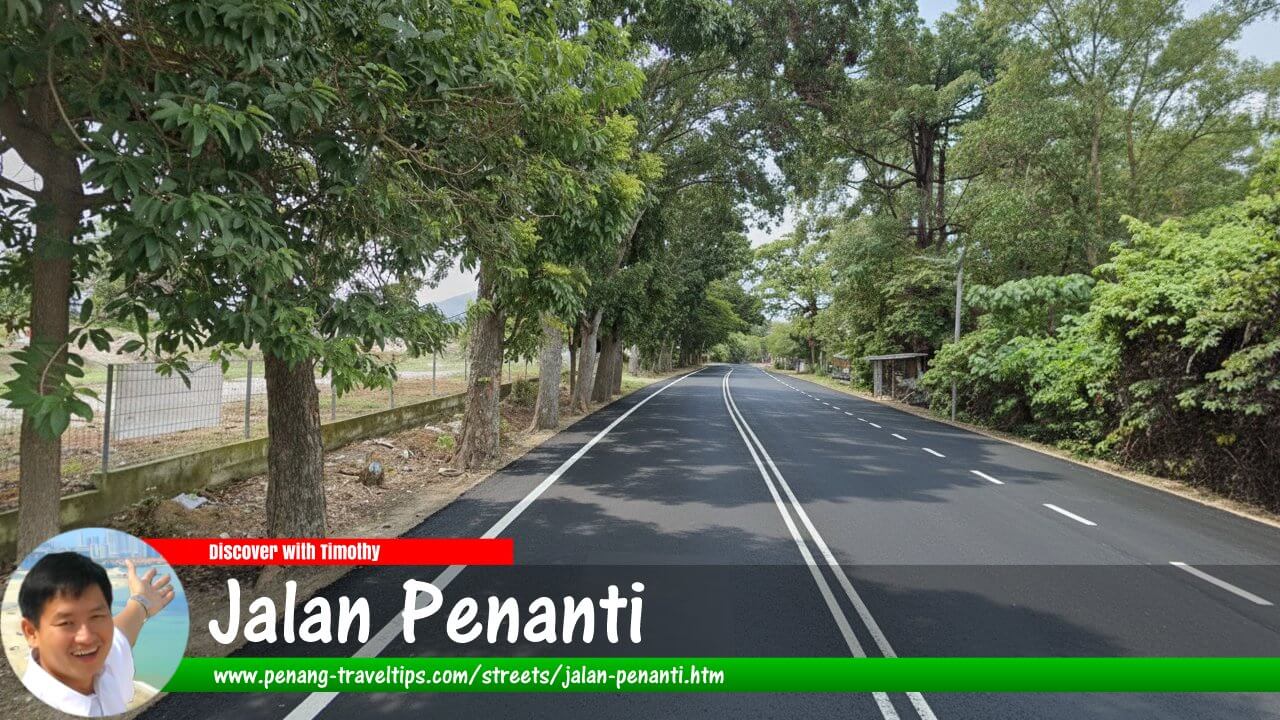 Jalan Penanti, Kubang Semang (AI-edited photograph on 2 January 2026)
Jalan Penanti is a significant rural connector road in Kubang Semang, Seberang Perai Tengah, Penang. Forming part of State Route P123, the road stretches for approximately 6.38 kilometres, linking the Padang Menora area in the north with Penanti in the south. It plays an important role in connecting several traditional villages and agricultural areas, supporting daily mobility, local commerce, and community life in this largely rural part of Penang.1
Quick Facts
- Road name: Jalan Penanti
- Location: Kubang Semang, Seberang Perai Tengah, Penang
- Route number: State Route P123
- Approximate length: 6.38 km
- Northern terminus: Jalan Lahar Yooi, Padang Menora
- Southern terminus: Penanti
- Areas served: Padang Ibu, Guar Petai, Guar Perahu, Kampung Pelet
- Primary role: Rural and village connector
Geographical Context
Jalan Penanti is situated within the heart of Seberang Perai Tengah, an area characterised by flat lowland terrain and long-established agricultural activity. The road runs through landscapes dominated by paddy fields, village houses, small plantations, and patches of undeveloped land, reflecting the rural identity of Kubang Semang and its surrounding localities.2
This geographical setting has shaped the function of Jalan Penanti as a practical and essential route rather than a high-speed thoroughfare. Its alignment prioritises access to villages and farmland, reinforcing its importance to local residents and small-scale economic activities.2
Route Alignment and Termini
The northern end of Jalan Penanti begins at Jalan Lahar Yooi in the Padang Menora area. This junction connects the road to a wider network of state and local roads serving Kubang Semang and neighbouring districts, allowing residents to travel toward larger towns and service centres.3
From Padang Menora, Jalan Penanti runs generally southward before reaching its southern terminus in Penanti. This end of the road provides access to village centres, religious institutions, schools, and local amenities that serve the surrounding rural population.3
Villages and Areas Along the Road
Padang Ibu
One of the first rural areas encountered along Jalan Penanti is Padang Ibu. This area is marked by traditional village housing and nearby agricultural plots, with the road serving as the main access route for residents to reach neighbouring villages and essential services.2
Guar Petai
Further along the route lies Guar Petai, a village area closely associated with paddy cultivation. Jalan Penanti supports the movement of farming equipment and produce, making it an important link between fields, homes, and local markets.2
Guar Perahu
Guar Perahu is another settlement served by Jalan Penanti. The road passes near residential clusters and open land, highlighting its role as a shared space for both vehicular movement and everyday village life.2
Kampung Pelet
Near the southern stretch, Jalan Penanti serves Kampung Pelet, a traditional village where the road acts as the primary access corridor. Daily activities such as commuting to work, attending school, and visiting nearby towns depend heavily on this route.2
Role within State Route P123
As part of State Route P123, Jalan Penanti contributes to Penang’s secondary road system, which complements major highways and arterial roads. These state routes are designed to ensure reliable connectivity within districts and to link rural communities with urban centres.1
P123 is particularly important in northern and central Seberang Perai, where it connects multiple rural roads and settlements. Jalan Penanti represents one of the longer rural segments within this route, underlining its significance to local transport patterns.1
Physical Characteristics
Jalan Penanti is generally a two-lane undivided road, suitable for light to moderate traffic. The carriageway accommodates motorcycles, private cars, and small commercial vehicles commonly used by villagers and local traders.4
Roadside features include open drains, grass verges, and occasional trees that provide shade. In many sections, houses and small shops are set close to the road, reflecting its function as both a transport route and a social space within villages.4
Traffic and Usage Patterns
Traffic volumes on Jalan Penanti are typically light to moderate, with peak usage occurring during morning and late afternoon hours. These peaks correspond with school times, work commutes, and agricultural activities.3
Motorcycles are a common sight, reflecting their affordability and practicality in rural Penang. Despite its rural nature, the road remains an essential daily route for many residents who rely on it for access to education, healthcare, and employment opportunities.3
Economic and Social Importance
Jalan Penanti plays a crucial role in sustaining the rural economy of Kubang Semang. By linking farming communities with larger roads and markets, it facilitates the movement of agricultural produce and supplies, supporting livelihoods that remain closely tied to the land.1
Socially, the road functions as a shared community asset. It connects families, enables access to mosques and schools, and supports social interactions that define village life in this part of Penang.1
Historical Development
The alignment of Jalan Penanti likely evolved from older village paths that linked early settlements and farming areas. Over time, these paths were upgraded and formalised to meet growing transport needs, eventually becoming part of the state road network.4
Its designation as part of State Route P123 reflects broader infrastructure planning aimed at improving rural accessibility while preserving the character and function of traditional villages.4
Future Outlook
Looking ahead, Jalan Penanti is expected to continue serving as a vital rural connector. Future improvements are likely to focus on maintenance, drainage, and safety enhancements rather than large-scale expansion, ensuring the road remains suitable for local needs.4
As development pressures gradually reach parts of Kubang Semang, Jalan Penanti will remain an important link that balances improved connectivity with the preservation of rural landscapes and community life.4
Jalan Penanti on the Map of Roads in Penang
References
- Roads in Penang – Wikipedia
- Kubang Semang – Wikipedia
- Seberang Perai Tengah – Wikipedia
- Public Works Department of Malaysia
Page Details
This page was created on 2 January 2026. Hi, my name is Timothy and created it from my research, for my own entertainment, knowledge and to satisfy my curiosity. I am providing the information to you in good faith and hope it is useful. I try to get the details as accurate as possible. I also try to update the page whenever I stumble on new details. So this and all my other pages are perpetual work in progress. If you discover any error, please politely inform me, pointing out where the error lies, and I will correct it as soon as possible. Your helpfulness will keep this page accurate, relevant and helpful to those who need the information.Want to share your Penang travel experiences or get tips from fellow travellers?
Join the Penang Travel Tips Facebook GroupUseful guides for visiting Penang
My Videos of Penang
 Latest Pages & Updates
Buy Me A Coffee
If you enjoy the information I provide and want to support the work I do, please buy me a coffee! I appreciate it immensely, thank you so much!
