
Penang Museum @ Macalister
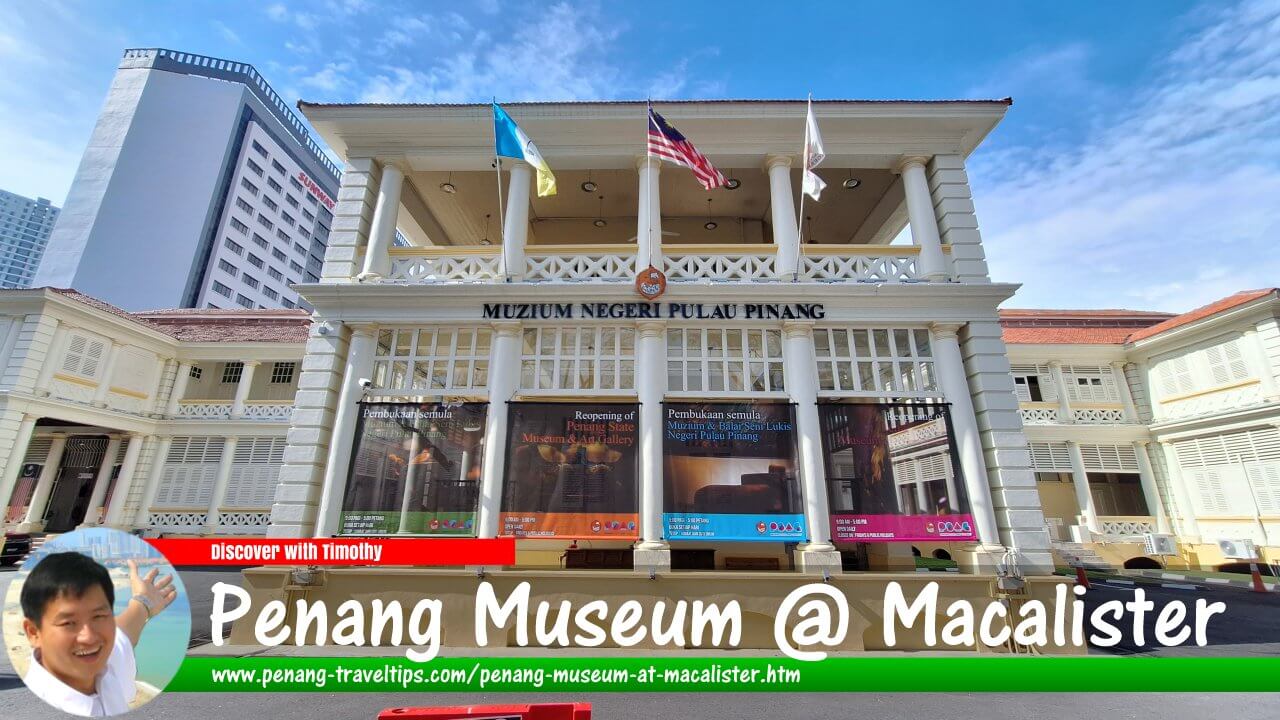 Penang Museum @ Macalister, Penang (12 November 2026)

Also Available: Penang Museum @ Macalister (Edisi Melayu) & 槟城州立博物馆
Penang Museum @ Macalister is a branch of the Penang State Museum and Art Gallery, located at No. 57, Jalan Macalister, in George Town, Penang. It occupies the historic premises of the former King Edward VII Memorial Maternity Hospital, a building inaugurated in 1915. Following a period of closure and restoration, the museum reopened to the public in October 2026, with galleries devoted to Penang's cultural heritage, historical paintings, contemporary art and transportation history.1,2
Quick Facts
- Name: Penang Museum @ Macalister
- Institution: Penang State Museum and Art Gallery
- Address: 57, Jalan Macalister, 10400 George Town, Penang
- GPS Coordinates: 5.415195, 100.325525
- Former Use: King Edward VII Memorial Maternity Hospital
- Hospital Inauguration: 13 September 1915
- First Museum Operation: April 2011
- Reopening: 22 October 2026
- Operating Hours: Saturdays to Thursdays, 9:00am–5:00pm
- Closed: Fridays and public holidays
- Admission: Free until 30 November 2026. Visitors should check with the museum for admission arrangements from 1 December 2026 onwards.
- Telephone: +604-226 1461
Location and Geography
Penang Museum @ Macalister is situated along Jalan Macalister, one of the principal roads in central George Town. The road extends between the KOMTAR area and the western part of the city, passing through a mixture of commercial premises, residential buildings, institutions and historic properties.
The museum is within the wider urban area of George Town and is accessible from several of the city's main roads. It is not far from KOMTAR, Penang Times Square and the commercial district around Jalan Burma. Its location makes it possible to combine a visit to the museum with other attractions and facilities in central George Town.
The museum grounds contain the original historic building as well as a separate, modern Automotive Gallery at the rear. Two preserved coaches from different generations of the Penang Hill Railway are displayed outdoors within the compound.
Origin of the Name Macalister
Jalan Macalister takes its name from Colonel Norman Macalister, a Scottish military officer and colonial administrator who served as Governor of Prince of Wales Island, the former name of Penang Island, during the early nineteenth century. The road is one of several streets in George Town named after individuals associated with the island's colonial administration.3
History of the Building
King Edward VII Memorial Maternity Hospital
The history of the site dates to 5 February 1912, when the land was transferred to William Evans, the Resident Councillor, and William Peel, President of the Municipal Commissioners, who acted as trustees. The purchase was funded through the King Edward Memorial Fund, which received fees and donations from the people of Penang.
The proposal to establish a maternity hospital in Penang had been announced in the Straits Echo on 12 November 1908. The hospital was intended to provide maternity and related medical services to the local population. It was operated by the Penang Municipal Council and had 50 beds when it first opened.
The King Edward VII Memorial Maternity Hospital was officially inaugurated on 13 September 1915 by A. T. Bryant, the Resident Councillor of Penang. Dr. George W. Park served as its first obstetric medical officer, while Ms Macdonald was appointed head nurse. The hospital was an important institution in the development of maternity care in Penang during the early twentieth century.1
War and Changes in Use
During the Japanese occupation of Penang from 1941 to 1945, the hospital premises were used as a naval facility. After the war, the British administration used the buildings as barracks and administrative offices. The premises subsequently returned to maternity services, with the hospital providing an expanded number of beds.
In 1955, maternity services were transferred to new premises at Residency Road, near the Penang General Hospital. The former hospital building was subsequently used by organisations including St. John Ambulance and the Red Crescent Society. It also served as a training centre and a base for non-profit organisations during the following decades.1
Conversion into a Museum
The Penang Island Municipal Council Board of Trustees decided on 18 September 2010 to expand the Penang State Museum's exhibition facilities by making use of the former hospital premises. The additional space allowed the museum to display more material relating to the history, arts and cultural heritage of Penang.
The Macalister premises began operating as a museum branch in April 2011, coinciding with the 46th anniversary celebrations of the Penang State Museum and Art Gallery, held from 14 to 17 April that year. The main branch of the Penang State Museum continued to operate at Farquhar Street, while the Macalister premises provided additional exhibition space.
Closure and Reopening in 2026
The Macalister museum branch closed around 2020 for repair and upgrading works. The premises remained closed for approximately six years. The restoration programme included repairs to the roof, improvements to the electrical wiring, repainting and improvements to the exhibition facilities.
The museum reopened to the public on 22 October 2026. The reopening marked the return of the historic building as a museum and exhibition venue, with displays covering Penang's cultural heritage, history and visual arts. Admission was announced as free until 30 November 2026.2,4
Galleries and Exhibitions
The museum's exhibition spaces cover several aspects of Penang's history and cultural development. The displays include traditional objects, household furnishings, costumes, handicrafts, historical paintings and works by local artists. The arrangement of individual exhibitions may change as new displays are introduced.
Malay Heritage Gallery
The Malay Heritage Gallery presents aspects of the traditional life and cultural practices of the Malay community in Penang. Its subject matter includes clothing, household furnishings, handicrafts and objects associated with everyday activities and customary practices.
The displays help illustrate the material culture of Malay communities and the traditions that have developed in the Malay Peninsula. They also provide an opportunity to understand the role of Malay society in the historical development of Penang.
Indian Muslim Heritage Gallery
The Indian Muslim Heritage Gallery focuses on the heritage of Penang's Indian Muslim community. The community has historical connections with migration and trade from the Indian subcontinent, including southern India and the Malabar Coast.
Indian Muslim traders and settlers contributed to the commercial and religious life of Penang. Their presence is reflected in the development of businesses, places of worship, food traditions and community institutions. The gallery provides an opportunity to explore the cultural identity and material heritage of this community, which has its own history and traditions within Penang's wider multicultural society.
Baba Nyonya Heritage Gallery
The Baba Nyonya Heritage Gallery introduces the distinctive culture of the Peranakan Chinese community. The terms Baba and Nyonya traditionally refer to men and women of the Peranakan community, whose culture developed through generations of interaction between Chinese settlers and the societies of the Malay Archipelago.
Among the interesting displays are traditional furnishings, clothing, decorative objects and household items associated with Peranakan family life. The gallery illustrates how Chinese cultural influences were adapted and combined with local customs, producing a distinctive Straits Chinese identity.
One of the notable exhibits is a traditional Peranakan bridal bed. Elaborately decorated matrimonial beds were important features of traditional Baba Nyonya wedding chambers. Their carved wooden frames, decorative details and textiles reflected the family's taste and social standing. The bridal bed also carried associations with marriage, family continuity and good fortune.
Nyonya beadwork is another distinctive part of this cultural tradition. Tiny glass beads were used to create elaborate patterns on footwear, accessories and other decorative items. One well-known example is kasut manek, the traditional beaded slippers worn with the Nyonya sarong kebaya.
Traditional Nyonya attire is also represented by garments such as the kebaya, a fitted blouse commonly worn with a batik sarong and fastened with decorative brooches known as kerongsang. The garments illustrate the development of Peranakan clothing and the influence of different cultural traditions on its design.
The gallery also displays colourful Peranakan porcelain, commonly known as nyonyaware. Such ceramics were used in household and ceremonial settings, including weddings and family occasions. Their colourful enamel decoration and motifs of flowers, birds and auspicious symbols are characteristic of many examples of this type of Chinese export and Straits Chinese porcelain.
Indian Heritage Gallery
The Indian Heritage Gallery presents aspects of the history and cultural traditions of Penang's Indian communities. Migration from the Indian subcontinent, particularly southern India, contributed to the growth of the Indian population in Penang during the colonial period.
Indian communities participated in a wide range of occupations, including trade, commerce, administration, construction and transport. Their cultural heritage is reflected in religious practices, clothing, domestic objects, music and other traditions. The Indian community is religiously diverse, comprising Hindus, Muslims, Christians and other groups.
The gallery provides a glimpse into the material culture and customs associated with these communities and their contribution to Penang's development.
Chinese Heritage Gallery
The Chinese Heritage Gallery explores the traditions and material culture of Penang's Chinese community. Chinese migration to Penang increased after the establishment of the British settlement in 1786, with many migrants arriving from southern China. The Hokkien, Teochew, Cantonese and Hakka communities became important parts of the island's social and commercial life.
The displays include traditional furnishings, decorative arts and objects associated with Chinese domestic life. Among the more unusual exhibits are small lotus shoes, traditionally worn by women whose feet had been bound. Foot binding was a historical practice that restricted the growth of the feet and caused lasting physical impairment. The embroidered shoes illustrate the relationship between footwear, social customs and ideals of beauty in certain periods of Chinese history.
Another exhibit is an opium bed, a specialised piece of furniture associated with the practice of opium smoking. Nearby displays include long opium pipes and a small object labelled as a jade pillow. Hard pillows made from materials such as ceramic, wood and stone were used in historical China, although the exact material, age and original use of the museum's particular pillow should be established from its catalogue information.
The gallery also contains examples of traditional Chinese decorative furniture. One notable type is mahogany furniture inlaid with mother-of-pearl, the iridescent inner layer of certain shells. Small pieces of shell were cut and fitted into the wooden surface to create decorative patterns, often depicting flowers, birds and foliage.
An elaborately carved and gilded decorative panel is another example of traditional Chinese craftsmanship. Its intricate openwork carving and gold-coloured finish demonstrate the skill involved in producing ornamental woodwork for interiors and furnishings.
Historical Paintings of Penang
The art exhibition area includes paintings depicting Penang during the early years of the settlement. These historical views provide visual impressions of the island's landscape, coastline, harbour, settlements and buildings before photography became widely used to record places and events.
Early views of Penang dating from approximately 1770 to 1860 are particularly valuable as historical records. The book Penang Views, 1770–1860, compiled by Lim Chong Keat and published under the auspices of the Penang Museum in 1986, documents more than 160 paintings, prints and sketches. Such works help researchers and visitors understand how Penang appeared during its formative years as a British settlement.5
Gallery of Mohd Azmi Mohd Hussin
A separate gallery is devoted to the artistic works of the late Mohd Azmi Mohd Hussin, a Penang artist and comics illustrator. His contribution represents an aspect of the state's visual and popular culture beyond conventional painting and fine art.
Comics and illustration are important forms of visual communication. Through drawing, characters and storytelling, illustrators create works that can reach a wide audience and become part of popular cultural memory. The dedicated display recognises Mohd Azmi's contribution to Penang's artistic heritage.2
Penang Art Open 2025: Future Ecologies
The reopening of the Macalister museum branch in October 2026 coincided with the launch of the Penang Art Open 2025 exhibition, themed Future Ecologies. The exhibition presents works by the winners of the 2025 art competition.
The theme explores the relationship between art, the natural environment and sustainable development. It encourages consideration of environmental changes and the ways artists interpret ecological issues through visual expression. The exhibition also demonstrates the museum's role as a venue for contemporary art alongside its historical and cultural displays.2
Penang State Art Gallery
When the Macalister branch reopened in October 2026, it also provided temporary exhibition space for the Penang State Art Gallery while upgrading works were being carried out at its usual premises in Dewan Sri Pinang.
The Penang State Art Gallery's wider collection includes modern and contemporary art, covering paintings, sculpture, drawings, prints, photography, architecture, design, performance, video and other emerging art forms. Its collection documents artistic developments from 1965 to the present. The temporary arrangement at Macalister enabled the gallery to continue presenting art exhibitions during the upgrading period.6,2
Earlier Exhibition: Penang's Popular Music of the 1940s, 1950s and 1960s
Before the museum's 2026 reopening, the Macalister premises also hosted exhibitions on Penang's performing arts and popular culture. One notable earlier exhibition was Penang's Popular Music of the 1940s, 1950s and 1960s, which opened on 16 February 2013.
The exhibition celebrated local entertainers and musicians, including P. Ramlee, Jimmy Boyle, Ooi Eow Jin, Robert Tan and Joe Rozells. It also explored the history of broadcasting in Penang, including Radio Malaysia Penang, Rediffusion and the Wireless Society established in 1925.
Among the objects associated with the exhibition were jukeboxes, traditional and vintage musical instruments, gramophones, record players and transistor radios. The exhibition documented an important period in the development of popular music and broadcasting in Penang. It is an earlier exhibition and should not be assumed to remain on permanent display following the museum's reopening.
Automotive Gallery
The Automotive Gallery occupies a separate, modern two-storey building at the rear of the original museum building. It was constructed within the museum grounds to display the Penang State Government's collection of antique transportation artefacts. Construction began on 8 March 2024, and the gallery officially opened on 3 February 2026.
The facility was designed as a controlled exhibition environment, with suitable lighting, temperature control and security systems to help protect the vehicles and other objects from deterioration. Its design also incorporates energy-efficient features and upcycled materials. Some furnishings, including sofas and the visitor reception counter, were made using repurposed components from vehicles that had reached the end of their service life.7,8
The two floors display a range of transportation artefacts, including handcarts, bicycles, rickshaws, trishaws, horse-drawn carriages, motorcycles and motorcars. Historical photographs and explanatory displays provide information about the development of transportation in Penang.
Penang Hill Railway Coaches
Two former Penang Hill Railway coaches are displayed outdoors near the Automotive Gallery and the museum office building. They represent the first and second generations of the funicular railway.
The first-generation coach represents the original wooden railway carriages, which were completed in 1923 and officially introduced to the public on 1 January 1924. These coaches operated until 1977, when they were replaced by the second generation.
The second-generation coach represents the red railway carriages introduced in 1977. They served Penang Hill for approximately 34 years before being replaced by the third generation of funicular trains in 2011. The two preserved coaches illustrate the development of the Penang Hill Railway over several decades.9
Scammell Scarab
One of the most distinctive vehicles in the Automotive Gallery is a bright yellow Scammell Scarab lorry. This compact commercial vehicle has a connection with Penang's industrial history. From the 1950s to the 1970s, it was used to haul tin ore from Penang Port to the smelting plant associated with Datuk Keramat Holdings.
The Scammell Scarab illustrates the role of road transport in supporting the tin industry. Ore arriving through the port had to be transported to the smelting works for processing, and specialised commercial vehicles such as this one formed part of the industrial transport system. The preserved lorry is a reminder of Penang's former importance as a centre of trade and industry.8
Rickshaws and Trishaws
The Automotive Gallery also displays traditional rickshaws and trishaws, two forms of passenger transport that were once common in George Town.
The hand-pulled rickshaw became popular in Penang around the turn of the twentieth century. It consisted of a passenger carriage mounted on two wheels and pulled by a person on foot. Rickshaws were widely used for short journeys through the town and were an important part of urban transportation during the early twentieth century.
The bicycle-powered trishaw was introduced in George Town in 1941. Unlike the hand-pulled rickshaw, it was propelled by a rider pedalling a bicycle attached to a passenger carriage. Trishaws gradually replaced the traditional rickshaws and became a familiar feature of Penang's streets. Today, trishaws are more commonly associated with heritage and sightseeing activities in George Town than with everyday public transport.10,11
Other Transportation Exhibits
Other exhibits include bicycles, vintage motorcycles, horse-drawn carriages and historical motorcars. The collection also includes vehicles associated with the Penang state government, as well as photographs illustrating earlier forms of transport such as bullock carts, tricycles and bicycles fitted with sidecars.
Together, the exhibits document changes in the way people travelled and goods were transported in Penang. They also show how developments in transport were connected to changes in commerce, industry and everyday life.7,8
State Museum Research Centre
The Macalister premises have also been associated with the Penang State Museum's research and archival activities. A State Museum Research Centre was established to bring together reference material relating to the history, art and culture of Malaysia, with particular emphasis on Penang.
Its archival material has included newspaper clippings, research reports, working papers and other documents useful for historical research. Such material supports the museum's wider role in documenting and interpreting the state's cultural heritage. Visitors intending to consult research materials should contact the Penang State Museum Board in advance to confirm access arrangements.
How to Get to Penang Museum @ Macalister
The museum is located at 57 Jalan Macalister in central George Town. It can be reached by car, taxi, ride-hailing service or Rapid Penang bus.
By Car or Taxi
Visitors travelling from other parts of Penang Island can follow the main roads into central George Town and proceed to Jalan Macalister. Taxi and ride-hailing services such as Grab can take passengers directly to the museum entrance. Traffic along the road can be busy during peak periods, so additional travel time should be allowed.
By Bus
Rapid Penang operates services through central George Town, with bus stops along or near Jalan Macalister and at nearby transport hubs. KOMTAR is a useful interchange for visitors arriving from other parts of the island. From KOMTAR, visitors can continue by local bus, taxi or ride-hailing service, or walk if comfortable with the distance and urban traffic conditions.
Visitors arriving at Penang International Airport can use an airport bus service to reach the KOMTAR area before continuing to the museum. Bus routes and stopping points may change, so check the latest Rapid Penang information before travelling.12
Where to Stay
Visitors wishing to stay near the museum can consider accommodation along Jalan Macalister, around KOMTAR and Penang Times Square, or in the wider central George Town area. These locations provide access to shops, restaurants, public transport and other urban facilities.
Those who prefer to explore George Town's historic streets on foot may choose accommodation within the UNESCO World Heritage Site. Pulau Tikus is another option for visitors who prefer a neighbourhood with markets, local eateries and access to the northern part of the city. The most suitable location depends on budget, transport preferences and the other places visitors intend to explore.
What to Eat
Jalan Macalister and the surrounding parts of George Town have a variety of restaurants, coffee shops and food outlets. Visitors can find local Penang dishes such as char koay teow, Hokkien mee, curry mee, nasi kandar, roti canai and other Malaysian favourites.
For a wider selection of hawker food, visitors can also explore food centres and traditional coffee shops in central George Town. The city offers Chinese, Malay, Indian, Peranakan and other cuisines, reflecting its multicultural population. Visitors with specific dietary requirements should check the ingredients and food preparation arrangements at individual establishments.
Getting Around
The museum's central location makes it possible to combine a visit with other destinations in George Town. Walking is practical for shorter journeys, particularly when exploring nearby commercial streets and historic buildings, although visitors should take care when crossing busy roads and walking along traffic-heavy sections of Jalan Macalister.
Rapid Penang buses provide connections to different parts of the island, while taxis and ride-hailing services are convenient for direct journeys. Trishaws operate mainly around George Town's historic core and provide a traditional way of viewing the heritage streets, although they are generally used for sightseeing rather than as a regular means of transport.
Visiting Information
Penang Museum @ Macalister
57, Jalan Macalister
10400 George Town
Penang, Malaysia
GPS Coordinates: 5.415195, 100.325525
Operating Hours:
Saturdays to Thursdays: 9:00am–5:00pm
Closed on Fridays and public holidays.
Admission: Free until 30 November 2026. Admission arrangements from 1 December 2026 onwards should be confirmed with the museum.
Telephone: +604-226 1461
Penang Museum @ Macalister is  on the Map of Macalister Road, Penang
Video about the Museum
2026 Photographs of the Museum
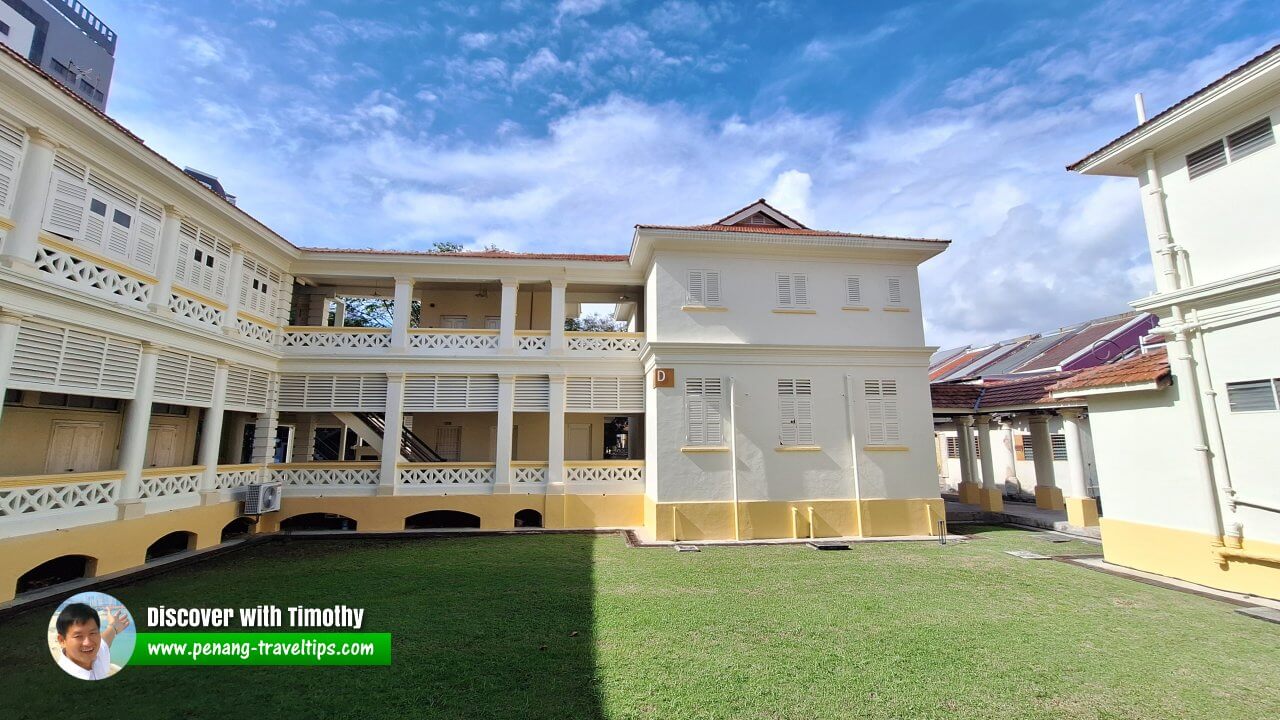 The newly repainted buildings of the Penang State Museum at Jalan Macalister, Penang (12 November 2026)
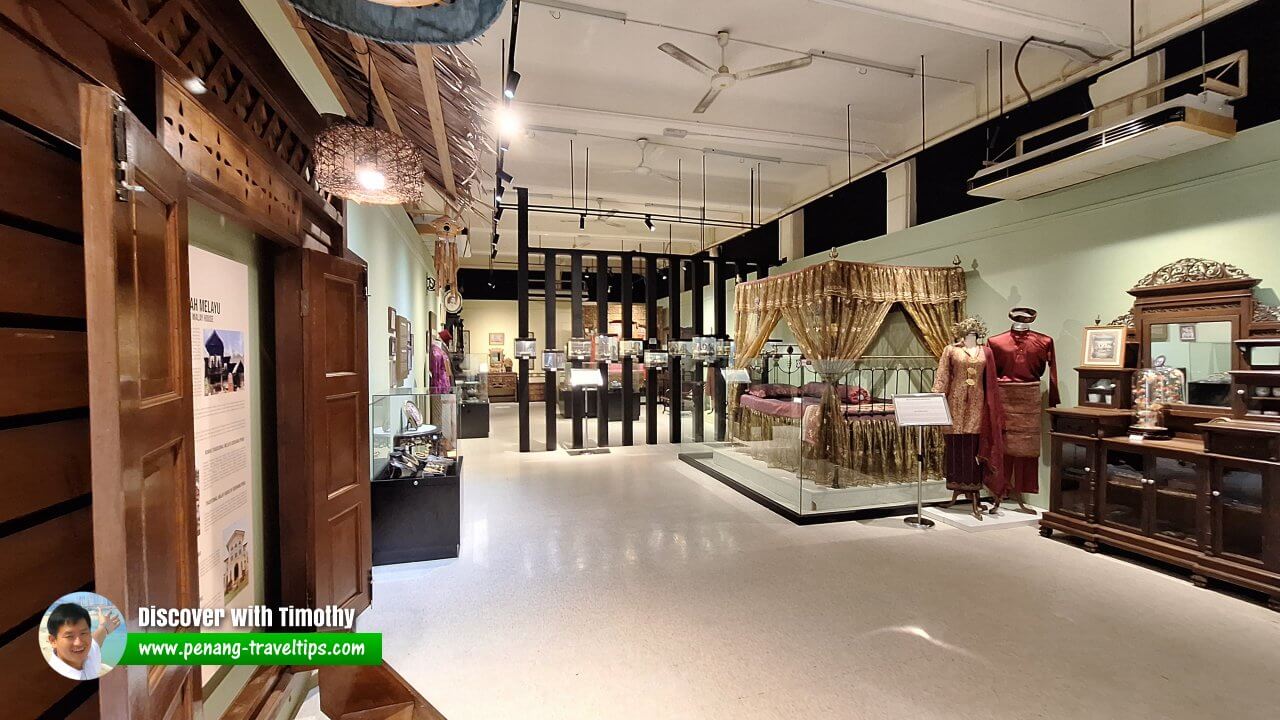 Gallery of the Penang State Museum at Jalan Macalister, Penang (12 November 2026)
2011 Photographs of the Museum

Museum at Macalister, George Town, Penang (17 April 2011)

Museum at Macalister Building (17 April 2011)

Exhibits at Museum at Macalister (17 April 2011)

At home with P. Ramlee, Museum at Macalister (12 March 2011)

Cardboard copy of life-size Jimmy Boyle immortalized on his piano (12 March 2011)

It's a day at the beach for me, courtesy of the Museum at Macalister (12 March 2011)
References
- Penang State Museum – Museum Building and History. Official history of the No. 57 Macalister Road premises, including the King Edward VII Memorial Maternity Hospital and its subsequent use.
- The Star – Restored Landmark Reopens as Penang Museum Branch, 31 October 2026. Reopening, restoration, art exhibitions and the temporary use of the premises by the State Art Gallery.
- Architecture Malaysia – Straits Eclectic Legacy. Historical background to Macalister Road and its namesake, Colonel Norman Macalister.
- Buletin Mutiara – Muzium Jalan Macalister Dibuka Semula, Kemasukan Percuma Hingga 30 November, 22 October 2026. Reopening announcement and free-admission period.
- Lim Chong Keat – Penang Views, 1770–1860. Published under the auspices of the Penang Museum by Summer Times Publishing, 1986.
- Penang State Museum – Gallery. Information on the Penang State Art Gallery and its modern and contemporary art collection.
- Penang State Museum – Automotive Gallery. Official description of the gallery, its construction, design and transportation collection.
- Buletin Mutiara – Penang State Museum Automotive Gallery Opens, Showcasing Over a Century of Mobility Heritage. Information on the Scammell Scarab and other transportation exhibits.
- Penang Hill Biosphere Reserve – Penang Hill. History of the Penang Hill funicular railway and its successive generations of coaches.
- Visit Penang – Trishaws in George Town. Background on the introduction of trishaws in George Town in 1941.
- George Town World Heritage Incorporated – A Guide to George Town's Historic Commercial and Civic Precincts. Historical account of the 1914 Battle of Penang and the anchor salvaged from the French destroyer Mousquet.
- Penang Global Tourism – Penang Tourist Map and Bus Information. Public transport information and Rapid Penang routes serving George Town.
Page Details
This page was created on 13 November 2026.Want to share your Penang travel experiences or get tips from fellow travellers?
Join the Penang Travel Tips Facebook GroupUseful guides for visiting Penang
My Videos of Penang
 Latest Pages & Updates
Buy Me A Coffee
If you enjoy the information I provide and want to support the work I do, please buy me a coffee! I appreciate it immensely, thank you so much!
