
Kuantan Travel Guide
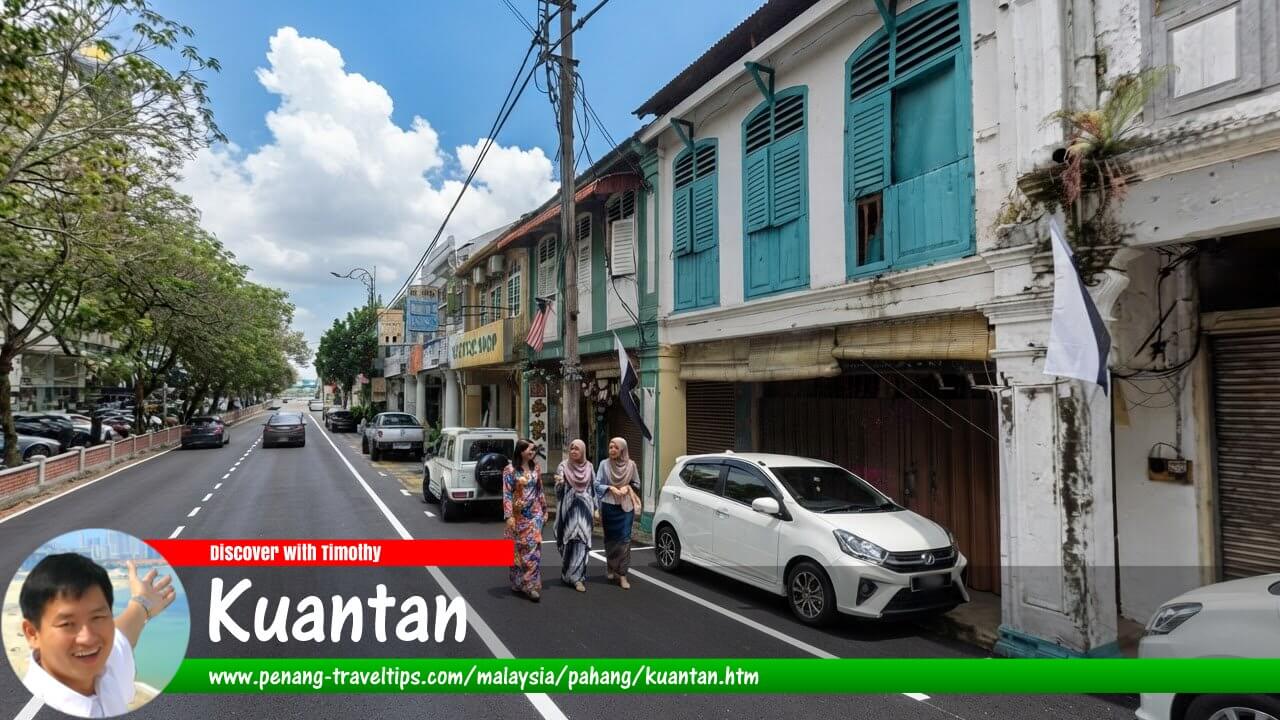 Kuantan Travel Guide (AI generated on 8 September 2026)
Also available: Panduan Melawat Kuantan
Introduction to Kuantan
Kuantan is the state capital of Pahang, Malaysia, and the largest city on the east coast of Peninsular Malaysia. Located beside the South China Sea and the mouth of the Kuantan River, the city combines urban facilities with beaches, rivers, forests and other natural attractions.
Kuantan is best known for its coastal setting. Teluk Cempedak, one of the city's most popular beaches, is located close to the city centre and is a favourite place for enjoying the sea, walking along the beach and watching the sunset. Other beaches and coastal areas can be found along the surrounding coastline.
The city also has several distinctive landmarks and cultural attractions. Sultan Ahmad Shah State Mosque, East Coast Mall, Menara Kuantan 188 and the Kuantan River are among the places that give the city its character. Nearby attractions include waterfalls, recreational forests and traditional villages.
Food is another important part of a visit to Kuantan. The city offers a variety of Malay, Chinese and Indian cuisine, as well as seafood and local specialities associated with the east coast of Peninsular Malaysia. Visitors can also sample dishes and snacks from Pahang and the wider east coast region.
Kuantan is an important gateway for exploring Pahang. From the city, travellers can continue to destinations such as Cherating, Pekan, Sungai Lembing and other parts of the state. Its location also makes it a convenient stop for travellers exploring the east coast between Kuala Lumpur and Terengganu.
With its combination of beaches, urban attractions, local food and access to nature, Kuantan can be enjoyed as a short city break or as a base for exploring the surrounding areas. A visit of two or three days allows enough time to experience the city's main attractions without having to rush.
History of Kuantan
Kuantan has a long history as a settlement and trading centre on the east coast of Peninsular Malaysia. Its location at the mouth of the Kuantan River gave it access to both the sea and the interior of Pahang, making the river an important route for transportation, fishing and trade.
Before it became known as Kuantan, the area was associated with a settlement called Kampung Teruntum. The settlement developed in importance over the centuries because of its strategic position along the coast and river. Kuantan eventually grew into an important trading port serving the surrounding region.
During the British colonial period, Kuantan continued to develop as a commercial and administrative centre. However, it was not initially the capital of Pahang. Kuala Lipis served as the state capital from 1898 until 1955, when the capital was transferred to Kuantan. The move reflected Kuantan's growing importance and its more favourable position on the east coast. 1
After becoming the state capital in 1955, Kuantan expanded rapidly. Government offices, commercial areas, roads and other urban facilities were developed, transforming the town into the principal administrative and economic centre of Pahang. The city's connection with the surrounding coastal and inland areas also strengthened its role as a gateway to eastern Pahang.
Kuantan was affected by the Japanese occupation of Malaya from 1941 to 1945, as was the rest of the peninsula. After the Second World War, the town resumed its development and gradually evolved from a relatively small coastal settlement into a modern state capital.
In the decades that followed, Kuantan's economy diversified beyond traditional river and coastal activities. Manufacturing, commerce, tourism, education and services became increasingly important. The development of industrial areas and modern shopping and commercial centres further expanded the city.
Today, traces of Kuantan's earlier history can still be seen around the riverfront and Jalan Besar, where older shophouses, street art and restored commercial buildings form part of the city's historic character. At the same time, modern landmarks such as Kuantan 188 reflect the city's transformation into a contemporary urban centre. 2
Getting to Kuantan
Kuantan is well connected to other parts of Peninsular Malaysia by road and air. For most visitors, driving or taking an express bus is the most practical way to reach the city, while flying is a convenient option from Kuala Lumpur or Singapore.
By car, Kuantan is about 275 kilometres from Kuala Lumpur. The most direct route from Kuala Lumpur is via the East Coast Expressway (LPT), which provides a fast connection between the Klang Valley and Pahang's east coast. From Kuala Terengganu, travellers can follow the East Coast Federal Route 2 southwards to Kuantan. Visitors coming from Johor Bahru or Singapore can travel through Segamat and Muadzam Shah, or take the coastal route through Mersing, Rompin and Pekan. 1
By express bus, Kuantan is served by long-distance buses from Kuala Lumpur and other major towns and cities. Buses from Kuala Lumpur generally take around four to five hours, depending on traffic and the departure point. Services from Johor Bahru generally take around five to six hours. Bus travel is an economical option for visitors who do not wish to drive. 1
By air, visitors can fly to Sultan Haji Ahmad Shah Airport, located about 15 kilometres west of Kuantan. The airport provides an air gateway to the city and Pahang. As flight schedules can change, travellers should check the latest services with the airlines before making their travel arrangements. 2
By train, Kuantan does not have a passenger railway station. The East Coast Railway, sometimes called the Jungle Railway, serves towns elsewhere in Pahang such as Jerantut, Kuala Lipis and Mentakab. Travellers wishing to reach Kuantan by rail therefore need to continue their journey by road. 3
Getting around Kuantan is easiest by car, taxi or ride-hailing service, particularly if you intend to visit beaches and attractions outside the city centre. Car rental is also available. Public buses provide an economical alternative for travelling to selected destinations within the city and surrounding areas. 1
For visitors staying in the city centre and concentrating on attractions around the riverfront, Jalan Besar and nearby commercial areas, some places can be reached on foot. However, a car is more convenient for exploring the wider Kuantan area, including Teluk Cempedak, Beserah, Balok and other coastal destinations.
Food in Kuantan
Kuantan offers a wide variety of food, reflecting the Malay, Chinese and Indian communities of Pahang as well as the city's position on the east coast. Seafood is particularly popular, while local Pahang dishes and east coast specialities can be found at restaurants, coffee shops, food courts and markets throughout the city. 1
One dish particularly associated with Kuantan is mee calong, a noodle soup traditionally made with fish balls, tofu and noodles in a fish-based broth. It is especially associated with the Beserah area, an old fishing village north of Kuantan. 2
Seafood is another highlight of Kuantan's food scene. The coastal areas of Tanjung Lumpur and Beserah are well known for fresh fish and seafood. Visitors can enjoy grilled fish, prawns, squid and other seafood dishes, with Tanjung Lumpur particularly noted for its seafood restaurants. 1
Visitors should also look for ikan patin tempoyak, a Pahang speciality in which freshwater catfish is cooked with tempoyak, a fermented durian preparation. Although patin is especially associated with other parts of Pahang, the dish is also available in Kuantan and provides an opportunity to sample one of the state's distinctive flavours. 1
Nasi dagang is another popular east coast dish available in Kuantan. The rice is cooked with coconut milk and commonly served with fish curry and accompanying condiments. Other Malay dishes, including nasi lemak, satay and various traditional cakes and kuih, are widely available.
For visitors interested in local produce and traditional food products, Bazar Serambi Teruntum is worth visiting. Located near Tanjung Lumpur, the bazaar offers food products and traditional Pahang and east coast specialities, together with handicrafts such as batik, songket and wood carvings. 3
Kuantan also has plenty of Chinese and Indian food, including noodles, dim sum, rice dishes, curries and other familiar Malaysian favourites. Cafés and modern restaurants around the city provide additional choices, particularly in the historic Jalan Besar area and the newer commercial districts. 1
Muslim visitors will find a wide selection of Malay and other Muslim-friendly eateries in Kuantan. For halal certification, however, it is advisable to check for the appropriate certification or ask the establishment directly, especially when dining at restaurants serving mixed cuisines.
Places to Visit in Kuantan
Kuantan offers a mixture of beaches, waterfront attractions, cultural landmarks and nature destinations. Many of the city's attractions are easy to reach from the centre, while several beaches and waterfalls are suitable for half-day excursions.
Teluk Cempedak is Kuantan's best-known beach and one of its most popular recreational areas. Located about 5 kilometres from the city centre, it has a sandy beach, rocky headlands, shady trees, a promenade and food outlets. It is suitable for swimming, picnics, walking and enjoying the sea, although it can become busy at weekends. 1
Menara Kuantan 188 is one of the city's most prominent landmarks. The 188-metre tower stands beside the Kuantan River in the historic city centre and provides panoramic views over Kuantan and the surrounding area. The riverfront around the tower has also become an important recreational and commercial area. 2
Jalan Besar is part of Kuantan's historic precinct. The street contains older shophouses, cafés, restaurants and colourful street art, offering visitors a glimpse of the city's earlier commercial character. It is particularly suitable for a leisurely walk through the older part of the city. 3
Sultan Ahmad Shah State Mosque, located near the city centre, is an important religious and architectural landmark. Its prominent domes and spacious grounds make it one of Kuantan's most recognisable buildings.
Taman Gelora is a recreational park near the coast, popular with local residents for walking, jogging and enjoying the greenery. Its location close to the sea makes it a pleasant place to combine outdoor exercise with a coastal atmosphere.
Zoo Teruntum is a family-oriented attraction near the city. The mini zoo features animal exhibits together with a dinosaur-themed attraction, making it particularly suitable for families travelling with children. 4
Beserah, an old fishing village north of Kuantan, offers a more traditional coastal experience. Fishing boats, seafood restaurants and the village atmosphere provide a contrast to the modern city centre. The wider Beserah and Balok coastline also has beaches and resorts. 5
Sungai Pandan Waterfall, also known as Panching Waterfall, is about 25 kilometres from Kuantan. Surrounded by forest, the waterfall is a popular recreational destination and is suitable for visitors looking for a nature excursion outside the city. 6
For a longer excursion, visitors can travel inland to Sungai Lembing, a former tin-mining town northwest of Kuantan. Its attractions include the Sungai Lembing Museum, the former underground mine area and Panorama Hill, which is known for its views and access to the Rainbow Waterfall. 7
Other coastal destinations around Kuantan include Balok Beach, Black Stone Beach and Pelindung Beach. These beaches are useful alternatives for visitors who prefer a quieter coastal setting than Teluk Cempedak. 5
Where to Stay in Kuantan
Kuantan has a wide range of accommodation, from budget hotels and guesthouses to international-standard hotels and beachfront resorts. The best area to stay depends largely on whether you want to explore the city, relax by the beach or use Kuantan as a base for exploring the surrounding attractions. 1
City centre is the most convenient choice for visitors who want easy access to restaurants, shops, markets, the historic area and the Kuantan River. There are numerous hotels around Jalan Besar, Jalan Haji Abdul Rahman and the surrounding commercial districts. This area is particularly suitable for short stays and visitors who plan to spend most of their time exploring the city.
Teluk Cempedak is a good choice for visitors who want to stay close to the beach. The area has beachfront accommodation as well as restaurants and recreational facilities. It is especially suitable for couples, families and travellers looking for a more relaxed seaside holiday while remaining close to the city centre. 2
Tanjung Lumpur, south of the Kuantan River, offers another convenient option. The area is known for its seafood restaurants and riverfront setting, and it is close to the city centre. Accommodation here can be suitable for visitors who want convenient access to both the city and the coast.
Beserah and Balok, north of Kuantan, are suitable for travellers who prefer a beach resort environment. The coastline has a number of hotels, resorts, apartments and holiday accommodation, with some properties offering direct access to the beach. This area is particularly suitable for longer stays and family holidays. 2
Budget accommodation is widely available in the city centre and surrounding commercial areas. Guesthouses, smaller hotels and homestays provide economical choices for travellers who spend most of the day sightseeing and mainly need a convenient place to sleep.
For a more comfortable stay, Kuantan also has several full-service hotels in and around the city centre. These are convenient for business travellers and visitors who prefer facilities such as swimming pools, restaurants, meeting rooms and larger rooms. 1
When choosing accommodation, consider the locations of the attractions you intend to visit. A city-centre hotel is generally more convenient for sightseeing and dining, while a beachfront property is preferable if spending time by the sea is the main purpose of your visit. Travellers should also check the latest list of officially registered tourist accommodation premises provided by the Ministry of Tourism, Arts and Culture Malaysia when making their choice. 3
Practical Information for Visiting Kuantan
Best time to visit: Kuantan can be visited throughout the year, although the east coast of Peninsular Malaysia is affected by the northeast monsoon, which generally brings wetter and rougher conditions between November and February. For beach activities, the months outside the main monsoon period are generally more suitable. Visitors should nevertheless check the weather forecast before planning outdoor activities.
Climate: Kuantan has a hot and humid tropical climate throughout the year. Daytime temperatures are generally around 30°C or above, while rainfall can occur at any time. Lightweight clothing, comfortable footwear, sunscreen and an umbrella or raincoat are useful when exploring the city.
How long to stay: Two or three days is sufficient for a first visit to Kuantan. This allows time to explore the city centre, visit Teluk Cempedak and other beaches, sample local food and make a short excursion to a nearby attraction. Visitors with more time can use Kuantan as a base for exploring places such as Sungai Lembing, Cherating and Pekan.
Getting around: A car is the most convenient way to explore Kuantan and its surrounding attractions. Taxis, ride-hailing services and local buses are also available. Tourism Pahang notes that Bus.My provides public transport within the city, while car rental is available for visitors who want greater flexibility. 1
Money: The currency used in Kuantan is the Malaysian ringgit (RM). Credit and debit cards are widely accepted at hotels, shopping centres and many restaurants, while cash remains useful for smaller food stalls, markets and some local businesses. ATMs are readily available in the city.
Muslim visitors: Kuantan is predominantly Muslim and has many mosques and Malay-Muslim eateries. Visitors can generally find halal food easily, although those requiring formally certified halal establishments should check for the relevant certification before dining.
Safety: Kuantan is generally suitable for tourists, but normal precautions should be taken. Keep valuables secure, especially in crowded areas, and take care when swimming or engaging in water activities. Beach conditions can change quickly during periods of rough weather, particularly during the northeast monsoon.
Useful tourist information: The Tourism Pahang office is located in Kuantan and provides tourist information and assistance. The Kuantan City Council also provides information on local attractions, recreation, accommodation and transportation. 2
Electricity: Malaysia uses a 240-volt electrical system with Type G three-pin plugs. Visitors from countries using different plug types should bring a suitable travel adaptor.
Language: Malay is the official language, while English is widely understood in hotels, shopping centres and tourist establishments. Mandarin and other Chinese languages are also spoken within the local Chinese community.
Kuantan is a relatively relaxed destination that combines the conveniences of a state capital with beaches, fishing villages, rivers and nearby natural attractions. It is therefore a good base for exploring the east coast of Pahang while still offering enough attractions and food choices for a satisfying city stay. 3
Map of Kuantan, Perak
Places of Interest in Kuantan
- Batu Hitam (GPS: 3.88812, 103.36649)

- Beserah (GPS: 3.91666, 103.36555)

- Pulau Ular (GPS: 4.05612, 103.40851)

- Stadium Darul Makmur (GPS: 3.8149, 103.32378)

- Sultan Ahmad Shah International Convention Centre (GPS: 3.81944, 103.32648)

- Sultan Ahmad Shah Mosque (GPS: 3.8079, 103.32804)

- Sungai Pandan Waterfall (GPS: 3.79051, 103.1453)

- Taman Pertanian Jubli Perak Sultan Haji Ahmad Shah (GPS: 3.846384, 103.300860)

- Teluk Cempedak (GPS: 3.81073, 103.37276)

- Tokong Kong Hock (GPS: 3.80942, 103.31525)

- Taman Teruntum: Public park with lotus lake and pavilions.
- Taman Gelora: Public park with pathways for evening strolls and jogging.
- Balai Karyaneka: Souvenir centre with a good variety of trinkets and handicrafts.
- Tanjung Pelindung: A boulder-strewn beach that is favoured by campers and bird watchers.
- Riverfront Park: A promenade and park beside the Kuantan River.
- Vistana Kuantan City Centre (GPS: 3.81652, 103.33682)

Categories of Sights in Kuantan
Shopping Malls in Kuantan
- East Coast Mall (GPS: 3.81784, 103.32633)

Transport Infrastructure in Kuantan
- Sultan Ahmad Shah Airport (GPS: 3.78071, 103.21414)

- Terminal Sentral Kuantan (GPS: 3.82969, 103.28448)

References
- Tourism Pahang, Transportation. https://www.pahangtourism.org.my/travel-info/transportation
- Kuantan City Council, Places of Interest. https://mbk.gov.my/portal/en/destinasi-menarik/
- Tourism Pahang, Kuantan – Sunshine of the East Coast. https://www.pahangtourism.org.my/index.php/destination/islands-beaches/kuantan
Page Details
This page was created on 8 September 2026. Hi, my name is Timothy and created it from my research, for my own entertainment, knowledge and to satisfy my curiosity. I am providing the information to you in good faith and hope it is useful. I try to get the details as accurate as possible. I also try to update the page whenever I stumble on new details. So this and all my other pages are perpetual work in progress. If you discover any error, please politely inform me, pointing out where the error lies, and I will correct it as soon as possible. Your helpfulness will keep this page accurate, relevant and helpful to those who need the information.Buy Me A Coffee
If you enjoy the information I provide and want to support the work I do, please buy me a coffee! I appreciate it immensely, thank you so much!
