
Courtauld Gallery, London
The Courtauld Gallery is one of the finest small art museums in London, renowned for its outstanding collection of Impressionist and Post-Impressionist masterpieces. Nestled within the historic Somerset House, the gallery is situated in the City of Westminster, offering visitors a quiet yet enriching cultural escape in the heart of the capital.
History and Origins
The Courtauld Gallery was founded in 1932 by the industrialist and art collector Samuel Courtauld, whose generous bequest helped establish the gallery’s core collection. His vision was to make great works of art accessible to the public and to promote the study of art history in Britain. The gallery is part of The Courtauld Institute of Art, one of the world’s leading centres for the study of art history and conservation.
In 1989, the Courtauld Gallery moved into the elegant North Wing of Somerset House, a neoclassical building overlooking the Thames. A major renovation was completed in 2021, restoring the building’s grandeur and upgrading gallery spaces, accessibility, and visitor facilities.
What to See at the Courtauld Gallery
The Courtauld is especially celebrated for its world-class collection of Impressionist and Post-Impressionist paintings. Among its highlights are:
- A Bar at the Folies-Bergère by Édouard Manet
- Self-portraits by Vincent van Gogh
- Works by Claude Monet, Pierre-Auguste Renoir, and Paul Cézanne
- Early Renaissance works by Botticelli and Cranach
- Drawings and decorative arts from the Medieval to the Modern era
Rotating exhibitions and temporary displays showcase research projects, contemporary works, and items from the Courtauld’s broader collections. The gallery layout encourages an intimate viewing experience, making it possible to enjoy major works without overwhelming crowds.
Location and Address
The Courtauld Gallery is located in the North Wing of Somerset House, with its entrance at:
Courtauld Gallery
Somerset House
Strand
London WC2R 0RN
United Kingdom
Tel: +44 (0)20 3947 7700
How to Get There
The nearest London Underground station is Temple Station, served by the District and Circle lines. From Temple Station, it's about a 5-minute walk to Somerset House. Simply exit the station onto Victoria Embankment, walk west along the river, and turn right at Somerset House.
Alternatively, you can arrive via Covent Garden or Charing Cross stations, both within a 10-15 minute walk.
Opening Hours
The Courtauld Gallery is open to the public as follows:
- Monday: Closed
- Tuesday – Sunday: 10:00 AM – 6:00 PM (last entry 5:15 PM)
The gallery is closed on 25 and 26 December each year.
Admission Fees
As of 2025, admission prices for the Courtauld Gallery are:
- Adults: £9
- Concessions (senior citizens, students): £7
- Under 18s: Free
- National Art Pass holders: 50% discount
- Friends of The Courtauld: Free entry
Tickets can be booked in advance online, although walk-ins are also accepted subject to availability.
Fun Fact
In 2021, after a three-year refurbishment, the Courtauld reopened its doors with its star painting—Manet’s A Bar at the Folies-Bergère—repositioned in a purpose-built gallery under a skylight, giving it the prominence it deserves. This painting, often studied in art history courses worldwide, has been called one of the first truly modern works of art due to its subtle commentary on urban life and identity.
Quick Facts
- Name: Courtauld Gallery
- Location: Somerset House, Strand, London WC2R 0RN
- Nearest Tube Station: Temple (District and Circle lines)
- Opening Hours: Tuesday to Sunday, 10:00 AM – 6:00 PM
- Admission: £9 adults, £7 concessions, free for under 18s
- Known For: Impressionist and Post-Impressionist masterpieces
- Fun Fact: Home to Manet’s iconic A Bar at the Folies-Bergère
- Founded: 1932 by Samuel Courtauld
- Website: www.courtauld.ac.uk/gallery
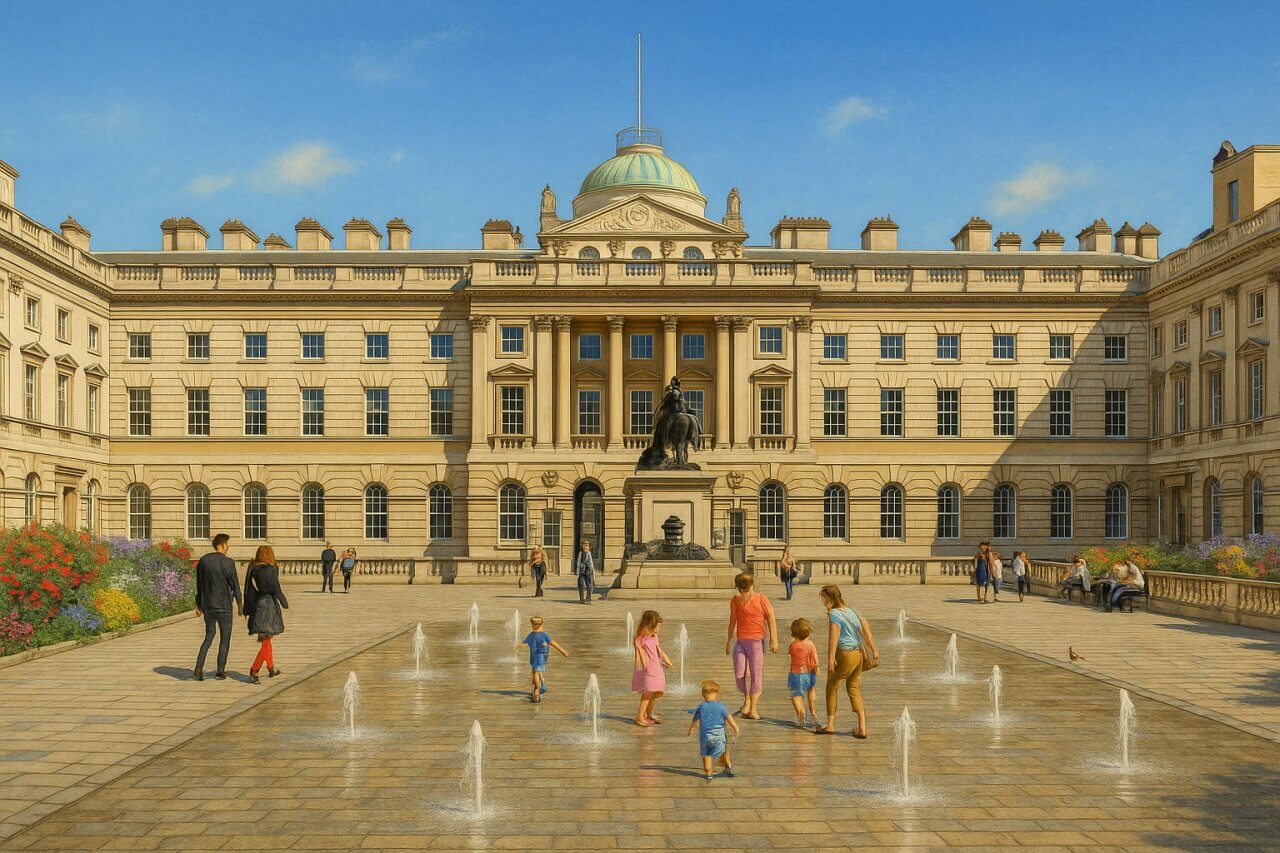 Painting of Courtauld Gallery, London
Page Details
This page was created on 5 June 2025. Hi, my name is Timothy and created it from my research, for my own entertainment, knowledge and to satisfy my curiosity. I am providing the information to you in good faith and hope it is useful. I try to get the details as accurate as possible. I also try to update the page whenever I stumble on new details. So this and all my other pages are perpetual work in progress. If you discover any error, please politely inform me, pointing out where the error lies, and I will correct it as soon as possible. Your helpfulness will keep this page accurate, relevant and helpful to those who need the information.List of Art Galleries in London
Want to share your London travel experiences or get tips from fellow travellers?
Join the London Travel Tips Facebook GroupMore information for visiting London
Here are some related articles to help you get to know London better.- Cost of Living in London: Discover the true cost of living in London, including housing, transport, groceries, and more - plus tips for budgeting in one of the world's most expensive cities.
- Driving in London: Planning to drive in London? Learn about roads, car rentals, parking, tolls, and key tips for tourists and visitors from outside the capital.
- Driving Tips for Visiting London: Thinking of driving to London? Discover the best times to travel, congestion tips, parking apps, breakdown help, and petrol advice for a smoother journey.
- Evolution of London's Streets: Discover the fascinating history of how London's streets developed from ancient footpaths to today's complex network of roads across the capital.
- History of Immigration to London: Discover the rich history of immigration to London, from Huguenots to Bangladeshis, and how diverse communities have shaped the city's vibrant identity.
- How Big Is London Compared to Other World Cities?
- How London's Streets Measure Up: A Global Comparison of Road Widths
- How Streets of London are Named: Discover how London streets get their names, who decides them, and how historic, political, and public influences shape street naming in the capital.
- How the Grosvenor Family Came to Own Much of Mayfair, Belgravia and Pimlico: Explore how the Grosvenor family came to own much of Mayfair, Belgravia, and Pimlico, and learn about their historical connection (or lack thereof) with the British royal family and government.
- Living and working in London
- London's Quiet Collapse: How Living Standards Fell as Costs Skyrockted (1975-2025): Explore how London residents endured rising costs and falling living standards from 1975 to 2025 - from rocketing rents to wage stagnation and inflation.
- Marvel of the London Underground: Discover the history, challenges, and triumphs of the London Underground - the world's first underground railway and a vital transport lifeline for the UK capital since 1863.
- Moving to London: Expat Tips for Settling in Westminster: Essential advice for expats moving to London's Westminster: neighborhood insights, cost of living, transportation, housing, healthcare, schools, and tips to help you feel at home in the heart of the city.
- Places in London that aren't pronounced the way they're spelled
- Shopping in London: Discover London's diverse shopping scene
- Taking the bus in London: This is your complete guide to taking the bus when in London.
- The Anglican Faith: A Visitor's Guide to the Church of England: Learn about the Anglican faith and its deep ties to London's landmarks like Westminster Abbey and St Paul's Cathedral.
- Top 10 London Streets Every Visitor Must See: Discover London through its most iconic thoroughfares - 10 streets every visitor must experience. From historic Abbey Road to vibrant Camden High Street, explore culture, shopping, and hidden gems.
- Why are most roads in Central London so narrow? Learn why there are so few multi-lane roads and elevated highways in the heart of the city.
 Latest Pages & Updates
Buy Me A Coffee
If you enjoy the information I provide and want to support the work I do, please buy me a coffee! I appreciate it immensely, thank you so much!
