
Wenzhou, China
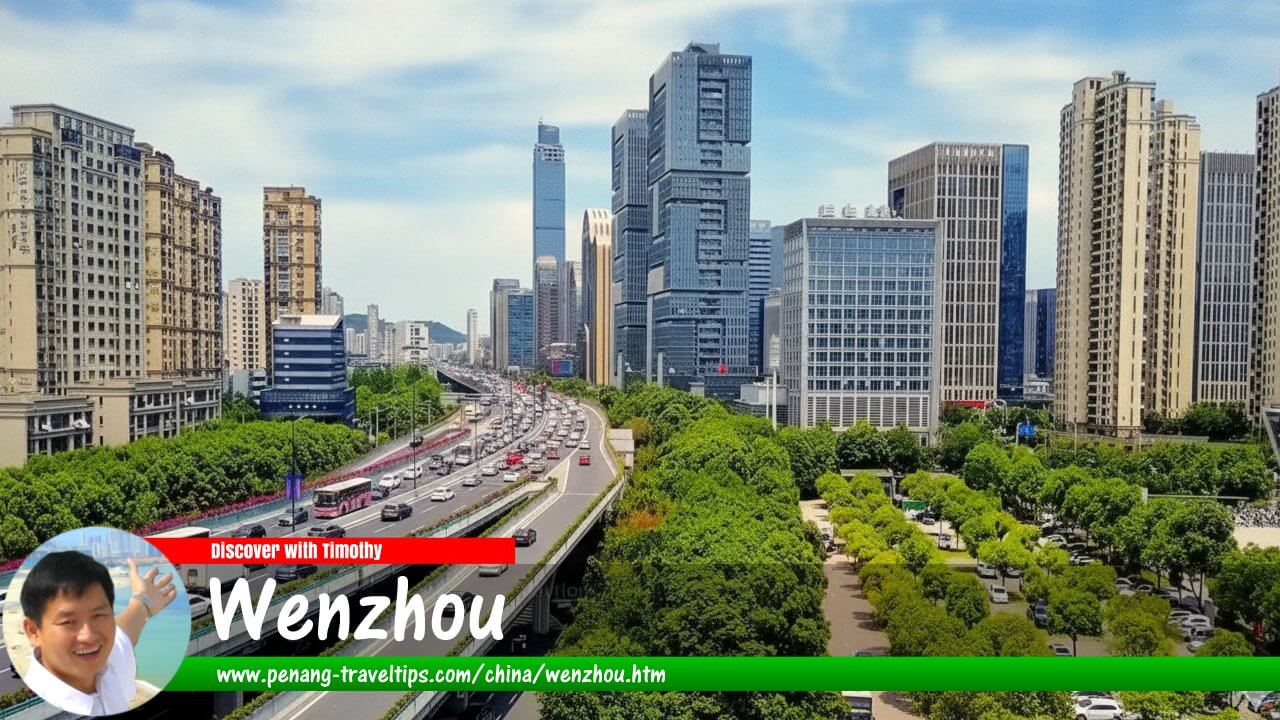 Wenzhou, China (Photo edited with AI on 18 June 2026)
Wenzhou (温州, Wēnzhōu) is a major prefecture-level city in southeastern Zhejiang Province, China. Located along the coast of the East China Sea and surrounded by mountains and rivers, Wenzhou is one of China's most economically dynamic cities and is renowned for its entrepreneurial culture, private-sector economy, and extensive overseas Chinese community.1 The name "Wenzhou" literally means "Warm Prefecture." The character 温 (wēn) means "warm," while 州 (zhōu) refers to a prefecture or administrative region. The name is believed to have originated from the city's relatively mild climate compared with other parts of China and has been used for well over a thousand years.2
Quick Facts
- Chinese Name: 温州
- Pinyin: Wēnzhōu
- Province: Zhejiang
- Location: Southeastern Zhejiang, China
- Population: Approximately 9 million
- Area: About 12,100 square kilometres
- Climate: Humid subtropical
- Known For: Entrepreneurship, manufacturing, overseas Chinese communities
- Main Airport: Wenzhou Longwan International Airport
- Main Dialect: Wenzhounese (Wu Chinese)
Geography
Wenzhou is situated in southeastern Zhejiang Province, facing the East China Sea. The city lies approximately 350 kilometres south of Hangzhou and occupies a strategic position between the coastal and mountainous regions of eastern China.3
The municipality covers an area of more than 12,000 square kilometres and includes both mainland territory and offshore islands. Much of the region is mountainous, with hills and valleys dominating the landscape. The Ou River, one of Zhejiang's most important rivers, flows through Wenzhou before emptying into the East China Sea.4
The city's coastline stretches for hundreds of kilometres and contains numerous bays, fishing harbours, and islands. Notable islands include Nanji Island and Dongtou Island, both known for their scenic beauty and marine ecosystems.
Wenzhou experiences a humid subtropical climate characterized by warm summers, mild winters, and abundant rainfall throughout the year. Typhoons occasionally affect the city during the summer and early autumn months due to its coastal location.
Languages and Dialects
Mandarin is the official language used in government, education, and media. However, Wenzhou is particularly famous for its local dialect, known as Wenzhounese (温州话), which belongs to the Wu Chinese language group.5
Wenzhounese is often regarded as one of the most distinctive and difficult Chinese dialects. Its pronunciation differs significantly from Mandarin and even from other Wu dialects such as Shanghainese. Because of its complexity, the dialect reportedly played a role in military communications during certain periods of Chinese history.
Other dialects spoken in various parts of the municipality include:
- Oujiang Wu dialects
- Taizhou Wu dialects
- Min Chinese dialects in some border regions
- Hakka dialects in certain communities
Due to extensive migration and international business activities, many residents also have some knowledge of Mandarin and, increasingly, English.
History
Human settlement in the Wenzhou area dates back thousands of years. Archaeological discoveries indicate that the region was inhabited long before the establishment of imperial Chinese rule.6
During the Qin and Han dynasties, the area became integrated into the Chinese imperial administrative system. The region gradually developed as an important agricultural and maritime centre due to its fertile river valleys and coastal location.
The name Wenzhou first appeared during the Tang Dynasty. Throughout the Tang and Song periods, the city prospered through trade and maritime commerce. Its port connected Zhejiang with other coastal regions of China and with overseas destinations.
During the Ming and Qing dynasties, Wenzhou became known for shipbuilding, handicrafts, agriculture, and fishing. The surrounding mountains also provided timber and other natural resources.
In the nineteenth century, Wenzhou was designated as one of China's treaty ports following international agreements. This opened the city to greater foreign trade and interaction with overseas markets.7
Following the establishment of the People's Republic of China in 1949, Wenzhou remained an important regional centre. However, its most significant transformation occurred after China's economic reforms beginning in the late 1970s.
Wenzhou became famous for what economists call the "Wenzhou Model," characterized by private entrepreneurship, family-owned businesses, flexible financing methods, and export-oriented manufacturing. This model contributed significantly to China's economic modernization and transformed Wenzhou into one of the country's wealthiest regions.8
Economy and Products
Wenzhou has one of China's most vibrant private-sector economies. Unlike many Chinese cities that initially relied on state-owned enterprises, Wenzhou's development was driven largely by private businesses and entrepreneurs.
The city is internationally known for manufacturing and exports. Major industries include:
- Electrical equipment
- Footwear manufacturing
- Leather products
- Eyeglasses
- Automobile parts
- Pumps and valves
- Machinery
- Textiles and garments
Wenzhou's shoe industry is particularly famous. Millions of pairs of shoes are produced annually and exported worldwide. The city is also one of China's leading centres for eyeglass manufacturing.
The port economy plays an important role in trade and logistics. Wenzhou Port handles cargo, industrial materials, and commercial goods serving both domestic and international markets.
Agriculture remains significant in rural areas. Major products include rice, tea, citrus fruits, vegetables, and seafood. The coastal waters support extensive fishing and aquaculture industries.
Many successful overseas Chinese businesspeople trace their origins to Wenzhou. Large Wenzhou communities can be found in Europe, North America, Southeast Asia, and other parts of the world, contributing to international trade networks and investment flows.
How to Go There
By Air
Wenzhou is served by Wenzhou Longwan International Airport, located approximately 22 kilometres southeast of the city centre.9
The airport handles domestic and international flights. Airlines operating there include Air China, China Eastern Airlines, China Southern Airlines, Hainan Airlines, Shenzhen Airlines, Xiamen Airlines, and several other carriers.
Domestic flights connect Wenzhou with major Chinese cities such as Beijing, Shanghai, Guangzhou, Shenzhen, Chengdu, Chongqing, Xi'an, Kunming, and Harbin. International services periodically connect the city with destinations in East and Southeast Asia.
By Train
Wenzhou is connected to China's high-speed rail network through several railway stations:
- Wenzhou South Railway Station – the principal high-speed rail station.
- Wenzhou North Railway Station – serving newer high-speed services.
- Wenzhou Railway Station – handling conventional rail services.
High-speed trains connect Wenzhou with Hangzhou, Shanghai, Ningbo, Fuzhou, Xiamen, Shenzhen, and many other cities.
By Long-Distance Bus
Several long-distance bus terminals operate within Wenzhou, including the Wenzhou New South Bus Station and Shuangyu Passenger Transport Centre. These provide services to cities throughout Zhejiang and neighbouring provinces.
By Road
Major expressways connect Wenzhou with Hangzhou, Ningbo, Fuzhou, and other important urban centres along China's southeastern coast.
How to Travel Locally
Wenzhou has a modern and efficient transportation system.
Taxis
Taxis are widely available throughout the city. Metered fares are relatively affordable and provide convenient transportation between attractions.
E-Hailing Services
Ride-hailing platforms such as Didi are extensively used in Wenzhou. These services often provide an easy alternative to traditional taxis.
Rail Transit
Wenzhou operates a modern urban rail transit system known as the Wenzhou Rail Transit network. Several lines connect major districts, railway stations, and residential areas, offering fast and reliable transportation.
Public Buses
An extensive bus network covers the municipality. Buses are economical and connect nearly all urban and suburban districts.
Bicycles and Shared Mobility
Shared bicycles and electric scooters are common, particularly in central districts and university areas.
Traditional trishaws, rickshaws, tuk-tuks, MRT systems, and LRT systems are generally not part of Wenzhou's transportation infrastructure.
Tourist Attractions
1. Yandang Mountains
One of China's most famous mountain scenic areas, Yandang Mountains are known for dramatic volcanic formations, waterfalls, cliffs, caves, and hiking trails. The area has been celebrated in Chinese literature and painting for centuries.10
2. Nanxi River Scenic Area
Located north of Wenzhou, this scenic river valley features crystal-clear waters, bamboo forests, ancient villages, and traditional rural landscapes.
3. Jiangxin Island
Situated in the middle of the Ou River, Jiangxin Island is one of Wenzhou's most iconic landmarks. Visitors can explore historic pagodas, gardens, temples, and riverfront scenery.
4. Nanji Islands
The Nanji Islands form a national marine nature reserve renowned for biodiversity, pristine beaches, coral ecosystems, and marine wildlife.
5. Dongtou Islands
Known as the "Hundred-Island County," Dongtou offers scenic coastal views, fishing villages, beaches, and fresh seafood.
6. Wenzhou Museum
The museum showcases local history, archaeology, traditional culture, maritime heritage, and economic development.
7. Wuma Street
This historic commercial street combines traditional architecture with modern shopping and dining opportunities.
8. Yaoxi Scenic Area
Featuring mountains, temples, lakes, and natural springs, Yaoxi is a popular recreational destination for local residents.
9. Zeya Scenic Area
Zeya is known for its waterfalls, forests, bamboo groves, and traditional paper-making heritage.
10. Century Square
One of the city's modern landmarks, Century Square hosts cultural events, public gatherings, and evening entertainment.
Wenzhou, China is  the Map of Cities in China
References
- Encyclopaedia Britannica – Wenzhou
- China Daily – Wenzhou Overview
- Zhejiang Provincial Government
- China National Tourism Information
- Encyclopaedia Britannica – Wu Chinese
- UNESCO Cultural Heritage Resources
- Encyclopaedia Britannica – Zhejiang Province
- World Bank – China's Regional Economic Development
- Wenzhou Longwan International Airport
- UNESCO – Yandang Mountains Information
Page Details
This page was created/modified on 18 June 2026. Hi, my name is Timothy and created it from my research, for my own entertainment, knowledge and to satisfy my curiosity. I am providing the information to you in good faith and hope it is useful. I try to get the details as accurate as possible. I also try to update the page whenever I stumble on new details. So this and all my other pages are perpetual work in progress. If you discover any error, please politely inform me, pointing out where the error lies, and I will correct it as soon as possible. Your helpfulness will keep this page accurate, relevant and helpful to those who need the information.