
Nanping, China
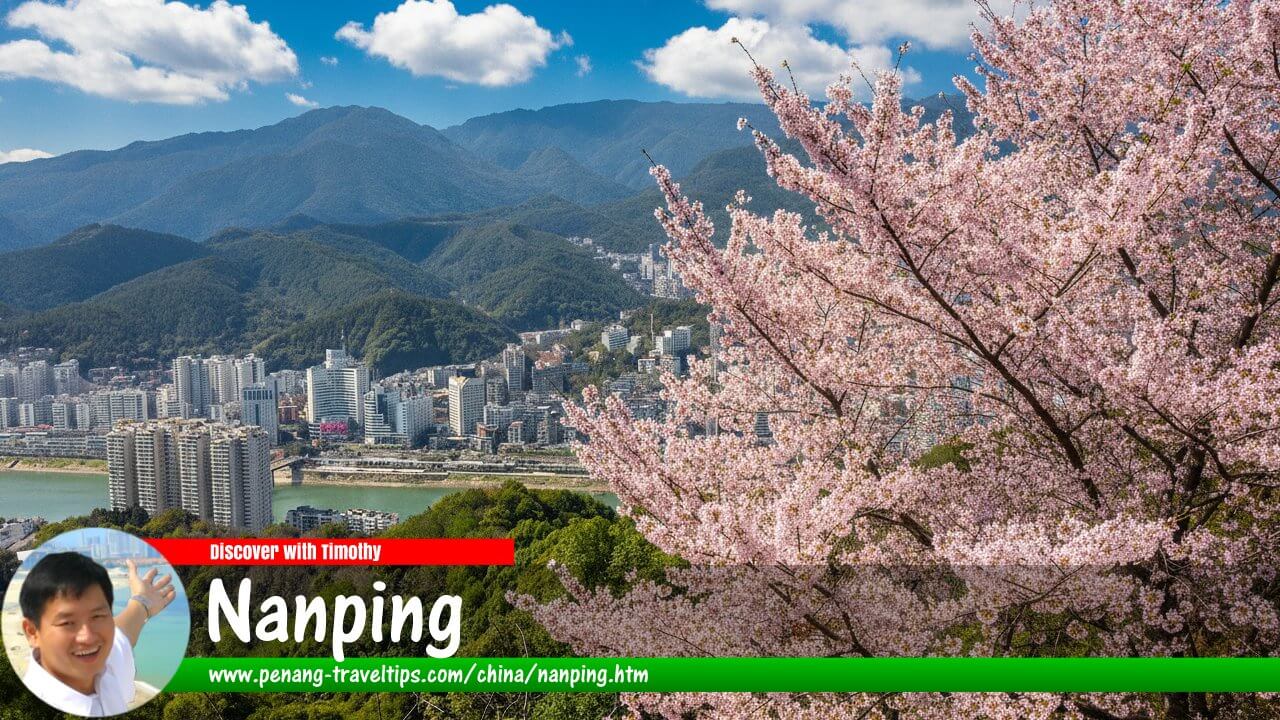 Nanping, China (Photo edited with AI on 15 June 2026)
Nanping (Chinese: 南平; pinyin: Nánpíng) is a prefecture-level city in northwestern Fujian Province, China. Covering a vast area of mountains, forests, rivers, and fertile valleys, Nanping is the largest municipality in Fujian by land area and one of the province's most important ecological regions. The city is internationally renowned for the spectacular Wuyi Mountains, a UNESCO World Heritage Site known for its natural beauty and cultural significance. Nanping is also famous for tea production, forestry, traditional Chinese culture, and its role as a gateway between Fujian and neighboring Jiangxi Province.1
The name "Nanping" literally means "Southern Peace" or "Peace in the South." The first character, "Nan" (南), means south, while "Ping" (平) means peace, tranquility, or stability. The name originated during ancient administrative reorganizations and reflected the historical importance of maintaining stability in this strategically located frontier region between inland and coastal China. Although the modern municipality was established in the twentieth century, the area has been inhabited and administered for more than two thousand years.2
Quick Facts
- English Name: Nanping
- Chinese Name: 南平
- Pinyin: Nánpíng
- Province: Fujian
- Location: Northwestern Fujian Province
- Area: Largest prefecture-level municipality in Fujian by land area
- Climate: Humid Subtropical
- Main Railway Hub: Nanping Railway Station
- Nearest Airport: Nanping Wuyishan Airport
- Known For: Wuyi Mountains, tea production, forests
- Major Industries: Tea, forestry, tourism, agriculture, manufacturing
- UNESCO Site: Mount Wuyi
Geography
Nanping occupies the northwestern portion of Fujian Province and borders Jiangxi Province to the west and Zhejiang Province to the northeast. The municipality covers more than 26,000 square kilometers, making it the largest prefecture-level city in Fujian in terms of land area.1
The landscape is dominated by mountains, forests, river valleys, and rolling hills. Much of the region lies within the Wuyi Mountain range, one of southeastern China's most important natural and ecological areas. Dense forests cover large portions of the municipality, contributing to its reputation as one of China's ecological strongholds.
The Min River, Fujian's largest river, originates in the mountains of Nanping. Numerous tributaries flow through the region, providing water for agriculture, industry, and urban settlements. These rivers have historically served as important transportation routes linking inland communities with coastal Fujian.
Nanping experiences a humid subtropical climate with four distinct seasons. Summers are warm and humid, while winters are relatively mild. Annual rainfall is abundant due to monsoon influences and the mountainous terrain, which supports rich biodiversity and extensive vegetation.
The region is home to many protected nature reserves, scenic areas, and forest parks. The combination of mountains, rivers, and forests makes Nanping one of the most environmentally significant areas in southeastern China.
History
The history of Nanping stretches back more than two millennia. Archaeological evidence indicates that prehistoric communities inhabited the region long before the arrival of organized Chinese administration. During the Qin and Han dynasties, the area gradually became integrated into the imperial system.2
During the Tang and Song dynasties, Nanping developed as an important agricultural and commercial center. River transport facilitated trade between inland and coastal regions, while fertile valleys supported rice cultivation and other agricultural activities.
The Wuyi Mountains became a major center of Chinese culture, religion, and scholarship. Confucian scholars, Buddhist monks, and Daoist practitioners established temples, academies, and cultural institutions throughout the region. The famous Neo-Confucian philosopher Zhu Xi taught and wrote extensively in the Wuyi area during the Southern Song Dynasty, greatly influencing Chinese intellectual history.3
Tea cultivation expanded significantly during the Song Dynasty. Wuyi tea became highly prized throughout China, and tea production remains one of the region's defining industries today.
During the Ming and Qing dynasties, Nanping continued to prosper through agriculture, forestry, and trade. Timber from the region's forests supplied construction projects throughout Fujian and neighboring provinces.
The nineteenth and twentieth centuries brought modernization, improved transportation, and industrial development. Railways and highways connected Nanping more closely with the rest of China, facilitating economic growth and urbanization.
Following the establishment of the People's Republic of China in 1949, industrialization and infrastructure development accelerated. In recent decades, environmental protection and tourism have become increasingly important priorities due to the ecological significance of the region.
Today, Nanping balances economic development with conservation, preserving its natural landscapes and cultural heritage while supporting modern industries.
Economy and Products
Nanping's economy is based on forestry, agriculture, tea production, tourism, manufacturing, and renewable resources. The city's extensive forests provide timber, bamboo, medicinal plants, and other forest products.
Tea production is among the region's most famous industries. Wuyi Rock Tea (Yancha), including the renowned Da Hong Pao variety, is considered one of China's finest teas and enjoys international recognition.4
Agricultural products include rice, vegetables, fruits, mushrooms, bamboo shoots, and medicinal herbs. The favorable climate and fertile valleys support diverse agricultural activities.
Forestry remains a major economic sector. Sustainable forest management programs have helped maintain ecological balance while supporting local livelihoods.
Manufacturing industries include machinery, food processing, building materials, electronics, chemicals, and renewable energy products. Industrial parks throughout the municipality attract domestic investment.
Tourism is increasingly important due to the popularity of Mount Wuyi and other scenic attractions. Hotels, transportation services, cultural attractions, and ecotourism activities generate substantial revenue.
Traditional handicrafts include bamboo products, wood carvings, tea-related crafts, and cultural souvenirs associated with the Wuyi Mountains.
How to Go There
By Air
Nanping Wuyishan Airport (WUS) is located near Wuyishan City, approximately 15 kilometers from the Wuyi Mountain Scenic Area and around 180 kilometers from Nanping's municipal center. The airport serves domestic routes connecting the region with major Chinese cities.5
Airlines operating at the airport have included Air China, China Eastern Airlines, China Southern Airlines, XiamenAir, Shenzhen Airlines, and several regional carriers. Flights typically connect Wuyishan with Beijing, Shanghai, Guangzhou, Shenzhen, Xiamen, Chengdu, and other cities, depending on seasonal schedules.
By Train
Nanping Railway Station and Nanping North Railway Station serve the city, while Wuyishan North Railway Station is a major high-speed rail hub for visitors traveling to the Wuyi Mountains. High-speed trains connect Nanping with Fuzhou, Xiamen, Quanzhou, Hangzhou, Shanghai, Nanchang, Beijing, and Shenzhen.6
The high-speed rail network has greatly improved accessibility and significantly reduced travel times to major cities across eastern China.
By Long-Distance Bus
Nanping Long-Distance Bus Station and numerous county-level terminals provide extensive services throughout Fujian Province and neighboring provinces including Jiangxi, Zhejiang, and Guangdong.
How to Travel Locally
Nanping offers a variety of transportation options suitable for both residents and visitors.
- Public Buses: Extensive bus networks operate within urban districts and connect nearby towns.
- Taxis: Metered taxis are widely available throughout the city.
- E-Hailing Services: Didi is commonly used and functions similarly to Uber.
- Intercity Coaches: Frequent coach services link counties and scenic attractions.
- Tourist Shuttle Buses: Dedicated services operate in the Wuyi Mountain Scenic Area.
- Car Rentals: Available for visitors exploring the region independently.
Nanping does not currently operate a subway, metro, MRT, or LRT system. Traditional transportation methods such as trishaws, rickshaws, and tuk-tuks are generally not used within the municipality.
Tourist Attractions
Mount Wuyi Scenic Area
The UNESCO World Heritage-listed Mount Wuyi Scenic Area is Nanping's most famous attraction. It is celebrated for its dramatic sandstone cliffs, winding rivers, biodiversity, archaeological sites, and cultural significance.1
Nine Bend River (Jiuqu Xi)
This picturesque river winds through the Wuyi Mountains and is famous for traditional bamboo raft excursions that offer stunning views of cliffs and forests.
Da Hong Pao Scenic Area
Visitors can see the legendary ancient tea bushes associated with Da Hong Pao, one of China's most celebrated tea varieties.
Zhu Xi Memorial Hall
This cultural site commemorates the life and teachings of Zhu Xi, one of the most influential philosophers in Chinese history.
Xiamei Ancient Village
Once an important tea-trading settlement, Xiamei preserves traditional architecture, historic streets, and cultural heritage associated with the tea trade.
Qinglong Waterfall
One of the region's most impressive waterfalls, Qinglong Waterfall is surrounded by forests and scenic hiking trails.
Mangdang Mountain
This mountain area is known for its dense forests, unique rock formations, and panoramic views of the surrounding countryside.
Kaoting Academy
An important historical academy associated with Neo-Confucian scholarship and traditional Chinese education.
Shaowu Ancient City
Shaowu contains historic architecture, temples, traditional neighborhoods, and cultural sites reflecting centuries of regional history.
Yanping Lake
Located near Nanping's urban center, Yanping Lake offers boating, scenic views, recreational activities, and attractive waterfront landscapes.
Nanping, China is  the Map of Cities in China
References
- UNESCO World Heritage Centre – Mount Wuyi
- Wikipedia – Nanping
- Encyclopaedia Britannica – Zhu Xi
- Wikipedia – Da Hong Pao
- Wikipedia – Wuyishan Airport
- Wikipedia – Wuyishan North Railway Station
Page Details
This page was created/modified on 14 June 2026. Hi, my name is Timothy and created it from my research, for my own entertainment, knowledge and to satisfy my curiosity. I am providing the information to you in good faith and hope it is useful. I try to get the details as accurate as possible. I also try to update the page whenever I stumble on new details. So this and all my other pages are perpetual work in progress. If you discover any error, please politely inform me, pointing out where the error lies, and I will correct it as soon as possible. Your helpfulness will keep this page accurate, relevant and helpful to those who need the information.