
Leizhou, China
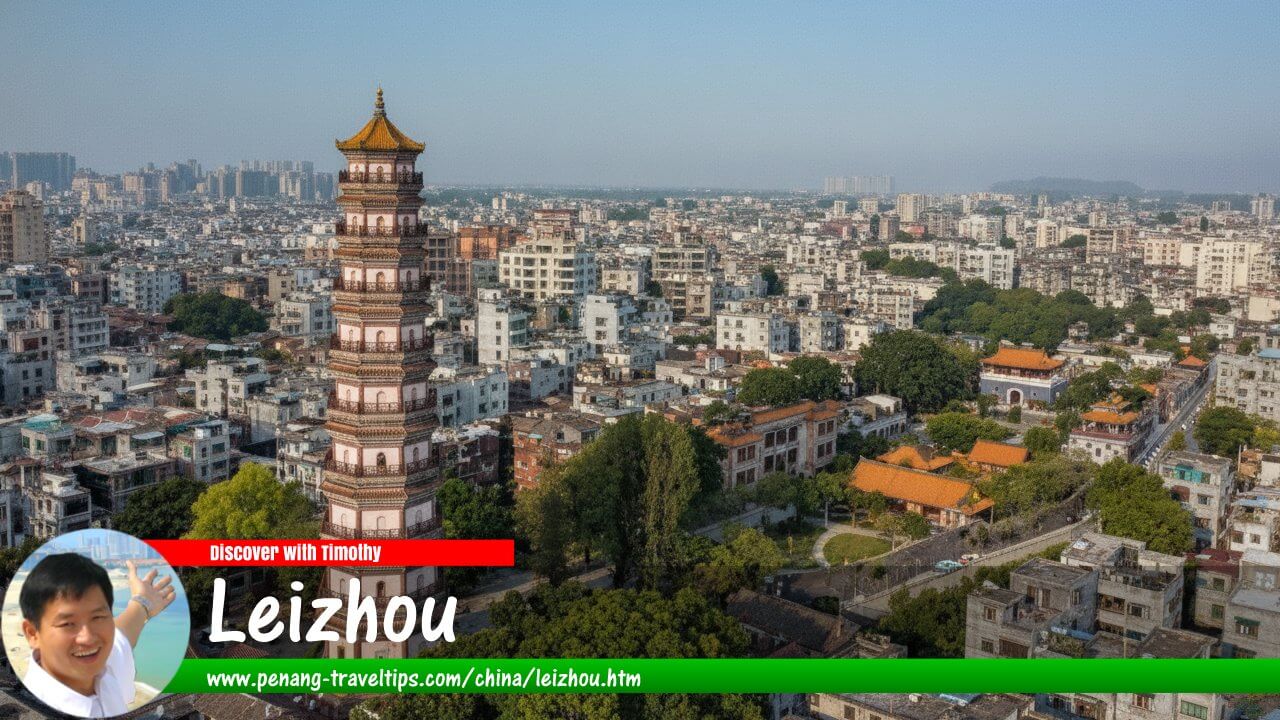 Leizhou, China (Photo edited with AI on 18 June 2026)
Leizhou (雷州, Léi zhōu) is a county-level city in southwestern Guangdong Province, China. Administered by Zhanjiang, it occupies much of the Leizhou Peninsula, the southernmost part of mainland China before Hainan Island. The city has a long and distinguished history stretching back more than two millennia and has served as an important administrative, cultural, and transportation center in southern China. Today, Leizhou is known for its unique volcanic landscapes, traditional culture, historic temples, fertile agricultural land, and strategic location along important maritime routes.1
Quick Facts
- English Name: Leizhou
- Chinese Name: 雷州
- Pinyin: Léi zhōu
- Province: Guangdong
- Administrative Status: County-level city under Zhanjiang
- Location: Leizhou Peninsula, southwestern Guangdong
- Population: Approximately 1.4 million
- Area: About 3,700 square kilometres
- Climate: Tropical to subtropical monsoon climate
- Main Industries: Agriculture, fisheries, food processing, tourism
- Nearest Airport: Zhanjiang Wuchuan International Airport
- Famous Attractions: Leizu Temple, Maodegong Drum City, Volcanic Landscapes, Tianchengtai Resort
Name and Origin
The name Leizhou is written as 雷州 in Chinese and romanized as Léi zhōu in pinyin. The character "Lei" (雷) means "thunder," while "Zhou" (州) traditionally referred to an administrative prefecture. Historical records suggest that the region was named after the frequent thunderstorms that occur on the Leizhou Peninsula due to its tropical maritime climate.2
The city was known by different names during various dynasties. During the Tang Dynasty, the area became an important administrative prefecture called Leizhou. The name has survived for over a thousand years and remains closely associated with the distinctive cultural identity of the peninsula and its people.3
Geography
Leizhou is situated on the Leizhou Peninsula in southwestern Guangdong Province. It lies south of Zhanjiang and faces the South China Sea to the east and the Gulf of Tonkin to the west. The peninsula forms the southern tip of mainland China and serves as a gateway to Hainan Island across the Qiongzhou Strait.4
The region is characterized by relatively flat terrain interspersed with low hills and volcanic formations. The Leizhou Peninsula was shaped by extensive volcanic activity millions of years ago, leaving behind volcanic rock formations, fertile soils, and unique geological features that distinguish the area from much of Guangdong.
Leizhou enjoys a tropical to subtropical monsoon climate. Summers are hot and humid, while winters are mild and relatively dry. The city receives abundant rainfall, which supports agriculture throughout the year. Typhoons occasionally affect the region during the summer and autumn months.
Several rivers and reservoirs provide water resources for agriculture and domestic use. The extensive coastline supports fishing communities and marine industries. Mangrove ecosystems can also be found in certain coastal areas, providing important habitats for wildlife.
Languages and Dialects
Mandarin Chinese is widely used in education, government, and business. However, the traditional local language is the Leizhou dialect, a distinctive variety of the Min language family. The Leizhou dialect differs significantly from Mandarin and reflects centuries of linguistic development on the peninsula.5
In addition to the Leizhou dialect, Cantonese is understood by many residents due to Guangdong's broader linguistic environment. Some communities also speak Hakka dialects and other regional varieties. The coexistence of multiple dialects contributes to the rich cultural diversity of the region.
History
The history of Leizhou dates back over 2,000 years. Archaeological evidence indicates that indigenous peoples inhabited the peninsula long before the arrival of imperial Chinese administration. During the Qin Dynasty, the region was incorporated into the expanding Chinese empire.6
During the Han Dynasty, the area became an important frontier region for trade and communication with Southeast Asia. Maritime routes connecting southern China with present-day Vietnam and other parts of Southeast Asia frequently passed through waters near the Leizhou Peninsula.
Leizhou gained prominence during the Tang Dynasty when it became an established prefectural seat. Because of its distance from the imperial capital, it also served as a place of exile for officials who had fallen out of favor. Several notable scholars and statesmen spent periods of exile in Leizhou, leaving cultural and literary influences that remain significant today.7
During the Song and Yuan dynasties, maritime trade flourished, and Leizhou's ports participated in regional commerce. The Ming and Qing periods saw continued agricultural development and population growth. Temples, academies, and local cultural institutions expanded throughout the region.
In the twentieth century, Leizhou experienced political and economic transformations alongside the rest of China. Improved transportation, agricultural modernization, and regional development programs have contributed to its contemporary growth while preserving many traditional cultural practices.
Economy and Products
Leizhou's economy is based primarily on agriculture, fisheries, food processing, commerce, and tourism. The fertile volcanic soils of the peninsula support the cultivation of numerous crops, making agriculture one of the city's most important economic sectors.8
Major agricultural products include rice, sugarcane, bananas, pineapples, lychees, mangoes, peanuts, cassava, and vegetables. Tropical fruits from the Leizhou Peninsula are widely distributed throughout Guangdong and neighboring provinces.
Marine resources are another key economic asset. Coastal fisheries produce fish, shrimp, crabs, shellfish, and other seafood products. Aquaculture operations have expanded significantly in recent decades, contributing to local employment and exports.
Food processing industries convert agricultural and marine products into packaged goods for domestic and international markets. The city also supports manufacturing activities related to construction materials, machinery, and consumer products.
Tourism has become increasingly important as visitors seek out Leizhou's historic sites, volcanic landscapes, cultural attractions, and coastal resorts. Heritage tourism and eco-tourism have helped diversify the local economy.
How to Go There
By Air
Leizhou does not have a major commercial airport of its own. The nearest airport is Zhanjiang Wuchuan International Airport, located approximately 70 to 90 kilometres north of central Leizhou, depending on the destination within the city.
The airport offers flights to major Chinese cities including Beijing, Shanghai, Guangzhou, Shenzhen, Chengdu, Chongqing, Xi'an, Kunming, Hangzhou, and many others. Airlines serving the airport include China Southern Airlines, China Eastern Airlines, Air China, Shenzhen Airlines, Hainan Airlines, and several regional carriers.9
Visitors can travel from the airport to Leizhou by taxi, private transfer, coach, or rail connections through Zhanjiang.
By Rail
Leizhou is connected to China's railway network through stations on the Guangdong coastal rail system. Nearby stations provide access to high-speed and conventional rail services linking the peninsula with Guangzhou, Shenzhen, Zhanjiang, Maoming, and other major cities.
Many travelers arrive via Zhanjiang and continue to Leizhou using local transport services.
By Long-Distance Bus
Leizhou has several long-distance bus terminals serving routes throughout Guangdong Province and neighboring regions. Frequent coach services connect the city with Guangzhou, Shenzhen, Foshan, Dongguan, Zhanjiang, Maoming, and other destinations.
By Road
Modern highways connect Leizhou with Zhanjiang and the wider Pearl River Delta region. Private vehicles and intercity coaches provide convenient access throughout the peninsula.
How to Travel Locally
Transportation within Leizhou is relatively straightforward and affordable.
- Taxis: Metered taxis operate throughout the city and surrounding districts.
- E-Hailing Services: Didi Chuxing is the dominant ride-hailing platform and functions similarly to Uber.
- Public Buses: Local bus routes connect neighborhoods, markets, schools, and tourist attractions.
- Motorcycle Taxis: In some areas, informal motorcycle taxi services may be available.
- Bicycles and E-Bikes: Popular for short-distance travel within urban areas.
- Car Rental: Available through agencies in nearby cities such as Zhanjiang.
Leizhou does not currently have a subway, MRT, LRT, tram, rickshaw, trishaw, or tuk-tuk system. Most visitors rely on taxis, buses, and ride-hailing services.
Tourist Attractions
Leizu Temple
Leizu Temple is one of the most important historic sites in the city. Dedicated to local cultural and spiritual traditions, the temple reflects centuries of religious heritage and architectural craftsmanship.
Maodegong Drum City
This cultural attraction showcases the famous drum traditions of the Leizhou region. Visitors can experience performances, exhibitions, traditional architecture, and local crafts.
Tianchengtai Resort
Tianchengtai is a popular coastal destination featuring beaches, recreational facilities, scenic ocean views, and holiday accommodations. It attracts both domestic tourists and local residents.
Leizhou West Lake
Often compared to other famous Chinese lakes on a smaller scale, Leizhou West Lake offers peaceful scenery, traditional pavilions, gardens, and walking paths.
Volcanic Geological Landscapes
The volcanic heritage of the Leizhou Peninsula is visible in rock formations, lava fields, and distinctive terrain. These geological features provide valuable insight into the region's natural history.
Sanyuan Pagoda
This historic pagoda stands as a symbol of traditional architecture and local cultural heritage. It has become one of Leizhou's recognizable landmarks.
Ancient City Sites
Remnants of historic walls, temples, and administrative buildings reveal the city's long role as a regional political and cultural center.
Coastal Fishing Villages
Traditional fishing communities along the peninsula offer opportunities to experience local customs, seafood cuisine, and maritime culture.
Mangrove Wetlands
The coastal wetlands surrounding parts of the peninsula provide habitats for birds and marine life, making them attractive destinations for nature enthusiasts.
Local Markets
Markets throughout Leizhou showcase tropical fruits, seafood, handicrafts, traditional snacks, and local specialties that reflect the city's agricultural abundance and cultural diversity.
Leizhou, China is  the Map of Cities in China
References
- Encyclopaedia Britannica – Guangdong Province
- China Daily – Historical Geography of Southern China
- Government of China – Administrative History Resources
- Geographical Information on the Leizhou Peninsula
- Encyclopaedia Britannica – Min Languages
- Encyclopaedia Britannica – History of China
- UNESCO Cultural Heritage Resources
- National Bureau of Statistics of China
- International Air Transport Association Airport Information
Page Details
This page was created/modified on 18 June 2026. Hi, my name is Timothy and created it from my research, for my own entertainment, knowledge and to satisfy my curiosity. I am providing the information to you in good faith and hope it is useful. I try to get the details as accurate as possible. I also try to update the page whenever I stumble on new details. So this and all my other pages are perpetual work in progress. If you discover any error, please politely inform me, pointing out where the error lies, and I will correct it as soon as possible. Your helpfulness will keep this page accurate, relevant and helpful to those who need the information.