
Beijing Daxing International Airport
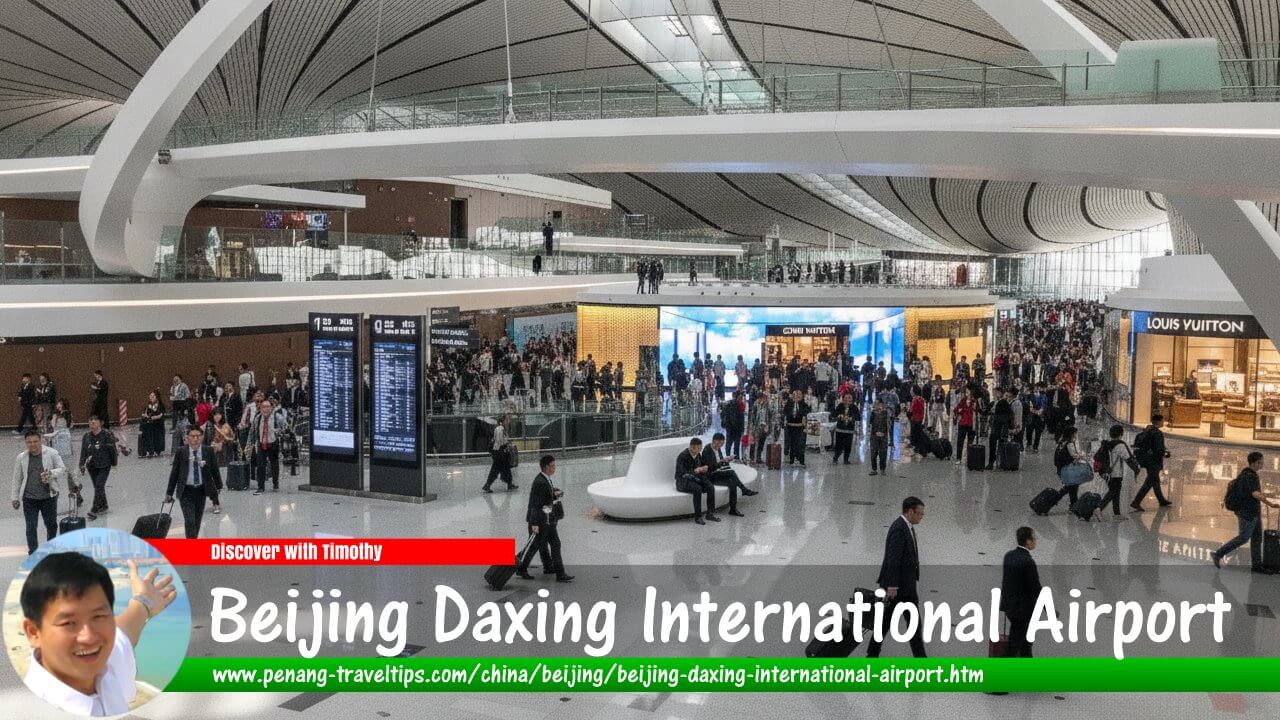 Beijing Daxing International Airport (Photo edited with AI on 8 June 2026)
Beijing Daxing International Airport (北京大兴国际机场, Běijīng Dàxīng Guójì Jīchǎng) is one of the world's most remarkable aviation facilities and serves as one of the two major international airports for Beijing, the capital of China. Opened in 2019, the airport was built to relieve congestion at Beijing Capital International Airport while supporting the rapid growth of air travel in northern China. Known for its striking starfish-shaped terminal designed by the renowned architectural firm Zaha Hadid Architects, the airport has become an international symbol of modern Chinese engineering and infrastructure development.1
Quick Facts
- Official Name: Beijing Daxing International Airport
- Chinese Name: 北京大兴国际机场
- Pinyin: Běijīng Dàxīng Guójì Jīchǎng
- IATA Code: PKX
- ICAO Code: ZBAD
- Location: Daxing District, Beijing, China
- Opened: 25 September 2019
- Terminal Buildings: 1 main passenger terminal
- Civilian Runways: 4
- Military Runway: 1
- Terminal Area: Approximately 700,000 square metres
- Boarding Gates: 82
- Primary Airlines: China Southern Airlines, China Eastern Airlines, China United Airlines and international carriers
- Architect: Zaha Hadid Architects
Location
Beijing Daxing International Airport is situated in the southern part of Beijing Municipality, primarily within Daxing District and extending across the boundary into Langfang in Hebei Province. The airport lies approximately 46 kilometres south of central Beijing and about 45 to 65 kilometres from Beijing Capital International Airport, depending on the route taken.2
The location was carefully selected to support the development of the larger Jing-Jin-Ji region, which integrates Beijing, Tianjin, and Hebei Province into a major economic zone. By positioning the airport south of the city centre, planners aimed to reduce air traffic congestion while improving accessibility for travellers from southern Beijing and neighbouring provinces.3
The airport's strategic location also allows it to function as a transportation hub linking air travel with high-speed rail, metro services, expressways, and long-distance bus networks. This integrated approach makes the airport a key gateway to northern China.
History
The concept of constructing a second major international airport for Beijing emerged during the late 2000s as passenger traffic at Beijing Capital International Airport approached its design limits. By 2012, the existing airport was operating near maximum capacity, creating concerns about future growth and operational efficiency.4
Plans for the new airport were formally approved by China's National Development and Reform Commission in December 2014. Construction commenced shortly afterwards on 26 December 2014. The project represented one of the most ambitious infrastructure developments in modern Chinese history, involving extensive coordination among government agencies, engineers, architects, and transportation planners.5
The terminal's distinctive design was created by Zaha Hadid Architects, whose vision centred on a starfish-like structure with six radiating concourses connected to a central hub. This layout was intended to minimise walking distances while creating an iconic architectural landmark.6
Construction progressed rapidly, with the terminal structure completed in 2019. On 25 September 2019, Beijing Daxing International Airport officially opened in a ceremony attended by Chinese President Xi Jinping. Commercial flights for the general public began the following day. At the same time, Beijing Nanyuan Airport, China's oldest airport, ceased civilian operations, with its airline services transferring to the new airport.7
Since its opening, Beijing Daxing International Airport has become one of China's most important aviation hubs, supporting domestic and international travel while serving as a showcase for advanced airport technology and design.
Dimensions and Facilities
Terminal Building
The airport's most impressive feature is its enormous passenger terminal. Covering approximately 700,000 square metres, the terminal is among the largest airport buildings ever constructed and is frequently cited as one of the largest single-building airport terminals in the world.8
The terminal's roof and concourses form a six-armed starfish pattern radiating from a central atrium. This innovative layout reduces walking distances, ensuring that passengers can reach even the furthest gates within a relatively short time. Natural lighting enters through extensive skylights, creating an open and spacious atmosphere throughout the building.9
Runways
At present, Beijing Daxing International Airport operates with four civilian runways and one additional military runway. The airport's long-term master plan allows for further expansion as passenger demand increases.10
The runway system has been designed to support a very high volume of aircraft movements, with advanced air traffic control technology enabling efficient operations. Future development plans envision additional runways and expanded capacity capable of handling over 100 million passengers annually.11
Gates and Aerobridges
The airport currently provides approximately 82 boarding gates distributed throughout the terminal complex. Most of these gates are equipped with modern aerobridges, allowing passengers to board aircraft directly from the terminal without using ground transportation.12
The gate arrangement reflects the airport's focus on passenger convenience. The centralised design means that travellers can move efficiently between check-in areas, security checkpoints, retail facilities, and departure gates.
Technology and Passenger Services
The airport incorporates extensive use of smart technologies, including biometric identification systems, facial recognition checkpoints, self-service kiosks, automated baggage handling systems, and digital navigation tools. These technologies are intended to improve security while reducing waiting times for passengers.13
Passengers also have access to numerous amenities, including restaurants, retail outlets, lounges, art installations, traditional Chinese-themed courtyards, and observation areas. These facilities contribute to the airport's reputation as both a transportation hub and an architectural destination.
Airlines Operating at Beijing Daxing International Airport
Beijing Daxing International Airport serves as a major hub for several Chinese and international airlines. The airport is particularly important for members of the SkyTeam alliance and carriers that have shifted operations from Beijing Capital International Airport.14
Major airlines operating from the airport include:
- Air China
- Air Macau
- Beijing Capital Airlines
- British Airways
- China Eastern Airlines
- China Southern Airlines
- China United Airlines
- Delta Air Lines
- Etihad Airways
- Finnair
- Hebei Airlines
- LOT Polish Airlines
- Malaysia Airlines
- Royal Air Maroc
- Royal Brunei Airlines
- Swiss International Air Lines
- Vietnam Airlines
- XiamenAir
Additional domestic and international airlines periodically add services as the airport expands its route network. The facility plays a particularly significant role in connecting Beijing with destinations throughout Asia, Europe, the Middle East, and other regions of the world.15
How to Go to Beijing Daxing International Airport
One of the defining features of Beijing Daxing International Airport is its extensive transportation network. Multiple options are available for passengers travelling to and from the airport.
Metro
The Beijing Daxing Airport Express provides one of the fastest connections between central Beijing and the airport. The dedicated rail service significantly reduces travel time and offers a convenient alternative to road transportation.16
Additional metro services, including Line 19 and other connecting routes, provide access from various parts of the city.
High-Speed Rail
The airport incorporates an integrated railway station beneath the terminal. High-speed and intercity rail services connect the airport with Beijing and other cities in the region, making transfers between air and rail transportation straightforward and efficient.17
Airport Buses
Numerous airport shuttle bus routes operate between the airport and destinations throughout Beijing and neighbouring cities. These services provide an economical option for travellers carrying luggage.
Taxi and Ride-Hailing Services
Taxis and ride-hailing platforms are widely available. Depending on traffic conditions, the journey between central Beijing and the airport generally takes between 45 and 90 minutes. Dedicated road infrastructure and expressways help facilitate access to the airport.18
Private Vehicle
Travellers can also reach the airport by private car using a network of modern expressways. Extensive parking facilities are available for both short-term and long-term parking needs.
Conclusion
Beijing Daxing International Airport represents one of the most ambitious airport projects ever completed. Combining innovative architecture, advanced technology, large-scale transportation integration, and substantial passenger capacity, it serves as a major gateway to China and the wider Asia-Pacific region. Its distinctive design, efficient layout, and strategic location have helped establish it as one of the world's most recognisable modern airports and a significant achievement in contemporary infrastructure development.
References
- Beijing Daxing International Airport - Wikipedia
- Beijing Daxing Airport Guide
- Visit Beijing - Daxing International Airport
- Development History
- Construction and Approval
- Architectural Digest
- Airport Opening
- Daxing PKX Airport
- Condé Nast Traveler
- Runway Information
- Wired
- China Airline Travel
- Technology and Services
- Airline Operations
- Airlines at Daxing Airport
- Daxing Airport Express
- Integrated Transport Hub
- Ground Transportation
Page Details
This page was created/modified on 8 June 2026. Hi, my name is Timothy and created it from my research, for my own entertainment, knowledge and to satisfy my curiosity. I am providing the information to you in good faith and hope it is useful. I try to get the details as accurate as possible. I also try to update the page whenever I stumble on new details. So this and all my other pages are perpetual work in progress. If you discover any error, please politely inform me, pointing out where the error lies, and I will correct it as soon as possible. Your helpfulness will keep this page accurate, relevant and helpful to those who need the information.