
Ara Kuda, Bukit Mertajam (English Edition)
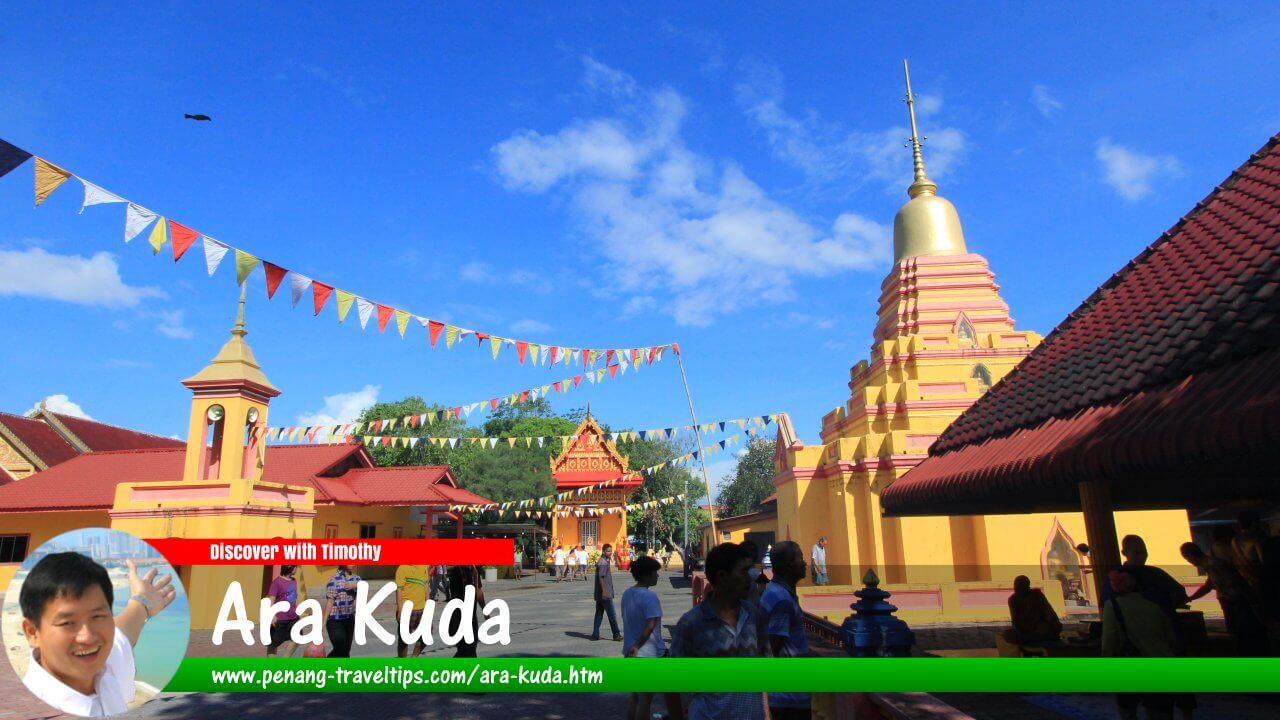 Ara Kuda (3 May 2015)

Also available: Ara Kuda (Edisi BM) & Ara Kuda (Chinese Version)
Ara Kuda (GPS: 5.43802, 100.51308) is a rural locality in Seberang Perai, on the mainland portion of Penang, Malaysia. Located in the wider Bukit Mertajam area, it is characterised by village settlements, local roads and stretches of greenery. The locality is associated with Kampung Ara Kuda and the neighbouring village of Kampung Teluk Wang, a settlement with a long-standing Thai Buddhist community. One of the area's principal landmarks is Wat Rajchaphohong, a Thai Buddhist temple established in 1931.1
Quick Facts
- Name: Ara Kuda
- Location: Seberang Perai, Penang, Malaysia
- Wider locality: Bukit Mertajam area
- Nearby settlements: Penanti and Kampung Teluk Wang
- Nearby state: Kedah
- Main road: Jalan Ara Kuda (State Route P119)
- Notable landmark: Wat Rajchaphohong Thai Buddhist Temple
- Other local landmark: Masjid Jamek Ara Kuda
- Character: Rural settlement with village houses, greenery and local roads
Geography and Location
Ara Kuda is situated in the inland part of Seberang Perai, away from the main coastal urban areas of Butterworth and Perai. It lies northeast of Penanti and close to the Penang–Kedah state boundary. Lunas, a town in Kedah, is located to the southeast of the locality.
The surrounding landscape includes village houses, cultivated land, trees and patches of greenery. Compared with the more densely developed parts of Bukit Mertajam, the area retains a predominantly rural character. Development is dispersed along local roads rather than concentrated in a large commercial town centre.
Jalan Ara Kuda is the principal road associated with the locality. It connects the area with Penanti and continues towards settlements in the direction of Tasek Gelugor and Lunas. Parts of the road pass through relatively quiet surroundings, with houses and village access roads appearing between stretches of vegetation.
Place boundaries in this part of mainland Penang can be fluid in everyday usage. Ara Kuda, Penanti and Kampung Teluk Wang are closely connected geographically, and the area around Wat Rajchaphohong may be described under more than one locality name in different sources.1
History and Settlement
Ara Kuda developed as part of the rural settlement network of mainland Penang. Its location near the Kedah border connects it geographically with inland communities on both sides of the state boundary. Historically, villages in the wider Bukit Mertajam region were associated with agriculture and local trading, although detailed published records specifically documenting the early development of Ara Kuda are limited.
An important part of the area's local history is the Thai, or Siamese, settlement at Kampung Teluk Wang. The village emerged as a community settlement in the early 20th century and became associated with Thai cultural and Buddhist religious traditions. Wat Rajchaphohong was established there in 1931 and remains a significant landmark of this heritage.2
The temple's presence reflects the historical settlement of Thai-speaking Buddhists in northern Peninsular Malaysia. Communities in this border region have maintained cultural and religious connections that extend beyond the modern state boundary between Penang and Kedah.
Today, Ara Kuda remains primarily a rural locality. Its identity is shaped by its village environment, its connection to Penanti and Kampung Teluk Wang, and the continued presence of places of worship serving the surrounding population.
Origin of the Name Ara Kuda
The name Ara Kuda is associated with Kampung Ara Kuda, from which the locality takes its name. Jalan Ara Kuda, the main road through the area, also uses the same place name.
In Malay, ara refers to a type of fig tree, while kuda means horse. Read literally, the words can be translated as “horse fig” or “horse fig tree”. However, a literal translation does not establish the historical reason for the place name. A reliable account explaining how the name Ara Kuda originated has not been confirmed, so its precise etymology remains uncertain.
Places of Interest in Ara Kuda
Wat Rajchaphohong Thai Buddhist Temple
Wat Rajchaphohong is one of the best-known landmarks in the Ara Kuda–Kampung Teluk Wang area. The Thai Buddhist temple was established in 1931 within a Siamese settlement and serves as an important religious and cultural centre for the local Buddhist community.2
The temple complex includes a Dharmasala Hall, which was officially opened on 9 June 2001. The hall contains Buddha images and murals illustrating scenes from Buddhist traditions. The temple also hosts religious observances and celebrations associated with the Buddhist calendar and Thai cultural traditions.
Visitors should remember that the temple is an active religious site. Appropriate clothing and respectful behaviour are recommended, particularly when entering prayer halls or visiting during ceremonies. Visitors should also seek permission before photographing worshippers or religious activities.
Masjid Jamek Ara Kuda
Masjid Jamek Ara Kuda is a local mosque serving the Muslim community in the area. It is one of the identifiable landmarks near the central Ara Kuda locality and reflects the presence of different religious communities within the surrounding rural settlement network.
As a functioning place of worship, access and visitor arrangements may depend on prayer times and mosque activities. Visitors who are not attending prayers should respect the mosque's rules and avoid disrupting worshippers.
Kampung Teluk Wang
Kampung Teluk Wang is a nearby village associated with the Thai Buddhist community of this part of Seberang Perai. Its settlement history and the presence of Wat Rajchaphohong make it relevant to understanding the cultural landscape around Ara Kuda.3
The village is not a purpose-built tourist district. Its significance lies primarily in its residential community, religious heritage and local history. Visitors exploring the area should be considerate of residents and avoid entering private property without permission.
Getting to Ara Kuda
Ara Kuda is easiest to reach by car or motorcycle. It is connected to the surrounding road network by Jalan Ara Kuda, also identified as State Route P119. The road links the locality with Penanti and continues towards Tasek Gelugor and the direction of Lunas.
By Car
Drivers approaching from the Butterworth–Kulim Expressway (BKE) can use Exit 1505 at the Tasik Mengkuang Interchange. From the interchange, follow the road towards Penanti, then join Jalan Ara Kuda in the direction of Tasek Gelugor and Lunas. Road signs for Kampung Teluk Wang can help drivers locate the area around Wat Rajchaphohong.1
Those travelling from Bukit Mertajam town should allow additional time for the journey, as the route depends on the starting point and traffic conditions. A navigation application can be useful for locating individual destinations, especially village roads and places of worship.
By Public Transport
Public transport options may be more limited than in central Bukit Mertajam or other urban parts of Seberang Perai. Travellers should check current Rapid Penang or other available local bus services before setting out, as routes, operating hours and service frequencies may change. A bus journey may need to be combined with a taxi or e-hailing ride for the final part of the trip.
Visitors arriving by train can use the railway network to reach Bukit Mertajam or another suitable station, then continue by road. Ara Kuda does not have its own railway station.
Getting Around Ara Kuda
A private vehicle is the most practical way to move around Ara Kuda and visit nearby places such as Kampung Teluk Wang and Wat Rajchaphohong. A motorcycle can also be convenient for local travel, provided riders take care on narrow village roads.
Walking is possible along some stretches of Jalan Ara Kuda, but the area is not necessarily designed for pedestrians. Road shoulders may be narrow or inconsistent, and traffic can include motorcycles, cars and other local vehicles. Visitors should avoid assuming that every stretch of road is suitable for walking.
For short trips between villages, taxis and e-hailing services may be an option, but availability and pick-up times can vary. It is sensible to arrange return transport in advance if visiting during quieter periods.
Where to Stay
Ara Kuda is a rural locality rather than a major accommodation centre, so travellers may find a wider choice of hotels and other lodging in the larger towns nearby.
- Bukit Mertajam: A practical base for visitors who want access to town facilities, shops, restaurants and transport connections.
- Kulim, Kedah: An alternative for travellers whose plans also include Lunas and other destinations on the Kedah side of the state boundary.
- Other parts of Seberang Perai: Accommodation in larger urban areas may be more suitable for visitors combining Ara Kuda with business, shopping or sightseeing elsewhere on the mainland.
When choosing accommodation, consider the distance to the intended destination, availability of transport and whether the trip involves visiting the temple or nearby villages. Visitors planning to attend a religious event should check accommodation availability early if they expect demand to increase.
Food and Dining
Ara Kuda is primarily residential and rural, so visitors should not expect the concentration of restaurants found in a major town centre. Food options may include small local eateries, village food stalls and shops serving residents along nearby roads. Opening hours can vary, and some establishments may operate only at particular times of day.
For a broader choice of meals, travellers can head towards Penanti, Bukit Mertajam or Lunas. These nearby towns offer more developed commercial areas, where visitors can look for Malaysian dishes, Chinese food, Indian cuisine and everyday kopitiam fare.
Visitors interested in Thai food should check current local listings rather than assume that every establishment in the Thai settlement serves Thai cuisine. Likewise, anyone with dietary requirements should confirm ingredients and food preparation directly with the vendor.
Best Time to Visit
Ara Kuda can be visited throughout the year. Daytime visits are convenient for exploring the roads and village surroundings, while visits to Wat Rajchaphohong should take account of temple activities and any special religious events.
As the area has a tropical climate, visitors should be prepared for hot weather, humidity and sudden rain. Comfortable footwear, drinking water and protection from the sun are useful when exploring outdoors. After heavy rain, take extra care on local roads and any uneven surfaces.
Practical Information for Visitors
- Use a navigation application to locate Ara Kuda, Kampung Teluk Wang or Wat Rajchaphohong, depending on the intended destination.
- Allow time to explore the surrounding roads, as local landmarks are spread across a rural area rather than concentrated in one pedestrian precinct.
- Dress respectfully when visiting temples and mosques, and follow any signs or instructions displayed at religious premises.
- Ask permission before photographing residents, private homes or religious ceremonies.
- Check public transport and food outlet operating hours before travelling, particularly on public holidays or during the evening.
- Drive carefully on village roads and be alert for pedestrians, motorcycles and vehicles entering or leaving residential properties.
 Map of Ara Kuda
 Sights in Ara Kuda
- Desa Ara Permai (GPS: 5.44147, 100.51386)

- Masjid Jamek Ara Kuda (GPS: 5.43713, 100.51215)

- Wat Rajchaphohong (GPS: 5.42905, 100.51083)

Location of Ara Kuda on the Map of Bukit Mertajam
Ara Kuda is on the Map of Seberang Perai
References
- Wat Rajchaphohong Thai Buddhist Temple, Penang Travel Tips. Background on the temple, its location, its establishment in 1931 and directions via Jalan Ara Kuda.
- Wat Thai Buddha Rajaphohong, e-RIBI. Malaysian government directory entry giving the temple's address, year of establishment and religious background.
- Kampung Teluk Wang, Penang Travel Tips. Information on the village, its Thai settlement history and its relationship with Wat Rajchaphohong.
Page Details
This page was created on 25 October 2026. Hi, my name is Timothy and created it from my research, for my own entertainment, knowledge and to satisfy my curiosity. I am providing the information to you in good faith and hope it is useful. I try to get the details as accurate as possible. I also try to update the page whenever I stumble on new details. So this and all my other pages are perpetual work in progress. If you discover any error, please politely inform me, pointing out where the error lies, and I will correct it as soon as possible. Your helpfulness will keep this page accurate, relevant and helpful to those who need the information.Want to share your Penang travel experiences or get tips from fellow travellers?
Join the Penang Travel Tips Facebook GroupUseful guides for visiting Penang
My Videos of Penang
Latest Pages & Updates
Buy Me A Coffee
If you enjoy the information I provide and want to support the work I do, please buy me a coffee! I appreciate it immensely, thank you so much!
