
New Zealand Travel Guide
 Go Back
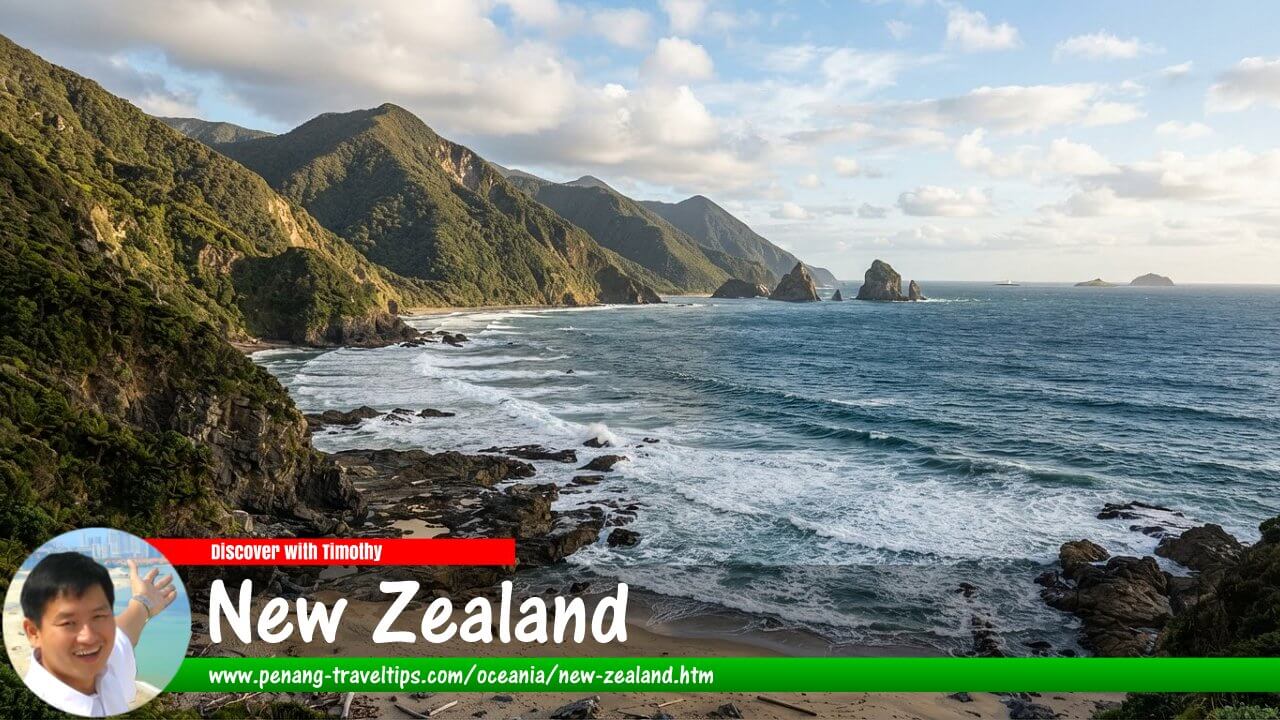 New Zealand Travel Guide (AI Image generated on 25 August 2026)
Also available: Panduan Melawat New Zealand
Introduction to New Zealand
New Zealand is an island country in the southwestern Pacific Ocean, renowned for its spectacular natural landscapes, outdoor activities, distinctive Māori culture and relaxed way of life. The country consists mainly of two large islands, the North Island and South Island, together with numerous smaller islands.
Although New Zealand is geographically isolated from the rest of the world, it is a popular destination for travellers seeking dramatic scenery, adventure, wildlife, hiking, road trips and encounters with Māori heritage. Its landscapes range from volcanic mountains and geothermal areas to fjords, glaciers, beaches, forests and rolling farmland.
New Zealand
New Zealand is known in Māori as Aotearoa, a name commonly translated as "Land of the Long White Cloud". The name Aotearoa is widely used alongside New Zealand, including in official and everyday contexts.
The country has a population of around five million people, with most of the population living in urban areas. Auckland is the largest city, while Wellington is the capital and Christchurch is the largest city on the South Island.
Geography of New Zealand
New Zealand lies in the southwestern Pacific Ocean, southeast of Australia. It is separated from Australia by the Tasman Sea, with the two countries separated by roughly 2,000 kilometres at their closest points.
The country's geography is remarkably varied for its relatively small population. Mountains, volcanic landscapes, lakes, rivers, forests, beaches and coastal areas can all be found within relatively short distances of one another.
North Island
The North Island is the more populous of New Zealand's two main islands. It contains Auckland, Wellington, Rotorua, Hamilton, Napier and other important cities and towns.
The island is particularly known for its volcanic and geothermal landscapes. Rotorua is one of the best-known destinations for experiencing geothermal activity and Māori culture.
South Island
The South Island is larger in area but has a much smaller population. It is famous for its dramatic mountain scenery, particularly the Southern Alps, which run through much of the island.
Popular destinations include Christchurch, Queenstown, Dunedin, Lake Tekapo, Aoraki / Mount Cook, Milford Sound and the West Coast.
Southern Alps
The Southern Alps form the backbone of much of the South Island. They contain numerous high peaks, glaciers and alpine valleys.
Aoraki / Mount Cook is the highest mountain in New Zealand and is located within Aoraki / Mount Cook National Park. The surrounding area is one of the country's most spectacular destinations for mountain scenery and outdoor activities.
Fiordland
Fiordland, in the southwest of the South Island, is one of New Zealand's most dramatic natural regions. It contains deep fiords, mountains, forests, waterfalls and lakes.
Milford Sound / Piopiotahi is the best-known attraction in Fiordland, while Doubtful Sound / Patea is another major destination for visitors interested in the region's spectacular scenery.
New Zealand's Islands
Besides the North and South Islands, New Zealand has numerous smaller islands. Some are inhabited while others are important for conservation and wildlife.
Stewart Island / Rakiura, south of the South Island, is the country's third-largest island and is known for its forests, hiking trails and birdlife.
Climate of New Zealand
New Zealand has a temperate climate, although weather conditions vary considerably between regions. The country lies in the Southern Hemisphere, so its seasons are opposite to those of Europe and North America.
Summer generally lasts from December to February, autumn from March to May, winter from June to August and spring from September to November.
Summer in New Zealand
Summer is generally the warmest period and is popular for hiking, road trips, beaches and outdoor activities. Daylight hours are long, making it possible to spend more time exploring.
Winter in New Zealand
Winter brings colder temperatures, particularly in mountainous areas. Ski resorts on both the North and South Islands attract visitors interested in skiing and snowboarding.
Weather Can Change Quickly
New Zealand's weather can change rapidly, particularly in mountainous areas. A sunny morning can sometimes be followed by rain, strong winds or much colder conditions.
Travellers planning outdoor activities should therefore check the weather forecast and track conditions before setting out.
History of New Zealand
The first people to settle New Zealand were Polynesian voyagers, whose descendants became the Māori people. European exploration began centuries later, followed by increasing European settlement during the nineteenth century.
Māori Culture
Māori culture is an important part of New Zealand's national identity. Māori traditions, language, art, music, carving, weaving and storytelling continue to play an important role in contemporary New Zealand.
Visitors can experience Māori culture through cultural performances, guided tours, museums, historical sites and visits to marae, where appropriate arrangements have been made.
Treaty of Waitangi
The Treaty of Waitangi, signed in 1840 between representatives of the British Crown and many Māori chiefs, is regarded as a founding document of modern New Zealand.
The treaty and its continuing significance are important to understanding New Zealand's history, politics and relationship between Māori and the Crown.
European Settlement
European settlement increased substantially during the nineteenth century. British migration and the development of agriculture, trade and towns transformed the country's population and economy.
New Zealand Today
Today, New Zealand is a developed country with a high standard of living and a predominantly urban population. Agriculture, tourism, services, manufacturing and international trade are important parts of its economy.
Languages of New Zealand
English is the main language used throughout New Zealand. Māori is also an official language and has an important place in the country's cultural identity. New Zealand Sign Language is also an official language.
Māori Place Names
Visitors will encounter many Māori names throughout New Zealand. Some places are commonly known by both English and Māori names, while others increasingly use their Māori names in official contexts.
For example, the capital is commonly known as Wellington, while the city of Hamilton is also known by its Māori name, Kirikiriroa. Learning a few Māori place names can make travelling around the country more meaningful.
New Zealand's Natural Environment
New Zealand is internationally known for its natural environment. Its geographical isolation has resulted in distinctive ecosystems and a remarkable variety of native plants and animals.
Native Birds
New Zealand has many distinctive native birds, including the kiwi, kea, tūī, kererū and kākā. Several native species are threatened by introduced predators, making conservation an important national concern.
Kiwi
The kiwi is New Zealand's best-known native bird and has become a national symbol. It is a flightless, nocturnal bird and can be difficult to see in the wild.
Visitors may have better opportunities to see kiwi at conservation centres and wildlife sanctuaries.
Conservation in New Zealand
New Zealand has an extensive network of national parks, conservation areas and marine reserves. The Department of Conservation, commonly known as DOC, manages many of the country's most important natural areas and hiking tracks.
National Parks
New Zealand has numerous national parks protecting mountains, forests, lakes, coastlines and other natural environments.
Among the best known are Tongariro National Park, Abel Tasman National Park, Fiordland National Park, Aoraki / Mount Cook National Park and Westland Tai Poutini National Park.
Outdoor Activities
New Zealand is particularly well suited to outdoor activities. Hiking, cycling, kayaking, skiing, snowboarding, sailing and wildlife watching are among the activities available to visitors.
Hiking in New Zealand
Hiking, known locally as tramping, is one of the country's most popular outdoor activities. There are trails ranging from short walks suitable for casual visitors to multi-day routes requiring considerable preparation.
Great Walks
New Zealand's Great Walks are a collection of premier multi-day hiking tracks managed by the Department of Conservation. They pass through some of the country's most scenic landscapes.
Because accommodation on popular Great Walks can fill quickly, advance booking is often necessary, particularly during the peak season.
Adventure Tourism
New Zealand has developed a strong reputation for adventure tourism. Queenstown is particularly famous for activities such as bungee jumping, jet boating, skydiving and other adrenaline-filled experiences.
Road Trips
Road trips are one of the best ways to experience New Zealand, especially outside the major cities. Driving allows visitors to stop at viewpoints, small towns, lakes, beaches and other places that may be difficult to reach by public transport.
However, travellers should remember that distances can be deceptive. Mountain roads, winding routes and changing weather can make journeys take considerably longer than expected.
New Zealand as a Travel Destination
New Zealand appeals to many different types of travellers. Nature lovers can explore national parks and hiking trails, while families can enjoy wildlife attractions and scenic journeys. Adventure travellers have a huge choice of activities, and those interested in culture can learn more about Māori traditions and New Zealand's history.
Major Tourist Destinations
The country's major tourist destinations include Auckland, Rotorua, Wellington, Christchurch, Queenstown, Dunedin, Taupō, Nelson and the West Coast.
Each destination offers a different experience, making it worthwhile to choose destinations according to the type of holiday you want.
Auckland
Auckland is New Zealand's largest city and the main international gateway for many visitors. It is situated between two large harbours and is surrounded by volcanic landscapes, beaches and islands.
Rotorua
Rotorua is famous for geothermal activity, Māori culture, hot springs, geysers and mud pools. It is one of the best places in New Zealand to experience both the country's volcanic landscape and Māori heritage.
Wellington
Wellington is the capital of New Zealand. It is known for its waterfront, cultural institutions, museums, cafés and lively arts scene.
Christchurch
Christchurch is the largest city on the South Island and an important gateway to destinations throughout the South Island. It is known for its gardens, parks and proximity to the Southern Alps.
Queenstown
Queenstown is one of New Zealand's most popular tourist destinations. Surrounded by mountains and Lake Wakatipu, it is particularly famous for adventure activities and spectacular scenery.
Dunedin
Dunedin has strong Scottish influences and is known for its historic architecture, university, wildlife and proximity to the Otago Peninsula.
Milford Sound
Milford Sound / Piopiotahi is one of New Zealand's most iconic natural attractions. Visitors can explore the fiord by boat, kayak or scenic flight.
New Zealand for First-Time Visitors
First-time visitors should resist the temptation to cover the entire country in a single short trip. The North and South Islands each contain enough attractions for a substantial holiday.
A well-planned itinerary combining a few major destinations with time for scenic drives and outdoor activities will generally provide a more enjoyable experience than trying to visit too many places.
Why Visit New Zealand?
New Zealand offers an unusual combination of dramatic scenery, accessible outdoor activities, distinctive Māori culture and relatively uncrowded natural areas. Its compact cities and excellent road-trip opportunities also make it relatively straightforward to explore.
Whether your interest is hiking through mountains, exploring geothermal landscapes, visiting Māori cultural sites, driving through spectacular countryside or simply enjoying a slower holiday surrounded by nature, New Zealand offers plenty of opportunities.
Getting to and Around New Zealand
New Zealand is a relatively easy country to travel around once you understand its geography and the distances involved. Most international visitors arrive by air, while travelling between destinations can be done by domestic flight, car, bus, train or ferry.
Getting to New Zealand
For international travellers, flying is by far the most practical way to reach New Zealand. The country's main international gateway is Auckland Airport, although international flights also operate to other airports including Christchurch, Wellington, Queenstown and Dunedin.
Travellers from Malaysia will normally find Auckland the most convenient point of entry, although flight options can vary depending on the season, airline and destination.
Flights from Malaysia to New Zealand
There are regular air connections between Malaysia and New Zealand, although direct and one-stop options depend on the airline and travel period.
Travellers from Kuala Lumpur can compare flights to Auckland, Christchurch, Wellington and other New Zealand destinations. A flight to Auckland is often the simplest option for a first visit, particularly when starting an itinerary on the North Island.
Auckland Airport
Auckland Airport is New Zealand's largest international airport and the main entry point for visitors arriving from overseas. It is located south of central Auckland and is connected to the city by road and public transport.
Christchurch Airport
Christchurch Airport is the main international gateway to the South Island. It can be a convenient arrival point for travellers whose itinerary focuses on Christchurch, Aoraki / Mount Cook, Queenstown, the West Coast or other destinations in the South Island.
Wellington Airport
Wellington Airport primarily handles domestic flights, together with selected international services. It is convenient for travellers visiting the capital and the lower North Island.
Queenstown Airport
Queenstown Airport serves one of New Zealand's most popular tourist regions. It is particularly useful for travellers whose main interests are Queenstown, Wānaka, Fiordland and the Southern Alps.
Arriving at the Airport
After arriving in New Zealand, allow sufficient time for immigration, baggage collection and biosecurity inspection. New Zealand has strict biosecurity rules, and visitors should declare food, plant material, animal products and other restricted items when required.
Domestic Flights
Domestic flights are one of the quickest ways to travel between distant parts of New Zealand. They are particularly useful when the available holiday time is limited.
For example, flying between Auckland and Christchurch can save considerable time compared with travelling overland. Domestic flights can also connect Auckland, Wellington, Christchurch, Queenstown, Dunedin and other regional airports.
Air New Zealand
Air New Zealand is the country's principal airline and operates an extensive domestic network. It connects the main cities with numerous regional destinations.
Jetstar
Jetstar also operates domestic services within New Zealand on selected routes. Travellers should compare fares, baggage allowances and schedules rather than choosing an airline based solely on the advertised ticket price.
Travelling by Car
Driving is one of the best ways to explore New Zealand, particularly if you want to visit smaller towns, national parks, scenic viewpoints and places away from the main cities.
A car gives travellers greater flexibility to stop along the way and adjust their itinerary according to weather and local conditions.
Driving on the Left
New Zealand drives on the left-hand side of the road, just like Malaysia. This makes driving somewhat more familiar for Malaysian visitors.
However, visitors should still take particular care on unfamiliar roads, especially narrow mountain roads and winding rural highways.
New Zealand Driving Licence
Visitors can drive in New Zealand using a valid overseas driving licence if it is in English. If the licence is not in English, an approved English translation or International Driving Permit may be required.
Before driving, check the current requirements and make sure the licence is valid for the type of vehicle being driven.
International Driving Permit
Although a Malaysian driving licence may be usable when it meets New Zealand's requirements, carrying an International Driving Permit can be useful, particularly when dealing with car rental companies.
Car Rental
Car rental companies operate at major airports and in many cities and tourist destinations. The choice of vehicle should take into account the number of passengers, luggage and the type of roads on the itinerary.
Choosing a Rental Car
A small car is usually sufficient for two people travelling mainly between cities and towns. A larger vehicle may be more comfortable for families or for travellers carrying substantial luggage.
For remote areas or certain road trips, travellers should check whether the rental vehicle is permitted on the intended roads.
Driving Times
Do not calculate New Zealand driving times simply by looking at the distance on a map. Mountain roads, curves, traffic, road works and weather can significantly increase the journey time.
Allow plenty of time, particularly when driving to catch a ferry, domestic flight or organised tour.
Road Conditions
Major highways are generally well maintained, but some rural roads are narrow and winding. Mountain passes may be affected by snow and ice during winter.
Check road conditions before setting out, especially when travelling through mountainous regions.
Driving in Winter
Winter driving requires additional care in alpine regions. Snow, ice and strong winds can affect roads, and some mountain passes may temporarily close.
Travellers planning a winter road trip should check weather and road conditions before travelling and follow any restrictions or warnings.
One-Way Car Rental
One-way car rentals can be useful for itineraries that begin in one city and finish in another. However, a one-way fee may apply, so compare the total rental cost before booking.
Campervans
Campervans are popular with visitors who want to combine transport and accommodation. They can be particularly attractive for longer road trips.
However, travellers should understand local camping rules. Freedom camping is not permitted everywhere, and visitors must use designated sites or otherwise comply with local regulations.
Freedom Camping
New Zealand has specific rules governing freedom camping. The rules vary according to the location and type of vehicle, and some areas prohibit or restrict overnight camping.
Always look for official signs and use designated campsites where required.
Intercity Buses
Long-distance buses provide an economical alternative to driving. They connect many of the country's cities and towns and can be useful for travellers who do not want to rent a car.
Bus Travel
Bus travel is particularly practical between major tourist destinations. However, services to smaller or more remote places may be less frequent.
Check schedules carefully when planning a journey, especially if you need to make a connection.
Tour Buses
Organised bus tours are another option for visitors who prefer not to drive. They can be particularly useful for multi-day journeys through scenic areas.
The advantage is that transport, accommodation and sightseeing may be arranged together, allowing visitors to concentrate on enjoying the journey.
Trains in New Zealand
New Zealand has a limited passenger rail network compared with countries such as Japan or the United Kingdom. Trains are not generally the main form of everyday intercity transportation.
However, several scenic rail journeys are popular with tourists and offer a different way to experience the country's landscapes.
TranzAlpine
The TranzAlpine is one of New Zealand's best-known scenic train journeys. It connects Christchurch and Greymouth across the South Island, passing through the Canterbury Plains, Southern Alps and West Coast landscapes.
The journey is particularly popular for its panoramic views of mountains, valleys and rivers.
Coastal Pacific
The Coastal Pacific connects Christchurch with Picton along the east coast of the South Island. The journey combines coastal scenery with views of mountains and countryside.
North Island Connection
The North Island connection between Auckland and Wellington provides another scenic rail experience. It passes through farmland, volcanic landscapes and the central North Island.
Ferries Between the Islands
The North and South Islands are connected by passenger and vehicle ferries across Cook Strait. The main ferry route links Wellington with Picton.
The crossing takes several hours and passes through the waters of Cook Strait and the Marlborough Sounds.
Interislander Ferry
The Interislander is one of the main ferry services between Wellington and Picton. It carries both passengers and vehicles.
Bluebridge
Bluebridge also operates a ferry service between Wellington and Picton. Travellers can compare schedules and fares between the available ferry operators.
Booking the Ferry
It is advisable to book the ferry in advance if you are travelling with a rental car, campervan or your own vehicle, particularly during busy travel periods.
Travelling Around Auckland
Auckland has buses, trains and ferries serving the metropolitan area. Public transport can be useful for visitors staying in the central city, especially when visiting attractions that are well connected to the network.
Auckland Ferries
Ferries are an important part of Auckland's public transport system and provide access to destinations around the Waitematā Harbour.
Ferry services can also be used to visit places such as Waiheke Island and Devonport.
Travelling Around Wellington
Wellington is relatively compact and can be explored on foot in combination with buses and other public transport.
The city's hilly geography means that some journeys may involve steep climbs, although public transport makes it easier to reach destinations farther from the central area.
Travelling Around Christchurch
Christchurch has a public transport network consisting mainly of buses, making it possible to explore the city without renting a car.
For destinations outside the urban area, however, renting a car can provide greater flexibility.
Travelling Around Queenstown
Queenstown has local bus services connecting the town with nearby areas. Many tourist attractions and activities also provide their own transport.
A rental car can be useful for exploring Wānaka, Glenorchy and other destinations around the region.
Walking
Walking is an excellent way to explore New Zealand's cities and towns. Central areas of Auckland, Wellington, Christchurch and Dunedin contain many attractions within walking distance of one another.
Cycling
New Zealand has a growing network of cycling trails, ranging from urban cycleways to long-distance routes through rural landscapes.
The New Zealand Cycle Trail includes a network of Great Rides that pass through some of the country's most scenic regions.
Kayaking and Water Transport
Kayaking is popular in places such as Abel Tasman National Park, the Bay of Islands and Fiordland. It provides a quieter way to experience coastal scenery and waterways.
Domestic Travel Passes
Some transport operators offer passes or packages combining several journeys. These can be worthwhile for travellers who intend to use the same operator repeatedly.
Always compare the cost of a pass with individual tickets, as the better option depends on your itinerary.
Travel by Organised Tour
Organised tours are useful for visitors who prefer not to drive or plan every detail themselves. They range from short sightseeing excursions to multi-day journeys covering several regions.
Private Tours
Private tours offer greater flexibility and can be particularly useful for families, small groups or visitors with specific interests such as photography, food, wine or Māori culture.
Scenic Flights
Scenic flights are available in several parts of New Zealand and offer a spectacular way to see mountains, glaciers, lakes and fiords from above.
Queenstown, Franz Josef, Fox Glacier, Aoraki / Mount Cook and Milford Sound are among the places where scenic flights are particularly popular.
Getting Around National Parks
Transport options vary considerably between national parks. Some can be reached easily by car, while others require shuttle buses, boats or organised tours.
For popular hiking destinations, check transport arrangements before starting your journey. Some tracks have no regular public transport connection.
Hiking Track Transport
For multi-day hikes, transport operators often provide shuttle services between trailheads and nearby towns. These services are particularly useful when a walking track starts and finishes at different locations.
Choosing the Right Transport
The best form of transport depends on the itinerary. Public transport is convenient in the major cities, domestic flights are useful for covering long distances quickly, and a rental car provides the greatest flexibility for exploring rural areas.
For a first visit, a combination of transport methods is often the most practical approach. You might fly between Auckland and Christchurch, rent a car for a South Island road trip and use public transport while staying in the major cities.
Driving Versus Public Transport
Driving provides flexibility but requires concentration and can be tiring on long journeys. Public transport removes the responsibility of driving but may limit where and when you can travel.
For travellers who want to explore national parks, remote viewpoints and small towns, renting a car is usually more convenient.
Allow Extra Time
Whatever transport you choose, allow extra time in your itinerary. New Zealand's landscapes are part of the attraction, and stopping unexpectedly for a scenic viewpoint, short walk or photograph is often one of the pleasures of travelling through the country.
Where to Stay in New Zealand
New Zealand offers a wide range of accommodation, from international hotels and boutique lodges to motels, holiday parks, hostels, farm stays and campsites. The best choice depends on your budget, itinerary and the type of experience you want.
Hotels
Hotels are available in all the major cities and in most popular tourist destinations. Auckland, Wellington, Christchurch and Queenstown have the widest selection, ranging from international luxury hotels to more affordable properties.
Hotels are particularly convenient for travellers who prefer daily housekeeping, private facilities and easy access to restaurants and attractions.
Luxury Hotels
Luxury hotels and resorts can be found in major cities and scenic destinations. Queenstown, Auckland, Rotorua and the country's major resort areas have some of the best-known upscale properties.
Luxury accommodation in scenic locations may provide mountain, lake, coastal or vineyard views and can itself become part of the travel experience.
Boutique Hotels
Boutique hotels and smaller design-led properties are popular in cities such as Wellington, Auckland, Christchurch and Dunedin. They tend to offer a more individual atmosphere than large international hotel chains.
Motels
Motels are particularly common in New Zealand and are a practical choice for road-trip travellers. Many provide parking directly outside or close to the room, making it convenient to unload luggage.
Some motel rooms also include kitchen facilities, allowing guests to prepare simple meals.
Serviced Apartments
Serviced apartments are useful for families and travellers staying for several nights. They commonly include a kitchen or kitchenette, living space and laundry facilities.
They can be particularly convenient in Auckland, Wellington, Christchurch and Queenstown.
Holiday Parks
Holiday parks are widely used by families, road trippers and campervan travellers. Depending on the property, accommodation may include powered sites, tent sites, cabins and self-contained units.
Facilities often include shared kitchens, bathrooms, laundry rooms and recreational areas.
Hostels
Hostels provide some of the most affordable accommodation in New Zealand. They are popular with backpackers and younger travellers, although many hostels also offer private rooms.
Shared kitchens are common and can help travellers reduce food costs.
Backpacker Accommodation
New Zealand has a well-established backpacker accommodation network. Backpacker hostels are found in major cities as well as popular tourist destinations.
They can be useful for travellers who want to meet other visitors, join activities or travel on a limited budget.
Farm Stays
Farm stays provide an opportunity to experience rural New Zealand. Guests may stay on working farms or rural properties and experience a quieter side of the country.
Farm stays are particularly suitable for families and visitors interested in agriculture, animals and rural life.
Bed and Breakfasts
Bed and breakfast accommodation is available in many parts of New Zealand, particularly in smaller towns and scenic regions. These properties are often privately operated and can provide a more personal experience.
Lodges
Lodges are particularly attractive in scenic regions such as Queenstown, Fiordland, the Southern Alps and wine-producing areas. They range from comfortable country lodges to high-end properties.
Eco Accommodation
New Zealand has a strong emphasis on environmental conservation, and visitors can find accommodation that incorporates sustainability measures such as renewable energy, water conservation and waste reduction.
Camping
Camping is a popular way to experience New Zealand's natural environment. There are commercial holiday parks, public campsites and campsites managed by the Department of Conservation.
Facilities vary considerably. Some campsites provide toilets, showers and cooking facilities, while more basic sites may offer only simple amenities.
Department of Conservation Campsites
The Department of Conservation, commonly known as DOC, manages a large network of campsites throughout New Zealand. They range from basic campsites to sites with more developed facilities.
Visitors should check the current campsite information, fees, facilities and booking requirements before travelling.
Freedom Camping
Freedom camping refers to camping on public land outside a designated campground. It is regulated in New Zealand and is not permitted everywhere.
Travellers must follow local signs and regulations. Some areas allow freedom camping only for certified self-contained vehicles, while other areas prohibit it altogether.
Self-Contained Vehicles
Travellers using campervans should understand New Zealand's requirements for self-contained vehicles. Certification and local rules can affect where a vehicle may legally be used for overnight camping.
When in doubt, use an official campground or holiday park.
Accommodation in Auckland
Auckland has the country's largest range of accommodation. Visitors can choose between international hotels, boutique properties, serviced apartments, hostels and budget accommodation.
Staying in the central city is convenient for visitors who want easy access to restaurants, shopping, attractions and public transport.
Accommodation in Rotorua
Rotorua has accommodation ranging from budget motels and hostels to resorts, hotels and holiday parks.
Visitors interested in geothermal attractions or Māori cultural experiences may find it convenient to stay close to the city centre or near the major tourist areas.
Accommodation in Wellington
Wellington has a wide variety of hotels, apartments, hostels and boutique properties. Staying near the central city makes it easy to reach Te Papa, the waterfront, restaurants and shopping areas on foot.
Accommodation in Christchurch
Christchurch offers hotels, motels, serviced apartments, hostels and holiday parks. It is also a common starting point for South Island road trips.
Travellers renting a car may find accommodation with free or inexpensive parking particularly convenient.
Accommodation in Queenstown
Queenstown has accommodation ranging from luxury resorts and boutique hotels to hostels, apartments and holiday parks.
Because Queenstown is one of New Zealand's most popular tourist destinations, accommodation prices can rise substantially during peak periods.
Accommodation in Wānaka
Wānaka offers hotels, lodges, apartments, motels, hostels and holiday parks. It is a good base for visitors exploring Lake Wānaka, the Southern Alps and nearby hiking areas.
Accommodation in Fiordland
Accommodation options are more limited in Fiordland than in the major cities. Te Anau is the main accommodation base for visitors travelling to Milford Sound.
Staying in Te Anau allows travellers to reach Milford Sound by road or organised tour without having to stay inside the remote fiord region itself.
Accommodation near Aoraki / Mount Cook
Accommodation around Aoraki / Mount Cook is limited compared with larger tourist destinations. The Mount Cook Village area provides the most convenient access to the national park.
Lake Tekapo is another useful base for exploring the Mackenzie Basin and the wider Aoraki / Mount Cook region.
Accommodation on the West Coast
Franz Josef, Fox Glacier, Hokitika and Greymouth provide accommodation for travellers exploring the West Coast.
Motels, hotels, hostels and holiday parks are common, making the region suitable for road trips.
Accommodation in Dunedin
Dunedin has hotels, motels, hostels, guesthouses and apartments. Staying near the city centre provides easy access to historic buildings, restaurants and the university area.
Accommodation in Smaller Towns
Smaller towns generally have fewer accommodation choices than the major cities. Motels, bed and breakfasts, lodges and holiday parks are particularly common.
For popular scenic areas, booking ahead is advisable because the number of rooms can be limited.
Booking Accommodation
Accommodation can be booked directly with hotels and other properties or through online booking platforms. Comparing several options can help identify differences in location, cancellation conditions, parking and included facilities.
Book Early During Peak Season
New Zealand's busiest travel period generally falls during the Southern Hemisphere summer, particularly around Christmas and New Year. Popular destinations such as Queenstown, Rotorua, Abel Tasman and the major national parks can become very busy.
Book accommodation well in advance if travelling during these periods.
Accommodation for Hiking Trips
Visitors planning multi-day hikes may need to stay at huts, campsites or lodges near trailheads. Popular Great Walks have limited hut and campsite capacity, so reservations may be required during the booking season.
Department of Conservation Huts
The Department of Conservation manages a large network of huts throughout New Zealand. These range from basic shelters to more comfortable huts with cooking facilities and other amenities.
Huts are intended primarily for people undertaking outdoor activities rather than as conventional hotel accommodation.
Great Walk Huts
Huts on the Great Walks are generally more developed than many other backcountry huts. Because they are popular, places can sell out quickly.
Visitors should check the official Department of Conservation booking system before starting a multi-day walk.
Accommodation for Families
Families may find serviced apartments, motels and holiday parks particularly convenient. Kitchen facilities can reduce food expenses, while family rooms provide more space than standard hotel rooms.
Accommodation for Muslim Travellers
Muslim travellers can generally find hotels and other accommodation throughout New Zealand without difficulty. The main consideration is usually access to halal food and prayer facilities rather than the accommodation itself.
In major cities such as Auckland, Wellington and Christchurch, Muslim travellers have more choices of halal restaurants and mosques. In smaller towns and remote areas, it is advisable to plan meals and prayer arrangements in advance.
Choosing Accommodation by Location
Location can be more important than the hotel itself. A cheaper property far outside a city centre may result in higher transport costs and more time spent travelling.
For road trips, however, accommodation outside the centre may be perfectly practical if it provides parking and easy access to the main highway.
Parking
Travellers renting a car should check whether accommodation provides free parking. Parking in central Auckland, Wellington and other major cities can be expensive or limited.
Kitchen Facilities
A kitchenette or full kitchen can be particularly useful for families, long-stay visitors and travellers who want to prepare their own meals.
This can also be helpful for Muslim travellers who prefer to prepare food themselves when halal options are limited.
Laundry Facilities
Self-service laundry facilities are common in motels, hostels, holiday parks and serviced apartments. They are particularly useful during longer road trips.
Accommodation and Road Trips
For a road trip, it is often better to choose accommodation with easy parking and convenient access to the next day's route rather than focusing entirely on staying in the centre of each town.
Accommodation Prices
Accommodation prices vary according to location, season, room type and demand. Queenstown and other highly popular destinations can be considerably more expensive than smaller towns.
Travellers on a limited budget can reduce costs by staying in hostels, motels, holiday parks or properties outside the main tourist centres.
Budget Accommodation
Hostels, budget motels and holiday parks provide some of the most economical choices. Booking a private room in a hostel can sometimes provide a useful compromise between price and privacy.
Mid-Range Accommodation
Mid-range hotels, motels and serviced apartments are widely available and are often the best choice for travellers who want comfortable accommodation without paying luxury prices.
Luxury Accommodation
Luxury hotels, lodges and resorts are available in major cities and scenic destinations. Some properties are located in remote settings where the surrounding landscape is a major part of the experience.
Accommodation with a View
In places such as Queenstown, Wānaka, Lake Tekapo and Fiordland, a room overlooking a lake or mountain landscape can be particularly memorable.
Such rooms may cost more, but for a special occasion they can make the accommodation itself part of the holiday.
Checking Reviews
When choosing accommodation, look beyond the overall rating. Read recent reviews concerning cleanliness, noise, heating, parking, location and the accuracy of the photographs.
Heating
Heating is an important consideration when travelling during the colder months. This is particularly true in the South Island and mountainous areas, where temperatures can fall considerably during winter.
Cancellation Policies
Check cancellation and payment conditions before booking. Flexible reservations may cost slightly more but can be useful when travelling in a country where weather can affect road conditions and outdoor activities.
Staying Longer in One Place
Whenever possible, stay at least two or three nights in major destinations rather than changing accommodation every night. This reduces packing and unpacking and allows more time to explore.
Accommodation Strategy for a New Zealand Trip
For a first visit, a practical approach is to stay in the main cities and larger tourist centres, using them as bases for day trips. For road trips, combine motels and holiday parks with occasional hotels or lodges.
If visiting national parks or undertaking multi-day hikes, book the necessary huts, campsites and transport separately and well in advance.
Food, Drink and Shopping in New Zealand
New Zealand's food culture reflects its Māori heritage, British influences, Pacific connections and increasingly diverse immigrant population. Travellers will find everything from traditional New Zealand dishes and fresh seafood to Asian, Indian, Middle Eastern and international cuisine.
New Zealand Cuisine
There is no single cuisine that defines modern New Zealand. Instead, the country's food culture combines local ingredients with influences from many different communities.
Fresh seafood, lamb, beef, dairy products, fruit and wine are among the country's best-known food products. Māori food traditions also form an important part of New Zealand's culinary heritage.
Māori Food
Traditional Māori cuisine is known as kai Māori. Historically, Māori communities made extensive use of native plants, birds, fish and other locally available foods.
Today, visitors can experience Māori food at cultural centres, traditional feasts and selected restaurants.
Hāngi
Hāngi is one of the best-known Māori cooking traditions. Food is traditionally cooked slowly in an underground oven using heated stones.
Modern hāngi meals may include meat, potatoes, kūmara and vegetables. Rotorua is particularly well known for Māori cultural experiences that include hāngi meals.
Kūmara
Kūmara is the Māori name for sweet potato. It has been an important food in Māori culture for centuries and remains a popular ingredient in New Zealand cuisine.
New Zealand Lamb
New Zealand is internationally associated with lamb. Lamb is widely available in restaurants and supermarkets and may be prepared in many different styles.
New Zealand Beef
Beef is another important agricultural product. Visitors will find beef steaks, burgers, pies and other beef dishes throughout the country.
Venison
Venison is widely available in New Zealand and is sometimes featured on restaurant menus. It is particularly associated with the country's deer farming industry.
Seafood
With a long coastline and extensive marine environment, New Zealand has an abundance of seafood. Fish, mussels, oysters, crayfish and other shellfish are popular.
Green-Lipped Mussels
New Zealand's green-lipped mussels are a well-known local seafood product. They are farmed commercially and are available in restaurants and seafood markets.
Crayfish
New Zealand crayfish, also known as rock lobster, is considered a premium seafood product. Kaikōura is particularly famous for crayfish and other marine food.
Whitebait
Whitebait is a traditional New Zealand delicacy consisting of very small native fish. It is commonly prepared as a fritter and is particularly associated with parts of the South Island's West Coast.
Fish and Chips
Fish and chips is one of the country's most familiar casual meals, reflecting New Zealand's British heritage. It is particularly enjoyable when bought from a takeaway shop and eaten near the coast.
New Zealand Pies
Savoury meat pies are a popular everyday food in New Zealand. They are sold at bakeries, cafés, supermarkets and convenience stores.
Common fillings include minced beef, steak, chicken and various combinations of meat and gravy.
Hokey Pokey
Hokey pokey is a popular New Zealand ice-cream flavour consisting of vanilla ice cream with pieces of honeycomb toffee.
It is one of the country's best-known dessert flavours and is widely available in supermarkets and ice-cream shops.
Pavlova
Pavlova is a meringue-based dessert traditionally topped with whipped cream and fruit. It is strongly associated with both New Zealand and Australia, and its exact historical origins have long been debated.
New Zealand Cheese
New Zealand's dairy industry produces a wide range of cheeses. Visitors can find cheddar, blue cheese, soft cheeses and other locally produced varieties.
New Zealand Dairy Products
Dairy farming is a major part of New Zealand's agricultural economy. Milk, butter, cheese, yoghurt and other dairy products are readily available.
New Zealand Fruit
New Zealand produces a variety of fruit, including kiwifruit, apples, pears, berries and grapes. Seasonal fruit can be found at supermarkets, farmers' markets and roadside stalls.
Kiwifruit
Kiwifruit is one of New Zealand's best-known agricultural exports. Despite its name, the fruit originated in China and was later commercially developed in New Zealand.
Manuka Honey
Mānuka honey is one of New Zealand's best-known food products. It is produced by bees that collect nectar from the mānuka plant.
Mānuka honey is sold widely in supermarkets, specialist shops and airport stores, with prices varying according to grading and claimed characteristics.
New Zealand Wine
New Zealand has a strong wine industry, despite being a relatively small wine-producing country. Marlborough is particularly famous for Sauvignon Blanc, while Central Otago is well known for Pinot Noir.
Marlborough Sauvignon Blanc
Marlborough's Sauvignon Blanc has become one of New Zealand's most recognisable wines. The region's vineyards are concentrated around Blenheim and the surrounding countryside.
Central Otago Pinot Noir
Central Otago is particularly known for Pinot Noir. Its dry climate and inland landscape provide conditions that are well suited to grape growing.
Wine Regions
Other important wine regions include Hawke's Bay, Wairarapa, Nelson and Northland. Wine tourism is popular, with many wineries offering cellar-door tastings and meals.
Craft Beer
New Zealand has a lively craft beer industry. Breweries can be found in cities and smaller towns, and many produce pale ales, IPAs, lagers, stouts and seasonal beers.
Coffee Culture
Coffee is an important part of urban life in New Zealand. Cafés are common in cities and towns, and the country has developed a strong specialty coffee culture.
Flat White
The flat white is strongly associated with both New Zealand and Australia. It consists of espresso-based coffee combined with steamed milk and a relatively thin layer of microfoam.
Travellers will find flat whites on café menus throughout the country.
New Zealand Breakfast
Breakfast options range from simple toast and cereal to cooked breakfasts served in cafés. Eggs, bacon, sausages, mushrooms, avocado and sourdough bread are common ingredients on contemporary café menus.
Brunch
Brunch is popular in New Zealand's cities. Cafés often serve dishes such as eggs Benedict, pancakes, smashed avocado, granola and other modern café meals.
Farmers' Markets
Farmers' markets are a good place to discover local produce. Depending on the region and season, visitors may find fruit, vegetables, cheese, bread, preserves, honey and prepared foods.
Food Markets
Major cities also have food markets offering a wider range of prepared dishes. Auckland and Wellington in particular have diverse food scenes reflecting their multicultural populations.
Supermarkets
Supermarkets are widely available throughout New Zealand and are useful for travellers staying in apartments, motels or holiday parks with cooking facilities.
The main supermarket chains include Woolworths, New World and Pak'nSave.
Budget Food Shopping
Travellers on a budget can save considerably by buying breakfast supplies, snacks and ingredients from supermarkets rather than eating every meal at restaurants.
Pak'nSave is particularly known for its focus on lower prices, while New World and Woolworths have stores in many towns and cities.
Eating Out
Restaurants and cafés are widespread in New Zealand's cities and tourist destinations. Prices can be relatively high compared with many Asian countries, so travellers should budget accordingly.
Asian Food
Asian cuisine is widely available, particularly in Auckland, Wellington and Christchurch. Chinese, Japanese, Korean, Thai, Vietnamese, Indian and other Asian cuisines can be found in urban areas.
Indian Food
Indian restaurants are common in New Zealand's larger cities and towns. Vegetarian dishes are widely available, and some Indian restaurants also offer halal meat.
Chinese Food
Chinese restaurants and takeaway shops are widespread, particularly in cities with established Chinese communities. Dim sum, Cantonese dishes, Sichuan cuisine and other regional styles can be found.
Japanese Food
Japanese restaurants are common in major cities and tourist centres. Sushi, ramen, donburi and other Japanese dishes are widely available.
Korean Food
Korean restaurants can be found in Auckland and other major urban centres. Korean barbecue, fried chicken, noodles and other dishes are increasingly popular.
Halal Food in New Zealand
Muslim travellers can find halal food in New Zealand, particularly in Auckland, Wellington and Christchurch. However, the availability becomes more limited in smaller towns and remote tourist areas.
Travellers who require halal food should check restaurants in advance and look for halal certification or confirmation from the restaurant rather than assuming that a dish is halal.
Halal Restaurants in Auckland
Auckland has the widest selection of halal food in New Zealand. Muslim travellers can find halal restaurants and food outlets serving South Asian, Middle Eastern, Turkish, Malaysian and other cuisines.
The city also has several mosques and Muslim communities, making it the easiest New Zealand destination for travellers who require regular access to halal food and prayer facilities.
Halal Food in Wellington
Wellington has a smaller Muslim population than Auckland but still offers halal food options, particularly around the central city and areas with international restaurants.
Halal Food in Christchurch
Christchurch also has halal restaurants and a Muslim community. Visitors should nevertheless check opening hours and locations before travelling outside the city.
Halal Food Outside Major Cities
In smaller towns and rural destinations, halal restaurants may be difficult to find. Travellers should consider purchasing suitable food from supermarkets before leaving a major city.
Vegetarian Food
Vegetarian food is widely available in New Zealand. Most restaurants and cafés have at least some vegetarian choices, particularly in the larger cities.
Vegan Food
Vegan food has become increasingly common. Many cafés and restaurants offer plant-based alternatives, including plant-based milk for coffee.
Food Allergies
Travellers with food allergies should inform restaurant staff clearly before ordering. New Zealand restaurants are generally familiar with common dietary requirements, but travellers should still verify ingredients when necessary.
Drinking Water
Tap water is generally safe to drink in New Zealand. Travellers can usually refill a reusable water bottle rather than buying bottled water.
Alcohol
Wine and beer are widely available in New Zealand, and the country has a well-developed wine and craft beer industry. Alcohol consumption is regulated, and visitors should observe the legal drinking age and local licensing rules.
Shopping in New Zealand
Shopping in New Zealand is generally more about local products, food, outdoor equipment and souvenirs than luxury shopping. Auckland has the widest range of international brands and shopping centres.
Souvenirs from New Zealand
Popular souvenirs include mānuka honey, New Zealand wine, wool products, Māori-inspired crafts, greenstone jewellery and locally made food products.
Greenstone
Pounamu, commonly known as New Zealand greenstone or jade, has great cultural significance to Māori. It is traditionally used to make ornaments, tools and other objects.
Visitors should buy pounamu from reputable sellers and be aware of the cultural significance of particular designs.
Merino Wool
New Zealand is known for high-quality merino wool. Merino clothing is popular with travellers because it is lightweight, warm and suitable for outdoor activities.
Possum Merino Products
Possum-merino clothing is another distinctive New Zealand product. It combines possum fibre with merino wool to produce lightweight and warm garments.
Outdoor Equipment
New Zealand has a strong outdoor culture, and specialist shops sell hiking boots, rainwear, backpacks, camping equipment, ski clothing and other outdoor gear.
Maori Crafts
Māori carving, weaving and other traditional crafts are available from galleries, cultural centres and specialist shops. Purchasing authentic locally made work supports artists and helps preserve traditional skills.
Souvenir Shops
Souvenir shops are common in tourist destinations and airports. While they are convenient, visitors may find better value and more authentic products by purchasing directly from local producers or specialist shops.
Duty-Free Shopping
International airports provide duty-free shopping for departing passengers. Popular products include cosmetics, alcohol, tobacco, confectionery and New Zealand souvenirs.
GST in New Zealand
New Zealand applies a Goods and Services Tax, or GST, to most goods and services. Unlike some countries, visitors generally should not expect a standard tourist refund of GST on ordinary purchases made during their trip.
Shopping Hours
Shops in major cities and tourist centres generally operate throughout the week, although opening hours vary. Shopping centres usually have longer opening hours than small independent shops.
Farm Shops
Road trips provide opportunities to stop at farm shops and roadside stalls selling local fruit, vegetables, honey, preserves and other produce.
These small businesses can provide a more local shopping experience than large supermarkets.
Buying Food for a Road Trip
Travellers planning a long drive should stock up on water, snacks and other food before entering remote areas. Supermarkets become less frequent outside major towns.
Picnics
New Zealand's parks, lakesides and scenic areas provide many opportunities for picnics. Buying food from a supermarket or local bakery can be an inexpensive way to enjoy the country's scenery.
Eating in Scenic Locations
One of the pleasures of travelling in New Zealand is eating outdoors with a view of mountains, lakes, beaches or farmland. Travellers should respect local rules and dispose of rubbish properly.
Responsible Food Tourism
Visitors can support New Zealand's local communities by purchasing food and products from local producers, farmers' markets, independent cafés, wineries and small businesses.
Food and Drink for Malaysian Travellers
Malaysian travellers will find the food environment in New Zealand generally easy to navigate, particularly in Auckland and other large cities. Asian cuisine is common, while halal options are available but require more planning than in Malaysia.
Because food prices can be relatively high, travellers may wish to combine restaurant meals with supermarket shopping, especially when staying in accommodation with kitchen facilities.
Practical Information for Travelling in New Zealand
Travelling in New Zealand is generally straightforward, but visitors should understand the country's entry requirements, currency, payment methods, communication, health services, safety rules and strict biosecurity regulations before arriving.
Entry Requirements
Entry requirements depend on the traveller's nationality, the purpose of the visit and the length of stay. Travellers should check the latest requirements with the New Zealand government before making travel arrangements, as visa and entry policies can change.
New Zealand for Malaysian Travellers
Malaysian citizens should check whether they require a visa or are eligible to travel under New Zealand's visa-waiver arrangements before departure. Where applicable, an electronic travel authority may be required.
Travellers should also make sure that their passport remains valid for the required period and that they have evidence of onward or return travel and sufficient funds when these are required.
New Zealand Electronic Travel Authority
The New Zealand Electronic Travel Authority (NZeTA) is an electronic travel authorisation used by eligible visa-waiver travellers and certain other visitors. It is not the same as a conventional visitor visa.
Travellers should apply through the official New Zealand immigration system and check the latest requirements before travelling.
New Zealand Traveller Declaration
Travellers entering New Zealand are required to complete the New Zealand Traveller Declaration. It collects information about the traveller, their journey and items being brought into the country.
Biosecurity
New Zealand has exceptionally strict biosecurity controls because its isolated ecosystem is vulnerable to introduced pests, diseases and invasive species.
Food, plants, animal products, soil, outdoor equipment and other items may need to be declared. When in doubt, declare the item rather than risk a penalty.
Food in Luggage
Visitors should be particularly careful when bringing food into New Zealand. Meat, fresh fruit, vegetables, seeds and other agricultural products may be restricted or prohibited.
This is especially relevant to Malaysian travellers who may be accustomed to bringing snacks or food products on overseas trips.
Outdoor Equipment
Hiking boots, camping equipment, bicycles and other outdoor gear should be clean and free of soil, seeds and organic material before arriving in New Zealand.
Dirty equipment may create a biosecurity risk and may be inspected at the border.
Customs and Immigration
On arrival, passengers pass through immigration and biosecurity controls. Keep passports, travel documents and any required declarations readily accessible.
Currency
The currency of New Zealand is the New Zealand dollar (NZD). Notes and coins are used throughout the country, although electronic payment is extremely common.
Credit and Debit Cards
Credit cards and debit cards are widely accepted in New Zealand, particularly in cities, hotels, restaurants, supermarkets and tourist attractions.
Contactless payment is also common. Travellers should nevertheless carry a small amount of cash for situations where cards or electronic payment may not be available.
ATMs
ATMs are available in cities and towns, although they are less common in remote areas. Travellers should withdraw sufficient cash before heading into rural or isolated regions if they expect to need it.
Banking
New Zealand has a modern banking system, with major banks operating throughout the country. International visitors can generally use their overseas cards to make purchases and withdraw cash, subject to fees imposed by their own bank and the local ATM operator.
Currency Exchange
Foreign currency can be exchanged at airports, banks and specialist currency-exchange outlets. Compare exchange rates and fees rather than assuming that airport exchange counters offer the best value.
Tipping
Tipping is not generally compulsory in New Zealand in the way it can be in some countries. Restaurant staff and other service workers normally receive their wages without relying on tips.
Customers may nevertheless leave a tip for particularly good service, especially in restaurants, cafés or for private guides.
Prices in New Zealand
New Zealand can be relatively expensive for visitors from Southeast Asia. Accommodation, restaurant meals, domestic transport and organised activities can make up a significant portion of the travel budget.
Travellers can reduce costs by using supermarkets, cooking some meals, staying in motels or holiday parks and combining free outdoor attractions with paid activities.
Electricity
New Zealand uses electricity at 230/240 volts and 50 hertz. The standard power plug has two or three angled pins.
Malaysian travellers should normally find the voltage familiar, but the plug configuration is different from the Malaysian Type G plug. A travel adaptor is therefore necessary.
Internet Access
Wi-Fi is widely available in hotels, hostels, cafés, libraries and other public places. Mobile coverage is generally good in populated areas but can be limited or absent in remote mountains, national parks and rural regions.
Mobile SIM Cards
Visitors can purchase local SIM cards or use an international roaming or eSIM service. Major airports and retail outlets provide options for travellers who need mobile data.
For road trips and hiking, download important maps and information before entering areas with limited coverage.
Mobile Network Coverage
Mobile coverage is strongest around cities and populated areas. Coverage can become intermittent in mountain regions, national parks and remote roads.
Do not assume that you will always have a mobile signal when hiking or driving through remote areas.
Time Zone
New Zealand uses more than one time zone depending on the territory. The main islands use New Zealand Standard Time, with daylight saving observed during part of the year.
This means the time difference between Malaysia and New Zealand changes during the year.
Public Holidays
New Zealand observes several national public holidays, including Christmas, New Year, Waitangi Day, Good Friday, Easter Monday and Anzac Day. Individual regions may also observe anniversary days.
Public holidays can affect opening hours, accommodation availability and transport services.
Christmas and New Year
Christmas and New Year fall during the New Zealand summer and are among the busiest periods for domestic travel. Popular destinations can become crowded and accommodation prices may increase.
Waitangi Day
Waitangi Day, observed on 6 February, commemorates the signing of the Treaty of Waitangi. It is an important date in New Zealand's national history.
Language
English is the most widely spoken language and is sufficient for ordinary travel throughout the country.
Māori is also an official language and is increasingly visible in place names, public signs, government services and cultural settings.
Useful Māori Words
Learning a few Māori words can be a pleasant way to engage with New Zealand culture. Kia ora is commonly used as a greeting and expression of thanks, while kai means food.
Health Care
New Zealand has modern medical facilities, including hospitals, clinics, pharmacies and emergency services. Visitors should have adequate travel insurance because medical treatment can be expensive for people who are not eligible for publicly funded care.
Travel Insurance
Travel insurance is strongly recommended. A suitable policy should take into account medical treatment, hospitalisation, trip cancellation, lost luggage and activities such as skiing, hiking or adventure sports.
Medication
Travellers who take prescription medication should bring an adequate supply for the journey and keep medication in its original packaging where possible.
Some medicines may be subject to import restrictions, so travellers should check the relevant New Zealand requirements before departure.
Pharmacies
Pharmacies are widely available in cities and towns and can provide common medicines and health products. Opening hours may be more limited in small towns.
Emergency Services
The emergency telephone number in New Zealand is 111. It is used for police, fire and ambulance emergencies.
Safety
New Zealand is generally considered a safe destination for tourists. Nevertheless, normal precautions should be taken, particularly in busy tourist areas, public transport stations and vehicles.
Personal Belongings
Keep passports, money, electronic devices and other valuables secure. Do not leave valuable items visible inside a parked rental car, particularly at scenic viewpoints and trailheads.
Natural Hazards
New Zealand's natural environment can present hazards including earthquakes, volcanic activity, landslides, floods, strong currents and rapidly changing weather.
Visitors should follow official warnings and local safety instructions, particularly when visiting mountains, volcanoes and coastal areas.
Earthquakes
New Zealand is located along the boundary of major tectonic plates and experiences earthquakes. Most are small and unnoticed, but visitors should familiarise themselves with basic earthquake safety procedures.
Volcanic Areas
Volcanic activity is an important part of New Zealand's geography. Visitors to volcanic areas should stay on designated tracks and obey warning signs and access restrictions.
Mountain Safety
Mountain weather can change very quickly. Even during summer, alpine areas can become cold, wet and windy.
Wear appropriate clothing, carry sufficient water and food, check the forecast and inform someone of your plans when undertaking longer hikes.
Hiking Safety
Choose a hiking track appropriate to your fitness and experience. Do not underestimate a route simply because it appears short on a map.
Check the estimated walking time, elevation gain, weather conditions and track status before setting out.
Department of Conservation Alerts
The Department of Conservation provides information about track conditions, closures, weather and hazards. Visitors should check official information before undertaking hikes in national parks and other conservation areas.
Water Safety
New Zealand has many beaches, rivers and lakes, but water conditions can be dangerous. Strong currents, cold water and rapidly changing conditions can pose risks.
Swim at patrolled beaches where possible and follow local safety signs.
Sun Protection
Sun exposure can be strong in New Zealand, particularly during summer. Use sunscreen, wear a hat and drink sufficient water when spending long periods outdoors.
Driving Safety
Visitors should take particular care when driving in rural and mountainous areas. Roads can be narrow, winding and unfamiliar, while weather conditions can change rapidly.
Drive according to the conditions and allow enough time to complete the journey safely.
Speed Limits
Speed limits apply throughout New Zealand and are generally posted clearly. Drivers should observe the applicable limit and reduce speed when road or weather conditions require it.
Alcohol and Driving
New Zealand has strict laws concerning driving under the influence of alcohol or drugs. Visitors should never drive after drinking alcohol.
Pedestrian Safety
Pedestrians should use marked crossings where available and pay attention to traffic, especially when crossing roads outside city centres.
Accessibility
Many hotels, public buildings, attractions and transport services provide accessibility facilities, although conditions vary considerably, especially in older buildings and remote areas.
Travellers with mobility requirements should confirm accessibility directly with accommodation providers and tour operators before booking.
Travelling with Children
New Zealand is generally family-friendly. Car seats and child restraints are required according to New Zealand law, and rental companies can usually provide suitable equipment if requested in advance.
Travelling with Babies
Major supermarkets and pharmacies sell nappies, baby food and other necessities. However, smaller towns and remote areas may have a more limited selection.
Public Toilets
Public toilets are available in many towns, visitor centres, parks and tourist attractions. Facilities can be less frequent in remote areas, so make use of available facilities before beginning a long journey or hike.
Smoking
Smoking is restricted in many indoor public places and workplaces. Visitors should observe no-smoking signs and local regulations.
Accessibility of Remote Areas
New Zealand's most spectacular natural attractions are sometimes located far from major cities. Travellers should not expect the same level of services in remote areas as in Auckland, Wellington or Christchurch.
What to Pack
Because weather conditions can change quickly, visitors should pack clothing that can be layered. A waterproof jacket, comfortable walking shoes and warm clothing are useful even during summer.
Clothing for Summer
Summer travellers should bring light clothing, sun protection and comfortable footwear, while also carrying a warm layer and waterproof jacket for cooler weather.
Clothing for Winter
Winter travellers should bring warm layers, waterproof outerwear and suitable footwear. Those visiting ski resorts or alpine areas will need appropriate winter equipment.
Rainwear
A waterproof jacket is one of the most useful items to pack for New Zealand. Rain can occur even when the weather forecast initially appears favourable, especially in mountainous and western regions.
Walking Shoes
Comfortable walking shoes are essential because many New Zealand attractions involve walking, even when visitors are not undertaking serious hikes.
Reusable Water Bottle
A reusable water bottle is useful for road trips, hiking and sightseeing. Tap water is generally safe to drink, allowing travellers to refill their bottles in many locations.
Maps and Navigation
Download offline maps before travelling into areas where mobile coverage may be unreliable. This is particularly useful for road trips and hiking.
Driving Maps
When driving, do not rely entirely on mobile navigation. A downloaded map or other backup navigation method can be valuable if the mobile signal disappears.
Respecting Māori Culture
Visitors should approach Māori cultural sites and traditions with respect. Follow the instructions of local guides and do not enter restricted areas or photograph people and ceremonies without permission.
Marae Visits
A marae is a communal and culturally significant meeting place for Māori communities. Visitors should not enter a marae casually without an invitation or appropriate arrangement.
Photography
New Zealand offers abundant opportunities for photography, but visitors should respect privacy and cultural restrictions. Ask permission before photographing people during cultural performances or ceremonies.
Environmental Responsibility
New Zealand's natural environment is one of its greatest attractions. Visitors should help protect it by taking rubbish with them, staying on marked tracks, respecting wildlife and following conservation rules.
Do Not Feed Wildlife
Wild animals should not be fed unless feeding is specifically permitted by an authorised facility. Feeding wildlife can alter natural behaviour and may harm animals.
Keep New Zealand Clean
Take rubbish with you when visiting beaches, hiking tracks and remote scenic areas if no suitable bin is available. Leave natural areas as you found them.
Responsible Hiking
Stay on marked tracks and avoid damaging vegetation. Do not remove rocks, plants or other natural objects from conservation areas.
Travel Information Centres
Visitor information centres can provide useful information about local attractions, accommodation, transport, weather and activities. They are particularly useful in smaller towns where local conditions can change quickly.
Booking Activities
Popular activities such as whale watching, scenic flights, glacier tours, Milford Sound cruises and adventure sports can fill up during busy periods.
Advance booking is recommended when a particular activity is an important part of your itinerary.
Weather and Travel Plans
Keep some flexibility in your itinerary. Bad weather can affect scenic flights, boat cruises, hiking conditions and mountain roads.
Having an alternative activity or an extra day available can make a New Zealand trip considerably less stressful.
Travelling During Peak Season
Summer is the busiest tourist season. Accommodation, rental cars, ferries and popular activities may be in high demand.
Travellers visiting between December and February should make important reservations well in advance.
Travelling During Shoulder Seasons
Spring and autumn can provide a good balance between weather, scenery and visitor numbers. Some activities may operate on reduced schedules, so check availability before travelling.
Travelling in Winter
Winter is ideal for skiing and snowboarding but requires more preparation for mountain travel. Snow and ice can affect roads, hiking tracks and transport services.
Travelling Responsibly
New Zealand places considerable importance on protecting its natural environment and respecting local communities. Responsible tourism means following conservation rules, supporting local businesses and treating cultural sites with respect.
Useful Preparation Before Departure
Before leaving for New Zealand, check your entry requirements, travel insurance, accommodation, transport bookings, weather forecast and any activities that require advance reservations.
It is also worthwhile downloading maps, saving important booking information offline and checking biosecurity requirements before packing.
Suggested Itineraries and Travel Tips for New Zealand
New Zealand is a country where the journey is often as memorable as the destination. Because the two main islands contain a large variety of landscapes and attractions, it is better to choose an itinerary that matches the amount of time available rather than trying to see everything in one trip.
How Long to Spend in New Zealand
A short visit of one week can cover one region reasonably well, while two weeks allows visitors to experience several major destinations. Three weeks or more provides considerably more flexibility, especially if both the North and South Islands are included.
Travellers should avoid trying to cover too much ground. Spending several nights in one place is generally more enjoyable than changing accommodation every night.
One-Week New Zealand Itinerary
For a first visit of about one week, it is best to concentrate on either the North Island or the South Island rather than attempting to cover the entire country.
A North Island itinerary could include Auckland, Rotorua and Wellington, with additional stops depending on available time.
A South Island itinerary could focus on Christchurch, Lake Tekapo, Aoraki / Mount Cook, Wānaka and Queenstown.
Ten-Day New Zealand Itinerary
With ten days, travellers can cover a larger portion of one island or combine selected destinations on both islands.
For example, a South Island journey could begin in Christchurch, continue to Lake Tekapo and Aoraki / Mount Cook, then travel to Wānaka and Queenstown before returning to Christchurch.
Two-Week New Zealand Itinerary
Two weeks is a useful amount of time for a first visit. One possible itinerary is to spend several days on the North Island before flying to Christchurch and exploring the South Island.
A possible route could include Auckland, Rotorua, Wellington, Christchurch, Aoraki / Mount Cook, Wānaka and Queenstown.
Three-Week New Zealand Itinerary
Three weeks allows a much more relaxed journey and makes it possible to include destinations such as the Bay of Islands, Rotorua, Wellington, Abel Tasman, Christchurch, Aoraki / Mount Cook, Queenstown and Fiordland.
A longer trip also provides more opportunities to stop at smaller towns and scenic locations along the way.
North Island Road Trip
A North Island road trip can begin in Auckland and travel south through the Waikato, Rotorua and Taupō before continuing towards Wellington.
Travellers with more time can add Northland, the Bay of Islands, Coromandel, Hawke's Bay or Taranaki.
South Island Road Trip
The South Island is particularly well suited to road trips. A popular route begins in Christchurch and continues through Lake Tekapo, Aoraki / Mount Cook, Wānaka and Queenstown.
Travellers with additional time can continue to Fiordland, the West Coast, Nelson, Marlborough or Dunedin.
Auckland and Northland Itinerary
Travellers interested in beaches, coastal scenery and New Zealand's early history can spend several days exploring Auckland and Northland.
The Bay of Islands, Russell and Cape Reinga are among the highlights of this part of the country.
Rotorua and Taupō Itinerary
Rotorua and Taupō are ideal for travellers interested in geothermal landscapes, volcanoes, lakes and Māori culture.
Rotorua can be used as a base for geothermal attractions and cultural experiences, while Taupō provides access to Lake Taupō and Tongariro National Park.
Wellington Itinerary
Wellington can be explored over two or three days. Highlights include Te Papa, the waterfront, the city's cafés and museums, and the surrounding hills.
The city can also serve as the starting point for a ferry journey to the South Island.
Christchurch and Canterbury Itinerary
Christchurch is a convenient starting point for exploring the South Island. Visitors can spend time in the city before travelling into the Canterbury Plains and towards the Southern Alps.
Aoraki / Mount Cook Itinerary
Aoraki / Mount Cook National Park is worth allowing at least one full day, and preferably more, particularly for travellers who enjoy hiking and mountain scenery.
Weather conditions can change quickly, so an additional day provides greater flexibility for outdoor activities.
Queenstown Itinerary
Queenstown can easily occupy several days. Visitors can combine sightseeing around Lake Wakatipu with adventure activities, scenic drives, hiking and day trips to nearby destinations.
Queenstown and Wānaka
Queenstown and Wānaka are relatively close to one another and can be combined in the same itinerary. Queenstown offers a livelier resort atmosphere, while Wānaka provides a quieter setting surrounded by mountains and lake scenery.
Fiordland Itinerary
Travellers visiting Fiordland should allow enough time to travel to and from Milford Sound. A day trip from Te Anau is possible, while staying overnight in Te Anau provides a more relaxed experience.
West Coast Itinerary
The West Coast is suitable for travellers who enjoy dramatic natural landscapes. A route can include Greymouth, Punakaiki, Hokitika, Franz Josef and Fox Glacier.
The region receives considerable rainfall, so flexible plans are useful.
Otago Itinerary
Dunedin and the Otago Peninsula can be combined with a journey through Central Otago and Queenstown.
This route provides a contrast between historic architecture, coastal wildlife, vineyards and alpine scenery.
Great Walks
New Zealand is famous for its multi-day hiking routes, including the Great Walks. These trails pass through forests, mountains, lakes, rivers and coastal landscapes.
Popular walks can become fully booked, so accommodation in huts and campsites should be reserved well ahead of time.
Tongariro Alpine Crossing
The Tongariro Alpine Crossing is one of New Zealand's most famous day hikes. It passes through a dramatic volcanic landscape and includes steep ascents and descents.
It should not be treated as an ordinary casual walk. Weather can change rapidly, and visitors should check conditions and prepare appropriately.
Milford Track
The Milford Track is one of New Zealand's best-known multi-day walks. It passes through Fiordland's spectacular mountain and rainforest environment.
Because accommodation and visitor numbers are controlled, advance planning is essential.
Abel Tasman Coast Track
The Abel Tasman Coast Track combines coastal scenery, beaches and native forest. It can be completed as a multi-day hike or experienced through shorter walks and water-based excursions.
Route Planning
When planning a road trip, calculate the route according to realistic driving times rather than simply the distance between places.
New Zealand's roads often pass through mountainous or winding terrain, and scenic stops can easily add several hours to a journey.
Do Not Overplan
Leave some unplanned time in the itinerary. New Zealand's weather and road conditions can change, and some of the most enjoyable experiences may come from stopping at an unexpected viewpoint, town or walking track.
Plan Around the Weather
Weather is an important factor when visiting New Zealand. Outdoor activities such as hiking, kayaking, scenic flights and boat cruises may be cancelled or modified because of rain, wind or poor visibility.
Where possible, schedule important outdoor activities early enough in your trip to allow another opportunity if the weather is unsuitable.
Book Important Activities Early
Popular activities should be booked in advance, particularly during the summer holiday period. This includes scenic flights, whale-watching trips, glacier experiences, adventure activities and popular cruises.
Road Trip Accommodation
For a road trip, accommodation should ideally be booked in locations that make the following day's journey convenient. Parking can be more important than being in the exact centre of a town.
Fuel Planning
Do not wait until the fuel tank is nearly empty before looking for a petrol station when travelling through remote areas. Fuel stations can be widely spaced outside major towns.
Driving with a Rental Car
Inspect the rental vehicle before leaving the rental station and familiarise yourself with its controls. Check the rental agreement for insurance coverage, restrictions and procedures for reporting damage.
Ferry and Flight Connections
When connecting a ferry with a domestic flight, or a long drive with a flight, allow a generous buffer. Delays caused by weather, traffic or other circumstances can affect connections.
Travelling Light
Travelling light is especially useful in New Zealand because many itineraries involve moving between different destinations. A smaller amount of luggage also makes rental cars more comfortable.
Photography
New Zealand is exceptionally photogenic, with mountains, lakes, beaches, forests, glaciers and volcanic landscapes. Early morning and late afternoon often provide particularly attractive light.
Always follow safety signs when taking photographs. Do not stand on roads or unstable cliffs simply to obtain a better photograph.
Wildlife Watching
New Zealand has unique wildlife, including native birds and a variety of marine animals. Whale watching, penguin encounters, seal colonies and albatross sightings are among the popular wildlife experiences.
Maintain an appropriate distance from wildlife and follow the instructions of guides and conservation authorities.
Penguins
Several species of penguins can be seen in New Zealand. The Otago Peninsula and parts of the South Island are particularly well known for penguin viewing.
Seals
New Zealand fur seals can often be seen along rocky coastlines. They may appear to be resting harmlessly on beaches or rocks, but visitors should keep a safe distance because they are wild animals.
Whale Watching
Kaikōura is particularly famous for whale watching because of the rich marine environment offshore. Boat excursions and scenic flights provide opportunities to see whales and other marine animals.
Bird Watching
New Zealand is an excellent destination for birdwatchers. Native species include the kiwi, kea, tūī, kererū and many other birds.
Kiwi
The kiwi is New Zealand's national bird and a national symbol. It is nocturnal and difficult to see in the wild, but specialised wildlife centres and conservation projects provide opportunities to learn about and sometimes observe kiwi.
Kea
The kea is a highly intelligent alpine parrot found in the South Island. It is particularly associated with mountainous areas.
Visitors should not feed kea or encourage them to approach vehicles and campsites.
Shopping for Souvenirs
When buying souvenirs, consider purchasing products made in New Zealand rather than mass-produced items imported from elsewhere.
Local food products, Māori crafts, greenstone, wool and wine are among the more distinctive choices.
Food Planning for Remote Areas
Remote areas may have fewer restaurants and supermarkets. Stock up on food before beginning a long drive or entering a national park.
Halal Travel Planning
Muslim travellers should plan meals more carefully when travelling outside Auckland, Wellington and Christchurch. Buying halal-certified food or suitable ingredients in a major city before travelling into rural areas can make the journey easier.
Prayer Facilities
Mosques and dedicated Muslim prayer facilities are most readily available in the larger cities. In rural areas, travellers may need to use a suitable private space for prayer.
When staying at a hotel or lodge, Muslim travellers can ask whether a quiet private area is available for prayer.
Ramadan in New Zealand
Muslims travelling during Ramadan should check local prayer times and the availability of halal food before visiting remote areas. The length of daylight varies considerably according to the season and location.
Travelling as a Couple
New Zealand is well suited to couples looking for scenic drives, nature experiences, wineries, hiking and quiet accommodation.
Travelling with Family
Families can choose from wildlife parks, museums, beaches, scenic rail journeys, geothermal attractions and outdoor activities. Motels, holiday parks and serviced apartments can be particularly convenient for families.
Travelling Alone
Solo travellers can use hostels, organised tours and public transport to meet other travellers. However, anyone hiking alone should take additional precautions and leave details of their plans when travelling in remote areas.
Travelling on a Budget
Budget travellers can reduce expenses by using hostels, holiday parks, supermarkets, public transport and free natural attractions.
New Zealand's beaches, hiking tracks, viewpoints and many parks can be enjoyed without an admission fee.
Free Attractions
Many of New Zealand's greatest attractions are natural and therefore free to experience. Mountains, beaches, forests, lakes and many walking tracks can be enjoyed without paying an entrance fee.
Paid Attractions
Geothermal attractions, museums, guided hikes, adventure sports, scenic flights and wildlife tours generally require payment. Prioritise the experiences that are most important to you rather than trying to pay for every attraction.
Best Time to Visit
There is no single best time to visit New Zealand. Summer is ideal for many outdoor activities, while winter is attractive for skiing and snow scenery. Spring and autumn offer their own advantages and can be quieter.
Summer
December to February is summer in New Zealand. Days are generally longer and outdoor activities are popular, but this is also the busiest travel season.
Autumn
March to May brings cooler temperatures and autumn colours. Central Otago is particularly attractive during autumn.
Winter
June to August is winter. Snow sports are a major attraction in Queenstown, Wānaka and other alpine areas, while some mountain roads require additional caution.
Spring
September to November brings increasing temperatures, longer days and spring growth. Weather can still be changeable, particularly in alpine areas.
Final Travel Advice
The most important advice for travelling in New Zealand is to allow enough time. The country may look small on a map, but its mountains, winding roads, weather and scattered attractions make journeys slower than they initially appear.
Choose a manageable itinerary, book important activities in advance, allow flexibility for weather and road conditions, and take time to enjoy the scenery between destinations.
Respect the Land
New Zealand's natural environment is one of the main reasons people visit. Keep it clean, follow conservation rules, respect wildlife and stay on designated tracks.
Respect the People and Culture
New Zealand is a multicultural society with a distinctive Māori heritage. Visitors should show respect for Māori traditions, cultural sites and local communities.
Enjoy the Journey
New Zealand is best experienced at a relaxed pace. Rather than rushing from one attraction to another, allow time for scenic stops, local food, short walks and unexpected discoveries.
For many visitors, those unplanned moments become some of the most memorable parts of the journey.
Rujukan
The following official and authoritative sources are useful for checking current travel information, entry requirements, transport arrangements, conservation information and biosecurity rules before travelling to New Zealand.
- New Zealand Government — immigration and visitor information
- Immigration New Zealand — visa and entry requirements
- New Zealand Traveller Declaration — arrival and biosecurity declaration
- New Zealand Customs Service — customs and border information
- Ministry for Primary Industries — biosecurity requirements
- Department of Conservation — national parks, hiking tracks, huts and conservation areas
- New Zealand Transport Agency Waka Kotahi — road and driving information
- Tourism New Zealand — destination and travel information
- New Zealand Police — safety and emergency information
Page Details
This page was created on 25 August 2026. Hi, my name is Timothy and created it from my research, for my own entertainment, knowledge and to satisfy my curiosity. I am providing the information to you in good faith and hope it is useful. I try to get the details as accurate as possible. I also try to update the page whenever I stumble on new details. So this and all my other pages are perpetual work in progress. If you discover any error, please politely inform me, pointing out where the error lies, and I will correct it as soon as possible. Your helpfulness will keep this page accurate, relevant and helpful to those who need the information.Buy Me A Coffee
If you enjoy the information I provide and want to support the work I do, please buy me a coffee! I appreciate it immensely, thank you so much!
