
Tanjong Malim Travel Guide
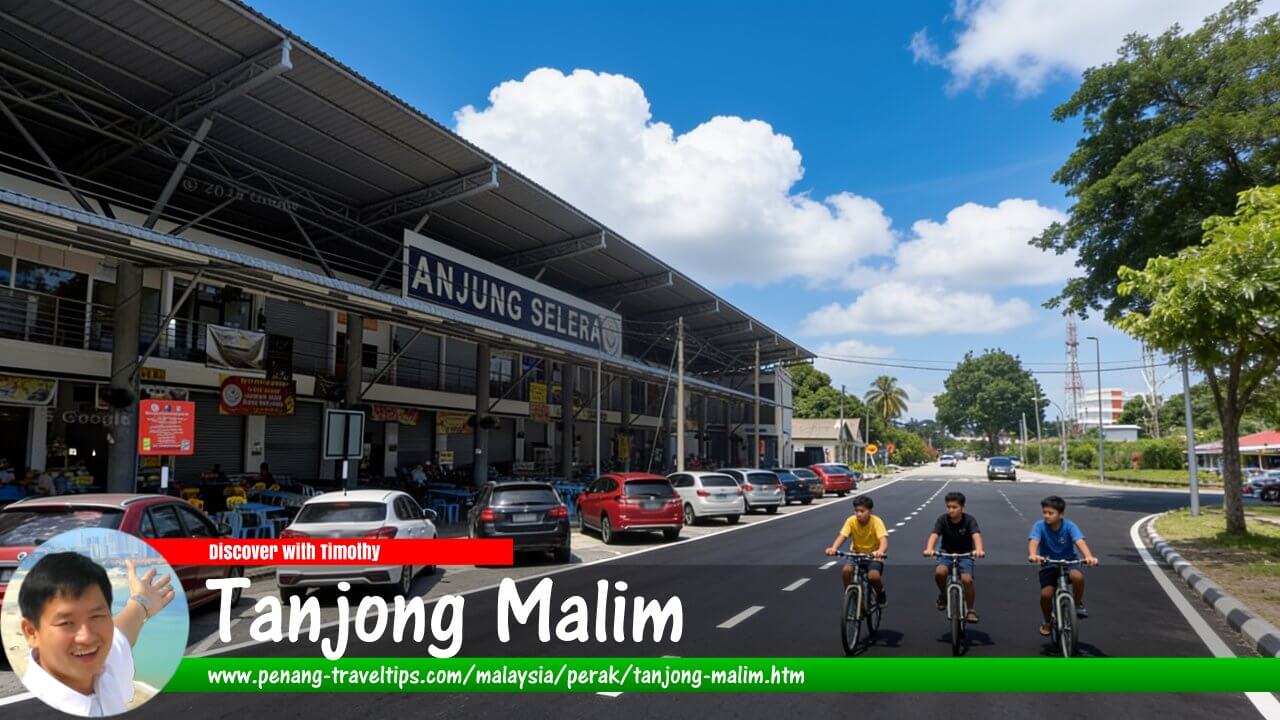 Tanjong Malim Travel Guide (AI generated on 10 September 2026)
Also available: Panduan Melawat Tanjong Malim
Tanjong Malim is a town in southern Perak, Malaysia, located on the Perak-Selangor border beside the Sungai Bernam. Set against the foothills of the Titiwangsa Range, the town is best known as an education centre because of Universiti Pendidikan Sultan Idris (UPSI), but it also has a significant heritage, recreational and industrial identity.
For visitors, Tanjong Malim offers an interesting combination of an old railway town, a historic teacher-training centre, a modern university town and an emerging automotive manufacturing hub. The surrounding Muallim district also provides access to rivers, waterfalls, hot springs, forests and outdoor activities.
Quick Facts
Town: Tanjong Malim
State: Perak
District: Muallim
Location: Southern Perak, on the Perak-Selangor border
Natural boundary: Sungai Bernam
Distance from Kuala Lumpur: About 84 km by road
Distance from Ipoh: About 145 km by road
Best known for: UPSI, education heritage and Proton's automotive manufacturing complex
Main heritage attraction: National Education Museum at UPSI
Nearby attractions: Ujana Muallim, Ulu Slim, Lata Kinjang and Sungai Klah Hot Springs
Where Is Tanjong Malim?
Tanjong Malim is situated in southern Perak, immediately north of the state of Selangor. The town lies beside the Sungai Bernam, which forms part of the natural boundary between Perak and Selangor.
The town is approximately 84 kilometres north of Kuala Lumpur and about 145 kilometres south of Ipoh. Its position on the main north-south transportation corridor makes it one of the more accessible towns in southern Perak.
The surrounding landscape consists of gently sloping land, hills and forested areas associated with the Titiwangsa Range. This setting gives Tanjong Malim a greener character than many larger urban centres in the Klang Valley.
Why Visit Tanjong Malim?
Tanjong Malim is not primarily a conventional sightseeing destination. Its main attraction is the opportunity to experience the history and everyday character of an important Malaysian education town.
The town is particularly worthwhile for visitors interested in the history of Malaysian education. The former Sultan Idris Training College, now part of UPSI, played an important role in teacher training and the development of Malay-language education.
At the same time, Tanjong Malim has changed significantly in recent decades. The expansion of UPSI, the development of Proton City and the establishment of the Automotive High-Tech Valley have given the town a new economic role.
The surrounding Muallim district also makes the town useful as a base for nature-based excursions.
A Brief History of Tanjong Malim
Located along Sungai Bernam, the town is said to have been established by Penghulu Datuk Mustapha Raja Kamala, of Rawa descent from Acheh, Sumatra.1
The name Tanjung Malim was given by the British in the 19th century. Before that, the area comprised a few riverside settlements such as Kampung Kubu, Kampung Jambu and Kampung Bugis. The area is said to have been settled since the beginning of the 18th century by the Bugis that travelled up the Bernam river. The area was called by different names in its early stage, among them Tanjong Jambu and Kampung Kubu.
The Sultanate of Selangor is said to have been established in 1766 when a Bugis nobleman was crowned Sultan Salahuddin Shah by the Sultan of Perak, Mahmud Shah.
In addition to being a town, Tanjung Malim is also a county (mukim). Towns within the county of Tanjung Malim includes Behrang, Behrang Ulu, Bernam Jaya, Kampung Kelawar, Proton City, Slim River, Sungkai and Trolak.
The history of modern Tanjong Malim is closely connected with transportation, education and the development of settlements along the Perak-Selangor frontier.
The town was selected in 1917 as the site for a new teacher-training institution. The institution was named the Sultan Idris Training College (SITC), after Sultan Idris Mursyidul Azam Shah, the 28th Sultan of Perak.
Construction of the college began in August 1919 on a 64-hectare site. The main building was completed on 29 November 1922 and was officially opened that year.
The establishment of SITC transformed Tanjong Malim into an important centre of education. The first intake consisted of 120 students who received training in teaching, handicrafts and agriculture. The first 58 trained teachers graduated in 1924.
The institution subsequently became Maktab Perguruan Sultan Idris (MPSI) in 1957 and Institut Perguruan Sultan Idris (IPSI) in 1987. In 1997, it was upgraded to university status as Universiti Pendidikan Sultan Idris (UPSI).
The educational institution also became associated with the development of Malay-language scholarship. The Writing and Translation Office at SITC, associated with the prominent scholar Za'ba, played an important role in the development of Malay-language education and intellectual life.
UPSI and the Education Heritage of Tanjong Malim
Universiti Pendidikan Sultan Idris (UPSI) is the defining institution of Tanjong Malim. The university operates two main campuses: the Sultan Abdul Jalil Shah Campus and the Sultan Azlan Shah Campus in Proton City.
The university traces its origins to SITC in 1922 and therefore has more than a century of educational heritage. Today, UPSI offers programmes extending beyond teacher education, including fields such as sports science, arts, sciences, computing, management and social sciences.
The historic campus contains buildings and sites associated with the earlier teacher-training institutions. Visitors interested in Malaysian history should regard the university not simply as a modern campus, but as an important part of the country's educational heritage.
National Education Museum
The National Education Museum (Muzium Pendidikan Nasional) is one of the most important places to visit in Tanjong Malim for anyone interested in Malaysian history.
The museum is operated by UPSI and documents the development of education in Malaysia, including the history of the institution that began as SITC. It contains permanent galleries, the Za'ba House, an art gallery and a heritage conservation centre.
The museum occupies historic colonial-era buildings and preserves artefacts, documents and other material associated with the country's educational development.
Its listed operating hours are generally Monday to Thursday, 8.30am to 4.30pm, and Friday, 8.30am to 12.15pm and 2.45pm to 4.30pm. Visitors should check with UPSI before travelling because opening arrangements may change.
Suluh Budiman and the Historic UPSI Campus
One of the most recognisable architectural features associated with the historic UPSI campus is the Suluh Budiman building. The original teacher-training campus was designed in a Medieval Gothic architectural style, giving it an appearance that differs considerably from most Malaysian educational buildings.
The campus also contains other historic locations associated with SITC and MPSI. The old SITC field, for example, was once the setting for sporting events, public gatherings, ceremonies and important events involving the institution.
Visitors should remember that UPSI remains an active university. Some buildings and facilities are academic or administrative areas rather than tourist attractions. Follow campus access rules and any instructions given by university staff.
The Old Tanjong Malim National School Building
The old Sekolah Kebangsaan Tanjong Malim (SKTM) building is another educational heritage site associated with the former SITC.
The wooden building originally served as the SITC training school. It was later known as Sekolah Kebangsaan Tanjong Malim. The school opened in 1930 and was used partly to provide practical teaching experience for trainee teachers.
The building reflects British colonial-era school architecture and has been preserved by UPSI after the school moved to a new site in 1989.
Tanjong Malim as a University Town
Although Tanjong Malim began developing long before UPSI became a university, the institution has strongly shaped the town's modern identity.
Students, lecturers, researchers and university staff contribute to the town's population and economy. Shops, restaurants, cafés, accommodation and other services have developed around the needs of the university community.
This gives Tanjong Malim a somewhat different atmosphere from traditional small towns in Perak. During university semesters, the town has a noticeable student presence, while university holidays can produce a quieter atmosphere.
Proton City
Proton City is a large modern development west of the traditional town centre. It developed around the presence of national car manufacturer PROTON and is now an important part of Tanjong Malim's economy.
PROTON began manufacturing operations in Tanjong Malim in 2003. The facility subsequently expanded considerably and became a major manufacturing centre.
In 2025, PROTON completed a major transition of its manufacturing operations to Tanjong Malim. The company moved its remaining manufacturing workforce from Shah Alam to the Tanjong Malim facility, making the town the centre of its vehicle production operations.
The site has also become increasingly important to Malaysia's electric-vehicle industry. In September 2025, PROTON launched its dedicated electric-vehicle assembly plant within the Automotive High-Tech Valley (AHTV) at Tanjong Malim.
For visitors, the significance of Proton City is mainly economic and geographical rather than as a conventional tourist attraction. Industrial facilities should not be treated as public sightseeing sites unless an official visitor programme or permitted visit is available.
Automotive High-Tech Valley
The Automotive High-Tech Valley (AHTV) represents the latest phase in Tanjong Malim's transformation. The area is intended to support vehicle manufacturing, automotive technology, component production and related industries.
PROTON's expanding facilities include vehicle assembly, engine and powertrain manufacturing, stamping and other production capabilities. The company has described the Tanjong Malim facility as an important centre for next-generation vehicle manufacturing.
This industrial development gives Tanjong Malim an unusual combination of educational heritage and advanced manufacturing. The same town that became famous for producing generations of teachers is now also becoming an important automotive production centre.
Ujana Muallim
Ujana Muallim is a public park developed within the Tanjong Malim district. The park was completed in April 2019 and occupies approximately 38.16 acres.
The park uses an urban-forest concept and is located near Proton City, UPSI-related areas, residential neighbourhoods and forested land.
It is a useful option for visitors who want a relatively easy outdoor activity without undertaking a long hike. The park is particularly suitable for families, casual walkers and visitors looking for a break from sightseeing.
Ulu Slim
Ulu Slim, in the Muallim area, is one of the nearby destinations for outdoor recreation. The area is associated with rivers, forest landscapes and white-water rafting.
Tourism Perak includes Ulu Slim White Water Rafting among the ecotourism attractions of the Tanjong Malim, Sungkai and Tapah cluster.
White-water rafting should be undertaken through an established operator and only when weather and river conditions are suitable. Heavy rain can change river conditions quickly.
Sungai Bernam
The Sungai Bernam is an important geographical feature of Tanjong Malim. The river forms part of the boundary between Perak and Selangor and gives the town its distinctive frontier-town setting.
The river and surrounding landscape also help explain why Tanjong Malim developed where it did. The town lies close to transportation routes while remaining near the foothills and natural landscapes of the Titiwangsa Range.
Visitors should use designated recreational areas when approaching rivers and avoid entering the water at unfamiliar locations, especially after heavy rain.
Lata Kinjang
Lata Kinjang is one of the better-known waterfalls in the wider southern Perak region and can be combined with a trip through the Muallim–Tapah area.
The waterfall is particularly impressive during periods when water flow is strong. However, rainfall can also make rocks and trails slippery, so visitors should exercise caution and follow any safety instructions at the site.
Sungai Klah Hot Springs
Sungai Klah Hot Springs is another attraction that can be included in a wider southern Perak itinerary. The hot springs are located in the Sungkai area, south of Tanjong Malim.
The attraction is suitable for visitors looking for a more relaxed outdoor experience rather than strenuous hiking. Because it is outside the town itself, allow additional driving time when planning the trip.
Food in Tanjong Malim
Tanjong Malim's food scene reflects its position as a university town and a community located close to Selangor. Visitors can find Malay, Chinese, Indian, mamak and modern café food, together with inexpensive meals catering to students and local residents.
One food name closely associated with the wider Tanjong Malim area is Yik Mun pau, a long-established steamed bun business associated with the town and the old trunk-road journey between Kuala Lumpur and Perak.
Visitors should also explore local breakfast shops, kopitiams and Malay food stalls. The university population means that reasonably priced food is widely available, although individual opening hours can vary.
Food Considerations for Muslim Travellers
Muslim visitors have a wide range of halal food options, particularly Malay and Muslim-owned restaurants. Nevertheless, as in other Malaysian towns with a multicultural population, not every restaurant is halal.
When eating at Chinese or mixed-menu establishments, check the ingredients and preparation methods if halal status is unclear. Some traditional Chinese dishes may contain pork, lard, alcohol or other ingredients unsuitable for Muslims.
For packaged food and restaurant chains, look for recognised Malaysian halal certification where relevant rather than assuming that a dish is halal simply because it does not visibly contain pork.
Masjid and Prayer Facilities
Muslim visitors can find several mosques in and around Tanjong Malim.
Masjid Jamek Tanjong Malim is located on Jalan Besar in the town centre. Its location makes it convenient for visitors exploring the old town.
Masjid Al-Ikhwan is located at Taman Bernam and is another substantial mosque in Tanjong Malim. The mosque's listed facilities include prayer areas, ablution facilities, toilets, parking, a library and facilities for travellers.
For visitors staying in Proton City, Masjid At-Taqwa Proton City is particularly convenient. The mosque was built in 2006 and officially inaugurated in 2009. Its architecture was inspired by Uzbek mosque design, and the mosque stands near the foothills of the Titiwangsa Range.
Planning prayer stops is therefore relatively straightforward, but visitors heading into forest, waterfall or river areas should pray before leaving town or identify the nearest suitable mosque in advance.
Accommodation
Tanjong Malim has hotels, guesthouses and other accommodation catering to students, families, business travellers and visitors passing through southern Perak.
Accommodation is concentrated around the town, university and newer development areas. Proton City also provides accommodation options and services associated with its growing residential and commercial population.
For a short sightseeing visit, staying in the town centre is convenient because restaurants, shops, the railway station and Masjid Jamek Tanjong Malim are relatively close together.
For visitors concentrating on UPSI or Proton City, accommodation in those areas may reduce daily driving.
Getting to Tanjong Malim by Car
Driving is one of the easiest ways to reach Tanjong Malim. The town is connected to the North-South Expressway and the wider road network linking Kuala Lumpur, Selangor and Perak.
From Kuala Lumpur, the journey generally takes around one to one and a half hours depending on traffic and the exact starting point. From Ipoh, the drive takes longer and is typically around two hours or more.
Road conditions and traffic can vary substantially during weekends, public holidays and peak periods, so allow additional time when travelling between Tanjong Malim and the Klang Valley.
Getting to Tanjong Malim by Train
Tanjong Malim is served by the railway network and is an important rail location at the southern end of Perak. The railway provides a practical alternative for visitors travelling from Kuala Lumpur and other parts of the West Coast railway corridor.
The town's railway heritage is also relevant to its historical development. The arrival and expansion of the railway helped strengthen Tanjong Malim's position as a transportation and commercial centre.
Check the current KTM timetable before travelling because train stopping patterns and schedules can change.
Getting Around Tanjong Malim
A car is the most convenient option if you want to explore both Tanjong Malim and the surrounding Muallim district.
The town centre itself can be explored partly on foot, particularly around the old commercial area. However, UPSI's campuses, Proton City, Ujana Muallim and rural attractions are spread across a much larger area.
E-hailing services may be useful within populated areas, but visitors should arrange return transport before travelling to remote recreational attractions.
Suggested One-Day Itinerary
Morning: Begin in the town centre with breakfast, then visit Masjid Jamek Tanjong Malim and explore the older commercial area.
Continue to the historic UPSI campus and the National Education Museum. Allow sufficient time to explore the educational heritage of SITC, MPSI, IPSI and UPSI.
Lunch: Have lunch at a halal restaurant in or around the town.
Afternoon: Visit Ujana Muallim or explore Proton City. If you are particularly interested in Malaysian automotive history, the Tanjong Malim manufacturing complex provides an interesting backdrop, although industrial facilities are not automatically open to the public.
Evening: Return to the town centre for dinner before continuing your journey or staying overnight.
Suggested Two-Day Itinerary
Day 1 – Education and Heritage
- Explore central Tanjong Malim.
- Visit Masjid Jamek Tanjong Malim.
- Explore the historic UPSI campus where permitted.
- Visit the National Education Museum.
- See the old SKTM building and other educational heritage locations.
- Enjoy local food in the evening.
Day 2 – Nature and Proton City
- Visit Proton City and Masjid At-Taqwa.
- Spend time at Ujana Muallim.
- Continue towards Ulu Slim for outdoor activities if conditions are suitable.
- Alternatively, make a longer excursion towards Lata Kinjang or Sungai Klah Hot Springs.
Tanjong Malim for Families
Tanjong Malim can work well as a family weekend destination, especially for families interested in combining educational heritage with outdoor recreation.
The National Education Museum offers an educational experience, while Ujana Muallim provides a less demanding outdoor option. Families with older children may prefer activities around Ulu Slim, although these should be chosen according to age, fitness and weather conditions.
Families travelling with young children should allow plenty of time between attractions because the district is geographically spread out.
Tanjong Malim for Foreign Travellers
For foreign visitors, Tanjong Malim provides a different perspective on Malaysia from the better-known destinations of Kuala Lumpur, Penang, Malacca and Ipoh.
The history of SITC offers insight into the development of education in Malaya and the role of Malay-language intellectual life during the twentieth century. The transition from SITC to MPSI, IPSI and finally UPSI also illustrates the transformation of Malaysia's education system.
The town's proximity to Kuala Lumpur makes it feasible as a side trip, while its location near forests, rivers and hills makes it useful for travellers interested in nature.
Tanjong Malim for Muslim Travellers
Tanjong Malim is relatively convenient for Muslim travellers because of the presence of several mosques and a substantial Malay and Muslim population.
- Use Masjid Jamek Tanjong Malim when exploring the town centre.
- Use Masjid At-Taqwa Proton City when visiting or staying around Proton City.
- Check halal status before eating at non-Malay restaurants.
- Plan prayer stops before travelling to Ulu Slim, waterfalls or other rural attractions.
- Bring appropriate clothing when visiting mosques and religious sites.
- For outdoor activities, carry a compact prayer garment and ensure there is a clean and suitable place for prayer.
Best Time to Visit
Tanjong Malim can be visited throughout the year. The most important consideration is the weather if you intend to include outdoor activities.
For sightseeing around town and UPSI, most days are suitable. For rivers, waterfalls, hiking and white-water rafting, check the weather forecast and local conditions before setting out.
Heavy rain can produce slippery trails, stronger river currents and temporary closures of outdoor attractions. Avoid entering rivers or waterfalls when water levels are rising.
Practical Travel Tips
- Carry cash as well as electronic payment options, especially when visiting smaller food stalls.
- Check museum and university visitor arrangements before travelling.
- Do not assume that university buildings are open to general visitors simply because they are heritage structures.
- Allow extra time for travel if visiting several attractions across the Muallim district.
- Wear comfortable shoes for walking around the historic campus and town.
- Carry drinking water for outdoor activities.
- Use insect repellent when spending extended periods outdoors.
- Be particularly cautious near rivers and waterfalls after heavy rain.
- If travelling by train, check the latest KTM schedule before departure.
- For Muslim visitors, identify a mosque along your route before travelling into rural areas.
How Long Should You Stay?
One day is sufficient for a basic introduction to Tanjong Malim, including the town centre and UPSI heritage.
One night and two days is better if you want to visit the National Education Museum, explore Proton City and include Ujana Muallim or another nearby attraction.
Two to three nights are suitable if Tanjong Malim is used as a base for outdoor activities around Ulu Slim and other parts of the Muallim district.
Tanjong Malim's Changing Identity
Tanjong Malim is an interesting example of how a Malaysian small town can acquire several different identities over time.
Its most enduring identity is as a town of education. The establishment of SITC in 1922 placed Tanjong Malim on the national educational map, and the institution's subsequent evolution into UPSI has kept education at the centre of the town's identity for more than a century.
Its newer identity is associated with the automotive industry. PROTON's establishment in Tanjong Malim in 2003 was followed by major manufacturing expansion, and the development of AHTV has made the town increasingly important to Malaysia's automotive sector.
At the same time, the surrounding hills, forests and rivers give Tanjong Malim a third identity as a gateway to outdoor recreation.
Tanjong Malim as a Gateway to Southern Perak
Tanjong Malim is well positioned for travellers exploring the southern part of Perak. From here, visitors can travel north towards Slim River, Tapah and other parts of Perak, or south towards Selangor and Kuala Lumpur.
The Muallim area also provides access to attractions that are better understood as part of a wider southern Perak itinerary rather than as attractions within the town itself.
For this reason, Tanjong Malim is particularly useful for travellers who prefer to explore several smaller destinations rather than concentrate on one major city.
Conclusion
Tanjong Malim is a distinctive Perak town where educational heritage, modern industry and natural landscapes meet. Its most important historical contribution came from Sultan Idris Training College, whose legacy continues through UPSI and the National Education Museum.
The town has since developed beyond its educational role. Proton City and the Automotive High-Tech Valley have made Tanjong Malim an important centre of vehicle manufacturing, while Ujana Muallim and the surrounding rivers, forests and hills provide opportunities for recreation.
For local travellers, Tanjong Malim makes an interesting weekend destination from Kuala Lumpur or other parts of Perak. For foreign visitors, it offers an opportunity to see a less tourist-oriented side of Malaysia and to understand the country's educational history. Its convenient location, railway connection and proximity to natural attractions make it a useful stop when travelling through southern Perak.
Map of Tanjung Malim
Sights in Tanjung Malim
- Fook Pau Lin (GPS: 3.69406, 101.52584)

- Gurdwara Sahib Tanjung Malim (GPS: 3.69342, 101.52432)

- Masjid Jamek Tanjung Malim (GPS: 3.68275, 101.52114)

- Sultan Idris Education University (GPS: 3.68597, 101.52276)

Transport Stations in Tanjung Malim
- Tanjung Malim Bus Station (GPS: 3.67901, 101.52)

- Tanjung Malim Railway Station (GPS: 3.68461, 101.51809)

Amenities in Tanjung Malim
- Tanjung Malim Police Station (GPS: 3.68349, 101.52163)

Petrol Stations in Tanjung Malim
- Petronas Tanjung Malim (GPS: )

Schools in Tanjung Malim
- SMK Methodist (GPS: 3.68588, 101.52121)

References
- Legasi 146 Tahun Tanjong Malim, Perak - Majalah 3
- Majlis Daerah Tanjong Malim, Info Tanjong Malim: https://mdtm.gov.my/index.php/en/pelawat?catid=31&id=89%3Ainfo-tanjong-malim&view=article
- Universiti Pendidikan Sultan Idris, UPSI Legacy: 100 Years of Education: https://www.upsi.edu.my/legacy/
- Universiti Pendidikan Sultan Idris, UPSI Campuses: https://www.upsi.edu.my/campus/
- Universiti Pendidikan Sultan Idris, National Education Museum: https://muzium.upsi.edu.my/
- Universiti Pendidikan Sultan Idris, National Education Museum: https://www.upsi.edu.my/national-education-museum-muzium-pendidikan-nasional/
- UPSI, Historical Locations – Padang SITC: https://hep.upsi.edu.my/lokasi-bersejarah/?lang=ms
- UPSI National Education Museum, Tanjong Malim National School Building: https://muzium.upsi.edu.my/sktm-building/
- Tourism Perak, Tanjung Malim, Sungkai & Tapah District Cluster: https://www.tourismperakmalaysia.com/clusters/
- Jabatan Landskap Negara, Ujana Muallim, Perak: https://www.jln.gov.my/index.php/pages/view/510
- PROTON, Milestones: https://www.proton.com/corporate/milestones
- PROTON, New Proton EV Plant Launched by Prime Minister Dato’ Seri Anwar Ibrahim: https://www.proton.com/happenings/2025/august/new-proton-ev-plant-launched-by-prime-minister-dato-seri-anwar-ibrahim
- PROTON, PROTON Welcomes Workers to Tanjong Malim: https://www.proton.com/happenings/2025/october/proton-welcomes-workers-to-tanjong-malim
- e-Masjid Perak, Masjid Jamek Tanjong Malim: https://e-masjid.perak.my/index.php/masjid/nmkvOj
- e-Masjid Perak, Masjid Al-Ikhwan, Taman Bernam: https://e-masjid.perak.my/index.php/masjid/4qaXkm
- e-Masjid Perak, Masjid At-Taqwa Proton City: https://e-masjid.perak.my/masjid/MmOgXm
Page Details
This page was created on 14 September 2026. Hi, my name is Timothy and created it from my research, for my own entertainment, knowledge and to satisfy my curiosity. I am providing the information to you in good faith and hope it is useful. I try to get the details as accurate as possible. I also try to update the page whenever I stumble on new details. So this and all my other pages are perpetual work in progress. If you discover any error, please politely inform me, pointing out where the error lies, and I will correct it as soon as possible. Your helpfulness will keep this page accurate, relevant and helpful to those who need the information.Buy Me A Coffee
If you enjoy the information I provide and want to support the work I do, please buy me a coffee! I appreciate it immensely, thank you so much!
