
Pasir Salak Travel Guide
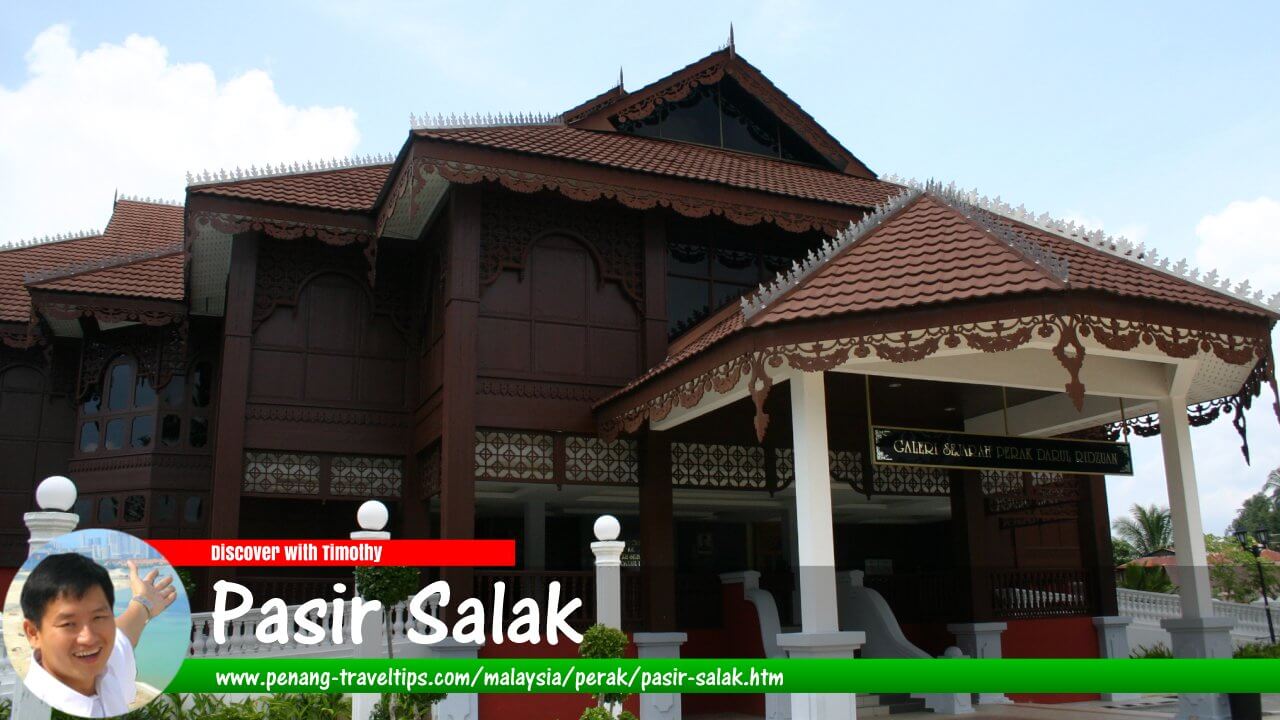 Pasir Salak Travel Guide (AI generated on 10 September 2026)
Also available: Panduan Melawat Pasir Salak
Pasir Salak is a historic riverside settlement in Perak Tengah, Perak, best known for its role in the 19th-century resistance to British intervention in Perak. Located on the banks of the Sungai Perak, the village is closely associated with the killing of British Resident J.W.W. Birch on 2 November 1875, an event that became one of the most important episodes in the history of Perak.
Today, Pasir Salak is a quiet rural destination centred on the Pasir Salak Historical Complex. The complex preserves and interprets the history of the Perak Malay resistance through galleries, monuments, traditional buildings and a historical tunnel. The surrounding area also provides an opportunity to experience the riverine landscape and traditional Malay settlements of Perak Tengah.
Pasir Salak is particularly suitable for travellers interested in Malaysian history, Malay heritage, rural landscapes and the history of British involvement in the Malay states. It is less suited to visitors looking for shopping, nightlife or a large selection of conventional tourist attractions.
Quick Facts
- Place: Pasir Salak
- State: Perak, Malaysia
- District: Kampong Gajah, Perak Tengah
- Mukim: Pasir Salak
- Setting: Rural riverside settlement on the Sungai Perak
- Main attraction: Pasir Salak Historical Complex
- Historical significance: Site associated with the killing of J.W.W. Birch in 1875
- Nearest town: Kampung Gajah
- Nearest major city: Ipoh
- Suitable for: History, heritage, culture and rural tourism
Where is Pasir Salak?
Pasir Salak is situated on the right bank of the Sungai Perak in the Kampong Gajah area of Perak Tengah. It is part of Mukim Pasir Salak in the Kampong Gajah administrative area.
The nearest town is Kampung Gajah, which is also located on the Sungai Perak. Kampung Gajah is approximately 75 kilometres west of Ipoh and about 25 kilometres north of Teluk Intan, according to the Perak Land and Mines Office.
The area is predominantly rural, with traditional villages, agricultural land and riverine landscapes. This gives Pasir Salak a very different atmosphere from the larger towns of Perak such as Ipoh and Seri Iskandar.
Why Visit Pasir Salak?
The main reason to visit Pasir Salak is its historical importance. The village occupies an important place in the history of Perak and in the wider story of British intervention in the Malay states.
The Pasir Salak Historical Complex brings together many aspects of this history in one location. Visitors can see traditional Perak buildings, memorials, galleries and a historical tunnel presenting important events in chronological form.
Beyond the historical complex, the journey to Pasir Salak is itself part of the experience. The road passes through the rural landscape of Perak Tengah, while the Sungai Perak provides the geographical setting that shaped the settlement's history.
Pasir Salak and the History of Perak
Pasir Salak became prominent during a period of major political change in Perak.
The Pangkor Agreement of 1874 led to the introduction of the British Resident system in Perak. J.W.W. Birch became the first British Resident of Perak. The new system was intended to give the Resident substantial influence over the administration of the state, while the Sultan retained authority over Malay religion and customs.
However, the implementation of the Resident system created considerable tension. The expansion of British administrative authority challenged established political arrangements and generated opposition among Malay rulers and local leaders.
Pasir Salak became one of the principal centres of this resistance.
The Killing of J.W.W. Birch
On 2 November 1875, J.W.W. Birch was killed at Pasir Salak while carrying out his duties as British Resident. The incident occurred during the period of resistance led by Perak Malay chiefs, most notably Dato' Maharaja Lela.
The killing of Birch became a defining episode in the history of British intervention in Perak. It led to military action and the subsequent suppression of the resistance, after which the British strengthened their control over the administration of Perak.
The event has subsequently been interpreted in different ways, particularly in relation to colonial rule, local authority and resistance. For Malaysian visitors, Pasir Salak is therefore not merely the site of an isolated historical event but a place connected with wider questions about sovereignty, colonialism and the development of nationalism.
Pasir Salak Historical Complex
The Pasir Salak Historical Complex is the principal attraction in the area. It was established as a memorial and historical centre to document the struggle of the people of Perak against British colonial intervention.
The first phase of the complex was officially opened on 26 May 1990. The completed complex was officially inaugurated on 5 July 2004.
The complex presents historical information through buildings, monuments, galleries and displays. One of its most distinctive features is the Historical Tunnel, where important episodes are presented chronologically using three-dimensional dioramas.
Historical Tunnel
The Historical Tunnel is designed to take visitors through a sequence of historical events. Dioramas and displays provide a visual interpretation of important episodes in the history of Perak and the country.
For visitors who are unfamiliar with the history of British intervention in the Malay states, the tunnel provides a useful introduction before exploring the monuments and buildings outside.
Rumah Kutai
The complex contains examples of the traditional Rumah Kutai, a distinctive form of traditional Malay house associated with Perak.
One of the houses at the complex, Rumah Kutai I, dates from around 1896 and has been restored. Another Rumah Kutai was subsequently constructed within the complex.
The houses are significant because the complex is not concerned only with political history. It also illustrates the architectural heritage of Perak Malay society.
Tugu Lela Rentaka
Tugu Lela Rentaka is one of the monuments within the historical complex. It refers to the traditional Malay cannon and the military aspect of the resistance in Perak.
Tugu Peringatan Pahlawan Perak
The Tugu Peringatan Pahlawan Perak commemorates the Perak figures associated with resistance to British intervention. Several historical personalities are represented within the memorial landscape of the complex.
Galeri Keris
The Galeri Keris presents the keris, an important traditional Malay weapon and cultural object. The gallery provides a connection between the political history of Perak and the wider material culture of the Malay world.
Galeri Menteri Besar-Menteri Besar Perak
The complex also contains a gallery dedicated to the Menteri Besar of Perak. It provides a broader perspective on the development of the state's modern administration after the period of British intervention.
J.W.W. Birch Memorial
A memorial to J.W.W. Birch is also located within the complex. It was constructed around 1900 by Ernest Woodford Birch, who later became the eighth British Resident of Perak, to commemorate his father's death.
The presence of both the Birch memorial and the monuments commemorating the Perak resistance makes the complex particularly interesting. Visitors can see how different aspects of the same historical episode have been remembered within one heritage site.
Current Visiting Information
The official website of the Perak State Museum Board currently lists the Pasir Salak Historical Complex at Kompleks Sejarah, 36800 Kampung Gajah, Perak.
The museum board currently lists admission as:
- Adults: RM4
- Children aged 7–12: RM2
The listed opening hours are:
- Monday–Thursday: 9:30 am–5:00 pm
- Friday: 9:30 am–12:15 pm and 2:45 pm–5:00 pm
- Saturday–Sunday: 9:30 am–5:00 pm
The museum board states that payment is cash only. Opening hours and admission arrangements can change, so visitors should check the official museum information before travelling.
Pasir Salak and the Sungai Perak
The Sungai Perak is central to understanding Pasir Salak. The river has historically been one of the principal transportation routes through the interior of Perak, connecting riverside settlements and facilitating movement of people and goods.
Pasir Salak and neighbouring villages developed within this riverine environment. Even today, the landscape around the village is characterised by the river, agricultural land, traditional settlements and mature vegetation.
For visitors, the riverside setting provides a useful contrast to the historical displays within the complex. A visit to Pasir Salak is therefore best approached as a combination of heritage and rural landscape rather than as a museum visit alone.
Kampung Gajah
Kampung Gajah is the nearest significant town and the practical service centre for visitors to Pasir Salak.
The town lies on the Sungai Perak and has a long history of settlement. The Perak Land and Mines Office notes that numerous old villages occur along the river in the Kampong Gajah area, reflecting the long-established nature of settlement in this part of Perak.
The name Kampung Gajah has several local explanations. One version associates it with elephants that were once found in the forests around Bukit Tunggal. Another relates to supposed elephant footprints near the river and paddy fields. Other local traditions connect the name with a rock formation said to resemble an elephant.
Kampung Gajah is useful as a place to obtain food, drinks and other necessities before or after visiting Pasir Salak.
Other Attractions in Perak Tengah
Pasir Salak can be combined with several other attractions in Perak Tengah, making the area suitable for a full-day excursion.
Pulau Misa Melayu
Perkampungan Warisan Budaya Pulau Misa Melayu at Kampung Kepayang, Bota Kiri, focuses on Malay cultural heritage. Tourism Perak describes it as a place for preserving and presenting Malay heritage through stories, songs and dances.
It provides a useful cultural complement to the political history presented at Pasir Salak.
River Terrapin Conservation Centre
The River Terrapin Conservation Centre at Bota Kanan is another Perak Tengah attraction. The centre is concerned with the conservation of the river terrapin, a freshwater turtle associated with major river systems in the region.
Visitors interested in wildlife can combine the conservation centre with Pasir Salak as part of a broader Perak Tengah itinerary. Check current operating arrangements before visiting, as conservation facilities may have specific visiting hours.
Seri Iskandar
Seri Iskandar, the principal modern town and administrative centre of Perak Tengah, is another useful base for exploring Pasir Salak.
Seri Iskandar has restaurants, supermarkets, accommodation and other facilities, as well as major educational institutions including Universiti Teknologi PETRONAS and UiTM Perak. Travellers who want more accommodation and dining choices than are available in the rural areas can stay in Seri Iskandar and make a day trip to Pasir Salak.
Food in Pasir Salak and Kampung Gajah
Pasir Salak itself is a rural village rather than a large commercial centre, so visitors should not expect a wide choice of restaurants immediately around the historical complex.
The greater choice is in Kampung Gajah and along the roads connecting the surrounding villages. Local eateries generally serve familiar Malaysian dishes such as nasi campur, nasi goreng, mee, bihun, roti and various kuih.
For a more extensive selection of restaurants, supermarkets and modern cafés, Seri Iskandar or Teluk Intan can be considered depending on the direction of travel.
Food for Muslim Travellers
Pasir Salak is located in an area with a predominantly Malay and Muslim rural community. Muslim travellers should generally find Malay food and Muslim-friendly eateries in Kampung Gajah and the surrounding villages.
Nevertheless, if formal halal certification is important, visitors should verify the current halal status of an establishment rather than relying solely on the type of food served or the appearance of the premises.
During Ramadan, visitors may find additional food choices at temporary Ramadan bazaars in nearby towns and villages, although locations and operating hours can change from year to year.
Mosques in Pasir Salak
Muslim travellers have several places of worship in the Pasir Salak area. One of the most historically interesting is Masjid Ar-Rahmaniah in Kampung Pasir Salak, located beside the Pasir Salak Historical Complex.
According to the Perak e-Masjid directory, the mosque was originally built in 1920 and is regarded as one of the older mosques in Perak. It has subsequently been relocated and upgraded, and was formally inaugurated in 1964 by Sultan Idris Al-Mutawakkil Alallahi Shah.
The mosque is particularly relevant to visitors because of its proximity to the historical complex and its own connection with the history of Pasir Salak.
Other mosques serve villages throughout the wider area, including Masjid Al-Taqwa at Kampung Selat Pulau and other mosques within Mukim Pasir Salak.
Visitors should observe the normal etiquette when visiting mosques, including appropriate clothing, removing footwear where required and avoiding photography during prayers unless permission has been given.
Accommodation
Pasir Salak has fewer accommodation choices than larger towns in Perak. Visitors who want to stay in the immediate area should check current homestay and small accommodation availability before travelling.
For a wider selection of hotels and other accommodation, Kampung Gajah, Seri Iskandar and Teluk Intan are more practical bases.
Staying overnight rather than returning immediately to Ipoh or another major town can be worthwhile if you want to explore several Perak Tengah attractions at a relaxed pace.
Getting to Pasir Salak
By car
Driving is the most convenient way to reach Pasir Salak. The village is connected to Kampung Gajah and the wider road network of Perak Tengah.
From Ipoh, travellers generally approach through the roads of Perak Tengah, with the journey taking them from the more urban Kinta Valley into a rural landscape.
From Teluk Intan, Kampung Gajah and Pasir Salak can be reached by road through the northern part of Hilir Perak. The Perak Land and Mines Office notes that Kampung Gajah is approximately 25 kilometres north of Teluk Intan.
From Seri Iskandar, Pasir Salak is suitable for a road excursion through the surrounding villages of Perak Tengah.
By public transport
Public transport is considerably more limited than in Ipoh or Teluk Intan. Travellers without a car may need to reach Kampung Gajah or another nearby town and arrange onward transport.
Because attractions in Perak Tengah are dispersed, a private vehicle, rental car or pre-arranged transport is strongly preferable if you intend to visit several places in the same day.
By train
Pasir Salak does not have a railway station. Travellers arriving by KTM train need to continue by road from a suitable station elsewhere in Perak.
For visitors travelling by train, it is important to arrange the onward journey in advance rather than assuming that a taxi or ride-hailing vehicle will be readily available at a rural destination.
Getting Around
Once in Pasir Salak, the historical complex and Masjid Ar-Rahmaniah can be visited in the same general area. However, other attractions are spread throughout Perak Tengah.
A car is therefore the most practical way to explore the region. Rural roads can be narrow and may pass through villages, agricultural areas and riverine settlements. Drive carefully and allow additional time for stops.
For Local Travellers
Pasir Salak makes a worthwhile historical excursion for Malaysians, particularly those interested in the history of Perak and the development of Malay political consciousness during the colonial period.
It is also suitable for school and family trips. The combination of the Historical Tunnel, traditional houses, monuments and riverside environment allows visitors to encounter history through both exhibits and the physical landscape.
Visitors who have previously explored Ipoh, Kuala Kangsar and other better-known Perak destinations may find Pasir Salak particularly rewarding because it provides a different perspective on the state's history.
For Foreign Travellers
For foreign visitors, Pasir Salak offers an opportunity to explore a part of Malaysia that is rarely included in conventional international itineraries.
The historical complex introduces an important chapter in the relationship between the Malay states and British colonial power. At the same time, the surrounding villages and Sungai Perak provide an authentic rural setting that contrasts strongly with the urban environments of Kuala Lumpur, Penang and Ipoh.
Foreign travellers interested in colonial history should approach the site with an understanding that the events of 1875 are remembered from different historical perspectives. The complex primarily presents the story of local resistance and Malay heritage, while the Birch memorial provides a contrasting reminder of the British colonial presence.
Suggested One-Day Itinerary
A day trip to Pasir Salak can be combined with several other Perak Tengah attractions.
- Morning: Travel to Pasir Salak and begin at the Pasir Salak Historical Complex.
- Late morning: Explore the Historical Tunnel, galleries, Rumah Kutai and monuments.
- Lunch: Have lunch in Kampung Gajah or another nearby village.
- Early afternoon: Visit Masjid Ar-Rahmaniah and explore the surrounding Pasir Salak village area, observing appropriate mosque etiquette.
- Afternoon: Continue towards Bota Kanan to visit the River Terrapin Conservation Centre if it is open to visitors.
- Late afternoon: Visit Pulau Misa Melayu or return towards Seri Iskandar.
- Evening: Return to your accommodation or continue to the next destination.
Suggested Two-Day Itinerary
Day 1: Pasir Salak
- Travel to Pasir Salak.
- Spend several hours at the Pasir Salak Historical Complex.
- Explore the Rumah Kutai, galleries and monuments.
- Visit Masjid Ar-Rahmaniah.
- Explore the village and Sungai Perak surroundings.
- Stay overnight in the Pasir Salak, Kampung Gajah or Seri Iskandar area.
Day 2: Perak Tengah
- Visit Bota Kanan and the River Terrapin Conservation Centre.
- Explore Pulau Misa Melayu at Bota Kiri.
- Have lunch in the Perak Tengah area.
- Continue to Seri Iskandar or another nearby destination.
- Return towards Ipoh, Teluk Intan or your next destination.
Best Time to Visit
Pasir Salak can be visited throughout the year. Since the principal attractions are historical and cultural rather than outdoor adventure sites, there is no single tourist season that dominates the destination.
However, dry weather is more convenient for exploring the village and surrounding area. Afternoon thunderstorms are possible throughout the year, so visitors should check the weather forecast if they plan to spend considerable time outdoors.
Starting early in the day is advisable, especially for visitors planning to combine Pasir Salak with several other attractions in Perak Tengah.
How Long Should You Stay?
A visit to the Pasir Salak Historical Complex can be completed in several hours, although travellers interested in the history may wish to spend more time examining the displays and monuments.
For most visitors, Pasir Salak is best treated as a half-day or full-day excursion. An overnight stay becomes worthwhile when it is combined with other Perak Tengah attractions such as Bota Kanan, Pulau Misa Melayu and Seri Iskandar.
Pasir Salak for Muslim Travellers
Pasir Salak is particularly straightforward for Muslim travellers because of its predominantly Malay rural setting and the presence of mosques and surau throughout the surrounding villages.
Masjid Ar-Rahmaniah is especially convenient because it stands beside the Historical Complex. This makes it possible to combine a heritage visit with prayer without travelling far.
Visitors should nevertheless plan their prayer stops around museum opening hours and travel times, particularly when making a day trip that includes several rural attractions.
Practical Tips
- Start early: This gives you more time to explore the Historical Complex and surrounding attractions.
- Bring cash: Rural food stalls and small businesses may not accept cards.
- Check museum hours: The Historical Complex has different Friday hours.
- Bring water: Perak's tropical climate can be hot and humid.
- Dress appropriately: This is especially important when visiting mosques and traditional villages.
- Drive carefully: Rural roads may be narrower than the main highways.
- Plan your return journey: Public transport and ride-hailing are less reliable in rural areas.
- Respect the historical site: Some monuments commemorate people and events that remain important to Malaysian history and identity.
- Check attraction status: Conservation centres and other facilities may have special opening arrangements.
Nearby Destinations
Pasir Salak can be incorporated into a broader Perak itinerary. Nearby destinations include:
- Kampung Gajah: The nearest town and a useful service centre for Pasir Salak.
- Seri Iskandar: A modern education and administrative centre of Perak Tengah with hotels, restaurants and universities.
- Bota: A historic riverside settlement along the Sungai Perak.
- Parit: Another riverside town in Perak Tengah.
- Pulau Misa Melayu: A cultural heritage attraction at Bota Kiri.
- Bota Kanan: Home to the River Terrapin Conservation Centre.
- Teluk Intan: A larger town to the south, famous for the Leaning Tower of Teluk Intan.
- Batu Gajah: A former mining town with historical and heritage attractions.
- Ipoh: The capital of Perak and the principal urban centre of the surrounding region.
Conclusion
Pasir Salak is one of the most historically significant rural destinations in Perak. Its name is inseparable from the events of 1875, when J.W.W. Birch, the first British Resident of Perak, was killed during the resistance led by local Malay leaders.
The Pasir Salak Historical Complex is the centrepiece of a visit, bringing together historical displays, a Historical Tunnel, traditional Rumah Kutai, galleries and monuments. The nearby Masjid Ar-Rahmaniah and the Sungai Perak add further historical and cultural context.
For local visitors, Pasir Salak provides an accessible way to explore an important chapter of Malaysian history. For foreign travellers, it offers a glimpse of rural Perak and an opportunity to understand the complex history of British intervention in the Malay states from a local perspective.
Pasir Salak is therefore best visited not simply as a museum stop, but as part of a wider journey through the villages, rivers and historical sites of Perak Tengah.
Map of Pasir Salak, Perak
Sights in Pasir Salak
- Dato Sagor Circuit, Pulau Belalang (GPS: 4.17449, 100.95095)

- Pasir Salak Historical Complex (GPS: 4.17335, 100.94685)

Schools in Pasir Salak
- SMK Dato' Seri Maharaja Lela (GPS: 4.17449, 100.95095)

Petrol Stations in Pasir Salak
- Petronas Kampung Gajah (GPS: 4.18193, 100.94433)

- Shell Kampung Gajah (GPS: 4.18274, 100.94291)

Amenities in Pasir Salak
- Kampung Gajah Police Station (GPS: 4.18405, 100.93867)

Government Buildings in Pasir Salak
- Pejabat Agama Islam Kampung Gajah (GPS: 4.18523, 100.94089)

- Rumah Rehat Kampung Gajah (GPS: .18341, 100.93989)

Pasir Salak is  on the Map of towns in Perak
References
- Lembaga Muzium Negeri Perak – Kompleks Sejarah Pasir Salak
- Jabatan Muzium Malaysia – Pasir Salak Historical Complex
- Majlis Daerah Perak Tengah – Destinasi Menarik
- Tourism Perak – Perak Tengah
- Pejabat Tanah dan Galian Perak – Sejarah Penubuhan Kampong Gajah
- Kerajaan Negeri Perak – Sejarah Ringkas Negeri Perak
- Kerajaan Negeri Perak – Pasir Salak Jadi Pedoman Perjuangan Penting Bagi Generasi Kini
- e-Masjid Perak – Masjid Ar-Rahmaniah, Pasir Salak
- e-Masjid Perak – Masjid Al-Taqwa, Selat Pulau
Page Details
This page was created on 15 September 2026. Hi, my name is Timothy and created it from my research, for my own entertainment, knowledge and to satisfy my curiosity. I am providing the information to you in good faith and hope it is useful. I try to get the details as accurate as possible. I also try to update the page whenever I stumble on new details. So this and all my other pages are perpetual work in progress. If you discover any error, please politely inform me, pointing out where the error lies, and I will correct it as soon as possible. Your helpfulness will keep this page accurate, relevant and helpful to those who need the information.Buy Me A Coffee
If you enjoy the information I provide and want to support the work I do, please buy me a coffee! I appreciate it immensely, thank you so much!
