
Lebuh Ampang, Kuala Lumpur
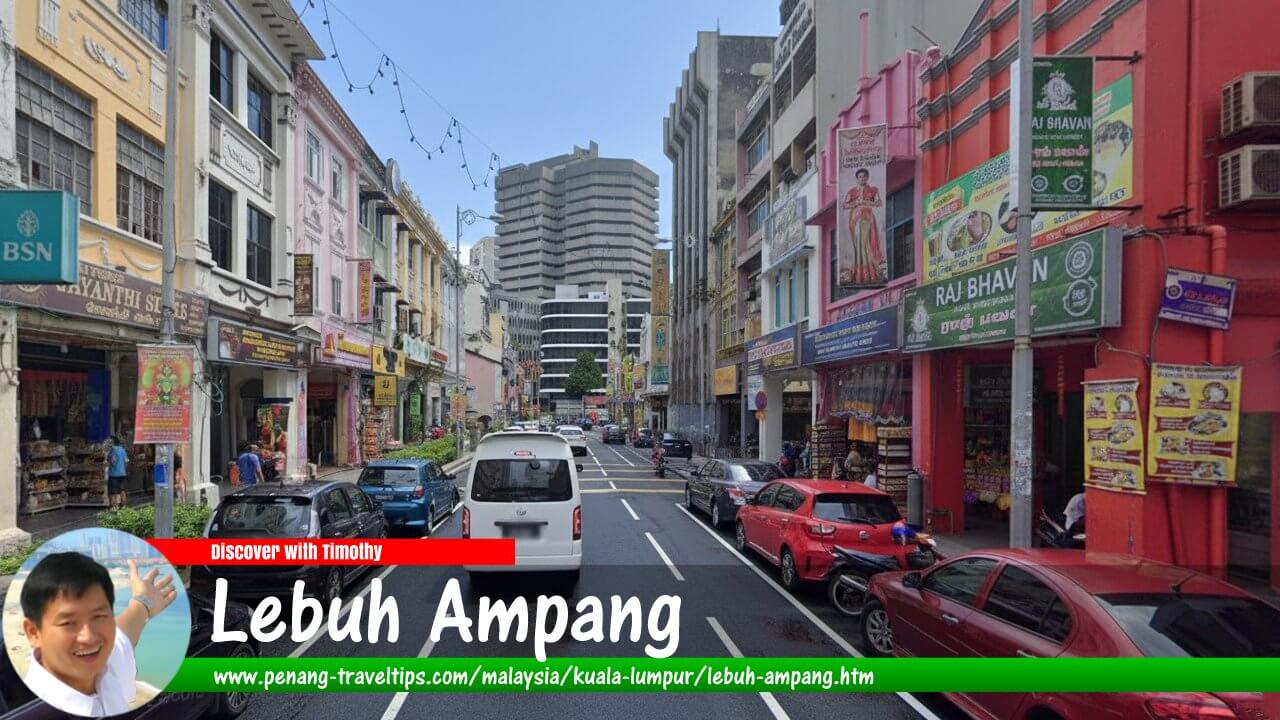 Lebuh Ampang, Kuala Lumpur (AI generated on 27 December 2025)
Lebuh Ampang is a compact yet historically layered street in downtown Kuala Lumpur, widely associated with the city’s old commercial core and the fringes of Chinatown. Formerly known as Ampang Street, this one-way road runs for just 299 metres but carries centuries of urban memory, linking early trade routes, ethnic communities, and modern city life 1.
Quick Facts
- Former name: Ampang Street
- Road length: 299 metres
- Road type: One-way street
- Orientation: Southwest to northeast
- Main intersections: Jalan Tun Tan Siew Sin, Jalan Tun Perak, Jalan Gereja
- Nearest rail station: Masjid Jamek LRT Station
- Historic nickname: Chetty Theru
- Area: Downtown Kuala Lumpur / Chinatown fringe
Location and Urban Context
Lebuh Ampang sits firmly within Kuala Lumpur’s historic downtown, approximately 0.5 km from Dataran Merdeka, the symbolic heart of the city. The street begins at Jalan Tun Tan Siew Sin in the southwest and ends at Jalan Gereja in the northeast, with Jalan Tun Perak cutting across it midway 2.
The surrounding streets form part of Kuala Lumpur’s earliest commercial grid, where colonial-era buildings, shophouses, and modern offices coexist. To the west lie the Klang River and the Masjid Jamek precinct, while to the east the road gently approaches older civic and religious landmarks. Although small in scale, Lebuh Ampang feels distinctly urban, with narrow sidewalks, continuous building frontage, and steady daytime foot traffic.
What the Street Is Like Today
Today, Lebuh Ampang is a functional city street rather than a tourist strip. Its one-way configuration helps funnel vehicles between major arteries, while pedestrians encounter a mix of legacy shophouses, small offices, eateries, and service-oriented businesses. The architecture ranges from pre-war low-rise structures to post-independence concrete blocks, giving the street an eclectic visual rhythm 3.
The atmosphere is busiest on weekdays, reflecting its role within the financial and administrative core. Evenings are quieter, though the area benefits from spillover activity from nearby Chinatown and riverfront zones. While not flashy, the street rewards visitors interested in urban history and the everyday texture of Kuala Lumpur life.
Historical Background
According to Kuala Lumpur Street Names by Mariana Isa and Maganjeet Kaur, Lebuh Ampang originally began at the Old Market Square and crossed Java Street into the Malay settlement of Kampung Rawa, eventually meeting Ampang Road 1. This alignment made it one of the earliest connectors between the commercial heart of the city and outlying communities.
Historically, the street extended further than it does today. Before turning into Ampang Road, it continued up Bukit Nanas to reach Kuala Lumpur’s earliest museum. That upper portion has long since been erased by redevelopment, leaving the present 299-metre stretch as a fragment of a once longer route 1.
Chetty Theru: A South Indian Legacy
Lebuh Ampang was once dominated by South Indian moneylenders, particularly the Chettiar community. Their prominence earned the street the local nickname “Chetty Theru”, meaning “chetty lane.” This role as a financial micro-hub predated modern banking and highlights the multicultural foundations of Kuala Lumpur’s economy 1.
Nearby Sights and Points of Interest
While Lebuh Ampang itself has limited attractions, its surroundings are rich in heritage. A short walk leads to Masjid Jamek, one of Kuala Lumpur’s oldest mosques, as well as riverfront promenades at the confluence of the Klang and Gombak rivers. Chinatown’s Petaling Street area is also within easy walking distance, offering markets, temples, and traditional shophouses 4.
Civic landmarks near Jalan Gereja and Jalan Tun Perak further reinforce the area’s historic role as an administrative and religious centre. These nearby sights make Lebuh Ampang a useful connector for pedestrians exploring central Kuala Lumpur.
Public Transport and Accessibility
The nearest rail stop is Masjid Jamek LRT Station, one of Kuala Lumpur’s most important interchange stations, serving the Kelana Jaya and Ampang/Sri Petaling lines. The station is less than five minutes’ walk away, making Lebuh Ampang highly accessible by rail 5.
Additional access comes from nearby bus routes operated by Rapid KL, while other rail options such as Bandaraya LRT Station and Pasar Seni MRT Station are within a 10–15 minute walk. Although there is no monorail station immediately adjacent, Medan Tuanku Monorail Station is reachable on foot for confident walkers.
Property and Real Estate Snapshot
Lebuh Ampang itself has very limited residential stock, as the street is largely commercial. However, nearby developments in the downtown and Chinatown fringe provide a useful benchmark. As of early 2025, small apartments and serviced residences in the vicinity typically range from 500 to 900 sq ft (46–84 sq metres) 6.
Sale prices in the area generally fall between RM600 and RM900 per sq ft as of 2025, depending on building age and amenities. This places the neighbourhood slightly below premium districts like KLCC but above many suburban areas. Rental rates for a 600 sq ft (56 sq metres) unit commonly range from RM2,000 to RM3,000 per month, reflecting the convenience of a central location 6.
Fun Facts and Local Colour
One intriguing aspect of Lebuh Ampang is how much of its original alignment has vanished from the modern map. Walking the street today means traversing only a fraction of what was once a key artery leading out of early Kuala Lumpur. Its former nickname, Chetty Theru, also survives mainly in historical records, making the street a quiet reminder of communities that shaped the city’s financial practices long before skyscrapers arrived 1.
Lebuh Ampang on the Map of Roads in Kuala Lumpur
References
- Isa, Mariana & Kaur, Maganjeet. Kuala Lumpur Street Names.
- Kuala Lumpur City Hall – Street and Planning Records.
- Architecture Malaysia – Historic Shophouses of Kuala Lumpur.
- Tourism Malaysia – Chinatown and River of Life Area.
- Rapid KL – Rail Network and Stations.
- PropertyGuru Malaysia – Central Kuala Lumpur Market Data (2025).
Page Details
This page was created on 27 December 2025. Hi, my name is Timothy and created it from my research, for my own entertainment, knowledge and to satisfy my curiosity. I am providing the information to you in good faith and hope it is useful. I try to get the details as accurate as possible. I also try to update the page whenever I stumble on new details. So this and all my other pages are perpetual work in progress. If you discover any error, please politely inform me, pointing out where the error lies, and I will correct it as soon as possible. Your helpfulness will keep this page accurate, relevant and helpful to those who need the information.More Streets of Kuala Lumpur here
Want to share your Kuala Lumpur travel experiences or get tips from fellow travellers?
Join the Kuala Lumpur Travel Tips Facebook GroupMore information for visiting and living in Kuala Lumpur
Here are some related articles to help you get to know Kuala Lumpur better. Latest Pages & Updates
Buy Me A Coffee
If you enjoy the information I provide and want to support the work I do, please buy me a coffee! I appreciate it immensely, thank you so much!
