
Jalan Haji Yahya Sheikh Ahmad, Kuala Lumpur
Jalan Haji Yahya Sheikh Ahmad is a short, residential lane tucked inside the traditional Malay enclave of Kuala Lumpur's Kampung Baru. The road runs east–west, connecting Jalan Daud on its western end to Jalan Abdul Manan Nordin to the east, and is lined with a mix of older single-storey homes, a few mid-century detached houses and small local businesses that serve the immediate community.1
What the street is like
Physically, Jalan Haji Yahya Sheikh Ahmad is narrow and intimate — designed for foot traffic, motorbikes and the occasional car rather than heavy through traffic. You’ll find shaded verandahs, compound gardens, and a relaxed kampung atmosphere where neighbours still exchange greetings. The skyline of downtown towers sits just beyond the trees, giving a striking contrast between village life and modern skyscrapers visible from certain spots on side lanes.2
Nearby streets and orientation
The lane ties into the local circulation of Kampung Baru: to the west is Jalan Daud, and to the east it meets Jalan Abdul Manan Nordin, both of which feed into larger roads that lead to Jalan Raja Alang, Jalan Tun Razak and central KL. A short walk takes you to the Raja Bot/Chow Kit market and to the neighbourhood’s mosque, making the street part of a compact, walkable district with traditional services and small traders.3
Connecting Streets
- Jalan Abdul Manan Nordin
- Jalan Datok Abdul Malik
- Jalan Daud
- Jalan Haji Hashim
- Jalan Mahmud
History and origin
Kampung Baru — the neighbourhood containing Jalan Haji Yahya Sheikh Ahmad — dates back to around 1899 when the British colonial administration set aside land as a Malay Agricultural Settlement so Malay families could retain a village lifestyle in the growing city. The street itself is typical of lanes added as the kampung expanded in the early to mid 20th century; while exact municipal naming and the date the road received its current name are less documented online, the lane forms part of the century-old map of Kampung Baru’s narrow residential grid.4
Interesting sights and the local flavour
Within minutes of Jalan Haji Yahya Sheikh Ahmad you can visit the Kampung Baru Jamek Mosque — a community focal point known for its centuries-old presence and nightly activities — and the lively Pasar Jalan Raja Bot (Chow Kit market), famous for fresh produce and local food stalls. These places give visitors a vivid taste of Malay culinary and communal life: nasi lemak stalls, kuih sellers, and weekend night markets are regular draws.5
Real estate — prices, sizes and rents (dates noted)
Land and landed property in Kampung Baru command premium central-city values because undeveloped land is rare inside inner KL. A bungalow lot on Jalan Haji Yahya Sheikh Ahmad was listed for sale at around RM 5.8–6.0 million for a land area of roughly 8,000–8,232 sq ft (≈ 745–765 m²) — listing date June 21, 2025. That works out to roughly RM 700+ per sq ft for those parcels and reflects the scarcity value of freehold land in the kampung core.6
More broadly across Kampung Baru, median transacted price data (accessed Aug 2025) shows figures in the low hundreds of RM per sq ft for recent transactions — a contrast to high-rise condominiums in KLCC and Bukit Bintang where per-sq-ft prices are commonly higher. These numbers mean that a typical terrace/landed unit (built-up 1,200–2,500 sq ft / 111–232 m²) if sold would typically be priced in the millions of ringgit depending on exact location, land title and development potential; vacant land parcels can reach mid-six figures to multiple millions as listings show.7
Rental market data (listings viewed in July–Aug 2025) indicates serviced apartments and newer low-rise developments near Kampung Baru can rent from roughly RM 2,300–RM 6,000 per month for 1–3 bedroom units (typical sizes 350–1,100 sq ft / 33–102 m²), while older houses in the kampung are less frequently rented but can command several thousand ringgit a month depending on condition and proximity to transit. These rental examples are drawn from property portals in mid-2025 and illustrate the range for tenants seeking proximity to the city center.8
Transit: LRT, MRT and Monorail access
Public transport access is convenient for a central-city lane: the Kampung Baru LRT station (Kelana Jaya Line) is the nearest Kelana Jaya-line stop that serves the neighbourhood and makes Masjid Jamek and other central interchanges easily reachable by foot or a short ride.9
The newer Raja Uda (Raja Uda–UTM) MRT station on the Putrajaya Line also serves the northern parts of Kampung Baru and opened to the public in 2023, improving cross-city access and offering another rapid link for residents and visitors.10
For monorail travellers, the nearest monorail connections (Chow Kit/Bukit Bintang/Raja Chulan area depending on which part of Kampung Baru you’re heading to) are a short ride or walk away; the monorail network puts central shopping and nightlife districts within easy reach for visitors who want to combine a kampung visit with a city night out.11
Fun fact
Despite being surrounded by skyscrapers, Kampung Baru — and lanes like Jalan Haji Yahya Sheikh Ahmad — still host traditional wooden Malay houses and community rituals (open-air Ramadan bazaars, communal prayers, and neighbours sharing home-cooked food) that give a living snapshot of Malay urban village life inside Malaysia’s capital. Photographers prize the alleyways that frame the Petronas Twin Towers in the distance — a graphic "old vs new" sight you can often capture from nearby side streets.12
References
- “KL's 100-year-old Kampung Baru stands frozen in time” — Free Malaysia Today (2024)
- Kampung Baru street photos with city skyline — robertharding
- “Streetscapes: A taste of old KL at Pasar Raja Bot” — The Edge
- “The Last Malay Enclave in Kuala Lumpur” — LSE blog (2023)
- Kampung Baru LRT station — mrt.com.my
- EdgeProp listing: bungalow lot, Jalan Haji Yahya Sheikh Ahmad (listing June 2025)
- Kampung Baru land transaction summary — iProperty (median transacted price)
- Kampung Baru rental listings — PropertyGuru (Jul–Aug 2025)
- Kampung Baru cultural notes and market context — example travel reporting
- Masjid Jamek Kampung Baru — Lonely Planet
Quick Facts
- Location: Kampung Baru, central Kuala Lumpur.
- Connections: Links Jalan Daud (west) to Jalan Abdul Manan Nordin (east).
- Transit: Nearest LRT — Kampung Baru (Kelana Jaya Line); MRT — Raja Uda (Putrajaya Line); Monorail within short ride/walk.
- Nearby sights: Kampung Baru Jamek Mosque, Pasar Jalan Raja Bot (Chow Kit market), traditional Malay eateries.
- Property notes (sample listings): Land/bungalow lots listed ~RM 5.8–6.0M for ~8,000 sqft (June 2025 listings); median Kampung Baru transacted price ~RM 326/sq ft (market data accessed Aug 2025).
- Character: Quiet kampung lane with traditional houses and direct access to central KL.
Map of Jalan Haji Yahya Sheikh Ahmad, Kuala Lumpur
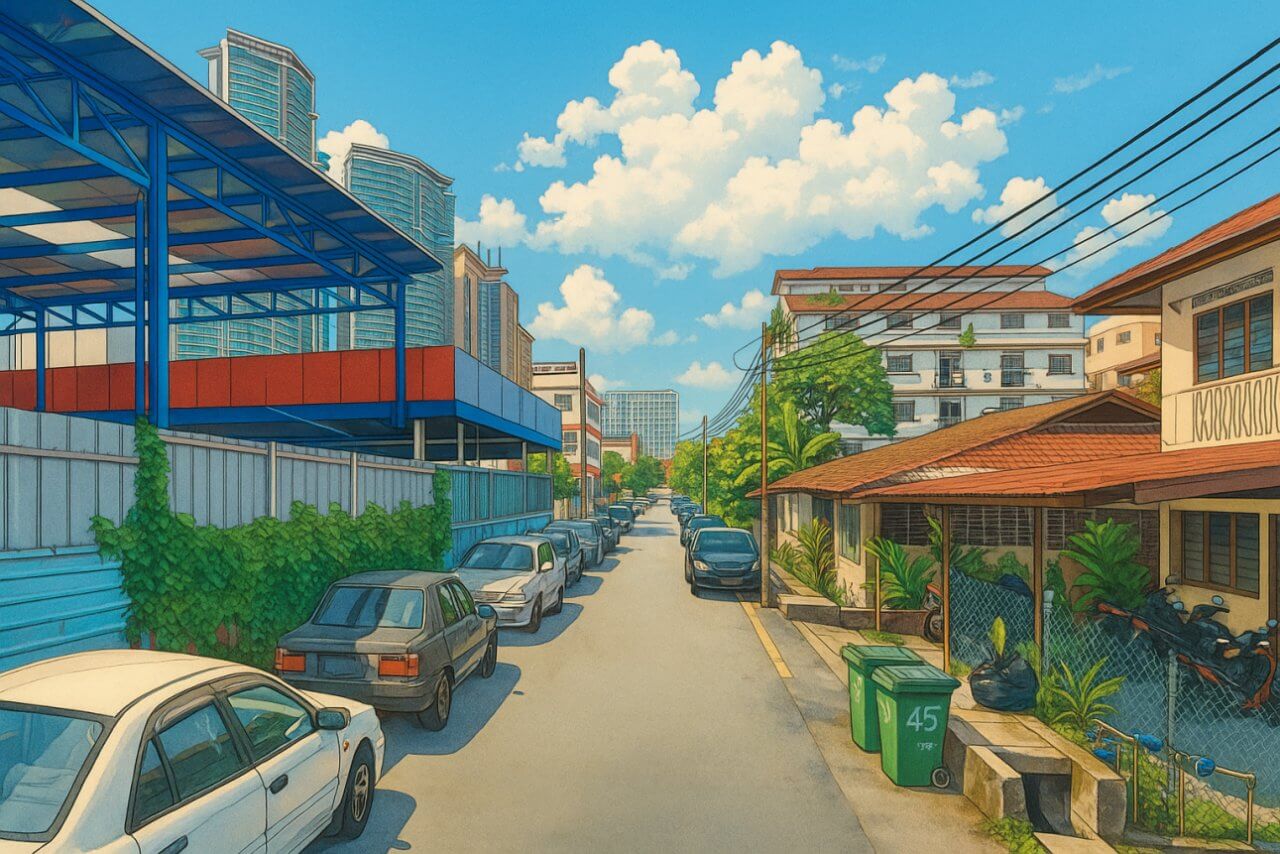 Panting of Jalan Haji Yahya Sheikh Ahmad, Kuala Lumpur
Page Details
This page was created on 11 August 2025. Hi, my name is Timothy and created it from my research, for my own entertainment, knowledge and to satisfy my curiosity. I am providing the information to you in good faith and hope it is useful. I try to get the details as accurate as possible. I also try to update the page whenever I stumble on new details. So this and all my other pages are perpetual work in progress. If you discover any error, please politely inform me, pointing out where the error lies, and I will correct it as soon as possible. Your helpfulness will keep this page accurate, relevant and helpful to those who need the information.More Streets of Kuala Lumpur here
Want to share your Kuala Lumpur travel experiences or get tips from fellow travellers?
Join the Kuala Lumpur Travel Tips Facebook GroupMore information for visiting and living in Kuala Lumpur
Here are some related articles to help you get to know Kuala Lumpur better. Latest Pages & Updates
Buy Me A Coffee
If you enjoy the information I provide and want to support the work I do, please buy me a coffee! I appreciate it immensely, thank you so much!
