
Indonesia Travel Guide
 Go Back
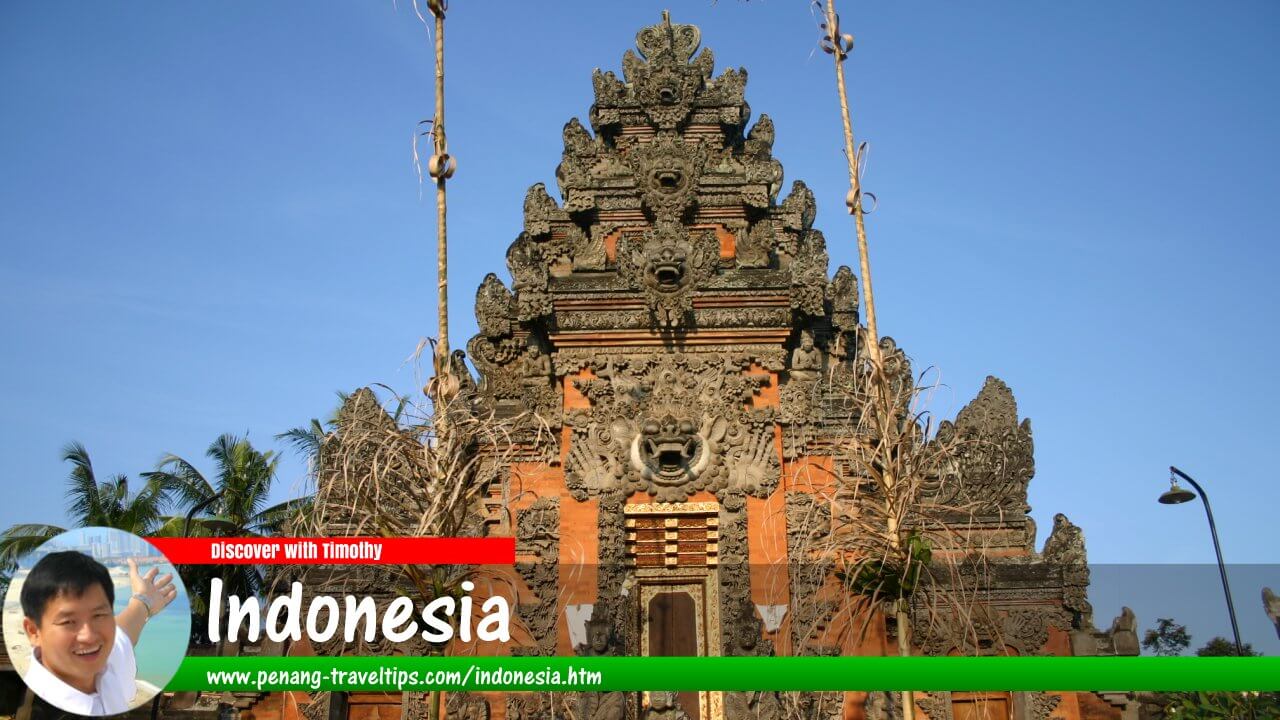 Indonesia Travel Guide (18 June, 2004)
Also available: Panduan Melawat Indonesia
Indonesia is a vast archipelagic country in Southeast Asia, stretching across the equator between the Indian and Pacific oceans. It is the world's largest archipelagic country, comprising more than 17,000 islands and extending more than 5,000 kilometres from west to east. :contentReference[oaicite:0]{index=0}
The country is remarkable for its geographical, cultural and ethnic diversity. Its territory encompasses large islands such as Sumatra, Java, Kalimantan, Sulawesi and Papua, together with thousands of smaller islands. For tourism purposes, Indonesia is commonly presented in six broad regions: Sumatra; Java; Kalimantan; Sulawesi; Bali and Nusa Tenggara; and Maluku and Papua. :contentReference[oaicite:1]{index=1}
Indonesia is therefore not a destination that can easily be experienced in a single trip. A journey to Java, for example, is very different from a holiday in Bali, a wildlife expedition in Sumatra, a diving trip in Raja Ampat or an exploration of the cultural heritage of Sulawesi.
Official Name
The official name of the country is the Republic of Indonesia, or Republik Indonesia in Indonesian. The name Indonesia is derived from Greek and Latin elements meaning roughly "Indian islands", reflecting the country's position and its extensive island geography.
Capital City
Jakarta has historically been Indonesia's capital and remains the country's principal metropolitan, financial and commercial centre. It is a huge city on the northwestern coast of Java and has a population of more than ten million within the city itself. :contentReference[oaicite:2]{index=2}
Indonesia has also been developing Nusantara in East Kalimantan as a new national capital. The transition of government functions is being carried out progressively, so travellers should distinguish between the country's established metropolitan centre, Jakarta, and the developing new capital, Nusantara.
Geography of Indonesia
Indonesia occupies a huge area on both sides of the equator. Its islands range from relatively large landmasses to tiny tropical islands and remote atolls. The country's enormous east-west span is one of its defining geographical characteristics. :contentReference[oaicite:3]{index=3}
The landscape is equally varied. Indonesia has tropical rainforests, highlands, beaches, coral reefs, fertile volcanic plains, extensive rivers and some of the world's most active volcanoes.
The country's location at the meeting point of major tectonic plates has created a landscape with numerous volcanoes and frequent geological activity. This volcanic environment has also produced fertile soils that support intensive agriculture, particularly on Java and Bali.
Travel Tips of Major Cities in Indonesia
- Jakarta - capital
- Bali
- Banda Aceh
- Bandung
- Batam
- Bintan
- Medan
- Padang
- Palembang
- Pekanbaru
- Solo
- Surabaya
- Yogyakarta
The Main Regions of Indonesia
For travellers, it is useful to think of Indonesia as a collection of distinct geographical and cultural regions rather than as one uniform destination.
Sumatra: The large western island is known for Lake Toba, tropical forests, volcanoes, wildlife and diverse ethnic cultures. Major destinations include Medan, Bukittinggi, Padang, Palembang and Banda Aceh.
Java: Indonesia's most densely populated island contains Jakarta, Bandung, Yogyakarta, Semarang, Surabaya and many important historical and cultural sites. Borobudur and the Bromo-Tengger-Semeru region are among its best-known attractions. :contentReference[oaicite:4]{index=4}
Kalimantan: The Indonesian portion of Borneo is characterised by extensive forests, rivers and wildlife. It is also the location of Nusantara, Indonesia's developing new capital.
Sulawesi: Known for its distinctive landscapes, marine environments and cultures, Sulawesi offers destinations such as Makassar, Toraja and Wakatobi.
Bali and Nusa Tenggara: Bali is Indonesia's best-known international tourist destination, while the islands extending eastwards towards Timor offer beaches, mountains, diving and more remote cultural experiences.
Maluku and Papua: These eastern regions contain some of Indonesia's most remote destinations and exceptional marine environments, including Raja Ampat.
Indonesia's Islands
Although Indonesia is often described simply as an island nation, its islands differ enormously in size, population, accessibility and character. Some are densely urbanised while others have only small communities.
The most important islands for international tourism include Java, Bali, Sumatra, Lombok, Flores, Sulawesi and parts of Kalimantan and Papua. Thousands of other islands remain relatively undeveloped for mass tourism.
This geographical scale has an important practical consequence: travelling between Indonesian destinations can take considerably longer than their positions on a map might suggest. Flights are often necessary for longer journeys, while ferries and boats connect many islands that have no airports.
People and Ethnic Diversity
Indonesia is one of the world's most culturally diverse countries. Its population consists of hundreds of ethnic groups with their own languages, traditions, cuisines, clothing, arts and customs.
The Javanese and Sundanese are among the largest ethnic groups, but the country's cultural landscape also includes Balinese, Madurese, Batak, Minangkabau, Bugis, Dayak, Toraja, Papuan and many other communities.
For travellers, this diversity is one of Indonesia's greatest attractions. Customs and cultural traditions can change noticeably from one island or province to another.
Language
The official national language is Indonesian, known locally as Bahasa Indonesia. It is used in government, education, the media and national communication.
At the same time, hundreds of regional languages continue to be spoken throughout the country. Javanese, Sundanese, Madurese, Balinese and many other languages remain important in their respective communities.
English is widely understood in major tourist destinations, particularly in Bali and parts of Jakarta and other large cities. However, outside major tourist centres, basic Indonesian can be extremely useful.
Religion
Indonesia has the world's largest Muslim population and Islam is the country's majority religion. However, Indonesia is constitutionally and culturally diverse, with significant Christian, Hindu and Buddhist communities as well as followers of indigenous traditions.
The religious character of Indonesia varies considerably by region. Java and Sumatra have large Muslim populations, Bali is predominantly Hindu, while parts of eastern Indonesia have substantial Christian populations.
This diversity is visible in the country's architecture, festivals, food, daily customs and places of worship.
Culture and Heritage
Indonesia's cultural heritage has been shaped by indigenous traditions as well as centuries of interaction with India, China, the Arab world, Europe and neighbouring Southeast Asian societies.
Its heritage includes Hindu and Buddhist monuments, Islamic architecture, traditional royal courts, indigenous communities, colonial-era buildings, traditional dances, music, textiles and elaborate ceremonial traditions.
Among Indonesia's most important heritage attractions is Borobudur in Central Java, one of the world's great Buddhist monuments. Indonesia's official tourism authority also highlights destinations such as Borobudur, Lake Toba, Raja Ampat and Bromo-Tengger-Semeru among the country's major attractions. :contentReference[oaicite:5]{index=5}
Natural Environment
Indonesia is one of the world's great biodiversity centres. Its tropical forests, coral reefs, mangroves, mountains and islands support an extraordinary range of plants and animals.
Among the country's best-known wildlife are the orangutan, Sumatran tiger, Komodo dragon and Javan rhinoceros. Marine environments around Indonesia are equally important, with extensive coral reefs and some of the world's richest tropical seas.
Raja Ampat, Wakatobi and other eastern Indonesian destinations are particularly well known among divers and marine enthusiasts. :contentReference[oaicite:6]{index=6}
Volcanoes
Indonesia lies along the Pacific "Ring of Fire" and has numerous active volcanoes. Volcanoes are an important part of the country's landscape and have shaped both its geography and agriculture.
Some volcanoes have become major tourist attractions. Mount Bromo in East Java is particularly popular for its dramatic volcanic scenery, while other volcanoes offer trekking and sunrise experiences.
Indonesia and Malaysia
Indonesia and Malaysia are close neighbours with extensive historical, cultural and linguistic connections. Both countries share many aspects of Malay and Southeast Asian culture, although their histories and modern identities have developed differently.
For Malaysian travellers, Indonesia is therefore one of the easiest foreign countries in which to feel culturally familiar while still experiencing considerable regional differences.
The two countries also share the island of Borneo, known as Kalimantan in Indonesia and divided among Malaysia's Sabah and Sarawak and the Indonesian provinces occupying the southern and central parts of the island.
Why Visit Indonesia?
Indonesia offers an unusually broad range of travel experiences. A single country can provide historic cities, ancient monuments, tropical beaches, volcanoes, rainforests, wildlife, diving destinations, shopping districts and distinctive regional cuisines.
History: Explore ancient Buddhist and Hindu monuments, Islamic heritage and colonial-era cities.
Nature: Discover volcanoes, rainforests, waterfalls, lakes and tropical islands.
Beaches: Enjoy Bali, Lombok, the Gili Islands and numerous lesser-known islands.
Wildlife: Encounter orangutans, Komodo dragons and other distinctive Indonesian species.
Culture: Experience the traditions of Java, Bali, Sumatra, Sulawesi, Kalimantan and eastern Indonesia.
Food: Explore an enormous variety of regional Indonesian cuisines, from rendang and nasi Padang to Javanese, Sundanese and Balinese dishes.
Marine life: Dive and snorkel in some of the world's richest coral-reef environments.
Indonesia for Malaysian Travellers
Indonesia is particularly accessible to Malaysians because of geographical proximity, frequent air connections and strong cultural links. Major Indonesian destinations can be reached from Kuala Lumpur and other Malaysian cities, while some destinations are also accessible by land or sea from neighbouring Malaysian states.
The most convenient destination depends on the type of holiday. Kuala Lumpur travellers seeking a short urban break may choose Jakarta or Bandung, while those interested in culture may prefer Yogyakarta. Bali remains popular for beaches and resorts, while Sumatra offers destinations such as Lake Toba and Bukittinggi.
Malaysians should nevertheless avoid assuming that all of Indonesia is equally easy to reach. The enormous size of the archipelago means that a trip involving several distant islands can require multiple flights and considerable travel time.
Indonesia for Muslim Travellers
For Malaysian Muslim travellers, Indonesia offers an unusually comfortable environment because Islam is the majority religion and halal food is widely available in most populated areas.
Mosques are common, including in smaller towns, and Muslim travellers generally have little difficulty finding places to pray. Nevertheless, regional differences should not be overlooked. Bali, for example, has a predominantly Hindu population, and halal food and mosques are less ubiquitous than in many parts of Java or Sumatra.
Muslim travellers should therefore distinguish between Indonesia's national Muslim identity and the religious character of individual destinations. This is particularly important when planning journeys to Bali, eastern Indonesia and remote islands.
Indonesia as a Travel Destination
The sheer size and diversity of Indonesia mean that the country is best approached through regions rather than as one single destination. First-time visitors should normally select one or two regions and explore them properly rather than attempting to cover too much ground.
For Malaysians making their first trip, Java and Bali provide a particularly accessible introduction to Indonesia. Those interested in nature and wildlife may prefer Sumatra, while experienced travellers seeking remote marine environments can venture further east to destinations such as Raja Ampat.
The following parts of this guide examine Indonesia's history and culture, major destinations, transportation, accommodation and food, the best time to visit, and practical advice for planning a journey.
History and Culture of Indonesia
Indonesia has a long and complex history shaped by migration, maritime trade, powerful kingdoms, religious movements and European colonialism. The country's present-day diversity is the result of many centuries of interaction between the peoples of the archipelago and the wider Asian world.
For travellers, this history is visible almost everywhere: in ancient temples, royal palaces, mosques, traditional villages, colonial buildings, languages, dances, textiles and food. Understanding some of this background makes a visit to Indonesia considerably more meaningful.
Early Human History
The Indonesian archipelago has been inhabited by humans and earlier human species for a very long period. Archaeological discoveries on Java have produced important evidence of Homo erectus, popularly known as Java Man.
The archaeological site of Sangiran in Central Java is particularly important. Fossils and stone tools discovered there indicate human occupation dating back at least 1.5 million years. Indonesia is also famous for the discovery of Homo floresiensis, an extinct human species whose remains were found on Flores. :contentReference[oaicite:0]{index=0}
Early Maritime Trade
Long before the emergence of modern Indonesia, the islands were connected to wider trading networks linking Southeast Asia with India and China.
The location of the archipelago between the Indian Ocean and the South China Sea made it strategically important for maritime trade. Traders were attracted by spices, forest products, gold and other valuable goods produced in different parts of the islands.
Indian cultural and religious influences became particularly important, introducing Hinduism and Buddhism as well as forms of writing, art, architecture and political organisation.
The Kingdom of Srivijaya
Srivijaya was one of the most important early maritime powers of Southeast Asia. Based in southern Sumatra, it rose to prominence from around the 7th century and exercised influence over important sea routes around Sumatra and the Strait of Malacca.
Srivijaya was also an important centre of Buddhist learning. Its position along major maritime routes allowed it to benefit from trade between India, China and the islands of Southeast Asia. :contentReference[oaicite:1]{index=1}
For Malaysian travellers, Srivijaya is particularly significant because its history was closely connected with the Strait of Malacca, one of the world's most important maritime passages.
The Mataram Kingdoms
Central Java became an important centre of Hindu and Buddhist civilisation. During the 8th and 9th centuries, powerful dynasties sponsored the construction of monumental religious buildings.
The Sailendra dynasty is associated with the construction of Borobudur, while the Hindu temple complex of Prambanan was also built in Central Java during this broader period.
These monuments demonstrate the sophistication of Javanese society at the time and remain among Indonesia's most important cultural attractions.
Borobudur
Borobudur is one of Indonesia's most important historical monuments and one of the world's great Buddhist monuments. It was constructed in Central Java around the 8th and 9th centuries during the period of the Sailendra dynasty.
The monument consists of a massive stepped structure decorated with thousands of relief panels and hundreds of Buddha statues. Its design represents Buddhist concepts of the cosmos and spiritual progression.
Borobudur was eventually abandoned and became buried beneath volcanic ash and vegetation. It was rediscovered in the early 19th century and subsequently underwent major restoration, including a major international conservation project involving Indonesia and UNESCO. :contentReference[oaicite:2]{index=2}
Prambanan
Prambanan is one of Indonesia's most important Hindu temple complexes. Located in Central Java, it represents another major expression of the religious and artistic traditions that flourished on Java more than a thousand years ago.
The proximity of Borobudur and Prambanan illustrates an important feature of Indonesian history: Hinduism and Buddhism both flourished on Java, leaving a remarkable collection of monuments and artistic traditions.
The Majapahit Empire
The Majapahit Kingdom, based in East Java, became one of the most powerful political entities in the Indonesian archipelago. It flourished from the late 13th century into the 15th century and exercised influence over a large part of the region.
Majapahit is especially important in modern Indonesian historical consciousness because later generations associated its political influence with the idea of a united Nusantara.
The kingdom left a strong cultural legacy, particularly in Java and Bali. Some traditions, artistic forms and literary works associated with the Majapahit period continue to influence Indonesian culture today. :contentReference[oaicite:3]{index=3}
The Spread of Islam
Islam reached the Indonesian archipelago gradually through trade, migration and interaction with Muslim communities from India, Arabia and other parts of Asia. The process began centuries before Indonesia became a modern nation.
Muslim trading communities became established in important ports, particularly along the northern coast of Sumatra and Java. Over time, local rulers and populations adopted Islam, leading to the emergence of numerous Islamic kingdoms and sultanates.
By the later medieval period, Islam had become an important force throughout much of the archipelago, particularly in Java, Sumatra, Kalimantan, Sulawesi and the Moluccas. Bali, however, retained a predominantly Hindu tradition.
Islamic Sultanates
A number of important sultanates emerged across the archipelago. These included Samudera Pasai in northern Sumatra, the Sultanate of Malacca across the Strait, the Sultanate of Demak in Java, and the powerful spice-trading sultanates of Ternate and Tidore in the Moluccas.
These states were closely connected to maritime trade. Their histories demonstrate that Islam in Indonesia developed alongside commercial networks rather than arriving through a single military conquest.
The Spice Trade
Indonesia's position at the centre of the global spice trade attracted merchants from across Asia and eventually European powers.
The Moluccas, or Maluku Islands, were particularly valuable because they produced cloves, nutmeg and mace. These spices were highly prized in Europe and became a major reason why European powers sought direct control of the region.
The search for spices profoundly changed Indonesian history and eventually brought the Portuguese, Spanish, Dutch and British into competition for influence in the archipelago. :contentReference[oaicite:4]{index=4}
European Arrival
The Portuguese were among the first Europeans to establish a significant presence in Southeast Asian maritime trade during the 16th century. Spanish and British interests followed, while the Dutch eventually became the dominant European colonial power in the Indonesian archipelago.
The Dutch established the Dutch East India Company, or VOC, which became a powerful commercial and military organisation. It sought to control the production and trade of valuable spices.
Dutch East Indies
After the VOC was dissolved, the Dutch government increasingly took direct control of the territories that became known as the Dutch East Indies.
Dutch colonial rule expanded gradually rather than being established over the entire archipelago at once. Different kingdoms and communities resisted Dutch expansion for long periods.
The colonial period profoundly influenced Indonesia's administration, economy, infrastructure, education and urban development, but it was also marked by exploitation, conflict and resistance.
Colonial Cities
The Dutch developed a number of important administrative and commercial centres. Batavia, the colonial name for present-day Jakarta, became the principal centre of Dutch power in the East Indies.
Other cities such as Bandung, Semarang, Surabaya, Yogyakarta and Malang also developed important colonial-era districts and buildings.
Visitors interested in history can still see Dutch colonial architecture in several Indonesian cities, particularly in old town districts.
Indonesian Nationalism
By the early 20th century, a modern Indonesian nationalist movement had begun to emerge. Educated Indonesians increasingly challenged colonial rule and called for greater political rights and national unity.
One of the most important events was the Youth Pledge, or Sumpah Pemuda, of 1928. Indonesian youth organisations declared their commitment to one homeland, one nation and one language: Indonesia.
This was an important step in developing a shared Indonesian identity across the archipelago's enormous ethnic and linguistic diversity. :contentReference[oaicite:5]{index=5}
Japanese Occupation
During the Second World War, Japan invaded and occupied the Dutch East Indies. Japanese rule lasted from 1942 until Japan's defeat in 1945.
The occupation was difficult and caused considerable suffering, but it also weakened Dutch colonial authority and created circumstances that allowed Indonesian nationalists to move towards independence.
Independence in 1945
On 17 August 1945, Sukarno and Mohammad Hatta proclaimed the independence of Indonesia.
The declaration did not immediately result in peaceful independence. The newly established Indonesian Republic had to fight to defend its claim against the returning Dutch authorities.
After several years of armed conflict and diplomatic negotiations, the Netherlands formally recognised Indonesian independence in 1949, with the transfer of sovereignty taking place at the end of that year. :contentReference[oaicite:6]{index=6}
Sukarno and the Early Republic
Sukarno became Indonesia's first president and played a central role in the country's independence movement and early national identity.
His government promoted Pancasila as the philosophical foundation of the Indonesian state. Pancasila consists of five principles, including belief in one God, humanitarianism, national unity, democracy and social justice.
The national motto, Bhinneka Tunggal Ika, meaning approximately "Unity in Diversity", expresses the idea that Indonesia's many ethnic, linguistic and religious communities form one nation.
The New Order
Following a period of severe political and economic instability in the mid-1960s, General Suharto became president. He established what became known as the New Order.
Suharto's government remained in power for more than three decades. The period was characterised by political centralisation and restrictions on political opposition, but it also brought significant economic development and infrastructure expansion.
The Reform Era
Suharto resigned in 1998 following widespread protests and a major economic crisis. Indonesia subsequently entered the Reformasi period, bringing major political and institutional changes.
Democratic elections, decentralisation, greater freedom of the press and stronger regional autonomy became important features of the new political era.
Culture and Society
Indonesia's culture cannot be described as one single tradition. It is a collection of hundreds of regional cultures shaped by geography, history, religion and ethnicity.
The Indonesian tourism authority describes the country's cultural diversity through its many ethnic groups, languages, customs and religious traditions. Java itself contains several major cultural traditions, while Bali, Sumatra, Sulawesi, Kalimantan, Maluku and Papua have their own distinctive identities. :contentReference[oaicite:7]{index=7}
Traditional Arts
Traditional Indonesian arts include dance, music, theatre, sculpture, weaving, woodcarving and shadow puppetry.
Wayang, particularly wayang kulit shadow puppetry, is one of Java's best-known traditional art forms. Performances traditionally combine storytelling, music and elaborate leather puppets.
Different regions have their own musical traditions. The gamelan orchestras of Java and Bali, for example, use percussion instruments to create distinctive layered musical performances.
Traditional Dance
Dance plays an important role in Indonesian cultural life. Different regions have developed distinctive forms, costumes and performance traditions.
Balinese dances are particularly famous for their expressive movements and elaborate costumes, while Javanese court dances are often characterised by controlled and refined movements.
Sumatra, Sulawesi and other regions also have their own ceremonial and traditional dances.
Batik
Batik is one of Indonesia's most recognisable cultural traditions. It is a textile-decoration technique in which wax is used to create patterns before the fabric is dyed.
Different regions have developed their own batik styles and motifs. Javanese batik traditions from places such as Yogyakarta and Solo are particularly well known.
Batik was recognised by UNESCO as an important example of Indonesia's intangible cultural heritage.
Traditional Textiles
Indonesia has numerous other textile traditions. Ikat, songket and ulos are examples of distinctive textiles produced by different communities.
These textiles may have meanings related to status, family, ceremonies, marriage or religious traditions. They are therefore more than simply decorative souvenirs.
Indonesian Cuisine
Food is one of the most accessible ways to experience Indonesia's cultural diversity. Each region has developed its own ingredients, cooking techniques and characteristic dishes.
Rendang, nasi Padang, gado-gado, satay, nasi goreng and soto are among the best-known Indonesian foods, but the regional variety extends far beyond these internationally familiar dishes.
Indonesian cuisine has been influenced by local traditions as well as centuries of contact with Indian, Chinese, Arab, European and neighbouring Southeast Asian cultures.
Religion and Culture
Religion remains an important part of Indonesian society. Islam is the majority religion nationally, while Hinduism is dominant in Bali and Christianity is predominant in several parts of eastern Indonesia and North Sulawesi.
The country's cultural diversity means that religious customs can vary greatly from one destination to another. Visitors should respect local traditions, particularly when visiting places of worship or during religious ceremonies. :contentReference[oaicite:8]{index=8}
Islamic Heritage
Indonesia has a rich Islamic heritage extending back many centuries. Historic mosques, Islamic schools, royal palaces and old trading towns can be found across Java, Sumatra, Sulawesi and other islands.
Some of Indonesia's oldest mosques incorporate architectural features influenced by local traditions rather than simply copying Middle Eastern designs. This has produced a distinctive Indonesian Islamic architectural heritage.
Hindu Heritage in Bali
Bali is distinctive within Indonesia because the majority of its population follows Balinese Hinduism. Hindu traditions are deeply integrated into everyday life, architecture and community ceremonies.
Visitors to Bali will encounter temples, shrines, ceremonial offerings and religious processions throughout the island. These are not merely tourist attractions but remain part of daily Balinese life.
Indonesian Hospitality
Hospitality is an important part of Indonesian culture. Visitors are generally welcomed warmly, although customs regarding greetings, dress and personal behaviour vary between communities.
A polite and respectful attitude is usually appreciated, particularly when visiting villages, religious sites or traditional communities.
Culture for Malaysian Travellers
Malaysians may find many aspects of Indonesian culture familiar because of shared historical, linguistic and religious connections. Bahasa Indonesia is also closely related to Bahasa Melayu, although vocabulary, pronunciation and everyday expressions differ.
At the same time, Indonesia's regional diversity means that cultural practices can be quite different from those in Malaysia. A visitor to Bali, for example, will encounter a predominantly Hindu society, while a visitor to Aceh will experience a strongly Islamic cultural environment.
Indonesia's Cultural Identity
The central idea of Indonesian national identity is that diversity does not prevent national unity. The motto Bhinneka Tunggal Ika captures this principle: the country consists of many different peoples and traditions, yet they form one nation. :contentReference[oaicite:9]{index=9}
For travellers, this is perhaps the most important cultural idea to understand. Indonesia should not be viewed as a single uniform culture, but as an enormous collection of cultures connected by a shared national identity.
Why History Matters to Travellers
Indonesia's history helps explain the extraordinary variety of experiences available to visitors. Ancient Hindu and Buddhist kingdoms produced monuments such as Borobudur and Prambanan; Islamic sultanates left mosques and royal traditions; the spice trade created historic port cities; Dutch colonialism left distinctive architecture; and the independence movement shaped the modern Indonesian state.
Exploring Indonesia therefore means encountering several layers of history at the same time. Ancient monuments, traditional communities, colonial buildings and modern cities can sometimes exist within the same journey, making Indonesia one of Southeast Asia's richest destinations for cultural and historical travel.
Major Cities and Tourist Destinations in Indonesia
Indonesia has an extraordinary variety of destinations spread across thousands of islands. Its attractions range from enormous modern cities and historic royal centres to volcanic landscapes, tropical beaches, rainforests, wildlife reserves and some of the world's finest diving areas.
Because Indonesia is so large, first-time visitors should resist the temptation to cover too many destinations in one trip. It is usually better to concentrate on one island or region and explore it properly.
Jakarta
Jakarta, on the island of Java, is Indonesia's largest city and its principal commercial and metropolitan centre. It is a sprawling urban area with modern business districts, shopping centres, historic neighbourhoods, museums and a diverse food scene.
The city's historic centre, known as Kota Tua, contains colonial-era buildings associated with Batavia, the Dutch colonial city that preceded modern Jakarta. The area around Fatahillah Square is particularly popular with visitors interested in Jakarta's history.
Other attractions include the National Museum of Indonesia, the National Monument (Monas), Istiqlal Mosque, Jakarta Cathedral and the old port of Sunda Kelapa.
Jakarta is best suited to travellers interested in urban Indonesia, history, shopping, food and contemporary culture rather than those seeking beaches or traditional rural landscapes.
Yogyakarta
Yogyakarta, often called Jogja, is one of Indonesia's most important cultural destinations. It is particularly associated with Javanese arts, traditional crafts, royal heritage and historic temples.
The city is home to the Keraton Ngayogyakarta Hadiningrat, the palace of the Sultan of Yogyakarta. The surrounding area contains traditional markets, batik workshops, museums and historic neighbourhoods.
Yogyakarta is also the principal base for visiting Borobudur and Prambanan, making it one of the most rewarding destinations in Indonesia for travellers interested in history and culture.
Borobudur
Borobudur Temple is one of Indonesia's most famous attractions and one of the world's greatest Buddhist monuments. It is located in Central Java, within reach of Yogyakarta.
The monument is built in the form of a huge stepped pyramid and is decorated with extensive reliefs and Buddha statues. Its terraces represent stages in the Buddhist spiritual journey.
Borobudur can be visited as a day trip from Yogyakarta, although staying in the surrounding area provides more time to explore the landscape and nearby villages.
Prambanan
Prambanan Temple is a spectacular Hindu temple complex located east of Yogyakarta. Its tall central towers and intricate carvings make it one of the most impressive ancient monuments in Indonesia.
The complex is associated with the Trimurti of Hinduism: Brahma, Vishnu and Shiva. Visitors interested in Indonesian history should ideally combine Prambanan with Borobudur to appreciate the coexistence of Hindu and Buddhist civilisations in Central Java.
Bandung
Bandung, the capital of West Java, is a highland city surrounded by mountains and volcanic landscapes. Its cooler climate has made it a popular weekend destination for residents of Jakarta.
Bandung is known for shopping, cafés, food, colonial architecture and nearby natural attractions. The surrounding highlands contain tea plantations, volcanic areas and hot springs.
The city is also associated with the Angklung, a traditional Sundanese musical instrument made from bamboo.
Surabaya
Surabaya is the capital of East Java and one of Indonesia's largest cities. It is an important commercial and industrial centre as well as a gateway to eastern Java.
Although Surabaya is less associated with international tourism than Bali or Yogyakarta, the city has historic districts, museums, colonial buildings and a strong local food culture.
It is also a convenient starting point for travellers heading towards Mount Bromo and other attractions in East Java.
Malang
Malang is a pleasant highland city in East Java surrounded by mountains and agricultural areas. Its cooler climate, colonial architecture and nearby natural attractions make it a popular destination.
Malang is also frequently used as a base for visiting Mount Bromo and the surrounding volcanic landscape.
Mount Bromo
Mount Bromo is one of Indonesia's most iconic volcanic landscapes. Located within the Bromo-Tengger-Semeru National Park, it rises from an enormous volcanic caldera surrounded by dramatic mountains.
The most popular experience is to watch the sunrise from a viewpoint overlooking Mount Bromo and the surrounding peaks before travelling across the volcanic sand sea towards the crater.
The journey normally begins very early in the morning. Warm clothing is useful because temperatures can be surprisingly cold before sunrise.
Bali
Bali is Indonesia's best-known international tourist destination. The island is famous for its beaches, Hindu temples, rice terraces, traditional arts, resorts, restaurants and distinctive Balinese culture.
Bali offers a wide range of experiences, from lively beach resorts and nightlife in the south to peaceful rice terraces, temples and mountain landscapes in the interior.
The island is particularly popular with honeymooners, families, surfers, divers, wellness travellers and visitors looking for a tropical holiday.
Denpasar
Denpasar is the capital of Bali and the island's main administrative centre. Most international visitors arrive through the nearby I Gusti Ngurah Rai International Airport.
Although many tourists stay in other parts of Bali, Denpasar provides an opportunity to experience a more ordinary side of Balinese urban life, including markets, temples and local neighbourhoods.
Ubud
Ubud, in central Bali, is strongly associated with Balinese arts, crafts, traditional dance, temples and rice-growing landscapes.
The town and surrounding villages contain galleries, workshops, temples and traditional compounds. The nearby rice terraces are among Bali's most recognisable landscapes.
Ubud is also a major centre for yoga, wellness retreats and vegetarian and health-oriented restaurants.
Kuta, Legian and Seminyak
The southern coast of Bali contains several well-developed tourist areas. Kuta is known for its beach, surfing and lively atmosphere, while Legian and Seminyak offer a mixture of resorts, restaurants, shopping and nightlife.
These areas are convenient for visitors seeking easy access to accommodation, restaurants and entertainment, although they can be considerably busier than other parts of Bali.
Nusa Dua
Nusa Dua is a resort area on the southern peninsula of Bali known for large hotels, landscaped grounds and relatively calm beaches.
It is particularly suitable for families, couples and travellers seeking a resort-based holiday with less emphasis on nightlife.
Tanah Lot
Tanah Lot is one of Bali's most photographed temples. Built on a rocky offshore formation, the temple is particularly striking around sunset when the surrounding sea and coastline are illuminated by the evening light.
The temple remains an important religious site rather than merely a tourist attraction, so visitors should respect local customs when exploring the area.
Mount Batur
Mount Batur is an active volcano in Bali's central highlands. Sunrise trekking is one of the island's popular outdoor activities.
The climb begins in the early hours of the morning so that visitors can reach the summit around sunrise. The surrounding volcanic landscape and views across Lake Batur make the effort worthwhile for travellers who enjoy hiking.
Lombok
Lombok, east of Bali, offers a more relaxed alternative to some of Bali's busiest tourist areas. The island is known for beaches, waterfalls, traditional villages and Mount Rinjani.
Lombok is predominantly Muslim, making it particularly comfortable for Malaysian Muslim travellers. Mosques are common and halal food is widely available.
The island is therefore an interesting choice for travellers who want tropical scenery similar to Bali while experiencing a predominantly Muslim local culture.
Mount Rinjani
Mount Rinjani is one of Indonesia's highest and most spectacular volcanoes. It dominates northern Lombok and contains the beautiful Segara Anak crater lake.
Trekking Mount Rinjani is physically demanding and normally requires several days. It is best suited to experienced hikers who are properly prepared for changing weather and difficult terrain.
Gili Islands
The Gili Islands, located off the northwestern coast of Lombok, consist of three principal islands: Gili Trawangan, Gili Meno and Gili Air.
They are known for beaches, snorkelling, diving and a relaxed island atmosphere. Gili Trawangan is generally the liveliest, Gili Meno is quieter, while Gili Air offers a balance between the two.
Sumatra
Sumatra is one of Indonesia's largest islands and offers a very different travel experience from Java and Bali. It is known for mountains, tropical forests, lakes, wildlife and diverse ethnic cultures.
The island is particularly attractive to travellers interested in nature and adventure.
Medan
Medan is the largest city in Sumatra and the principal gateway to northern Sumatra. It is a busy commercial city with a diverse population and an interesting food culture.
Among the city's attractions are the Maimun Palace, the Great Mosque of Medan and the historic Kesawan district.
Medan is also a convenient starting point for journeys to Lake Toba and the orangutan habitats of North Sumatra.
Lake Toba
Lake Toba is an enormous volcanic lake in North Sumatra. It occupies the caldera of a gigantic ancient volcanic eruption and is surrounded by mountains.
Samosir Island, located within the lake, is particularly interesting for its Batak culture, traditional houses, stone graves and scenic villages.
Lake Toba is one of the best destinations in Indonesia for travellers seeking spectacular scenery combined with cultural experiences.
Bukittinggi
Bukittinggi is a highland city in West Sumatra surrounded by volcanic mountains and fertile agricultural landscapes. It is associated with the Minangkabau people, whose distinctive culture is one of the most interesting in Indonesia.
The region is famous for its traditional houses with dramatically curved rooflines and for its rich cuisine.
Padang
Padang is the capital of West Sumatra and the home of the cuisine known internationally as Padang food.
Restaurants serving nasi Padang can be found throughout Indonesia and Malaysia, but eating the cuisine in its place of origin provides an opportunity to experience its regional character.
Lake Maninjau
Lake Maninjau is a beautiful volcanic lake in West Sumatra surrounded by steep green hills. The journey to the lake includes the famous road known as the Kelok 44, or 44 hairpin bends.
The area is suitable for travellers seeking scenery, quiet villages and a slower pace of travel.
Kerinci and Mount Kerinci
Mount Kerinci is the highest volcano in Indonesia and lies within the Kerinci Seblat region of Sumatra.
The surrounding forests are important habitats for wildlife, including the critically endangered Sumatran tiger. Trekking and nature-based tourism are the main reasons adventurous travellers visit the region.
Orangutan Destinations
Sumatra is one of the best places in the world to see orangutans in their natural environment. Bukit Lawang, on the edge of Gunung Leuser National Park, is a popular base for jungle trekking.
Visitors should choose responsible wildlife operators and avoid activities that encourage inappropriate feeding, touching or handling of wild animals.
Banda Aceh
Banda Aceh is the capital of Aceh province at the northern tip of Sumatra. Aceh is particularly distinctive because of its strong Islamic identity and the special status of Islamic law within the province.
The city's most famous landmark is the Baiturrahman Grand Mosque, which became a powerful symbol of resilience following the devastating Indian Ocean tsunami of 2004.
Sulawesi
Sulawesi has a distinctive shape and a remarkable mixture of cultures and landscapes. It is particularly attractive to travellers interested in marine life, traditional communities and unusual geography.
Makassar
Makassar is the largest city in Sulawesi and an important gateway to eastern Indonesia. It has a long maritime trading history and remains an important port.
The city is known for seafood, local cuisine and historical attractions such as Fort Rotterdam.
Tana Toraja
Tana Toraja, in the highlands of South Sulawesi, is one of Indonesia's most distinctive cultural destinations. The Toraja people are known for elaborate funeral ceremonies, traditional houses called tongkonan and distinctive burial practices.
Visitors should remember that these ceremonies are genuine religious and family events rather than performances staged for tourists. Respect and sensitivity are particularly important when observing or photographing them.
Wakatobi
Wakatobi, in Southeast Sulawesi, is famous for its coral reefs and marine biodiversity. It is one of Indonesia's important diving destinations.
The area is particularly suitable for divers and snorkellers looking for relatively remote tropical marine environments.
Kalimantan
Kalimantan occupies the Indonesian part of the island of Borneo. Much of the region consists of tropical forest and river systems, making it particularly important for wildlife and nature tourism.
Travellers should expect longer journeys and fewer tourist facilities than in Java or Bali.
Banjarmasin
Banjarmasin, in South Kalimantan, is known as the city of rivers because waterways have traditionally played an important role in local life and commerce.
The city's floating markets are among its best-known attractions, although travellers should check current operating arrangements before planning a visit.
Derawan Islands
The Derawan Islands in East Kalimantan offer beaches, coral reefs, marine life and opportunities for diving and snorkelling.
The islands are considerably less developed than Bali, making them more suitable for travellers seeking a quieter marine destination.
Flores
Flores, in the Lesser Sunda Islands, is known for mountains, traditional villages, volcanic lakes and access to Komodo National Park.
The island's cultural landscape is predominantly Christian, distinguishing it from many other Indonesian tourist destinations.
Labuan Bajo
Labuan Bajo is a small port town in western Flores and the principal gateway to Komodo National Park.
The town has developed rapidly as a tourist destination and offers hotels, restaurants, dive operators and boat trips to surrounding islands.
Komodo National Park
Komodo National Park is famous for the Komodo dragon, the world's largest living lizard. The park encompasses islands, savannah landscapes, forests, beaches and exceptionally rich marine environments.
Visitors normally explore the park with trained guides because Komodo dragons are powerful wild animals and should be observed at a safe distance.
Raja Ampat
Raja Ampat, in Southwest Papua, is one of the world's premier marine destinations. Its limestone islands, turquoise waters and coral reefs attract divers and nature enthusiasts from around the world.
The region is remote and considerably more difficult to reach than Bali or Java. Accommodation and transportation can also be more expensive.
For travellers who are prepared to make the journey, Raja Ampat offers some of Indonesia's most extraordinary marine scenery.
Jakarta or Bali?
First-time visitors sometimes ask whether they should choose Jakarta or Bali. The two destinations offer completely different experiences.
Jakarta: Best for urban life, shopping, business, museums, history, food and contemporary Indonesia.
Bali: Best for beaches, resorts, Hindu culture, temples, nature, wellness and a broad range of tourist activities.
Travellers who have enough time can visit both, although doing so is more worthwhile if the journey also includes other destinations in Java.
Java or Bali?
For travellers interested in history and culture, Java often provides a richer experience than simply visiting Bali. Yogyakarta, Borobudur, Prambanan and the volcanic landscapes of East Java can form an excellent cultural and scenic journey.
Bali, on the other hand, is more immediately accessible as a holiday destination, with a highly developed tourism industry and a wide range of accommodation, restaurants and activities.
Indonesia for Beach Holidays
Indonesia has thousands of beaches, but the experience varies greatly between destinations. Bali and Lombok are the easiest choices for travellers seeking well-developed beach resorts.
Those looking for quieter beaches can consider the Gili Islands, Flores, the Derawan Islands or parts of eastern Indonesia.
For world-class marine biodiversity, Raja Ampat and Wakatobi are particularly attractive, although both require considerably more planning.
Indonesia for Nature and Wildlife
Nature lovers have an enormous choice of destinations. Sumatra is particularly suitable for rainforest and orangutan experiences, Komodo National Park for the Komodo dragon, and eastern Indonesia for marine biodiversity.
Indonesia's national parks and protected areas should be visited responsibly. Travellers should follow park regulations and use recognised guides where required.
Indonesia for History and Culture
Java is the strongest choice for travellers interested in ancient Indonesian civilisation. Yogyakarta, Borobudur and Prambanan can be combined into a relatively compact cultural itinerary.
Bali provides a different cultural experience through Balinese Hinduism, while Sumatra, Sulawesi and other islands offer opportunities to discover distinctive indigenous traditions.
Indonesia for Muslim Travellers
Muslim travellers from Malaysia will find Indonesia particularly convenient in many parts of the country. Java, Sumatra and Lombok have large Muslim populations, with mosques and halal food widely available.
Bali requires somewhat more planning. Although halal restaurants and mosques are available, they are not as ubiquitous as in Muslim-majority areas of Java or Sumatra.
In more remote destinations, especially parts of eastern Indonesia, Muslim travellers should check the availability of halal food and prayer facilities before travelling.
Choosing an Indonesian Destination
For a first visit: Java and Bali.
For history: Yogyakarta, Borobudur and Prambanan.
For volcanoes: Mount Bromo, Mount Batur and Mount Rinjani.
For beaches: Bali, Lombok and the Gili Islands.
For wildlife: Sumatra and Komodo National Park.
For Islamic culture: Java, Sumatra and Lombok.
For traditional cultures: Tana Toraja, Yogyakarta and Bali.
For diving: Raja Ampat, Wakatobi and the Derawan Islands.
For a city holiday: Jakarta, Bandung and Surabaya.
For a quieter experience: Flores, parts of Sumatra, Kalimantan and eastern Indonesia.
Planning a Multi-Destination Trip
Indonesia's size means that a multi-destination itinerary should be planned around geographical regions. A journey combining Yogyakarta, Mount Bromo and Bali, for example, is relatively logical because the destinations can be connected across Java and by ferry or flight to Bali.
By contrast, combining Jakarta, Sumatra, Bali and Raja Ampat in a short holiday would involve considerable flying and leave little time for exploring each destination.
For Malaysian travellers taking their first trip, a well-planned itinerary covering fewer destinations will usually be more enjoyable than attempting to see as much of Indonesia as possible.
Getting to Indonesia and Getting Around
Indonesia is relatively easy to reach from Malaysia, with frequent air connections between Malaysian cities and major Indonesian destinations. Once in Indonesia, however, travelling between destinations can involve considerable distances because the country stretches across thousands of islands.
For Malaysian travellers, the most important thing to understand is that air travel is often the most practical way to cover long distances, while trains, buses, ferries and private vehicles are more useful for travelling within individual islands or between nearby islands.
Travelling from Malaysia to Indonesia
Malaysia and Indonesia are close neighbours, and there are numerous air connections between the two countries. The most useful departure points for Malaysian travellers include Kuala Lumpur, Penang, Johor Bahru, Kota Kinabalu and Kuching, depending on the destination.
The easiest Indonesian destinations to reach by air are generally Jakarta, Bali, Medan, Surabaya and other major cities with international airports. Some routes operate directly while others require a connection in Kuala Lumpur, Singapore or another regional hub.
Because airline schedules change, travellers should check the latest flight availability before planning an itinerary.
Flying from Kuala Lumpur
Kuala Lumpur International Airport (KLIA) is the principal international gateway for Malaysians travelling to Indonesia. It offers frequent services to major Indonesian cities and tourist destinations.
Jakarta and Bali are among the most convenient choices for a first trip, while direct services may also be available to destinations such as Medan, Surabaya and other Indonesian cities depending on the current airline schedule.
For travellers living in Penang, Johor, Sabah or Sarawak, it may sometimes be more convenient to use a regional airport rather than travel to Kuala Lumpur first.
Flying from Penang
For Malaysian travellers living in northern Malaysia, Penang International Airport can be a useful starting point for Indonesia trips.
Flight availability varies by season and airline, so travellers should check current schedules when planning their journey. Where a direct flight is unavailable, Kuala Lumpur can serve as a convenient connecting point.
Crossing the Land Border
Malaysia and Indonesia share a land border on the island of Borneo. Travellers can cross between Malaysian Sabah or Sarawak and Indonesian Kalimantan through designated immigration checkpoints.
Land crossings are mainly useful for travellers exploring Borneo rather than for visitors taking a conventional holiday to Java or Bali.
Travellers using a land border should check the operating hours, immigration requirements and current crossing arrangements before departure.
Travelling by Sea
Because Indonesia is an archipelago, boats and ferries form an important part of the country's transportation system.
Passenger ferries connect many islands, while smaller boats serve coastal communities and tourist islands. Routes range from relatively short crossings to long overnight journeys.
For tourists, ferries are particularly useful when travelling between Java and Bali, Bali and Lombok, and mainland areas and nearby islands.
Ferries between Java and Bali
One of Indonesia's most useful ferry routes for tourists is the crossing between Ketapang in East Java and Gilimanuk in western Bali.
This crossing is commonly used by buses, cars and travellers moving overland between Java and Bali. It is considerably cheaper than flying and allows visitors to combine a Java itinerary with a Bali holiday.
Ferries between Bali and Lombok
Travellers can reach Lombok from Bali by ferry or faster passenger boat, depending on the route and destination.
The conventional ferry crossing between Bali and Lombok takes considerably longer than a fast boat but can be useful for travellers transporting vehicles or seeking a lower-cost option.
Fast boats operate between several points in Bali and the Gili Islands or Lombok, but sea conditions can affect schedules.
Domestic Flights
Domestic aviation is extremely important in Indonesia. Flying is usually the most practical way to travel between distant islands such as Java, Sumatra, Sulawesi, Bali and Papua.
Major airlines serve many destinations throughout the archipelago. Depending on the route, travellers may choose between full-service and low-cost airlines.
When comparing flights, remember to check baggage allowances, airport locations, departure times and whether checked baggage is included in the fare.
Choosing Domestic Flights
For long-distance journeys, domestic flights can save many hours or even days compared with travelling by land and sea.
For example, flying from Jakarta to Bali is much more practical for most tourists than attempting to travel entirely overland. Similarly, flying is normally the preferred option when connecting Java with Sumatra or Sulawesi.
Travellers should nevertheless allow sufficient time between connecting flights, particularly when using separate tickets.
Jakarta Airports
The principal airport serving Jakarta is Soekarno-Hatta International Airport, located outside the city centre. It is one of Indonesia's busiest airports.
Jakarta also has Halim Perdanakusuma Airport, which serves some domestic and other flights.
When booking accommodation and transportation, check which Jakarta airport is being used because travelling between the airport and different parts of the metropolitan area can take considerable time.
Bali Airport
Most international visitors to Bali arrive at I Gusti Ngurah Rai International Airport, located south of Denpasar.
The airport serves the island's major tourist areas, including Kuta, Seminyak, Nusa Dua and Ubud, although journey times vary considerably depending on traffic.
Yogyakarta Airports
Travellers visiting Yogyakarta may encounter flights to Yogyakarta International Airport, located some distance from the city, as well as information relating to the older Adisutjipto Airport.
Yogyakarta International Airport is now the principal airport for scheduled commercial services to the region. Travellers should therefore check their arrival airport carefully when booking accommodation and transportation.
Trains in Java
Java has the most extensive and useful railway network for tourists in Indonesia. Trains connect Jakarta with major cities including Bandung, Yogyakarta and Surabaya.
Travelling by train can be an enjoyable way to see the countryside while avoiding the congestion that affects some major roads.
For many journeys in Java, trains offer a good balance between comfort, speed and cost.
High-Speed Rail
Indonesia is home to the Whoosh high-speed railway, which connects Jakarta with Bandung.
The service has significantly reduced the travel time between the two metropolitan areas and provides an alternative to travelling by road through the heavily populated and congested corridor.
Passengers should check the current station arrangements because high-speed rail stations are not necessarily located in the same central locations as conventional railway stations.
Booking Train Tickets
Train tickets in Indonesia can be purchased through official railway channels and authorised booking platforms. Popular routes can become busy during weekends, school holidays and major Indonesian festivals.
For long-distance journeys, booking in advance is recommended, particularly if travellers want a specific departure time or a higher class of carriage.
Classes of Indonesian Trains
Indonesian long-distance trains generally offer different classes of service. Higher classes provide more comfortable seating and, on some services, additional facilities.
For long journeys, spending more for a comfortable seat can be worthwhile, especially for travellers accustomed to Malaysia's intercity train services.
Buses
Buses remain an important form of transportation, particularly on islands where railway coverage is limited.
Long-distance buses connect many cities and towns, with different operators offering different standards of comfort.
For tourists, premium or executive buses are usually preferable for long journeys because they offer more comfortable seats and better onboard facilities.
Travel by Car
Hiring a private car with a driver is a popular way to explore Indonesia, particularly in Java and Bali.
This arrangement is useful for visiting several attractions in one day, especially when public transportation is limited.
For families and groups, the cost of a private car and driver can sometimes be surprisingly reasonable when divided among several travellers.
Driving Yourself
Self-driving is possible in Indonesia, but it is not always the easiest option for visitors.
Traffic congestion, motorcycles, road conditions, unfamiliar road rules and local driving practices can make driving stressful, especially in Jakarta, Bali and other busy destinations.
Travellers who intend to drive should ensure that they have the appropriate driving licence and insurance coverage and should check the current requirements for international visitors.
Motorcycles and Scooters
Motorcycles and scooters are widely used in Indonesia and are a convenient way to move around some tourist destinations.
They are particularly common in Bali and Lombok, where travellers sometimes rent scooters to explore beaches, villages and rural roads.
However, motorcycle accidents are a significant risk. Visitors should not rent a motorcycle simply because it appears to be an inexpensive way to travel.
Only riders who are properly licensed, experienced and adequately insured should consider doing so. Always wear a helmet.
Getting Around Jakarta
Jakarta has an extensive transportation system that includes the MRT Jakarta, TransJakarta buses, commuter railways, taxis and app-based ride-hailing services.
The MRT is particularly useful for travelling along its operating corridor, while TransJakarta serves a much wider area.
Traffic congestion can be severe, especially during weekday peak periods, so journeys that look short on a map may take much longer by road.
Getting Around Bali
Bali does not have a comprehensive railway system, so tourists mainly use cars, taxis, ride-hailing services, private drivers and motorcycles.
A private car with driver is particularly useful for sightseeing because many attractions are spread across different parts of the island.
Traffic around southern Bali can be heavy. Travellers should allow considerably more time than the road distance alone suggests.
Getting Around Yogyakarta
Yogyakarta is relatively easy to explore using a combination of walking, local buses, ride-hailing services, taxis and private vehicles.
For excursions to Borobudur, Prambanan and rural attractions, hiring a car with a driver can be more convenient than arranging several separate journeys.
Ride-Hailing Services
App-based transportation is widely used in Indonesian cities. Services such as Gojek and Grab offer motorcycle and car rides as well as food delivery and other services.
For visitors, ride-hailing can be considerably easier than negotiating fares with drivers on the street.
Before entering a vehicle, check the driver's name, vehicle details and registration number shown in the application.
Traditional Taxis
Metered taxis remain available in many Indonesian cities. They can be useful where ride-hailing services are unavailable or when travellers prefer conventional taxi services.
Where possible, use established taxi companies and ensure that the meter is being used.
Angkot and Local Public Transport
Many Indonesian cities have inexpensive local minibuses known as angkot. They serve fixed or semi-fixed routes and are heavily used by local residents.
They can be an inexpensive way to experience everyday transportation, but routes and payment procedures may be confusing for first-time visitors.
Travellers who do not speak Indonesian may find buses, trains or ride-hailing services easier to use.
Using Ferries Safely
Ferry travel is an essential part of Indonesian transportation, but standards can vary between operators and routes.
Choose reputable operators, pay attention to weather conditions and follow instructions from crew members. Do not board overloaded or visibly unsafe vessels simply because they offer a cheaper fare.
Travelling During the Rainy Season
Heavy rain can affect road traffic, ferry services and domestic flights. This is particularly relevant in mountainous and island destinations.
Travellers should allow flexibility in their itinerary and avoid arranging very tight connections between separate transportation services.
Travelling During Eid al-Fitr
The annual Idul Fitri or Lebaran holiday is one of the busiest travel periods in Indonesia. Millions of Indonesians travel to their hometowns during the period known as mudik.
Roads, airports, railway stations, bus terminals and ferry ports can become exceptionally busy.
Malaysian travellers visiting Indonesia around this period should book transportation and accommodation well in advance and expect longer journey times.
Travelling During School Holidays
Indonesian school holidays and major public holidays can significantly increase demand for accommodation and transportation, particularly in Bali, Bandung, Yogyakarta and other popular destinations.
Travellers who prefer a quieter experience should consider travelling outside major holiday periods.
Distances in Indonesia
One of the most common mistakes made by first-time visitors is underestimating distances. Indonesia may look relatively compact on a map of Southeast Asia, but its islands extend across an enormous area.
Travelling from one end of Java to the other can already take many hours, while travelling between islands may require flights or lengthy ferry journeys.
An itinerary should therefore take transportation time seriously rather than treating it as merely a small part of the holiday.
Recommended Transport by Type of Journey
Between distant islands: Domestic flight.
Across Java: Train is often the most convenient choice.
Java to Bali: Flight or train-and-ferry combination.
Bali to Lombok: Flight, ferry or fast boat depending on the itinerary.
Within Bali: Private car with driver, ride-hailing or taxi.
Within Jakarta: MRT, TransJakarta, commuter rail and ride-hailing.
Within Yogyakarta: Walking, ride-hailing, local transport or private vehicle.
Remote islands: Domestic flight followed by boat where necessary.
Getting Around Indonesia as a Malaysian Traveller
Malaysian travellers will generally find Indonesia relatively easy to navigate because Bahasa Indonesia shares considerable vocabulary with Bahasa Melayu and because major tourist destinations have well-developed visitor services.
Nevertheless, transportation can become less predictable outside major tourist centres. A little Indonesian vocabulary, an offline map and a flexible itinerary can be extremely useful.
Transportation for Muslim Travellers
Muslim travellers generally have little difficulty travelling around the populated parts of Indonesia because mosques are common and prayer facilities can often be found at transport hubs.
Long-distance bus and train stations frequently have prayer facilities, while airports and major shopping centres commonly provide prayer rooms known as musala or mushola.
In more remote islands, however, facilities may be limited. Travellers should plan prayer stops when travelling through sparsely populated areas.
Travelling with Halal Food
Halal food is widely available throughout much of Indonesia, particularly in Java, Sumatra and Lombok. However, travellers heading into remote areas should not assume that a suitable meal will always be available when needed.
Carrying packaged halal snacks and drinking water is therefore useful on long journeys, particularly when travelling by boat or through rural areas.
Booking Transportation in Advance
Advance booking is recommended for flights, popular trains, fast boats and accommodation during weekends, school holidays and major Indonesian festivals.
For less popular routes, tickets may be available closer to the travel date, but flexibility should not be confused with certainty.
Travellers should keep digital copies of all tickets and booking confirmations and arrive at stations, airports and ferry terminals with sufficient time to complete check-in procedures.
A Practical Transportation Strategy
For most Malaysian visitors, the simplest strategy is to fly between distant regions and use local transportation within each region.
For example, a traveller could fly from Kuala Lumpur to Jakarta, use trains to explore Java, cross to Bali by air or the Java-Bali ferry, and then use a private car or ride-hailing service to explore Bali.
This approach reduces unnecessary travel time while still allowing visitors to experience different forms of Indonesian transportation.
Accommodation, Food and Practicalities
Indonesia offers an enormous range of accommodation and dining options, from international luxury hotels and private villas to budget guesthouses, homestays and simple lodgings. The standard and availability of facilities vary considerably between major cities, established tourist destinations and remote islands.
Where to Stay in Indonesia
The best place to stay depends largely on the destination and the purpose of the trip. In major cities, visitors can choose between central business districts, historic neighbourhoods and suburban areas. In resort destinations, accommodation is often concentrated around beaches and established tourist centres.
For a first visit, it is generally better to choose accommodation that provides convenient access to the attractions and transportation facilities that form the main purpose of the trip.
Hotels in Indonesia
Indonesia has hotels in almost every price category. International hotel chains operate in Jakarta, Bali and other major cities, while locally operated hotels are particularly common outside the main tourist centres.
Standards at established four- and five-star hotels are generally comparable with those elsewhere in Southeast Asia. Budget hotels can offer excellent value, although facilities and maintenance standards can vary.
Travellers should check recent guest reviews rather than relying solely on the hotel's star classification.
Luxury Resorts
Bali is particularly well known for luxury resorts, but high-end accommodation can also be found in Lombok, Jakarta, Yogyakarta, Labuan Bajo and other major destinations.
Luxury resorts may offer swimming pools, spas, restaurants, private beaches, villas and extensive recreational facilities. They are particularly suitable for travellers seeking a holiday where the accommodation itself forms an important part of the experience.
Villas
Private villas are especially popular in Bali and some other resort destinations. They range from simple houses suitable for families to large luxury properties with private swimming pools and staff.
A villa can provide excellent value for families or groups travelling together because the cost can be divided among several people.
Travellers should nevertheless check the exact location carefully. A villa described as being in a particular tourist area may actually be some distance from the main attractions or beach.
Budget Accommodation
Budget accommodation is widely available throughout Indonesia. Options include hostels, guesthouses, budget hotels and homestays.
Prices can be particularly attractive outside Bali and Jakarta. However, the cheapest accommodation should not automatically be assumed to offer good value.
Travellers should check whether air-conditioning, hot water, private bathrooms, breakfast and Wi-Fi are included in the advertised rate.
Homestays
Homestays can provide a more personal experience, particularly in smaller towns and rural areas. They may allow visitors to experience local food and everyday life more closely than a conventional hotel.
Facilities are normally simpler than those of hotels, so expectations should be adjusted accordingly.
Choosing a Location in Jakarta
Jakarta is enormous, and choosing the right neighbourhood can have a major effect on the convenience of a stay.
Areas such as Central Jakarta, South Jakarta and districts around major business and shopping centres provide extensive hotel choices. Visitors interested in history may prefer accommodation within easier reach of Kota Tua.
Because traffic can be severe, a hotel that looks close to an attraction on a map may still require considerable travel time by road.
Choosing a Location in Bali
Bali has several distinct tourist areas, each with a different atmosphere.
Kuta: Suitable for travellers seeking a busy tourist area, shopping, nightlife and easy access to the beach.
Seminyak: Known for restaurants, boutiques, villas and a more upscale atmosphere.
Nusa Dua: Suitable for resort holidays, families and travellers seeking a quieter environment.
Sanur: Generally more relaxed and suitable for families and travellers who prefer a less hectic atmosphere.
Ubud: Best suited to travellers interested in Balinese culture, arts, rice terraces and wellness.
Canggu: Popular with younger travellers, surfers, cafés and longer-stay visitors, although traffic can be heavy.
Choosing a Location in Yogyakarta
Yogyakarta has a good range of accommodation around the city centre and areas popular with visitors. Staying near the main cultural and shopping districts can make it easier to explore the city on foot or by short ride-hailing journeys.
Travellers planning excursions to Borobudur and Prambanan should consider whether they prefer to stay in central Yogyakarta or closer to the monuments.
Indonesian Food
Food is one of the great attractions of Indonesia. The country's enormous geographical and cultural diversity has produced hundreds of regional dishes and cooking traditions.
Indonesian food commonly combines rice or noodles with meat, seafood, vegetables, spices, coconut milk, chilli, herbs and fermented ingredients. The balance of flavours can differ greatly between regions.
Nasi Goreng
Nasi goreng, or Indonesian fried rice, is one of the country's best-known dishes. It can be prepared with chicken, seafood, egg, vegetables or other ingredients and is often served with crackers and condiments.
The dish varies considerably from one restaurant and region to another, so travellers should not assume that all nasi goreng tastes the same.
Satay
Satay consists of seasoned meat grilled on skewers and served with a sauce. Chicken and beef are common, while other types of meat are also used in different regions.
The most familiar version is served with a peanut-based sauce, although regional variations can be quite different.
Rendang
Rendang originated among the Minangkabau people of West Sumatra and has become one of Indonesia's most famous dishes.
Traditionally, meat is slowly cooked with coconut milk and a complex mixture of spices until the liquid is reduced and the meat becomes intensely flavoured.
Nasi Padang
Nasi Padang refers to the style of cuisine associated with Padang and the Minangkabau people of West Sumatra. Restaurants typically offer numerous dishes that customers can choose from and eat with steamed rice.
Popular dishes include rendang, beef dishes, chicken, fish, vegetables and spicy sambal.
Gado-Gado
Gado-gado is a mixed vegetable dish served with a peanut sauce. Depending on the preparation, it may include vegetables, tofu, tempeh, egg and crackers.
It is a useful choice for travellers looking for a substantial meal containing vegetables, although ingredients should be confirmed if there are particular dietary restrictions.
Soto
Soto is a broad family of Indonesian soups. Different regions have developed their own versions using chicken, beef, noodles, rice, herbs and spices.
Because the term refers to many different regional preparations, ordering soto in different parts of Indonesia can produce very different meals.
Tempeh
Tempeh is a traditional Indonesian food made by fermenting soybeans into a firm cake. It is an important source of plant protein and is widely used in Indonesian cooking.
Tempeh can be fried, grilled, cooked in sauces or incorporated into numerous traditional dishes.
Sambal
Sambal is a general term for chilli-based sauces or condiments. Indonesia has an enormous variety of sambal, ranging from relatively mild preparations to extremely spicy versions.
Travellers who are not accustomed to chilli should ask about the level of spiciness before ordering.
Halal Food
Indonesia has the world's largest Muslim population, and halal food is therefore widely available throughout much of the country.
In predominantly Muslim areas, travellers can generally find halal restaurants, food stalls and eateries without difficulty. However, the situation varies between regions, particularly in areas with significant non-Muslim populations.
In Bali, for example, visitors will find many restaurants serving pork and other foods that are not halal. Muslim travellers should therefore check ingredients and look for clearly identified halal establishments when necessary.
Non-Halal Food
Indonesia's culinary diversity includes pork and other foods that are not halal, particularly in areas with predominantly Hindu or Christian populations.
Bali is the most important example for international tourists. Balinese cuisine includes pork, and dishes such as babi guling are traditional specialities.
Travellers who require halal food should not assume that a restaurant is halal simply because it serves Indonesian food.
Muslim-Friendly Facilities
Mosques are common throughout Indonesia, and many shopping centres, airports, railway stations and other public facilities provide prayer rooms known as musala or mushola.
The availability of such facilities makes Indonesia relatively convenient for Muslim travellers, although facilities can become less common in remote tourist destinations and on smaller islands.
Drinking Water
Travellers should generally avoid drinking untreated tap water in Indonesia unless local authorities or accommodation providers specifically confirm that it is safe.
Bottled drinking water is widely available and inexpensive.
When buying bottled water, check that the seal is intact. Reusable water bottles can also be refilled at hotels and establishments that provide filtered drinking water.
Indonesian Currency
The official currency is the Indonesian rupiah, abbreviated IDR and commonly written as Rp.
Indonesian prices can involve large numbers because the rupiah has a relatively low unit value. For Malaysian travellers, becoming familiar with the denominations and learning a simple approximate conversion method can make shopping easier.
Using Malaysian Ringgit
The Malaysian ringgit is not generally accepted for everyday purchases in Indonesia. Travellers should therefore use Indonesian rupiah or an accepted electronic payment method.
Money changers are available in major tourist areas, but travellers should use reputable licensed establishments and count the money carefully before leaving the counter.
Credit and Debit Cards
Credit and debit cards are widely accepted at established hotels, shopping centres, restaurants and businesses in major cities and tourist destinations.
However, cash remains important, especially at small food stalls, local markets, rural businesses and some transportation services.
Travellers should therefore maintain a reasonable amount of rupiah rather than relying entirely on cards.
Electronic Payments
Indonesia has developed a sophisticated electronic payment environment, particularly in urban areas. QR-code payments are extremely common among Indonesian consumers.
Foreign visitors may not always be able to use every domestic payment system because some require an Indonesian bank account or locally supported application.
International cards remain useful for larger purchases, while cash provides a reliable backup.
ATMs
ATMs are widely available in cities and established tourist destinations. International cards are commonly accepted, although availability can vary between machines.
It is sensible to withdraw enough cash before travelling to remote islands or rural areas where ATMs may be scarce.
Internet and Mobile Connectivity
Mobile connectivity is generally good in Indonesian cities and established tourist destinations. Coverage can become weaker in mountainous, forested and remote island areas.
Travellers who intend to explore remote regions should not assume that mobile data will be available everywhere.
SIM Cards and eSIMs
Malaysian travellers can use international roaming, purchase a local Indonesian SIM card or use an eSIM where their device supports it.
A local SIM or eSIM can be useful for longer trips and for using navigation and ride-hailing applications without depending on hotel Wi-Fi.
Travellers should ensure that their phone is unlocked and compatible with the relevant Indonesian network before purchasing a physical SIM card.
Wi-Fi
Wi-Fi is widely available in hotels, cafés, restaurants and shopping centres in major tourist destinations.
The quality of the connection can vary, particularly in inexpensive accommodation and remote destinations.
Language for Travellers
Bahasa Indonesia is the national language and is the most useful language for visitors to learn a few basic words and phrases in.
English is widely used in hotels, airports and tourist businesses, particularly in Bali and major cities, but English becomes less common in rural areas.
Because Bahasa Indonesia and Bahasa Melayu share many words, Malaysian travellers often have an advantage in understanding basic Indonesian.
Useful Indonesian Words
Selamat pagi: Good morning.
Terima kasih: Thank you.
Permisi: Excuse me.
Maaf: Sorry.
Berapa harganya? How much is it?
Di mana? Where?
Kiri: Left.
Kanan: Right.
Halal: Halal.
Masjid: Mosque.
Tipping
Tipping is not always compulsory in Indonesia, although it is increasingly common in hotels, restaurants and tourism services.
Some restaurants add a service charge to the bill. Travellers should check the bill before deciding whether an additional tip is appropriate.
Small tips may be appreciated by hotel staff, drivers, guides and other service providers when they have provided good service.
Bargaining
Bargaining is common in traditional markets, street stalls and some souvenir shops, but it is not normally expected in supermarkets, department stores, shopping malls and established restaurants.
Visitors should bargain politely rather than aggressively. A friendly approach is generally more appropriate than treating the transaction as a confrontation.
Shopping in Indonesia
Indonesia offers a wide variety of souvenirs, including batik, woven textiles, handicrafts, woodcarvings, traditional musical instruments, coffee, spices and locally produced foods.
Batik from Java, for example, can range from inexpensive printed fabric to individually crafted pieces requiring considerable time and skill.
Indonesian Coffee
Indonesia is an important coffee-producing country, and different regions are associated with distinctive coffee-growing traditions.
Sumatra, Java, Sulawesi, Bali and Flores all produce coffee, with differences in flavour resulting from the variety, altitude, soil and processing method.
Coffee lovers can therefore treat an Indonesian journey as an opportunity to sample beans from different regions.
Weather and Air Conditioning
Indonesia is generally tropical, although temperatures vary according to altitude and region. Coastal areas are normally hot and humid, while highland destinations such as Bandung and parts of Java can be considerably cooler.
Air-conditioning is common in hotels and modern buildings, but inexpensive accommodation may rely on fans instead.
Electricity
Indonesia uses electricity at 230 volts and 50 hertz, with plugs commonly using the two-round-pin Type C and Type F systems.
Malaysian travellers use Type G plugs, so a travel adaptor is normally necessary when bringing Malaysian electrical appliances to Indonesia.
Time Zones
Indonesia spans three time zones.
Western Indonesia Time (WIB): UTC+7. Includes Java, Sumatra and western and central Kalimantan.
Central Indonesia Time (WITA): UTC+8. Includes Bali, Sulawesi, Nusa Tenggara and southern and eastern Kalimantan.
Eastern Indonesia Time (WIT): UTC+9. Includes Maluku and Papua.
For Malaysian travellers, Bali, Lombok and much of central Indonesia are on the same time as Malaysia, while Jakarta and Java are one hour behind Malaysia.
Travel Insurance
Travel insurance is strongly recommended for trips to Indonesia, particularly when the itinerary includes adventure activities, diving, trekking, motorcycle travel or remote islands.
Travellers should check that their policy covers medical treatment, evacuation, trip interruption and the activities they intend to undertake.
Medical Facilities
Major Indonesian cities and established tourist destinations have hospitals and private medical facilities, but standards vary considerably outside urban centres.
Travellers with specific medical needs should identify suitable medical facilities before visiting remote destinations.
Medication
Travellers who take regular medication should bring a sufficient supply for the entire trip and keep medicines in their original packaging.
It is useful to carry a copy of the prescription or a letter from the prescribing doctor, particularly for medicines that may be subject to restrictions.
Travelling with Children
Indonesia is generally suitable for family holidays, with many hotels and resorts offering family rooms, swimming pools and child-friendly facilities.
Families should take particular care with traffic, motorcycles, swimming pools, beaches and boat excursions.
Long journeys between islands can also be tiring for young children, so family itineraries should allow plenty of rest time.
Dress and Cultural Etiquette
Indonesia is culturally diverse, and appropriate dress depends on the destination. Casual clothing is generally acceptable in tourist areas, but visitors should dress more modestly when entering mosques, temples and traditional communities.
Visitors should also remove their shoes when required and follow local instructions when entering places of worship.
Photography
Photography is generally welcomed at tourist attractions, but visitors should ask permission before photographing people closely, particularly during religious ceremonies, funerals and other private events.
Some temples, museums and cultural sites may impose photography restrictions.
Respecting Religious Sites
Indonesia contains many important mosques, Hindu temples, Buddhist monuments and Christian places of worship. Visitors should treat these sites as living religious spaces rather than simply tourist attractions.
Follow instructions regarding clothing, footwear, photography and areas that are restricted to worshippers.
Respecting Local Communities
Indonesia's cultural diversity means that customs can change significantly between communities. Visitors should avoid assuming that behaviour acceptable in one tourist area is automatically appropriate elsewhere.
A respectful attitude, modest behaviour and willingness to observe local customs will make interactions with local residents more pleasant.
Accommodation and Food for Muslim Travellers
Although detailed Muslim-travel information will be covered in Panduan Melawat Indonesia, Muslim visitors should be aware that Indonesia is generally one of the easier countries in Asia for finding halal food and prayer facilities.
The situation is particularly straightforward in Muslim-majority areas of Java, Sumatra and Lombok. Travellers visiting Bali and predominantly Christian or Hindu regions should make more deliberate arrangements.
Practical Advice for Malaysian Travellers
Carry some cash: Cards are widely accepted in cities, but cash remains important for small businesses and rural areas.
Use reputable transport: Ride-hailing applications and established taxi companies are generally easier for visitors to use.
Check distances: Indonesia is much larger than it appears on a map.
Allow extra time: Traffic, weather and ferry schedules can affect travel times.
Carry drinking water: Especially when visiting remote attractions or travelling long distances.
Learn some Indonesian: Bahasa Indonesia is relatively easy for Malaysians to recognise and can be very useful outside tourist areas.
Check regional customs: Indonesia's cultural and religious practices vary significantly between regions.
Keep important documents safe: Carry your passport, travel insurance information and booking details securely.
Indonesia as an Affordable Destination
Indonesia can be an affordable destination for Malaysians, particularly outside the most developed tourist areas. Food, local transportation and accommodation can offer excellent value.
However, costs in popular areas of Bali and in luxury resorts can be comparable to those in Malaysia or other international destinations.
Remote destinations can also become surprisingly expensive because flights, boats and supplies have to be transported over long distances.
Budgeting for a Trip
Travellers should budget separately for accommodation, food, transportation, entrance fees and activities. Long-distance transportation can represent a significant part of the cost of an Indonesian itinerary.
A trip concentrated in one region may therefore cost considerably less than an itinerary involving several distant islands.
Planning for Remote Destinations
Remote destinations such as Raja Ampat, parts of Papua, the Derawan Islands and isolated areas of eastern Indonesia require more preparation than visiting Jakarta or Bali.
Travellers should confirm transportation, accommodation, food availability, communication coverage and payment arrangements before leaving major cities.
Once in a remote area, alternatives may be limited if a ferry is cancelled or a flight is delayed.
A Comfortable Travel Style
For most Malaysian travellers, a comfortable Indonesian holiday can be achieved by combining well-located hotels, domestic flights for long distances, trains or private vehicles within Java, and ride-hailing services in major cities.
Travellers seeking a more adventurous experience can incorporate ferries, homestays, local buses and remote islands, but should allow more time and flexibility.
Planning an Indonesia Trip
The key to enjoying Indonesia is to recognise its scale and diversity. Choosing the right destinations, accommodation and transportation is more important than trying to see as much of the country as possible.
For a first journey, a carefully planned itinerary combining a few destinations in Java and Bali can provide an excellent introduction. Repeat visitors can then explore Sumatra, Sulawesi, Kalimantan, Nusa Tenggara, Maluku or Papua.
Travel Tips for Indonesia
Indonesia can be visited throughout the year, but the best time to travel depends on the destination and the type of experience you seek. Because the country stretches across a vast area, weather conditions can differ between islands and regions.
Best Time to Visit Indonesia
For much of Indonesia, the generally drier period from May to October is considered the most convenient time for sightseeing and outdoor activities. However, this should be treated as a broad guide rather than a fixed rule, as rainfall patterns vary between regions.
The dry season is particularly attractive for beach holidays, hiking, volcano trekking and visiting outdoor attractions. It is also a popular period for travel, so some destinations can become crowded.
Rainy Season
The wetter period generally falls between November and April in much of Indonesia. Rain does not necessarily mean that it rains continuously throughout the day. Tropical rain often arrives as heavy showers or thunderstorms followed by periods of sunshine.
The rainy season can still be a rewarding time to visit, particularly for travellers who do not mind occasional rain and prefer fewer tourists and, in some places, lower accommodation prices.
Heavy rain can nevertheless affect roads, hiking trails, boat services and outdoor activities, so itineraries should allow some flexibility.
Weather in Bali
Bali has a tropical climate throughout the year. The drier months are generally the most popular with visitors, particularly for beach holidays and outdoor activities.
The wet season can bring heavy rain and high humidity, but Bali remains open and active throughout the year. The interior highlands can receive considerably more rain than the coastal areas.
Weather in Java
Java has a tropical climate influenced by altitude and geography. Coastal areas tend to be hot and humid, while mountain areas can be much cooler.
The dry season is generally preferable for visiting outdoor attractions such as Borobudur, Prambanan and the volcanic landscapes of East Java.
Weather in Sumatra
Sumatra has a humid tropical climate, with rainfall varying considerably according to location and topography.
Rainforest areas can receive rain at almost any time of year. Travellers visiting Sumatra for jungle trekking should therefore be prepared for wet conditions even during periods that are relatively dry elsewhere in Indonesia.
Weather in Eastern Indonesia
The islands of Nusa Tenggara and parts of eastern Indonesia can have noticeably drier conditions than many areas further west.
This makes destinations such as Flores and Komodo particularly attractive during their drier months, although weather conditions can change and travellers should check local forecasts before undertaking boat trips or outdoor activities.
Best Time for Volcano Trekking
The dry season is generally preferable for trekking Indonesian volcanoes such as Mount Bromo, Mount Batur and Mount Rinjani.
Even during the dry season, temperatures at high elevations can be surprisingly cold before sunrise. Visitors should bring warm clothing, particularly when joining early-morning sunrise excursions.
Best Time for Diving and Snorkelling
Indonesia's marine destinations can often be visited throughout the year, but visibility and sea conditions vary by location and season.
Travellers planning a diving holiday should research the specific destination rather than assuming that the same season applies throughout Indonesia.
Raja Ampat, Komodo, Wakatobi and the Derawan Islands all have their own seasonal patterns, and local dive operators can provide the most useful current advice.
How Long to Spend in Indonesia
Indonesia is far too large to explore in a single trip. The appropriate length of stay therefore depends more on the number of regions visited than on the country as a whole.
A short holiday of around five to seven days is better spent concentrating on one destination or a small region. Trying to visit several distant islands during such a trip can result in spending much of the holiday in airports and transportation.
A trip of 10 to 14 days allows visitors to combine several destinations more comfortably, while longer journeys can explore different islands and regions in greater depth.
One Week in Indonesia
For a first visit of about one week, Bali is one of the simplest choices because the island offers beaches, temples, cultural attractions, nature and a large selection of accommodation and restaurants.
Another option is to concentrate on Yogyakarta and Central Java, particularly for travellers interested in history and culture.
Two Weeks in Indonesia
Two weeks provide considerably more flexibility. A popular first-time itinerary is to combine Java and Bali, for example Jakarta or Yogyakarta, the volcanic landscapes of East Java and several days in Bali.
Travellers should resist the temptation to add too many additional islands simply because domestic flights are available. Every additional destination involves packing, airport transfers, check-in time and potential delays.
Longer Trips
Travellers with three weeks or more can consider combining Java and Bali with another region such as Sumatra, Lombok or Flores.
Longer trips are particularly useful for visitors who want to experience Indonesia beyond the major international tourist centres.
Travel During Public Holidays
Indonesian public holidays can have a significant effect on transportation, accommodation prices and crowd levels.
The most important period is Idul Fitri, which follows Ramadan. Millions of Indonesians travel to their hometowns during the mudik period.
Visitors travelling around this time should book flights, trains, buses and hotels as early as possible and expect heavy traffic.
Ramadan
During Ramadan, the daily rhythm of life changes in predominantly Muslim parts of Indonesia. Muslims fast from dawn until sunset, and many restaurants may alter their operating hours.
After sunset, streets and food areas can become particularly lively as people gather for buka puasa, the breaking of the fast.
Visitors should be respectful of people who are fasting. In tourist areas, restaurants serving non-Muslim and international visitors may continue operating during daylight hours, but this varies by location.
Nyepi in Bali
One of the most unusual travel experiences in Indonesia is Nyepi, the Balinese Day of Silence. It marks the Balinese Hindu New Year and is observed with an island-wide period of silence and inactivity.
During Nyepi, streets become quiet, businesses close and visitors are generally required to remain within their accommodation. The airport also closes for the period.
Travellers visiting Bali around Nyepi should check the dates carefully and understand the restrictions before booking their trip.
Travel During Christmas and New Year
Christmas and New Year are busy travel periods in many parts of Indonesia, particularly in Bali and major tourist destinations.
Accommodation prices can rise substantially, and popular attractions may become crowded.
Travellers planning to visit Indonesia during this period should reserve accommodation and transportation well in advance.
Safety in Indonesia
Indonesia is generally a welcoming destination for tourists, but visitors should take the same sensible precautions they would use elsewhere in Southeast Asia.
Keep valuables secure, be aware of your surroundings and avoid displaying large amounts of cash or expensive possessions unnecessarily.
Petty Theft
Pickpocketing and opportunistic theft can occur in crowded tourist areas, markets, public transportation and busy streets.
Keep passports, phones and wallets secure, particularly in crowded places. A small cross-body bag or money belt can be useful for carrying important items.
Scams
Tourists may encounter occasional scams involving transportation, money changing, shopping or tourist activities.
Using established businesses, checking prices in advance and confirming the terms of a service before paying can reduce the risk of unpleasant surprises.
Money-Changing Scams
Travellers should be particularly cautious when using informal money changers offering unusually favourable exchange rates.
Use licensed or well-established money changers, count the money yourself and do not allow yourself to be distracted while the transaction is taking place.
Transportation Safety
Road traffic can be chaotic in some Indonesian cities, with large numbers of motorcycles sharing the road with cars, buses and trucks.
Take extra care when crossing roads and avoid stepping into traffic without checking carefully in both directions.
Motorcycle Safety
Motorcycle accidents are an important safety concern in tourist areas, especially where inexperienced visitors rent scooters.
Visitors should only ride if they are properly licensed, experienced and insured. A helmet should always be worn.
Travellers who are uncertain about riding should use a car with driver or ride-hailing service instead.
Beach Safety
Indonesia has many beautiful beaches, but not all are suitable for swimming. Strong currents, waves, reefs and changing sea conditions can make some beaches dangerous.
Visitors should follow local warnings and avoid entering the water when conditions are unsafe.
Rip Currents
Rip currents can occur at Indonesian beaches, including popular tourist beaches. A calm-looking sea does not necessarily mean that the water is safe.
Where lifeguards or warning signs are present, follow their instructions. If caught in a rip current, do not attempt to swim directly against it. Swim parallel to the shoreline until you are out of the current, then make your way back towards the beach.
Boat Safety
Boat excursions are an important part of visiting Indonesia, particularly in Bali, Lombok, Komodo and other island destinations.
Choose reputable operators and pay attention to weather forecasts and sea conditions. Avoid overcrowded boats and make sure that appropriate safety equipment is available.
Volcano Safety
Indonesia lies along the Pacific Ring of Fire and contains many active volcanoes. Volcanic activity can change quickly.
Travellers visiting volcanoes should follow instructions from local authorities and park officials and should not enter restricted areas simply to obtain a better photograph.
Earthquakes
Earthquakes occur in Indonesia because of its location along several active tectonic boundaries.
Travellers should familiarise themselves with basic earthquake safety procedures and follow instructions from hotel staff or local authorities if an earthquake occurs.
Tsunami Risk
Some coastal areas of Indonesia are exposed to tsunami risk following major undersea earthquakes or volcanic activity.
Travellers staying near the coast should pay attention to local evacuation signs and know the direction of higher ground or designated evacuation areas.
Flooding
Heavy rainfall can cause flooding in some urban and rural areas. Jakarta and other low-lying locations can experience significant flooding during periods of intense rain.
Travellers should monitor local weather information and allow extra time for road journeys during heavy rainfall.
Heat and Humidity
Many Indonesian destinations are hot and humid, particularly at low elevations.
Drink sufficient water, use sun protection and avoid prolonged exposure to strong midday sunlight. Travellers undertaking strenuous activities should allow time to rest and acclimatise.
Sun Protection
Sunscreen, sunglasses and a hat are useful throughout Indonesia, particularly during beach holidays, boat trips and outdoor sightseeing.
The tropical sun can cause sunburn surprisingly quickly even when clouds are present.
Mosquitoes
Mosquitoes are common in tropical Indonesia. Visitors should use insect repellent and consider wearing long sleeves and trousers in areas where mosquitoes are particularly prevalent.
The risk of mosquito-borne diseases varies by region and season. Travellers should consult a medical professional before departure if they have concerns about vaccinations, malaria or other travel-related health risks.
Food and Water Hygiene
Street food is an important part of Indonesian culture and can be an excellent way to experience local cuisine. Choose stalls that appear busy and have a high turnover of food.
Travellers should exercise normal food and water precautions, particularly when eating raw food or drinking beverages prepared with untreated water.
Travel Health
Travellers should consider their individual health circumstances before visiting Indonesia. Depending on the itinerary, vaccinations or other preventive measures may be recommended.
A travel health consultation before departure is particularly useful for visitors planning to explore remote areas, spend time in tropical forests or undertake strenuous outdoor activities.
Altitude
Most Indonesian tourist destinations are at low elevation, but several popular attractions are located in mountainous areas.
Visitors hiking Mount Rinjani and other high mountains should be prepared for cold temperatures, physical exertion and rapidly changing weather.
Travel Insurance and Emergency Assistance
Travel insurance is particularly important for visitors undertaking diving, trekking, motorcycle riding, rafting or other adventure activities.
Before travelling, check whether the policy covers medical evacuation and the specific activities included in the itinerary.
Keeping Your Passport Safe
Your passport is one of your most important travel documents. Keep it secure and avoid carrying it unnecessarily when sightseeing if local circumstances allow you to store it safely at your accommodation.
Carry a digital or photocopied backup of the identification page and important travel documents.
Emergency Numbers
Indonesia uses different emergency services for different situations. Travellers should check the current emergency numbers before travelling and save the contact details of their accommodation, travel insurer and relevant embassy or consulate.
In a genuine emergency, seek assistance from local authorities, police, medical services or nearby hotel staff as appropriate.
Indonesian Etiquette
Indonesian society generally places considerable importance on politeness and respectful behaviour. Visitors will usually find that a friendly and courteous manner is appreciated.
Avoid raising your voice unnecessarily, especially when dealing with service staff or local residents. A calm approach is generally more effective when resolving misunderstandings.
Using the Right Hand
In many Indonesian communities, the right hand is traditionally preferred for giving, receiving and eating.
Using the right hand when handing something to another person is a simple gesture of courtesy.
Pointing
Pointing directly at people or objects with one finger may be considered impolite in some Indonesian communities.
When indicating a direction or object, a more subtle gesture may be preferable.
Entering Homes and Places of Worship
Visitors may be expected to remove their shoes before entering homes, mosques and certain other religious or traditional spaces.
Look for signs or observe what local people are doing and follow the established practice.
Temple Etiquette in Bali
Visitors to Balinese Hindu temples should dress respectfully and follow local rules. Some temples require a sarong or other covering for the legs.
Women who are menstruating may be subject to restrictions at certain Hindu temples. These rules vary between temples, and visitors should respect the instructions provided.
Photography of Religious Ceremonies
Balinese Hindu ceremonies and other religious events can be visually spectacular, but they remain meaningful religious occasions for local communities.
Visitors should avoid walking directly in front of worshippers, interrupting ceremonies or using intrusive photography.
Visiting Mosques
Non-Muslim visitors may be permitted to enter some mosques, particularly major historic or tourist sites, but permission and dress requirements vary.
Visitors should dress modestly, remove their shoes where required and avoid entering areas reserved for worshippers unless permitted.
Visiting Traditional Villages
Some Indonesian communities maintain traditional customs and architecture that have become attractions for visitors.
Travellers should remember that these are living communities rather than open-air museums. Ask permission before entering private homes or photographing residents.
Responsible Tourism
Indonesia's natural environment is one of its greatest attractions, but tourism can also place pressure on coral reefs, forests, beaches and wildlife.
Visitors can help by reducing plastic waste, avoiding single-use plastics where possible, respecting wildlife and choosing responsible tour operators.
Wildlife Tourism
Indonesia is home to orangutans, Komodo dragons, tigers, elephants, marine mammals and many other species.
Wild animals should be observed without touching, feeding or provoking them. Travellers should be cautious about attractions that allow direct interaction with wild animals.
Seeing Orangutans
Visitors trekking in Sumatra should choose operators that follow responsible wildlife practices.
Feeding wild orangutans can alter their behaviour and increase their dependence on humans. Observing them from an appropriate distance is a more responsible way to experience them.
Seeing Komodo Dragons
Komodo dragons are wild predators and should never be approached independently.
Visitors to Komodo National Park should remain with their ranger or guide and follow instructions concerning distance, movement and photography.
Protecting Coral Reefs
Indonesia contains some of the world's richest coral reef ecosystems. Divers and snorkellers should avoid standing on coral, touching marine life or collecting shells and other natural objects.
Using reef-safe practices and choosing environmentally responsible operators can help reduce the impact of tourism.
Plastic Waste
Plastic pollution remains a challenge in some Indonesian tourist destinations, particularly coastal areas.
Travellers can help by carrying reusable water bottles and bags, refusing unnecessary disposable items and disposing of rubbish properly.
Shopping Responsibly
Indonesian handicrafts can make meaningful souvenirs, but travellers should avoid purchasing products made from protected wildlife or endangered species.
When buying antiques, cultural objects or natural materials, check whether there are restrictions on exporting them from Indonesia or importing them into Malaysia.
Travelling with a Flexible Itinerary
A little flexibility is valuable when travelling in Indonesia. Flights can be delayed, ferries can be affected by weather and traffic can turn a short journey into a much longer one.
Avoid scheduling important international flights immediately after a separate domestic flight or boat journey if there is no margin for delay.
Keeping a Backup Plan
For remote destinations, identify an alternative transportation option whenever practical. This is particularly important when relying on a single ferry, small aircraft or limited daily service.
Having a flexible plan can turn an unexpected delay into a minor inconvenience rather than a major disruption to the entire holiday.
Using Offline Maps
An offline map can be extremely useful when travelling outside major cities or in areas with unreliable mobile coverage.
Download maps before travelling to remote destinations and save the names and addresses of hotels, airports, railway stations and other important locations.
Saving Important Information
Passport details
Flight and hotel bookings
Travel insurance information
Emergency contacts
Embassy or consular contact information
Transportation bookings
Important medication information
What to Pack for Indonesia
Lightweight clothing is suitable for most lowland destinations, but a jacket or warmer clothing is useful for mountain areas and early-morning volcano excursions.
Comfortable walking shoes, sandals, sunscreen, insect repellent, a reusable water bottle and a small umbrella can all be useful.
Travellers visiting religious sites should also bring clothing that allows them to dress modestly when required.
What to Pack for a Beach Holiday
Beach travellers should consider bringing swimwear, sunscreen, sunglasses, a hat, insect repellent, waterproof bags and suitable footwear.
For diving and snorkelling trips, some operators provide equipment, but travellers who have their own well-fitting mask and snorkel may prefer to bring them.
What to Pack for Mountain Trips
Mountain destinations require more preparation than tropical beach resorts. Bring warm layers, sturdy footwear, rain protection, a headlamp if beginning a trek before dawn and sufficient drinking water.
For multi-day treks, follow the equipment recommendations provided by the guide or tour operator.
What to Pack for Remote Islands
Travellers visiting remote islands should carry essential medication, personal toiletries, power banks and sufficient cash. Internet connectivity and shopping facilities may be limited.
It is also sensible to carry some packaged snacks and drinking water for journeys where food options may be uncertain.
For Malaysian Travellers
Indonesia is one of the easiest international destinations for Malaysians to visit culturally and linguistically. Bahasa Indonesia shares many similarities with Bahasa Melayu, Malaysian food is familiar in many respects, and flights between the two countries are plentiful.
At the same time, Indonesia is far larger and more diverse than Malaysia. Travellers should therefore approach each island or region as a distinct destination rather than assuming that conditions in Bali, for example, represent the whole country.
First-Time Visitor Tips
Do not overpack your itinerary: Indonesia is enormous and transportation takes time.
Book major transportation early: Especially during holidays and peak travel periods.
Carry cash: Small businesses and remote destinations may not accept cards.
Use reputable operators: Particularly for boats, diving, trekking and wildlife activities.
Respect local customs: Religious and cultural practices vary considerably between regions.
Protect yourself from the sun and mosquitoes: Both can affect an otherwise enjoyable holiday.
Allow for delays: Weather and transportation conditions can change.
Keep emergency information accessible: Especially when travelling outside major cities.
Learn a few Indonesian words: Even simple phrases can make communication easier.
Choosing the Right Indonesian Experience
Indonesia can provide very different types of holidays. A visitor can spend a week in a luxury Bali resort without venturing far from the beach, explore ancient temples and Javanese culture around Yogyakarta, trek through Sumatran rainforest in search of orangutans, dive among the reefs of Raja Ampat or sail between the islands of Komodo National Park.
There is therefore no single definition of an Indonesian holiday. The most enjoyable trip is one that matches the destination to the traveller's interests, available time and willingness to travel between islands.
Preparing Before Departure
Before leaving for Indonesia, check the latest entry requirements, airline schedules, accommodation arrangements and local conditions for every destination on the itinerary.
Travellers should also check weather forecasts, particularly before boat journeys and mountain excursions, and confirm that their travel insurance covers the activities they intend to undertake.
With sensible preparation and a realistic itinerary, Indonesia is a remarkably rewarding destination that can be visited repeatedly without exhausting its variety of landscapes, cultures and experiences.
Major Destinations and Suggested Itineraries
Indonesia is an archipelago of extraordinary geographical and cultural diversity. Its destinations range from historic cities and ancient monuments to tropical beaches, volcanic mountains, rainforests and remote islands. Because travelling between islands can take considerable time, visitors should select destinations according to their interests rather than attempting to cover too much of the country in one trip.
Jakarta
Jakarta is the capital and largest city of Indonesia. Located on the island of Java, it is the country's principal centre of government, business, finance and international commerce.
The city offers a very different experience from the tropical-resort image often associated with Indonesia. Its attractions include historic Kota Tua, museums, colonial-era buildings, shopping centres, restaurants and modern commercial districts.
Jakarta is particularly suitable as an introduction to contemporary Indonesian urban life and as a transportation hub for exploring Java.
Kota Tua Jakarta
Kota Tua, or Jakarta Old Town, preserves historic buildings associated with the Dutch colonial period. The area around Fatahillah Square contains museums and historic architecture and provides an interesting contrast to the modern city surrounding it.
Bandung
Bandung, in West Java, is known for its cooler climate, mountain scenery, shopping, food and colonial-era architecture.
Its location in a highland basin makes it considerably cooler than Jakarta. The surrounding region contains tea plantations, volcanic landscapes and natural attractions.
Yogyakarta
Yogyakarta is one of Indonesia's most important cultural destinations. It is particularly associated with Javanese traditions, arts, batik, traditional crafts and the royal court of the Sultanate of Yogyakarta.
The city is also the principal base for visiting two of Indonesia's most important ancient monuments, Borobudur and Prambanan.
Borobudur
Borobudur is a monumental Buddhist complex in Central Java and one of the world's most significant Buddhist monuments.
The monument consists of a large stepped structure decorated with relief panels and numerous stupas. Its setting among volcanic mountains makes it particularly impressive at sunrise and early in the morning.
Prambanan
Prambanan is a magnificent Hindu temple complex dating from the period of the ancient Javanese kingdoms. Its tall central towers and elaborate stone carvings make it one of Indonesia's most important archaeological sites.
Borobudur and Prambanan can both be visited from Yogyakarta, making the city an excellent base for travellers interested in Indonesian history and culture.
Surakarta
Surakarta, commonly known as Solo, is another important centre of Javanese culture. It is known for batik, traditional arts, royal heritage and a more relaxed atmosphere than some of Java's larger cities.
Travellers interested in Javanese culture can combine Yogyakarta and Surakarta to experience two important centres of the traditional Javanese world.
Mount Bromo
Mount Bromo in East Java is one of Indonesia's most famous volcanic landscapes. The volcano rises from a vast sea of volcanic sand surrounded by dramatic mountain scenery.
Sunrise excursions are particularly popular, with visitors travelling to viewpoints before dawn to watch the surrounding landscape gradually become visible.
The early-morning temperature can be surprisingly cold, so warm clothing is recommended.
Mount Bromo and East Java
Mount Bromo is commonly combined with other attractions in East Java, particularly Mount Ijen.
Travellers should allow sufficient time for transportation because journeys through mountainous areas can take much longer than distances on a map might suggest.
Mount Ijen
Mount Ijen is famous for its volcanic crater lake and the striking blue flames that can sometimes be observed at night under suitable conditions.
The area is also known for traditional sulphur mining. Visiting the crater requires physical exertion and careful attention to local safety instructions because volcanic gases can be hazardous.
Bali
Bali is Indonesia's best-known international tourist destination. The island combines beaches, Hindu temples, rice terraces, traditional arts, volcanic landscapes, restaurants and a highly developed tourism industry.
Different parts of Bali offer very different experiences, from the busy beach districts of southern Bali to the cultural landscape of Ubud and the quieter northern and eastern parts of the island.
Ubud
Ubud is widely regarded as the cultural heart of Bali. It is surrounded by rice terraces, villages and Hindu temples and is known for traditional dance, painting, sculpture, handicrafts and wellness activities.
Visitors should explore beyond the busiest central streets to appreciate the surrounding countryside and traditional villages.
Southern Bali
Southern Bali contains the island's largest concentration of international hotels, restaurants, shopping facilities and nightlife.
Kuta, Legian, Seminyak, Canggu, Sanur and Nusa Dua each have their own character, making it important to choose accommodation according to the type of holiday desired.
Uluwatu
Uluwatu is located on the southern Bukit Peninsula and is known for dramatic coastal cliffs, beaches, surfing and the famous Uluwatu Temple.
The area is also associated with traditional Balinese performances, including the Kecak dance performed in an open-air setting overlooking the sea.
Lombok
Lombok lies east of Bali and offers a quieter alternative to some of Bali's most developed tourist areas.
The island is known for beaches, waterfalls, traditional Sasak culture and Mount Rinjani. It is particularly attractive to travellers who want a combination of nature and outdoor activities.
Mount Rinjani
Mount Rinjani is one of Indonesia's highest and most spectacular volcanoes. The mountain surrounds a large crater lake and attracts trekkers seeking a challenging multi-day hiking experience.
Rinjani trekking requires proper preparation and should be undertaken with an authorised guide or operator. Conditions can change quickly at high elevations.
Gili Islands
The Gili Islands, off the northwest coast of Lombok, consist of three principal islands: Gili Trawangan, Gili Meno and Gili Air.
They are known for beaches, diving, snorkelling and a relaxed island atmosphere. Motor vehicles are generally absent from the islands, with bicycles and small horse-drawn carts traditionally used for local transportation.
Flores
Flores is an island in eastern Indonesia known for dramatic landscapes, traditional villages, volcanic lakes and access to Komodo National Park.
The island is less developed than Bali and Java, making it attractive to travellers looking for a more adventurous experience.
Labuan Bajo
Labuan Bajo is the principal gateway to Komodo National Park. The town has developed rapidly as a tourism centre and offers hotels, restaurants, diving operators and boat excursions.
It is the usual starting point for trips to Komodo Island, Padar Island and the surrounding marine areas.
Komodo National Park
Komodo National Park is famous for its Komodo dragons and spectacular combination of islands, savannah, beaches and coral reefs.
Visitors normally explore the park with rangers or licensed guides. The park also offers excellent opportunities for diving and snorkelling.
Sumatra
Sumatra is Indonesia's largest island and one of the country's most rewarding destinations for nature and wildlife.
It contains rainforests, volcanoes, large lakes, plantations and culturally diverse communities. Travelling around Sumatra generally requires more time than travelling around the compact tourist areas of Bali or Java.
Medan
Medan is the principal city of North Sumatra and an important gateway to the region.
It is commonly used as the starting point for journeys to Lake Toba and the orangutan habitats around Bukit Lawang.
Lake Toba
Lake Toba is a vast volcanic lake in North Sumatra. At its centre lies Samosir Island, which is associated with the Batak people and their distinctive culture and traditional architecture.
The lake's cool highland environment makes it a pleasant contrast to Indonesia's hot lowland cities.
Bukit Lawang
Bukit Lawang is a popular gateway for visitors seeking to experience the rainforest and observe Sumatran orangutans.
Jungle trekking can range from short excursions to multi-day adventures. Visitors should choose responsible operators that respect wildlife and conservation practices.
West Sumatra
West Sumatra is associated with the Minangkabau people, whose distinctive culture, architecture and cuisine are important parts of the region's identity.
Padang is the regional capital and is famous for its cuisine, particularly dishes such as rendang and nasi Padang.
Sulawesi
Sulawesi is one of Indonesia's most geographically distinctive islands. Its unusual shape encompasses mountains, forests, coastlines and numerous cultural regions.
The island is particularly attractive to travellers interested in diving, wildlife and indigenous cultures.
Makassar
Makassar is the principal city of South Sulawesi and an important gateway to eastern Indonesia.
The city has a long maritime history and is known for seafood, local cuisine and Fort Rotterdam.
Tana Toraja
Tana Toraja in South Sulawesi is renowned for the distinctive culture and funeral traditions of the Toraja people.
The region is also known for traditional houses, known as tongkonan, and spectacular mountain scenery.
Bunaken
Bunaken, near Manado in North Sulawesi, is one of Indonesia's best-known diving destinations. Its surrounding marine park contains coral reefs and a rich variety of marine life.
Kalimantan
The Indonesian portion of the island of Borneo is known as Kalimantan. Much of the island is covered by tropical forest, although development and deforestation have transformed many areas.
Travellers visit Kalimantan particularly for river journeys, rainforest experiences and wildlife.
Maluku
The Maluku Islands, historically known as the Spice Islands, played an important role in the history of global trade because of their production of cloves, nutmeg and other valuable spices.
Today, Maluku offers relatively undeveloped islands, beaches, marine environments and a quieter travel experience.
Papua
Indonesian Papua occupies the western part of the island of New Guinea. It contains some of the most remote and culturally diverse areas of Indonesia.
Travel in Papua generally requires considerably more preparation than travel in Java or Bali. Infrastructure is limited in many areas, but the region offers extraordinary opportunities for adventure and nature tourism.
Raja Ampat
Raja Ampat in Southwest Papua is regarded as one of the world's outstanding marine destinations. Its islands, reefs and exceptionally diverse marine ecosystems attract divers and snorkellers from around the world.
The remoteness of Raja Ampat means that travel can be considerably more expensive and complicated than visiting Indonesia's major tourist centres.
Suggested One-Week Itinerary: Bali
Day 1: Arrive in Bali and settle into your accommodation.
Day 2: Explore southern Bali and its beaches.
Day 3: Visit Ubud and the surrounding cultural attractions.
Day 4: Explore rice terraces, temples and villages around Ubud.
Day 5: Visit another part of the island, such as eastern or northern Bali.
Day 6: Enjoy a beach, cultural or wellness day.
Day 7: Free time and departure.
This itinerary is deliberately relaxed. Bali offers enough attractions to fill several weeks, so attempting to visit every major attraction during a one-week holiday would make the trip unnecessarily rushed.
Suggested One-Week Itinerary: Java
Day 1: Arrive in Yogyakarta.
Day 2: Explore Yogyakarta's cultural and historic attractions.
Day 3: Visit Borobudur.
Day 4: Visit Prambanan and other attractions around Yogyakarta.
Day 5: Travel towards East Java.
Day 6: Visit Mount Bromo.
Day 7: Continue towards your departure point.
Suggested Two-Week Itinerary: Java and Bali
Days 1–3: Jakarta or Yogyakarta.
Days 4–5: Yogyakarta and Borobudur.
Day 6: Prambanan and travel towards East Java.
Days 7–8: Mount Bromo and surrounding attractions.
Day 9: Travel to Bali.
Days 10–12: Ubud and central Bali.
Days 13–14: Southern Bali and departure.
Suggested Two-Week Nature Itinerary
Days 1–2: Medan and North Sumatra.
Days 3–5: Lake Toba and Samosir Island.
Days 6–8: Bukit Lawang and rainforest trekking.
Days 9–10: Return through Medan and travel onwards.
Days 11–14: Another destination such as Bali or Yogyakarta.
Suggested Two-Week Island-Hopping Itinerary
Days 1–4: Bali.
Days 5–7: Lombok.
Days 8–10: Gili Islands.
Days 11–14: Flores and Labuan Bajo, subject to suitable flight connections.
This itinerary involves considerably more transportation than a conventional Bali holiday and is therefore better suited to travellers who enjoy moving between destinations.
Choosing an Itinerary by Interest
Culture and history: Yogyakarta, Solo, Borobudur, Prambanan and Bali.
Beaches and resorts: Bali, Lombok, the Gili Islands and Nusa Dua.
Volcanoes: Java, Bali and Lombok.
Wildlife: Sumatra, Kalimantan, Komodo and Papua.
Diving and snorkelling: Raja Ampat, Komodo, Bunaken, Wakatobi and Bali.
Adventure: Sumatra, Java, Lombok, Flores and Papua.
Food: Java, West Sumatra, Bali and the major cities.
Luxury: Bali, Jakarta, Lombok and selected island resorts.
Indonesia for Repeat Visitors
Visitors who have already experienced Bali or Java can find an entirely different Indonesia by travelling further afield.
Sumatra offers rainforest and wildlife, Sulawesi provides extraordinary marine and cultural experiences, Flores combines dramatic landscapes with Komodo National Park, while Raja Ampat offers some of the world's most spectacular underwater environments.
The more remote the destination, however, the more important it becomes to plan transportation and accommodation carefully.
How to Choose Your Destination
The most important consideration when planning an Indonesian holiday is not how many places can be fitted into the itinerary, but which places best match the traveller's interests.
A traveller interested in temples and history may gain more from spending a week around Yogyakarta than from rushing between several islands. A diver may prefer to spend most of a holiday in one marine destination rather than travelling through several major cities.
Indonesia rewards slow travel. Allowing enough time to appreciate a destination usually produces a more satisfying experience than attempting to collect as many destinations as possible.
Indonesia for Malaysian Travellers
For Malaysians, Indonesia is an especially accessible international destination. Flights connect Malaysia with numerous Indonesian cities, Bahasa Indonesia is relatively easy for Malaysians to understand, and many aspects of Indonesian food and culture are familiar.
At the same time, Indonesia's enormous size means that travelling beyond the most accessible destinations requires greater planning.
A Malaysian visitor should therefore think of Indonesia not as one destination, but as a collection of very different travel regions linked together within a single country.
Final Advice
Indonesia offers an exceptional combination of natural scenery, cultural heritage, wildlife, food and island landscapes. From the historic monuments of Java and the Hindu culture of Bali to the rainforests of Sumatra and the coral reefs of eastern Indonesia, there is considerable variety even for travellers who have visited the country many times.
The best approach is to choose a manageable number of destinations, allow sufficient time for transportation, respect local customs and remain flexible when weather or transportation conditions change.
Whether the journey is a short holiday to Bali, a cultural exploration of Java, a wildlife adventure in Sumatra or an expedition to a remote Indonesian island, careful planning makes it possible to experience Indonesia comfortably while leaving plenty of room for discovery.
References
Government of Indonesia — Official information concerning tourism, immigration, transportation and government services.
Ministry of Tourism and Creative Economy of the Republic of Indonesia — Tourism information and destination resources.
Directorate General of Immigration, Indonesia — Immigration and visa information for international visitors.
Indonesia Travel — Official tourism information covering destinations, attractions and travel experiences throughout Indonesia.
UNESCO World Heritage Centre — Information on Indonesian World Heritage Sites, including Borobudur Temple Compounds and the Prambanan Temple Compounds.
National Parks of Indonesia — Information concerning protected areas, wildlife and conservation destinations.
Page Details
This page was created on 17 August 2026. Hi, my name is Timothy and created it from my research, for my own entertainment, knowledge and to satisfy my curiosity. I am providing the information to you in good faith and hope it is useful. I try to get the details as accurate as possible. I also try to update the page whenever I stumble on new details. So this and all my other pages are perpetual work in progress. If you discover any error, please politely inform me, pointing out where the error lies, and I will correct it as soon as possible. Your helpfulness will keep this page accurate, relevant and helpful to those who need the information.Buy Me A Coffee
If you enjoy the information I provide and want to support the work I do, please buy me a coffee! I appreciate it immensely, thank you so much!
