
 Go Back
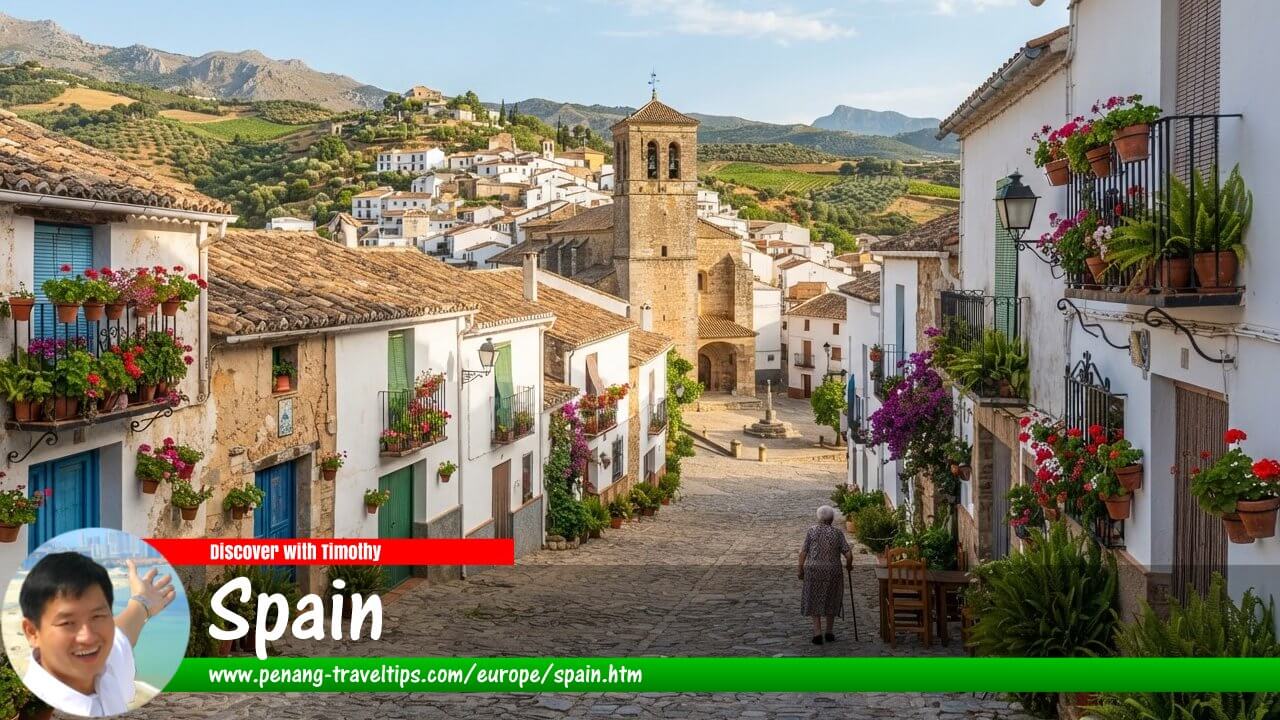 Spain Travel Guide (AI Image generated on 1 September 2026)
Also available: Panduan Melawat Sepanyol
Spain, officially the Kingdom of Spain, is one of Europe's most diverse and popular travel destinations. Located on the Iberian Peninsula in southwestern Europe, Spain is known for its historic cities, Mediterranean beaches, magnificent architecture, distinctive regional cultures, delicious food and lively festivals.
From the grand boulevards and museums of Madrid to the architecture of Barcelona, the Moorish heritage of Andalusia, the beaches of the Mediterranean and the Atlantic coast, and the dramatic landscapes of northern Spain, the country offers an extraordinary variety of experiences for travellers.
Where Is Spain?
Spain occupies most of the Iberian Peninsula, which it shares with Portugal. It is bordered by France and Andorra to the northeast and Portugal to the west. Spain also has coastlines along the Mediterranean Sea and the Atlantic Ocean.
In addition to its mainland territory, Spain includes several island groups and territories. The Balearic Islands are located in the Mediterranean Sea, while the Canary Islands are situated in the Atlantic Ocean, off the northwestern coast of Africa.
Spain at a Glance
- Official name: Kingdom of Spain
- Capital: Madrid
- Largest metropolitan areas: Madrid and Barcelona
- Official national language: Spanish, also known as Castilian
- Currency: Euro (€)
- Time zone: Central European Time in most of the country
- Government: Parliamentary constitutional monarchy
- Continent: Europe
The Meaning of the Name Spain
The English name Spain comes from the Roman name Hispania, which was used for the Iberian Peninsula. The precise origin of the ancient name remains uncertain, although it has been associated with earlier peoples and languages of the region.
In Spanish, the country is called España.
A Country of Many Regions
One of the most important things for travellers to understand about Spain is that it is not culturally uniform. The country consists of different regions and autonomous communities, many of which have strong local identities, traditions and, in some cases, their own languages.
A journey through Spain can therefore feel like visiting several distinct cultural regions within one country. The architecture, food, language, landscapes and traditions of Catalonia, Andalusia, Galicia and the Basque Country, for example, can be noticeably different from one another.
The Autonomous Communities of Spain
Spain is divided into autonomous communities, which have varying degrees of self-government. These regions play an important role in the country's political and cultural identity.
Among the best-known autonomous communities are:
- Andalusia
- Aragon
- Asturias
- the Balearic Islands
- the Basque Country
- the Canary Islands
- Cantabria
- Castile and León
- Castile-La Mancha
- Catalonia
- Extremadura
- Galicia
- the Community of Madrid
- the Region of Murcia
- Navarre
- La Rioja
- the Valencian Community
Madrid
Madrid is the capital and political centre of Spain. Located near the geographical centre of the country, it is a major centre for government, business, culture and the arts.
The city is famous for institutions such as the Prado Museum, the Royal Palace and the Reina Sofía Museum. Madrid is also known for its broad avenues, public squares, parks, restaurants and energetic nightlife.
Barcelona
Barcelona is the capital of Catalonia and one of Spain's most internationally recognised cities. It is located on the Mediterranean coast and is famous for its architecture, beaches and distinctive Catalan identity.
The city is particularly associated with the architect Antoni Gaudí, whose works include the unfinished Sagrada Família and Park Güell.
Andalusia
Andalusia, in southern Spain, is one of the country's most important regions for travellers interested in history and culture. It contains cities such as Seville, Granada and Córdoba.
The region preserves a remarkable legacy from the centuries when much of the Iberian Peninsula was under Muslim rule. Palaces, mosques, fortresses and other monuments from this period remain among Spain's most important historic attractions.
Granada
Granada is best known for the Alhambra, a magnificent palace and fortress complex associated with the final centuries of Muslim rule in the Iberian Peninsula.
The city's location near the Sierra Nevada mountains and its mixture of Islamic and Christian heritage make it one of Spain's most memorable destinations.
Seville
Seville is the capital of Andalusia and is famous for its historic centre, flamenco traditions and impressive monuments.
Major attractions include Seville Cathedral, the Alcázar palace complex and Plaza de España.
Córdoba
Córdoba was once one of the great cities of the Islamic world. Its most famous monument is the Mosque-Cathedral of Córdoba, a remarkable building that reflects the changing religious and political history of Spain.
Catalonia
Catalonia is located in northeastern Spain and has a strong cultural and linguistic identity. Barcelona is its largest city and capital.
In addition to Spanish, the Catalan language plays an important role in public and cultural life. Visitors will often see signs and information written in both Catalan and Spanish.
The Basque Country
The Basque Country is located in northern Spain near the border with France. It has a distinctive culture and language that is different from Spanish and other Romance languages.
Bilbao and San Sebastián are among the region's best-known destinations. The Basque Country is also famous for its food and culinary traditions.
Galicia
Galicia occupies the northwestern corner of Spain and has a strong cultural identity influenced by its Atlantic location and historical connections.
The region is known for its green landscapes, rugged coastline and seafood. Santiago de Compostela, the destination of the famous Camino de Santiago pilgrimage route, is located in Galicia.
The Geography of Spain
Spain is one of the larger countries in Europe and has a remarkably varied landscape. Travellers can experience mountains, high plateaus, fertile valleys, Mediterranean beaches, Atlantic coastlines and volcanic islands.
The country's geography has also influenced its history and culture. Mountain ranges have historically separated regions, helping local identities and traditions to develop.
The Meseta Central
The Meseta Central is a large plateau that occupies much of central Spain. Madrid is located on this broad inland plateau.
The landscape of central Spain can be very different from the country's coastal regions, with hotter summers and colder winters in many inland areas.
The Pyrenees
The Pyrenees form a major mountain range along Spain's northeastern border with France. The mountains offer opportunities for hiking, skiing and enjoying dramatic natural scenery.
The Sierra Nevada
The Sierra Nevada mountain range is located in southern Spain, near Granada. It contains some of the highest mountains in mainland Spain.
The combination of mountains and nearby Mediterranean landscapes makes southern Spain geographically diverse.
The Mediterranean Coast
Spain's Mediterranean coastline attracts visitors with its beaches, seaside resorts and historic coastal cities. The climate is generally warm and sunny for much of the year.
Popular coastal areas include the Costa Brava in Catalonia, the Costa del Sol in Andalusia and the coastline of the Valencian Community.
The Atlantic Coast
Spain also has an extensive Atlantic coastline, especially in northern and western regions. The Atlantic coast is generally cooler and wetter than the Mediterranean coast.
Galicia and the northern coast offer green landscapes, dramatic cliffs and fishing communities that provide a very different experience from the sunny Mediterranean resorts.
The Balearic Islands
The Balearic Islands are located in the Mediterranean Sea. The best-known islands include Mallorca, Menorca, Ibiza and Formentera.
They are popular for beaches, coastal scenery and resort holidays, although each island has its own distinctive character.
The Canary Islands
The Canary Islands are located in the Atlantic Ocean off the northwestern coast of Africa. Although they are part of Spain, their geography and climate are very different from mainland Spain.
The islands are known for volcanic landscapes, beaches and a relatively mild climate throughout much of the year.
Climate in Spain
Spain does not have a single climate. Conditions vary considerably between the Mediterranean coast, the Atlantic north, the central plateau and the islands.
Southern and Mediterranean areas can experience very hot summers, while northern Spain is generally cooler and receives more rainfall. Inland areas may experience significant differences between summer and winter temperatures.
Spring in Spain
Spring is often an excellent time to visit Spain. Temperatures in many regions are pleasant, and the countryside can be particularly attractive.
Spring is especially suitable for exploring historic cities and southern Spain before the intense heat of summer arrives.
Summer in Spain
Summer is the busiest travel season in many parts of Spain. Coastal destinations are particularly popular, while inland cities and southern regions can experience extremely high temperatures.
Travellers visiting cities such as Seville and Córdoba during summer should plan outdoor sightseeing carefully and avoid spending too much time in the strongest afternoon heat.
Autumn in Spain
Autumn brings cooler temperatures to many parts of Spain and can be a pleasant season for sightseeing, food and cultural travel.
September and October are often particularly attractive months for visitors who want comfortable weather without the peak summer crowds.
Winter in Spain
Winter can be mild in southern and coastal regions but considerably colder in central and northern Spain. Mountain areas receive snow and offer winter sports.
The Canary Islands are popular with travellers seeking warmer weather during the European winter.
Spain's Long History
Spain has been inhabited for thousands of years and has been shaped by many different peoples and civilisations. Its history includes Iberian peoples, Roman rule, the Visigoths, centuries of Muslim rule, Christian kingdoms, imperial expansion and the development of the modern Spanish state.
This long and complicated history is one reason why Spain contains such an extraordinary concentration of historic cities and monuments.
The Romans in Spain
The Romans conquered much of the Iberian Peninsula and incorporated it into the Roman world as Hispania. Roman roads, cities, aqueducts and theatres were built throughout the peninsula.
Roman remains can still be seen in places such as Mérida, Tarragona and Segovia.
After Rome
Following the decline of the Western Roman Empire, much of the Iberian Peninsula came under the rule of the Visigoths.
This period was followed by one of the most significant transformations in Spanish history: the arrival of Muslim armies from North Africa in the early eighth century.
Al-Andalus
Al-Andalus was the name used for territories of the Iberian Peninsula under Muslim rule. Over several centuries, Muslim, Christian and Jewish communities contributed to the intellectual, cultural and economic life of the region.
The architectural legacy of this period remains particularly visible in Andalusia, including the Alhambra in Granada and the Mosque-Cathedral of Córdoba.
The Reconquista
The term Reconquista is commonly used to describe the long process through which Christian kingdoms gradually expanded their control over the Iberian Peninsula.
By the end of the fifteenth century, the Kingdom of Granada, the last major Muslim state on the peninsula, had fallen to the Catholic Monarchs.
Spain and the Age of Exploration
During the late fifteenth century and the centuries that followed, Spain became one of the world's major imperial powers. Spanish expeditions and colonies transformed global trade and had a profound impact on the Americas and other parts of the world.
This period brought enormous wealth and influence to Spain but also involved conquest, colonisation and major consequences for indigenous peoples.
Modern Spain
Spain experienced major political and social changes during the nineteenth and twentieth centuries. The country endured a devastating civil war in the 1930s and later lived under the dictatorship of Francisco Franco.
Following Franco's death in 1975, Spain underwent a transition towards democracy and became a modern parliamentary constitutional monarchy.
Spain Today
Modern Spain is a member of the European Union and one of the world's leading tourism destinations. It combines a strong sense of national identity with the distinctive cultures of its regions.
For travellers, this diversity is one of Spain's greatest attractions. A trip can include Roman ruins, Islamic palaces, Gothic cathedrals, modern architecture, beaches, mountains, world-class museums and vibrant contemporary cities.
Why Visit Spain?
Spain appeals to many different types of travellers. History lovers can explore ancient and medieval cities, food enthusiasts can experience regional cuisines, and beach lovers can choose from Mediterranean and Atlantic destinations.
The country also offers excellent art museums, famous festivals, scenic road trips and an extensive network of modern transport.
Highlights of Spain
- Explore Madrid and its world-famous art museums.
- Admire the architecture of Barcelona and Antoni Gaudí.
- Visit the Alhambra in Granada.
- Explore the historic centre of Seville.
- See the Mosque-Cathedral of Córdoba.
- Enjoy Spanish food and regional culinary traditions.
- Relax on Mediterranean or Atlantic beaches.
- Experience the landscapes of northern Spain.
- Visit the Balearic or Canary Islands.
- Follow part of the Camino de Santiago pilgrimage route.
Planning Your Journey Through Spain
Because Spain is geographically large and culturally diverse, it is usually better not to attempt to see the entire country during a short visit. Travellers should choose a few regions and spend enough time exploring them properly.
A first journey might focus on Madrid and Andalusia, Madrid and Barcelona, or a combination of several destinations connected by Spain's extensive high-speed rail network.
In the following parts of this Spain Travel Guide, we will explore Spain's major destinations, history and culture, food, transport, accommodation and practical information for planning a memorable journey through the country.
Major Destinations in Spain
Spain offers an extraordinary variety of destinations, ranging from major metropolitan cities and ancient historic centres to Mediterranean beaches, mountain landscapes and islands. For first-time visitors, choosing where to go can be one of the most difficult parts of planning a trip.
Spain is a large country, and travelling from one end to another can take considerable time. It is usually better to concentrate on a few regions rather than trying to visit every major destination in one journey.
Madrid
Madrid is Spain's capital and one of the best places to begin a journey through the country. Located near the geographical centre of mainland Spain, it is an important transport hub as well as a centre of politics, culture and business.
The city combines grand historic architecture with modern neighbourhoods, excellent museums, large parks and a lively food scene.
Puerta del Sol
Puerta del Sol is one of Madrid's best-known public squares and an important meeting point in the city centre. It is surrounded by shops, restaurants and historic streets.
The square is also associated with Spain's New Year's Eve celebrations, when crowds gather to welcome the new year.
Plaza Mayor
Plaza Mayor is a large historic square surrounded by elegant buildings. Originally developed during the Habsburg period, it has been used for markets, ceremonies and public events over the centuries.
Today, it is one of Madrid's most popular places for visitors to experience the atmosphere of the historic city centre.
The Royal Palace of Madrid
The Royal Palace of Madrid is the official residence of the Spanish monarchy, although it is primarily used for state ceremonies rather than as the monarch's everyday home.
The palace is one of Europe's largest royal palaces and contains richly decorated rooms, historic collections and works of art.
The Prado Museum
The Prado Museum is one of the world's great art museums. Its collection includes important works by Spanish artists such as Diego Velázquez and Francisco de Goya, as well as paintings by other European masters.
Visitors interested in art should allow plenty of time because the museum's collection is extensive.
Reina Sofía Museum
The Reina Sofía Museum focuses mainly on modern and contemporary art. One of its most famous works is Pablo Picasso's Guernica, a powerful painting associated with the Spanish Civil War.
Retiro Park
El Retiro Park is one of Madrid's largest and most popular green spaces. It provides a welcome break from the busy streets of the city and contains gardens, monuments and a large artificial lake.
Barcelona
Barcelona is Spain's second-largest city and the capital of Catalonia. Located on the Mediterranean coast, it is famous for its architecture, beaches, museums and distinctive Catalan culture.
Barcelona is particularly associated with the work of Antoni Gaudí, whose imaginative architectural style has become one of the city's defining features.
Sagrada Família
La Sagrada Família is Barcelona's most famous landmark. Designed by Antoni Gaudí, the enormous basilica is known for its highly unusual architectural forms and richly decorated façades.
Construction began in the nineteenth century and continued long after Gaudí's death, making the building one of the world's most remarkable long-term architectural projects.
Park Güell
Park Güell is another major work associated with Gaudí. The park combines architecture, gardens and colourful decorative elements with views over Barcelona.
Casa Batlló
Casa Batlló is a striking modernist building redesigned by Gaudí. Its unusual façade and imaginative interior make it one of the best-known buildings along Barcelona's Passeig de Gràcia.
La Rambla
La Rambla is one of Barcelona's most famous pedestrian boulevards. It runs through the central part of the city and is lined with shops, restaurants and historic buildings.
Because it is a popular tourist area, visitors should remain aware of their belongings and take normal precautions against pickpocketing.
The Gothic Quarter
The Gothic Quarter, or Barri Gòtic, is one of Barcelona's oldest areas. Its narrow streets, historic squares and medieval buildings provide a strong contrast to the city's modern architecture.
Barcelona's Beaches
Barcelona is unusual among major European cities because visitors can combine urban sightseeing with time at the beach. Several beaches are easily accessible from the city centre.
Seville
Seville, the capital of Andalusia, is one of Spain's most beautiful and historically important cities. It is known for its Moorish and Christian monuments, flamenco traditions and lively street life.
Seville Cathedral
Seville Cathedral is one of the world's largest Gothic cathedrals. It was built on the site of a former mosque, and its famous bell tower, the Giralda, was originally a minaret.
The cathedral reflects the complex layers of religious and political history that can be found throughout Andalusia.
The Alcázar of Seville
The Royal Alcázar of Seville is a historic palace complex that incorporates Islamic and Christian architectural traditions.
Its decorated rooms, courtyards and gardens make it one of Spain's most important royal monuments.
Plaza de España
Plaza de España is a grand semicircular square built for the Ibero-American Exposition of 1929. It is famous for its bridges, tiled decorations and impressive architecture.
Flamenco in Seville
Seville is one of the best-known places to experience flamenco, the expressive art form associated particularly with Andalusia.
Flamenco combines singing, guitar playing, dancing and rhythmic hand movements. Visitors can attend performances ranging from intimate venues to larger theatrical shows.
Granada
Granada lies at the foot of the Sierra Nevada mountains in Andalusia. It is internationally famous for the Alhambra and its extraordinary Islamic architectural heritage.
The Alhambra
The Alhambra is one of Spain's most important historic monuments. The vast complex includes palaces, fortifications, courtyards and gardens.
It was developed primarily during the period of the Nasrid dynasty and represents one of the greatest surviving achievements of Islamic architecture in Europe.
Because the Alhambra is extremely popular, visitors should arrange tickets well in advance, particularly during busy travel periods.
The Albaicín
The Albaicín is Granada's historic quarter, known for its narrow streets, traditional houses and views towards the Alhambra.
The area reflects the city's long Islamic heritage and is one of the most atmospheric places to explore on foot.
Córdoba
Córdoba was once one of the most important cities in the Islamic world. During its medieval period of prosperity, it became a major centre of learning, culture and trade.
The Mosque-Cathedral of Córdoba
The Mosque-Cathedral of Córdoba, known in Spanish as the Mezquita-Catedral, is one of the world's most remarkable religious buildings.
Its famous interior contains a forest of columns and arches from the period when it functioned as a major mosque. Following the Christian reconquest of Córdoba, a cathedral was established within the building.
The Historic Centre of Córdoba
The historic centre contains narrow streets, courtyards and buildings that reflect centuries of Roman, Islamic and Christian history.
Córdoba is particularly enjoyable for travellers who prefer walking through historic neighbourhoods and discovering smaller architectural details.
Valencia
Valencia is located on Spain's eastern Mediterranean coast. It is Spain's third-largest city and combines a historic centre with modern architecture and beaches.
The City of Arts and Sciences
The City of Arts and Sciences is a spectacular modern complex containing museums, entertainment venues and other attractions.
Its futuristic architecture provides a striking contrast to Valencia's historic buildings.
The Historic Centre of Valencia
Valencia's old city contains historic churches, markets and public squares. The Central Market is particularly well known for its impressive building and food stalls.
The Home of Paella
Valencia is traditionally associated with paella, one of Spain's best-known dishes. Visitors should remember that authentic Valencian versions can differ considerably from the international versions commonly served outside Spain.
Bilbao
Bilbao is the largest city in the Basque Country and has undergone major redevelopment from its industrial past.
It is now internationally recognised as a cultural destination, particularly because of the Guggenheim Museum Bilbao.
The Guggenheim Museum Bilbao
The Guggenheim Museum Bilbao is famous both for its modern and contemporary art collection and for the extraordinary titanium-clad building designed by architect Frank Gehry.
The museum became an international symbol of Bilbao's transformation and helped demonstrate how cultural investment can change the image of an entire city.
San Sebastián
San Sebastián, also known by its Basque name Donostia, is a beautiful coastal city in the Basque Country.
It is famous for its beaches, elegant architecture and exceptional food culture.
Pintxos
One of the great experiences in San Sebastián is trying pintxos, small dishes or snacks commonly served in bars.
Visitors often move from one bar to another, trying different pintxos as part of a social and culinary experience.
Santiago de Compostela
Santiago de Compostela is the capital of Galicia and the traditional destination of the Camino de Santiago, one of Europe's most famous pilgrimage routes.
Its cathedral is an important destination for Christian pilgrims, while the historic city attracts travellers interested in architecture, history and the culture of northern Spain.
The Camino de Santiago
The Camino de Santiago, or Way of St James, consists of several pilgrimage routes leading towards Santiago de Compostela.
Some travellers walk for weeks across Spain, while others complete shorter sections. The route can be a religious pilgrimage, a cultural journey or a personal travel experience.
Toledo
Toledo is located near Madrid and is one of Spain's most important historic cities.
It is often described as a city where Christian, Jewish and Islamic traditions have all left important cultural and architectural legacies.
Historic Toledo
Toledo's historic centre contains narrow streets, churches, synagogues and other monuments from different periods of its history.
Because of its location near Madrid, Toledo is also a popular destination for a day trip.
Segovia
Segovia is famous for its exceptionally well-preserved Roman aqueduct, which remains one of the most impressive surviving examples of Roman engineering.
The Alcázar of Segovia
The Alcázar of Segovia is a dramatic historic castle standing on a rocky outcrop above the city.
Its distinctive appearance has made it one of Spain's most recognisable castles.
Ronda
Ronda is a historic town in Andalusia famous for its spectacular location above a deep gorge.
The Puente Nuevo bridge, which crosses the gorge, is one of the town's most famous landmarks.
Málaga
Málaga is a major city on the Costa del Sol in southern Spain. It combines beaches with a historic centre and important cultural attractions.
The city is also associated with Pablo Picasso, who was born there.
Ibiza
Ibiza is one of the Balearic Islands and is internationally known for its nightlife and beach resorts.
However, the island also has quieter areas, historic towns and attractive natural scenery.
Mallorca
Mallorca is the largest of the Balearic Islands. It offers beaches, mountain scenery, historic towns and resort areas.
Palma, the island's capital, is known for its historic cathedral and attractive old town.
The Canary Islands
The Canary Islands provide a completely different side of Spain. Their volcanic landscapes, beaches and mild climate attract visitors throughout much of the year.
Tenerife
Tenerife is the largest and one of the most visited Canary Islands. It is home to Mount Teide, a volcano that dominates the island's landscape.
Gran Canaria
Gran Canaria is known for its beaches, dunes and varied interior landscapes. Its climate makes it a popular destination for winter sunshine.
Spain's UNESCO World Heritage Cities
Spain has one of the world's largest collections of UNESCO World Heritage Sites. Historic cities and monuments form an important part of the country's appeal.
Among the destinations associated with outstanding historic heritage are Córdoba, Granada, Seville, Toledo, Segovia and Santiago de Compostela.
Choosing Your Destinations
The best destinations depend on the type of trip you want to have. Travellers interested in art may prefer Madrid and Barcelona, while those interested in Islamic heritage may focus on Andalusia.
Food enthusiasts may enjoy the Basque Country and Galicia, while beach lovers can choose between the Mediterranean coast, the Balearic Islands and the Canary Islands.
A Good First Trip to Spain
For many first-time visitors, one of the easiest combinations is Madrid, Barcelona and Andalusia. However, visiting all three areas requires enough time because they are separated by considerable distances.
With a shorter trip, it may be better to choose Madrid and nearby historic cities, Barcelona and Catalonia, or Seville, Córdoba and Granada.
Spain rewards travellers who take their time. Rather than rushing from one famous landmark to another, spend time walking through historic neighbourhoods, trying regional food and experiencing the distinctive character of each destination.
Spanish History, Culture and Traditions
Spain has one of the richest and most complex cultural histories in Europe. Its identity has been shaped by ancient Iberian peoples, the Romans, the Visigoths, centuries of Muslim rule, Christian kingdoms, global exploration and the development of the modern Spanish state.
For travellers, understanding a little of this history makes Spain's cities and monuments far more meaningful. A Roman aqueduct, an Islamic palace, a Gothic cathedral and a modernist building may all stand within the same country, reflecting different chapters of its long history.
Ancient Peoples of the Iberian Peninsula
Long before Spain became a unified country, the Iberian Peninsula was inhabited by various peoples with different cultures and languages. Among them were groups commonly described as Iberians, Celts and Celtiberians.
The peninsula's location between Europe and Africa, as well as its long coastlines, also attracted trading peoples from the Mediterranean, including the Phoenicians and Greeks.
Roman Hispania
The Romans gradually conquered the Iberian Peninsula and incorporated it into their empire as Hispania. Roman rule left a deep and lasting influence on Spain.
The Romans built roads, bridges, aqueducts, theatres and cities throughout the peninsula. Latin became the foundation from which the Spanish language and other Romance languages of the region eventually developed.
Roman Remains in Spain
Travellers can still see impressive Roman monuments in many parts of Spain. Mérida is particularly important for its concentration of Roman remains, while Segovia is famous for its monumental aqueduct.
Tarragona also preserves important evidence of its Roman past, including an amphitheatre overlooking the Mediterranean.
The Visigothic Period
Following the decline of the Western Roman Empire, the Visigoths established a kingdom over much of the Iberian Peninsula.
The Visigothic period formed an important bridge between Roman rule and the dramatic changes that followed the arrival of Muslim forces from North Africa in the early eighth century.
The Arrival of Islam in Iberia
In the early eighth century, Muslim armies crossed from North Africa into the Iberian Peninsula. Within a relatively short period, much of the peninsula came under Muslim control.
The territories ruled by Muslims became known as Al-Andalus. Over the following centuries, Al-Andalus developed into one of the most important centres of civilisation in medieval Europe.
Al-Andalus
Al-Andalus is one of the most significant chapters in Spanish history. Muslim rule lasted for centuries in different parts of the Iberian Peninsula, although the territory under Muslim control changed considerably over time.
Cities such as Córdoba, Seville and Granada became important centres of government, learning, trade and culture.
Córdoba as a Centre of Learning
During its period of great prosperity, Córdoba was one of the most important cities in Europe. It became associated with scholarship, libraries, medicine, philosophy and scientific learning.
The city's famous mosque, now known as the Mosque-Cathedral of Córdoba, remains one of the greatest architectural symbols of this period.
The Legacy of Islamic Architecture
The influence of Islamic architecture can still be seen throughout southern Spain. Characteristic features include horseshoe arches, elaborate geometric decoration, courtyards, fountains and gardens.
The Alhambra in Granada is perhaps the finest surviving example of this architectural heritage.
Muslims, Christians and Jews
Medieval Spain was home to Muslim, Christian and Jewish communities. Their relationships were complex and varied according to time and place.
There were periods of cultural exchange and cooperation, as well as periods of conflict, persecution and political rivalry. Spain's historic cities preserve evidence of all three religious traditions.
The Christian Kingdoms
While much of the Iberian Peninsula came under Muslim rule, Christian kingdoms remained or developed in northern regions.
Over the centuries, these kingdoms gradually expanded southwards. This long historical process is commonly known as the Reconquista.
The Reconquista
The Reconquista was not a single event but a long series of political and military developments involving different kingdoms and rulers over several centuries.
Christian kingdoms gradually took control of more territory, eventually reducing Muslim rule to the Kingdom of Granada in southern Spain.
The Fall of Granada
In 1492, Granada fell to the forces of the Catholic Monarchs, Ferdinand and Isabella. This marked the end of the last major Muslim kingdom on the Iberian Peninsula.
The year 1492 was therefore a particularly important turning point in Spanish history, coinciding with another event that would transform Spain's role in the world: Christopher Columbus's voyage across the Atlantic.
Spain and the Age of Exploration
Spain became one of the leading powers of the Age of Exploration. Spanish-sponsored expeditions crossed the Atlantic and established connections between Europe and the Americas that would profoundly change world history.
Christopher Columbus's first voyage in 1492 opened the way for Spanish exploration, conquest and colonisation in the Americas.
The Spanish Empire
Over the following centuries, Spain developed one of the largest empires in world history. Spanish territories eventually extended across large parts of the Americas and included possessions in other regions of the world.
The empire brought enormous wealth and international influence to Spain, but it was also built through conquest and colonisation, with devastating consequences for many indigenous populations.
The Golden Age
Spain experienced an extraordinary cultural flowering during the period often called the Spanish Golden Age. This era produced major achievements in literature, painting, theatre and other arts.
Among the great figures associated with Spanish culture are Miguel de Cervantes, Diego Velázquez and many other writers and artists whose works remain internationally important.
Miguel de Cervantes
Miguel de Cervantes is widely regarded as one of the greatest writers in the Spanish language. His novel Don Quixote is one of the most famous works in world literature.
The story of an idealistic man who sets out on adventures inspired by tales of chivalry has become deeply associated with Spanish culture.
Don Quixote and La Mancha
The region of Castile-La Mancha is strongly associated with Don Quixote. Travellers may encounter references to the novel throughout the region.
The famous windmills of La Mancha have become one of the most recognisable images connected with the story.
Spain in the Nineteenth Century
The nineteenth century was a period of political instability and major change for Spain. Wars, political struggles and the gradual loss of overseas territories affected the country's position in the world.
Spain nevertheless continued to develop a strong national culture and produced important artistic and intellectual movements.
The Spanish Civil War
The Spanish Civil War, fought from 1936 to 1939, was one of the most traumatic events in modern Spanish history.
The conflict attracted international attention and involved deep political and social divisions within Spain. It ended with the victory of the Nationalist forces led by Francisco Franco.
Francisco Franco and the Dictatorship
Following the Civil War, Spain was ruled by Francisco Franco for several decades. His authoritarian government lasted until his death in 1975.
The period remains an important and sometimes sensitive part of Spain's modern history.
Spain's Transition to Democracy
After Franco's death, Spain underwent a transition towards democracy. A new constitutional system was established, and Spain developed into a parliamentary constitutional monarchy.
Modern Spain is now a democratic member of the European Union and plays an important role in European and international affairs.
The Spanish Monarchy
Spain is a parliamentary constitutional monarchy. The monarch serves as head of state, while elected representatives and the government exercise political authority under the constitutional system.
The Spanish royal family remains an important public institution and part of the country's national identity.
Spain's Regional Identities
One of the most fascinating aspects of Spain is the strength of its regional identities. Spain is a unified country, but its regions have distinct histories, traditions and cultural characteristics.
For travellers, this means that a journey from one region to another can bring noticeable changes in architecture, language, food and local customs.
Languages of Spain
Spanish, also called Castilian, is the country's national language and is spoken throughout Spain. However, other regional languages also have important official or recognised status in particular autonomous communities.
Visitors may therefore encounter public signs and information written in more than one language.
Catalan
Catalan is widely used in Catalonia and is an important part of the region's cultural identity. Visitors to Barcelona will commonly see signs written in both Catalan and Spanish.
Basque
Basque, or Euskara, is particularly remarkable because it is not a Romance language and is unrelated to Spanish in the same way that French, Italian and Portuguese are related to Latin.
It is an important part of the cultural identity of the Basque Country.
Galician
Galician is spoken in Galicia and has close historical and linguistic connections with Portuguese.
Visitors to Galicia may encounter both Galician and Spanish in everyday life.
Spanish Identity and Regional Culture
It is useful for travellers not to think of Spain as culturally identical everywhere. People in different regions may have strong attachments to their local identity.
Catalonia, the Basque Country and Galicia are among the regions with particularly distinctive languages and cultural traditions, but every part of Spain has its own local customs.
Flamenco
Flamenco is one of Spain's most internationally recognised cultural traditions. It is particularly associated with Andalusia and has strong historical connections with the culture of the Roma people of Spain.
Flamenco is not simply a dance. It combines cante (singing), guitar playing, dancing and rhythmic expression into a powerful art form.
Spanish Festivals
Festivals play an important role in Spanish life. Throughout the year, towns and cities celebrate religious events, historical traditions and local customs.
Travellers who visit during a major festival may experience Spain at its most colourful and energetic, although accommodation and transport can also become more expensive and crowded.
Semana Santa
Semana Santa, or Holy Week, is celebrated throughout Spain during the week leading up to Easter.
In cities such as Seville and Málaga, elaborate religious processions attract large crowds. Religious brotherhoods carry decorated floats through the streets, creating some of the country's most impressive annual spectacles.
Feria de Abril
Feria de Abril is one of Seville's most famous festivals. It is celebrated with music, dancing, traditional clothing and food.
The festival reflects the strong cultural traditions of Andalusia and is one of the major events in the city's annual calendar.
Las Fallas
Las Fallas is a famous festival held in Valencia. Large artistic structures are created and displayed throughout the city before many are dramatically burned during the festival's concluding celebrations.
The event combines art, satire, fireworks and public celebration on a spectacular scale.
La Tomatina
La Tomatina is a well-known festival held in the town of Buñol, near Valencia. Participants take part in a large tomato fight that has become internationally famous.
Although it is not representative of everyday Spanish culture, the event attracts visitors from around the world.
San Fermín and the Running of the Bulls
The San Fermín festival in Pamplona is internationally known for the running of the bulls.
The festival attracts many visitors, although it also raises serious questions about safety and animal welfare. Travellers should understand the risks involved before participating in any related activities.
Spanish Bullfighting
Bullfighting has historically been associated with Spanish culture, although attitudes towards it vary considerably within Spain.
Some people regard it as an important cultural tradition, while others oppose it on animal welfare grounds. It is therefore important not to assume that all Spaniards support the practice.
Spanish Music
Spain has a rich musical heritage that extends far beyond flamenco. Traditional music varies considerably between regions.
Galicia has musical traditions influenced by its Atlantic and Celtic heritage, while the Basque Country and Catalonia also have distinctive musical cultures.
Spanish Dance
Dance traditions are also diverse. Flamenco is the best known internationally, but other regional dances and folk traditions remain important parts of local celebrations.
Traditional costumes, music and dance are often displayed during regional festivals.
Art in Spain
Spain has produced some of the world's most influential artists. Its museums contain masterpieces from medieval, Renaissance, Baroque and modern periods.
For art lovers, Spain is one of Europe's great destinations.
Diego Velázquez
Diego Velázquez was one of the greatest painters of the Spanish Golden Age. His work is particularly associated with the royal court and is prominently represented in Madrid's Prado Museum.
His painting Las Meninas is among the most famous works in European art.
Francisco de Goya
Francisco de Goya was another major Spanish artist whose work covered portraits, historical events and darker, more disturbing subjects.
His career spanned a period of major political upheaval in Spain.
Pablo Picasso
Pablo Picasso, born in Málaga, became one of the most influential artists of the twentieth century.
His famous painting Guernica, displayed in Madrid's Reina Sofía Museum, was inspired by the bombing of the Basque town of Guernica during the Spanish Civil War.
Salvador Dalí
Salvador Dalí was one of the leading figures associated with Surrealism. His imaginative and often dreamlike paintings made him one of Spain's most internationally recognisable artists.
Visitors interested in his work can explore sites connected with Dalí in Catalonia.
Antoni Gaudí
Antoni Gaudí was an architect whose distinctive style became closely associated with Barcelona.
His buildings often combine natural forms, elaborate decoration and highly imaginative structural ideas. The Sagrada Família remains his most famous work.
Spanish Architecture
Spain's architecture reflects the many civilisations and historical periods that shaped the country.
Travellers can see Roman structures, Islamic palaces, Romanesque churches, Gothic cathedrals, Renaissance buildings, Baroque palaces and modern architecture within the same country.
Daily Life in Spain
Spanish daily life has its own rhythms and customs, although these can vary between regions and cities.
Visitors may notice that meals are often eaten later than in many other European countries. Lunch can take place well into the afternoon, while dinner may begin relatively late in the evening.
The Importance of Social Life
Social interaction is an important part of life in Spain. Cafés, bars, restaurants and public squares often serve as places where people meet friends and family.
Travellers may find that simply sitting at an outdoor café and watching daily life can be one of the most enjoyable experiences of a visit.
The Spanish Siesta
The idea of the siesta is closely associated with Spain, but visitors should not assume that the entire country stops for an afternoon nap every day.
In some smaller towns and businesses, afternoon closing hours may still occur, while the rhythm of life in large modern cities can be very different.
Respecting Spanish Culture
Spain is a welcoming destination, but visitors should respect local customs and understand that traditions can vary between regions.
When visiting churches, mosques converted into historic monuments or other religious sites, appropriate behaviour and dress should be observed.
Understanding Spain Through Its History
Spain's greatest strength as a travel destination is the way its many historical layers remain visible. A traveller can move from a Roman monument to an Islamic palace, from a Gothic cathedral to a modern art museum, often within a relatively short distance.
This mixture of history and living culture gives Spain a depth that goes far beyond its beaches and famous tourist attractions.
In the next part of this Spain Travel Guide, we will explore Spanish food and drink, including the country's regional cuisines and the dishes that travellers should try during their visit.
Spanish Food and Drink
Spain is one of Europe's great food destinations. Spanish cuisine is not a single uniform style of cooking but a collection of regional traditions shaped by geography, climate, history and local ingredients.
Travellers may find that the food of northern Spain is very different from the food of Andalusia or the Mediterranean coast. Seafood is particularly important in coastal regions, while inland areas are known for meat dishes, stews and cured products.
Understanding Spanish Cuisine
Spanish food is often associated internationally with paella, tapas and sangria, but these represent only a small part of the country's enormous culinary diversity.
Each region has its own specialities, and one of the pleasures of travelling through Spain is discovering how local ingredients and traditions change from place to place.
Tapas
Tapas are among the best-known features of Spanish food culture. The word generally refers to small portions of food served as snacks or light dishes.
Tapas can range from a simple plate of olives or cheese to elaborate hot dishes prepared specifically for sharing.
Eating Tapas
In many parts of Spain, eating tapas is a social experience. Friends may visit several bars, ordering a small selection of food and drinks at each place.
The style and availability of tapas vary between regions. In some cities, small portions may accompany a drink, while elsewhere they are ordered and paid for separately.
Paella
Paella is one of Spain's most internationally famous dishes. It originated in the region around Valencia and is traditionally prepared in a wide, shallow pan.
Although many people outside Spain associate paella mainly with seafood, traditional Valencian versions can include ingredients such as chicken, rabbit and local beans.
Seafood Paella
Seafood versions of paella are popular in many coastal areas and restaurants, particularly in places visited by tourists.
Travellers should remember that Spain has many different rice dishes, and not every dish served in a large pan is necessarily the traditional Valencian paella.
Jamón
Jamón, or cured ham, is an important part of Spanish cuisine. It is commonly served in thin slices and eaten on its own, with bread or as part of other dishes.
Different types of jamón are available, including highly prized varieties that are aged for long periods.
As jamón is pork, Muslim travellers who follow halal dietary requirements should avoid it.
Tortilla Española
Tortilla española, also called the Spanish omelette, is a simple but popular dish made mainly with eggs and potatoes.
It is commonly served in homes, restaurants and tapas bars. Some versions include onions, while preferences over whether onions belong in the dish are famously strong among Spanish food enthusiasts.
Gazpacho
Gazpacho is a cold soup strongly associated with Andalusia. It is usually made from ingredients such as tomatoes, peppers, cucumber, garlic, olive oil and vinegar.
It is particularly refreshing during the hot weather of southern Spain.
Salmorejo
Salmorejo is another cold tomato-based dish from Andalusia, particularly associated with Córdoba.
It is generally thicker and creamier than gazpacho. Traditional versions may be served with toppings that can include egg and cured ham, so Muslim travellers should check the ingredients before ordering.
Patatas Bravas
Patatas bravas are pieces of fried potato served with a spicy sauce. They are one of the most common dishes found in tapas bars.
The sauce can vary significantly from place to place, and some establishments have their own distinctive versions.
Croquetas
Croquetas are small fried rolls with a creamy filling. Common fillings include ham, chicken, seafood, cheese or vegetables.
Because the filling varies, travellers with dietary restrictions should always ask about the ingredients.
Spanish Seafood
With extensive coastlines along the Mediterranean Sea and the Atlantic Ocean, Spain has a rich seafood tradition.
Fresh fish, prawns, squid, octopus, mussels and other seafood are important ingredients in many coastal regions.
Pulpo a la Gallega
Pulpo a la gallega, also known as pulpo á feira, is a famous dish from Galicia. It consists mainly of octopus, usually served with olive oil, paprika and salt.
Galicia is particularly famous for seafood, and travellers visiting northwestern Spain will find many local dishes based on ingredients from the Atlantic.
Gambas al Ajillo
Gambas al ajillo consists of prawns cooked with garlic and olive oil. It is a popular dish in tapas restaurants and is often served hot.
Like many Spanish dishes, its preparation may vary according to region and restaurant.
Calamari
Squid is widely eaten in Spain and may be served fried, grilled or prepared in various sauces.
In Madrid, one well-known street food is the bocadillo de calamares, a sandwich filled with fried calamari.
Spanish Cheese
Spain produces a wide variety of cheeses, with each region having its own traditions.
Manchego, made from sheep's milk and associated with the La Mancha region, is among the country's best-known cheeses.
Olive Oil
Olive oil is one of the foundations of Spanish cooking. Spain is one of the world's leading producers of olive oil, and olive groves are an important feature of the landscape in many regions.
Olive oil is used for cooking, frying, salads and countless other dishes.
Olives
Olives are commonly served as snacks and are an important part of Spanish food culture.
Travellers will encounter many varieties of olives, often seasoned or marinated with herbs, garlic and other flavourings.
Bread in Spain
Bread is an everyday part of Spanish meals and is commonly served with food in restaurants.
It may be eaten with olive oil, cheese, cured meats or other dishes.
Pan con Tomate
Pan con tomate, particularly associated with Catalonia, consists of bread rubbed with tomato and often finished with olive oil and salt.
Despite its simplicity, it is a classic example of how good local ingredients can produce an excellent dish.
Spanish Soups and Stews
Although Spain is often associated with warm Mediterranean weather, many regions have substantial soups and stews, particularly in colder inland and northern areas.
These dishes often reflect traditional rural cooking and make use of beans, vegetables, meat and locally available ingredients.
Cocido
Cocido is a general name used for various Spanish stews. Different regions have their own versions, often combining chickpeas, vegetables and meat.
Because many traditional recipes contain pork or other non-halal meat, Muslim travellers should ask about the ingredients before ordering.
Fabada Asturiana
Fabada asturiana is a famous bean stew from Asturias in northern Spain.
Traditional versions usually contain pork products, making it unsuitable for Muslim travellers who follow halal dietary requirements.
Basque Cuisine
The Basque Country is widely regarded as one of Spain's great culinary regions. Its cuisine makes extensive use of fresh seafood, local produce and carefully prepared dishes.
San Sebastián is particularly famous for its restaurants and food culture.
Pintxos
Pintxos are small dishes strongly associated with the Basque Country. They are similar in some ways to tapas but form a distinctive local culinary tradition.
Many pintxos are displayed at bars, allowing visitors to choose from a wide variety of small dishes.
Galician Cuisine
Galicia is famous for seafood because of its long Atlantic coastline.
Octopus, shellfish and fresh fish are particularly important, while the region also has strong traditions of soups, stews and rustic cooking.
Andalusian Cuisine
Andalusian cuisine reflects the region's hot climate, agricultural traditions and historical influences.
Cold dishes such as gazpacho and salmorejo are particularly suitable for the hot summers of southern Spain.
Valencian Cuisine
Valencian cuisine is strongly associated with rice dishes, especially paella.
The region's Mediterranean location also contributes seafood and fresh produce to its culinary traditions.
Catalan Cuisine
Catalan cuisine combines Mediterranean ingredients with traditions from inland areas. Vegetables, seafood, olive oil, bread and seasonal ingredients all play important roles.
Visitors to Catalonia will find that local food has its own distinctive identity rather than simply being a variation of generic Spanish cuisine.
Spanish Desserts
Spain has many traditional desserts and sweets, often associated with particular regions or religious festivals.
Churros
Churros are long pieces of fried dough that are often eaten with hot chocolate.
They are popular for breakfast or as a snack, although the style and shape of churros can vary.
Chocolate con Churros
Chocolate con churros is one of Spain's best-known sweet combinations. The churros are dipped into thick hot chocolate.
This can be an enjoyable experience during cooler weather or as a late-night snack in cities where cafés remain open late.
Crema Catalana
Crema catalana is a traditional dessert associated with Catalonia. It consists of a creamy custard with a caramelised sugar surface.
It is often compared with French crème brûlée, although the two desserts have their own traditions and methods of preparation.
Turrón
Turrón is a traditional sweet often associated with the Christmas season. It commonly contains ingredients such as honey, sugar and nuts.
Different varieties are available, ranging from hard and crunchy to soft and smooth.
Spanish Drinks
Spain has a wide range of traditional drinks, including coffee, fruit-based refreshments and alcoholic beverages.
Travellers who do not drink alcohol can still enjoy Spanish cafés, fresh juices and a variety of non-alcoholic drinks.
Coffee in Spain
Coffee is an important part of daily life in Spain. Cafés can be found throughout cities and towns, providing places to meet friends, take a break or simply watch the world go by.
Common styles include café solo, a small strong coffee, and café con leche, coffee served with milk.
Hot Chocolate
Spanish-style hot chocolate can be much thicker than the drink commonly served in other countries.
It is especially associated with eating churros and can be a popular treat during cooler months.
Fresh Fruit and Juice
Spain's climate supports the cultivation of a wide range of fruits, including oranges, lemons and other Mediterranean produce.
Fresh fruit and freshly prepared juices are widely available, particularly in markets and cafés.
Spanish Wine
Wine is an important part of Spanish culture and cuisine, with famous wine-producing regions including Rioja and Ribera del Duero.
However, Muslim travellers and others who do not consume alcohol will find many non-alcoholic alternatives and do not need to participate in drinking culture to enjoy Spanish food.
Sangria
Sangria is internationally associated with Spain and generally consists of wine mixed with fruit and other ingredients.
It is particularly familiar to tourists, although it should not be assumed to represent the everyday drink of all Spaniards.
Eating Times in Spain
One aspect of Spanish culture that may surprise visitors is the relatively late timing of meals.
Lunch is often eaten later than in many countries, while dinner may begin well into the evening.
Lunch
For many Spaniards, lunch has traditionally been an important meal of the day.
Restaurants may offer a menú del día, a set lunch menu that can provide good value for travellers.
Dinner
Dinner is often eaten relatively late, especially in larger cities and during warmer months.
Visitors accustomed to eating early may find that some restaurants do not begin their main dinner service until later in the evening.
Markets in Spain
Food markets are excellent places to understand local ingredients and Spanish eating culture.
Fresh vegetables, fruits, seafood, meat, cheese and other products may be displayed in colourful stalls.
Eating in Restaurants
Spanish restaurants range from simple neighbourhood establishments to internationally famous fine-dining venues.
Travellers should not feel that they need to eat only at restaurants located directly beside major tourist attractions. Exploring side streets and neighbourhoods can sometimes lead to more interesting dining experiences.
Menus and Ordering Food
In tourist areas, menus are often available in English, but learning a few basic Spanish food words can be useful.
Travellers with allergies or dietary restrictions should clearly explain their requirements rather than assuming that a dish is suitable based only on its name.
Vegetarian Food in Spain
Vegetarian options are increasingly available, especially in larger cities such as Madrid and Barcelona.
However, traditional dishes may contain meat or meat-based ingredients even when vegetables are the main visible component.
Halal Food in Spain
Muslim travellers can find halal food in Spain, especially in larger cities and areas with significant Muslim communities.
Madrid, Barcelona, Seville, Granada and other major cities generally offer restaurants serving halal Middle Eastern, Turkish, Pakistani, Indian and North African food.
Halal Food in Andalusia
Andalusia has a particularly strong historical connection with the Islamic world, and cities such as Granada and Córdoba attract many Muslim visitors interested in the region's heritage.
Halal restaurants can be found in major tourist cities, although travellers should still confirm the halal status of food and ingredients directly with the restaurant.
Finding Halal Restaurants
When looking for halal food, travellers should search for restaurants specifically identifying their food as halal or ask staff about the source and preparation of the ingredients.
A restaurant serving Middle Eastern or North African food should not automatically be assumed to be halal unless this is clearly confirmed.
Muslim-Friendly Spanish Food
Some traditional Spanish dishes may be suitable for Muslim travellers if they are prepared without pork, alcohol or other non-halal ingredients.
Seafood, vegetables, rice dishes and certain vegetarian foods can be possible choices, but preparation methods should always be checked.
Food Safety
Spain generally has good food safety standards, and travellers can confidently enjoy restaurants, cafés and markets.
As anywhere in the world, choose busy and well-maintained establishments, especially when eating seafood or other highly perishable foods.
Trying Local Specialities
One of the best ways to experience Spain is to try dishes associated with the particular region you are visiting.
Instead of searching only for internationally familiar foods, ask about local specialities and seasonal ingredients.
Food as Part of the Journey
Spanish food is closely connected with local history, geography and social life. A meal can reveal as much about a region as a museum or historic monument.
From seafood in Galicia to rice dishes in Valencia, pintxos in the Basque Country and tapas in Andalusia, food provides another way of understanding Spain's remarkable regional diversity.
In the next part of this Spain Travel Guide, we will look at how to travel around Spain, including flights, high-speed trains, buses, driving and other practical transportation options.
Getting to and Around Spain
Spain has one of the most developed transportation networks in Europe. Travellers can arrive by air, rail, road or sea, while moving around the country is relatively convenient thanks to domestic flights, high-speed trains, conventional rail services, buses and an extensive road network.
Because Spain is a large country, choosing the right form of transportation can make a major difference to the quality of your journey. High-speed trains are excellent for connecting major cities, while buses and rental cars can be more useful for reaching smaller towns and rural areas.
Getting to Spain by Air
For most international visitors, flying is the easiest way to reach Spain. The country has numerous international airports, including major gateways in Madrid, Barcelona and Málaga.
Other cities and holiday destinations also have airports with international connections, particularly along the Mediterranean coast and on the islands.
Madrid-Barajas Airport
Adolfo Suárez Madrid-Barajas Airport is Spain's principal international aviation gateway and one of Europe's busiest airports.
It is particularly convenient for travellers beginning their journey in Madrid or continuing onwards to other parts of Spain.
Barcelona Airport
Barcelona-El Prat Airport serves Barcelona and the surrounding region of Catalonia.
It is an important gateway for travellers visiting northeastern Spain and offers connections to destinations throughout Europe and beyond.
Málaga Airport
Málaga-Costa del Sol Airport is an important gateway to southern Spain and the Costa del Sol.
It is especially useful for travellers visiting Málaga, Marbella, Granada and other destinations in Andalusia.
Other Major Airports
Spain has many other airports that may be useful depending on your itinerary. Important examples include airports serving Valencia, Seville, Bilbao, Alicante and Palma de Mallorca.
The Canary Islands also have several airports, allowing travellers to fly directly to or between the islands.
Flying from Malaysia to Spain
Travellers from Malaysia will normally reach Spain through one or more international transit hubs, depending on the airline and route chosen.
Madrid and Barcelona are common arrival points for a first journey through Spain, although travellers focusing on southern Spain may find it convenient to fly into Málaga or another regional airport.
Flight routes and schedules can change, so travellers should compare current options before booking.
Arriving from Other European Countries
Spain is well connected to other European countries by air, rail and road. Budget airlines also provide numerous connections between Spanish cities and other parts of Europe.
For travellers already touring Europe, flying may sometimes be the quickest option, although high-speed and international rail services can be attractive for certain routes.
Getting Around Spain by Train
Train travel is one of the best ways to travel between many of Spain's major cities. The country has an extensive rail network, including one of the world's largest high-speed rail systems.
Trains can be particularly convenient because they connect city centres, allowing travellers to avoid the time and expense involved in travelling to and from airports.
Renfe
Renfe is Spain's principal national railway operator and provides a wide range of passenger rail services.
Its services include high-speed trains, long-distance trains and regional connections.
AVE High-Speed Trains
AVE is the name commonly associated with Spain's high-speed rail services. These trains connect Madrid with many important cities across the country.
High-speed rail has dramatically reduced travel times between major destinations and makes it possible to combine several cities during one trip.
Popular High-Speed Rail Routes
High-speed rail services connect Madrid with major destinations including Barcelona, Seville, Málaga and Valencia, among others.
Depending on the route and service, travelling by train can be considerably more comfortable and convenient than flying.
Madrid to Barcelona by Train
The route between Madrid and Barcelona is one of Spain's most important high-speed rail corridors.
For travellers who want to visit both cities, the train is often an attractive alternative to flying because it connects central locations and avoids many airport procedures.
Madrid to Seville by Train
The high-speed connection between Madrid and Seville makes it easy to combine Spain's capital with the cultural heart of Andalusia.
Seville can also serve as a base for exploring other parts of southern Spain.
Madrid to Valencia by Train
Valencia is also connected with Madrid by fast rail services, making it practical for travellers to combine Spain's capital with the Mediterranean coast.
Booking Train Tickets
It is generally advisable to book long-distance and high-speed train tickets in advance, especially during busy travel periods.
Prices can vary according to demand, travel date and how early the ticket is purchased.
Low-Cost Rail Competition
Spain's rail market has become more competitive, with additional operators offering services on some major routes.
This can provide travellers with more choices and, in some cases, lower fares. However, schedules, stations and baggage rules may vary, so always check the details of the particular service you are booking.
Travelling by Bus
Long-distance buses are an important part of Spain's transportation system and can be particularly useful for reaching destinations not directly served by high-speed trains.
Bus services may also be less expensive than rail travel, although journeys can take longer.
When Is the Bus Better Than the Train?
Buses can be the better choice when travelling to smaller towns, rural areas or destinations where rail connections are limited.
They are also useful for budget-conscious travellers who are not in a hurry.
Intercity Bus Stations
Major Spanish cities have central bus stations or terminals serving long-distance and regional routes.
When planning your journey, check the departure and arrival points carefully because bus terminals may not always be located beside the main railway station.
Domestic Flights
Domestic flights can save time when travelling long distances, especially between mainland Spain and the islands.
They can also be useful for routes where rail connections are slow or indirect.
Flying to the Balearic Islands
The Balearic Islands are easily reached by air from several Spanish cities and international destinations.
Flights are often the fastest way to travel between mainland Spain and islands such as Mallorca and Ibiza.
Flying to the Canary Islands
Because the Canary Islands are located far from mainland Spain, flying is generally the most practical way to reach them.
Domestic flights connect the islands with major Spanish cities, while international flights also serve several island airports.
Travelling by Car
Driving gives travellers the greatest flexibility, particularly when exploring rural areas, small towns and scenic regions.
Spain has a modern network of highways and roads, and driving can be an enjoyable way to explore regions such as Andalusia, northern Spain and the countryside.
Should You Rent a Car?
A rental car is useful when your itinerary includes places that are difficult to reach by public transport.
However, a car is usually unnecessary when visiting major cities such as Madrid and Barcelona, where public transportation is extensive and parking can be expensive or inconvenient.
Driving in Spanish Cities
Driving in historic city centres can be challenging because of narrow streets, traffic restrictions and limited parking.
It is often easier to travel between cities by train and rent a car only when you need to explore the countryside.
Toll Roads
Spain has a network of major highways, and some roads or sections may involve tolls, while others do not.
Travellers planning a road trip should check the current route information and understand any toll or payment requirements before setting out.
Parking
Parking can be expensive and difficult in the centres of major cities.
Many travellers find it easier to use public parking facilities outside the most congested historic areas and continue on foot or by public transport.
Fuel and Electric Vehicles
Petrol and diesel are widely available throughout Spain. Electric vehicle infrastructure is also developing, although travellers planning longer journeys should identify charging locations in advance.
Driving Licence Requirements
Visitors intending to drive in Spain should check current requirements regarding driving licences and international driving permits before travelling.
Requirements can depend on the country that issued the licence and the duration of the stay.
Public Transportation in Madrid
Madrid has an extensive public transportation system that includes the Metro, buses and suburban rail services.
The Metro is one of the easiest ways for visitors to move around the city and reach many major attractions.
The Madrid Metro
The Madrid Metro connects large parts of the city and surrounding metropolitan area.
It is generally fast and convenient, particularly when compared with travelling through central Madrid by car.
Madrid Buses
Madrid's bus network complements the Metro and can be useful for reaching destinations not directly served by underground lines.
Buses also allow visitors to see more of the city during their journey.
Public Transportation in Barcelona
Barcelona has an integrated public transportation system including Metro lines, buses and other urban rail services.
Public transportation is generally the easiest way to move between major neighbourhoods and attractions.
The Barcelona Metro
The Barcelona Metro serves many important parts of the city and is particularly useful for visitors staying outside the immediate historic centre.
Walking can then be combined with Metro journeys to explore different districts.
Trams and Other Urban Transport
Depending on the city, travellers may also encounter trams, suburban rail and other forms of public transportation.
Before travelling, check the local transportation options and ticket systems for the city you are visiting.
Walking in Spanish Cities
Walking is one of the best ways to explore Spanish cities, particularly historic centres.
Areas such as the old quarters of Seville, Granada, Córdoba and Toledo are best experienced slowly on foot.
Wear Comfortable Shoes
Historic streets can be uneven, steep or paved with stone. Comfortable footwear is therefore important, especially if you plan to spend several hours sightseeing.
Cycling in Spain
Cycling is popular in some Spanish cities and tourist areas. Bike lanes and bicycle rental systems are available in various locations.
However, conditions can vary considerably between cities, and cyclists should always follow local traffic rules.
Taxi Services
Taxis are widely available in major cities and can be useful when travelling with luggage or returning to your accommodation late at night.
Official taxis are generally regulated, but travellers should use authorised vehicles and ensure that they understand the approximate fare or fare system.
Ride-Hailing Services
Ride-hailing and private transport services are available in many Spanish cities, although availability and regulations can vary by location.
Travellers should check current local options before relying on a particular service.
Travelling Between Islands
Spain's island groups can be explored by a combination of flights and ferries.
Flights are generally faster for longer distances, while ferries can be useful for certain routes between islands or between islands and mainland ports.
Ferries to the Balearic Islands
Ferry services connect parts of mainland Spain with the Balearic Islands.
Travelling by ferry can be an attractive option for visitors who wish to bring a vehicle or prefer travelling by sea.
Ferries Between the Canary Islands
Ferry services are an important way of travelling between some of the Canary Islands.
However, distances between islands vary, so flights may be more convenient for certain routes.
Travelling by Sea from Mainland Spain
Spain's ports also provide ferry connections to destinations outside mainland Europe, including routes across the Mediterranean and towards North Africa.
These routes can be useful for travellers continuing their journey beyond Spain.
How Much Time Should You Allow for Travel?
Spain is larger than many visitors initially realise. A journey between major cities can still consume several hours even when using high-speed trains.
When planning an itinerary, allow time for travelling to and from stations, checking into hotels and moving between attractions.
Avoid Changing Hotels Every Day
One of the most common mistakes is trying to visit too many places in too little time.
It is often better to spend at least two or three nights in a major destination rather than changing hotels every day.
Using Madrid as a Transport Hub
Because of its central location and extensive rail network, Madrid can be an excellent transport hub for exploring other parts of Spain.
Travellers can also make day trips from Madrid to historic destinations such as Toledo and Segovia.
Using Barcelona as a Base
Barcelona can serve as a convenient base for exploring Catalonia and parts of northeastern Spain.
However, visitors should allow enough time to experience Barcelona itself before rushing off to other destinations.
Exploring Andalusia
Andalusia can be explored by a combination of trains, buses and rental cars.
The major cities of Seville, Córdoba, Granada and Málaga can form the foundation of an excellent regional itinerary.
Day Trips in Spain
Spain has many destinations that can be visited as day trips from larger cities.
Madrid is particularly convenient for trips to Toledo and Segovia, while Barcelona provides access to various destinations in Catalonia.
Travel Passes
Various rail and transportation passes may be available for travellers, depending on nationality, itinerary and the type of services being used.
Before buying a pass, compare its cost with the price of individual tickets because a pass is not always the cheapest option.
Booking Transportation in Advance
Advance booking can be particularly useful for high-speed trains, popular flights and long-distance journeys during busy travel periods.
It also helps travellers secure preferred departure times and avoid last-minute stress.
Using Navigation Apps
Digital maps and transportation applications can make travelling around Spain much easier.
They can help with walking directions, public transportation routes and estimating travel times, although travellers should always remain aware of their surroundings rather than focusing entirely on a phone screen.
Accessibility
Accessibility has improved in many modern transportation systems and public buildings, although historic areas can present challenges because of narrow streets, steps and uneven surfaces.
Travellers with mobility requirements should research hotels, stations and attractions in advance.
Choosing the Best Transportation
For major city-to-city travel, high-speed trains are often the best choice. For smaller towns, buses may provide better connections, while a rental car offers flexibility in rural areas.
Flights are most useful for long distances and travel to the islands.
A Practical Transportation Strategy
For a first trip to Spain, a sensible strategy is to rely on trains while visiting major cities and use local public transportation once you arrive.
Rent a car only for portions of the journey where it genuinely provides an advantage, such as exploring the countryside or remote destinations.
In the next part of this Spain Travel Guide, we will look at accommodation in Spain, including hotels, hostels, apartments and practical advice on choosing where to stay.
Where to Stay and Practical Travel Advice
Spain offers accommodation for almost every type of traveller and budget. Visitors can choose from luxury hotels, boutique properties, international hotel chains, historic inns, budget hotels, hostels, holiday apartments and rural accommodation.
Where you stay can significantly affect your experience of Spain. A centrally located hotel may cost more but save time and transportation expenses, while accommodation outside the city centre may offer better value and more space.
Hotels in Spain
Hotels are the most straightforward accommodation choice for many travellers. Spain has everything from simple family-run establishments to some of Europe's most luxurious hotels.
International hotel chains are widely represented in major cities and resort areas, while smaller independent hotels can provide a more distinctive local experience.
Choosing a Hotel Location
When selecting a hotel, location is often more important than having the largest room or the most facilities.
For a short visit, staying within walking distance of major attractions or close to a Metro or railway station can save considerable time.
Hotels in Madrid
Visitors to Madrid may prefer accommodation near the city centre, particularly around areas with convenient access to the Metro and major attractions.
Staying centrally makes it easier to explore places such as Puerta del Sol, Plaza Mayor, the Prado Museum and other important sights.
Hotels in Barcelona
Barcelona offers accommodation in many different neighbourhoods. Visitors may choose the historic centre for atmosphere, the Eixample district for its central location and modernist architecture, or other neighbourhoods depending on their interests.
Because Barcelona is heavily visited, accommodation prices can be high during busy periods, so booking early is often advisable.
Hotels in Seville
Seville's historic centre is an attractive area to stay because many of the city's major monuments are within walking distance.
However, the narrow streets and historic character of the old city can make vehicle access more difficult, so travellers arriving by car should check parking arrangements carefully.
Hotels in Granada
Granada offers accommodation near the historic centre as well as in other parts of the city.
Travellers interested primarily in visiting the Alhambra should consider transportation and walking distances when choosing where to stay.
Hotels in Coastal Resorts
Spain's Mediterranean coast and islands have numerous resort hotels designed for beach holidays.
When choosing a resort, consider whether you want to stay directly beside the beach, near restaurants and nightlife, or in a quieter area away from the busiest tourist zones.
Luxury Hotels
Spain has an impressive selection of luxury hotels, including historic properties, modern urban hotels and exclusive beach resorts.
Luxury accommodation can be particularly appealing for special occasions, although prices may rise sharply during major festivals and peak holiday seasons.
Boutique Hotels
Boutique hotels are often a good choice for travellers who want a more individual experience than that offered by a large international chain.
Many are located in restored historic buildings and combine modern comfort with distinctive architecture.
Paradores
One of the most distinctive accommodation experiences in Spain is staying at a Parador.
Paradores are hotels located in or associated with historic buildings and notable sites, including castles, monasteries, palaces and other important structures.
They can provide travellers with an opportunity to experience Spanish history in a particularly memorable setting.
Hostels
Hostels are popular among backpackers, younger travellers and visitors seeking lower-cost accommodation.
Many modern hostels offer both shared dormitories and private rooms, making them suitable for a wider range of travellers than traditional dormitory accommodation.
Holiday Apartments
Holiday apartments can be useful for families, groups and travellers planning a longer stay.
Having a kitchen can also help reduce food expenses, especially for visitors who prefer to prepare some of their own meals.
Check Local Accommodation Rules
Rules affecting short-term holiday accommodation can vary between cities and regions. Some areas have introduced regulations to control the growth of tourist apartments.
Travellers should therefore book through reputable platforms and ensure that the accommodation is legally registered where required.
Rural Accommodation
Travellers exploring the countryside may wish to stay in rural accommodation, including country houses, farm stays and small village hotels.
This can provide a very different experience from staying in Spain's major cities and is particularly suitable for travellers with rental cars.
Accommodation Along the Camino de Santiago
Pilgrims and walkers following the Camino de Santiago have access to a special range of accommodation options.
These can include simple pilgrim hostels as well as hotels and guesthouses. Availability can vary according to the route and season.
Book Popular Destinations Early
Accommodation should be booked well in advance when visiting Spain during major holidays, festivals or peak summer periods.
Cities such as Seville can become particularly busy during Semana Santa and the Feria de Abril, while Barcelona and coastal resorts experience high demand during the summer.
The Best Areas for First-Time Visitors
First-time visitors usually benefit from staying in a central and well-connected location.
A cheaper hotel far from the attractions may appear to save money, but the additional transportation time and expense can reduce the value of the saving.
Understanding Spanish Weather
Spain's weather varies considerably according to region and season. It is important not to assume that the entire country experiences the same climate.
Southern Spain can become extremely hot in summer, while northern Spain is generally cooler and wetter. Mountain areas can experience snow and cold temperatures during winter.
Summer in Spain
Summer is the busiest period for many beach destinations, particularly along the Mediterranean coast and on the islands.
However, temperatures in inland and southern cities can become extremely high. Sightseeing in places such as Seville and Córdoba may be physically demanding during the hottest part of the day.
Spring
Spring is often one of the best times to visit Spain. Temperatures are generally more comfortable, and many regions are particularly attractive before the intense heat of summer arrives.
Spring is also the season for important events such as Semana Santa and, in Seville, the Feria de Abril.
Autumn
Autumn can also be an excellent time to travel around Spain. Temperatures often become more comfortable, while major cities and cultural attractions may be less crowded than during the peak summer season.
Winter
Winter is generally quieter in many parts of Spain, although Christmas and New Year can still be busy travel periods.
Southern Spain can remain relatively mild, while mountain regions offer opportunities for winter sports.
What to Pack for Spain
What you should pack depends greatly on where and when you are travelling.
Spain is not a country where one set of clothing will necessarily suit every destination throughout the year.
- Comfortable walking shoes are essential for exploring historic cities.
- Light clothing is useful during hot weather.
- A jacket or warmer clothing may be needed during evenings and winter.
- Sun protection is important, particularly during summer.
- A small umbrella or rain jacket can be useful in northern Spain.
Sun Protection
Strong sunshine can be a serious issue, especially during summer.
Use sunscreen, wear appropriate clothing and consider a hat when spending long periods outdoors.
Stay Hydrated
Hot weather can lead to dehydration, particularly when sightseeing for hours in cities such as Seville, Córdoba and Madrid during summer.
Carry water and take regular breaks, especially during the hottest hours of the afternoon.
Safety in Spain
Spain is generally regarded as a safe destination for travellers, and millions of people visit each year without serious problems.
However, visitors should take normal precautions against theft, scams and other common travel problems.
Pickpocketing
Pickpocketing can occur in crowded tourist areas, public transportation and busy city centres.
Keep wallets, phones and passports secure, particularly in crowded places such as popular attractions, railway stations and busy pedestrian streets.
Protect Your Belongings
Avoid keeping valuables in easily accessible pockets or leaving bags unattended.
When sitting at an outdoor café or restaurant, keep your belongings within sight and secure.
Tourist Scams
Travellers should be cautious when approached by strangers offering unsolicited assistance, distractions or deals that appear unusually attractive.
Most people you meet will be perfectly genuine, but maintaining normal awareness can help avoid unnecessary problems.
Emergency Services
The European emergency number 112 can be used to contact emergency services in Spain.
Travellers should know how to contact their embassy or consulate if they lose important travel documents.
Travel Insurance
Travel insurance is strongly recommended for international visitors.
Good coverage can help with unexpected medical expenses, cancelled trips, lost luggage and other travel disruptions.
Healthcare
Spain has a modern healthcare system, but visitors should understand what medical services are covered by their insurance or travel arrangements.
Carry important medical information and ensure that you have enough of any necessary prescription medication for your journey.
Money and Currency
Spain uses the euro (€).
Credit and debit cards are widely accepted in cities, tourist areas, hotels and many restaurants and shops.
Cash in Spain
Although electronic payments are common, carrying a small amount of cash can still be useful for small purchases or places where card payment may not be convenient.
Do not carry unnecessarily large amounts of cash while sightseeing.
Using ATMs
ATMs are widely available in Spanish cities and towns.
When using an ATM, choose one located in a secure and reputable location, such as a bank branch, and remain aware of your surroundings.
Tipping in Spain
Tipping is generally less formal and less obligatory in Spain than in some other countries.
Good service may be rewarded with a small tip, but visitors should not assume that a large percentage is automatically expected in every situation.
Electricity and Plugs
Spain uses European-style electrical outlets and standard European voltage.
Travellers from Malaysia should check whether their electronic devices and chargers require a plug adapter.
Internet and Mobile Connectivity
Wi-Fi is widely available in hotels, cafés and many public places.
Travellers who need reliable mobile internet for navigation and communication may consider purchasing an appropriate local SIM card or travel eSIM, depending on their device and needs.
Language for Travellers
Spanish is the main language used throughout the country, although regional languages are important in some autonomous communities.
English is widely understood in major tourist areas, hotels and many restaurants, but this should not be assumed everywhere.
Useful Spanish Expressions
Learning a few simple Spanish words can make travelling easier and is generally appreciated.
- Hola – Hello
- Gracias – Thank you
- Por favor – Please
- Buenos días – Good morning
- Buenas tardes – Good afternoon
- Buenas noches – Good evening / Good night
- ¿Cuánto cuesta? – How much does it cost?
- ¿Dónde está...? – Where is...?
Respecting Local Customs
Spain is a modern and diverse country, but travellers should still respect local customs, religious sites and cultural traditions.
Appropriate clothing and behaviour should be observed when visiting churches and other places of worship.
Dress and Appearance
There is generally no single dress code for everyday travel in Spain, particularly in major cities and beach resorts.
However, visitors should dress appropriately for the place and occasion, especially when entering religious buildings or more formal establishments.
Opening Hours
Opening hours can vary according to city, region, season and type of business.
Some smaller shops may close during part of the afternoon, while major shopping centres and businesses in large cities may operate on longer schedules.
Sunday and Public Holidays
Some shops, services and attractions may have reduced opening hours or be closed on Sundays and public holidays.
Always check opening times in advance, particularly if visiting a major attraction on a specific day.
Making Restaurant Reservations
Reservations are advisable for popular restaurants, particularly in major cities and during busy weekends or holidays.
Fine-dining restaurants and internationally famous establishments may require reservations well in advance.
Visiting Major Attractions
Spain's most famous attractions can attract very large crowds.
Advance tickets are often advisable for major sites such as the Alhambra, the Sagrada Família and other popular monuments.
Arrive Early
Arriving early in the day can help you avoid the largest crowds and, during summer, the most intense heat.
Early morning is also often one of the best times for photography.
Be Careful with Overloaded Itineraries
Spain offers so much that travellers can easily try to do too much.
Allow time to relax, enjoy meals and explore neighbourhoods rather than treating every day as a race between attractions.
Travelling During Festivals
Major festivals can provide an unforgettable cultural experience, but they also create challenges.
Hotels may be fully booked, prices can increase and public transportation may become crowded.
If you want to experience a festival, plan early. If you want a quieter trip, check the calendar and consider travelling at another time.
Accessibility for Older Travellers
Spain can be an excellent destination for older travellers, but historic cities may involve considerable walking.
Choose accommodation close to attractions or transportation, plan regular rest breaks and avoid trying to cover too much ground in one day.
Travelling with Children
Spain is generally a family-friendly destination, with parks, beaches, museums and attractions suitable for children.
Families may find apartments useful because they provide additional space and kitchen facilities.
Muslim Travellers in Spain
Muslim travellers can enjoy Spain while also exploring one of the most important centres of Islamic history in Europe.
Cities such as Córdoba, Granada and Seville contain major monuments connected with the history of Al-Andalus.
Halal Food and Prayer
Halal restaurants and Muslim-friendly food options are most easily found in larger cities and areas with significant Muslim communities.
Mosques and Islamic centres are also present in various parts of Spain, although their availability varies by location.
Travellers who require specific halal food or prayer facilities should research the local area before arriving rather than assuming these will always be available nearby.
LGBTQ+ Travellers
Spain is generally considered one of Europe's more socially liberal destinations, particularly in major cities such as Madrid and Barcelona.
As in any country, experiences can vary according to location and situation, but Spain has a well-established LGBTQ+ community and major annual Pride celebrations.
A Responsible Visitor
Spain's popularity brings economic benefits but can also place pressure on historic cities, neighbourhoods and natural environments.
Travellers can help by respecting local residents, avoiding unnecessary waste and choosing responsible tourism practices.
Respect Local Residents
Historic neighbourhoods are not simply tourist attractions; they are places where people live and work.
Avoid excessive noise, respect private property and remember that local communities continue their daily lives even in heavily visited destinations.
Enjoy Spain at a Comfortable Pace
The best Spanish journey is not necessarily the one that includes the greatest number of cities.
Spain is a country best appreciated by allowing time to experience its streets, food, history and regional character.
Spend an evening in a neighbourhood café, wander through a historic quarter, enjoy a long meal and take time to observe daily life.
Final Practical Advice Before You Go
Before travelling to Spain, check current entry requirements, passport validity rules, transportation schedules and the opening hours of attractions you intend to visit.
Keep digital and physical copies of important travel documents, arrange suitable travel insurance and make advance reservations for major attractions during busy periods.
In the final part of this Spain Travel Guide, we will bring everything together with suggested itineraries, advice on planning your journey and a final overview of what makes Spain one of the world's most rewarding travel destinations.
Suggested Itineraries and Final Travel Advice
Spain is a country that can reward almost any style of traveller. You can spend a week exploring two great cities, devote two weeks to a journey through several regions, or return repeatedly to discover places that you missed on earlier visits.
The greatest mistake is often trying to see too much in one trip. Spain is large, culturally diverse and full of destinations that deserve more than a quick visit. With dozens of UNESCO World Heritage properties, including major historic cities, monuments and natural landscapes, there is far more to see than most visitors can cover in a single journey.1
How Long Should You Spend in Spain?
The ideal length of a visit depends on your interests, but Spain deserves at least a week if possible.
- 5 to 7 days: Concentrate on one or two major cities.
- 10 to 14 days: Explore several major destinations in one part of the country.
- 2 to 3 weeks: Combine several regions and travel at a more relaxed pace.
- One month or more: Explore Spain in much greater depth, including smaller cities and rural regions.
A 7-Day Spain Itinerary
A one-week trip should not attempt to cover the entire country. A sensible first visit might concentrate on Madrid and one other major destination.
Option 1: Madrid and Barcelona
- Day 1: Arrive in Madrid and explore the city centre.
- Day 2: Visit Madrid's major museums and historic districts.
- Day 3: Continue exploring Madrid or take a day trip to Toledo or Segovia.
- Day 4: Travel from Madrid to Barcelona by high-speed train.
- Day 5: Explore Barcelona's historic centre and major attractions.
- Day 6: Visit Gaudí landmarks and other parts of Barcelona.
- Day 7: Enjoy a final morning before departure.
This itinerary provides a good introduction to two of Spain's greatest cities without spending every day rushing from one attraction to another.
Option 2: Madrid and Andalusia
Another excellent first journey combines Madrid with southern Spain.
- Days 1 to 3: Madrid.
- Day 4: Travel to Seville.
- Days 5 and 6: Explore Seville.
- Day 7: Return to Madrid or continue onwards for departure.
This itinerary provides a contrast between Spain's modern capital and the historic culture of Andalusia.
A 10-Day Spain Itinerary
With ten days, travellers can combine several destinations while still allowing enough time to enjoy each one.
Madrid, Córdoba, Seville and Granada
- Days 1 to 3: Madrid.
- Day 4: Travel to Córdoba and explore the historic centre.
- Days 5 and 6: Seville.
- Days 7 and 8: Granada and the Alhambra.
- Days 9 and 10: Return towards your departure city or add Málaga.
This is one of the most rewarding routes for travellers interested in history. Córdoba, Seville and Granada reveal different aspects of Andalusia's Roman, Islamic and Christian heritage. The Alhambra, Generalife and Albayzín in Granada, as well as the historic centre of Córdoba and the major monuments of Seville, are among Spain's internationally recognised heritage treasures.2
A Two-Week Spain Itinerary
Two weeks allow you to experience Spain in greater depth without turning the holiday into a continuous race between railway stations.
Classic Spain in 14 Days
- Days 1 to 3: Barcelona.
- Days 4 and 5: Madrid.
- Day 6: Toledo or Segovia.
- Day 7: Córdoba.
- Days 8 and 9: Seville.
- Days 10 and 11: Granada.
- Days 12 to 14: Málaga or another coastal destination before departure.
This itinerary combines some of Spain's best-known cities with several of its most important historical regions.
A Northern Spain Itinerary
Travellers who want something different from the familiar route through Madrid, Barcelona and Andalusia should consider northern Spain.
The north offers greener landscapes, Atlantic coastlines, distinctive regional cultures and excellent food.
Suggested Northern Spain Route
- Bilbao and the Basque Country.
- San Sebastián and its celebrated food culture.
- Santander or other destinations along the northern coast.
- Asturias and its mountain and coastal scenery.
- Galicia, including Santiago de Compostela.
This journey is especially suitable for travellers who enjoy nature, regional food and less intensely hot weather during the summer months.
Following the Camino de Santiago
The Camino de Santiago is one of Europe's most famous pilgrimage routes. People walk the route for religious, cultural, personal and sporting reasons.
The historic routes to Santiago de Compostela are also internationally recognised for their cultural importance, with the Camino Francés and associated northern routes included on UNESCO's World Heritage List.3
You do not need to walk the entire route to experience the Camino. Some visitors choose to walk only a section before continuing their journey to Santiago de Compostela.
A Spain Itinerary for Art Lovers
Spain is an exceptional destination for travellers interested in art.
Suggested Art Route
- Madrid: Major national museums and masterpieces of Spanish and European art.
- Barcelona: Modernist architecture and the legacy of Antoni Gaudí.
- Bilbao: Modern art and contemporary architecture.
- Málaga: The birthplace of Pablo Picasso and an important cultural city.
- Figueres: A major destination for admirers of Salvador Dalí.
Spain's artistic heritage ranges from prehistoric cave paintings and Roman monuments to the works of Velázquez, Goya, Picasso, Dalí and Gaudí.4
A Spain Itinerary for Food Lovers
Food lovers can organise an entire journey around Spain's regional cuisines.
- Basque Country: Pintxos, seafood and internationally respected restaurants.
- Galicia: Atlantic seafood and traditional regional cooking.
- Valencia: Rice dishes and the birthplace of paella.
- Andalusia: Tapas, olive oil and cold dishes suited to the southern climate.
- Catalonia: Mediterranean ingredients and a distinctive regional food culture.
One of the best strategies is to avoid eating exactly the same dishes throughout the journey. Let each region introduce you to its own local ingredients and traditions.
A Spain Itinerary for Beach Lovers
Spain has an enormous variety of coastal destinations.
Mediterranean Coast
The Mediterranean coast offers beaches, resort towns and major cities. Popular areas include the Costa Brava, the Costa Blanca and the Costa del Sol.
The Balearic Islands
Mallorca, Menorca and Ibiza offer different styles of island holiday, ranging from beaches and historic towns to nightlife and quieter natural areas.
The Canary Islands
The Canary Islands provide a different experience because of their Atlantic location and volcanic landscapes. They can be attractive throughout much of the year.
A Spain Itinerary for History Lovers
History enthusiasts could spend months travelling through Spain.
Suggested Historical Journey
- Mérida: Roman heritage.
- Segovia: Roman engineering and medieval history.
- Toledo: A city shaped by Christian, Muslim and Jewish traditions.
- Córdoba: The legacy of Al-Andalus.
- Granada: The Alhambra and the final centuries of Muslim rule in Iberia.
- Seville: The history of empire and exploration.
- Santiago de Compostela: One of Europe's great pilgrimage destinations.
Spain's UNESCO-listed heritage includes Roman sites, historic cities, religious monuments, Islamic architecture, pilgrimage routes and major cultural landscapes.5
Spain for Muslim Travellers
Spain is particularly interesting for Muslim travellers because of the country's long Islamic history.
Andalusia was once the heart of Al-Andalus, and its architectural and cultural legacy remains visible today.
Important Destinations
- Córdoba: The Mosque-Cathedral and the historic centre.
- Granada: The Alhambra and the Albayzín.
- Seville: A major city with a rich Islamic and later Christian heritage.
- Madrid and Barcelona: Large cities where halal food and Muslim communities are easier to find.
Travellers seeking halal food should research restaurants in advance and confirm their halal status directly. Major cities generally offer more options than smaller towns.
Spain for First-Time European Travellers
Spain can be an excellent introduction to Europe because it offers modern transportation, major international airports, a wide range of accommodation and a relatively easy environment for independent travel.
At the same time, it has a strong and distinctive cultural identity. A journey through Spain does not feel like simply visiting a generic European destination.
How to Plan Your Route
A practical route should take geography into account.
Do not travel from Barcelona to Seville, then back to Madrid, then north to Bilbao unless there is a specific reason to do so. A journey usually becomes more enjoyable when destinations are arranged in a logical geographical sequence.
A Good Rule
Try to move generally in one direction rather than constantly travelling back and forth across the country.
Build in Rest Days
Spain is not a destination that should be experienced entirely through a checklist of monuments.
Allow time to sit in a café, wander through neighbourhoods, enjoy a long meal and simply observe the rhythm of daily life.
Choose Quality Over Quantity
It is better to understand four Spanish cities properly than to spend one hurried day in ten cities.
Major destinations such as Madrid, Barcelona, Seville and Granada each deserve enough time to be experienced beyond their most famous attractions.
Making Advance Reservations
Some of Spain's most popular attractions have limited capacity or experience extremely high demand.
Book important attractions in advance whenever possible, especially during the busiest travel periods. This is particularly important for world-famous sites and major museums.
Check Official Information Before Travelling
Entry requirements, transportation schedules, attraction opening hours and other practical details can change.
Always check official and current sources before your journey rather than relying entirely on information published months or years earlier.
Budgeting for Spain
Your travel budget can vary enormously depending on where and when you travel.
Madrid and Barcelona can be relatively expensive, particularly for centrally located accommodation, while smaller cities and towns may offer better value.
Major Expenses
- International flights.
- Accommodation.
- Long-distance transportation.
- Entrance tickets for major attractions.
- Food and drinks.
- Shopping and entertainment.
Booking transportation and accommodation early can often provide more choice and help control costs.
Spain During Peak Season
Summer is the busiest season for many parts of Spain, particularly beaches and major tourist destinations.
If you dislike crowds and extreme heat, consider travelling during spring or autumn instead.
Spain During the Shoulder Season
Spring and autumn are often excellent times for a cultural journey through Spain.
The weather is generally more comfortable for sightseeing, while many destinations may be less crowded than during the peak summer holiday period.
Spain in Winter
Winter can be an attractive choice for travellers who want fewer crowds and are not primarily visiting for a beach holiday.
Southern destinations may remain relatively mild, while mountain areas provide opportunities for winter activities.
Responsible Tourism in Spain
Spain's most famous destinations receive enormous numbers of visitors.
Travellers can help protect the country by respecting historic sites, reducing unnecessary waste and remembering that popular neighbourhoods are also home to local residents.
Respect Historic Sites
Do not climb on monuments, enter restricted areas or damage historic structures for photographs.
Spain's remarkable heritage has survived for centuries, and responsible visitors can help ensure that it remains available for future generations.
Respect Local Communities
When staying in residential neighbourhoods, keep noise to a reasonable level and respect the people who live there.
A good traveller does not simply consume a destination but recognises that tourism takes place within real communities.
The Great Diversity of Spain
Perhaps the most important lesson for a first-time visitor is that there is no single experience that represents all of Spain.
The Spain of Barcelona is different from the Spain of Seville. Galicia feels different from Valencia, while the Basque Country has a distinct culture from Andalusia.
This diversity is one of the country's greatest attractions.
What Makes Spain Special?
Spain brings together an extraordinary range of experiences within one country.
- Ancient Roman monuments.
- Islamic palaces and mosques.
- Medieval Christian cities.
- World-famous art and architecture.
- Distinctive regional languages and cultures.
- Some of Europe's most celebrated food traditions.
- Beautiful beaches and islands.
- Mountain landscapes and national parks.
- Modern cities with excellent transportation.
- Colourful festivals and strong local traditions.
Spain's UNESCO World Heritage portfolio alone demonstrates the extraordinary range of its cultural and natural attractions, from the Alhambra and the historic cities of Córdoba and Toledo to national parks and major pilgrimage routes.6
Final Thoughts on Visiting Spain
A journey through Spain can be as relaxing or as ambitious as you want it to be.
You can spend your days studying masterpieces in Madrid, walking through the streets of Barcelona, admiring the Alhambra in Granada, eating tapas in Seville, following the Camino de Santiago or relaxing beside the Mediterranean.
The secret is not to try to do everything. Choose the experiences that interest you most, plan your route sensibly and leave enough time for unexpected discoveries.
Spain is a country that rewards curiosity. The famous attractions may bring you there, but the memories often come from smaller moments: a quiet street in an old town, a meal shared with friends, an unexpected local festival or the simple pleasure of watching daily life from a café terrace.
For many travellers, one visit to Spain is only the beginning. Its regional diversity means that there is always another city, landscape, tradition or meal waiting to be discovered.
References
- UNESCO World Heritage Convention: Spain
- UNESCO World Heritage Convention: Spain – Alhambra, Córdoba and Seville heritage properties
- UNESCO World Heritage Centre: Routes of Santiago de Compostela
- UNESCO World Heritage Convention: Spain – Cultural heritage properties
- UNESCO World Heritage Convention: Spain – World Heritage List
- UNESCO World Heritage Convention: Spain – Cultural, natural and mixed heritage properties
Page Details
This page was created on 2 September 2026. Hi, my name is Timothy and created it from my research, for my own entertainment, knowledge and to satisfy my curiosity. I am providing the information to you in good faith and hope it is useful. I try to get the details as accurate as possible. I also try to update the page whenever I stumble on new details. So this and all my other pages are perpetual work in progress. If you discover any error, please politely inform me, pointing out where the error lies, and I will correct it as soon as possible. Your helpfulness will keep this page accurate, relevant and helpful to those who need the information.Buy Me A Coffee
If you enjoy the information I provide and want to support the work I do, please buy me a coffee! I appreciate it immensely, thank you so much!
