
Zhangzhou, China
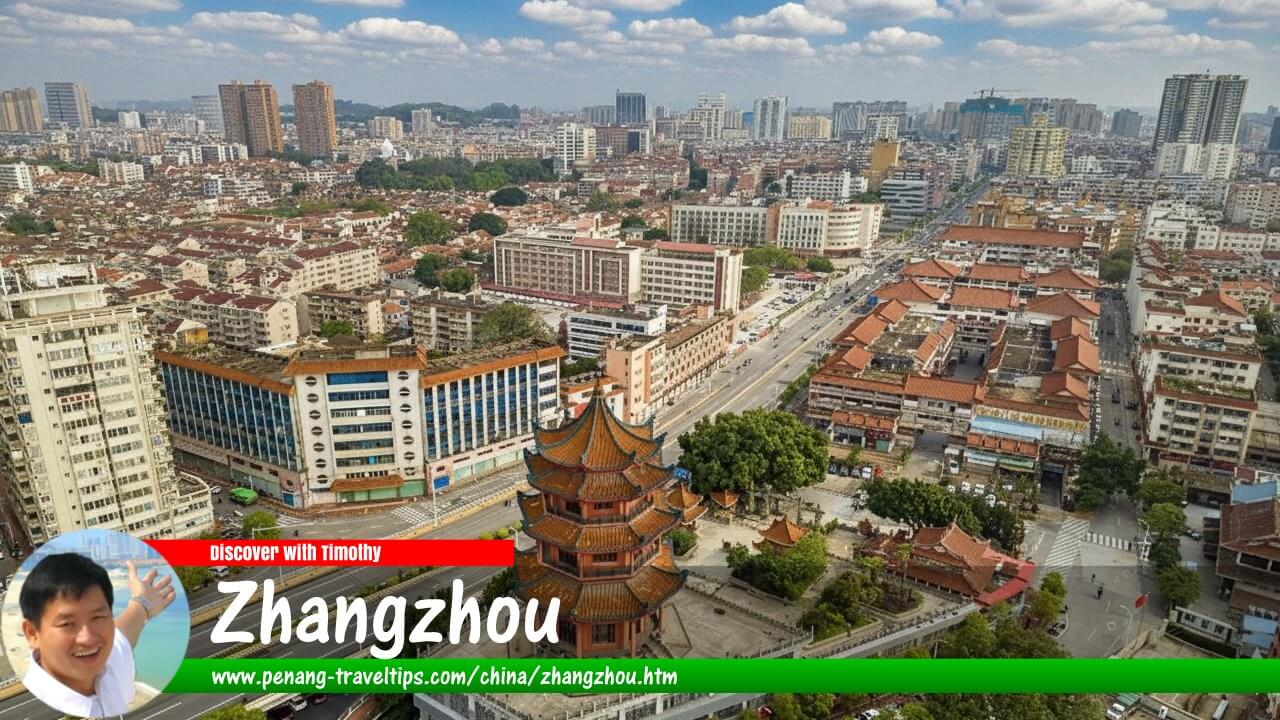 Zhangzhou, China (Photo edited with AI on 15 June 2026)
Zhangzhou (Chinese: 漳州; pinyin: Zhāngzhōu) is a prefecture-level city in southern Fujian Province, China. Located along the lower reaches of the Jiulong River and bordering the Taiwan Strait, Zhangzhou is one of Fujian's oldest and most historically significant cities. Known for its fertile agricultural lands, rich cultural traditions, historic towns, and strong connections with overseas Chinese communities, Zhangzhou has played an important role in the economic and cultural development of southeastern China for more than a millennium. The city is often regarded as one of the birthplaces of Minnan (Southern Fujian) culture and language, which have influenced communities throughout Taiwan and Southeast Asia.1
The name "Zhangzhou" literally means "Zhang Prefecture." The first character, "Zhang" (漳), refers to the Zhang River, an ancient name associated with waterways in the region, while "Zhou" (州) was a traditional Chinese administrative division equivalent to a prefecture. The city received its present name during the Tang Dynasty when the imperial government established an administrative prefecture in the area. Over the centuries, Zhangzhou grew into an important center of trade, agriculture, education, and overseas migration.2
Quick Facts
- English Name: Zhangzhou
- Chinese Name: 漳州
- Pinyin: Zhāngzhōu
- Province: Fujian
- Location: Southern Fujian, China
- River: Jiulong River
- Climate: Humid Subtropical
- Main Airport Access: Xiamen Gaoqi International Airport
- Main Railway Station: Zhangzhou Railway Station
- Known For: Agriculture, Hakka Tulou, Minnan culture
- Major Industries: Agriculture, food processing, manufacturing, petrochemicals
- UNESCO Heritage Nearby: Fujian Tulou
Geography
Zhangzhou is located in southern Fujian Province and borders Xiamen, Quanzhou, Longyan, and Guangdong Province. The city lies approximately 50 kilometers southwest of Xiamen and occupies a strategic position between the mountainous interior of Fujian and the Taiwan Strait coast.1
The municipality covers a diverse landscape that includes river valleys, fertile plains, rolling hills, coastal areas, islands, and mountainous regions. The Jiulong River, the second-largest river in Fujian Province, flows through the city and has historically provided fertile farmland, transportation routes, and water resources.
The western and northern parts of Zhangzhou are dominated by mountain ranges, while the eastern and coastal regions contain broad agricultural plains. These fertile lands have made the city one of Fujian's most productive agricultural regions.
Zhangzhou experiences a humid subtropical climate characterized by mild winters, hot summers, abundant rainfall, and a long growing season. The climate is ideal for cultivating fruits, vegetables, tea, flowers, and other crops. Typhoons occasionally affect the region during the summer and autumn months.
The city's natural environment includes forests, rivers, wetlands, and coastal ecosystems. Scenic mountain landscapes and traditional rural villages contribute significantly to Zhangzhou's tourism appeal.
History
The history of Zhangzhou extends back more than two thousand years. Archaeological discoveries indicate that the area was inhabited by indigenous peoples long before it became integrated into the Chinese imperial system. During the Qin and Han dynasties, the region was gradually incorporated into China's administrative framework.2
Zhangzhou's development accelerated during the Tang Dynasty. In 686 AD, the imperial government formally established Zhangzhou Prefecture, giving the city its modern name. The area's fertile lands and strategic location encouraged population growth, agricultural expansion, and commercial activity.
During the Song Dynasty, Zhangzhou became one of the most prosperous regions in southeastern China. Trade flourished through nearby ports, and merchants established commercial links with Taiwan, Southeast Asia, and other parts of Asia. The city developed a reputation for education, literature, and scholarship.
Throughout the Yuan, Ming, and Qing dynasties, Zhangzhou continued to prosper as an agricultural and commercial center. Large numbers of residents migrated overseas, particularly to Taiwan, the Philippines, Malaysia, Indonesia, Singapore, and other parts of Southeast Asia. These emigrants maintained strong cultural and economic ties with their homeland, helping spread Minnan culture abroad.3
The region also became associated with the development of the distinctive Fujian Tulou, large fortified earthen buildings constructed by Hakka communities. These structures provided protection and communal living space for extended families and remain among the region's most famous landmarks today.4
During the nineteenth century, Zhangzhou's economy benefited from increased trade opportunities following the opening of nearby treaty ports. Agricultural exports, including tea, sugar, and fruits, became increasingly important.
Following the establishment of the People's Republic of China in 1949, Zhangzhou underwent significant modernization. New transportation infrastructure, industrial facilities, and urban development projects transformed the city. Economic reforms beginning in the late twentieth century further accelerated growth and integration with regional and international markets.
Today, Zhangzhou remains an important center of agriculture, manufacturing, culture, and tourism while preserving many aspects of its rich historical heritage.
Economy and Products
Zhangzhou possesses one of Fujian Province's strongest agricultural economies. The city's fertile plains, favorable climate, and extensive irrigation systems support the production of a wide variety of crops. It is particularly known for fruits such as longans, lychees, bananas, pomelos, and citrus fruits.
The region is one of China's leading producers of flowers and ornamental plants. Many agricultural products from Zhangzhou are exported domestically and internationally.
Food processing is a major industry. Factories produce canned foods, fruit juices, seafood products, frozen foods, and agricultural exports. The city has developed a strong reputation for high-quality food manufacturing.
Manufacturing sectors include machinery, electronics, petrochemicals, building materials, textiles, and consumer goods. Industrial zones throughout the municipality attract domestic and foreign investment.
Traditional products associated with Zhangzhou include tea, wood carvings, handicrafts, ceramics, and specialty foods. The city's culinary traditions form an important part of Minnan culture and are popular among visitors.
Tourism has become an increasingly significant contributor to the economy, especially following the international recognition of nearby Fujian Tulou sites as UNESCO World Heritage attractions.4
How to Go There
By Air
Zhangzhou does not currently have a major commercial airport serving large numbers of passenger flights. Most visitors arrive through Xiamen Gaoqi International Airport (XMN), located approximately 60 kilometers northeast of central Zhangzhou. The airport serves as one of southeastern China's major aviation hubs and offers extensive domestic and international connections.5
Airlines operating at Xiamen Gaoqi International Airport include XiamenAir, Air China, China Eastern Airlines, China Southern Airlines, Hainan Airlines, Spring Airlines, and numerous international carriers. Flights connect the region with major Chinese cities such as Beijing, Shanghai, Zhangzhou, Shenzhen, Chengdu, Chongqing, and Kunming, as well as destinations throughout Asia.
By Train
Zhangzhou Railway Station is located in Longwen District, east of the city center. The station serves high-speed rail services on the Hangzhou–Shenzhen Railway, providing convenient connections to Xiamen, Quanzhou, Fuzhou, Shenzhen, Zhangzhou, Hangzhou, Shanghai, and other major cities.6
Additional railway stations within the municipality provide access to regional destinations and surrounding counties.
By Long-Distance Bus
Zhangzhou Passenger Transport Center Station and several regional bus terminals provide extensive long-distance services throughout Fujian Province and neighboring provinces including Guangdong, Jiangxi, and Zhejiang.
How to Travel Locally
Zhangzhou offers a variety of transportation options for residents and visitors.
- Public Buses: An extensive network of bus routes connects urban districts, suburbs, and nearby towns.
- Taxis: Metered taxis are readily available throughout the city.
- E-Hailing Services: Didi is widely used and functions similarly to Uber.
- Shared Bicycles: Bicycle-sharing services are available in many urban areas.
- Intercity Coaches: Frequent coach services connect Zhangzhou with Xiamen, Quanzhou, Longyan, and surrounding counties.
Zhangzhou does not currently operate a subway, metro, MRT, or LRT system. Traditional forms of transport such as trishaws, rickshaws, and tuk-tuks are generally not part of the city's modern transportation network.
Tourist Attractions
Fujian Tulou
The Fujian Tulou are among the region's most famous attractions. These large fortified earthen buildings were constructed primarily by Hakka communities and served as communal residences. Several tulou clusters within Zhangzhou's jurisdiction are recognized as UNESCO World Heritage Sites.4
Nanjing Tulou Scenic Area
This area contains some of the most famous tulou structures, including Tianluokeng Tulou Cluster and Hegui Lou. Visitors can learn about traditional Hakka culture and architecture.
Yunshuiyao Ancient Town
Known for its historic stone pathways, ancient banyan trees, streams, and traditional buildings, Yunshuiyao offers a glimpse into rural Fujian life and culture.
Dongshan Island
Located off the coast of Zhangzhou, Dongshan Island is famous for its sandy beaches, coastal scenery, seafood, and relaxed atmosphere. It is one of Fujian's most popular seaside destinations.
Zhangzhou Ancient City
The historic center of Zhangzhou preserves traditional streets, temples, residences, and cultural landmarks that reflect the city's long history.
Nanshan Temple
One of Zhangzhou's most important Buddhist temples, Nanshan Temple is known for its religious significance, historic architecture, and peaceful surroundings.
Jiulong River Scenic Area
The Jiulong River provides attractive landscapes, parks, and recreational opportunities. River cruises and waterfront walks are popular activities.
Zhao'an Jiuhou Mountain
This scenic mountain area offers hiking trails, natural landscapes, and panoramic views of southern Fujian.
Huayang Mountain Scenic Area
Known for its forests, waterfalls, and rock formations, Huayang Mountain attracts nature enthusiasts and photographers.
Lingtong Mountain
Featuring dramatic cliffs, temples, and scenic viewpoints, Lingtong Mountain is one of the most impressive natural attractions in the Zhangzhou region.
Zhangzhou, China is  the Map of Cities in China
References
- Encyclopaedia Britannica – Zhangzhou
- Wikipedia – Zhangzhou
- Encyclopaedia Britannica – Chinese Diaspora
- UNESCO World Heritage Centre – Fujian Tulou
- Wikipedia – Xiamen Gaoqi International Airport
- Wikipedia – Zhangzhou Railway Station
Page Details
This page was created/modified on 14 June 2026. Hi, my name is Timothy and created it from my research, for my own entertainment, knowledge and to satisfy my curiosity. I am providing the information to you in good faith and hope it is useful. I try to get the details as accurate as possible. I also try to update the page whenever I stumble on new details. So this and all my other pages are perpetual work in progress. If you discover any error, please politely inform me, pointing out where the error lies, and I will correct it as soon as possible. Your helpfulness will keep this page accurate, relevant and helpful to those who need the information.